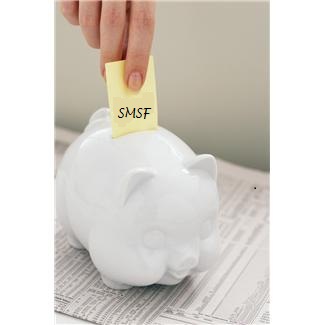


Superannuation Splitting to a Spouse already in or entering Transition to Retirement Phase


So I got a question about continuing to Super Split to a spouse who is over 55 and already using a Transition to retirement Pension but not fully retired.

If a client is over 55 with a TRIS/TTRAP Pension and an Accumulation Account as they are still working or not fully retired, can they continue to receive Super Splits from their spouse?

The answer is yes they can receive the splits into their accumulation account as they are between 55 and 64 and not retired which meets the eligibility rules. The ATO guidelines state:

“Which members are eligible to apply?
All your members are eligible, although it’s your decision whether to offer a splitting facility to all members. They can apply to split contributions regardless of their own age, but their spouse, to whom you transfer the contributions, must be either:

less than 55 years old
55 to 64 years old and not retired.”

The super contributions splitting provisions operate independently from the pension payment rules. So as long as each set of provisions are complied with, there shouldn’t be an issue.

The question was then asked “could the spouse then consolidate their TRIS/TTRAP and Accumulation accounts the following year and thereby moving those funds to pension phase and possibly accessing a higher maximum pension including the amount super split from their spouse.”

 I again believe yes as otherwise the accounting would have to quarantine Super Split amounts until 65 or retirement and the ATO have again said:

“There are no requirements for funds to specially report to us amounts that have been rolled over or received as a result of a contributions-splitting application”

 This clarifies the way to continue implementing two strategies:

  • When looking to maximise clients TRIS/TTRAP pensions – often to use the 10% to pay off debt
  • Ensuring a member can do rollbacks, consolidations and recommencements to maximise the amount in pension phase.

Make sure to get individual advice on your personal circumstances and be aware that the Super split amount will count towards the receiving spouse’s concession caps.

I hope this guidance  has been helpful and please take the time to comment. Feedback always appreciated. Click here to arrange a meeting/call back or contact our Castle Hill or Windsor offices for an appointment to discuss your needs.

Liam Shorte B.Bus SSA™ AFP

Financial Planner & SMSF Specialist Advisor™

SMSF Specialist Adviser 

 Follow SMSFCoach on Twitter Liam Shorte on Linkedin NextGen Wealth on Facebook   

Verante Financial Planning

Tel: 02 98941844, Mobile: 0413 936 299

PO Box 6002 BHBC, Baulkham Hills NSW 2153

5/15 Terminus St. Castle Hill NSW 2154

Corporate Authorised Representative of Viridian Select Pty Ltd ABN 41 621 447 345, AFSL 51572

This information has been prepared without taking account of your objectives, financial situation or needs. Because of this you should, before acting on this information, consider its appropriateness, having regard to your objectives, financial situation and needs. This website provides an overview or summary only and it should not be considered a comprehensive statement on any matter or relied upon as such.

What can my SMSF invest in?


Control over investment decisions lies with the Trustees of the Fund.

7E623C9E-5F9E-46CF-890E-ABC89D961462

We find this is the main reason so many Australians are establishing their own Self-Managed Superannuation Fund or SMSF for short. The range of investments you can consider for your portfolio include almost anything you yourself could invest in as an individual including:

  • Direct investments  (such as shares, ETFs, cash, term deposits, hybrids, income securities, gold/silver bullion and bonds)
  • Cryptocurrencies, Bitcoin, Ethereum, initial Coin Offerrings (Just because you can doesn’t mean you should)
  • Direct property (Residential houses, villas, units, as well as Commercial property such as offices, warehouses, factory units, shops and land.)
  • Managed funds (retail or wholesale, domestic and/or international)
  • Private Unit Trusts
  • A business (non-related party to avoid hassle) and business property
  • Non-traditional assets such as coins, antiques, art , taxi plate licences, ATMs (some of these have been subject to major losses)

The first step is to ensure your Trust Deed allows you to invest in the items you are considering. I know it is a long boring document but you need to know its contents so go through it regularly to get a handle on it. If it does not specifically mention cryptocurrencies then you should have the trust deed updated to allow them as they may not fall under any other category.

Once satisfied the Trust deed does not exclude an investment, the types of investments the SMSF actually holds are determined by the fund’s investment strategy, which is formulated by you, along with the other members in the fund, and often advised by an SMSF Specialist Advisor™. The fund’s strategy should reflect your objectives, risk profile/tolerance, liquidity needs and the investments you intend to utilise. This is not set and forget or forged in stone. The investment strategy can be changed as often as you wish, to suit your changing circumstances and to take advantage of new investment opportunities. The fund can also incorporate different strategies to suit each of its members.

An important benefit of this having this ultimate control is that, during retirement phase, you can continue to invest in growth assets. This contrasts the approach of many retail providers, who lock ‘pension phase’ investors into income-producing assets such as cash and fixed interest, increasing the risk that the investor may outlive their retirement savings. This is coming back on the agenda now as many funds move to ”Lifecycle strategies” which I believe are dangerous in assuming that fixed interest is low risk when inflation is a real risk and bubbles can effect the capital value of even “conservative”options.

It is important to understand that there are certain regulatory limitations placed on SMSF; for example, a fund cannot borrow money to invest in assets such as property or shares unless the funds are provided through a Limited Recourse Borrowing Arrangement (LRBA) .

A fund cannot acquire assets from related parties of the fund or invest in in-house assets; for example the fund could not purchase your assets (such as your house or residential investment property) from you. Other restrictions placed on the fund include the inability to lend funds to members or their relatives or to provide the assets of the fund as security for personal borrowing.

As part of our service, we can provide you with access to a range of investments for your SMSF.

Can I invest in equipment and leased it to my business?

Technically yes but there are so many ways you can get in trouble it may not be worth the hassle. I went into this in more debt in this article.

Can I buy a Classic or Vintage Car within my SMSF?

Again technically and theoretically yes you can, but it would be very difficult with many pitfalls. You’d also have to be able to prove to the ATO that the investment meeting the sole purpose test and was going to generate income for your retirement and not for personal enjoyment now! You can own but you or a related party cannot drive it even for maintenance purposes! If you invest in classic cars, they would have to be hired out to generate income. It would be difficult for you to drive. Remember if you are driving you need to be covered by the vehicle’s insurance, and that would make it obvious to the ATO you are using the car for your own purposes.

Can I use a property within my SMSF?

SMSFs are expressly forbidden from investing in the family home or holiday home for your personal use. But they are able to invest in investment properties – as long as the property is only used for investment purposes. Likewise properties within holiday resorts or golf courses can draw the ire of the ATO as again you may be seen to benefitting members personally rather than providing for retirement

This means fund members can’t go and stay in the property or rent it out to family members. The property should generally be managed by a real estate agent to satisfy the sole purpose test regulations unless you can show genuine evidence that you are managing it professionally yourself.

If I want to push the limits! Coins, jewellery, antiques, wine and art?

You can invest in coins – but you can’t display them if you want to satisfy the sole purpose test. Coins are collectables if their value exceeds their face value. Therefore, if bullion coins have a value that exceeds their face value and they are traded at a price above the spot price of their metal content, they will be a collectable and your SMSF must comply with regulation 13.18AA in relation to the investment

Likewise, you can invest in wine but you can’t drink it unless you are in pension fully retired and taking it out as a lump sum pension payment! If your fund acquired the wine on or after 1 July 2011 it must not be stored in the private residence of any related party. A private residence includes all parts of a private dwelling (above or below ground), the land on which the private residence is situated and all other buildings on that land, such as garages or sheds.

SMSF investments in art operate in a similar way. You can’t hang it in the hall at home, but you can rent it to a non-related company or an art bank that rents out artworks on an ongoing basis.

Here is a link to the ATO’s guidance on leasing and selling artworks:

ok so what about stepping into the Cryptocurrency or Bitcoin mania?

Just because it may be possible does not mean you should. If you want to then you need to do some major research and follow normal compliance rules to the Nth degree. Read my blog SMSF Research – BITCOIN, DOLLARS, GOLD: What Is the Future of Money?

Although it might seem like a good idea to use your super to invest in exotic assets, the value of these types of investments is notoriously volatile and the market for these asset classes is generally pretty illiquid. If you have special or professional knowledge in a particular subject then you may be able to put forward a better case than an ordinary person for engaging in those assets as part of your funds strategy. Again make sure that you are not using your SMSF or its assets to prop up your own business.

I hope these thoughts  have been helpful and please take the time to comment if you know of other investments as I know this is not an exhaustive list. Would love some feedback as well.

Liam Shorte B.Bus SSA™ AFP

Financial Planner & SMSF Specialist Advisor™

SMSF Specialist Adviser 

 Follow SMSFCoach on Twitter Liam Shorte on Linkedin NextGen Wealth on Facebook   

Verante Financial Planning

Tel: 02 98941844, Mobile: 0413 936 299

PO Box 6002 BHBC, Baulkham Hills NSW 2153

5/15 Terminus St. Castle Hill NSW 2154

Corporate Authorised Representative of  Viridian Advisory Pty Ltd (ABN 34 605 438 042) (AFSL 476223)

This information has been prepared without taking account of your objectives, financial situation or needs. Because of this you should, before acting on this information, consider its appropriateness, having regard to your objectives, financial situation and needs. This website provides an overview or summary only and it should not be considered a comprehensive statement on any matter or relied upon as such.

Understanding transition to retirement pensions


If you have reached your preservation age you can use a transition to retirement pension to access your superannuation as a non-commutable income stream while you are still working. This may be particularly attractive if you have reduced your working hours and need to top-up your income to maintain your standard of living.

There was another great benefit of setting up the pension which was that all the funds supporting the pension move in to a tax exempt status. Yes that means those funds paid no earnings tax and in fact they received a full refund of any franking credits on your investments. For the average investor this can increase your returns by 0.5% to 1% a year risk free every year! However that tax free status was removed as of 1 July 2017.

The strategy still remains effective for those needing a boost in income or those who can combine the pension with salary sacrifice.

What is a transition to retirement pension?

Transition to retirement pensions allow you to access your superannuation as a non-commutable income stream, after reaching preservation age (see below), but while you are still working.

The aim of these income streams is to provide you with flexibility in the lead up to retirement. For example, you may choose to reduce your working hours and at the same time access your superannuation as a transition to retirement pension that can supplement your other income. It may also allow you to salary sacrifice to give your retirement savings a boost.

Not all superannuation funds offer the transition to retirement pensions, so you need to check with your own fund to see if they do. You can also start one in a self-managed superannuation fund.

Are there any special characteristics?

These pensions are essentially like a normal account-based pension, but with two important differences.

Firstly, they are non-commutable, which means they cannot be converted into a lump sum until you satisfy a condition of release, such as retirement or age 65.

Secondly, you have a minimum pension amount you must withdraw each year but you can only withdraw up to 10% of the account balance (at 1 July). No lump sum withdrawals are allowed.

What is my preservation age?

Your preservation age is generally the date from which you can access your superannuation benefits and depends upon your date of birth.

Date of birth Preservation Age
Before 1 July 1960 55
1 July 1960 – 30 June 1961 56
1 July 1961 – 30 June 1962 57
1 July 1962 – 30 June 1963 58
1 July 1963 – 30 June 1964 59
After 30 June 1964 60

How are transition to retirement pensions taxed?

Transition to retirement pensions are taxed the same as regular superannuation income streams.

If you are under age 60, the taxable part of your pension will be taxed at your marginal rate, but you receive a 15% tax offset if your pension is paid from a taxed source*.

However, once you reach 60, your pension is tax-free if paid from a taxed source*.

  • Most people belong to a taxed superannuation fund. Some government superannuation funds may be untaxed and you will pay higher tax on pensions.

Can you still contribute to superannuation?

As long as you are eligible to contribute, you and your employer can still contribute to superannuation for your benefit. In any case, your employer’s usual superannuation guarantee obligations would still apply. You need to have an accumulation account to pay these amounts into.

Is a transition to retirement pension right for you?

Transition to retirement pensions can provide you with flexibility in the years leading up to your retirement and can help to boost your retirement savings in some circumstances.

People who might find the transition to retirement pensions attractive include those who:

  • have reduced working hours from full-time to part-time, eg down to three days per week. The reduced salary can be topped up with income from the transition to retirement pension
  • are able to salary sacrifice to your superannuation or your spouse’s super for tax savings – the outcome of combining the transition to retirement pension with salary sacrifice can be a greater build-up of superannuation savings by the time you reach actual retirement

The transition to retirement rules and associated strategies can be very complicated. It is recommended that you seek expert advice from your financial adviser before deciding if this type of income stream and strategy is right for you.

Want a Superannuation Review or are you just looking for an adviser that will keep you up to date and provide guidance and tips like in this blog? Then why now contact me at our Castle Hill or Windsor office in Northwest Sydney to arrange a one on one consultation. Just click the Schedule Now button up on the left to find the appointment options. Do it! make this year the year to get organised or it will be 2030 before you know it.

Please consider passing on this article to family or friends. Pay it forward!

Liam Shorte B.Bus FSSA™ AFP

Financial Planner & SMSF Specialist Advisor™

SMSF016_Fellow_Logo_CMYK

 color logo with background_page_1-3-1

Tel: 02 9899 3693, Mobile: 0413 936 299

PO Box 6002 BHBC, NORWEST NSW 2153

40/8 Victoria Ave , CASTLE HILL NSW 2154

Suite 4/1 Dight St, Windsor NSW 2765

Corporate Authorised Representative of Viridian Advisory Pty Ltd (ABN 34 605 438 042) (AFSL 476223)

This information has been prepared without taking account of your objectives, financial situation or needs. Because of this you should, before acting on this information, consider its appropriateness, having regard to your objectives, financial situation and needs. This website provides an overview or summary only and it should not be considered a comprehensive statement on any matter or relied upon as such.

7 Common SMSF Pension Errors


Having set up over 120 pensions and taken over many other clients we know that having the right documentation and following the guidelines set down for accessing pensions is essential to remain compliant and access tax exempt status. Here are some of the common mistakes we see on documentation of pensions that clients bring to us from other sources.

1.  Pension entitlement – don’t bend the rules

You must be over the preservation age to commence a pension. This means that you must have reached the preservation age at the time the pension documents say the pension starts.  A common mistake is to assume this means at the time the first pension payment is made, which is wrong. For example, you may be turning  which is your preservation age on the 1st of October and think that you can start the pension on the 1st of July but not pay any pension payments until after the 1st of October and get the full year of tax exempt  income. This is not possible; in order to start the pension you must have reached the preservation age at the 1st of October. the income for that year will be split pro-rata across the period in accumulation phase pre- 1st of October and in pension phase after that date.

2. Market valuation of assets funding the pension

SMSF Advisors, Accountants and trustees must make sure the assets of the fund are valued at market rates before the pension is calculated. Further they should ensure the assets are revalued at the end of financial year. This is important in determining the level of pension in the coming year is correct and reflects the true value of the assets in the fund. There used to be some leeway especially with property but auditors now seem to be implementing a more rigorous checking system to ensure property values are updated annually.

3. Use a Comprehensive Pension Kit

Timely documentation is essential to ensure that the pension actually commences when you want it to commence. Typically, a pension may start well before an actual pension payment is made as often the financials for the SMSF are not completed yet. Often the pension start date will be 1st July and the actual pension payment may be made quarterly or half-yearly later in the year. The pension kit should reflect this and include at a bare minimum such things as a pension request form from the member to the trustee(s), minutes of the trustee acknowledging and agreeing to the request, notification from the trustee to the member with a draft pension agreement stating the type of pension, start date, frequency of payments and if a reversionary pension is to be applied.  Importantly, it should also include a Product Disclosure Statement which is a legal requirement. The initial pension documentation does not have to have the exact figure of the pension amount but should refer to the fact that this figure will be clarified once the financials are completed. We update the initial kit with a set of minutes after the financials are provided which shows the exact amount in the pension and the relevant minimum and maximums or selected pension payment for that year and the Tax free component of the pension.

Your SMSF advisor of accountant should be able to help with this documentation.

4. Minimum Pension Payments (don’t ignore letters from your advisor!)

Pension payments are only tax-free if you met the conditions required to take advantage of the Tax Exempt Pension Income within the fund (0% tax on the income from the assets supporting the pension). The minimum pension amount must be paid within the financial year. This means that the pension payment must physically leave the SMSF bank account by the 30th June. That is a benefit is paid when the member accepts the money, banks the cheque which is subsequently honoured or receives a credit by way of electronic transfer from the SMSF. As an example, if at the 30th June you have made $6,000 worth of pension payments but your minimum pension payment for the year is $10,000, the $4,000 cannot be carried over and paid at a later date.  In this instance the fund has failed to meet its pension requirements and the pension would be invalid and the entire pension account subject to tax for the full year.

During the financial year all pensions paid must be paid in “cash”;. That is a benefit is cashed when the member accepts the money, banks the cheque which is subsequently honoured or receives a credit by way of electronic transfer from the SMSF. Therefore if a member receives a cheque dated 30/6 and banks it after 30/6, this amount cannot be classed as “cash” for the year ending 30/6 on the cheque. Also a member cannot receive a pension via an in-species transfer from the SMSF to the member.

Our process is to remind clients in April/May each year by advising them in writing the minimum amount payable by the 30th June. We ask clients to confirm they have taken these payments by ticking a questionnaire and returning it to us. If you are receiving a Transition to Retirement Pension the advice also indicates the maximum amount of pension and requests confirmation that this has not been exceeded.

Some strategies are in place for correcting errors before the 30th of June but once that clock ticks over to 1st of July there is little that can be done to amend strategies.

5. Tax and Estate Planning -Tracking the Tax Free Component Amount/Percentage

On commencing a pension the Tax Free and Taxable Components need to be calculated. This percentage split remains the same for the life of the pension. The tax free percentage is calculated by dividing the Tax Free Components by the total starting balance of the pension. The Tax free component should be shown in your Pension Kit (once financials completed) and then reaffirmed in your members account statement annually.

Why is this important if Pension payments are tax free?

The tax free component does not refer to the annual pension payments. The Tax Free Component percentage becomes relevant upon death of the last member without a reversionary beneficiary and can make significant difference to the tax paid by your dependents (particular adult children). Good pension planning may see more than one pension being set up for a member with each Pension allocated towards the most tax efficient recipient beneficiary. i.e. spouse may receive pension with low tax free % while adult children receive the pension with a higher Tax free %.

Some smaller accountants or those who do not have the relevant software may not be tracking your Tax Free component and this may cause a problem later when your remainder pension needs to be distributed.  Check your last statement and If in any doubt you should discuss with your accountant or SMSF Advisor.

6. Ongoing Contributions

A member’s pension account cannot receive new contributions during the year. You can make contributions but these contributions must be credited to a separate accumulation account. A SMSF a member may have more than one pension account but cannot have more than one accumulation account. As an aside this is necessary for a Transition to Retirement Strategy combined with Salary Sacrifice to work properly.

You can rollback (stop) a pension and add the accumulation account balance and then start a new pension.  We term this as RCR (Rollback, Consolidation and Recommencement). Before stopping a pension you must ensure that you first pay the minimum pension to keep the fund tax exempt for the year to that date. For this reason we often rollback the pension at the end of the financial year and recommence on 01st July.

7. Actuarial Certificate

If you have a pension account and accumulation account during the year (i.e you have made contributions) and the fund’s assets have not been segregated you will need to obtain an actuarial certificate to identify the tax exempt percentage of the investment income. The Actuarial Certificates are normally outsourced by the Accountant to an Actuary but you should ensure that they do take responsibility for arranging it for you annually.

As you can see these pension rules can be a minefield to negotiate and advice from a SMSF Specialist Advisor is highly recommended. Through Verante’s SMSF Coaching Service we remind our clients that when it comes to “their money” that there is no such thing as a silly question. With pensions it is essential to get it right up front and double-check before June 30th!

I hope these thoughts  have been helpful and please take the time to comment if you know of other common mistakes as I know this is not an exhaustive list. Would love some feedback as well.

Liam Shorte B.Bus SSA™ AFP

Financial Planner & SMSF Specialist Advisor™

SMSF Specialist Adviser 

 Follow SMSFCoach on Twitter Liam Shorte on Linkedin NextGen Wealth on Facebook   

Verante Financial Planning

Tel: 02 98941844, Mobile: 0413 936 299

PO Box 6002 BHBC, Baulkham Hills NSW 2153

5/15 Terminus St. Castle Hill NSW 2154

Corporate Authorised Representative of  Viridian Advisory Pty Ltd (ABN 34 605 438 042) (AFSL 476223)

This information has been prepared without taking account of your objectives, financial situation or needs. Because of this you should, before acting on this information, consider its appropriateness, having regard to your objectives, financial situation and needs. This website provides an overview or summary only and it should not be considered a comprehensive statement on any matter or relied upon as such.

Five pointers to consider when looking at dividend investing


Ok so you are looking to get back in to the market or use the current dip to add to your portfolio and everyone in every article is saying look for Yield! Well how do you do that or how  do you explain it to a client? I found this article on Morning Star and it was very easy to read and understand so I thought it would be appropriate to pass it on. It discuss 5 points to consider when looking a Dividend Investing:

  1. Look at the past and future – where have dividends come from in the past and can the company sustain them into the future.
  2. Look behind the yield – why is the yield high. Is it because the capital value has fallen or because dividends increasing over time. Capacity to grow its dividends is essential.
  3. Look closer at cyclical stocks – Cyclical companies like Newcrest Mining (NCM) may also have a tendency to pay sporadic dividends and you do not want to be buying into a story that will change in the short-medium term. Again consistency and future capacity are the core.
  4. Look beyond banks – don’t get overexposed to one sector . Look at consumer staples (MTS, WOW, WES), Healthcare, Infrastructure all defensive high yielding sectors. Because the Global financial Crisis revolved around banking, this sector has been more volatile in the recent past and looks to continue in this vein for years to come.
  5. Look for tax implications – what is useful for one type of investor is not for another. Franking Credits are the “CREAM” for a SMSF Pension Investor but of little or no use to someone on a higher Tax Bracket. Look at the after tax implications of an investment for your particular circumstances

So as I said some good points to consider and if you want to read the article in full please go to Click here

Liam Shorte B.Bus SSA™ AFP

Financial Planner & SMSF Specialist Advisor™

SMSF Specialist Adviser 

 Follow SMSFCoach on Twitter Liam Shorte on Linkedin NextGen Wealth on Facebook   

Verante Financial Planning

Tel: 02 98941844, Mobile: 0413 936 299

PO Box 6002 BHBC, Baulkham Hills NSW 2153

5/15 Terminus St. Castle Hill NSW 2154

Corporate Authorised Representative of Viridian Select Pty Ltd ABN 41 621 447 345, AFSL 51572

This information has been prepared without taking account of your objectives, financial situation or needs. Because of this you should, before acting on this information, consider its appropriateness, having regard to your objectives, financial situation and needs. This website provides an overview or summary only and it should not be considered a comprehensive statement on any matter or relied upon as such.

How to react to this volatility as a SMSF Trustee / Investor.


The volatility over the last 6 months has been staggering but it is not unusual in historical terms as it has happened many times before. The difference now is that we are bombarded through all the forms of media with the daily movements of our investments and you just cannot ignore that weight of news. Also many people are now able to take more control of their investments via their own Self Managed Super fund or retail Master Trust / Wrap account.

It’s enough to make an anxious investor abandon shares entirely. But if you jettison equities from your portfolio in favour of cash, bonds and term deposits, it will take you much longer to reach your savings goals, and you may not get there at all.

When you look at current interest rates as being a pretty good predictor of what bonds/fixed interest will return in the future, the outlook isn’t particularly good with the 3yr bond yield hovering around 3.87% and inflation tickling the 3% band.

Likewise, interest rates from term deposits and high interest cash accounts have been dropping sharply in the last 2 weeks with 4s and 5s now in front of 6 month rates where 6s were common last month and forecasters now looking at rate cuts in October.

While short-term fluctuations in the market can be unnerving, they rarely affect long-term returns, for example investors who moved their savings into cash at the end of 2008 and stopped contributing to their superannuation accounts now have an account balance worth 20% less than investors who remained in the market.

With no end to volatility in sight, how do you keep your head while all around you are losing theirs? Here are some coping strategies:

Rebalance, Rebalance, Rebalance. Volatile markets can distort your portfolio. For example, if your goal is to have 35% of your savings in Australian equities, 20% in International Equities, 10% in property, 25% in Fixed Interest and 10% in cash, a big market meltdown could increase the amount you have in Fixed Interest and lower your allocation in equities and property.

To rebalance, you should sell some of your best-performing funds (fixed Interest, bond and cash funds) and put the money in your worst performers, something many investors lack the fortitude or commitment to do. We all know in theory what we’re supposed to do, but in reality do the opposite and flee to the best performer or cash. I know it hurts but you have to understand market cycles as opposed to “herd mentaility”. Look at Warren Buffet this week investing $5 Billion in Bank of America when most were fleeing the stock. He has a strong track record of buying when stocks are out of favour with the mainstream.

Don’t be blind to significant changes in markets like the rise of Asia or the risk of sovereign debt. Look out for changing trends like the move towards income orientated stocks. Your adviser should be pointing these matters out to you and identifying strategic asset allocations to allow for them.

How often should you rebalance? We recommend conducting regular portfolio reviews every six months, but only rebalancing when your allocation is at least 5 percentage points way from your benchmark.

Revisit you long term strategy and stick to it.  If the thought of rebalancing makes your palms sweat, consider investing your savings a “life cycle” strategy. This name for the common strategy, which has become much more popular in the last decade, invests in a mix of shares, bonds and cash and gradually become more conservative as you approach retirement. It is nothing new and most advisers will adjust your portfolio this way as part of your overall strategy but maybe you have not discussed this with them for awhile and the volatility may have led to inaction. Well now is the time to consider your future strategy and get that down in writing so you and your adviser are clear on your objectives, timelines and changing strategy over time.

Resist chasing this year’s ‘winner’ is just as likely to be next year’s ‘loser’. Even during the darkest days, some investments will shine. Lately, the flavour of the day has been gold, which is up considerably this year vs. a decline of almost 9% for the All Ordinaries.

The rise of exchange traded funds and similar products in the past few years has made it easier for small investors to invest in “hard” assets, such as gold and other commodities. In small doses, such investments can diversify your portfolio, but they’re easily abused. For example, while gold has been a winner this year, it’s not for the fainthearted. Factoring in inflation, it would have to reach $2,113 an ounce to reach its 1981 high of $850. That was a long time in the doldrums in between its peaks!

Have a look at the Russell Long Term Investment Returns report for more insight in to this subject. http://www.russell.com/AU/_pdfs/market-reports/asx/ASX_Report_2011.pdf

Save more. In this uncertain world, the amount you save is one of the few things you can control. If your employer matches super contributions or you take advantage of the Government co-contribution fro you or your spouse, you’re guaranteed an investment return — something even gold can’t deliver.

If you look back at just how complicated and volatile the last 10 years have been, people who diversified and rebalanced and kept contributing are well ahead of where they were a decade ago.

Liam Shorte B.Bus SSA™ AFP

Financial Planner & SMSF Specialist Advisor™

SMSF Specialist Adviser 

 Follow SMSFCoach on Twitter Liam Shorte on Linkedin NextGen Wealth on Facebook   

Verante Financial Planning

Tel: 02 98941844, Mobile: 0413 936 299

PO Box 6002 BHBC, Baulkham Hills NSW 2153

5/15 Terminus St. Castle Hill NSW 2154

Corporate Authorised Representative of Viridian Select Pty Ltd ABN 41 621 447 345, AFSL 51572

This information has been prepared without taking account of your objectives, financial situation or needs. Because of this you should, before acting on this information, consider its appropriateness, having regard to your objectives, financial situation and needs. This website provides an overview or summary only and it should not be considered a comprehensive statement on any matter or relied upon as such.

Future Service Benefits Deduction a more practical alternative to the Anti-Detriment tax deduction for SMSFs and another example of where SMSFs may lead to better outcomes.


I hit a real low when I hear a client is Permanently Disabled or Terminally ill and I am sure that is the same with most of you too but in our field of work it is a matter of when not if we have to deal with such a situation. My reaction is to always want to make the best of the situation from my point of view and add as much benefit and make life as good for that client as possible.

I have always looked at the anti-detriment deduction (no longer available for deaths after 30 June 2017) and wished there was something I could do for the client while living as well as helping their family afterwards.    (more…)

Tax Planning for Small Business owners over 55


EOFY Tax Tips for Small Business

Business Owner Tax Tip

Welcome to my first attempt at a blog with an idea for end of year tax planning aimed specifically at Small/Medium Business Owners.

Ok, so you run your own business and are finally making a profit even if it is just on paper. Now you are looking at your tax position for the current year before June 30th just like you have been encouraged to do. You have spoken to your accountant and know you have a forecast profit for the year after deductions of say $25,000 in your small company after already taking a decent salary for living expenses. Well at the 30% corporate rate the tax will be $7500. But hey, your business does not have that sort of cash in the bank? you have used the profits to plough back in to more stock or equipment for your business.

Here is a strategy for over 55’s to consider if they have a cashflow shortfall for June 30th tax planning.  Look at your Superannuation and if you have not moved into Transition to Retirement Phase you could arrange to do so and access up to 10% of your balance before June 30th as a pension. Lets assume you had $200,000 in Super so you could access $20,000 this year.

You could then lend the money to your company via a shareholders loan and the company could use the funds to make a tax deductible employer contribution back into your superannuation. why you ask?

Well the company gets a tax deduction of $20K reducing its tax bill from $7500 to $1500…..Nice! Now you pay 15% contributions tax on these concessional contributions so of the $20,000 you pay tax of $3000. so overall you save $3000 in tax and you have moved $20,000 from your company into your retirement savings.

Now as you have taken the pension, if you are over 55 but under 60 you need to add this to your taxable income…but the nice government give you a 15% Pension tax offset to reduce the tax payable. Once over 60 you do not need to report it in your income so an even better outcome (has to be at least one benefit of getting older!)

Any other benefit of this strategy?

By moving the $200,000 to Pension Phase any further earnings or capital gains are now exempt income and you pay Nil (0%) tax in your superannuation pension on those earnings. So if your fund earned 5% for the year or $10,000 you save an extra $1500 per year. Better still , if your super fund is invested in shares and received franked dividends your fund will get a refund from the taxman of those franking credits…bonus!

As you now have a shareholder loan to your company you can have the company repay you that loan during the next year rather than taking a higher taxable salary from the company and thereby reducing your marginal tax rate.

Things to check :

  • your age – you have to have reached your preservation age which is now rising towards 60- check here

Preservation age

Access to super benefits is generally restricted to members who have reached preservation age. A person’s preservation age ranges from 55 to 60, depending on their date of birth.

Date of birth Preservation age
(years)
Before 1 July 1960 55
1 July 1960 – 30 June 1961 56
1 July 1961 – 30 June 1962 57
1 July 1962 – 30 June 1963 58
1 July 1963 – 30 June 1964 59
After 30 June 1964 60
  • your tax position personally and via your company or business (see your tax agent/accountant/bookkeeper)
  • your superannuation balance
  • check you have not exceeded your contribution limits.

I hope this guidance has been helpful and please take the time to comment. Feedback always appreciated. Please reblog, retweet, like on Facebook etc to make sure we get the news out there to do plenty of research first and only trust those that have earned your trust. As always please contact me if you want to look at your own options. We have offices in Castle Hill and Windsor but can meet clients anywhere in Sydney or via Skype.

Liam Shorte B.Bus SSA™ AFP

Financial Planner & SMSF Specialist Advisor™

SMSF Specialist Adviser 

 Follow SMSFCoach on Twitter Liam Shorte on Linkedin NextGen Wealth on Facebook   

Verante Financial Planning

Tel: 02 98941844, Mobile: 0413 936 299

PO Box 6002 BHBC, Baulkham Hills NSW 2153

5/15 Terminus St. Castle Hill NSW 2154

Corporate Authorised Representative of Viridian Select Pty Ltd ABN 41 621 447 345, AFSL 51572

This information has been prepared without taking account of your objectives, financial situation or needs. Because of this you should, before acting on this information, consider its appropriateness, having regard to your objectives, financial situation and needs. This website provides an overview or summary only and it should not be considered a comprehensive statement on any matter or relied upon as such.