New Centrelink Deeming Rates Announced From March 20th 2015


Centrelink

The Government has announced that from 20 March 2015, Centrelink will reduce the deeming rates applicable to allowances and pensions. The lower deeming rate will be reduced from 2 per cent to 1.75 per cent for pensioner and single allowees for financial investments of up to $48,000 and for pensioner couples with investments of up to $79,600.

The higher deeming rate will fall from 3.5 per cent to 3.25 per cent for amounts over the deeming threshold.

This is estimated to affect 770,000 pensioner and allowee recipients according to the Minister for Social Services, Scott Morrison. In the media alert, the Minister suggests that part-pensioners will receive an average increase of $3.20 per fortnight or $83.20 per annum.

In summary the new deeming rates will be as follows:

Deeming Rates from March 2015

Deeming Rates from March 2015

This will be received as welcome news to those pension, aged care users and Commonwealth Seniors Health Card recipients who, from 1 January 2015, have been caught by the extension of the deeming rules to account-based pensions.

It may also allow some people who were previously in receipt of the Low Income Health Card to become eligible for it again.

Future changes
The lower deeming rates may not be the end of Centrelink changes with respect to deeming. The Social Services and Other Legislation Amendment (2014 Budget Measures No. 5) Bill 2014 was introduced into the House of Representatives on 2 October 2014. One of the measures contained within this bill was to reset the deeming thresholds to $30,000 for singles and $50,000 combined for pensioner couples from 20 September 2017. This was part of the measures proposed in the May 2014 Federal Budget. To date, the Government hasn’t had any success in moving this Bill through the House and on to the Senate.

Does it make a difference?

Overall, the changes to the deeming rates are a welcome measure for all pensioners and allowees who are not in receipt of the full allowance or age pension. This is especially so for those who own direct shares and/or who are not beneficiaries of the grandfathering of account-based pensions. What will be interesting looking forward is whether there are any interest rate cuts in the near future which affect the deeming rates.

Are you looking for an advisor that will keep you up to date and provide guidance and tips like in this blog? then why now contact me at our Castle Hill or Windsor office in Northwest Sydney to arrange a one on one consultation. Just click the Schedule Now button up on the left to find the appointment options.

Liam Shorte B.Bus SSA™ AFP

Financial Planner & SMSF Specialist Advisor™

SMSF Specialist Adviser 

 Follow SMSFCoach on Twitter Liam Shorte on Linkedin NextGen Wealth on Facebook   

Verante Financial Planning

Tel: 02 98941844, Mobile: 0413 936 299

PO Box 6002 BHBC, Baulkham Hills NSW 2153

5/15 Terminus St. Castle Hill NSW 2154

Corporate Authorised Representative of Viridian Select Pty Ltd ABN 41 621 447 345, AFSL 51572

This information has been prepared without taking account of your objectives, financial situation or needs. Because of this you should, before acting on this information, consider its appropriateness, having regard to your objectives, financial situation and needs. This website provides an overview or summary only and it should not be considered a comprehensive statement on any matter or relied upon as such.

Herd Mentality and Bubbles – Be Careful When Following the Crowd


Whether you are a long-term investor or an opportunist, many investors find comfort in knowing that many others are investing the same way they are and they get caught up in the media hype on a certain sector. Think of the Dot Com craze in the late 90’s when many invested in this sector even though they did not understand it well and as prices rose even the hesitant among investors poured more money in for fear of missing out or FOMO as I prefer to term it. A good adviser should help you identify the risk of these fads and keep you well diversified.

Here is a good educational video from Franklin Templeton Investments on the subject.

I believe that you always need to do your own research on an investment and then cross check that with others. Be prepared to listen to those who may seem wacky, over optimistic or pessimistic before making your decisions. A good Self Managed Super Fund advisor should be able to get you a selection of research from different sources to stress test any investment.

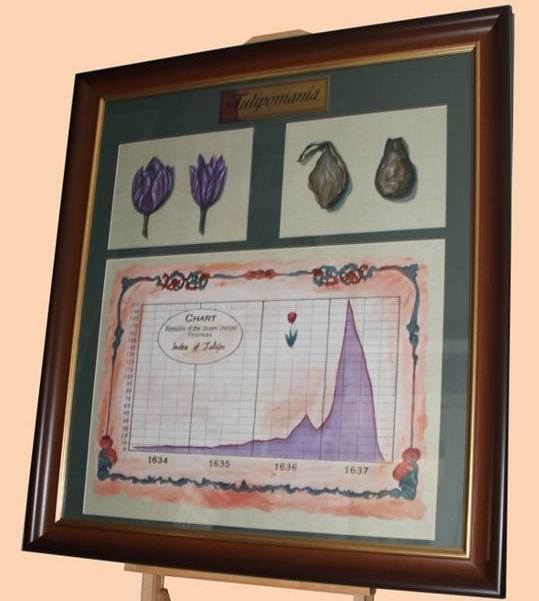
Bubble’s go back a long time, even centuries and while we are weary of each investment that crashes we rarely learn enough to avoid the next one. From my personal collection is one of my favourite prints called Gekko’s Tulip Mania which you may have seen in the movie Wall Street 2. I have it hanging on my office wall as a constant reminder! You can read more on this bubble at Wikipedia – Tulip Mania

 “This is the greatest bubble story of all time… they call it the Tulip Mania.” - Gordon Gekko

“This is the greatest bubble story of all time… they call it the Tulip Mania.”
– Gordon Gekko

For those looking for a truly Australian history of bubbles I would recommend reading a 2003 paper by the John Simon and published by the RBA available free online called Three Australian Asset-price Bubbles

Are you looking for an advisor that will keep you up to date and provide guidance and tips like in this blog? then why now contact me at our Castle Hill or Windsor office in Northwest Sydney to arrange a one on one consultation. Just click the Schedule Now button up on the left to find the appointment options.

Liam Shorte B.Bus SSA™ AFP

Financial Planner & SMSF Specialist Advisor™

SMSF Specialist Adviser 

 Follow SMSFCoach on Twitter Liam Shorte on Linkedin NextGen Wealth on Facebook   

Verante Financial Planning

Tel: 02 98941844, Mobile: 0413 936 299

PO Box 6002 BHBC, Baulkham Hills NSW 2153

5/15 Terminus St. Castle Hill NSW 2154

Corporate Authorised Representative of Viridian Select Pty Ltd ABN 41 621 447 345, AFSL 51572

This information has been prepared without taking account of your objectives, financial situation or needs. Because of this you should, before acting on this information, consider its appropriateness, having regard to your objectives, financial situation and needs. This website provides an overview or summary only and it should not be considered a comprehensive statement on any matter or relied upon as such.

How long will my superannuation last?


Generally the first question most prospective clients ask when discussing their future retirement is: “How long will my super last?” People naturally want to be confident that their income streams and investment portfolios will provide adequate income for their life expectancy. Broken Piggy Bank

For individuals planning their retirement, lifestyle should be considered in the long-term wealth creation process. The sum of money that retirees accumulate during their working lives will drive their total retirement income and therefore influence their lifestyle choices. Once in retirement it becomes more unlikely that individuals will be able to ‘top up’ their capital base.

Changes in medicine have ensured that life expectancies are longer and all the evidence suggests that this trend will continue. The proposition that some of us will outlive our savings is not at all unrealistic. While there are many uncertainties associated with retirement, it is possible to draw some broad rules of thumb in terms of how long retirement savings will last.

The following table shows the life expectancy rates for men and women between the ages of 55 and 70 years.

Table 1 – Life Expectancy Rates

Age Male Female Age Male Female
55 26.95 30.53 63 20.14 23.35
56 26.08 29.61 64 19.34 22.48
57 25.20 28.70 65 18.54 21.62
58 24.34 27.79 66 17.76 20.76
59 23.48 26.89 67 16.99 19.92
60 22.63 26.00 68 16.24 19.08
61 21.79 25.11 69 15.49 18.24
62 20.96 24.23 70 14.76 17.42

Source. Australian Life Tables 2005-07

The table below illustrates, for any particular amount of retirement savings, how long this amount will last assuming a constant annual drawdown amount (left hand axis) and a constant annual effective earning rate net of taxes and fees (top axis). 

Table 2 – How long before my savings run out ?

Effective Earning Rate % 1 2 3 4 5 6 7 8
Drawdown %
5% 22.43 25.80 31.00 41.04
6% 18.32 20.48 23.45 28.01 36.72
7% 15.49 16.99 18.93 21.60 25.68 33.40
8% 13.42 14.53 15.90 17.67 20.10 23.79 30.73
9% 11.84 12.69 13.72 14.99 16.62 18.85 22.23 28.55
10% 10.59 11.27 12.07 13.02 14.21 15.73 17.79 20.91
11% 9.58 10.13 10.77 11.52 12.42 13.53 14.95 16.88
12% 8.74 9.21 9.73 10.34 11.05 11.90 12.94 14.27
13% 8.04 8.44 8.88 9.38 9.95 10.62 11.43 12.42
14% 7.45 7.78 8.16 8.58 9.06 9.60 10.24 11.01
15% 6.93 7.23 7.55 7.91 8.31 8.77 9.29 9.90
16% 6.49 6.74 7.02 7.33 7.68 8.07 8.50 9.01
17% 6.09 6.32 6.57 6.84 7.14 7.47 7.84 8.26
18% 5.74 5.95 6.17 6.41 6.67 6.96 7.28 7.64
19% 5.43 5.62 5.81 6.03 6.26 6.51 6.79 7.10
20% 5.15 5.32 5.50 5.69 5.90 6.12 6.37 6.64

For example, let’s assume that James has an accumulated retirement amount of $200,000 in his SMSF when he retires at age 65. If he starts withdrawing 10% ($20,000) per year, assuming his withdrawals remain constant and he earns 4% (effective) constantly on his money, he will run out of money early in the 13th year. Even if James earns 6%, the money will be fully depleted during the 15th year.

This means that a 65 year male who has a life expectancy of 18.54 years (refer to Table 1), will require an effective earning rate of at least 6.51% percent to have sufficient funds for his life expectancy.

The above table does not take into account price inflation nor does it take into account indexation of annual drawdown amounts. If price inflation and indexation of drawdowns are included, the money runs out even faster.

If we return to James and assume that instead of $200,000 he has $400,000 and his lifestyle can be accommodated by a constant drawdown of 5%, which equates with $20,000, the table indicates that even at very low earning rates, James will have enough money to last as long as his life expectancy even if he increases the constant draw down amount to 6% or even 7% (assuming an earnings rate of at least 3% in that case).

Clearly, having more money to start with is the desirable retirement strategy.

How does asset allocation affect things?

The above analysis assumes effective earning rates ranging from 1% – 8%. This does not address the returns associated with different asset allocations and the different marginal tax rates that apply for individuals. Instead of saying that over your retirement period you would hope for a return of 5% – 6% per annum, one could also ask what particular asset allocation which will determine an earnings rate. This asset allocation will also reflect the retiree’s tolerance for risk.

However, even if this approach is adopted there will still be occasions when an investment mix may not be able to satisfy a retiree’s expectation of income for their life expectancy (and beyond). For instance, it may be that even if all investments were in growth assets the expected rate of return may not be sufficient to provide the desired income for the person’s life expectancy, notwithstanding the level of risk that would have been assumed. It is also important to remember that the life expectancy is an average for a group of people – there is a significant chance that a particular person will outlive their life expectancy. For instance for a 60 year old male it is nearly 51%.

Once again, the moral of the story is the more money you start with, the more likely you will be able to fund your retirement throughout your life expectancy.

The above information is, of course, general in nature and demonstrates the need to seek specific retirement planning advice in order to comprehensively address issues of risk and return.

Notes on using Table 2

Because the table values are independent of the initial investment it is necessary to work out what gross level of income would meet lifestyle needs. Thus if someone has $400,000 and can live on a constant amount of $20,000, they need only draw down at the 5% rate. If their income needs were higher they would need to use a higher drawdown rate.

The values reflect all fees and taxes so that by choosing an appropriate rate of earnings it is possible to model both taxed and tax-exempt income streams (the latter would have a higher effective earning rate).

A drawdown rate of 4% effectively equates to the minimum annual payment from an account-based pension at age 65. A drawdown rate of 9% equates with the minimum annual payment from an account-based pension at age 85.

If you want to know current thinking on the amount needed then read by earlier article How much do I need to live comfortably in retirement?

Feel you are falling behind? Then read 10 Tips For Salvaging Your Retirement Plans and then contact me for personal advice.

Are you looking for an advisor that will keep you up to date and provide guidance and tips like in this blog? then why now contact me at our Castle Hill or Windsor office in Northwest Sydney to arrange a one on one consultation. Just click the Schedule Now button up on the left to find the appointment options.

Liam Shorte B.Bus SSA™ AFP

Financial Planner & SMSF Specialist Advisor™

SMSF Specialist Adviser 

 Follow SMSFCoach on Twitter Liam Shorte on Linkedin NextGen Wealth on Facebook   

Verante Financial Planning

Tel: 02 98941844, Mobile: 0413 936 299

PO Box 6002 BHBC, Baulkham Hills NSW 2153

5/15 Terminus St. Castle Hill NSW 2154

Corporate Authorised Representative of Viridian Select Pty Ltd ABN 41 621 447 345, AFSL 51572

This information has been prepared without taking account of your objectives, financial situation or needs. Because of this you should, before acting on this information, consider its appropriateness, having regard to your objectives, financial situation and needs. This website provides an overview or summary only and it should not be considered a comprehensive statement on any matter or relied upon as such.

Image courtesy of patpitchaya at FreeDigitalPhotos.net

Medibank Private Allocations at a Glance – How Much Do I Get?


Medibankl

The full pricing and allocation details for Australian public applicants has been indicated in a Government Press Release.  Applicants will be able to get confirmation of their individual allocation from Tuesday, 25 November 2014 by visiting medibankprivateshareoffer.com.au  or calling 1800 998 778.  Applicants will need to have their Application Reference Number available.

Transaction confirmation statements will be sent to successful applicants from Thursday, 4 December 2014.

The Government has also exercised its right to claw back a further 20 per cent of the shares previously allocated to the Broker Firm Offer which will no doubt annoy the Broking community even further after a huge scale back in their offer.  I cannot help feel there will be a huge amount of shareholders with mediocre holdings and headaches for their accountants and advisers trying to track  applications, allocations, scale backs and refunds of excess funds.

Medibank Private will list on the ASX at 12.00pm AEDT on Tuesday, 25 November 2014.  Its ASX code will be MPL.

Final price per share paid by institutional investors $2.15
Discount per share on final insto price for retail investors 15 cents or 7%
Final price per share paid by retail investors1 $2.00
Proceeds
Total proceeds returned to Commonwealth $5.679B
Allocation of shares as a % of total shares
Retail allocation 60.0%
Total institutional allocation 40.0%
Domestic institutional allocation 22.9%
Offshore institutional allocation 17.1%
Details of Retail Offer
Total number of individual Applications Approx. 440,000
Dollar amount allocated to Retail Offer $3.311 billion
Average shareholding for Retail Offer Approx. $5,850
Policyholder Applicants’ allocation2 33.2%
General Public Applicants’ allocation2 66.7%


Medibank Private Share Offer – How Much Will You Get

General Public Offer

Applicants who applied under the General Public Offer have received allocations as follows:

General Public Offer Applicants who did not pre-register who applied for Receive*
$2,000 The full amount you have applied for
$2,001 to $7,000 $2,000 + 75.00% of your Application within this band
$7,001 to $14,000 $5,750 + 20.00% of your Application within this band
Over $14,000 $7,150 + 5.00% of your Application within this band
General Public Offer Applicants who pre-registered who applied for Receive*
$2,000 to $2,300 The full amount you have applied for
$2,301 to $7,000 $2,300 + 86.25% of your Application within this band
$7,001 to $14,000 $6,353.75 + 23.00% of your Application within this band
Over $14,000 $7,963.75 + 5.75% of your Application within this band

Policyholder Offer

Applicants who applied under the Policyholder Offer have received allocations as follows:

Policyholder Offer Applicants who did not pre-register who applied for Receive*
$2,000 to $2,300 The full amount you have applied for
$2,301 to $7,000 $2,300 + 86.25% of your Application within this band
$7,001 to $14,000 $6,353.75  + 23.00% of your Application within this band
Over $14,000 $7,963.75 + 5.75% of your Application within this band
Policyholder Offer Applicants who pre-registered who applied for Receive*
$2,000 to $2,600 The full amount you have applied for
$2,601 to $7,000 $2,600 + 97.50% of your Application within this band
$7,001 to $14,000 $6,890 + 26.00% of your Application within this band
Over $14,000 $8,710 + 6.50% of your Application within this band

For example, a General Public Offer Applicant who did not pre-register who applied for $10,000 will receive:

Application band Receive*
$2,000 $2,000 (100% of $2,000)
$2,001 to $7,000 $3,750 (75% of $5,000)
$7,001 to $14,000 $600 (20% of $3,000)
Over $14,000 n/a
Total $6,350

* The final allocation of Shares will be subject to rounding and application of the Final Price to any allocation above $250,000.

Are you looking for an advisor that will keep you up to date and provide guidance and tips like in this blog? then why now contact me at our Castle Hill or Windsor office in Northwest Sydney to arrange a one on one consultation. Just click the Schedule Now button up on the left to find the appointment options.

Liam Shorte B.Bus SSA™ AFP

Financial Planner & SMSF Specialist Advisor™

SMSF Specialist Adviser 

 Follow SMSFCoach on Twitter Liam Shorte on Linkedin NextGen Wealth on Facebook   

Verante Financial Planning

Tel: 02 98941844, Mobile: 0413 936 299

PO Box 6002 BHBC, Baulkham Hills NSW 2153

5/15 Terminus St. Castle Hill NSW 2154

Corporate Authorised Representative of Viridian Select Pty Ltd ABN 41 621 447 345, AFSL 51572

This information has been prepared without taking account of your objectives, financial situation or needs. Because of this you should, before acting on this information, consider its appropriateness, having regard to your objectives, financial situation and needs. This website provides an overview or summary only and it should not be considered a comprehensive statement on any matter or relied upon as such.

SMSF Coach Blog Helps Take Out Top Social Media Influencer in Finance Award


Totally surprised and humbled to have taken out this award as key influencer in the Social Media space in what was a great competition among some of the best and most innovative financial services professionals in the country.

Liam Shorte aka @SMSFcoach winner of Scholar of the Year top in the Social Media Influence Leadership + Excellence Scholarship Award (SMILEYS)

IMG_1327.JPG

Congratulations also to Sam Henderson and Kimberly Middlemis

IMG_1328.JPG

SMSF Using an Unrelated Unit Trust for Property Development


Following on from my previous article How a SMSF can Purchase a Property with a Related Party – Using a 13.22c Trust , another strategy for those wishing to engage in property development with their SMSF involvement is for the fund trustee to invest in a unit trust that holds the development land / existing property by subscribing for units in the unit trust with partners so that no related entity group owns more than 50% of the units in the trust.

Propert Development

Where the fund trustee invests in an unrelated trust the trustee for the unit trust is not required to comply with the requirements of regulation 13.22C of the SIS Regulations. This means that the trustee for the unit trust can borrow to fund the land development without the fund trustee breaching the in-house asset rules in s71 of the SIS Act.

To make it very clear the unit trust will be unrelated if the fund trustee and its associates do not:

  • exercise Sufficient Influence; or
  • have a fixed entitlement to more than 50% of the income and capital of the unit trust; or
  • have the power to remove or appoint the trustee for the unit trust.

So each SMSF or related group of investors can own exactly 50% in combination between them and still maintain an unrelated trust and meet the above requirements.

Keep it simple as it  is important that the units in the unit trust carry equal rights to income and capital so that you do not also trigger the non arm’s length income provisions under s295-550 of the Income Tax Assessment Act 1997 (1997 Act).

The diagram below shows 2 unrelated Self Managed Superannuation Funds investing in a unit trust equally (50/50) to carry out a property development. One of the SMSFs uses as related party loan to fund their purchase of the units. Remember it is only the units that are offered as security not the property in the trust.

Unrelated Unit Trust

Each SMSF contributes $350,000 and the property is developed for a total cost of $700,000 and sold for $1m. The$300,000 profit flow back through the Unit Trust to the unit holders equally.

Sufficient Influence

Where two unrelated SMSFs each hold 50% of the units in the unit trust, it is important that the trust management decisions are decided on a 50/50 basis. It should be very clear from documentation and minutes of the trust that decisions are made jointly.

How to avoid distributions to the SMSF being treated as non-arm’s length income?

Where the SMSF invests by way of a unit trust structure, any income received by the fund trustee may be treated as non arm’s length income and taxed at 47% under s295-550(5) of the Income Tax Assessment Act 1997 (1997 Act), where:

  • the parties are not dealing at arm’s length terms; and
  • the fund trustee receives an amount it would not otherwise have received if the parties were dealing on arm’s length terms.

Similarly, income the SMSF derives as a beneficiary of the trust, other than because of a fixed entitlement to income, will be treated as non arm’s length income and taxed at 47%.

Therefore, it is important to ensure that the unit trust is a fixed trust, meaning that the entitlement of unit holders to receive income and/or capital from the unit trust is fixed and indefeasible. However, even with a fixed trust it is necessary for the income to be no more than the income that would have been derived if the parties were dealing with each other at arms-length (s295-550(5)).

Managing powers of trustee appointment or removal

Again to avoid falling foul of the legislation, the constitution of the trustee company of the unit trust should be designed to ensure that the SMSF trustee and/or its associates do not have the power to control the trustee by effectively having the power to appoint and remove the trustee for the unit trust by reason that they hold a majority of the shares in the trustee. One trap is a constitution that allows the chairperson to have a casting vote where the chairperson is a SMSF Trustee or representative of the SMSF trustee.

Documentation

When the transaction is structured by way of an unrelated unit trust arrangement, the following documents should be prepared by an experienced legal expert (not off the shelf):

  • purpose specific unit trust deed and accompanying minutes of meeting; and
  • unit holders’ agreement all ensuring none of the requirements breached..

Gradual acquisitions of more units by the SMSF

Where a fund trustee invests in an unrelated unit trust the fund trustee may acquire the units held by the other party over time, subject to complying with the provisions of the SIS Act and keeping their related entity group to less than 50% of the overall trust units.  Keep in mind that where the unit trust is land rich, there may be a corresponding stamp duty liability and there may be capital gains tax implications for the initial owner as well as valuation fees at each transaction date.

Remember the Sole Purpose Test

In the zest for undertaking any strategy I always remind clients about the reason for undertaking any investment. Your aim should be to provide for a better retirement. If that is not the core purpose then you are breaching the sole purpose test and should reconsider the whole strategy. Also you must review or amend your fund’s investment strategy to ensure this investment falsl within it’s guidelines..

Important information (emphasised for use of this material):

The information in this article is provided for illustrative purposes only and does not take into consideration your personal circumstances. You are encouraged to seek financial, tax and legal advice suitable to your circumstances to avoid a decision that is not appropriate. Any reference to your actual circumstances is coincidental. Magnitude, Verante and its representatives receive fees from the provision of financial advice.

Are you looking for an advisor that will keep you up to date and provide guidance and tips like in this blog? then why now contact me at our Castle Hill or Windsor office in Northwest Sydney to arrange a one on one consultation. Just click the Schedule Now button up on the left to find the appointment options.

Liam Shorte B.Bus SSA™ AFP

Financial Planner & SMSF Specialist Advisor™

SMSF Specialist Adviser 

 Follow SMSFCoach on Twitter Liam Shorte on Linkedin NextGen Wealth on Facebook   

Verante Financial Planning

Tel: 02 98941844, Mobile: 0413 936 299

PO Box 6002 BHBC, Baulkham Hills NSW 2153

5/15 Terminus St. Castle Hill NSW 2154

Corporate Authorised Representative of Magnitude Group Pty Ltd ABN 54 086 266 202, AFSL 221557

This information has been prepared without taking account of your objectives, financial situation or needs. Because of this you should, before acting on this information, consider its appropriateness, having regard to your objectives, financial situation and needs. This website provides an overview or summary only and it should not be considered a comprehensive statement on any matter or relied upon as such.

Image courtesy of hywards at FreeDigitalPhotos.net