OK so here we are with only a few weeks left to the end of the financial year to get our SMSF in order and ensure we are making the most of the strategies available to us. Here is a check-list of the most important issues that you should address with your advisers before the year-end. But before we start, one warning:
Be careful not to allow your accountant, administrator or financial planner to reset any pension that has been grandfathered under the new pension deeming rules that came in on Jan 1st 2015 without getting advice on the current and possible future consequences at the current and higher deeming rates.
1. It’s all about timing!
First thing to note is that June 30th falls on a Tuesday this year so be very careful about doing anything for your fund after the 26th as funds transferred from Friday the 26th risk not reaching the destination account before the deadline. Remember it is when the funds are received by the Superannuation fund that counts.
2. Review Your Concessional Contributions – 30K under 49 and $35K if you were 49-64 this year and then work test applies for 65+.
Maximise contributions up to concessional contribution cap but do not exceed your Concession Limit. The sting has been taken out of Excess contributions tax but you don’t need additional paperwork to sort out the problem. So check employer contributions on normal pay and bonuses, salary sacrifice and premiums for insurance in super as they may all be included in the limit.
3. Review your Non-Concessional Contributions
Have you considered making non-concessional contributions to move investments in to super and out of your personal, company or trust name. Maybe you have proceeds from and inheritance or sale of a property sitting in cash. As shares and cash have increased in value you may find that personal tax provisions are increasing and moving some assets to super may help control your tax bill. Are you nearing 65? then consider your contribution timing strategy to take advantage of the “bring forward” provisions before turning age 65 to contribute up to $540,000 this year or $180K this year and up to $540,000 next year before you turn 65.
4. Co-Contribution
Check your eligibility for the co-contribution and if you are eligible take advantage. Note that the rules have changed and it is not as attractive as previously but it is free money – grab it if you are eligible.
To calculate the super co-contribution you could be eligible to receive based on your income and personal super contributions, use the Super co-contribution calculator.
5. Spouse Contribution
If your spouse has assessable income plus reportable fringe benefits totaling less than $13,800 then consider making a spouse contribution. Check out the ATO guidance here
6. Over 65? Do you meet the work test? (The 40 hours in any 30 days rule)
You should review your ability to make contributions as if you if you have reached age 65 you must pass the work test of 40 hours in any 30 day period during the financial year, in order to continue to make contributions to super. Check out ATO superannuation contribution guidance
7. Check any payments you may have made on behalf of the fund.
It is important that you check for amounts that may form a superannuation contribution in accordance with TR 2010/1 (ask your advisor), such as expenses paid for on behalf of the fund, debt forgiveness or in-specie contributions, insurance premiums for cover via super paid from outside the fund.
8. Notice of intent to claim a deduction for contributions
If you are planning on claiming a tax deduction for personal concessional contributions you must have a valid ‘notice of intent to claim or vary a deduction’ (NAT 71121). If you intend to start a pension this notice must be made before you commence the pension. Many like to start pension in June and avoid having to take a minimum pension but make sure you have claimed your tax deduction first.
9. Contributions Splitting
Consider splitting contributions with your spouse, especially if:
• your family has one main income earner with a substantially higher balance or
• if there is a n age difference where you can get funds into pension phase earlier or
• If you can improve your eligibility for concession cards or pension by retaining funds in superannuation in younger spouse’s name.
This is a simple no-cost strategy I recommend everyone look at especially with the Government moving on taxing higher balance accounts. See my blog about this strategy here.
10. Off Market Share Transfers (selling shares from your own name to your fund)
If you want to move any personal shareholdings into super you should act early. Here is the Standard Form for Computershare and here is the Link Market Services Form
11. Pension Payments
If you are in pension phase, ensure the minimum pension has been taken. For transition to retirement pensions, ensure you have not taken more than 10% of your opening account balance this financial year.
The minimum payment amounts have been by 25% for the 2012-13 years. The following table shows the minimum percentage factor (indicative only) for each age group.
Age Minimum % withdrawal (in all other cases)
Under 65 4%
65-74 5%
75-79 6%
80-84 7%
85-89 9%
90-94 11%
95 or more 14%
Sacrificial Lamb
Think about having a sacrificial lamb, a second lower value pension that can sacrificed if minimum not taken. In this way if you pay only a small amount less than the minimum you only have to lose the smaller pensions concession rather than the concession on your full balance. When combined with the ATO relief discussed in the following article “What-happens-if-i-don’t-take-the-minimum-pension” you will have a buffer for mistakes.
Before reading the following:Be careful not to reset a pension that has been grandfathered under the new deeming of pension rules that came in on Jan 1st 2015 without getting advice.
12. Reversionary Pension is often the preferred option to pass funds to a spouse or dependent child.
You should review your pension documentation and check if you have nominated a reversionary pension. If not, consider your family situation and options to have a reversionary pension. This is especially important with blended families and children from previous marriages that may contest your current spouse’s rights to your assets. Also consider reversionary pensions for dependent disabled children
13. Review Capital Gains Tax Position of each investment
Review any capital gains made during the year and over the term you have held the asset and consider disposing of investments with unrealised losses to offset the gains made. If in pension phase then consider triggering some capital gains regularly to avoid building up an unrealised gain that may be at risk to government changes in legislation like those proposed this year. Remember if you plan to sell an asset for the next 2 years the Temporary Budget Repair Levy may mean 2% extra tax
14. Review and Update the Investment Strategy not forgetting to include Insurance of Members
Review your investment strategy and ensure all investments have been made in accordance with it, and the SMSF trust deed. Also, make sure your investment strategy has been updated to include consideration of insurances for members. See my article of this subject here. Don’t know what to do…..call us.
15. Collate and Document records of all asset movements and decisions
Ensure all the funds activities have been appropriately documented with minutes, and that all copies of all statements and schedules are on file for your accountant/administrator and auditor.
16. Double Dipping! June Contributions Deductible this year but can be allocated across 2 years.
For those who may have a large taxable income this year (large bonus or property sale) and are expecting a lower taxable next year you should consider a contribution allocation strategy to maximise deductions for the current financial year. This strategy is also known as a “Contributions Reserving” strategy but the ATO are not fans of Reserves so best to avoid that wording!
17. Market Valuations – Now required annually
Regulations now require assets to be valued at market value each year, ensure that you have re-valued assets such as property and collectibles. Here is my article on valuations of SMSF investments in Private Trusts and Private Companies. For more information refer to ATO’s publication Valuation guidelines for SMSFs.
18. In-House Assets
If your fund has any investments in in-house assets you must make sure that at all times the market value of these investments is less than 5% of the value of the fund. Do not take this rule lightly as the new SMSF penalty powers will make it easier for the ATO to apply administrative penalties (fines) for smaller misdemeanors ranging from $820 to $10,200 per breach.
19. TPD Insurance (Total Permanent Disability – basically “never work again” insurance)
Have you reviewed your insurances inside and outside of super? Check your TPD policies owned by the fund for own occupation definition as the rules about deductibility for these policies have changed. Here is a link to a good guide about this subject from Money Management
20. Do you need to update to a Corporate Trustee
We recommend a corporate trustee to all clients. To understand why please read this article on Why SMSFs should have a Corporate Trustee
21. Check the ownership details of all SMSF Investments
Make sure the assets of the fund are held in the name of the trustees on behalf of the fund and that means all of them. Check carefully any online accounts you may have set up without checking the exact ownership details. You have to ensure all SMSF assets are kept separate from your other assets.
22. Review Estate Planning and Loss of Mental Capacity Strategies.
Review any Binding Death Benefit Nominations (BDBN) to ensure they are valid (check the wording matches that required by the Trust Deed) and still in accordance with your wishes. Also ensure you have appropriate Enduring Power of Attorney’s (EPOA) in place allow someone to step in to your place as Trustee in the event of illness, mental incapacity or death. Do you know what your Deed says on the subject? Did you know you cannot leave money to Step-Children via a BDBN if their birth-parent has pre-deceased you?
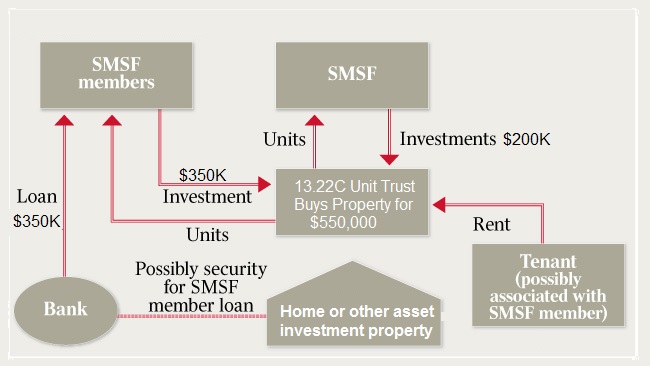
23. Review any SMSF Loans
Have you provided special terms (low or no interest rates , capitalisation of interest etc.) on a related party loan? Then you need to review your loan agreement and get advice to see if you need to amend your loan. Have you made all the payments on your internal or third-party loans, have you looked at options on prepaying interest or fixing the rates while low. Have you made sure all payments in regards to Limited Recourse Borrowing Arrangements (LRBA) for the year were made through the SMSF Trustee? If you bought a property using borrowing, has the Holding Trust been stamped by your state’s Office of State Revenue.
Don’t leave it until June, review your Self Managed Super Fund now and seek advice if in doubt about any matter.
Are you looking for an advisor that will keep you up to date and provide guidance and tips like in this blog? then why now contact me at our Castle Hill or Windsor office in Northwest Sydney to arrange a one on one consultation. Just click the Schedule Now button up on the left to find the appointment options.
Happy EOFYS!
Liam Shorte B.Bus SSA™ AFP
Financial Planner & SMSF Specialist Advisor™



Tel: 02 98941844, Mobile: 0413 936 299
PO Box 6002 BHBC, Baulkham Hills NSW 2153
5/15 Terminus St. Castle Hill NSW 2154
Corporate Authorised Representative of Viridian Select Pty Ltd ABN 41 621 447 345, AFSL 51572
This information has been prepared without taking account of your objectives, financial situation or needs. Because of this you should, before acting on this information, consider its appropriateness, having regard to your objectives, financial situation and needs. This website provides an overview or summary only and it should not be considered a comprehensive statement on any matter or relied upon as such.



































 The SMSF Coach