I am always on the lookout for good Australian educational content for new SMSF trustees and I know many people enjoy content delivered in short videos. Today we have another guest post but one with a difference.
Owen Raszkiewicz from Rask Finance has a passion for delivering free educational content and has just completed his 15 part video course which is an introduction to investing in shares, managed funds and ETFs. The course is suitable for those starting out and a good refresher for experienced investors trying to explain concepts to other trustees. He has kindly agreed to me providing these 15 1-2 minute bite size videos here on my blog for you.
So off we go:
And finally for those looking at investing in direct shares overseas
I hope this course has been helpful and please scroll down to comment and make sure to visit Owen’s webpage Rask Finance for more educational content or follow him on twitter @OwenRask .
Feedback always appreciated. Please reblog, retweet, like on Facebook etc to make sure we get this educational material out there. As always please contact me if you want to look at your own planning needs or an SMSF review. We have offices in Castle Hill and Windsor but can meet clients anywhere in Sydney or via Skype. Just click the Schedule Now button up on the left to find the appointment options.
Liam Shorte B.Bus SSA™ AFP
Financial Planner & SMSF Specialist Advisor™
Tel: 02 98941844, Mobile: 0413 936 299
PO Box 6002 BHBC, Baulkham Hills NSW 2153
5/15 Terminus St. Castle Hill NSW 2154
Corporate Authorised Representative of Viridian Select Pty Ltd ABN 41 621 447 345, AFSL 51572
This information has been prepared without taking account of your objectives, financial situation or needs. Because of this you should, before acting on this information, consider its appropriateness, having regard to your objectives, financial situation and needs. This website provides an overview or summary only and it should not be considered a comprehensive statement on any matter or relied upon as such.
Not only do SMSF members need to have an up-to-date will but everyone who is a member of an SMSF needs to also put into place an enduring power of attorney.
The Australian Law Reform Commission’s (ALRC) recommendations in its final report titled “Elder Abuse – A National Legal Response” are positive steps towards helping mitigate the risks that could face ageing self-managed super fund (SMSF) members.
It involves changes to the superannuation laws to ensure that trustees consider planning for the loss of capacity of an SMSF member and estate planning as part of a fund’s investment strategy, and for the ATO to be told when an individual becomes a trustee of an SMSF because of an enduring power of attorney (EPOA).
TRUSTING SOMEONE TO DEAL WITH YOUR FINANCIAL MATTERS IF YOU CAN’T
An enduring power of attorney (EPOA) deals with your finances if you lose capacity or are unable to attend to financial matters personally and/or as a trustee of your SMSF. Your attorney is able to deal with your assets in the same way that you deal with them (subject to any directions or limitations and being appointed as a director of the SMSF Corporate Trustee). This includes signing tax returns and financial statements of the fund, buying and selling real estate or shares, accessing bank accounts and spending money on behalf of yourself personally and on your behalf as trustee of your SMSF.
For an EPOA to take your place as Trustee you must resign and they are appointed in your place. They cannot manage affairs of the SMSF using the EPOA alone, they must be made a trustee or a trustee director.
This is because if a member loses their mental capacity, perhaps through having a stroke or suffering onset of dementia, they will no longer be able to be a trustee of their fund, or a director of the corporate trustee, putting at risk the complying status of the fund.
Another occasion may be if a member departs overseas indefinitely. In this case their enduring attorney in Australia can become the trustee or director of the trustee in their place to avoid fund residency issues under subsection 295-95(2) of the Income Tax Assessment Act 1997.
Scenario we handled: Judith’s father was in the UK and had a fall. She flew back to check he was ok but found it was worse than expected and that he would need multiple surgeries and rehab over a protracted period and she would need to be there most of the time to manage the process and care for him. Her son, James, was her EPOA so she resigned as Director of the Trustee Company and James used the Enduring Power of Attorney to allow him to be appointed as director with her 2nd husband for the 3 year period she was away.
If you do not address the situation within the six-month period of grace allowed under section s17A(4) of the Superannuation Industry (Supervision) Act 1993 (SISA), the consequences for the fund and your retirement savings could be very serious indeed and attract severe penalties.
Unlike a general power of attorney, an EPOA continues to operate in the event that you lose capacity.
WHY SHOULD YOU HAVE A TRUSTED ENDURING POWER OF ATTORNEY?
It is important to have an EPOA in place for each fund member because without it, in the event that you lose capacity, your next of kin would have to make an application to the NSW Civil and Administrative Tribunal (or relevant government body in your state) to obtain a financial management order to deal with your assets. This lengthy (often more than the 6 month grace period allowed under the SIS Act) and costly process can be avoided if you have the foresight to establish your EPOA in advance. It can also lead to major friction in the family and especially with blended families and outcomes you did not expect or wish for under any circumstances!
EPOA SHOULD BE SOMEONE YOU TRUST AND CONSIDER APPOINTING SUBSTITUTE ATTORNEYS
We recommend that you seek legal advice and arrange for an EPOA to be prepared covering your personal finances and SMSF role. You may like to appoint your spouse, adult child, accountant, lawyer, business partner or close friend as your attorney in the first instance. Our legal advisers also suggest appointing substitute attorneys in case your primary attorney is unwilling or unable to act. We had one case where father had dementia but son who was EPOA was on secondment to PNG so could not take up the power of attorney
Your nominated attorney should be someone whom you trust and believe would make decisions in your best interests. I often recommend that you leave written details of your preferences for dealing with asset sales, buy backs, dividend reinvestment plans, term deposit maturities, minimum pensions and add clear instructions if they should work with trusted advisers like Financial planners, accountants and auditors before making major decisions.
You should of course consider having reversionary pensions or non-lapsing binding death nominations to ensure as much as possible that your wishes are carried out.
So when next reviewing your wills and powers of attorney just ask your solicitor if they are confident that the EPOA would also cover Superannuation matters or if that should be specifically mentioned.
I hope this guidance has been helpful and please take the time to comment. Feedback always appreciated. Please reblog, retweet, like on Facebook etc to make sure we get the news out there. As always please contact me if you want to look at your own options. We have offices in Castle Hill and Windsor but can meet clients anywhere in Sydney or via Skype. Just click the Schedule Now button up on the left to find the appointment options.
Liam Shorte B.Bus SSA™ AFP
Financial Planner & SMSF Specialist Advisor™
Tel: 02 98941844, Mobile: 0413 936 299
PO Box 6002 BHBC, Baulkham Hills NSW 2153
5/15 Terminus St. Castle Hill NSW 2154
Corporate Authorised Representative of Viridian Select Pty Ltd ABN 41 621 447 345, AFSL 51572
This information has been prepared without taking account of your objectives, financial situation or needs. Because of this you should, before acting on this information, consider its appropriateness, having regard to your objectives, financial situation and needs. This website provides an overview or summary only and it should not be considered a comprehensive statement on any matter or relied upon as such.
What seems like a worthwhile SMSF reporting requirement to help trustees that is being introduced from next year has potential to push local accountants out of the SMSF administration sector and play into the hands of major administrators.
In order to help administer the new transfer balance cap reporting, the Australian Taxation Office (ATO) is in the process of developing a self managed superannuation fund (SMSF) event based reporting regime. This new regime is likely to be in the form of a report to be called the Transfer Balance Account Report or TBAR. (Don’t you love another 4 letter acronym).
At this stage nothing has been finalised but the TBAR reporting regime is expected to be as follows:
Where the event is a pension being commuted (ie stopped) in part or in full or a rollover occurs – that must be reported to the ATO with 10 business days after the end of the month that the event occurs.
Where the event is the commencement of a pension – that must be reported within 28 days of the end of the quarter that the event occurs.
Transition Period
The ATO is also expected to introduce a transition period for events that occur in the first part of the 2018 year (ie from 1 July 2017):
Where the event is the commencement or commutation of a pension, that event does not need to be reported until the SMSF is due to lodge its 2017 tax return (typically before May 2018)
However, all events that occur after that date have to be reported in the normal manner (ie monthly or quarterly)
The transition period will not apply to some events – such as rollovers
For many accounting practitioners, and SMSF trustees, this will be a fundamental change in how they manage the administer of their SMSFs. Where an SMSF trustee needs to commence, or commute a pension they can no longer see their accountant / administrator once a year. They will have to see their administrator before, or soon after, an event occurs. While accountants may have to prepare “real time” accounts so that they can lodge such reports. They will find it hard to pass on the additional costs to trustees and many will just not be able to cope with regular reporting.
Timing Problem
It is unlikely that many, if any, existing SMSFs administered by suburban accountants are capable of reporting on a monthly basis. For example, just a simple end of year reconsolidation of accumulation and pensions will now be reportable by the 10th August each year but many tax reports from investment managers, AREITS and platforms don’t come out until after this date. We presently minute the request on 1 July but finalise implementing on receipt of financials later in the year.
Don’t panic: Many SMSFs will have no TBAR reporting obligations because they have no pensions or they are not starting any new pensions or commuting any existing pensions.
However, if you are an SMSF trustee that maybe affected by the new Transfer Balance Account Report (TBAR) regime, you should ensure that your accountant / administrator have systems, staffing and processes in place that will enable your fund to comply with this new reporting obligation.
I hope this guidance has been helpful and please take the time to comment. Feedback always appreciated. Please reblog, retweet, like on Facebook etc to make sure we get the news out there. As always please contact me if you want to look at your own options. We have offices in Castle Hill and Windsor but can meet clients anywhere in Sydney or via Skype. Just click the Schedule Now button up on the left to find the appointment options.
Liam Shorte B.Bus SSA™ AFP
Financial Planner & SMSF Specialist Advisor™
Tel: 02 98941844, Mobile: 0413 936 299
PO Box 6002 BHBC, Baulkham Hills NSW 2153
5/15 Terminus St. Castle Hill NSW 2154
Corporate Authorised Representative of Viridian Select Pty Ltd ABN 41 621 447 345, AFSL 51572
This information has been prepared without taking account of your objectives, financial situation or needs. Because of this you should, before acting on this information, consider its appropriateness, having regard to your objectives, financial situation and needs. This website provides an overview or summary only and it should not be considered a comprehensive statement on any matter or relied upon as such.
I found this excellent article on LinkedIn and and re-blogging it here for your guidance.
By now, many of us would be aware, that from 1 July 2017, earnings generated by Transition to Retirement (TtR) pensions are taxed at accumulation rates. Indeed, we are questioning what to do with an existing TtR pension, whether to roll it back to accumulation or maintain it post 30 June 2017?
Estate planning dynamics of Transition to Retirement (TtR) pensions
Through this post, I hope to share with you an estate planning consideration in situations involving TtR pensions, especially in light of typical TtR range clients (preservation age but less than 65) contributing $540,000 before 1 July 2017.
For some clients, this estate planning benefit of TtR pensions could provide sufficient benefits to maintain TtR pensions or deal with new ones in a specific way.
Hopefully, the example can highlight the role of the proportioning rules in ITAA 1997 307-125 at play and its use in estate planning context.
What about TtR clients contributing $540,000 before 30 June 2017 or $300,000 after 1 July 2017?
Julie (56) has an existing accumulation phase balance of $600,000 (all taxable component). A TtR pension on the existing $600,000 balance wasn’t recommended in the first place because:
i. her cashflow is in surplus, not needing the income from a TtR pension to use the concessional contributions cap of $35,000 (in 2016-17)
ii. given the balance is entirely taxable component, the 4% minimum pension payment were surplus to her needs and cost her more in personal income tax (despite the 15% rebate on the pension payments). The rise in personal income tax was more than the benefit of tax-free earnings of a TtR pension
So that’s just setting the scene around current state of play with Julie’s superannuation savings.
With advice, Julie contributes $540,000 to superannuation before 30 June 2017 under the bring-forward provisions (the concept applies equally to TtR range clients contributing $300,000 post 30 June 2017).
Unfortunately, Julie recently became widowed. She has no other SIS dependents other than adult children. She has nominated her financially independent adult children as her beneficiaries under a binding death benefit nomination.
One initial question is where to contribute the $540,000? Into her existing accumulation fund of $600,000 or a separate accumulation account/fund?
Focusing on public offer funds, there is a chain of thought that perhaps Julie might consider contributing the $540,000 non-concessional contribution into a separate super account to the existing one and immediately soon after starting a TtR pension.
The benefit of contributing to a separate retail fund plan / account:
At the heart of the issue, TtR pensions despite not being classed as retirement phase income streams from a tax perspective (and therefore paying accumulation phase tax rate) are still pensions under SIS standards. It is this classification of it being pension under SIS that allows a favourable proportioning rule compared to accumulation phase.
Earnings in accumulation phase are added to the taxable component whereas earnings in pension phase are recorded in the same proportion of tax components as at commencement.
If a pension is commenced with 100% tax-free component, then this pension during its existence will consist of 100% tax-free component, irrespective of earnings and pension payments.
Had the $540,000 contribution added to existing accumulation balance of $600,000, then any pension commencement soon after, will have tax-free component of 47% (540,000 / 1,140,000)
So if Julie contributes to a separate super fund or a separate super account and starts a TtR pension immediately soon after, her $540,000 TtR pension will start with $540,000 tax-free component. If it grows to $600,000 in a year’s time or two, the balance will still be 100% tax-free component.
To flesh out the benefit of proportioning rules, imagine if she passed away in 8 years time. The $540,000 has grown nicely by $100,000 with the TtR pension balance standing at $640,000 (all tax-free component).
Had she left the funds in accumulation, the $100,000 growth would be recorded against the taxable component.
The benefit to her adult children is to the tune of $17,000.
As can be seen, starting a TtR pension means that adult children benefited by an additional $17,000 and shows the differing mechanics of earnings in accumulation and TtR pensions. The larger the growth, the bigger the death benefit tax saving when comparing funds sitting in accumulation or TtR pension phase.
But the TtR pension does come with a downside doesn’t it? While the pension payments are tax-free as the TtR pension consists entirely of non-concessional contributions and therefore tax-free component, there is leakage of 4%, being the minimum pension payment requirement of the TtR. For some clients, this may be a significant hurdle, not wanting leakage from superannuation, as it is getting much harder to make non-concessional contributions. For others, this could be overcome where non-concessional cap space is available (or refreshed once the bring-forward period expires) in their own name or in a spouse’s account.
Going back to Julie, she may be okay with the 4% leakage as her total superannuation balance is well below $1.6 million for the moment. The 4% minimum pension payments are accumulated in her bank account and contributed when the 3 year bring forward period is refreshed on 1 July 2019. On 1 July 2019, assuming her total superannuation balance is less than $1.4 million, she could easily contribute up to $300,000 non-concessional contributions under the bring-forward provisions at that time.
It is this favourable aspect of the superannuation income stream proportioning rules which could offer estate planning benefits for TtR pensions. I have seen the proportioning rules as they apply to TtR pensions mentioned by some but not by many as the focus has been the loss of exempt status on the earnings. As demonstrated by Julie’s example, for some of our clients, when relevant, the proportioning rule may be something to look out for as we look to add value to our client’s situation.
Other estate planning issues around pensions (including TtRs)
1. What if Julie was retired and over 60? Has an existing standard account based pension of $600,000 (all taxable component) with $540,000 non-concessional contribution earmarked to be in pension phase?
Would you have one pension or two separate pensions?
There is a chain of thought that two separate pensions, keeping the 100% tax-free component one separate, allows more planning options with drawdown and may assist with minimising death benefit tax. If Julie’s requirements are more than the minimum level (4%), then stick to minimum from the one that is 100% tax-free component and draw down as much as needed from the one that has the higher proportion in taxable component.
Two separate pensions can dilute the taxable component at the point of death whereas one loses such planning option involving drawdown where a decision is made to consolidate pensions.
2. What if Julie was partnered?
Naturally, there are many variables but the concept of separate pensions and proportioning continues from an estate planning perspective.
The impact of $1.6 million transfer balance cap upon death for some clients may show the attractiveness of separating pensions where possible for tax component reasoning.
Say Julie had $800,000 in one pension (all taxable component) and $700,000 in another pension (all tax-free component). To illustrate the issue simplistically, if the hubby only has a defined benefit pension using up $900,000 of the transfer balance cap, then having maintained separate pensions has meant that he possibly may look to retain the $700,000 (all tax free component) death benefit pension and cash out the $800,000 pension outside super upon Julie’s death.
This way the $700,000 account based pension (and whatever it grows to in the future) could be paid out tax-free to the beneficiaries down the track.
Had Julie’s pensions been merged at the outset, the proportion of components would have been 53% taxable (800,000 / 1.5 million) and 47% tax-free. Her husband would have inherited those components. Any subsequent death benefit upon the hubby’s death passed onto the adult children would have incurred up to 17% tax on 53% of the death benefit.
The example hopefully shows the power of separate pensions in managing estate planning issues.
3. Going back to Julie. What if she was over 60 and under 65, still working and intending to work for the next 6-7 years? Has no funds to contribute to super but has accumulation phase of $600,000
You could consider having a TtR pension simply for taking 10% of account balance out as a pension payment and re-contributing it back as a non-concessional contribution assuming Julie has non-concessional contribution space available.
To ensure the re-contribution strategy dilutes as much of taxable component, there may be a need for separate pensions though. For example:
1. $600,000 TtR pension on 1 July 2017. 10% pension payment ($60,000) taken out closer to the end of FY
2. $60,000 contributed to a separate accumulation interest before in 17-18 and separate TtR pension commenced with $60,000. At this point, Julie has two pensions. One with $60,000 and the other with say $540,000.
3. Next FY in 18-19, 10% taken from both pensions and the amount contributed to a separate accumulation interest and a TtR pension commenced. The smaller TtR pension balance are consolidated (with all tax-free component) and similar process is repeated Julie turns 65 at which time she could do a cash-out and recontribution if she has non-concessional space, including the application of bring-forward provisions.
Slightly different application to SMSFs
While the concepts regarding proportioning of tax components and multiple pension interests remain the same in SMSFs, the steps taken to plan and organise multiple pension interests is different to public offer funds. In public offer funds, it is typically straightforward to establish a separate superannuation account. In SMSF’s, the planning around such things requires further steps.
Relevant to SMSFs, the ATO’s interpretation is that a SMSF can only have one accumulation interest but is permitted to have multiple pension interests.
Here is the ATO link with detail on this concept of single accumulation interest and multiple pension interest for SMSFs.
Conclusion
No doubt, there are many other things to consider with many variables leading to different considerations.
I hope this guidance has been helpful and please take the time to comment. Feedback always appreciated. Please reblog, retweet, like on Facebook etc to make sure we get the news out there. As always please contact me if you want to look at your own options. We have offices in Castle Hill and Windsor but can meet clients anywhere in Sydney or via Skype. Just click the Schedule Now button up on the left to find the appointment options.
Liam Shorte B.Bus SSA™ AFP
Financial Planner & SMSF Specialist Advisor™
Tel: 02 98941844, Mobile: 0413 936 299
PO Box 6002 BHBC, Baulkham Hills NSW 2153
5/15 Terminus St. Castle Hill NSW 2154
Corporate Authorised Representative of Viridian Select Pty Ltd ABN 41 621 447 345, AFSL 51572
This information has been prepared without taking account of your objectives, financial situation or needs. Because of this you should, before acting on this information, consider its appropriateness, having regard to your objectives, financial situation and needs. This website provides an overview or summary only and it should not be considered a comprehensive statement on any matter or relied upon as such.
Thankfully after the reams of changes to superannuation in last years budget that we are still trying to negotiate the through the implementation minefield, the government have left SMSFs and Superannuation largely untouched this year. As the SMSF Association have said “Stability and confidence for superannuation is the good news coming out of the 2017-18 Federal Budget.” However there are a few issues and gladly opportunities you need to be aware of.
Contributing the proceeds of downsizing your home to superannuation (or just taking advantage of strategy if moving house)
Tip: If you’re over 65 self funded retiree and your marginal tax rate is more than 15% then strategy may be useful. May also help avoid the Medicare levy increase in 2 years time.
It is proposed that from 1 July 2018, people aged 65 and over will be able to make a non-concessional contribution of up to $300,000 from the proceeds of selling their home. These contributions will be in addition to the existing contribution caps.
Features associated with this measure include:
The property must have been the principal place of residence for a minimum of 10 years
Both members of a couple will be able to take advantage of this measure for the same home, meaning $600,000 per couple can be contributed to superannuation through the downsizing cap
Amounts will count towards the transfer balance cap when used to commence an income stream
Contributions will be subject to social security means testing when added to a superannuation account
Contribution eligibility requirements, such as the work test and restrictions on contributions from age 75 will not apply to these contributions. The requirement to have a total superannuation balance of less than $1.6 million to be eligible to contribute will also not apply.
Social security changes
Pensioners who lost their Pensioner Concession Card entitlement due to the assets test changes on 1 January 2017 will have their card reinstated. This card provides access to a wider range of concessions than those available with the Health Care Card, such as subsidised hearing services. Pensioner Concession Cards will be automatically reissued over time with an ongoing income and assets test exemption.
As of 1 July 2018, there will be stricter residence requirements for the age pension and disability support pension. From that date, pension recipients will need to have at least 15 years’ residence in Australia or 10 years’ continuous residence with certain restrictions.
First home super saver scheme – talk to us about how you can use this to help your children or grandchildren
From 1 July 2017 individuals will be able to make voluntary contributions to superannuation of up to $15,000 per year and $30,000 in total, to be withdrawn for the purpose of purchasing a first home. Both voluntary concessional and non-concessional contributions will qualify.
These contributions (less tax on concessional contributions) along with deemed earnings can be withdrawn for a deposit from 1 July 2018. When withdrawn, the taxable portion will be included in assessable income and will receive a 30 per cent offset.
Features associated with this measure include:
Contributions will count towards existing concessional and non-concessional contribution caps
Earnings will be calculated based on the 90 day Bank Bill rate plus three percentage points.
The ATO will administer this scheme, calculate the amount that can be released and provide release instructions to superannuation funds.
The amount withdrawn (including the taxable component) will not flow through to income tests used for tax and social security purposes, such as for the calculation of HECS/HELP repayments, family tax benefit or child care benefit.
Example of how to use this strategy: Get your child or grandchild to salary sacrifice up to $15,000 each year until they max out the $30,00 limit and let them live at home or support their living costs to ensure they can still make ends meet. This way you promote a savings culture and they get a tax incentive at the same time. Boost the savings by matching what they put in to the super account dollar for dollar in to an High Interest Savings account.
If you are giving money to children then teach them a valuable life lesson on regular saving at the same time…best gift you can give to them.
Bank levy may hit dividends or term deposit rates
The Government will introduce a major bank levy which will raise $6.2 billion in the next four years. This will either be passed on to customers with lower rates on deposits or higher mortgage rates or to shareholders in the form of lower dividends. Another good reason to review your exposure to the large banks as the market cycle changes.
PROPERTY INVESTORS
Integrity of limited recourse borrowing arrangements
The Government is proceeding with amendments to the transfer balance cap and total superannuation balance rules for limited recourse borrowing arrangements (LRBAs). The outstanding balance of an LRBA will now be included in a member’s annual total superannuation balance for all new LRBAs once this legislation is passed.
Integrity of non-arm’s length arrangements
The Government will amend the non-arm’s length income rules to prevent member’s using related party transactions on non-commercial terms to increase superannuation savings by including expenses that would normally apply in a commercial transaction.
Disallow certain deductions for residential rental property
From 1 July 2017, deductions for travel expenses related to inspecting, maintaining or collecting rent for a residential rental property will be disallowed.
Investors will not be prevented from engaging third parties such as real estate agents for property management services. These expenses will remain deductible.
Also from 1 July 2017, plant and equipment depreciation deductions will be limited to outlays actually incurred by the SMSF in residential real estate properties. Plant and equipment items are usually mechanical fixtures or those which can be ‘easily’ removed from a property such as dishwashers and ceiling fans. Here’s the list of residential #property plant and equipment items that will go in crack down on negative gearing deductions. Here’s the list of residential property plant and equipment items that will go in crack down on negative gearing deductions.
This measure addresses concerns that some plant and equipment items are being depreciated by successive investors in excess of their actual value. Acquisitions of existing plant and equipment items will be reflected in the cost base for capital gains tax purposes for subsequent investors.
Other matters: Energy Assistance Payment
A one-off Energy Assistance Payment will be made in 2016-17 of $75 for single recipients and $125 per couple for those eligible for qualifying payments on 20 June 2017 and who are a resident in Australia.
Qualifying payments include the Age Pension, Disability Support Pension, Parenting Payment Single, the Veterans’ Service Pension and the Veterans’ Income Support Supplement, Veterans’ disability payments, War Widow(er)s Pension, and permanent impairment payments under the Military Rehabilitation and Compensation Act 2004 (including dependent partners) and the Safety, Rehabilitation and Compensation Act 1988.
I hope this guidance has been helpful and please take the time to comment. Feedback always appreciated. Please reblog, retweet, like on Facebook etc to make sure we get the news out there. As always please contact me if you want to look at your own options. We have offices in Castle Hill and Windsor but can meet clients anywhere in Sydney or via Skype. Just click the Schedule Now button up on the left to find the appointment options.
Liam Shorte B.Bus SSA™ AFP
Financial Planner & SMSF Specialist Advisor™
Tel: 02 98941844, Mobile: 0413 936 299
PO Box 6002 BHBC, Baulkham Hills NSW 2153
5/15 Terminus St. Castle Hill NSW 2154
Corporate Authorised Representative of Viridian Select Pty Ltd ABN 41 621 447 345, AFSL 51572
This information has been prepared without taking account of your objectives, financial situation or needs. Because of this you should, before acting on this information, consider its appropriateness, having regard to your objectives, financial situation and needs. This website provides an overview or summary only and it should not be considered a comprehensive statement on any matter or relied upon as such.
The changes to the superannuation system, announced by the Australian Government in the 2016–17 Budget, have now received royal assent and the finer details of how to implement them have been released. While the government claim these changes were designed to improve the sustainability, flexibility and integrity of Australia’s superannuation system, they did not work with industry or the ATO before announcing them and as such it has been a nightmare to try to get your head around what the actual changes are and how strategies need to be implemented to manage them.
As a result we are getting last-minute guidance from the ATO and software providers as well as SMSF, Industry and Retail Super providers. The government have back-flipped on some measures, amended others because of collateral damage and tightened other measures for obscure reasons. With most of these changes commencing from 1 July 2017 I have tried to put some useful links together.
A short video overview of the changes is provided below. I have provided more detailed information links and will update these as they are progressively published to help you understand the changes, how they may affect you, and what you may need to know and do now, or in the future as a trustee of a self-managed super fund (SMSF). Even more detailed information is available to help you understand the changes, including for some topics, law companion guidelines (see below) to provide certainty about how the changes will be administered.
For those who wish to dive in to the detail please view the Law Companion Guides below. A law companion guideline is a type of public ruling. It gives the ATO view on how recently enacted law applies. It is usually developed at the same time as the drafting of the Bill.
The ATO normally release a law companion guideline in draft form for comment when the Bill is introduced into Parliament. It is finalised after the Bill receives Royal Assent. It provides early certainty in the application of the new law. Please make sure to look for updates before relying on this information.
The ATO have also released access to answers to some frequently asked questions and they can be found in this document Super Changes Q & As
Example: Q. How are my pensions and annuities valued for transfer balance cap purposes?
ANSWER : You need to contact your fund about the value of your pensions and annuities.
The value of your pension or annuity will generally be the value of your pension account for an account-based pension.
Special rules apply to calculate the value of: • lifetime pensions • lifetime annuities that existed on 30 June 2017, and • life expectancy and market linked pensions and annuities where the income stream existed on 30 June 2017
Lifetime pension and annuities These are valued by multiplying the annual entitlement by a factor of 16.This provides a simple valuation rule based on general actuarial considerations. Your annual entitlement to a superannuation income stream is worked out by reference to the first payment entitlement for the year. The first payment is annualised based on the number of days in the period to which the payment refers. (I.e. the first payment divided by the number of days the payment relates to multiplied by 365).
This means that a lifetime pension that pays $100,000 per annum will have a special value of $1.6 million which counts towards your transfer balance cap in the 2017-18 financial year.
For a lifetime pension or annuity already being paid on 1 July 2017, the special value will be based on annualising the first payment in the 2017-18 financial year. This may include indexation, so may be slightly higher than your current annual lifetime pension payments.
Life expectancy and market linked pensions and annuities being paid on or before 30 June 2017 are valued by multiplying the annual entitlement by the number of years remaining on the term of the product (rounded up to the nearest year).
I hope this guidance has been helpful and please take the time to comment. Feedback always appreciated. Please reblog, retweet, like on Facebook etc to make sure we get the news out there. As always please contact me if you want to look at your own options. We have offices in Castle Hill and Windsor but can meet clients anywhere in Sydney or via Skype. Just click the Schedule Now button up on the left to find the appointment options.
Liam Shorte B.Bus SSA™ AFP
Financial Planner & SMSF Specialist Advisor™
Tel: 02 98941844, Mobile: 0413 936 299
PO Box 6002 BHBC, Baulkham Hills NSW 2153
5/15 Terminus St. Castle Hill NSW 2154
Corporate Authorised Representative of Viridian Select Pty Ltd ABN 41 621 447 345, AFSL 51572
This information has been prepared without taking account of your objectives, financial situation or needs. Because of this you should, before acting on this information, consider its appropriateness, having regard to your objectives, financial situation and needs. This website provides an overview or summary only and it should not be considered a comprehensive statement on any matter or relied upon as such.
Retirement planning is vitally important and with the new rules it may be more important to start as early as possible. New limitations on contributions to super will mean you must be actively making additional contributions sooner. Then when you have been working hard to get money into the super environment, and have complied with all the rules and contribution caps, you want to ensure you are maximising your opportunities when you start to draw on your super savings for a retirement income stream.
What are the changes?
A maximum limit of $1.6 million is permitted to be transferred into retirement income stream products.
Excessive balances can remain in super in accumulation phase
Earnings on assets supporting transition to retirement income streams will be taxed within super
Limits on amounts that can be transferred into retirement income streams
There has been considerable talk in recent times about whether a limit should be placed on the amount that can be accumulated within super and afforded tax concessions. Rather than simply place an arbitrary ceiling on how much can be held inside super, the Government has instead targeted potentially excessive superannuation balances by limiting the amount that will be eligible for the nil tax on earnings concession. From 1 July 2017, the maximum amount that can be placed into retirement income streams will be $1.6 million. For anyone who has started income streams and account balances exceeding that limit, there will be a requirement to roll-back (or withdraw) amounts to bring them in line with these new maximums. The current tax free status of earnings on assets supporting superannuation income streams will only be available to the extent that the income streams are within this new limit.
Excessive balances can remain in superannuation
There is a lot of media hype and some misconceptions floating around at present. It’s important you understand that if you are in the fortunate position to have more than $1.6 million in super, you aren’t forced to withdraw the additional benefits. Amounts above the $1.6 million threshold can remain in super, but must remain in the accumulation phase. Earnings will be taxed at the standard superannuation tax rate of 15% which for many people will be better than paying their marginal tax rate on the earnings if they take the funds out of the system.
Also remember if you have $1.6m in pension then if you take the excess funds out of your SMSF then you will not have an opportunity to put the funds back in as you will be blocked form making further non-concessional (after tax) contributions.
For some, it may be worthwhile to explore taking some of the excess out in to your own names after July 2017 if you have a low level of assets outside in your personal names or through family trusts. But remember if you’re minimum pensions from the remaining money in superannuation pensions is more than you need to live on then these funds can build up quickly outside of the system and you could be come taxable now or when the first spouse passes.
Earnings on assets supporting transition to retirement income streams will be taxed within super
Despite considerable speculation, the Government has not removed the ability to commence and run transition to retirement (TTR) income streams. TTR income streams are available to you once you reach your preservation age. They allow you to access your super in the form of an income stream without the need to retire or alter your employment arrangements. However, the Government has opted to reduce the concessions available for these income streams. From 1 July 2017, instead of earnings on assets supporting these income streams being exempt from tax within the super environment (as would apply to all other income streams within the new $1.6 million threshold), earnings will instead remain subject to the standard 15% tax rate that applies to funds in accumulation phase.
So for those accessing their super via a TTR so they can salary sacrifice more of their wages back to super within the new $25,000 limit from 1 July 2017, then this is still a very valid strategy. How ever if you have the savings and can manage without accessing your super balance then it may be better to move your fund to accumulation phase.
Look for opportunities to change from a transition to retirement income streams to a full account based pension
If you retire before 60 or leave any one employer after age 60 then you can switch your TTR to a full tax free pension. So think about your situation and do you or can you do marking of exams, AEC electoral role work, stocktaking, Christmas short term employment, part-time survey work, bar work, filling in for family in a business while they go on holidays. If you can document a work arrangement and it genuinely ceases then you can meet that further condition of release which could move your fund in to tax free earnings phase again.
Summary
What hasn’t changed is the tax treatment of superannuation benefits received by individuals from their retirement savings. Payments received after reaching age 60 will continue to be received tax free. To ensure you get the right advice for your situation give us a call on 02 9984 1844 or click here to schedule an appointment
We have offices in Castle Hill and Windsor but can meet clients anywhere in Sydney or via Skype.
Liam Shorte B.Bus SSA™ AFP
Financial Planner & SMSF Specialist Advisor™
Tel: 02 98941844, Mobile: 0413 936 299
PO Box 6002 BHBC, Baulkham Hills NSW 2153
5/15 Terminus St. Castle Hill NSW 2154
Corporate Authorised Representative of Viridian Select Pty Ltd ABN 41 621 447 345, AFSL 51572
This information has been prepared without taking account of your objectives, financial situation or needs. Because of this you should, before acting on this information, consider its appropriateness, having regard to your objectives, financial situation and needs. This website provides an overview or summary only and it should not be considered a comprehensive statement on any matter or relied upon as such.
Image courtesy of Stuart Miles at FreeDigitalPhotos.net
This is part of series on the necessary changes to strategies and opportunities that have resulted from the pending 1 July 2017 changes which will see earnings on transition to retirement (TTR) pensions subject to 15% tax in the fund.
I know this has created concerns with many trustees and advisers around the question of should you access the relief and if so how to actually access the CGT relief provisions. People want to know what factors they must take in to consideration.
Some of the concerns have been clarified by the ATO. One concern was that trustees would need to commute their TTR pensions and roll back into accumulation before 1 July to access the CGT relief provisions. Those relief provisions would allow the cost base of all or selected eligible assets to be reset to the current market value on a date chosen by the trustees between now and 30 June. This CGT relief allows trustees to in effect, retain the tax-free status of unrealised capital gains accumulated prior to 30 June 2017.
The newly issued ATO issued Law Companion Guideline (LCG) 2016/8 has provided some excellent clarification. If your SMSF is operating as an unsegregated fund, the LCG states that member will not need to commute back to accumulation phase to be able to elect to reset the cost base of assets the wish to elect to apply the CGT relief.
It is intended that the same basis should be available for segregated funds, but the ATO has indicated is still reviewing options for how to make this work in practice. I will try to keep this blog updated with any guidance from the ATO on this matter but please make sure you adviser/administrator is on top of these matters. An SMSF that only has TTR or account-based pensions (and no accumulation phase) is automatically classified as a segregated fund. However if you put in a new contribution, as many are, this year then that money goes in to accumulation and the fund becomes automatically unsegregated. So look at your contribution intentions.
All is not lost as the fund would still have been segregated until that contribution was made and you may elect for that date to be the new CGT cost base valuation date.
Conversations need to start with YOUR advisers and administrators to check whether:
you should to continue a TTR pension after 1 July 2017 or to commute back to accumulation phase.
you may have already or can trigger a further condition of release such as leaving any one employment position after age 60. To move from Accumulation or TTR to Account Based Pension
Why are TTR pensions still relevant and for whom
The tax advantages of a TTR pension will reduce when the earnings in the fund start to be taxed on 1 July, but advantages may still arise for members who:
Are over age 60 and can draw tax-free income from the TTR
Wish to start accessing super to top-up income or increase income to pay off debts
Want to be able to nominate an automatic reversionary for estate planning purposes
Can use salary sacrifice or personal deductions to contribute a higher net amount into super than they need to withdraw.
If the TTR pension is no longer required, care should be taken with the commutation and timing of the commutation to ensure the CGT relief provisions can be accessed on any assets they wish to claim the relief for.
Looking for an adviser that will keep you up to date and provide guidance and tips like in this blog? Then why now contact me at our Castle Hill or Windsor office in Northwest Sydney to arrange a one on one consultation. Just click the Schedule Now button up on the left to find the appointment options. Do it! make 2016 the year to get organised or it will be 2026 before you know it.
Please consider passing on this article to family or friends. Pay it forward!
Liam Shorte B.Bus SSA™ AFP
Financial Planner & SMSF Specialist Advisor™
Tel: 02 98941844, Mobile: 0413 936 299
PO Box 6002 BHBC, Baulkham Hills NSW 2153
5/15 Terminus St. Castle Hill NSW 2154
Corporate Authorised Representative of Viridian Select Pty Ltd ABN 41 621 447 345, AFSL 51572
This information has been prepared without taking account of your objectives, financial situation or needs. Because of this you should, before acting on this information, consider its appropriateness, having regard to your objectives, financial situation and needs. This website provides an overview or summary only and it should not be considered a comprehensive statement on any matter or relied upon as such
I knew with all the recent changes to Superannuation that many of my clients would need to update their SMSF Trust Deeds and started doing my research for a blog. Then I came across a recent blog from Dr.Brett Davies at Legal Consolidated today and I could not really improve on it. So with his permission, I am re-blogging his content here.
Self-Managed Super Fund (SMSF) Deeds previously required updates in:
– 1999 – ‘Excluded Funds’ became ‘Self-Managed Super Funds’, preservation & in-house assets
– 2007 – ‘Simpler Super’
– 2017 – Legislation passed in 2016, requires the changes below
The 15 changes to SMSF Deeds required after the 2016 Budget are to:
Internally ‘rollback’ pensions to accumulation;
Segregate assets between accumulation and pension phases;
Reject contributions;
Refund contributions;
Deal with excess transfer balance tax and excess non-concessional contributions;
Allow income streams and Account Based Pension (grandfathered);
Specify guardians for incapacity and death;
Identify the Power of Attorney when living overseas for more than 2 years;
Resettle pensions with flexible timing without mingling with accumulation account;
Allow reversionary beneficiary nominations;
Provide for CGT relief;
Deal with segregated and unsegregated assets;
Cease or keep Transition to Retirement Income Streams;
Calculate member balances, across different funds; and
Calculate internal pension rollbacks to accumulation.
These SMSF updates are all required to give maximum flexibility to your accountant and adviser.
Why does my SMSF Specialist Advisor / Accountant want to apply these SMSF updates?
Pre-2012 SMSF Deeds fail to deal with these 10 issues:
Removing clauses requiring the Trustee to do something that is no longer legal or beneficial;
Changing the sections that are ‘regimented’ with unnecessary rules vs being ‘permissive’. There is no point stating mandatory SIS requirements. In fact, it is dangerous to re-state legislation. This is because it dates your deed;
Accounting for an increased concessional contribution cap;
Removing insurance cover where the conditions are out of date;
Incorporating clauses about losing the pension at death or when the minimum payment has not been made;
Allowing for excess concessional contributions taxed at member’s marginal rate (-15% offset);
Updating the Investment Strategy to incorporate the ATO’s new Audit approach;
Changing market valuation clauses to leave the mechanism for the Accountant;
Allowing remuneration for non-trustee duties; and
Allowing non-lapsing Death Benefit Nominations.
Update your Deed to ensure your SMSF is compliant. Then you get the most out of your SMSF.
There is no risk of resettlement
‘Resettlement’ is when you create a new ‘trust estate’ out of an old trust. This applies to SMSFs and causes significant tax implications. However, there is no risk of resettlement under the High Court authority of Commercial Nominees (2010).
Updating your SMSF Deed through Legal Consolidated does not result in the resettlement of your SMSF. We retain the parts of the old Deed that are required by legislation and previous court decisions. But this does not affect a resettlement.
Make sure to check your with your own current deed provider or ask your adviser to check out Legal Consolidated’s offer.
Looking for an adviser that will keep you up to date and provide guidance and tips like in this blog? Then why now contact me at our Castle Hill or Windsor office in Northwest Sydney to arrange a one on one consultation. Just click the Schedule Now button up on the left to find the appointment options. Do it! make 2016 the year to get organised or it will be 2026 before you know it.
Please consider passing on this article to family or friends. Pay it forward!
Liam Shorte B.Bus SSA™ AFP
Financial Planner & SMSF Specialist Advisor™
Tel: 02 98941844, Mobile: 0413 936 299
PO Box 6002 BHBC, Baulkham Hills NSW 2153
5/15 Terminus St. Castle Hill NSW 2154
Corporate Authorised Representative of Viridian Select Pty Ltd ABN 41 621 447 345, AFSL 51572
This information has been prepared without taking account of your objectives, financial situation or needs. Because of this you should, before acting on this information, consider its appropriateness, having regard to your objectives, financial situation and needs. This website provides an overview or summary only and it should not be considered a comprehensive statement on any matter or relied upon as such.
The ATO have released the analysis of the SMSF sector based on the financial returns for 30 June 2015 and some 2016 figures from their records. It’s always good to understand how the sector is developing and how your SMSF compares in the overall scheme of things. In this article I cherry-pick some of the stats that may be of interest to you.
Number of new SMSFs setup each year rising again.
The SMSF sector continues to grow with another up tick in 2015-6 after a slow down in 2014 and 2015.
One of the stats that still defies the belief of most SMSF Specialist Advisors is the number of funds being set up with Individual Trustees. In all our interaction with professional advisors over 90% recommend Corporate Trustees but the ATO stats on new setups show continued preference, over 90%, for Individual Trustees. When you are finished this blog I would urge readers to look at my earlier blog Why Self Managed Super Funds Should Have A Corporate Trustee (click now an it will open in another tab for reading later)
SMSF trustee type
This table shows the trustee structure (either corporate or individual trustees) of the SMSF population as at 30 June 2016, plus new registrations for the years 30 June 2014 to 30 June 2016.
SMSF trustee type
Trustee
type
% of all SMSFs (at 30/06/16)
2014 registrations
2015 registrations
2016 registrations
Corporate
23.23%
2,813 (7.70%)
1,781 (5.45%)
2,433 (7.24%)
Individual
76.77%
33,718 (92.30%)
30,916 (94.55%)
31,183 (92.76%)
Total
100%
36,531 (100%)
32,697 (100%)
33,616 (100%)
Size of SMSF sector
SMSFs make up 99.6% of the number of funds and 29% of the $2.1 trillion total superannuation assets as at 30 June 2016.
SMSFs make up 99.6% of the number of funds and 29% of the $2.1 trillion total superannuation assets as at 30 June 2016.
There were 577,000 SMSFs holding $622 billion in assets, with more than one million SMSF members.
Over the five years to 30 June 2016, growth in the number of SMSFs averaged almost 6% annually.
45% of SMSFs have been established for more than 10 years, and 17% have been established for three years or less.
Growth of SMSF assets
In 2015, the average assets of SMSFs reached $1.1 million, a growth of 20% over five years. Average assets per member were $590,000, the highest over five years.
In 2015, the average assets of SMSFs reached $1.1 million, a growth of 20% over five years.
Average assets per member were $590,000, the highest over five years.
For SMSFs established in 2015, the average fund assets were $392,000, an increase of 15% compared to average assets of funds established in 2011.
48% of SMSFs had assets between $200,000 and $1 million, accounting for 23% of all SMSF assets.
The majority of SMSF assets were held by funds with assets between $1 million and $5 million, representing 54% of total SMSF assets.
Contributions
Total contributions to SMSFs increased by 38% over the five years to 2015. This is 6% higher than the growth of total contributions to all superannuation funds (32%) over the same period.
Member contributions increased to more than $26 billion or by 54% over the five-year period.
Employer contributions made to SMSFs fell by 0.5% over the five years to 2015.
The Graph below compares contributions to SMSFs as a proportion of all super fund contributions for the years ended 30 June 2011 to 30 June 2015.
At 30 June 2015, contributions to SMSFs represented 24% of all super fund contributions. Member contributions into SMSFs, accounted for 51% of all member contributions across all super funds in 2015, an increase of 2% over the five-year period. In contrast, the proportion of employer contributions to SMSFs has dropped over the period to only 8% of all employer contributions across all super funds in 2015.
Graph 3: Contributions to SMSFs as a percentage of total Australian super contributions (for member, employer, and total) 2011–2015
SMSF benefit payments
Benefit payments have increased from $19.2 billion in 2011 to $35 billion in 2015. The proportion of SMSF members receiving a benefit payment also increased by 24% in 2015.
In 2015 the average benefit payment per fund was $126,000, and the median payment $62,900.
In 2015, 94% of all benefit payments were in the form of income stream (including transition to retirement income streams).
Transition to retirement income streams have remained steady representing 12% of total benefit payments in 2015.
SMSF payment phase
The majority of SMSFs continued to be solely in the accumulation phase (52%) with the remaining 48% making pension payments to some of or all members.
Over the five years to 2015, there was a shift of funds moving into the pension phase (7%).
Of SMSFs that started to make pension payments in 2015, 50% were more than five years old, while 23% were less than two years old.
Of funds established over the last 10 years to 2015, 69% have not started making pension payments.
SMSF member demographics
SMSF member demographics
At 30 June 2016 there were almost 1.1 million SMSF members, of whom 53% were male and 47% female
The trend continued for members of new SMSFs to be from younger age groups. With the median age of SMSF members of newly established funds in 2015 decreased to 48 years, compared to 59 years for all SMSF members as at 30 June 2016.
In 2015, SMSF members tended to be older than members of APRA funds and had both higher average balances and higher average taxable incomes.
The proportion of members receiving pension payments from an SMSF continued to trend upwards. In 2015, 41% of members were fully or partially in pension phase, compared to 34% in 2011
SMSF member balances
At 30 June 2015 the average SMSF member balance was $590,000 and the median balance was $355,000, an increase of 21% and 26% respectively over the five years to 2015.
The average member balances for female and male members were $498,000 and $633,000 respectively. The female average member balance increased by 24% over the five-year period, while the male average member balance increased by 17% over the same period.
Over the five years to 2015, the proportion of members with balances of $200,000 or less decreased to 31% of all members.
Graph : Asset size SMSF and SMSF member 2011–2015
SMSF asset allocation
SMSFs directly invested 81% of their assets, mainly in cash and term deposits and Australian-listed shares (a total of 57%).
For the third consecutive year the proportion of total assets held in cash and term deposits decreased slightly (by 2%).
As fund asset size increased, the proportion of assets held in cash and term deposits decreased significantly while the proportion of assets held in trusts and other managed investments increased.
SMSFs in the pension phase had similar assets to SMSFs in the accumulation phase. The only noticeable differences are that SMSFs in pension phase tend to slightly favour listed shares and managed investments more, while those in accumulation phase favoured property assets more.
In 2015, 6% of SMSFs reported assets held under LRBAs, which is consistent with the prior year (5.7%). The majority of these funds held LRBA investments in residential real property and non-residential real property. In terms of value, real property assets held under LRBAs collectively made up 91% or $18.5 billion of all SMSF LRBA asset holdings in 2015.
SMSF borrowing
At 30 June 2015, SMSFs held total borrowings of $16.9 billion representing 2.8% of total SMSF assets. The average amount borrowed increased from $346,000 in 2011 to $378,000 in 2015.
Investment performance
Investment performance
In 2014–15, estimated average return on assets for SMSFs was positive (6.2%), a decrease from the estimated returns in 2014 (of 9.7%), but remains in positive terms and is consistent with the trend of investment performance for APRA funds of more than four members over the five years to 2015.
SMSF expenses
The estimated average total expense ratio of SMSFs in 2015 was 1.1% and the average total expenses value was $12,200.
The average ‘investment expense’ and ‘administration and operating expense’ ratios were consistent at 0.60% and 0.50% respectively.
SMSFs in pension phase incurred higher average total expenses than funds solely in accumulation phase.
The average expense ratios for SMSFs declined in direct proportion to the increased size of the fund.
SMSF auditors
In 2015, there continued to be a trend towards SMSF Auditors performing audits for a larger number of SMSFs, with most (53%) performing between five and 50 SMSF audits, and 28% of auditors performing between 51 and 250 SMSF audits.
There were 5% of SMSF auditors conducting more than 250 audits, representing 44% of total SMSF audits in 2015
I hope this guidance has been helpful and please take the time to comment. Feedback always appreciated. Please reblog, retweet, like on Facebook etc to make sure we get the news out there. As always please contact me if you want to look at your own options. We have offices in Castle Hill and Windsor but can meet clients anywhere in Sydney or via Skype. Just click the Schedule Now button up on the left to find the appointment options.
Liam Shorte B.Bus SSA™ AFP
Financial Planner & SMSF Specialist Advisor™
Tel: 02 98941844, Mobile: 0413 936 299
PO Box 6002 BHBC, Baulkham Hills NSW 2153
5/15 Terminus St. Castle Hill NSW 2154
Corporate Authorised Representative of Viridian Select Pty Ltd ABN 41 621 447 345, AFSL 51572
This information has been prepared without taking account of your objectives, financial situation or needs. Because of this you should, before acting on this information, consider its appropriateness, having regard to your objectives, financial situation and needs. This website provides an overview or summary only and it should not be considered a comprehensive statement on any matter or relied upon as such.
I recently had my 17-year-old son do some work experience in the office and after a few days he asked “what do you do for your clients dad?” I rattled off my elevator speech about my core belief that “I put people back in control of their finances and empower them to plan for a brighter future.” He looked at me as if I had two heads and said “yeah but what do you actually do?” Well that hit me like a brick and I realised that many people do not know what I actually do as a Professional Financial Planner. No not just a Financial Planner but a professional who lives and breathes his work and is building a business around the clients he takes care of and not around the amount of funds under management.
When I sat down with my business partner, Michael Rambaldini, and our team and we looked at what we have done for clients over the last few decades. We split the role in to 5 parts:
The financial plan designer who deals with the big picture of your goals and dreams and strategies to achieve them from a financial perspective. As part of this we help get back control by ensuring you are more organised.
The relationship builder – someone who earns your trust, becomes your financial coach and guides you through your financial journey with confidence. We deal with many clients so understand the changes in lifestyle and monetary needs as you age.
The investment strategist who chooses how to build wealth to fund those objectives. We bring that third-party view to help you avoid emotionally driven investment.
The insurance adviser who makes sense of the options available and make an assessment of the needs of the family in terms of risk management and protecting the family’s financial future.
The tax consultant (often with an accountant) to minimise the leakage from those returns and ensure compliance.
Now to actually show how that is done and the actual services provided I have made some lists and while not exhaustive they encompass 99% of what I can do for my clients.
A Professional Financial Planner:
Guides you to think about areas of your financial life you may not have considered.
Formalises your goals and puts them in writing.
Helps you prioritise your financial objectives in the right order not what’s easy first.
Helps you determine realistic benchmarks.
Makes you accountable for your own strategies through regular reviews.
Studies possible alternatives that could meet your goals.
Helps you work out your best Salary Sacrifice strategy
Prepares a “big picture” financial plan called a Statement of Advice for you. This should be a reference document for the detailed strategy.
Suggests creative alternatives that you may not have considered including the best way to maximise Centrelink benefits.
Assists you in setting up a Superannuation plan and maybe even an SMSF when the time is right.
Reviews your children’s educational cost funding strategy.
Provides reminders about updates to key financial planning data.
Checks with you before the end of the year to identify any last-minute financial planning needs.
Guides you on ways to fund health care and other lump sum expenses in retirement.
Assists in preparing an estate plan for you.
Cares more about you and your money than anyone who doesn’t share your last name.
A PERSONAL FINANCIAL COACH:
Monitors changes in your life, career and family situation.
Proactively keeps in touch with you with news and ideas, educating you along the way.
Serves as a human glossary of financial terms such as alpha, P/E ratio, and franking credits.
Provides referrals to other professionals, such as accountants, auditors and lawyers.
Shares the experience of dozens of his clients who have also faced circumstances similar to yours. (I’m Irish so I love a story to relay a solution)
Helps with the continuity of your family’s financial plan through generations.
Keeps you on track with reviews to achieve your objectives.
Identifies your savings shortfalls and strategies to plug the gap.
Develops and monitors a strategy for debt reduction.
Is a wise sounding board for ideas you are considering.
I provide the necessary resources to facilitate your decisions, and explaining the opportunities and risks associated with each option.
Provides “the sleep factor” so you are not stressed about money
Is there for your spouse and family should anything happen to you.
Is honest with you, always, even when it means saying NO!
AN INVESTMENT STRATEGIST:
Prepares an asset allocation for you so you can achieve the best rate of return for a given level of risk tolerance.
Stays up to date on changes in the investment world.
Monitors your investments.
Reviews your investments in your company superannuation plans.
Reviews the costs of your existing plan to ensure it is value for money
Helps transition your investments from Accumulation phase to providing a retirement income.
Refers you to mortgage broker for loan and debt financing.
Suggests alternative strategies to increase your income during retirement.
Researches and keeps records of your cost basis on shares and property
Provides you with reliable investment research and often differing views from a range of sources.
Provides you with personal investment analysis.
Determines the risk level of your existing portfolio.
Helps you consolidate and simplify your superannuation and investments.
Can provide you with technical, fundamental, and quantitative investment analysis.
Provides introductions to new investment opportunities.
Shows you how to access your statements and other information online.
AN INSURANCE ADVISER:
Reviews and recommends life, TPD, Trauma and Income Protection insurance policies to protect your family.
Advises on the best structure in terms of within or outside of superannuation to hold the policies
Advises on which entity should own these policies to achieve the desired outcome in the event of a claim.
Looks at Keyman and Business Expenses Insurance for professional and small business clients.
Holding your hand or if the worst happens, your family’s hand while we process a claim with you in the event of illness, injury or death.
ATAX CONSULTANT (within the limits of my licence):
Suggests alternatives to manage income streams and lower your taxes during retirement.
Reviews your tax strategies/returns with an eye to possible savings in the future.
Stays up to-date on tax law changes.
Helps you reduce your current taxes.
Helps you determine and fund your desired income in retirement and minimum pension payments.
Re-positions investments to take full advantage of tax law provisions.
Facilitates the transfer of investments from individual names to trust(s), or from an owner through to beneficiaries.
Works with your accountant, tax agent and legal advisers to help you meet your financial goals.
I can’t live your life for you but I can smooth the way!
Are you looking to build that sort of relationship? Do you want a professional advisor that will take the time to build that trusted relationship with you. Please contact me if you want to look at your own options. We have offices in Castle Hill and Windsor but can meet clients anywhere in Sydney or via Skype. Just click the Schedule Now button up on the left to find the appointment options.
Liam Shorte B.Bus SSA™ AFP
Financial Planner & SMSF Specialist Advisor™
Tel: 02 98941844, Mobile: 0413 936 299
PO Box 6002 BHBC, Baulkham Hills NSW 2153
5/15 Terminus St. Castle Hill NSW 2154
Corporate Authorised Representative of Viridian Select Pty Ltd ABN 41 621 447 345, AFSL 51572
This information has been prepared without taking account of your objectives, financial situation or needs. Because of this you should, before acting on this information, consider its appropriateness, having regard to your objectives, financial situation and needs. This website provides an overview or summary only and it should not be considered a comprehensive statement on any matter or relied upon as such.
What follows is a case study prepared by the Actuaries Institute’s Superannuation Projections and Disclosure (SPD) Subcommittee and if any one has advised you to dispose of assets to get more Centrelink/DVA Aged Pension in reaction to the reduced Assets Test in January 2017, then you should read this article. You should not act on strategies that affect short-term income unless you look at the long-term results too.
The Actuaries Institute’s Superannuation Projections and Disclosure (SPD) Subcommittee designed a projection model to estimate the income that assets would support during retirement for a number of case studies.
The Importance of Projections in Developing Retirement Strategies
Experts are thick on the ground these days, sometimes with free advice that can prove costly later on. And it seems experts are particularly fond of advising retirees and those about to soak up the sun on weekdays about how and when to spend their money. One strand of free advice at the moment involves recommending that retirees should spend a bit more, or indeed a lot more, to secure a higher pension to take into account impending changes to the asset test.
Understandably, these changes from January 1 next year have many retirees and those close to retiring thinking hard about whether they should change their financial arrangements. To be more specific, after this date the age pension reduces by $78 per year for each $1,000 of non-home assets over certain thresholds. At first glance, this looks like you’d have to earn over 7.8% on the extra $1,000 or you’d be better off without the extra $1,000 of assets.
The Actuaries Institute cautions that retirees destined to live to a ripe old age should think twice before accepting some of the advice recently aired on this topic. Indeed, this advice ignores the fact that a partial age pension entitlement generally increases throughout retirement as assets reduce. The SPD Subcommittee have designed a projection model to estimate the income that assets would support during retirement for a number of case studies.
A Case Study
The SPD considered a number of scenarios. They were based on two single females (Anne and Barbara) who own their own homes. Their only asset, other than their home, was a balance in an allocated pension. It was assumed that the allocated pension was the only source of income for both women and that they continued to live in their own homes throughout their retirement. The modelling also assumed that the required level of income each year (the combination of the age pension and income from the allocated pension) would be equal to the annual expenditure of ASFA’s comfortable lifestyle for a single person indexed to CPI.
In this case study, we examine one of the scenarios considered.
This scenario assumes the two women plan to retire at age 65 on 1 January 2017 with potentially identical superannuation assets of $450,000. To highlight the long-term impact of spending some of the superannuation assets before retirement, we assumed that Anne increases her spending before 1 July 2017 so as to reduce her retirement assets and receive a higher age pension than Barbara, who decides to save her money. The additional spending was assumed to reduce Anne’s final retirement benefit available on 1 January 2017 to $250,000.
Chart 1 below provides a year-by-year projection of the incomes of these two individuals to age 100.
Chart 1 – Total income if retiring at age 65
Note: all projected values have been discounted to Today’s Dollars at the rate of Wage Inflation.
Assumptions Net investment return on allocated pension assets – 6.5% pa compound
Wage inflation – 3.5% pa compound
Price Inflation – 2.5% pa compound
Increase in desired income – Price inflation
Increase in age pension rate – Wage inflation
Increase in age pension asset test thresholds – Price inflation
The green and purple lines show the total income received in Today’s Dollars. The blue and red lines show the annual amount of age pension received.
It can be seen that the aged pension paid to Anne in the early years is higher because the pension assets she owns do not reduce her age pension. However, because Anne has less pension assets she exhausts her assets by age 84, after which she must live on the age pension or use her home to generate additional income.
Barbara, however, at age 84 still has pension assets and therefore receives a higher level of income than Anne for the rest of her retirement. Also Barbara’s total income received is equal to or greater than her desired income level throughout retirement. She will also maintain a balance in her allocated pension throughout retirement and can continue without resorting to using her own home to generate additional income.
An examination of the projected asset values is also instructive. Chart 2 below shows the value of their pension fund assets at the end of each year during retirement.
Chart 2 – Asset Values if retiring at age 65
Note: all projected values have been discounted to Today’s Dollars at the rate of Wage Inflation.
Barbara has significantly greater pension fund assets throughout retirement. This provides added flexibility in her spending pattern. It also allows for aged care costs or bequests in later age. The additional assets also provide a buffer if the net investment earnings are less than the 6.5% we have assumed. Importantly, the fact that Anne receives a larger age pension in the early retirement years does not indicate what strategy results in the best long-term outcome.
The example and related discussion above highlight the significant challenges involved in retirement income modelling and strategy choice. Such tasks cannot be properly addressed through conclusions based upon calculations of a retiree’s first year age pension and allocated pension income entitlements.
The interaction of the many pieces of Australia’s retirement income system is complex. It includes assets and income test rules for the pension, minimum superannuation assets withdrawal requirements and the interaction of other factors such as inflation and investment returns. Any conclusions based on only considering the income generated in the first year after retirement are liable to be incorrect. Only the output of a year-by-year projection can clearly show how these factors interact throughout a person’s retirement.
Retirees must make decisions about spending capital over time. Ideally, these should allow for a sensible assessment of future cash flow. Year-by- year projections throughout retirement are vital to capture the dynamic nature of the age pension rules as asset values change. However, this is just the start. Given each retiree has an unknown lifespan and faces unknown investment returns, people have valid concerns about outliving their capital. Models like this one can be extended to assess a full distribution of likely outcomes and take into account the retiree’s asset mix and even health status. This allows people to make informed decisions that meet their required levels of certainty.
A longer article which considers all the scenarios examined by the SPD Subcommittee is also available. If a copy of the longer article is required (or if there are any questions on the material contained in this article) please contact Andrew Boal, Convenor of the Institute’s Superannuation Practice Committee. See the original article here The Importance of Projections in Developing Retirement Strategies
I hope this guidance has been helpful and please take the time to comment. Feedback always appreciated. Please reblog, retweet, like on Facebook etc to make sure we get the news out there. As always please contact me if you want to look at your own options. We have offices in Castle Hill and Windsor but can meet clients anywhere in Sydney or via Skype. Just click the Schedule Now button up on the left to find the appointment options.
Liam Shorte B.Bus SSA™ AFP
Financial Planner & SMSF Specialist Advisor™
Tel: 02 98941844, Mobile: 0413 936 299
PO Box 6002 BHBC, Baulkham Hills NSW 2153
5/15 Terminus St. Castle Hill NSW 2154
Corporate Authorised Representative of Viridian Select Pty Ltd ABN 41 621 447 345, AFSL 51572
This information has been prepared without taking account of your objectives, financial situation or needs. Because of this you should, before acting on this information, consider its appropriateness, having regard to your objectives, financial situation and needs. This website provides an overview or summary only and it should not be considered a comprehensive statement on any matter or relied upon as such.
This guide has been requested by a number of our younger clients under 50 who are now taking an interest in retirement savings and tax planning but applies to all working SMSF members especially those who can combine Salary Sacrifice with a Transition to Retirement Pension. Please view this short ATO video on super contributions first and then we will go in to detail:
So what is salary sacrifice?
Salary sacrifice is an arrangement between an employer and an employee, whereby the employee agrees to forgo part of their future entitlement to salary or wages in return for the employer providing them with benefits of a similar value.
Contributions made through a Salary Sacrifice Arrangement (SSA) into super are made with pre-tax dollars, meaning they are not taxed at the member’s marginal tax rate.
They are treated as Concessional Contributions (CCs) and tax of up to 15% will usually be payable, so long as the member does not exceed their CC cap. Higher income earners may have CCs within the cap taxed at 30% (refer to our article Will you be paying the new top up tax on your SMSF contributions? )
The difference between your marginal tax rate and the tax rate on contributions is what makes up the benefit of salary sacrifice for the member of your fund. This has nothing to do with investments, it is just income planning and using the tax system legally to your advantage.
Unlike Superannuation Guarantee (SG) or other employer contributions required under an award or workplace agreement, there is no legislative time-frame specifying when salary sacrifice contributions must be made to superannuation. It’s recommended that a time-frame be specified in the SSA. This could be, for example:
at the same time as SG is paid, or
within three business days of being withheld from salary.
An SSA is only valid until the person turns age 75. Salary sacrifice contributions generally cannot be accepted by a super fund after 28 days from the end of the month in which the member turns 75. Only mandated employer contributions can be made for an employee age 75 or older (SIS Reg 7.04).
What makes a Salary Sacrifice Arrangement (SSA) valid?
There is no legal obligation for employers to offer salary sacrifice to employees. To be effective, only prospective earnings can be sacrificed. This means an SSA will only be valid if there is a prospective agreement in place before the employee has earned the entitlement to receive the relevant amount as salary and wages.
Remember, there is no requirement for an SSA to be in writing, nor is there a standard SSA. It is strongly recommended that a written agreement be in place which states the terms and conditions of that agreement. The ATO provides a detailed explanation in tax ruling TR 2001/10.
What forms of income can be salary sacrificed?
Salary or wages are the most common types of payments that are sacrificed into super. As only future entitlements can be sacrificed, an effective arrangement can’t be made for salary or wages that have already been earned.
This means payments to which an employee is already entitled to (such as earned salary and wages, accrued leave and bonuses or commissions already earned), cannot be salary sacrificed into super unless an effective arrangement was in place prior to the employee becoming entitled to that remuneration. For example, annual and long service leave paid on termination of employment can’t be sacrificed.
If an employee has entered into an SSA and takes leave during employment, the SSA is still effective and salary sacrifice amounts can still be directed to superannuation.
What are the tax implications?
Amounts salary sacrificed into super under an effective SSA are not ‘salary and wages’ in the hands of the employee. Accordingly, employers have no PAYG withholding liabilities in relation to the payment.
Although the super contributions are a benefit derived due to employment, it is specifically exempt from Fringe Benefits Tax (FBT). However, this doesn’t extend to salary sacrifice amounts into another person’s super account (eg a spouse).
Super contributions made under an effective SSA are considered employer contributions for the purposes of the Income Tax Assessment Act 1997 and are deductible to the employer.
Usually, an SSA favours taxpayers subject to the higher marginal tax rates, as they pay just 15% contributions tax on the amount sacrificed into super (or 30% for high income earners). See this ATO video below for a short explanation of the Division 293 Tax
However, for taxpayers with incomes under the 19%( + 2% Medicare) tax rate threshold (currently $37,000), the marginal rate is not markedly different to the 15% tax payable on contributions by the receiving super fund for the sacrificed contribution.
A minor saving can still be made of almost 6% as Medicare Levy (of up to 2%) is not payable on the amount sacrificed to super.
An alternative strategy for lower-income earners is to make personal after-tax contributions to obtain a Government co-contribution of up to $500. Note: Salary sacrificed employer contributions do not qualify for the Government’s co-contribution.
What are the Centrelink implications?
An amount of salary voluntarily sacrificed into super is still counted as income for Centrelink / social security purposes. Contributions are assessed as income where a person voluntarily sacrifices income into super and has the capacity to influence the size of the amount contributed or the way in which the contribution is made reduces their assessable income.
Super contributions that an employer is required to make under the SG Act, an award, a collective workplace agreement or the super fund’s rules are not assessed as income for the member.
What issues should be considered?
Employer or other limitations
It is not compulsory for an employer to allow salary sacrificing, including amounts to superannuation. The first step is for the member to know is if their employer permits salary sacrificing.
Also, even where allowed, the arrangement under which the person is employed may impose limitations. This could be terms in a workplace agreement or award.
For example, some awards specify that a certain level of an employee’s package must be paid as salary. This would effectively place a limit on the amount that could be sacrificed to superannuation
Super Guarantee payments
Salary sacrifice amounts are treated as employer contributions. An employer may decrease an employee’s SG contributions when taxable income is reduced through salary sacrifice.
This is because the minimum amount of SG an employer is required to pay is based on the employee’s Ordinary Time Earnings (OTE). As entering into an SSA reduces an employee’s OTE, it will reduce the amount of SG that an employer is required to pay.
It is also the case that a salary sacrificed amount, being an employer contribution, could meet some or all of employers SG obligations. SMSF members should negotiate with their employer that SG payments are maintained at pre-salary sacrifice levels and include this in the SSA.
Example
Malcolm’s salary and OTE is $105,000 pa. He enters into an effective SSA to forego $20,000 of his salary for additional employer super contributions. Malcolm’s salary/OTE reduces to $85,000 for SG purposes and his employer is only legally required to pay 9.5% on this amount.
Malcolm should have negotiated with his employer to maintain the SG based on his original salary and the salary sacrifice amounts are made in addition.
Entitlements upon ceasing employment
As outlined above, an SSA reduces the salary component of a person’s package. This may also reduce other entitlements when ceasing employment (through resignation or redundancy) such as:
leave loading
calculation of leave entitlements, and
calculation of redundancy payments.
Members of your SMSF should ensure that they understand the impact of entering into an SSA. Where possible, the agreement should ensure no reduction in benefits. However confirmation from the employer is necessary.
Timing of employer contributions
There are clear rules governing an employers’ legal obligation to pay its contributions to a complying super fund either monthly or quarterly.
There are no such rules governing an employer to make a pre-tax voluntary contribution/salary sacrifice contribution into an employee’s super fund when the employee requests it. This means an employer can pay this contribution whenever they want.
SMSF members should include in the SSA the frequency of salary sacrifice contributions to super (eg the same frequency as salary payments).
Reportable employer contributions
Reportable employer super contributions (RESC) including salary sacrifice, are counted as ‘income’ for many Government benefits and concessions, such as:
Government co-contributions
Senior Australians tax offset
Spouse contribution tax offset
10% rule for making personal deductible super contributions
Medicare Levy Surcharge
Family assistance benefits, and
Centrelink and DVA income tests.
RESCs are not added back when calculating the low-income tax offset and Medicare levy.
Termination payments
Long service leave and annual leave paid on termination cannot be salary sacrificed, unless an effective SSA was put in place prior to the leave being accrued.
If termination payments are based on a definition of salary that excludes employer superannuation contributions, the employer can effectively exclude the salary sacrifice amount from the total salary on which these entitlements would be calculated.
As a result, the employee’s termination package would be reduced. SMSF members should ensure that the SSA does not impact on other benefits and entitlements.
Contribution caps
An employer is eligible for a tax deduction for super contributions made on behalf of employees, regardless of the amount.
There is also no limit on the amount that an employee can sacrifice into super. However, salary sacrifice amounts are counted towards the employee’s CC cap. Excess CCs are taxed at the person’s marginal tax rate plus a charge. See the ATO video below for more details
This effectively limits the tax-effectiveness of salary sacrifice to superannuation to the employee’s annual CC cap.
At the beginning of the financial year, it’s critical to review your SMSF member’s existing SSA to ensure they won’t exceed their CC cap.
For example, if a member has received a pay rise, they may now be getting higher SG contributions from their employer. They may therefore need to reduce their salary sacrifice contributions to ensure they don’t breach their CC cap.
Ongoing reviews may also be necessary as the member may receive a pay rise during the financial year or elect to salary sacrifice a bonus which impacts on the total CCs. As well as if the concessional contribution cap increases in future years or the client becomes eligible to use the transitional higher CC cap. We recommend a April or May review of contributions to make sure your SMSF members are under their caps and will stay so up to June 30th.
Checklist
While salary sacrifice can be a tax-effective way for people to save for retirement, there are a number of steps that should be taken to ensure it is properly implemented. The following checklist could be used to help ensure all the key issues are addressed.
1.
Check that the employer permits salary sacrifice
2.
Check on limitations placed on an agreement by employment conditions (eg award, workplace agreement, etc)
3.
Ensure agreement is for future earnings and valid
4.
Ensure other employment entitlements are not impacted by agreement (eg SG,
5.
Check available concessional contribution cap and ensure client will not exceed the cap
6.
Establish the agreement in writing (including timing of contributions)
7.
Review agreement and level of contributions at least on an annual basis (around
I hope this guidance has been helpful and please take the time to comment. Feedback always appreciated. Please reblog, retweet, like on Facebook etc to make sure we get the news out there. As always please contact me if you want to look at your own options. We have offices in Castle Hill and Windsor but can meet clients anywhere in Sydney or via Skype. Just click on the Schedule now link to see some options.
Liam Shorte B.Bus SSA™ AFP
Financial Planner & SMSF Specialist Advisor™
Tel: 02 98941844, Mobile: 0413 936 299
PO Box 6002 BHBC, Baulkham Hills NSW 2153
5/15 Terminus St. Castle Hill NSW 2154
Corporate Authorised Representative of Viridian Select Pty Ltd ABN 41 621 447 345, AFSL 51572
This information has been prepared without taking account of your objectives, financial situation or needs. Because of this you should, before acting on this information, consider its appropriateness, having regard to your objectives, financial situation and needs. This website provides an overview or summary only and it should not be considered a comprehensive statement on any matter or relied upon as such.
Information sourced and valid as of February 2015 from ATO, BT, MLC, Challenger, SIS Act.
We are finally seeing the SMSF sector being recognised as the retirement option of preference for engaged investors. Fees and costs are constantly being addressed but what trustees and members need is more confidence in running their funds and that comes through informative content and education.
The industry and the regulator have stepped up a notch in terms of engagement and producing news and educational content for people who want to be active in controlling their future and open to learning more about managing their finances.
Just look at the new content provided by the ATO this year:
For Trustees :
The ATO released 22 short, educational, and entertaining videos, to help you navigate a wide range of events including retirement planning, investment decisions and running an SMSF. We will release more videos next year, covering new topics to help you run your SMSF smoothly and better understand your obligations.
To help people search their website for relevant SMSF information they launched SMSF assist External Link . To use SMSF assist, type in a question or select a topic to get specific information in an instant. SMSF assist and other SMSF services have been added to the ATO app.
News articles, practical case studies and Q&As are now published as they become available and can be accessed anytime through ‘News’ on the left-hand side menu of the SMSF home page.
The ATO quarterly FREE subscription service ‘SMSF News’ has a fresh look and feel, and from 2015 will be issued on a bi-monthly basis.
They will run webinars in 2015 covering different topics for trustees and professionals.
For professionals (in addition to the above services):
The ATO began engaging with SMSF professionals through a live LinkedIn question and answer event hosted by Deputy Commissioner Alison Lendon. The event created dialogue with participants, and we answered SMSF-related questions during the forum.
Building on the success of the LinkedIn forum, they embarked on a series of webinars aimed at SMSF professionals. The webinars highlighted current issues facing the industry and provided an opportunity for participants to ask questions.
To help you better understand your role as a SMSF trustee the SMSF Association has launched a free online resource.
By completing this course, you will have learnt;
The basic facts about Superannuation and Self-Managed Superannuation Funds
How an SMSF works
The investment rules for SMSFs
The administration process to keep your SMSF healthy.
If want a source of constantly updated new on what is relevant to SMSFs then you can get subscribe free to The #SMSF News which picks up most relevant SMSF articles across the web daily. Also if you are on Twitter make sure to follow us as @SMSFCoach and subscribe to this blog up on the left hand column.
Are you looking for an advisor that will keep you up to date and provide guidance and tips like in this blog? then why now contact me at our Castle Hill or Windsor office in Northwest Sydney to arrange a one on one consultation. Just click the Schedule Now button up on the left to find the appointment options.
Liam Shorte B.Bus SSA™ AFP
SMSF Specialist Advisor™ & Financial Planner
Tel: 02 8853 6833, Mobile: 0413 936 299
liam@verante.com.au
PO Box 6002 BHBC, Baulkham Hills NSW 2153
Liam Shorte is a partner in VERANTE Financial Planning, Corporate Authorised Representative of Genesys Wealth Advisers Limited, Licence No 232686, Genesys Wealth Advisers Limited ABN 20 060 778 216 • AFSL No.232686
Important information :
The information in this article is provided for illustrative purposes only and does not take into consideration your personal circumstances. You are encouraged to seek financial advice suitable to your circumstances to avoid a decision that is not appropriate. Any reference to your actual circumstances is coincidental. Genesys and its representatives receive fees and brokerage from the provision of financial advice or placement of financial products.
Are you looking for an advisor that will keep you up to date and provide guidance and tips like in this blog? then why now contact me at our Castle Hill or Windsor office in Northwest Sydney to arrange a one on one consultation. Just click the Schedule Now button up on the left to find the appointment options.
Liam Shorte B.Bus SSA™ AFP
Financial Planner & SMSF Specialist Advisor™
Tel: 02 98941844, Mobile: 0413 936 299
PO Box 6002 BHBC, Baulkham Hills NSW 2153
5/15 Terminus St. Castle Hill NSW 2154
Corporate Authorised Representative of Viridian Select Pty Ltd ABN 41 621 447 345, AFSL 51572
This information has been prepared without taking account of your objectives, financial situation or needs. Because of this you should, before acting on this information, consider its appropriateness, having regard to your objectives, financial situation and needs. This website provides an overview or summary only and it should not be considered a comprehensive statement on any matter or relied upon as such.
Image courtesy of cooldesign at FreeDigitalPhotos.net
Many SMSF investors are confident with shares, property and term deposits but when it comes to bonds they are feel like they hit a brick wall when they look for solid reasons to consider this sector.
I found this series of articles from Elizabeth Moran that looks at some of the myths around bonds and addresses them in detail. The series addresses the key concerns that SMSF investors mention to me when suggest a potential investment in a bond issue or bond fund. Most of the concerns are based on misinformation on the web and false rules of thumb. So, if you would like to learn more about bonds, this series of articles which looks at the “Seven Key Myths” is a good starting point.
Subscribe to the SMSF Coach blog on the left hand column so that you don’t miss out educational articles like this.
As a thank you to FIIG I will also add a link to their SMSF Solutions page (Not a paid endorsement just a recognition of a good effort)
Are you looking for an advisor that will keep you up to date and provide guidance and tips like in this blog? then why now contact me at our Castle Hill or Windsor office in Northwest Sydney to arrange a one on one consultation. Just click the Schedule Now button up on the left to find the appointment options.
Liam Shorte B.Bus SSA™ AFP
Financial Planner & SMSF Specialist Advisor™
Tel: 02 98941844, Mobile: 0413 936 299
PO Box 6002 BHBC, Baulkham Hills NSW 2153
5/15 Terminus St. Castle Hill NSW 2154
Corporate Authorised Representative of Viridian Select Pty Ltd ABN 41 621 447 345, AFSL 51572
This information has been prepared without taking account of your objectives, financial situation or needs. Because of this you should, before acting on this information, consider its appropriateness, having regard to your objectives, financial situation and needs. This website provides an overview or summary only and it should not be considered a comprehensive statement on any matter or relied upon as such.
Join Us Image courtesy of Stuart Miles at FreeDigitalPhotos.net




















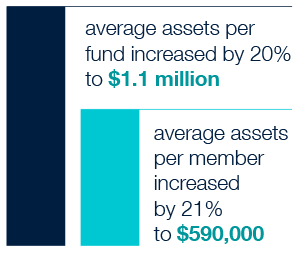

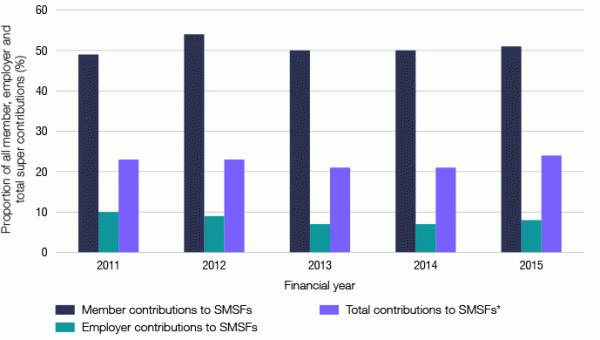
 The majority of SMSFs continued to be solely in the accumulation phase (52%) with the remaining 48% making pension payments to some of or all members.

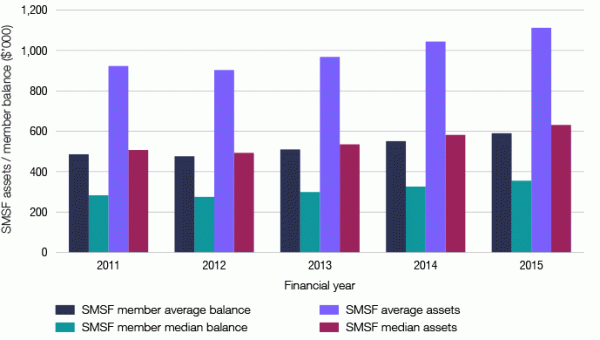
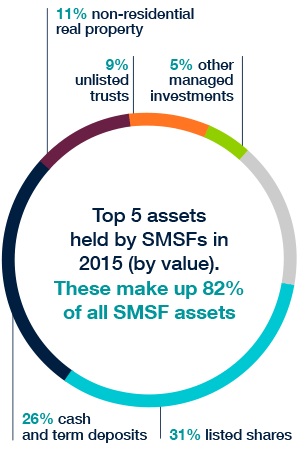
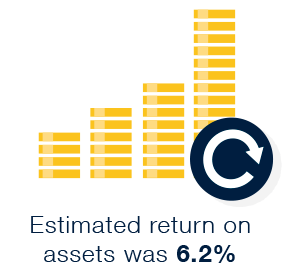












 The SMSF Coach