Failure to pay minimum pensions just got a lot more costly
You may need to ensure your accountant, financial planner and your fellow trustees is up to date with the latest rule changes affecting the start and ending of an SMSF pension which mostly affect those that fail to take the minimum pension amounts in a financial year.
SMSF trustees, accountants and financial advisers should take note of significant changes to pension commencement rules that came into effect on 1 July 2025. These changes impact how pensions are treated for tax purposes if a minimum pension is missed and could have serious implications for retirement planning strategies.
What’s Changed?
The Australian Taxation Office (ATO) has revised Tax Ruling 2013/5 (TR 2013/5), which governs when a pension starts and ceases.
Previously, the rules provided some flexibility with minimal adverse consequences. However, the ATO has now taken a stricter stance, which may have major implications not only for the current and the previous year’s, tax position but also on strategies designed to quarantine pensions with high tax free components from ones with mixed components.
Key Implications of the Changes
1. Pension Failures Confirmed to Take Effect at the Start of the Financial Year
Under the new rules, if a pension fails to pay the minimum pension, it is treated as ceasing at the beginning of the financial year rather than the end. This means:
The pension account converts to an accumulation account immediately at 1 July of the relevant tax year.
If an existing accumulation balance exists, the two amounts will merge for tax purposes, potentially disrupting carefully planned tax strategies. These strategies often revolve around blended families.
2. Transfer Balance Cap Complications
If a pension fails at the start of the year, the transfer balance cap debit must be applied at the 30 June in the year the pension ceased. Ref: ITAA97 Section 294-80(1) item 6. NOTE: In the earlier version of this article we wrongly advised it was a credit to the TBA and immediate when in fact it is a debit and occurs 30 June at end of financial year the pension ceased. Thank you to Mark Ellen of Accurium for picking up on our error.
The pension can only restart once the member rectifies any errors (e.g., failing to meet minimum pension draw down requirements), which may take 13 to 22 months from the date the pension has to be commuted under the enforced rules. Why? Because for many people the first they realise that they have not paid the full minimum pension payment is when their accountant or administrator drafts the financial which is often 9 months after the end of the financial year. e.g., 20 June 2025 financials not completed until March 2026 and that’s when mistake found. But then the Pension is deemed to have been commuted on 01 July 2024!
During this gap, market growth could lock a portion of the funds out of pension phase due to the Transfer Balance Cap issues, limiting tax efficiency and spoiling estate planning strategies.
3. Investment Market Risks
If markets rise while a pension is inactive, the increased account balance may exceed the available transfer balance cap. This means:
Some funds could remain stuck in accumulation phase, missing out on tax-free pension earnings.
Members may not be able to restore their pension to its original value, reducing retirement income benefits.
What Should SMSF Trustees, Accountants and Advisers Do?
Given these changes, it’s crucial to: ✔ Review pension compliance to avoid accidental failures. Request a Minimum Pensions Report from your Accountant/Adviser.
✔ Do not just rely on the last 30 June Financials as you need to ensure you include any new pensions that began in the current financial year
✔ Monitor minimum drawdowns before 30 June each year to prevent unintended cessations. Have someone cross check the payments for you.
✔ Beware that Market Linked and Term Allocated Income Streams have different minimum drawdowns
✔ Plan for tax implications if pensions lapse and merge with accumulation accounts. ✔ Consider timing and market risks when restarting pensions.
Final Thoughts
The ATO’s stricter interpretation of pension rules means SMSF trustees, accountants and advisers must be more vigilant than ever to avoid costly tax, estate planning and transfer balance cap issues. Proactive planning can help mitigate risks and ensure retirees maximise their superannuation benefits.
Stay informed,seek advice and adjust strategies accordingly!
Warning before you jump into implementation of any strategy without checking your personal circumstances.
Are you looking for an advisor that will keep you up to date and provide guidance and tips like in this blog? then why now contact me at our Castle Hill or Windsor office in Northwest Sydney to arrange a one-on-one consultation, just click the Schedule Now button up on the left to find the appointment options.
Please consider passing on this article to family or friends. Pay it forward!
Corporate Authorised Representative of Viridian Advisory Pty Ltd ABN 34 605 438 042, AFSL 476223
This information has been prepared without taking into account your objectives, financial situation, or needs. Because of this, you should, before acting on this information, consider its appropriateness, having regard to your objectives, financial situation, and needs. This website provides an overview or summary only and it should not be considered a comprehensive statement on any matter or relied upon as such.
Here we go again. We have only a short time left to the end of the 2025 financial year to get our SMSF in order and ensure we are making the most of the strategies available to us. Here is a checklist of the most important issues that you should address with your advisers before the year-end.
It’s been another busy year and I have not had as much time to put this together so if you find an error or have a strategy to add then please let me know. Links were working at the time of writing.
Warning before we begin,
You need to check your personal super balances, contribution limits, caps and tax position before implementing any of these strategies as your own particular circumstances may warrant alternative options.
It’s all about timing
If you are making a contribution, the funds must hit the super fund’s bank account by the close of business on 30 June. Some clearing houses hold on to money for up to 14 days before presenting them to the super fund. Some Retail and Industry funds are asking for funds at least to be contributed by the 18th-20th June!
In addition, pension payments must leave the account by the close of business unless paid by cheque in which case the cheques must be presented within a few days of the EOFY. There must have been sufficient funds in the bank account to support the payment of the cheques on 30 June but a cheque should only be your very last-minute option! You can also ask your adviser or administrator about a Promissory Note if time is against you but funds are ready.
So, for SMSFs get your payments in the fund by Monday 23rd June or earlier to be sure (yes I’m Irish) as the 30th is a Monday this year. This is even more important if using a clearing house for contributions.
Review your Concessional Contributions (CC) options including Unused Carry Forward Limits
The government changed the contribution cap from 1 July 2024 to $30,000 and remember that you have the ability to make concessional contributions up to age 67 even if not working and to 75 if you meet the Work Test . This is important for those who have retired but may have sold a property or shares and triggered a large capital gain during the year. Do not not exceed your limit unless you have Unused Carried Forward Concessional limits and Total Super Balance under $500K as of last 01 July 2024.
Check employer contributions on normal pay and bonuses, salary sacrifice and premiums for insurance in super paid by employers, as they are all included in the limit.
This current 5 year period for Unused Concessional Contributions applies from 2019-20 so effectively, this means an individual can make up to $162,500 of CCs in a single financial year by utilising unapplied unused CC caps since 1 July 2019 and this years limit. Guidance on how to check your Unused Carried Forward Concessional limits via MyGov records available here. ..
This is the last year to use the 2019/20 unused Carried Forward Concessional Caps as they fall outside the 5 year rolling period from 30 June 2025.
Beware that once your Income including Salary, Investment income, Employer SGC, Personal Concessional Contributions goes over $250,000 you will be subject to Div 293 Tax
From 1 July 2025 the Super Guarantee also rises to 12%. Re-evaluate your contribution plans for 2025-26
Review plans for Non-Concessional Contributions (NCC) options
From 1 July 2022 the NCC contribution rules changed and currently the age limit of 75 (28 days after the end of the month your turn 75) applies to NCCs (that is, from after-tax money) without meeting the work test. Check out ATO superannuation contribution guidance.
NCCs are an opportunity to move investments into super and out of a personal, company or trust names.
For those couples where one has a higher balance that may be affected by the proposed Division 296 Tax, it is important to review you option to even-up spouse balances and maximise super in pension phase up to age 75. For couples where one spouse has exhausted their transfer balance cap and has excess amounts in accumulation or above $3m, they are able to withdraw from the higher balance and recontribute to the other spouse who has transfer balance cap space available to commence a retirement phase income stream. This can increase the tax efficiency of the couple’s retirement assets as more of their savings are in the tax-free pension phase environment and may help minimise Div 296 Tax.
If you have considerable additional funds to add to contribution then maybe contribute up to $120,000 before June 30 and then you may be able to contribute up to $360,000 after 1 July to maximise contributions.
From 1 July 2024 the Non-Concessional Cap rose to $120,000 per year or $360,000 under the 3 Year Bring Forward Rule.
RECONTRIBUTION STRATEGIES
Consider doing the drawdown before 30 June 2025 so that your Transfer Balance Cap and Total Super Balance on 1 July 2025 gets some additional space with the rise in the TBAR and TSB full limits to $1.2m. Note that if you had and existing pension(s) at 30 June 2024 your current limit will be anywhere between $1.6m and $2M after 1 July (Frustrating for Advisers!)
You can also make your tax components more tax free by using recontribution strategies. SMSF members can cash out their existing super and re-contribute (subject to their contribution caps) them back in to the fund to help reduce tax payable from any super death benefits left to non-tax dependants. From 1 July 2022 you can do this until they turn age 75 (contribution to be made with 28 days after the end of the month you turn 75).
Downsizer contributions
If you have sold your home in the last year and you are over 55, consider eligibility for downsizer contributions of up to $300,000 for each member.
From 1 jan 2023, the eligibility age to make downsizer contributions into superannuation was reduced from 60 to 55 years of age. All other eligibility criteria remain unchanged, allowing individuals to make a one-off, post-tax contribution to their superannuation of up to $300,000 per person from the proceeds of selling their home. These contributions will continue not to count towards non-concessional contribution caps.
The $300,000 downsizer limit (or $600,000 for a couple) and the $360,000 bring forward NCC cap allow up to $660,000 in one year contributions for a single person and $1,320,000 for a couple subject to their contributions caps.
PLEASE BE CAREFUL AS THE DOWNSIZER IS A ONCE ONLY STRATEGY AND IF YOU WOULD BENEFIT MORE IN OLDER YEARS USING THE STRATEGY THEN MAXIMISE NCCs FIRST.
Calculate co-contributions
Check your eligibility for the co-contribution, it’s a good way to boost your super. The amounts differ based on your income and personal super contributions, so use the super co-contribution calculator.
Examine spouse contributions
If your spouse has assessable income plus reportable fringe benefits totalling less than $37,000 for the full $540 tax offset or up to $40,000 for a partial offset, then consider making a spouse contribution. Check out the ATO guidance here.
You can implement this strategy up to age 75 as a Spouse Contribution is treated as a NCC in their account (and therefore counted towards your spouse’s NCC cap).
Give notice of intent to claim a deduction for contributions
A notice must be made before you commence the pension. Many people like to start pension in June and avoid having to take a minimum pension in that financial year but make sure you have claimed your tax deduction first. The same notice requirement applies if you plan to take a lump sum withdrawal from your fund.
Consider contributions splitting to your spouse
Consider splitting contributions with your spouse, especially if:
your family has one main income earner with a substantially higher balance or
if there is an age difference where you can get funds into pension phase earlier or
if you can improve your eligibility for concession cards or age pension by retaining funds in superannuation in the younger spouse’s name.
This is a simple no-cost strategy I recommend for everyone here.
Remember, any spouse contribution is counted towards your spouse’s NCC cap.
Act early on off-market share transfers
If you want to move any personal shareholdings into super (as a contribution) you should act early. The contract is only valid once the broker receives a fully-valid transfer form so timing in June is critical. There are likely to be brokerage costs involved.
Review options on pension payments
Ensure you take the standard minimum pension at your age-based rate. If a pension member has already taken pension payments of equal to or greater than the the minimum amount, they are not required to take any further pension payments before 30 June 2025. For transition to retirement pensions, ensure you have not taken more than 10% of your opening account balance this financial year.
Minimum annual payments for pensions for 2024/25 financial year onwards.
Age at 1 July
2024 – Standard Minimum % withdrawal
Under 65
4%
65–74
5%
75–79
6%
80–84
7%
85–89
9%
90–94
11%
95 or older
14%
If a pension member has already taken a minimum pension for the year, they cannot change the payment but they can get organised for 2025/26. No, you can’t sneak a payment back into the SMSF bank account unless you treat to as a new contribution!
If you need more than the minimum pension payments for living expenses then it may be a good strategy for amounts above the minimum to be treated as either:
a partial lump commutation sum rather than as a pension payment. This would create a debit against the pension member’s Transfer Balance Account (TBA). Please discuss this with your accountant and adviser first as all funds now have to report these quarterly to the ATO.
for those with both pension and accumulation accounts, take the excess as a lump sum from the accumulation account to preserve as much in tax-exempt pension phase as possible.
Check your documents on reversionary pensions
A reversionary pension to your spouse will provide them with up to 12 months to get their financial affairs organised before making a final decision on how to manage your death benefit. In NSW this may avoid issues with Binding Death Nominations and the Notional Estate (see Benz v Armstrong; Benz v Armstrong; Benz v Armstrong – 2022 NSWSC)
You should review your pension documentation and check if you have nominated a reversionary pension in the context of your family situation. This is especially important with blended families and children from previous marriages that may contest your current spouse’s rights to your assets. Also consider reversionary pensions for dependent disabled children.
The reversionary pension has become more important with the application of the $1.6-$2m million Transfer Balance Cap (TBC) limit to pension phase.
Tip:If you have opted for a nomination instead then check the existing Binding Death Benefit Nominations (many expire after 3 years in older deeds) and look to upgrade to a Non-Lapsing Binding Death Benefit Nomination. Check your Deed allows for this first.
Review Capital Gains Tax on each investment
Review any capital gains made during the year and over the term you have held the asset and consider disposing of investments with unrealised losses to offset the gains made. If in pension phase, then consider triggering some capital gains regularly to avoid building up an unrealised gain that may be at risk to legislation changes.
Collate records of all asset movements and decisions
Ensure all the fund’s activities have been appropriately documented with minutes, and that all copies of all statements, valuations and schedules are on file for your accountant, administrator and auditor.
The ATO has now beefed up its requirements for what needs to be detailed in the SMSF Investment Strategy so review your investment strategy and ensure all investments have been made in accordance with it and the SMSF Trust Deed, including insurances for members. See my article on this subject here.
Arrange market valuations (beware of the proposed Div 296 Tax Sting)
Regulations now require assets to be valued at market value each year, including property and collectibles. For more information refer to ATO’s publication Valuation guidelines for SMSFs.
On collectibles, play by the new rules that came into place on 1 July 2016 or remove collectibles from your SMSF.
Tip:The ATO is targeting audit compliance this year on Property Valuations in SMSFs as we approach the implementation of the proposed Division 296 Tax from 1 July 2025.
Tip 2: It would be better to ensure your properties truly match the market value on 1 July 2025 than to have a large rise in value recorded in future years that will trigger higher Div 296 Tax.
Check the ownership of all investments.
Make sure the assets of the fund are held in the name of the trustees (including a corporate trustee) on behalf of the fund. Carefully check any online accounts and ensure all SMSF assets are separate from your other assets.
We recommend a corporate trustee to all clients. This might be a good time to change, as explained in this article on Why SMSFs should have a corporate trustee. If you have previously moved to a Corporate Trustee ten double check all accounts/investments were changed to the name of this trustee.
Review Estate Planning and loss of mental capacity strategies
Review any Binding Death Benefit Nominations (BDBN) to ensure they are valid, consider Non-Lapsing Nominations and check the wording matches that required by the Trust Deed. Ensure it still accords with your wishes.
Also ensure you have appropriate Enduring Powers of Attorney (EPOA) in place to allow someone to step into your place as trustee in the event of illness, mental incapacity or death.
Check your Trust Deed and the details of the rules. For example, did you know you cannot leave money to stepchildren via a BDBN if their birth-parent has pre-deceased you?
Review any SMSF loan arrangements
Have you provided special terms (low or no interest rates, capitalisation of interest etc) on a related party loan? Review your loan agreement and see if you need to amend your loan.
Have you made all the payments on your internal or third-party loans, have you looked at options on prepaying interest or fixing the rates while low?
Have you made sure all payments in regards to Limited Recourse Borrowing Arrangements (LRBA) for the year were made through the SMSF trustee? If you bought a property using borrowing, has the Holding Trust been stamped by your state’s Office of State Revenue? For Related Party LRBA’s the Variable interest rate is currently 9.35% (will be updated for 2026FY in late May)
Ensure SuperStream obligations are met
For super funds that receive employer contributions, the ATO is gradually introducing SuperStream, a system whereby super contributions data is made electronically.
All funds should be able to receive contributions electronically and you should obtain an Electronic Service Address (ESA) to receive contribution information.
All funds should be able to receive contributions electronically and you should obtain an Electronic Service Address (ESA) to receive contribution information.
If you change jobs your new employers may ask SMSF members for their ESA, ABN and bank account details.
Ensure you are meeting your Quarterly TBAR Reporting deadlines
From 1 July 2023 you need to be checking in with your accountant/administrator Quarterly
All SMSFs are required to report quarterly, even if the members total super balance is less than $1 million. This means you must report the event that affects the members transfer balance within 28 days after the end of the quarter in which the event occurs.
Example: All unreported events that occurred between 1 April and 30 June 2024 must be reported by 28 October 2023. This means you cannot report at the same time as your SMSF annual return (SAR) for the 2023-24 income year. More info here
ASIC fee increased from 1 July 2023
ASIC is increasing fees by $2 for the annual review of a special purpose SMSF trustee company $63 to $65. The Government is moving gradually to a “user pays” model so expect increases to accelerate in future years. Before 30 June, for $452 you can pre-pay the company fees for 10 years and lock in current prices with a decent discount. There is a remittance form linked here.
On 6 December 2024, regulations were released to allow the commutation of legacy pensions for a limited 5-year period. There is considerable additional detail in this feature so consult an adviser if you are affected, especially to ensure you do not lose other entitlements such as the age pension.
The regulations allow a five-year timeframe for lifetime or life expectancy pensions and MLIS to be commuted.
You have the following options:
▪ withdraw the funds from superannuation (all these clients have previously met a condition of release) ▪ rollover the amount to accumulation phase, or
▪ use the funds to commence an account based pension (if transfer balance cap space is available).
Under this measure, if a lifetime or life expectancy pension is commuted, any reserve supporting that income stream is also added to the commutation value. However, no amount from the reserve is counted tow
HAS NOT PASSED: Relaxing residency requirements for SMSFs– Labor Government has failed to move on this issue.
SMSFs and small APRA funds still do not have relaxed residency requirements through the extension of the central management and control test safe harbour from two to five years as the LNP government failed to pass it before the last election and Labor have put it on the backburner. The active member test was also to be removed, allowing members who are temporarily absent to continue to contribute to their SMSF.
Improving the Home Equity Access Scheme – Social security benefits for you or your mum and/or dad
The Home Equity Access Scheme formerly called The Pension Loan Scheme is now up and running. The Government introduced a No Negative Equity Guarantee for HEAS loans and allow people access to a capped advance lump sum payment.
No negative equity guarantee – Borrowers under the HEAS, or their estate, will not owe more than the market value of their property, in the rare circumstances where their accrued HEAS debt exceeds their property value. This brings the HEAS in line with private sector reverse mortgages.
Immediate access to lump sums under the HEAS – Eligible people will be able to access up to two lump sum advances in any 12-month period, up to a total value of 50% of the maximum annual rate of Age Pension (currently maximums are $14,937 for singles and $22,518.60 for couples).
Careful if replacing Income Protection or TPD Insurance (Total Permanent Disability)
Have you reviewed your insurances inside and outside of super? Don’t forget to check your current TPD policies owned by the fund with an own occupation definition as the rules changed a few years ago. So be careful about replacing an existing policy as you may not be able to obtain this same cover inside super again.
There were major changes to Income Protection insurance in 2021 so be very careful about switching insurer unless costs have blown out as new cover is often vastly inferior to current covers. Read more here before switching cover.
Large one-off Personal income or gain – Bring forward Concessional Contributions
For those who may have a large taxable income this year (large bonus or property sale) and are expecting a lower taxable next year you should consider a contribution allocation strategy to maximise deductions for the current financial year by bringing some or all of your 2026FY limit forward to this year. This strategy is also known as a “Contributions Reserving” strategy but the ATO are not fans of Reserves so best to avoid that wording! Just call is an Allocated Contributions Holding Account. See my article on this strategy here.
Providing Proof of Crypto Currency Holdings as of 30 June.
You should be using an exchange that is set up for SMSF accounts. They should provide a Tax Summary but it may cost extra. Some exchanges are now partnering with Specialised services that are experts in Australian to offer tax reports that meet Australian Audit requirements.
The auditor will also want to verify holdings by checking:
An exchange account is set up in the name of the fund
Wallet purchased using funds from the SMSFs cash account
Cold Wallet Audit management extra step: For annual audit purposes, take a screenshot of the assets held in your Ledger wallet (e.g. via the Ledger ‘Live’ App or similar) on 30 June 2023 and also on the day you submit your paperwork and email this to the tax agent at tax time.
29. NALE/NALI applies in the 2025 year (in the sense the ATO are going to enforce it) – please ensure that if members perform services for their SMSF which is their ‘day job’ (ie. Accounting work for Accountants, Building and repair work for tradies, etc) that these are charged at the appropriate commercial rate that they charge their clients. A good article explaining this in more detail here from ASF Audits
Don’t leave it until after 30 June, review your Self Managed Super Fund now and seek advice if in doubt about any matter.
Some for 1 July 2025
Check your Salary Sacrifice or Concessional Contributions as SG rises to 12%
The superannuation guarantee (SG) rate will increase from 11% to 11.5% on 1 July 2024. You’ll need to use the new rate to calculate how much of your $30,000 concessional cap will be available to salary sacrifice or make personal deductible contributions.
Div 296 Tax – valuations of all assets on 1 July 2025 will be crucial.
For those with balances over or close to $3m and used to using low end of property valuations for your asset value, you may need to rethink this strategy as you do not want a large increase in value in future years or it will be caught under the “unrealised gains” sting in the proposed Division 296 Tax.
Warning before you jump into implementation of any strategy without checking your personal circumstances.
Are you looking for an advisor that will keep you up to date and provide guidance and tips like in this blog? then why now contact me at our Castle Hill or Windsor office in Northwest Sydney to arrange a one-on-one consultation, just click the Schedule Now button up on the left to find the appointment options.
Please consider passing on this article to family or friends. Pay it forward!
Corporate Authorised Representative of Viridian Advisory Pty Ltd ABN 34 605 438 042, AFSL 476223
This information has been prepared without taking into account your objectives, financial situation, or needs. Because of this, you should, before acting on this information, consider its appropriateness, having regard to your objectives, financial situation, and needs. This website provides an overview or summary only and it should not be considered a comprehensive statement on any matter or relied upon as such.
OK, yet again we have only a short time left to the end of the 2024 financial year to get our SMSF in order and ensure we are making the most of the strategies available to us. Here is a checklist of the most important issues that you should address with your advisers before the year-end.
It’s been another busy year and I have not had as much time to put this together so if you find an error or have a strategy to add then please let me know. Links were working at the time of writing.
Warning before we begin,
Before we start, just a warning as in the rush to take advantage of new strategies you may have forgotten about how good you have it already Be careful not to allow your accountant, administrator or financial planner to reset any pension that has been grandfathered under the pension deeming rules that came in on Jan 1st 2015 without getting advice on the current and possible future consequences resulting in the pension being subject to current deeming rates if you lose the grandfathering. Point them to this document
It’s all about timing
If you are making a contribution, the funds must hit the super fund’s bank account by the close of business on 30 June. Some clearing houses hold on to money for up to 14 days before presenting them to the super fund. Some Retail and Industry funds are asking for funds at least 7 days before the end of the financial year!
In addition, pension payments must leave the account by the close of business unless paid by cheque in which case the cheques must be presented within a few days of the EOFY. There must have been sufficient funds in the bank account to support the payment of the cheques on 30 June but a cheque should only be your very last-minute option! You can also ask your adviser or administrator about a Promissory Note if time is against you but funds are ready.
So, for SMSFs get your payments in the fund by Monday 24th June or earlier to be sure (yes I’m Irish) as the 30th is a Sunday this year. This is even more important if using a clearing house for contributions.
Review your Concessional Contributions (CC) options and new rules
The government changed the contribution rules from 1 July 2020 to extend the ability to make contributions from age 65 up to age 67. Read more here. Maximise contributions up to CC cap of $27,500 but do not exceed your limit unless you have Unused Carried Forward Concessional limits and Total Super Balance under $500K as of last 01 July 2022. Guidance on how to check your Unused Carried Forward Concessional limits via MyGov records available here
Some of the sting has been taken out of excess contributions tax but you really don’t need the additional paperwork to sort out the problem. Check employer contributions on normal pay and bonuses, salary sacrifice and premiums for insurance in super as they may all be included in the limit.
Consider using the ‘Unused Carry Forward Concessional Contribution” limits
Broadly, the carry forward rule allows individuals to make additional CC in a financial year by utilising unused CC cap amounts from up to five previous financial years. Eligibility requires a total superannuation balance just before the start of that financial year of less than $500,000 (across all your super accounts).
This measure applies from 2018-19 so effectively, this means an individual can make up to $132,500 of CCs in a single financial year by utilising unapplied unused CC caps since 1 July 2018. Guidance on how to check your Unused Carried Forward Concessional limits via MyGov records available here
This is the last year to use the 2018/19 unused Carried Forward Concessional Caps as they fall outside the 5 year rolling period from 30 June 2024.
Beware that once your Income including Salary, Investment income, Employer SGC, Personal Concessional Contributions goes over $250,000 you will be subject to Div 293 Tax
From 1 July 2024 the Concessional Cap rises to $30,000 per year. Super Guarnatee also rises to 11.5%. Re-evaluate your contribution plans for 2024-25
Review plans for Non-Concessional Contributions (NCC) options
From 1 July 2022 the NCC contribution rules changed and currently the age limit of 75 (28 days after the end of the month your turn 75) applies to NCCs (that is, from after-tax money) without meeting the work test. Check out ATO superannuation contribution guidance.
NCCs are an opportunity to move investments into super and out of a personal, company or trust names.
Even-up spouse balances and maximise super in pension phase up to age 75. For couples where one spouse has exhausted their transfer balance cap and has excess amounts in accumulation are able to withdraw from the higher balance and recontribute to the other spouse who has transfer balance cap space available to commence a retirement phase income stream. This can increase the tax efficiency of the couple’s retirement assets as more of their savings are in the tax-free pension phase environment.
Make your tax components more tax free by using recontribution strategies. SMSF members can cash out their existing super and re-contribute (subject to their contribution caps) them back in to the fund to help reduce tax payable from any super death benefits left to non-tax dependants. From 1 July 2022 you can do this until they turn age 75 (contribution to be made with 28 days after the end of the month you turn 75).
From 1 July 2024 the Non-Concessional Cap rises to $120,000 per year or $360,000 under the 3 Year Bring Forward Rule. Re-evaluate your contribution plans for 2024-25
RECONTRIBUTION STRATEGIES
Consider doing the drawdown before 30 June 2023 so that your Transfer Balance Cap and Total Super Balance on 1 July 2024 gets some additional space with the rise in the TBAR and TSB full limits to $1.9m. Note that if you had and existing pension(s) at 30 June 2023 your current limit will be anywhere between $1.6m and $1.9M (Frustrating for Advisers!)
If you have additional funds to add to the withdrawal then maybe take up to $330,000 before June 30 and then you may be able to contribute up to $360,000 using the new Non-Concessional Cap.
Downsizer contributions
If you have sold your home in the last year and you are over 55, consider eligibility for downsizer contributions of up to $300,000 for each member.
From 1 jan 2023, the eligibility age to make downsizer contributions into superannuation was reduced from 60 to 65 years of age. All other eligibility criteria remain unchanged, allowing individuals to make a one-off, post-tax contribution to their superannuation of up to $300,000 per person from the proceeds of selling their home. These contributions will continue not to count towards non-concessional contribution caps.
The $300,000 downsizer limit (or $600,000 for a couple) and the $330,000 bring forward NCC cap allow up to $630,000 in one year contributions for a single person and $1,260,000 for a couple subject to their contributions caps. That rises on 1 July 2024 to $660,000 for a single person and $1,320,000 for a couple subject to their contributions caps
PLEASE BE CAREFUL AS THIS IS A ONCE ONLY STRATEGY AND IF YOU WOULD BENEFIT MORE IN OLDER YEARS USING THE STRATEGT THE MAXIMISE NCCs FIRST.
Calculate co-contributions
Check your eligibility for the co-contribution, it’s a good way to boost your super. The amounts differ based on your income and personal super contributions, so use the super co-contribution calculator.
Examine spouse contributions
If your spouse has assessable income plus reportable fringe benefits totalling less than $37,000 for the full $540 tax offset or up to $40,000 for a partial offset, then consider making a spouse contribution. Check out the ATO guidance here.
You can implement this strategy up to age 75 as a Spouse Contribution is treated as a NCC in their account (and therefore counted towards your spouse’s NCC cap).
Give notice of intent to claim a deduction for contributions
A notice must be made before you commence the pension. Many people like to start pension in June and avoid having to take a minimum pension in that financial year but make sure you have claimed your tax deduction first. The same notice requirement applies if you plan to take a lump sum withdrawal from your fund.
Consider contributions splitting to your spouse
Consider splitting contributions with your spouse, especially if:
your family has one main income earner with a substantially higher balance or
if there is an age difference where you can get funds into pension phase earlier or
if you can improve your eligibility for concession cards or age pension by retaining funds in superannuation in the younger spouse’s name.
This is a simple no-cost strategy I recommend for everyone here. Remember, any spouse contribution is counted towards your spouse’s NCC cap.
Act early on off-market share transfers
If you want to move any personal shareholdings into super (as a contribution) you should act early. The contract is only valid once the broker receives a fully-valid transfer form so timing in June is critical. There are likely to be brokerage costs involved.
Review options on pension payments
The government has not extended the Temporary Reduction in Minimum Pensions as part of the COVID-19 response. Ensure you take the standard minimum pension at your age-based rate. If a pension member has already taken pension payments of equal to or greater than the the minimum amount, they are not required to take any further pension payments before 30 June 2024. For transition to retirement pensions, ensure you have not taken more than 10% of your opening account balance this financial year.
Minimum annual payments for pensions for 2023/24 financial year onwards.
OK we are back to normal rates from 01/07/2023, no more COVID reductions.
Age at 1 July
2023-24 Back to Standard Minimum % withdrawal
Under 65
4%
65–74
5%
75–79
6%
80–84
7%
85–89
9%
90–94
11%
95 or older
14%
Minimum Pension Standards
If a pension member has already taken a minimum pension for the year, they cannot change the payment but they can get organised for 2024/-25. So, no you can’t sneak a payment back into the SMSF bank account!
If you need more than the minimum pension payments for living expenses then it may be a good strategy for amounts above the minimum to be treated as either:
a partial lump commutation sum rather than as a pension payment. This would create a debit against the pension member’s Transfer Balance Account (TBA). Please discuss this with your accountant and adviser first as all funds now have to report this quarterly to the ATO.
for those with both pension and accumulation accounts, take the excess as a lump sum from the accumulation account to preserve as much in tax-exempt pension phase as possible.
Check your documents on reversionary pensions
A reversionary pension to your spouse will provide them with up to 12 months to get their financial affairs organised before making a final decision on how to manage your death benefit. In NSW this may avoid issues with Binding Death Nominations and the Notional Estate (see Benz v Armstrong; Benz v Armstrong; Benz v Armstrong – 2022 NSWSC)
You should review your pension documentation and check if you have nominated a reversionary pension in the context of your family situation. This is especially important with blended families and children from previous marriages that may contest your current spouse’s rights to your assets. Also consider reversionary pensions for dependent disabled children.
The reversionary pension has become more important with the application of the $1.6-$1.9 million Transfer Balance Cap (TBC) limit to pension phase from 01/07/2023.
Tip:If you have opted for a nomination instead then check the existing Binding Death Benefit Nominations (many expire after 3 years) and look to upgrade to a Non-Lapsing Binding Death Benefit Nomination. Check your Deed allows for this first.
Review Capital Gains Tax on each investment
Review any capital gains made during the year and over the term you have held the asset and consider disposing of investments with unrealised losses to offset the gains made. If in pension phase, then consider triggering some capital gains regularly to avoid building up an unrealised gain that may be at risk to legislation changes.
Collate records of all asset movements and decisions
Ensure all the fund’s activities have been appropriately documented with minutes, and that all copies of all statements, valuations and schedules are on file for your accountant, administrator and auditor.
The ATO has now beefed up its requirements for what needs to be detailed in the SMSF Investment Strategy so review your investment strategy and ensure all investments have been made in accordance with it and the SMSF Trust Deed, including insurances for members. See my article on this subject here.
Arrange market valuations
Regulations now require assets to be valued at market value each year, including property and collectibles. For more information refer to ATO’s publication Valuation guidelines for SMSFs.
On collectibles, play by the new rules that came into place on 1 July 2016 or remove collectibles from your SMSF.
Tip:The ATO is targeting audit compliance this year on Property Valuations in SMSFs as we approach the implementation of the Division 293 Tax from 1 July 2025.
Check the ownership of all investments.
Make sure the assets of the fund are held in the name of the trustees (including a corporate trustee) on behalf of the fund. Carefully check any online accounts and ensure all SMSF assets are separate from your other assets.
Review Estate Planning and loss of mental capacity strategies
Review any Binding Death Benefit Nominations (BDBN) to ensure they are valid, and check the wording matches that required by the Trust Deed. Ensure it still accords with your wishes.
Also ensure you have appropriate Enduring Powers of Attorney (EPOA) in place to allow someone to step into your place as trustee in the event of illness, mental incapacity or death.
Check your Trust Deed and the details of the rules. For example, did you know you cannot leave money to stepchildren via a BDBN if their birth-parent has pre-deceased you?
Review any SMSF loan arrangements
Have you provided special terms (low or no interest rates, capitalisation of interest etc) on a related party loan? Review your loan agreement and see if you need to amend your loan.
Have you made all the payments on your internal or third-party loans, have you looked at options on prepaying interest or fixing the rates while low?
Have you made sure all payments in regards to Limited Recourse Borrowing Arrangements (LRBA) for the year were made through the SMSF trustee? If you bought a property using borrowing, has the Holding Trust been stamped by your state’s Office of State Revenue? For Related Party LRBA’s the Variable interest rate is currently 8.85%
Ensure SuperStream obligations are met
For super funds that receive employer contributions, the ATO is gradually introducing SuperStream, a system whereby super contributions data is made electronically.
All funds should be able to receive contributions electronically and you should obtain an Electronic Service Address (ESA) to receive contribution information.
All funds should be able to receive contributions electronically and you should obtain an Electronic Service Address (ESA) to receive contribution information.
If you change jobs your new employers may ask SMSF members for their ESA, ABN and bank account details.
Ensure you are meeting your Quarterly TBAR Reporting deadlines
From 1 July 2023 you need tio be checking in with your accountant/administrator Quarterly
All SMSFs are required to report quarterly, even if the members total super balance is less than $1 million. This means you must report the event that affects the members transfer balance within 28 days after the end of the quarter in which the event occurs.
Example: All unreported events that occurred between 1 April and 30 June 2024 must be reported by 28 October 2023. This means you cannot report at the same time as your SMSF annual return (SAR) for the 2023-24 income year. More info here
ASIC fee increased from 1 July 2023
ASIC is increasing fees by $4 for the annual review of a special purpose SMSF trustee company $59 to $63. The Government is moving gradually to a “user pays” model so expect increases to accelerate in future years. Before 30 June, for $407 you can pre-pay the company fees for 10 years and lock in current prices with a decent discount. There is a remittance form linked here.
HAS NOT PASSED: Relaxing residency requirements for SMSFs– Labor Government has failed to move on this issue.
SMSFs and small APRA funds still do not have relaxed residency requirements through the extension of the central management and control test safe harbour from two to five years as the LNP government failed to pass it before the last election and Labor have put it on the backburner. The active member test was also to be removed, allowing members who are temporarily absent to continue to contribute to their SMSF.
HAS NOT PASSED: Legacy retirement product conversions (Under Review STILL by Government)
Individuals were to be able to exit a specified range of legacy retirement products, together with any associated reserves over a two-year period but the legislation was not passed and is now to be reviewed by the new Government. The specified range of legacy retirement products includes market-linked, life expectancy and lifetime products, but not flexi-pension products or a lifetime product in a large APRA-regulated or public sector defined benefit scheme.
Currently, these products can only be converted into another like product and limits apply to the allocation of any associated reserves without counting towards an individual’s contribution cap.
There is considerable additional detail in this feature so consult an adviser if you are affected, especially to ensure you do not lose other entitlements such as the age pension.
Improving the Home Equity Access Scheme – Social security benefits for you or your mum and/or dad
The Home Equity Access Scheme formerly called The Pension Loan Scheme is now up and running. The Government introduced a No Negative Equity Guarantee for HEAS loans and allow people access to a capped advance lump sum payment.
No negative equity guarantee – Borrowers under the HEAS, or their estate, will not owe more than the market value of their property, in the rare circumstances where their accrued HEAS debt exceeds their property value. This brings the HEAS in line with private sector reverse mortgages.
Immediate access to lump sums under the HEAS – Eligible people will be able to access up to two lump sum advances in any 12-month period, up to a total value of 50% of the maximum annual rate of Age Pension (currently $14,511.90 for singles and $21,876.40 for couples).
Careful if replacing Income Protection or TPD Insurance (Total Permanent Disability)
Have you reviewed your insurances inside and outside of super? Don’t forget to check your current TPD policies owned by the fund with an own occupation definition as the rules changed a few years ago so be careful about replacing an existing policy as you may not be able to obtain this same cover inside super again.
There were major changes to Income Protection insurance in 2021 so be very careful about switching insurer unless costs have blown out as new cover is often vastly inferior to current covers. Read more here before switching cover.
Large one-off Personal income or gain – Bring forward Concessional Contributions
For those who may have a large taxable income this year (large bonus or property sale) and are expecting a lower taxable next year you should consider a contribution allocation strategy to maximise deductions for the current financial year. This strategy is also known as a “Contributions Reserving” strategy but the ATO are not fans of Reserves so best to avoid that wording! Just call is an Allocated Contributions Holding Account. See my article on this strategy here.
Providing Proof of Crypto Currency Holdings as of 30 June.
You should be using an exchange that is set up for SMSF accounts. They should provide a Tax Summary but it may cost extra. Independent Reserve provides one audited by KPMG for $50. COINSPOT also offer tax reports that meet Australian Audit requirements.
The auditor will also want to verify holdings by checking:
An exchange account is set up in the name of the fund
Wallet purchased using funds from the SMSFs cash account
Cold Wallet Audit management extra step: For annual audit purposes, take a screenshot of the assets held in your Ledger wallet (e.g. via the Ledger ‘Live’ App or similar) on 30 June 2023 and also on the day you submit your paperwork and email this to the tax agent at tax time.
29. NALE/NALI applies in the 2024 year (in the sense the ATO are going to enforce it) – please ensure that if members perform services for their SMSF which is their ‘day job’ (ie. Accounting work for Accountants, Building and repair work for tradies, etc) that these are charged at the appropriate commercial rate that they charge their clients. A good article explaining this in more detail here from ASF Audits
Don’t leave it until after 30 June, review your Self Managed Super Fund now and seek advice if in doubt about any matter.
One for I July 2024 Check your Salary Sacrifice or Concessional Contributions as SG rises to 11.5%
So busy, I forgot the superannuation guarantee (SG) rate will increase from 11% to 11.5% on 1 July 2024. You’ll need to use the new rate to calculate how much of your new indexed limit of $30,000 concessional cap will be available to salary sacrifice or make personal deductible contributions.
Warning before you jump into implementation of any strategy without checking your personal circumstances.
Are you looking for an advisor that will keep you up to date and provide guidance and tips like in this blog? then why now contact me at our Castle Hill or Windsor office in Northwest Sydney to arrange a one-on-one consultation, just click the Schedule Now button up on the left to find the appointment options.
Please consider passing on this article to family or friends. Pay it forward!
Corporate Authorised Representative of Viridian Advisory Pty Ltd ABN 34 605 438 042, AFSL 476223
This information has been prepared without taking into account your objectives, financial situation, or needs. Because of this, you should, before acting on this information, consider its appropriateness, having regard to your objectives, financial situation, and needs. This website provides an overview or summary only and it should not be considered a comprehensive statement on any matter or relied upon as such.
OK, yet again we are with only a few weeks left to the end of the financial year to get our SMSF in order and ensure we are making the most of the strategies available to us. Here is a checklist of the most important issues that you should address with your advisers before the year-end.
It’s been another busy year and I have not had as much time to put this together so if you find an error or have a strategy to add then please let me know. Links were working at the time of writing.
Warning before we begin,
Before we start, just a warning as in the rush to take advantage of new strategies you may have forgotten about how good you have it already Be careful not to allow your accountant, administrator or financial planner to reset any pension that has been grandfathered under the pension deeming rules that came in on Jan 1st 2015 without getting advice on the current and possible future consequences resulting in the pension being subject to current deeming rates if you lose the grandfathering. Point them to thisdocument
It’s all about timing
If you are making a contribution, the funds must hit the super fund’s bank account by the close of business on 30 June. Some clearing houses hold on to money before presenting them to the super fund.
In addition, pension payments must leave the account by the close of business unless paid by cheque in which case the cheques must be presented within a few days of the EOFY. There must have been sufficient funds in the bank account to support the payment of the cheques on 30 June but a cheque should be your very last-minute preference!
Get your payments in by Friday 23rd June or earlier to be sure (yes I’m Irish). This is even more important if using a clearing house for contributions.
Review your Concessional Contributions (CC) options and new rules
The government changed the contribution rules from 1 July 2020 to extend the ability to make contributions from age 65 up to age 67. Read more here. Maximise contributions up to CC cap of $27,500 but do not exceed your limit unless you have Unused Carried Forward Concessional limits and Total Super Balance under $500K as of last 01 July 2022. Guidance on how to check your Unused Carried Forward Concessional limits via MyGov records available here
Some of the sting has been taken out of excess contributions tax but you really don’t need the additional paperwork to sort out the problem. Check employer contributions on normal pay and bonuses, salary sacrifice and premiums for insurance in super as they may all be included in the limit.
Consider using the ‘Unsed Carry Forward Concessional Contribution” limits
Broadly, the carry forward rule allows individuals to make additional CC in a financial year by utilising unused CC cap amounts from up to five previous financial years. Eligibility requires a total superannuation balance just before the start of that financial year of less than $500,000 (across all your super accounts).
This measure applies from 2018-19 so effectively, this means an individual can make up to $130,000 of CCs in a single financial year by utilising unapplied unused CC caps since 1 July 2018. Guidance on how to check your Unused Carried Forward Concessional limits via MyGov records available here
Beware that once your Income including Salary, Investment income, Employer SGC, Personal Concessional Contributions goes over $250,000 you will be subject to Div 293 Tax
Review plans for Non-Concessional Contributions (NCC) options
From 1 July 2022 the NCC contribution rules changed and currently the age limit of 75 (28 days after the end of the month your turn 75) applies to NCCs (that is, from after-tax money) without meeting the work test. Check out ATO superannuation contribution guidance.
NCCs are an opportunity to move investments into super and out of a personal, company or trust names.
Even-up spouse balances and maximise super in pension phase up to age 75. For couples where one spouse has exhausted their transfer balance cap and has excess amounts in accumulation are able to withdraw from the higher balance and recontribute to the other spouse who has transfer balance cap space available to commence a retirement phase income stream. This can increase the tax efficiency of the couple’s retirement assets as more of their savings are in the tax-free pension phase environment.
Make your tax components more tax free by using recontribution strategies. SMSF members can cash out their existing super and re-contribute (subject to their contribution caps) them back in to the fund to help reduce tax payable from any super death benefits left to non-tax dependants. From 1 July 2022 you can do this until they turn age 75 (contribution to be made within 28 days after the end of the month you turn 75).
The Bring Forward Rule for 2022-23 compared to after 1 July 2023
Maximum NCC cap
Current
From 1 July 2023
$330,000
< $1.48M
< $1.68M
$220,000
$1.48 – $1.59M
$1.68 – $1.79M
$110,000
$1.59 – $1.7M
$1.79 – $1.9M
NIL
> $1.7M
> $1.9M
Bring Forward Limits affected by TSB
RECONTRIBUTION STRATEGIES
Consider doing the drawdown before 30 June 2023 so that your Transfer Balance Cap and Total Super Balance on 1 July 2023 gets some additional space with the rise in the TBAR and TSB full limits to $1.9m. Note that if you have existing pensions you new limit will be anywhere between $1.6m and $1.9M (Frustrating for Advisers!)
Downsizer contributions
If you have sold your home in the last year and you are over 55, consider eligibility for downsizer contributions of up to $300,000 for each member.
From 1 jan 2023, the eligibility age to make downsizer contributions into superannuation will be reduced from 60 to 55 years of age. All other eligibility criteria remain unchanged, allowing individuals to make a one-off, post-tax contribution to their superannuation of up to $300,000 per person from the proceeds of selling their home. These contributions will continue not to count towards non-concessional contribution caps.
The $300,000 downsizer limit (or $600,000 for a couple) and the $330,000 bring forward NCC cap allow up to $630,000 in one year contributions for a single person and $1,260,000 for a couple subject to their contributions caps.
PLEASE BE CAREFUL AS THIS IS A ONCE ONLY STRATEGY AND IF YOU WOULD BENEFIT MORE IN LATER YEARS USING THE STRATEGY THEN MAXIMISE NCCs FIRST.
Calculate co-contributions
Check your eligibility for the co-contribution, it’s a good way to boost your super. The amounts differ based on your income and personal super contributions, so use the super co-contribution calculator.
Examine spouse contributions
If your spouse has assessable income plus reportable fringe benefits totalling less than $37,000 for the full $540 tax offset or up to $40,000 for a partial offset, then consider making a spouse contribution. Check out the ATO guidance here.
From 1 July 2022 you can implement this strategy up to age 75 as a Spouse Contribution is treated as a NCC in their account (and therefore counted towards your spouse’s NCC cap).
Give notice of intent to claim a deduction for contributions
A notice must be made before you commence the pension. Many people like to start pension in June and avoid having to take a minimum pension in that financial year but make sure you have claimed your tax deduction first. The same notice requirement applies if you plan to take a lump sum withdrawal from your fund.
Consider contributions splitting to your spouse
Consider splitting contributions with your spouse, especially if:
your family has one main income earner with a substantially higher balance or
if there is an age difference where you can get funds into pension phase earlier or
if you can improve your eligibility for concession cards or age pension by retaining funds in superannuation in the younger spouse’s name.
This is a simple no-cost strategy I recommend for everyone here. Remember, any spouse contribution is counted towards your spouse’s NCC cap.
Act early on off-market share transfers
If you want to move any personal shareholdings into super (as a contribution) you should act early. The contract is only valid once the broker receives a fully-valid transfer form so timing in June is critical. There are likely to be brokerage costs involved.
Review options on pension payments
The government has extended the Temporary Reduction in Minimum Pensions as part of the COVID-19 response. Ensure you take the new minimum pension of at least 50% of your age-based rate below. If a pension member has already taken pension payments of equal to or greater than the 50% reduced minimum amount, they are not required to take any further pension payments before 30 June 2023. For transition to retirement pensions, ensure you have not taken more than 10% of your opening account balance this financial year.
Minimum annual payments for pensions for 2022/23 and 2023/24 financial years.
OK we are back to normal rates from 01/07/2023
Age at 1 July
2023-24 Back to Standard
Minimum % withdrawal
2022-23 50% reduced
minimum pension
Under 65
4%
2%
65–74
5%
2.5%
75–79
6%
3%
80–84
7%
3.5%
85–89
9%
4.5%
90–94
11%
5.5%
95 or older
14%
7%
If a pension member has already taken a minimum pension for the year, they cannot change the payment but they can get organised for 2023/24. So, no, you can’t sneak a payment back into the SMSF bank account!
If you still need pension payments for living expenses but have already taken the 50% minimum then it may be a good strategy for amounts above the 50% reduced minimum to be treated as either:
a partial lump commutation sum rather than as a pension payment. This would create a debit against the pension members transfer balance account (TBA). Please discuss this with your accountant and adviser asap as some funds will have to report this quarterly and others on an annual basis.
for those with both pension and accumulation accounts, take the excess as a lump sum from the accumulation account to preserve as much in tax-exempt pension phase as possible.
Check your documents on reversionary pensions
A reversionary pension to your spouse will provide them with up to 12 months to get their financial affairs organised before making a final decision on how to manage your death benefit. In NSW this may avoid issues with Binding Death Nominations and the Notional Estate (see Benz v Armstrong; Benz v Armstrong – 2022 NSWSC)
You should review your pension documentation and check if you have nominated a reversionary pension in the context of your family situation. This is especially important with blended families and children from previous marriages that may contest your current spouse’s rights to your assets. Also consider reversionary pensions for dependent disabled children.
The reversionary pension has become more important with the application of the $1.6-$1.9 million Transfer Balance Cap (TBC) limit to pension phase from 01/07/2023.
Tip: If you have opted for a nomination instead then check the existing Binding Death Benefit Nominations (many expire after 3 years) and look to upgrade to a Non-Lapsing Binding Death Benefit Nomination. Check your Deed allows for this first.
Review Capital Gains Tax on each investment
Review any capital gains made during the year and over the term you have held the asset and consider disposing of investments with unrealised losses to offset the gains made. If in pension phase, then consider triggering some capital gains regularly to avoid building up an unrealised gain that may be at risk to legislation changes.
Collate records of all asset movements and decisions
Ensure all the fund’s activities have been appropriately documented with minutes, and that all copies of all statements and schedules are on file for your accountant, administrator and auditor.
The ATO has now beefed up its requirements for what needs to be detailed in the SMSF Investment Strategy so review your investment strategy and ensure all investments have been made in accordance with it and the SMSF Trust Deed, including insurances for members. See my article on this subject here.
Arrange market valuations
Regulations now require assets to be valued at market value each year, including property and collectibles. For more information refer to ATO’s publication Valuation guidelines for SMSFs.
On collectibles, play by the new rules that came into place on 1 July 2016 or remove collectibles from your SMSF.
Check the ownership of all investments
Make sure the assets of the fund are held in the name of the trustees (including a corporate trustee) on behalf of the fund. Check carefully any online accounts and ensure all SMSF assets are separate from your other assets.
Review Estate Planning and loss of mental capacity strategies
Review any Binding Death Benefit Nominations (BDBN) to ensure they are valid, and check the wording matches that required by the Trust Deed. Ensure it still accords with your wishes.
Also ensure you have appropriate Enduring Powers of Attorney (EPOA) in place to allow someone to step into your place as trustee in the event of illness, mental incapacity or death.
Check your Trust Deed and the details of the rules. For example, did you know you cannot leave money to stepchildren via a BDBN if their birth-parent has pre-deceased you?
Review any SMSF loan arrangements
Have you provided special terms (low or no interest rates, capitalisation of interest etc) on a related party loan? Review your loan agreement and see if you need to amend your loan.
Have you made all the payments on your internal or third-party loans, have you looked at options on prepaying interest or fixing the rates while low? Have you made sure all payments in regards to Limited Recourse Borrowing Arrangements (LRBA) for the year were made through the SMSF trustee? If you bought a property using borrowing, has the Holding Trust been stamped by your state’s Office of State Revenue.
Ensure SuperStream obligations are met
For super funds that receive employer contributions, the ATO is gradually introducing SuperStream, a system whereby super contributions data is made electronically.
All funds should be able to receive contributions electronically and you should obtain an Electronic Service Address (ESA) to receive contribution information.
All funds should be able to receive contributions electronically and you should obtain an Electronic Service Address (ESA) to receive contribution information.
If you change jobs your new employers may ask SMSF members for their ESA, ABN and bank account details.
Ensure you are ready for Quarterly TBAR Reporting
From 1 July 2023
All SMSFs will be required to report quarterly, even if the members total super balance is less than $1 million. This means you must report the event that affects the members transfer balance within 28 days after the end of the quarter in which the event occurs.
All unreported events that occurred before 30 September 2023 must be reported by 28 October 2023. This means you cannot report at the same time as your SMSF annual return (SAR) for the 2022–23 income year. More info here
ASIC fee increases from 1 July 2021
ASIC is increasing fees by $4 for the annual review of a special purpose SMSF trustee company $59 to $63. The Government is moving gradually to a “user pays” model so expect increases to accelerate in future years. Before 30 June for $407 you can pre-pay the company fees for 10 years and lock in current prices with a decent discount. There is a remittance form linked here.
HAS NOT PASSED: Relaxing residency requirements for SMSFs– new Government to review.
SMSFs and small APRA funds still do not have relaxed residency requirements through the extension of the central management and control test safe harbour from two to five years as the LNP government failed to pass it before the election. The active member test was also to be removed, allowing members who are temporarily absent to continue to contribute to their SMSF.
HAS NOT PASSED: Legacy retirement product conversions (Under Review By New Government)
Individuals were to be able to exit a specified range of legacy retirement products, together with any associated reserves over a two-year period but the legislation was not passed and is now to be reviewed by the new Government. The specified range of legacy retirement products includes market-linked, life expectancy and lifetime products, but not flexi-pension products or a lifetime product in a large APRA-regulated or public sector defined benefit scheme.
Currently, these products can only be converted into another like product and limits apply to the allocation of any associated reserves without counting towards an individual’s contribution cap.
There is considerable additional detail in this feature so consult an adviser if you are affected, especially to ensure you do not lose other entitlements such as the age pension.
Improving the Home Equity Access Scheme – Social security benefits for you or your mum and/or dad
The Home Equity Access Scheme formerly called The Pension Loan Scheme is now up and running. The Government introduced a No Negative Equity Guarantee for HEAS loans and allow people access to a capped advance lump sum payment.
No negative equity guarantee – Borrowers under the HEAS, or their estate, will not owe more than the market value of their property, in the rare circumstances where their accrued HEAS debt exceeds their property value. This brings the HEAS in line with private sector reverse mortgages.
Immediate access to lump sums under the HEAS – Eligible people will be able to access up to two lump sum advances in any 12-month period, up to a total value of 50% of the maximum annual rate of Age Pension (currently $13,882 for singles and $20,852 for couples).
Careful if replacing Income Protection or TPD Insurance (Total Permanent Disability)
Have you reviewed your insurances inside and outside of super? Don’t forget to check your current TPD policies owned by the fund with an own occupation definition as the rules changed a few years ago so be careful about replacing an existing policy as you may not be able to obtain this same cover inside super again.
There were major changes to Income Protection insurance in 2021 so be very careful about switching insurer unless costs have blown out as new cover is often vastly inferior to current covers. Read more here before switching cover.
Large one-off Personal income or gain – Bring forward Concessional Contributions
For those who may have a large taxable income this year (large bonus or property sale) and are expecting a lower taxable next year you should consider a contribution allocation strategy to maximise deductions for the current financial year. This strategy is also known as a “Contributions Reserving” strategy but the ATO are not fans of Reserves so best to avoid that wording! Just call it an Allocated Contributions Holding Account. See my article on this strategy here.
Providing Proof of Crypto Currency Holdings as of 30 June.
You should be using an exchange that is set up for SMSF accounts. They should provide a Tax Summary but it may cost extra. Independent Reserve provides one audited by KPMG for $50. COINSPOT also offer tax reports that meet Australian Audit requirements.
The auditor will also want to verify holdings by checking:
An exchange account is set up in the name of the fund
Wallet purchased using funds from the SMSFs cash account
Cold Wallet Audit management extra step: For annual audit purposes, take a screenshot of the assets held in your Ledger wallet (e.g.via the Ledger ‘Live’ App or similar) on 30 June 2023 and also on the day you submit your paperwork and email this to the tax agent at tax time.
Don’t leave it until after 30 June, review your Self Managed Super Fund now and seek advice if in doubt about any matter.
One for 1 July 2023 Check your Salary Sacrifice or Concessional Contributions as SG rises to 11%
So busy, I forgot the superannuation guarantee (SG) rate will increase from 10.5% to 11% on 1 July 2023. You’ll need to use the new rate to calculate how much of your $27,500 concessional limit will be available to salary sacrifice or make personal deductible contributions.
Warning before you jump into implementation of any strategy without checking your personal circumstances.
Are you looking for an advisor that will keep you up to date and provide guidance and tips like in this blog? Then, why not contact me at our Castle Hill or Windsor office in Northwest Sydney to arrange a one-on-one consultation (after 1 February 2023 due to our waiting list). Just click the Schedule Now button up on the left to find the appointment options.
Please consider passing on this article to family or friends. Pay it forward!
Liam Shorte B.Bus SSA™ AFP
Financial Planner & SMSF Specialist Advisor™
Tel: 02 9899 3693, Mobile: 0413 936 299
PO Box 6002 NORWEST NSW 2153
Suite 40, 8 Victoria Ave, Castle Hill NSW 2154
Suite 4, 1 Dight St., Windsor NSW 2756
Corporate Authorised Representative of Viridian Advisory Pty Ltd ABN 34 605 438 042, AFSL 476223
This information has been prepared without taking into account your objectives, financial situation, or needs. Because of this, you should, before acting on this information, consider its appropriateness, having regard to your objectives, financial situation, and needs. This website provides an overview or summary only and it should not be considered a comprehensive statement on any matter or relied upon as such.
Previously, the government has announced the revised changes to the age limits for Non-Concessional Contributions from 1 July 2022, allowing them to age 75 without having to meet the work test. Now to explore in more detail the actual workings of the new Non-Concessional contributions rules and the “Bring Forward Rule” which allows lump sums to be contributed by bringing forward 2 future years of the non-concessional contribution cap to the current year.
So this year, if you are under 75, you can still use the bring-forward rule to contribute the full $360,000. Note that you may also have already triggered that rule in one of the 2 previous financial years and be wondering how much of the cap you have remaining.
So for example;
If an SMSF member triggered the Non-Concessional Cap bring forward rule last financial year 2023-24 with a $200,000 non-concessional contribution, they could only contribute a maximum of $130,000 as a non-concessional contribution across the 2024-25 or 2025-26 financial years. This is because you triggered the bring-forward arrangement when the limit was was $110,000 per year or $330,000 using the bring-forward rule.
So for example;
If an SMSF member triggers the Non-Concessional Cap bring forward rule this financial year 2024-25 with a $200,000 non-concessional contribution, they could contribute a maximum of $160,000 as a non-concessional contribution across the 2025-26 or 2026-27 financial years. This is because you are triggering the bring-forward arrangement when the limit has increased to $120,000 per year or $360,000 using the bring-forward rule.
$1.9 million eligibility threshold and how it affects the 3 bring forward rule for contributions
From 1 July 2017 another rule has applied that affects NCC contributions. Individuals are unable to make further NCCs where their, now indexed, Total Superannuation Balance (TSB) is $2 million or more (tested at 30 June of the previous financial year) across all Superannuation accounts not just their SMSF. Where an individual’s balance is close to $2 million, they can only make a contribution or use the bring forward to take their balance to $2 million but not beyond.
TSB on 30 June of prior financial year
Contribution and bring-forward available
Less than $1.76m
3 years ($360,000)
$1.76m to < $1.88m
2 years ($240,000)
$1.88m to < $12m
1 year ($120,000, no bring-forward available)
$2m and above
Ni
What should you do now
If you are considering making a contribution this year then I strongly recommend that you track your previous 2 years’ contributions by checking your eligibility via your MyGov App -> ATO service -> Super Tab -> Information -> Bring Forward Arrangement and using the above tables to assess how much you have contributed and how much you can now still contribute under the new rules.
I hope this guidance has been helpful and please take the time to comment. Feedback always appreciated. Please reblog, retweet, like on Facebook etc to make sure we get the news out there. As always please contact me if you want to look at your own options. We have offices in Castle Hill and Windsor but can meet clients anywhere in Sydney or via Skype. Just click the Schedule Now button up on the left to find the appointment options.
Corporate Authorised Representative of Viridian Advisory Pty Ltd ABN 34 605 438 042, AFSL 476223
This information has been prepared without taking account of your objectives, financial situation or needs. Because of this you should, before acting on this information, consider its appropriateness, having regard to your objectives, financial situation and needs. This website provides an overview or summary only and it should not be considered a comprehensive statement on any matter or relied upon as such.
Depending on the tax components of your Superannuation balance you may leave a nasty tax bill for your ultimate beneficiaries on death. Here, we will review the use of withdrawal and re-contribution strategies, to maximise benefits for eventual beneficiaries and offer some protection against future legislation changes. Seek personal advice before implementing any strategy.
What has changed
The withdrawal and re-contribution strategy has been popular from both a retirement and estate planning perspective to manage tax outcomes for retired members and beneficiaries on the death of a member.
The benefit of the withdrawal and re-contribution strategy should now be reassessed as a result of some of the reforms which took effect incrementally since 1 July 2017:
• the Non-Concessional Contribution (NCCs) cap is now $120,000 ($360,000 using 3 year bring forward rule).
• indexation to $2m of the Total Super Balance cap (TSB) rule to determine eligibility to make NCCs
• partial indexation to between $1.6 and $2m Transfer Balance Cap (TBC( applicable to existing and new pensions.
• the abolition of anti-detriment payment (sigh of relief from many professionals!), and
From 1 July 2022, the ability for SMSF members over 67 to continue to make Non-Concessional (NCC) contributions up to age 75. This will help you get the maximum benefit available under the re-contribution strategy.
The basic re-contribution strategy
The re-contribution strategy involves withdrawing an amount from an SMSF member’s balance and making a non-concessional contribution (NCC) back into the SMSF in the same or another member’s name. This effectively enables any taxable component of the lump sum withdrawn to be converted into a tax-free component paying nil tax on death benefits.
Before you can use the strategy, the SMSF member needs to have met a full condition of release to be eligible to make lump sum withdrawals. Now, if you are under 75 you do not need to meet the work test eligibility to make NCCs but you do have to ensure that your Total Super Balance contribution cap limit will allow a re-contribution of the funds.
We normally suggest using this strategy after meeting a condition of release after age 60 and before age 75 because if this strategy is implemented by a person who is 60 or over, any withdrawal is received tax-free and not included in assessable income.
The re-contribution strategy may help to:
reduce the tax to be paid by non-tax dependant beneficiaries (usually financially independent adult children) on any death benefit lump sum after the member passes away.
offer some protection against legislative changes to taxing of pensions as NCCs are after-tax contributions where no tax concession has been received.
Case Study Example
Michael, a widower, (aged 60) has $720,000 in an SMSF account. The tax components of his account are split 50:50, meaning that $360,000 of the account is taxable and $360,000 is tax-free. He has fully retired and therefore has complete access to his super benefits.
Michael has two adult children, his daughter Carmel and son Sebastian (neither of whom are financial dependents). Michael has a valid non-lapsing binding death benefit nomination in place in favour of them equally.
If Michael passed away today, $360,000 of his super benefit which is attributable to the taxable component would be subject to tax at a maximum rate of 15% plus Medicare Levy (if not paid to estate) as Carmel and Sebastian are not tax dependants.
Michael could use the re-contribution strategy which may give a better outcome for the kids from a tax perspective saving up to $61,200 ($360,000 x 17%). In addition, assuming Michael has other taxable passive investment income outside super, if Michael was to start an account-based pension, a concessional contribution strategy could also help him to reduce tax payable on his income using funds from the SMSF pension payments until he reaches age 67 and afterward to age 75 if he meets the work test yearly.
Maximum Total Super Balance for additional contributions
A person will not be eligible to make NCCs if their total super balance (across all super funds) on the prior 30 June is equal to or greater than $1.9m depending on their personal limit. If the total super balance is less than$1.9m but more than $1.68m on 30 June of the prior year, the person will be eligible to contribute some NCCs but cannot fully utilise the 3-year bring-forward of $360,000. In relation to the re-contribution strategy, this means that:
TSB on 30 June of prior financial year
Contribution and bring-forward available
Less than $1.76m
3 years ($360,000)
$1.476m to < $1.88m
2 years ($240,000)
$1.88m to < $2m
1 year ($120,000, no bring-forward available)
$2m and above
Nil
re-contributions, whereby one member of a couple makes a withdrawal from their SMSF account and contributes into their spouse’s member account, may become attractive to the extent that it would enable them both to maintain a member account balance of less than $1.9m, potentially preserving future eligibility to make NCCs.
$1.9 – $2m Pension transfer balance cap
From 1 July 2024, a transfer balance cap rose to $2m (indexed) but somewhere between $1.6 and $2m for those who already have a pension in place. This measure was introduced in 2017 to limit the maximum amount that an individual can transfer into the retirement phase of superannuation. Any amount in excess of the transfer balance cap needs to
remain in accumulation, or
use a re-contribution strategy where one spouse makes a lump sum withdrawal and contributes the amount into their spouse’s account may also allow the couple to collectively hold more of their wealth in tax-effective superannuation pensions.
The Traps and interaction with Centrelink strategies
When deciding whether to use a re-contribution strategy, it’s important to consider each member’s personal circumstances, as well as any implications the re-contribution strategy may have on their broader situation.
Moving Funds to a Spouse under Age Pension age
A popular Centrelink strategy involves a person who is of Age Pension age cashing out some of his/her super and having the money contributed in the SMSF member account of their spouse who is below Age Pension age. This strategy can enable the older spouse to get more Age Pension, as super in the accumulation phase is not means-tested when held in the name of a person under Age Pension age. It can also enable taxable money to be converted into tax-free money and may result in a Government co-contribution or spouse tax offset.
I hope this guidance has been helpful and please take the time to comment. Feedback is always appreciated. Please reblog, retweet, like on Facebook, etc to make sure we get the news out there. As always please contact me if you want to look at your own options. We have offices in Castle Hill and Windsor but can meet clients anywhere in Sydney or via Skype. Just click the Schedule Now button up on the left to find the appointment options.
Liam Shorte B.Bus SSA™ AFP
Financial Planner & SMSF Specialist Advisor™
Tel: 02 9899 3693, Mobile: 0413 936 299
PO Box 6002 NORWEST NSW 2153
U40/8 Victoria Ave. Castle Hill NSW 2154
Corporate Authorised Representative of Viridian Advisory Pty Ltd ABN 34 605 438 042, AFSL 476223
This information has been prepared without taking into account of your objectives, financial situation or needs. Because of this you should, before acting on this information, consider its appropriateness, having regard to your objectives, financial situation and needs. This website provides an overview or summary only and it should not be considered a comprehensive statement on any matter or relied upon as such.
OK, so here we are with only a few weeks left to the end of the financial year to get our SMSF in order and ensure we are making the most of the strategies available to us. Here is a checklist of the most important issues that you should address with your advisers before the year-end.
It’s been a busy year and I have not had as much time to put this together so if you find an error or have a strategy to add then please let me know. Links were working at the time of writing.
Warning before we begin,
Before we start, just a warning as in the rush to take advantage of new strategies you may have forgotten about how good you have it already Be careful not to allow your accountant, administrator or financial planner to reset any pension that has been grandfathered under the pension deeming rules that came in on Jan 1st 2015 without getting advice on the current and possible future consequences resulting in the pension being subject to current deeming rates if you lose the grandfathering. Point them to thisdocument
It’s all about timing
If you are making a contribution, the funds must hit the super fund’s bank account by the close of business on 30 June. Some clearing houses hold on to money before presenting them to the super fund.
In addition, pension payments must leave the account by the close of business unless paid by cheque in which case the cheques must be presented within a few days of the EOFY. There must have been sufficient funds in the bank account to support the payment of the cheques on 30 June but a cheque should be your very last-minute preference!
Get your payments in by Friday 24th June or earlier to be sure (yes I’m Irish). This is even more important if using a clearing house for contributions.
Review your Concessional Contributions (CC) options and new rules
The government changed the contribution rules from 1 July 2020 to extend the ability to make contributions from age 65 up to age 67. Read more here. Maximise contributions up to CC cap of $27,500 but do not exceed your limit unless you have Carried Forward Concessional limits and Total Super Balance under $500K as of last 01 July 2021.
The sting has been taken out of excess contributions tax but you don’t need additional paperwork to sort out the problem. Check employer contributions on normal pay and bonuses, salary sacrifice and premiums for insurance in super as they may all be included in the limit.
Consider using the ‘carry forward’ CC cap
Broadly, the carry forward rule allows individuals to make additional CC in a financial year by utilising unused CC cap amounts from up to five previous financial years. Eligibility requires a total superannuation balance just before the start of that financial year of less than $500,000 (across all your super accounts).
This measure applies from 2018-19 so effectively, this means an individual can make up to $75,000 of CC in a single financial year by utilising unapplied unused CC caps since 1 July 2018.
Review plans for Non-Concessional Contributions (NCC) options
From 1 July 2022 the NCC contribution rules change but currently the age limit of 67 applies to NCCs (that is, from after-tax money) without meeting the work test (increasing to age 74 from 1 July 2022). You have the option of making $110,000 NCCs per year up to 67 (or 74 from 1 July 2022). Check out ATO superannuation contribution guidance.
NCCs are an opportunity to move investments into super and out of a personal, company or trust names.
Even-up spouse balances and maximise super in pension phase up to age 74. For couples where one spouse has exhausted their transfer balance cap and has excess amounts in accumulation are able to withdraw from the higher balance and recontribute to the other spouse who has transfer balance cap space available to commence a retirement phase income stream. This can increase the tax efficiency of the couple’s retirement assets as more of their savings are in the tax-free pension phase environment.
Make your tax components more tax free by using recontribution strategies. SMSF members can cash out their existing super and re-contribute (subject to their contribution caps) them back in to the fund to help reduce tax payable from any super death benefits left to non-tax dependants. From 1 July 2022 you can do this until they turn age 75 and 28 days.
Downsizer contributions
If you have sold your home in the last year and you are over 65, consider eligibility for downsizer contributions of up to $300,000 for each member.
From 1 July 2022, the eligibility age to make downsizer contributions into superannuation will be reduced from 65 to 60 years of age. All other eligibility criteria remain unchanged, allowing individuals to make a one-off, post-tax contribution to their superannuation of up to $300,000 per person from the proceeds of selling their home. These contributions will continue not to count towards non-concessional contribution caps.
The $300,000 downsizer limit (or $600,000 for a couple) and the $330,000 bring forward NCC cap allow up to $630,000 in one year contributions for a single person and $1,260,000 for a couple subject to their contributions caps.
Calculate co-contributions
Check your eligibility for the co-contribution, it’s a good way to boost your super. The amounts differ based on your income and personal super contributions, so use the super co-contribution calculator.
Examine spouse contributions
If your spouse has assessable income plus reportable fringe benefits totalling less than $37,000 for the full $540 tax offset or up to $40,000 for a partial offset, then consider making a spouse contribution. Check out the ATO guidance here.
From 1 July 2022 you may also be able to implement this strategy up to age 75 as a Spouse Contribution is treated as a NCC in their account (and therefore counted towards your spouse’s NCC cap).
Give notice of intent to claim a deduction for contributions
A notice must be made before you commence the pension. Many people like to start pension in June and avoid having to take a minimum pension in that financial year but make sure you have claimed your tax deduction first. The same notice requirement applies if you plan to take a lump sum withdrawal from your fund.
Consider contributions splitting to your spouse
Consider splitting contributions with your spouse, especially if:
your family has one main income earner with a substantially higher balance or
if there is an age difference where you can get funds into pension phase earlier or
if you can improve your eligibility for concession cards or age pension by retaining funds in superannuation in the younger spouse’s name.
This is a simple no-cost strategy I recommend for everyone here. Remember, any spouse contribution is counted towards your spouse’s NCC cap.
Act early on off-market share transfers
If you want to move any personal shareholdings into super (as a contribution) you should act early. The contract is only valid once the broker receives a fully-valid transfer form so timing in June is critical. There are likely to be brokerage costs involved.
Review options on pension payments
The government has extended the Temporary Reduction in Minimum Pensions as part of the COVID-19 response. Ensure you take the new minimum pension of at least 50% of your age-based rate below. If a pension member has already taken pension payments of equal to or greater than the 50% reduced minimum amount, they are not required to take any further pension payments before 30 June 2022. For transition to retirement pensions, ensure you have not taken more than 10% of your opening account balance this financial year.
Minimum annual payments for pensions for 2021/22 and 2022/23 financial years.
Age at 1 July
Standard
Minimum % withdrawal
50% reduced
minimum pension
Under 65
4%
2%
65–74
5%
2.5%
75–79
6%
3%
80–84
7%
3.5%
85–89
9%
4.5%
90–94
11%
5.5%
95 or older
14%
7%
If a pension member has already taken a minimum pension for the year, they cannot change the payment but they can get organised for 2022/23. So, no, you can’t sneak a payment back into the SMSF bank account!
If you still need pension payments for living expenses but have already taken the 50% minimum then it may be a good strategy for amounts above the 50% reduced minimum to be treated as either:
a partial lump commutation sum rather than as a pension payment. This would create a debit against the pension members transfer balance account (TBA). Please discuss this with your accountant and adviser asap as some funds will have to report this quarterly and others on an annual basis.
for those with both pension and accumulation accounts, take the excess as a lump sum from the accumulation account to preserve as much in tax-exempt pension phase as possible.
Check your documents on reversionary pensions
A reversionary pension to your spouse will provide them with up to 12 months to get their financial affairs organised before making a final decision on how to manage your death benefit. In NSW this may avoid issues with Binding Death Nominations and the Notional Estate (see Benz v Armstrong; Benz v Armstrong; Benz v Armstrong – 2022 NSWSC)
You should review your pension documentation and check if you have nominated a reversionary pension in the context of your family situation. This is especially important with blended families and children from previous marriages that may contest your current spouse’s rights to your assets. Also consider reversionary pensions for dependent disabled children.
The reversionary pension has become more important with the application of the $1.6-$1.7 million Transfer Balance Cap (TBC) limit to pension phase.
Tip: If you have opted for a nomination instead then check the existing Binding Death Benefit Nominations (many expire after 3 years) and look to upgrade to a Non-Lapsing Binding Death Benefit Nomination. Check your Deed allows for this first.
Review Capital Gains Tax on each investment
Review any capital gains made during the year and over the term you have held the asset and consider disposing of investments with unrealised losses to offset the gains made. If in pension phase, then consider triggering some capital gains regularly to avoid building up an unrealised gain that may be at risk to legislation changes.
Collate records of all asset movements and decisions
Ensure all the fund’s activities have been appropriately documented with minutes, and that all copies of all statements and schedules are on file for your accountant, administrator and auditor.
The ATO has now beefed up its requirements for what needs to be detailed in the SMSF Investment Strategy so review your investment strategy and ensure all investments have been made in accordance with it and the SMSF Trust Deed, including insurances for members. See my article on this subject here.
Arrange market valuations
Regulations now require assets to be valued at market value each year, including property and collectibles. For more information refer to ATO’s publication Valuation guidelines for SMSFs.
On collectibles, play by the new rules that came into place on 1 July 2016 or remove collectibles from your SMSF.
Understand COVID relief on in-house assets
If your fund has any investments in ‘in-house assets’ you must make sure that at all times the market value of these investments is less than 5% of the value of the fund. Do not take this rule lightly as the current SMSF penalty powers make it easier for the ATO to apply administrative penalties (fines) for smaller misdemeanours ranging from $820 to $10,200 per breach per trustee.
Due to COVID, the ATO will not take action against SMSFs where:
at 30 June 2021 the market value of an SMSF’s in-house assets is over 5% because of the downturn in the share market
the trustee of the SMSF prepares a rectification plan
by 30 June 2022, the rectification plan either cannot be effectively implemented because of market conditions or does not need to be implemented because the market recovers and the 5% test is again satisfied at 30 June 2022.
Get your Director’s ID sorted now!
The deadline for applying for a DIN depends on when you were appointed as a director: If you are already a director on or by 31 October 2021, you must apply by 30 November 2022. If you become a director between 1 November 2021 and 4 April 2022, you must apply within 28 days of your appointment. See my article here for guidance on the process
Check the ownership of all investments
Make sure the assets of the fund are held in the name of the trustees (including a corporate trustee) on behalf of the fund. Check carefully any online accounts and ensure all SMSF assets are separate from your other assets.
Review Estate Planning and loss of mental capacity strategies
Review any Binding Death Benefit Nominations (BDBN) to ensure they are valid, and check the wording matches that required by the Trust Deed. Ensure it still accords with your wishes.
Also ensure you have appropriate Enduring Powers of Attorney (EPOA) in place to allow someone to step into your place as trustee in the event of illness, mental incapacity or death.
Check your Trust Deed and the details of the rules. For example, did you know you cannot leave money to stepchildren via a BDBN if their birth-parent has pre-deceased you?
Review any SMSF loan arrangements
Have you provided special terms (low or no interest rates, capitalisation of interest etc) on a related party loan? Review your loan agreement and see if you need to amend your loan.
Have you made all the payments on your internal or third-party loans, have you looked at options on prepaying interest or fixing the rates while low? Have you made sure all payments in regards to Limited Recourse Borrowing Arrangements (LRBA) for the year were made through the SMSF trustee? If you bought a property using borrowing, has the Holding Trust been stamped by your state’s Office of State Revenue.
Ensure SuperStream obligations are met
For super funds that receive employer contributions, the ATO is gradually introducing SuperStream, a system whereby super contributions data is made electronically.
All funds should be able to receive contributions electronically and you should obtain an Electronic Service Address (ESA) to receive contribution information.
If you change jobs your new employers may ask SMSF members for their ESA, ABN and bank account details.
ASIC fee increases from 1 July 2021
ASIC is increasing fees by $3 for the annual review of a special purpose SMSF trustee company $56 to $59. The Government is moving gradually to a “user pays” model so expect increases to accelerate in future years. Before 30 June for $387 you can pre-pay the company fees for 10 years and lock in current prices with a decent discount. There is a remittance form linked here.
HAS NOT PASSED: Relaxing residency requirements for SMSFs– new Government to review.
SMSFs and small APRA funds still do not have relaxed residency requirements through the extension of the central management and control test safe harbour from two to five years as the LNP government failed to pass it before the election. The active member test was also to be removed, allowing members who are temporarily absent to continue to contribute to their SMSF.
HAS NOT PASSED: Legacy retirement product conversions (Under Review By New Government)
Individuals were to be able to exit a specified range of legacy retirement products, together with any associated reserves over a two-year period but the legislation was not passed and is now to be reviewed by the new Government. The specified range of legacy retirement products includes market-linked, life expectancy and lifetime products, but not flexi-pension products or a lifetime product in a large APRA-regulated or public sector defined benefit scheme.
Currently, these products can only be converted into another like product and limits apply to the allocation of any associated reserves without counting towards an individual’s contribution cap.
There is considerable additional detail in this feature so consult an adviser if you are affected, especially to ensure you do not lose other entitlements such as the age pension.
Improving the Home Equity Access Scheme – Social security benefits for you or your mum and/or dad
Proposed: The Home Equity Access Scheme formerly called The Pension Loan Scheme will apply from 1 July 2022. the Government will introduce a No Negative Equity Guarantee for PLS loans and allow people access to a capped advance lump sum payment.
No negative equity guarantee – Borrowers under the PLS, or their estate, will not owe more than the market value of their property, in the rare circumstances where their accrued PLS debt exceeds their property value. This brings the PLS in line with private sector reverse mortgages.
Immediate access to lump sums under the PLS – Eligible people will be able to access up to two lump sum advances in any 12-month period, up to a total value of 50% of the maximum annual rate of Age Pension (currently $12,385 for singles and $18,670 for couples).
Careful if replacing Income Protection or TPD Insurance (Total Permanent Disability)
Have you reviewed your insurances inside and outside of super? Don’t forget to check your current TPD policies owned by the fund with an own occupation definition as the rules changed a few years ago so be careful about replacing an existing policy as you may not be able to obtain this same cover inside super again.
There were major changes to Income Protection insurance in 2021 so be very careful about switching insurer unless costs have blown out as new cover is often vastly inferior to current covers. Read more here before switching cover.
Large one-off Personal income or gain – Bring forward Concessional Contributions
For those who may have a large taxable income this year (large bonus or property sale) and are expecting a lower taxable next year you should consider a contribution allocation strategy to maximise deductions for the current financial year. This strategy is also known as a “Contributions Reserving” strategy but the ATO are not fans of Reserves so best to avoid that wording! Just call is an Allocated Contributions Holding Account. See my article on this strategy here.
28. Providing Proof of Crypto Currency Holdings as of 30 June.
You should be using an exchange that is set up for SMSF accounts. They should provide a Tax Summary but it may cost extra. Independent Reserve provides one audited by KPMG for $50.
The auditor will also want to verify holdings by checking:
An exchange account is set up in the name of the fund
Wallet purchased using funds from the SMSFs cash account
Cold Wallet Audit management extra step: For annual audit purposes, take a screenshot of the assets held in your Ledger wallet (e.g.via the Ledger ‘Live’ App or similar) on 30 June 2022 and also on the day you submit your paperwork and email this to the tax agent at tax time.
Don’t leave it until after 30 June, review your Self Managed Super Fund now and seek advice if in doubt about any matter.
One for I July 2022 Check your Salary Sacrifice or Concessional Contributions as SG rises to 10.5%
So busy, I forgot the superannuation guarantee (SG) rate will increase from 10% to 10.5% on 1 July 2022. You’ll need to use the new rate to calculate how much of your $27,500 concessional limit will be available to salary sacrifice or make personal deductible contributions.
Warning before you jump into implementation of any strategy without checking your personal circumsatances.
Are you looking for an advisor that will keep you up to date and provide guidance and tips like in this blog? then why now contact me at our Castle Hill or Windsor office in Northwest Sydney to arrange a one-on-one consultation (after 1 August 2022). Just click the Schedule Now button up on the left to find the appointment options.
Please consider passing on this article to family or friends. Pay it forward!
Liam Shorte B.Bus SSA™ AFP
Financial Planner & SMSF Specialist Advisor™
Tel: 02 9894 1844, Mobile: 0413 936 299
PO Box 6002 NORWEST NSW 2153
5/15 Terminus St. Castle Hill NSW 2154
Suite 40, 8 Victoria Ave, Castle Hill NSW 2154
Suite 4, 1 Dight St., Windsor NSW 2756
Corporate Authorised Representative of Viridian Advisory Pty Ltd ABN 34 605 438 042, AFSL 476223
This information has been prepared without taking into account your objectives, financial situation, or needs. Because of this, you should, before acting on this information, consider its appropriateness, having regard to your objectives, financial situation, and needs. This website provides an overview or summary only and it should not be considered a comprehensive statement on any matter or relied upon as such.
OK, so here we are with only a few weeks left to the end of the financial year to get our SMSF in order and ensure we are making the most of the strategies available to us. Here is a checklist of the most important issues that you should address with your advisers before the year-end.
Its been a busy year and I have not had as much time as usual to put this together so if you find an error or have a strategy to add then please let me know. Links were working at the time of writing.
Warning before we begin,
Before we start, just a warning as in the rush to take advantage of new strategies you may have forgotten about how good you have it already Be careful not to allow your accountant, administrator or financial planner to reset any pension that has been grandfathered under the pension deeming rules that came in on Jan 1st 2015 without getting advice on the current and possible future consequences resulting in the pension being subject to current deeming rates if you lose the grandfathering. Point them to thisdocument
It’s all about timing!
If you are making a contribution the funds must hit the Superfund’s bank account by the close of business on the 30th June. Careful of making contributions through Clearing houses as they often hold on to funds before presenting them to the individual’s superannuation fund for 7-30 days and it’s when the fund receives the payment that the contribution is counted except if paid via the government’s Small Business Clearing House. Pension payments must leave the account by the close of business unless paid by cheque in which case the cheques must be presented within a few days of the EOFY and there must have been sufficient funds in the bank account to support the payment of the cheques on June 30th. Get you payments in by Friday 25th or earlier to be sure (yes I’m Irish).
Review Your Concessional Contributions options – $25,000 per year up to 67 and $27,500 from 1 July 2021
The government changed the contribution rules from 1 July 2020 to extend the ability to make contributions from age 65 up to age 67. Read more here. Maximise contributions up to concessional contribution cap but do not exceed your Concession Limit. The sting has been taken out of Excess contributions tax but you don’t need additional paperwork to sort out the problem. So check employer contributions on normal pay and bonuses, salary sacrifice and premiums for insurance in super as they may all be included in the limit.
3. If your Super balance on 1 July 2020 was under $500,000 Review your previous Concessional Contributions (CC) and consider using the ‘Carry forward’ concessional contributions cap
Broadly, the carry forward rule allows individuals to make additional CC in a financial year by utilising unused CC cap amounts from up to five previous financial years, providing their total superannuation balance just before the start of that financial year was less than $500,000.
This measure applies from 2018-19 so effectively, this means an individual can already make up to $75,000 of CC (less any Employer or Personal deductible contributons in those years) in a single financial year by utilising unapplied unused CC caps since 1 July 2018 and going forward from up to five previous financial years.
Prior to these amendments, if an individual did not fully utilise their annual CC cap in a financial year, they could not carry forward the unused cap to a later year. But please note the balance refers to $500,000 across all of your Superannuation accounts.
Review plans for Non-Concessional Contributions (NCC) options
From 1 July 2020 the new age limit of 67 applied to Non-Concessional Contributions (NCC) without meeting the work test so you have the option of making $100,000 NCC per year up to turning 67.
Hopefully this month (tabled for June 2020 sitting) the Senate will also pass the long delayed legislation allowing you to also use the “3 year bring forward rule” up to age 67 this year (currently still not legislated).
So people who turned 64 or 65 this year and who planned to use the “3 year bring forward rule” may want to review that strategy as it will have to be a last minute transfer once the legislation passes. But don’t fret! another solution awaits
From 1 July 2022 the new age limit of 74 will apply to Non-Concessional Contributions (NCC) without meeting the work test so you have the option of making $100,000 NCC per year up to age 74 (specifically turning 75 and 28 Days.)
Current Option if turned 65 in 2020-21 FY: NCC of $100,000 or $300,000
Have you considered making non-concessional contributions to move investments in to super and out of your personal, company or trust name. Maybe you have proceeds from and inheritance or sale of a property sitting in cash.
Opportunity to even up spouse balances and maximise superannuation in pension phase up to age 74 – Couples where one spouse has exhausted their transfer balance cap and has excess amounts in accumulation are able to withdraw and recontribute to the other spouse who has transfer balance cap space available to commence a retirement phase income stream. This can increase the tax efficiency of the couple’s retirement assets as more of their savings are in the tax-free pension phase environment.
Make your tax components more tax free by using recontribution strategies – SMSF members can cash out their existing super and re-contribute (subject to their contribution caps) them back in to the fund to help reduce tax payable from any super death benefits left to non-tax dependants. They can now do this until they turn age 75 and 28 days.
Co-Contribution
Check your eligibility for the co-contribution and if you are eligible take advantage. Note that the limits have changed and it is “free incentive money to save for your retirement” – grab it if you are eligible.
To calculate the super co-contribution you could be eligible to receive based on your income and personal super contributions, use the Super co-contribution calculator.
Spouse Contribution
If your spouse has assessable income plus reportable fringe benefits and reportable employer super contributions totalling less than $37,000 for the full $540 tax offset and up to $40,000 for a partial offset, then consider making a spouse contribution. Check out the ATO guidance here
From 1 July 2022 you may also be able to implement this strategy up to age 75 as Spouse Contribution treated as a NCC in their account.
Trap: Any spouse contribution is counted towards your spouse’s NCC cap
Over 67? Do you meet the work test? (The 40 hours in any 30 days rule)
You should review your ability to make contributions as if you if you have reached age 67 you must pass the work test of 40 hours in any 30 day period during the financial year, in order to continue to make concessional contributions to super. Check out ATO superannuation contribution guidance . Again if budget measures pass then from 1 July 2022 you can continue to make salary sacrifice contributions up to age 75 but you will still need to meet the work test to make Personal Deductible contributions.
Check any payments you may have made on behalf of the fund.
It is important that you check for amounts that may form a superannuation contribution in accordance with TR 2010/1 (ask your advisor), such as expenses paid for on behalf of the fund, debt forgiveness or in-specie contributions, insurance premiums for cover via super paid from outside the fund.
Notice of intent to claim a deduction for contributions
If you intend to start a pension this notice must be made before you commence the pension. Many like to start pension in June and avoid having to take a minimum pension but make sure you have claimed your tax deduction first. The same applies if you plan to take a lump sum withdrawal from your fund. GET THE NOTICE OF INTENT IN FIRST
Contributions Splitting to your spouse allowed for longer
Consider splitting contributions with your spouse , especially if:
your family has one main income earner with a substantially higher balance or
• if there is an age difference where you can get funds into pension phase earlier or
• If you can improve your eligibility for concession cards or age pension by retaining funds in superannuation in the younger spouse’s name.
This is a simple no-cost strategy I recommend everyone look at. See my blog about this strategy here.
Trap: Any spouse contribution is counted towards your spouse’s NCC cap
Off Market Share Transfers (selling shares from your own name to your fund)
If you want to move any personal shareholdings into super you should act early. The contract is only valid once the broker receives a fully valid transfer form not before so timing in June is critical.
Pension Payments – so many more options this year 2020-2021 and 2021-2022
If you are in pension phase, the government have extended the Temporary Reduction in Minimum Pensions as part of the Covid-19 response. So please ensure you take the new minimum pension of at least 50% of your age-based rate below. For transition to retirement pensions, ensure you have not taken more than 10% of your opening account balance this financial year.
The following table shows the minimum percentage factor (indicative only) for each age group.
Minimum annual payments for super income streams for 2020/21 and 2021/22 Financial years.
Age at 1 July
Standard
Minimum % withdrawal
50% reduced
minimum pension
Under 65
4%
2%
65–74
5%
2.5%
75–79
6%
3%
80–84
7%
3.5%
85–89
9%
4.5%
90–94
11%
5.5%
95 or older
14%
7%
FINER DETAILS with TIPS and TRAPS
Here is some of the finer detail on how these measures will work, along with some tips and traps to consider when taking withdrawals for the rest of this financial year and the full 2020-21 financial year:
The measures are forward looking so if a pension member has already taken your minimum pension for the year then they cannot change the payment for this year but they can get organised for 2021/22. So, no you can’t try to sneak a payment back in to the SMSF bank account!
If a pension member has already taken pensions payments of equal to or greater than the 50% reduced minimum amount, they are not required to take any further pension payments before 30 June 2021. For example, many would have taken quarterly or half yearly payments. If they add up to the 50% reduced minimum then you do not need to take anymore payments this financial year.
If you still need your pension payments for living expenses but have already taken the 50% reduced minimum then, it may be a good strategy for amounts above the 50% reduced minimum to be treated as either:
for those with both pension and accumulation accounts to take the excess as a lump sum from the accumulation account balance to preserve as much in tax exempt pension phase as possible going forward to future years.
a partial lump commutation sum rather than as a pension payment. This would create a debit against the pension members transfer balance account (TBA). Please discuss this with your accountant and adviser asap as some funds will have to report this quarterly and others on an annual basis. OR
Think about having a sacrificial lamb, a second lower value pension that can sacrificed if minimum not taken. In this way if you pay only a small amount less than the minimum you only have to lose the smaller pensions concession rather than the concession on your full balance. When combined with the ATO relief discussed in the following article “What-happens-if-i-don’t-take-the-minimum-pension” you will have a buffer for mistakes.
Before reading the above: Be careful not to reset a pension that has been grandfathered under the new deeming of pension rules that came in on Jan 1st 2015 without getting advice.
Reversionary Pension is often the preferred option to pass funds to a spouse or dependent child. Review your options
A reversionary pension to you spouse will provide them with up to 12 months to get their financials affairs organised before having to make a final decision on how to manage your death benefit.
You should review your pension documentation and check if you have nominated a reversionary pension. If not, consider your family situation and options to have a reversionary pension.
This is especially important with blended families and children from previous marriages that may contest your current spouse’s rights to your assets. Also consider reversionary pensions for dependent disabled children. T
The reversionary pension has become more important with the application of the $1.6m Transfer Balance Cap limit to pension phase.
Tip: If you have opted for a nomination instead then check existing Binding Death Benefit Nominations (many expire after 3 years) and look to upgrade to a Non-Lapsing Binding Death Benefit Nomination. Check you Deed allows for this first
Review Capital Gains Tax Position of each investment
If you have some funds in accumulation then review any capital gains made during the year and over the term you have held the asset and consider disposing of investments with unrealised losses to offset any gains made in this tax year. If in pension phase then consider triggering some capital gains regularly to avoid building up an unrealised gain that may be at risk to government changes in legislation like those proposed this year.
Review and Update the Investment Strategy not forgetting to include Insurance of Members
The ATO has now beefed up its requirements for what needs to be detailed in the SMSF Investment Strategy so review your investment strategy and ensure all areas are covered and all investments have been made in accordance with it, and the SMSF trust deed. Also, make sure your investment strategy has been updated to include consideration of insurances for members. See my article of this subject here. You should also visit the ATO’s webpage on the topic here which is very educational Don’t know what to do…..call us.
Collate and Document records of all asset movements and decisions
Ensure all the funds activities have been appropriately documented with minutes, and that all copies of all statements and schedules are on file for your accountant/administrator and auditor.
Double Dipping! June Contributions Deductible this year but can be allocated across 2 years.
For those who may have a large taxable income this year (large bonus or property sale) and are expecting a lower taxable next year you should consider a contribution allocation strategy to maximise deductions for the current financial year. This strategy is also known as a “Contributions Reserving” strategy but the ATO are not fans of Reserves so best to avoid that wording! Just call is an Allocated Contributions Holding Account. Note that as the Concessional Limit is moving to $27,500 on 1 July 2021 you can make a total of up to $52,500 using this strategy this year.
Market Valuations – Now required annually
Regulations now require assets to be valued at market value each year, ensure that you have re-valued assets such as property and collectibles. Here is my article on valuations of SMSF investments in Private Trusts and Private Companies. For more information refer to ATO’s publication Valuation guidelines for SMSFs.
In-House Assets
If your fund has any investments in in-house assets you must make sure that at all times the market value of these investments is less than 5% of the value of the fund. Do not take this rule lightly as the new SMSF penalty powers will make it easier for the ATO to apply administrative penalties (fines) for smaller misdemeanours ranging from $820 to $10,200 per breach pere trustee.
Covid-Relief – The ATO has responded to current market conditions, and has announced it will not take compliance action against SMSFs where:
at 30 June 2021 the market value of an SMSF’s in-house assets is over 5% because of the downturn in the share market
the trustee of the SMSF prepares a rectification plan
by 30 June 2022, the rectification plan either:
cannot be effectively implemented because of market conditions
does not need to be implemented because the market recovers and the 5% test is again satisfied at 30 June 2022.
Is your fund providing Covid-19 Rent Relief to a property tenant whether a related party or not? Get your documentation in place.
If you have provided Rent Relief to a tenant, related or not, then get it documented now before June 30 that you have considered, managed and documented the request, the reasoning behind the Trustee’s decision and the details of the relief provided
The ATO have thankfully provided a non-binding practical approach of broadly not applying resources to this issue for FY2021. However, this announcement, while positive, should not be relied on given the considerable downside risks.
Careful if replacing TPD Insurance (Total Permanent Disability – basically “never work again” insurance)
Have you reviewed your insurances inside and outside of super? Don’t forget to check your current TPD policies owned by the fund with an own occupation definition as the rules changed a few years ago so be careful about replacing an existing policy as you may not be able to obtain this same cover inside super again.
Check the ownership details of all SMSF Investments
Make sure the assets of the fund are held in the name of the trustees on behalf of the fund and that means all of them. Check carefully any online accounts you may have set up without checking the exact ownership details. You have to ensure all SMSF assets are kept separate from your other assets.
Review Estate Planning and Loss of Mental Capacity Strategies.
Review any Binding Death Benefit Nominations (BDBN) to ensure they are valid (check the wording matches that required by the Trust Deed) and still in accordance with your wishes. Also ensure you have appropriate Enduring Power of Attorney’s (EPOA) in place allow someone to step in to your place as Trustee in the event of illness, mental incapacity or death. Do you know what your Deed says on the subject? Did you know you cannot leave money to Step-Children via a BDBN if their birth-parent has pre-deceased you?
Review any SMSF Loans
Have you provided special terms (low or no interest rates , capitalisation of interest etc.) on a related party loan? Then you need to review your loan agreement and get advice to see if you need to amend your loan. Have you made all the payments on your internal or third-party loans, have you looked at options on prepaying interest or fixing the rates while low. Have you made sure all payments in regards to Limited Recourse Borrowing Arrangements (LRBA) for the year were made through the SMSF Trustee? If you bought a property using borrowing, has the Holding Trust been stamped by your state’s Office of State Revenue. Please review my blog on the ATO’s Safe Harbour rules for Related Party Loans here
Still have Collectibles in your fund?
Play by the new rules that came into place on the 1st of July 2016 or get them out of your SMSF.
SuperStream obligations must be met
For super funds that receive employer contributions it’s important to take note that since 2014 the ATO has been gradually introducing SuperStream, a system whereby super contributions data is received and made electronically.
All funds should be able to receive contributions electronically and you should obtain an Electronic Service Address (ESA) to receive contribution information. If you are not sure if your fund has an ESA, contact your fund’s administrator, accountant or your bank for assistance.
If you change jobs your new employers may ask SMSF members for their ESA, ABN and bank account details. Some employers may also ask for your Unique Superfund Identifier (USI) – for SMSFs this is the ABN of the fund.
30. ASIC Fees – Increases from 1 July 2021
As expected, ASIC is increasing fees by $1 for the annual review of a special purpose SMSF trustee company $55 > $56. The Government is moving gradually to a “user pays” model so expect increases to accelerate in future years.
For $387 you can pre-pay the company fees for 10 years and lock in current prices with a decent discount. There is a remittance form here:
31. Reducing the eligibility age for downsizer contributions from 1 July 2022The eligibility age to make downsizer contributions into superannuation will be reduced from 65 to 60 years of age. All other eligibility criteria remain unchanged, allowing individuals to make a one-off, post-tax contribution to their superannuation of up to $300,000 per person from the proceeds of selling their home. These contributions will continue not to count towards non-concessional contribution caps.
The $300,000 downsizer limit (or $600,000 for a couple) and the $330,000 bring forward NCC cap allow up to $630,000 in one year contributions for a single person and $1,260,000 for a couple subject to their contributions caps.
Tip: Great for people who have smaller super balances and invested in their business or property to now switch to tax-effective pensions. You don’t need to have funds available from the sale of your home, that is just the trigger to allow the downsizer contribution and you can use other funds to make the contribution even if you have upsized!.
32. Relaxing residency requirements for SMSFs from 1 July 2022
SMSFs and small APRA funds will have relaxed residency requirements through the extension of the central management and control test safe harbour from two to five years. The active member test will also be removed, allowing members who are temporarily absent to continue to contribute to their SMSF. The Government expects this measure will have effect from 1 July 2022.
Tip: Probably useful post-COVID for those working or travelling to stay with family or get away from them for extended periods overseas.
33 . Legacy retirement product conversions (probably from 1 July 2022)
Individuals will be able to exit a specified range of legacy retirement products, together with any associated reserves over a two-year period. The specified range of legacy retirement products includes market-linked, life expectancy and lifetime products, but not flexi-pension products or a lifetime product in a large APRA-regulated or public sector defined benefit scheme.
Currently, these products can only be converted into another like product and limits apply to the allocation of any associated reserves without counting towards an individual’s contribution cap.
There is considerable additional detail in this feature so consult an adviser if you are affected, especially to ensure you do not lose other entitlements such as the age pension.
This measure will take effect from the first financial year after the date of Royal Assent of the enabling legislation.
34. Improving the Pension Loan Scheme – Social security benefits for you or you mum and/or dad
Current
The Pension Loan Scheme (PLS) allows a fortnightly loan of up to 150% of the maximum rate of Age Pension to help boost a person’s retirement income by unlocking capital in their real estate assets. It can be available for self-funded retirees who are Age Pension age but do not receive a social security pension. Interest is compounded fortnightly at 4.50% p.a., and any debt under the scheme is paid back when the property is sold or the person dies.
Proposal
From 1 July 2022, the Government will introduce a No Negative Equity Guarantee for PLS loans and allow people access to a capped advance lump sum payment.
► No negative equity guarantee
Borrowers under the PLS, or their estate, will not owe more than the market value of their property, in the rare circumstances where their accrued PLS debt exceeds their property value. This brings the PLS in line with private sector reverse mortgages.
► Immediate access to lump sums under the PLS
Eligible people will be able to access up to two lump sum advances in any 12-month period, up to a total value of 50% of the maximum annual rate of Age Pension (currently $12,385 for singles and $18,670 for couples).
Don’t leave it until after 30 June, review your Self Managed Super Fund now and seek advice if in doubt about any matter.
Warning before you jump in to implementation of any strategy,
Before we start, just a warning as in the rush to take advantage of new strategies you may have forgotten about how good you have it already. Be careful not to allow your accountant, administrator or financial planner to reset an account based pension or exit a legacy pension that has been grandfathered under the pension deeming rules that came in on Jan 1st 2015 without getting advice on the current and possible future consequences resulting in the pension being subject to current deeming rates if you lose the grandfathering.
Are you looking for an advisor that will keep you up to date and provide guidance and tips like in this blog? then why now contact me at our Castle Hill or Windsor office in Northwest Sydney to arrange a one on one consultation. Just click the Schedule Now button up on the left to find the appointment options.
Please consider passing on this article to family or friends. Pay it forward!
Liam Shorte B.Bus SSA™ AFP
Financial Planner & SMSF Specialist Advisor™
Tel: 02 98941844, Mobile: 0413 936 299
PO Box 6002 BHBC, Baulkham Hills NSW 2153
5/15 Terminus St. Castle Hill NSW 2154
Corporate Authorised Representative of Viridian Select Pty Ltd ABN 41 621 447 345, AFSL 51572
This information has been prepared without taking account of your objectives, financial situation or needs. Because of this you should, before acting on this information, consider its appropriateness, having regard to your objectives, financial situation and needs. This website provides an overview or summary only and it should not be considered a comprehensive statement on any matter or relied upon as such.
OK, so here we are with only a few weeks left to the end of the financial year to get our SMSF in order and ensure we are making the most of the strategies available to us. Here is a checklist of the most important issues that you should address with your advisers before the year-end.
Its been a busy year and I have not had as much time as usual to put this together so if you find an error or have a strategy to add then please let me know. Links were working at the time of writing.
Warning before we begin,
Before we start, just a warning as in the rush to take advantage of new strategies you may have forgotten about how good you have it already Be careful not to allow your accountant, administrator or financial planner to reset any pension that has been grandfathered under the pension deeming rules that came in on Jan 1st 2015 without getting advice on the current and possible future consequences resulting in the pension being subject to current deeming rates if you lose the grandfathering. Point them to this document
It’s all about timing!
If you are making a contribution the funds must hit the Superfund’s bank account by the close of business on the 30th June. Careful of making contributions through Clearing houses as they often hold on to funds before presenting them to the individual’s superannuation fund for 7-30 days and it’s when the fund receives the payment that the contribution is counted except if paid via the government’s Small Business Clearing House. Pension payments must leave the account by the close of business unless paid by cheque in which case the cheques must be presented within a few days of the EOFY and there must have been sufficient funds in the bank account to support the payment of the cheques on June 30th. Get you payments in by Friday 26th or earlier to be sure (yes I’m Irish).
Review Your Concessional Contributions options – 25K per year up to 65 this year but work test from 1 July 2020 will apply to 67.
The big news is the government have changed the contribution rules from 1 July 2020 to extend the ability to make contributions from age 65 up to age 67. Read more here. Maximise contributions up to concessional contribution cap but do not exceed your Concession Limit. The sting has been taken out of Excess contributions tax but you don’t need additional paperwork to sort out the problem. So check employer contributions on normal pay and bonuses, salary sacrifice and premiums for insurance in super as they may all be included in the limit.
3. If your Super balance on 1 July 2019 was under $500,000 Review your previous Concessional Contributions (CC) and consider using the ‘Carry forward’ concessional contributions cap
Broadly, the carry forward rule allows individuals to make additional CC in a financial year by utilising unused CC cap amounts from up to five previous financial years, providing their total superannuation balance just before the start of that financial year was less than $500,000.
This measure applies from 2018-19 so effectively, this means an individual can make up to $50,000 of CC in a single financial year by utilising unapplied unused CC caps since 1 July 2018 and going forward from up to five previous financial years.
Prior to these amendments, if an individual did not fully utilise their annual CC cap in a financial year, they could not carry forward the unused cap to a later year. But please note the balance refers to $500,000 across all of your Superannuation accounts.
Review plans for Non-Concessional Contributions (NCC) options
From 1 July 2020 the new age limit of 67 will apply to Non-Concessional Contributions (NCC) without meeting the work test so you have the option of making $100,000 NCC per year up to turning 67.
Hopefully this month (tabled for 18th June 2020 sitting) the Parliament will also pass legislation allowing you to also use the “3 year bring forward rule” up to age 67.
So people who turned 64 0r 65 this year and who planned to use the “3 year bring forward rule” may want to review that strategy if they wish to get more money in to super
Current Option if turned 65 in 2019-20 FY: NCC of $100,000 or $300,000
Have you considered making non-concessional contributions to move investments in to super and out of your personal, company or trust name. Maybe you have proceeds from and inheritance or sale of a property sitting in cash.
As shares and cash have been hit by the Covod-19 crisis value you may find that it is opportune for personal tax reasons to take this time to move some assets to super may help control your tax bill.
Co-Contribution
Check your eligibility for the co-contribution and if you are eligible take advantage. Note that the limits have changed and it is “free incentive money to save for your retirement” – grab it if you are eligible.
To calculate the super co-contribution you could be eligible to receive based on your income and personal super contributions, use the Super co-contribution calculator.
Spouse Contribution
If your spouse has assessable income plus reportable fringe benefits totalling less than $37,000 for the full $540 tax offset and up to $40,000 for a partial offset, then consider making a spouse contribution. Check out the ATO guidance here
Over 65 and soon up to 67? Do you meet the work test? (The 40 hours in any 30 days rule)
You should review your ability to make contributions as if you if you have reached age 65 you must pass the work test of 40 hours in any 30 day period during the financial year, in order to continue to make contributions to super. Check out ATO superannuation contribution guidance . Keep an eye later this month for new of the age limit rising form 65 to 67 before needing to meet the work test from 1 July 2020.
Check any payments you may have made on behalf of the fund.
It is important that you check for amounts that may form a superannuation contribution in accordance with TR 2010/1 (ask your advisor), such as expenses paid for on behalf of the fund, debt forgiveness or in-specie contributions, insurance premiums for cover via super paid from outside the fund.
Notice of intent to claim a deduction for contributions
If you intend to start a pension this notice must be made before you commence the pension. Many like to start pension in June and avoid having to take a minimum pension but make sure you have claimed your tax deduction first. The same applies if you plan to take a lump sum withdrawal from your fund. GET THE NOTICE OF INTENT IN FIRST
Contributions Splitting to your spouse
Consider splitting contributions with your spouse, especially if:
your family has one main income earner with a substantially higher balance or
• if there is an age difference where you can get funds into pension phase earlier or
• If you can improve your eligibility for concession cards or age pension by retaining funds in superannuation in the younger spouse’s name.
This is a simple no-cost strategy I recommend everyone look at. See my blog about this strategy here.
Off Market Share Transfers (selling shares from your own name to your fund)
If you want to move any personal shareholdings into super you should act early. The contract is only valid once the broker receives a fully valid transfer form not before so timing in June is critical.
Pension Payments – so many more options this year 2019-2020 and in 2020-2021
If you are in pension phase, the government have brought in the Temporary Reduction in Minimum Pensions as part of the Covid-19 response. So please ensure you take the new minimum pension of at least 50% of your age-based rate below. For transition to retirement pensions, ensure you have not taken more than 10% of your opening account balance this financial year.
The following table shows the minimum percentage factor (indicative only) for each age group.
Minimum annual payments for super income streams for 2019/20 and 2020/21 Financial years.
Age at 1 July
Standard
Minimum % withdrawal
50% reduced
minimum pension
Under 65
4%
2%
65–74
5%
2.5%
75–79
6%
3%
80–84
7%
3.5%
85–89
9%
4.5%
90–94
11%
5.5%
95 or older
14%
7%
FINER DETAILS with TIPS and TRAPS
Here is some of the finer detail on how these measures will work, along with some tips and traps to consider when taking withdrawals for the rest of this financial year and the full 2020-21 financial year:
The measures are forward looking so if a pension member has already taken your minimum pension for the year then they cannot change the payment for this year but they can get organised for 2020/21. So, no you can’t try to sneak a payment back in to the SMSF bank account!
If a pension member has already taken pensions payments of equal to or greater than the 50% reduced minimum amount, they are not required to take any further pension payments before 30 June 2020. For example, many would have taken quarterly or half yearly payments. If they add up to the 50% reduced minimum then you do not need to take anymore payments this financial year.
If you still need your pension payments for living expenses but have already taken the 50% reduced minimum then, it may be a good strategy for amounts above the 50% reduced minimum to be treated as either:
a partial lump commutation sum rather than as a pension payment. This would create a debit against the pension members transfer balance account (TBA). Please discuss this with your accountant and adviser asap as some funds will have to report this quarterly and others on an annual basis. OR
for those with both pension and accumulation accounts to take the excess as a lump sum from the accumulation account balance to preserve as much in tax exempt pension phase as possible going forward to future years.
Think about having a sacrificial lamb, a second lower value pension that can sacrificed if minimum not taken. In this way if you pay only a small amount less than the minimum you only have to lose the smaller pensions concession rather than the concession on your full balance. When combined with the ATO relief discussed in the following article “What-happens-if-i-don’t-take-the-minimum-pension” you will have a buffer for mistakes.
Before reading the above: Be careful not to reset a pension that has been grandfathered under the new deeming of pension rules that came in on Jan 1st 2015 without getting advice.
Reversionary Pension is often the preferred option to pass funds to a spouse or dependent child. Review your options
A reversionary pension to you spouse will provide them with up to 12 months to get their financials affairs organised before having to make a final decision on how to manage your death benefit.
You should review your pension documentation and check if you have nominated a reversionary pension. If not, consider your family situation and options to have a reversionary pension.
This is especially important with blended families and children from previous marriages that may contest your current spouse’s rights to your assets. Also consider reversionary pensions for dependent disabled children. T
The reversionary pension has become more important with the application of the $1.6m Transfer Balance Cap limit to pension phase.
Review Capital Gains Tax Position of each investment
Review any capital gains made during the year and over the term you have held the asset and consider disposing of investments with unrealised losses to offset the gains made. If in pension phase then consider triggering some capital gains regularly to avoid building up an unrealised gain that may be at risk to government changes in legislation like those proposed this year.
Review and Update the Investment Strategy not forgetting to include Insurance of Members
Review your investment strategy and ensure all investments have been made in accordance with it, and the SMSF trust deed. Also, make sure your investment strategy has been updated to include consideration of insurances for members. See my article of this subject here. Don’t know what to do…..call us.
Collate and Document records of all asset movements and decisions
Ensure all the funds activities have been appropriately documented with minutes, and that all copies of all statements and schedules are on file for your accountant/administrator and auditor.
Double Dipping! June Contributions Deductible this year but can be allocated across 2 years.
For those who may have a large taxable income this year (large bonus or property sale) and are expecting a lower taxable next year you should consider a contribution allocation strategy to maximise deductions for the current financial year. This strategy is also known as a “Contributions Reserving” strategy but the ATO are not fans of Reserves so best to avoid that wording! Just call is an Allocated Contributions Holding Account.
Market Valuations – Now required annually
Regulations now require assets to be valued at market value each year, ensure that you have re-valued assets such as property and collectibles. Here is my article on valuations of SMSF investments in Private Trusts and Private Companies. For more information refer to ATO’s publication Valuation guidelines for SMSFs.
In-House Assets
If your fund has any investments in in-house assets you must make sure that at all times the market value of these investments is less than 5% of the value of the fund. Do not take this rule lightly as the new SMSF penalty powers will make it easier for the ATO to apply administrative penalties (fines) for smaller misdemeanours ranging from $820 to $10,200 per breach pere trustee.
Covid-Relief – The ATO has responded to current market conditions, and has announced it will not take compliance action against SMSFs where:
at 30 June 2020 the market value of an SMSF’s in-house assets is over 5% because of the downturn in the share market
the trustee of the SMSF prepares a rectification plan
by 30 June 2021, the rectification plan either:
cannot be effectively implemented because of market conditions
does not need to be implemented because the market recovers and the 5% test is again satisfied at 30 June 2021.
Is your fund providing Covid-19 Rent Relief to a property tenant whether a related party or not? Get your documentation in place.
If you have provided Rent Relief to a tenant, related or not, then get it documented now before June 30 that you have considered, managed and documented the request, the reasoning behind the Trustee’s decision and the details of the relief provided
The ATO have thankfully provided a non-binding practical approach of broadly not applying resources to this issue for FY2020 and FY2021. However, this announcement, while positive, should not be relied on given the considerable downside risks.
Careful if replacing TPD Insurance (Total Permanent Disability – basically “never work again” insurance)
Have you reviewed your insurances inside and outside of super? Don’t forget to check your current TPD policies owned by the fund with an own occupation definition as the rules changed a few years ago so be careful about replacing an existing policy as you may not be able to obtain this same cover inside super again.
Check the ownership details of all SMSF Investments
Make sure the assets of the fund are held in the name of the trustees on behalf of the fund and that means all of them. Check carefully any online accounts you may have set up without checking the exact ownership details. You have to ensure all SMSF assets are kept separate from your other assets.
Review Estate Planning and Loss of Mental Capacity Strategies.
Review any Binding Death Benefit Nominations (BDBN) to ensure they are valid (check the wording matches that required by the Trust Deed) and still in accordance with your wishes. Also ensure you have appropriate Enduring Power of Attorney’s (EPOA) in place allow someone to step in to your place as Trustee in the event of illness, mental incapacity or death. Do you know what your Deed says on the subject? Did you know you cannot leave money to Step-Children via a BDBN if their birth-parent has pre-deceased you?
Review any SMSF Loans
Have you provided special terms (low or no interest rates , capitalisation of interest etc.) on a related party loan? Then you need to review your loan agreement and get advice to see if you need to amend your loan. Have you made all the payments on your internal or third-party loans, have you looked at options on prepaying interest or fixing the rates while low. Have you made sure all payments in regards to Limited Recourse Borrowing Arrangements (LRBA) for the year were made through the SMSF Trustee? If you bought a property using borrowing, has the Holding Trust been stamped by your state’s Office of State Revenue. Please review my blog on the ATO’s Safe Harbour rules for Related Party Loans here
Still have Collectibles in your fund?
Play by the new rules that came into place on the 1st of July 2016 or get them out of your SMSF. More on these rules and what you must do in a good blog from SuperFund Partners here.
SuperStream obligations must be met
For super funds that receive employer contributions it’s important to take note that since 2014 the ATO has been gradually introducing SuperStream, a system whereby super contributions data is received and made electronically.
All funds should be able to receive contributions electronically and you should obtain an Electronic Service Address (ESA) to receive contribution information. If you are not sure if your fund has an ESA, contact your fund’s administrator, accountant or your bank for assistance.
If you change jobs your new employers may ask SMSF members for their ESA, ABN and bank account details. Some employers may also ask for your Unique Superfund Identifier (USI) – for SMSFs this is the ABN of the fund.
Don’t leave it until after 30 June, review your Self Managed Super Fund now and seek advice if in doubt about any matter.
Are you looking for an advisor that will keep you up to date and provide guidance and tips like in this blog? then why now contact me at our Castle Hill or Windsor office in Northwest Sydney to arrange a one on one consultation. Just click the Schedule Now button up on the left to find the appointment options.
Please consider passing on this article to family or friends. Pay it forward!
Liam Shorte B.Bus SSA™ AFP
Financial Planner & SMSF Specialist Advisor™
Tel: 02 98941844, Mobile: 0413 936 299
PO Box 6002 BHBC, Baulkham Hills NSW 2153
5/15 Terminus St. Castle Hill NSW 2154
Corporate Authorised Representative of Viridian Select Pty Ltd ABN 41 621 447 345, AFSL 51572
This information has been prepared without taking account of your objectives, financial situation or needs. Because of this you should, before acting on this information, consider its appropriateness, having regard to your objectives, financial situation and needs. This website provides an overview or summary only and it should not be considered a comprehensive statement on any matter or relied upon as such.
On Sunday the 22nd March the Morrison Government announced it is temporarily reducing the minimum pension drawdown requirements on superannuation income streams for the rest of the 2020 Financial Year and all of the 2021 Financial Year and this has now been extended to the 2022 tax year. This affects Account-based Pensions, Transition to Retirement Pensions, Allocated Pensions and Market Linked Income Streams
The measure will benefit many retirees not just SMSF members by reducing the need of to sell equity and bond investments that have taken a hit to their value in the last month to fund their minimum pension drawdown requirements.
There are some tips and traps for those running their own funds so please read the detail carefully.
Minimum annual payments for super income streams for 2019/20, 2020/21and 2021/22 Financial years.
Age at 1 July
Standard
Minimum % withdrawal
50% reduced
minimum pension
Under 65
4%
2%
65–74
5%
2.5%
75–79
6%
3%
80–84
7%
3.5%
85–89
9%
4.5%
90–94
11%
5.5%
95 or older
14%
7%
FINER DETAILS with TIPS and TRAPS
Here is some of the finer detail on how these measures will work, along with some tips and traps to consider when taking withdrawals for the rest of this financial year and the full 2020-21 financial year:
The measures are forward looking so if a pension member has already taken your minimum pension for the year then they cannot change the payment for this year but they can get organised for 2021/22. So, no you can’t try to sneak a payment back in to the SMSF bank account!
If a pension member has already taken pensions payments of equal to or greater than the 50% reduced minimum amount, they are not required to take any further pension payments before 30 June 2021. For example, many would have taken quarterly or half yearly payments. If they add up to the 50% reduced minimum then you do not need to take anymore payments this financial year.
If you still need your pension payments for living expenses but have already taken the 50% reduced minimum then, it may be a good strategy for amounts above the 50% reduced minimum to be treated as either:
a partial lump commutation sum rather than as a pension payment. This would create a debit against the pension members transfer balance account (TBA). Please discuss this with your accountant and adviser asap as some funds will have to report this quarterly and others on an annual basis. OR
for those with both pension and accumulation accounts to take the excess as a lump sum from the accumulation account balance to preserve as much in tax exempt pension phase as possible going forward to future years.
Let’s look at an example:
Example – 50% reduced minimum pension options
Jenny (66) has an account based pension from her Self Managed Super Fund – The Morrison Pension Fund. The balance of her pension at 1 July 2020 was $800,000, which requires her to take a minimum pension payment for the 2020/21 financial year of 5% ($40,000). Her husband Scotty is still working but will have a large pension on retirement.
Thanks to the Stimulus Package Part #2 she can take a 50% reduced minimum pension for 2020-21, meaning that Jenny is only required to draw down $20,000 before 30 June 2021. As Jenny still needs the income and usually takes her pension every month so has already taken $30,000 for the year. There is still room to use a strategy and benefit. Jenny can now stop the monthly payments for April-June and take a Partial Lump Sum Commutation of $10,000 to cover her income needs but this will now reduce her Transfer Balance Account by $10,000 as well freeing up the ability to add more to pension phase at a later date (such as on the death of Scotty)
If as of 1 July 2021 Jenny’s Pension account has dropped to $600,000 as a result of the impact of the coronavirus on financial markets, Jenny’s now has the option to do some planning for 2021/22 financial year as well. Based on the 1 July balance Jenny’s 50% reduced minimum pension for the 2021-22 financial year is calculated at $$15,000 or $600,000 x 2.5%. So, she can take the $15,000 via monthly pension payments of $1,250 and her remaining income needs for the year of $25,000 via combination of one or more Partial Lump Sum Commutations during the 2021/22 year. Plan ahead with your adviser to document this properly.
The result of this change is that Jenny can still meet her income needs but will be able to free up some of her Transfer Balance Cap for future use.
In Stimulus Package #2 the government approved new lower Deeming Rates for Centrelink/DVA income tested benefits. the measure is a further 0.25% drop in Lower Rate to 0.25% and the Higher Rate to 2.25%
On 12 March 2020, the Government had already announced a 0.5 percentage point reduction in both the upper and lower social security deeming rates. The Government will now reduce these rates by another 0.25 percentage points.
As of 1 May 2020, the upper deeming rate is 2.25 per cent and the lower deeming rate will be 0.25 per cent. The reductions reflect the low interest rate environment and its impact on the income from savings. The change will benefit around 900,000 income support recipients, including around 565,000 Age Pensioners who will, on average receive around $105 more of the Age Pension in the first full year the reduced rates apply.
What are the new deeming rates?
Situation
Deeming rate
Single
0.25% on the first $51,800 of your investment assets, plus 2.25% on your investment assets over the amount of $51,800
Couple
0.25% on the first $86,200 of your combined investment assets, plus 2.25% on your investment assets over the amount of $86,200
Examples provided by Government:
Helen is a single part-rate age pensioner Helen receives a single part-rate Age Pension. She has $200,000 in financial assets with $175,000 held in a term deposit which returns 1.5 per cent and the remainder in a cash transaction account earning a negligible rate of interest.
Under the former deeming rates, Helen’s Age Pension would have been reduced by $8.50 per fortnight as her income was above the income test threshold. With the change in deeming rates Helen has less deemed income and will now be eligible for a maximum rate Age Pension.
Leslie and Brian are an age pensioner couple Leslie and Brian are an age pensioner couple. They have $550,000 worth of financial assets. They hold $300,000 in a superannuation account with a conservative investment strategy which returned around 5 per cent last year. They have invested $130,000 in a term deposit with an annual return of 1.5 per cent and hold the remainder in a cash transaction account earning a negligible rate of interest.
Under the former deeming rates, Leslie and Brian’s Age Pension would have been reduced by $65 each per fortnight. Under the new deeming rates, Leslie and Brian’s Age Pension will only be reduced by around $32 each per fortnight.
LASTLY BUT IMPORTANTLY PLEASE BE CAREFUL ABOUT CLICKING ON LINKS IN SMS MESSAGES OR EMAILS. IF YOU WANT TO CHECK ANY ATO/CENTRELINK/Government OFFER THEN GO TO YOUR ADVISER/TAX AGENT OR THE ATO/CENTRELINK WEBSITE DIRECTLY TO VERIFY IT.
Looking for an adviser that will keep you up to date and provide guidance and tips like in this blog? Then why now contact me at our Castle Hill or Windsor office in Northwest Sydney to arrange a one on one consultation. Just click the Schedule Now button up on the left to find the appointment options. Do it! Make 2019 the year to get organised or it will be 2029 before you know it.
Please consider passing on this article to family or friends. Pay it forward!
Liam Shorte B.Bus SSA™ AFP
Financial Planner & SMSF Specialist Advisor™
Tel: 02 98941844, Mobile: 0413 936 299
PO Box 6002 BHBC, Baulkham Hills NSW 2153
5/15 Terminus St. Castle Hill NSW 2154
Corporate Authorised Representative of Viridian Select Pty Ltd ABN 41 621 447 345, AFSL 51572
This information has been prepared without taking account of your objectives, financial situation or needs. Because of this you should, before acting on this information, consider its appropriateness, having regard to your objectives, financial situation and needs. This website provides an overview or summary only and it should not be considered a comprehensive statement on any matter or relied upon as such.
I love working on strategies for clients but sometimes you just need a true expert or excellent software to crunch the numbers. I was looking for some ideas on downsizing as it had become clear to me that is was not the panacea to retirement funding that client’s often believe it would be. So I was looking for an in-depth article working through the numbers and Rob van Dalen of Optimo Financial has kindly stepped up to provide the required analysis in our latest guest blog. Rob’s main warning is to do your sums on your own particular situation before leaping in to a downsizing strategy.
Optimo Financial
Suite 204, 10-12 Clarke Street, Crows Nest NSW 2065
PO Box 931, Crows Nest NSW 1585
Do Your Sums Before Downsizing
A popular subject often talked about at family barbecues is; “should mum and dad downsize when they get older?” Often it’s assumed that downsizing is the best option moving forward. To test and possibly challenge this we decided to run a few scenarios through our Pathfinder Financial Optimisation Platform to find out. Read our findings below;
1.1 The Clients
In this example, we look at the case of David and Alice who have recently retired and who will soon both be eligible for the age pension. David was born on 11 April 1953 while Alice was born on 15 November 1952. They have a modest $400,000 in super. Their other assets are the family home valued at $900,000 and personal assets valued at $40,000. They have no debt. They would like to have $50,000pa (increasing at CPI) for living expenses. They are worried that their super is not sufficient to maintain their desired income. Consequently, they have contemplated selling the family home and moving to a cheaper area where they could buy a new home for $500,000. Will downsizing leave them better off?
1.2 Assumptions
We have assumed in the analysis:
· Pension fund returns 5.7%pa;
· House selling costs 2.5%;
· House purchase costs 6% (including stamp duty);
· House prices in the long term increase at 3%pa;
· CPI 2.5%p.a.
1.3 Scenario 1: Retain Current Home
We first examine the scenario where David and Alice retain their current home. In this case, they will receive income from the government pension as well as drawing a pension from their own super. Figure 1 shows the sources of their income over a 20 year period.
David and Alice receive approximately 64% of their income from the age pension and associated benefits (see also Figure 6 below). The remainder is withdrawn from their pension account through withdrawing the minimum amount each year (plus some extra for the first few years until they become eligible for the age pension).
Their age pensions are limited approximately equally by the income and assets tests. After 20 years, David and Alice have a combined wealth of $1,960,000 most of which is from the family home.
1.4 Scenario 2: Downsizing Family Home in 2016/17
The next scenario sees David and Alice downsizing their family home from $900,000 to $500,000 in 2016/17. Their ages enable them to deposit the excess funds generated from the house sale into super as non-concessional contributions. However, a Pathfinder® analysis shows that increasing their superannuation balance reduces their age pension because, unlike the family home, super counts towards the age pension assets test and is deemed for the income test. Figure 2 shows the results of the age pension assets and income tests for David and Alice and we can see that their pension is now limited by the assets test. For a home owning couple, the age pension reduces at a rate of $3 per fortnight for each $1,000 of assets in excess of $575,000. This taper rate was doubled from 1 January 2017, so now has a much larger impact on the pension received.
So in 2019/20, for example, their age pension reduces from $36,337 to $9,004 and they must draw more from their pension account to make up the difference. Their wealth after 20 years is now projected at $1,581,000 or about $379,000 less than in the first scenario.
1.5 Scenario 3: Downsizing Family Home in 2027/28
In the third scenario, we examine the possibility that David and Alice defer the downsizing for ten years, say in 2027/28. Their age pension is initially unaffected until they downsize the family home, but after that time their age pension payments are severely curtailed. Their projected wealth after 20 years is now $1,714,000. This is a better outcome than in the second scenario but is still $246,000 less than if they keep their existing home.
1.6 Comparing the Scenarios
Figure 3 gives a comparison of the annual age pension received in the three scenarios. You can see that the scenario where they retain their current home, yields a higher pension and that their pension drops sharply after the sale of their house in the other two scenarios.
Figure 4 shows the total age pension payments over the 20 years. You can see that by keeping their original family home, their total pension entitlement is significantly higher than either of the downsizing options we analysed.
Figure 5 shows the total wealth over the 20 year period analysed.
The first point to note is the importance of the age pension towards retirement income, depending, of course, on the particular circumstances. Figure 6 shows the composition of retirement income over the 20 years analysed for Scenario 1.
1.7 Conclusions
In this example, the age pension plus estimated concession card benefits contribute about 64% to income while the account based pensions contribute about 36%. The second point is that downsizing the family home may not result in improving the overall situation as an increase in payments from a private pension may be more or less offset by a decrease in the age pension.
1.8 Pathfinder Learnings
In our Pathfinder® analysis, we find, perhaps surprisingly, that a couple could be considerably worse off by downsizing the family home. Any funds added to super by the income generated from downsizing could be dissipated by a reduction in the age pension. In addition, the costs of sale and repurchase of a family home are significant.
The age pension can provide a buffer between retirement savings and lifestyle expenses.
For persons eligible for the age pension, downsizing the family home may leave you worse off financially because of the impact of the age pension income and assets test.
Thank you Robby
Are you looking for an advisor that will keep you up to date and provide guidance and tips like in this blog? Then why now contact me at our Castle Hill or Windsor office in Northwest Sydney to arrange a one on one consultation. Just click the Schedule Now button up on the left to find the appointment options.
Liam Shorte B.Bus SSA™ AFP
Financial Planner & SMSF Specialist Advisor™
Tel: 02 98941844, Mobile: 0413 936 299
PO Box 6002 BHBC, Baulkham Hills NSW 2153
5/15 Terminus St. Castle Hill NSW 2154
Corporate Authorised Representative of Viridian Select Pty Ltd ABN 41 621 447 345, AFSL 51572
This information has been prepared without taking account of your objectives, financial situation or needs. Because of this you should, before acting on this information, consider its appropriateness, having regard to your objectives, financial situation and needs. This website provides an overview or summary only and it should not be considered a comprehensive statement on any matter or relied upon as such.
Image courtesy of Stuart Miles at FreeDigitalPhotos.net
There are many rumours and well-intentioned but wrong advice out here on the internet about how to maximise Centrelink or DVA pension by “gifting assets” before applying. I want to clear up some of those misunderstandings
The gifting and deprivation rules prevent you from giving away assets or income over a certain level in order to increase age pension and allowance entitlements. For Centrelink and Department of Veteran’s Affairs (DVA) purposes, gifts made in excess of certain amounts are treated as an asset and subject to the deeming provisions for a period of 5 years from disposal.
Acknowledgement: I have relied on the excellent guidance of the AMP TAPin team for the majority of the content in this article. They write great technical articles for advisors and I try and make them SMSF trustee friendly.
What is considered a gift for Centrelink purposes?
For deprivation provisions to apply, it must be shown that a person has destroyed or diminished the value of an asset, income or a source of income.
A person disposes of an asset or income when they:
− engage in a course of conduct that destroys, disposes of or diminishes the value of their assets or income, and
− do not receive adequate financial consideration in exchange for the asset or income.
Adequate financial consideration can be accepted when the amount received reasonably equates to the market value of the asset. It may be necessary to obtain an independent market valuation to support your estimated value or transferred value or Centrelink may use their own resources to do so..
Deprivation also applies where the asset gifted does not actually count under the assets test. For example, unless the ‘granny flat’ provisions apply, deprivation is assessed if a person does not receive adequate financial consideration when they:
− transfer the legal title of their principal home to another person, or
− buy a new principal home in another person’s name.
What are the gifting limits?
The gifting rules do not prevent a person from making a gift to another person. Rather, they cap the amount by which a gift will reduce a person’s assessable income and assets, thereby increasing social security entitlements.
There are two gifting limits.
A person or a couple can dispose of assets of up to $10 000 each financial year. This $10, 000 limit applies to a single person or to the combined amounts gifted by a couple, and
An additional disposal limit of $30 000 over a five financial years rolling period.
The $10,000 and $30,000 limits apply together. That is, although people can continue to gift assets of up to $10 000 per financial year without penalty, they need to take care not to exceed the gifting free limit of $30 000 in a rolling five-year period.
What happens if the gifting limits are exceeded?
If the gifting limits are breached, the amount in excess of the gifting limit is considered to be a deprived asset of the person and/or their spouse.
The deprived amount is then assessed as an asset for 5 anniversary years from the date of gift. It is assessed as an asset for asset test purposes and subject to deeming under the income test.
After the expiration of the 5 year period, the deprived amount is neither considered to be a person’s asset nor deemed.
Example 1: Single pensioner – gifts not impacted by deprivation rules
Sally, a single pensioner, has financial assets valued at $275,000. She has decided to gift some money to her son to improve his financial situation. Her plan for gifting is as follows:
Financial year
2017/18
2018/19
2019/20
2020/21
2021/22
2022/23
Amount gifted
$6,000
$6,000
$6,000
$6,000
$6,000
$6,000
With this gifting plan, Sally is not affected by either gifting rule. This is because she has kept under the $10,000 in a single year rule and also within the $30,000 per rolling five-year period.
Example 2: Single pension – Gifts impacted by both gifting rules
Peter is eligible for the Age Pension. He has given away the following amounts:
Financial year
Amount gifted
Deprived asset assessed using the $10,000 in a financial year free area rule
Deprived asset assessed using the $30,000 five-year free area rule
2017/18
$33,000
$23,000
$0
2018/19
$2,000
$0
$0
In this case, $23,000 of the $33,000 given away in 2017/18 exceeds the gifting limit (the first limit of $10,000) for that financial year, so it will continue to be treated as an asset and subject to deeming for five years.
In 2018/19, while gifts totalling $35,000 have been made, no deprived asset is assessed under the five-year rule after taking into account the deprived assets already assessed, ie $33,000 + $2,000 – $23,000 = $12,000, which is less than the relevant limit of $30,000.
Example 3: Couple impacted by both gifting rules
Ted and Alice are eligible for the Age Pension. They give away the following amounts:
Financial year
Amount gifted
Deprived asset assessed using the $10,000 in a financial year free area rule
Deprived asset assessed using the $30,000 five-year free area rule
2017/18
$10,000
$0
$0
2018/19
$13,000
$3,000
$0
2019/20
$10,000
$0
$0
2020/21
$10,000
$0
$10,000
2021/22
Any gifts in 2014/15 will be assessed as deprived assets under the five-year rule
In this case, $3,000 of the $13,000 given away in 2018/19 exceeds the gifting limit for that year, so it will continue to be treated as an asset and subject to deeming for five years. The $10,000 given away in 2020/21 exceeds the $30,000 limit for the five-year period commencing on 1 July 2017, so it will also continue to be treated as an asset and subject to deeming for five years.
Are some gifts exempt from the rules?
Certain gifts can be made without triggering the gifting provisions. Broadly speaking, these include:
− Assets transferred between the members of a couple. A common example is where a person who has reached Age Pension age withdraws money from their superannuation and contributes it to a superannuation account in the name of the spouse who has not yet reached age pension age.
− Certain gifts made by a family member or a certain close relative to a Special Disability Trust. For more information on Special Disability Trusts, refer to Department of Human Services – Special Disability Trusts.
− Assets given or construction costs paid for a ‘granny flat’ interest. See Department of Human Services – Granny Flat Interest for further detail.
Trying to be too smart – Gifting prior to claim
Contrary to what many read on the internet any amounts gifted in the five years prior to accessing the Age Pension or other allowance are subject to the gifting rules
Deprivation provisions do not apply when a person has disposed of an asset within the five years prior to accessing the Age Pension or other allowance but could not reasonably have expected to become qualified for payment. For example, a person qualifies for a social security entitlement after unexpected death of a partner or job loss.
Gifting and deceased estates
The gifting rules apply to a person’s interest in a deceased estate if the person does any of the following:
− Gives away their right to their interest in a deceased estate for no/inadequate consideration,
− Directs the executor to distribute their interest in a deceased estate for no/inadequate consideration, or
− After the estate has been finalised, gives away their interest in a deceased estate to a third-party for no/inadequate consideration.
The above rules apply even if the deceased died without a will.
Gifting and death of a partner
In some circumstances, couples in receipt of a social security benefit may give away assets prior to death of one of them. Prior to death, any deprived assets would have been assessed against the pensioner couple for five years from the date of the disposal. Now that a member of the couple has passed away, how will the deprived assets be assessed for the surviving partner?
The amount of deprivation that continues to be held against a surviving partner depends on who legally owned the assets prior to death.
Table 1: Gifting and death of a partner
Legal owner of the deprived asset
Assessment of deprived assets
jointly,
does not change.
by the deceased partner,
is reduced to zero.
by the surviving partner,
increases by the amount held against the deceased partner by the outstanding balance held against the deceased partner.
Example 4: Death of a partner
Daryl (age 84) and Gail (age 78) gifted an apartment worth $260,000 to their son Ethan on 1 July 2019. At the time the gift was made, Centrelink assessed $250,000 as a deprived asset. Daryl passed away on 1 July 2020.
The treatment of the deprived assets for Gail will depend on who legally owned the assets prior to Daryl’s death. The impact of different ownership options is shown below:
Legal owner of the deprived asset
Assessment of deprived assets
jointly,
Half of the asset value of the deprived asset will be assessed against the surviving spouse. As the amount of the deprived asset is $250,000, only $125,000 will be assessed against Gail
by the deceased partner,
No amount will be assessed against the surviving partner. As the amount of the deprived asset is $250,000, the amount assessable to Gail is $0.
by the surviving partner,
The full amount will continue to be assessed against the surviving partner. As the amount of the deprived asset is $250,000, the amount assessable to Gail remains at $250,000.
Want a Centrelink Review or are you just looking for an adviser that will keep you up to date and provide guidance and tips like in this blog? Then why not contact me at our Castle Hill or Windsor office in Northwest Sydney to arrange a one on one consultation. Just click the Schedule Now button up on the left to find the appointment options. Do it! make this the year to get organised or it will be 2028 before you know it.
Please consider passing on this article to family or friends. Pay it forward!
Liam Shorte B.Bus SSA™ AFP
Financial Planner & SMSF Specialist Advisor™
Tel: 02 98941844, Mobile: 0413 936 299
PO Box 6002 BHBC, Baulkham Hills NSW 2153
5/15 Terminus St. Castle Hill NSW 2154
Corporate Authorised Representative of Viridian Select Pty Ltd ABN 41 621 447 345, AFSL 51572
This information has been prepared without taking account of your objectives, financial situation or needs. Because of this you should, before acting on this information, consider its appropriateness, having regard to your objectives, financial situation and needs. This website provides an overview or summary only and it should not be considered a comprehensive statement on any matter or relied upon as such.
There are all sorts of unexpected consequences coming out of the changes to the superannuation rules. As a result of moving funds over $1.6m back to accumulation to meet the Transfer Balance Cap (TBC), you may in fact now qualify for the Commonwealth Seniors Health Care card.
How?
There may be a silver lining to the new $1.6 million transfer balance cap (TBC) for some SMSF members. Having less money in an account based pension and more money in accumulation or other assets may result in some SMSF members being entitled to receive the Commonwealth Seniors Health Card (CSHC). This is because amounts held in accumulation phase are not deemed for the CSHC and are not included in a member’s personal taxable income.
Now if the excess over the $1.6m is/was withdrawn out of superannuation, whether it will count as income for the CHSC will depend on how the client invests it. for example financial investments such as shares, rented investment property and interest will be deemed but a Holiday home not rented out will not be deemed towards the CSHC income test.
Older pensions may be even more forgiving!
Income from an account based pension is deemed under the usual Centrelink deeming rates unless the account based pension commenced before 1 January 2015, and the client was entitled to the card before 1 January 2015 and continues to hold the card. This is known as the grandfathering rules.
For SMSF members who are not eligible for the grandfathering rules, holding a significant amount of money in an account based pension means that they have a lower likelihood of being eligible for a CSHC. Prior to 1 July 2017, for most SMSF members it was more beneficial to hold as much as possible in an account based pension for tax purposes even if this meant they were ineligible for the CSHC. The tax savings on the excess would have outstripped the CSHC benefit.
However, from 1 July 2017, SMSF members can only hold up to $1.6 million in an account based pension and if they are also receiving defined benefit pension income the amount which can be held in account based pensions will be lower. Depending on other income the member receives, this may result in them now being entitled to the CSHC.
You don’t believe me? The following example explains how this works in a simple scenario:
Example – single person
James is single and is age 67. In the 2016 -2017 financial year, he had $2 million in his account based pension, and no other income.
The deemed income from his account based pension is calculated as $64,247 based on deeming rates and thresholds as at 1 July 2017. His deemed income exceeds the income threshold of $52,796 for the CSHC and therefore he is not entitled to a CSHC.
On 30 June 2017, he rolls $400,000 back to accumulation leaving $1.6million in his account based pension.
The deemed income on $1.6 million is $51,247 and is under the income threshold of $52,796 (20 March 2017) meaning that James is entitled to a CSHC after rolling back money from his account based pension to accumulation.
Are you looking for an advisor that will keep you up to date and provide guidance and tips like in this blog? then why now contact me at our Castle Hill or Windsor office in Northwest Sydney to arrange a one on one consultation. Just click the Schedule Now button up on the left to find the appointment options.
Liam Shorte B.Bus SSA™ AFP
Financial Planner & SMSF Specialist Advisor™
Tel: 02 98941844, Mobile: 0413 936 299
PO Box 6002 BHBC, Baulkham Hills NSW 2153
5/15 Terminus St. Castle Hill NSW 2154
Corporate Authorised Representative of Viridian Select Pty Ltd ABN 41 621 447 345, AFSL 51572
This information has been prepared without taking account of your objectives, financial situation or needs. Because of this you should, before acting on this information, consider its appropriateness, having regard to your objectives, financial situation and needs. This website provides an overview or summary only and it should not be considered a comprehensive statement on any matter or relied upon as such.
What follows is a case study prepared by the Actuaries Institute’s Superannuation Projections and Disclosure (SPD) Subcommittee and if any one has advised you to dispose of assets to get more Centrelink/DVA Aged Pension in reaction to the reduced Assets Test in January 2017, then you should read this article. You should not act on strategies that affect short-term income unless you look at the long-term results too.
The Actuaries Institute’s Superannuation Projections and Disclosure (SPD) Subcommittee designed a projection model to estimate the income that assets would support during retirement for a number of case studies.
The Importance of Projections in Developing Retirement Strategies
Experts are thick on the ground these days, sometimes with free advice that can prove costly later on. And it seems experts are particularly fond of advising retirees and those about to soak up the sun on weekdays about how and when to spend their money. One strand of free advice at the moment involves recommending that retirees should spend a bit more, or indeed a lot more, to secure a higher pension to take into account impending changes to the asset test.
Understandably, these changes from January 1 next year have many retirees and those close to retiring thinking hard about whether they should change their financial arrangements. To be more specific, after this date the age pension reduces by $78 per year for each $1,000 of non-home assets over certain thresholds. At first glance, this looks like you’d have to earn over 7.8% on the extra $1,000 or you’d be better off without the extra $1,000 of assets.
The Actuaries Institute cautions that retirees destined to live to a ripe old age should think twice before accepting some of the advice recently aired on this topic. Indeed, this advice ignores the fact that a partial age pension entitlement generally increases throughout retirement as assets reduce. The SPD Subcommittee have designed a projection model to estimate the income that assets would support during retirement for a number of case studies.
A Case Study
The SPD considered a number of scenarios. They were based on two single females (Anne and Barbara) who own their own homes. Their only asset, other than their home, was a balance in an allocated pension. It was assumed that the allocated pension was the only source of income for both women and that they continued to live in their own homes throughout their retirement. The modelling also assumed that the required level of income each year (the combination of the age pension and income from the allocated pension) would be equal to the annual expenditure of ASFA’s comfortable lifestyle for a single person indexed to CPI.
In this case study, we examine one of the scenarios considered.
This scenario assumes the two women plan to retire at age 65 on 1 January 2017 with potentially identical superannuation assets of $450,000. To highlight the long-term impact of spending some of the superannuation assets before retirement, we assumed that Anne increases her spending before 1 July 2017 so as to reduce her retirement assets and receive a higher age pension than Barbara, who decides to save her money. The additional spending was assumed to reduce Anne’s final retirement benefit available on 1 January 2017 to $250,000.
Chart 1 below provides a year-by-year projection of the incomes of these two individuals to age 100.
Chart 1 – Total income if retiring at age 65
Note: all projected values have been discounted to Today’s Dollars at the rate of Wage Inflation.
Assumptions Net investment return on allocated pension assets – 6.5% pa compound
Wage inflation – 3.5% pa compound
Price Inflation – 2.5% pa compound
Increase in desired income – Price inflation
Increase in age pension rate – Wage inflation
Increase in age pension asset test thresholds – Price inflation
The green and purple lines show the total income received in Today’s Dollars. The blue and red lines show the annual amount of age pension received.
It can be seen that the aged pension paid to Anne in the early years is higher because the pension assets she owns do not reduce her age pension. However, because Anne has less pension assets she exhausts her assets by age 84, after which she must live on the age pension or use her home to generate additional income.
Barbara, however, at age 84 still has pension assets and therefore receives a higher level of income than Anne for the rest of her retirement. Also Barbara’s total income received is equal to or greater than her desired income level throughout retirement. She will also maintain a balance in her allocated pension throughout retirement and can continue without resorting to using her own home to generate additional income.
An examination of the projected asset values is also instructive. Chart 2 below shows the value of their pension fund assets at the end of each year during retirement.
Chart 2 – Asset Values if retiring at age 65
Note: all projected values have been discounted to Today’s Dollars at the rate of Wage Inflation.
Barbara has significantly greater pension fund assets throughout retirement. This provides added flexibility in her spending pattern. It also allows for aged care costs or bequests in later age. The additional assets also provide a buffer if the net investment earnings are less than the 6.5% we have assumed. Importantly, the fact that Anne receives a larger age pension in the early retirement years does not indicate what strategy results in the best long-term outcome.
The example and related discussion above highlight the significant challenges involved in retirement income modelling and strategy choice. Such tasks cannot be properly addressed through conclusions based upon calculations of a retiree’s first year age pension and allocated pension income entitlements.
The interaction of the many pieces of Australia’s retirement income system is complex. It includes assets and income test rules for the pension, minimum superannuation assets withdrawal requirements and the interaction of other factors such as inflation and investment returns. Any conclusions based on only considering the income generated in the first year after retirement are liable to be incorrect. Only the output of a year-by-year projection can clearly show how these factors interact throughout a person’s retirement.
Retirees must make decisions about spending capital over time. Ideally, these should allow for a sensible assessment of future cash flow. Year-by- year projections throughout retirement are vital to capture the dynamic nature of the age pension rules as asset values change. However, this is just the start. Given each retiree has an unknown lifespan and faces unknown investment returns, people have valid concerns about outliving their capital. Models like this one can be extended to assess a full distribution of likely outcomes and take into account the retiree’s asset mix and even health status. This allows people to make informed decisions that meet their required levels of certainty.
A longer article which considers all the scenarios examined by the SPD Subcommittee is also available. If a copy of the longer article is required (or if there are any questions on the material contained in this article) please contact Andrew Boal, Convenor of the Institute’s Superannuation Practice Committee. See the original article here The Importance of Projections in Developing Retirement Strategies
I hope this guidance has been helpful and please take the time to comment. Feedback always appreciated. Please reblog, retweet, like on Facebook etc to make sure we get the news out there. As always please contact me if you want to look at your own options. We have offices in Castle Hill and Windsor but can meet clients anywhere in Sydney or via Skype. Just click the Schedule Now button up on the left to find the appointment options.
Liam Shorte B.Bus SSA™ AFP
Financial Planner & SMSF Specialist Advisor™
Tel: 02 98941844, Mobile: 0413 936 299
PO Box 6002 BHBC, Baulkham Hills NSW 2153
5/15 Terminus St. Castle Hill NSW 2154
Corporate Authorised Representative of Viridian Select Pty Ltd ABN 41 621 447 345, AFSL 51572
This information has been prepared without taking account of your objectives, financial situation or needs. Because of this you should, before acting on this information, consider its appropriateness, having regard to your objectives, financial situation and needs. This website provides an overview or summary only and it should not be considered a comprehensive statement on any matter or relied upon as such.
With all the talk of the government bringing out rules to tax superannuation or limit balances, I have been having some very interesting conversations with colleagues and clients, especially those whose retirement savings are expected to be in the $600,000 $900,000 level.
Many are conservative investors and would hold 30-40% of these funds in Cash and Term Deposits normally, which at current levels would earn them 2.0-3.1% at best.
They are concerned that they may not qualify for the Age Pension when the Asset Test limits apply in 2017 or lose a substantial portion of what they currently receive. Further they don’t trust that the rules for the Commonwealth Seniors Health Care card won’t tighten further so that offers no solace. Now with the added worry that the government may tax or tighten superannuation pension rules and affect them, they are looking for some alternatives that offer more security.
So I did the figures on one option I had discussed with my colleague Richard Livingston at Eviser.com.au (our online General Advice service). I looked at a couple who are currently retired and have $850,000 in assets that for example purposes are all deemed and of which $400,000 is in Term Deposits.
They currently receive $6,104 each of Age Pension per year which has helped them as the rates on their Term Deposits have dropped significantly in the preceding 5 years. The problem is that with the new asset test in 2017 they will lose that Age Pension completely or $12,208 as a couple per year.
The table below summarises these changes and the likely impacts for a home owning couple:
Table 1: Age Pension Asset test changes and impact on our clients
Asset test threshold
Couples -Home Owners
Impact on combined pensioners increase (decrease)
Announced lower threshold
(current threshold)
$375,000
($286,500)
$49 pf or $1275 p.a. extra
Announced Cut-off threshold
(current cut-off threshold)
$823,000
($1,151,500)
($510) pf or ($13,260) pa
Calculations are based on pension rates as at 20 September 2015.
Strategy to both secure some Age Pension and provide a better return that Term Deposits.
Note: this is not a recommendation to implement this strategy and you should seek personal advice before doing anything like this with your savings.
So what if instead of keeping $400,000 of their funds in Term Deposits as they currently do, they put that $200,000 in to a value adding extension to their current home (say a kitchen or extra bathroom and bedroom extension). To be clear, THEY DO NOT NEED THE EXTRA ROOM!.
Well even at the best current Term Deposit Rates, say 3%, they would lose $6,000 per year in investment income. However as their assets for Centrelink Age Pension purposes have now dropped from $850,000 to $650,000 their Age Pension would increase to $10,004 each per year until January 2017 and they would receive $6,747 each or $13,554 as a couple from 2017 onward based on current rates.
Can you see the perverse nature of using this strategy. They reduce their assessable assets by $200,000 and probably add significant value to their home if a smart extension is done while at the same time getting over $13,554 from the Age Pension as opposed to only foregoing $6,000 of investment income.
So instead of the 3% return on that Term Deposit they are getting a 6.78% per year return plus potential for increased value in their property going forward.
Is this really what we want to see? Clients refusing to downsize or actually pumping more of their savings in to their family home which is exactly what the country does not need in terms of housing affordability issues.
Are you looking for an advisor that will keep you up to date and provide guidance and tips like in this blog? Then why now contact me at our Castle Hill or Windsor office in Northwest Sydney to arrange a one on one consultation. Just click the Schedule Now button up on the left to find the appointment options.
Liam Shorte B.Bus SSA™ AFP
Financial Planner & SMSF Specialist Advisor™
Tel: 02 98941844, Mobile: 0413 936 299
PO Box 6002 BHBC, Baulkham Hills NSW 2153
5/15 Terminus St. Castle Hill NSW 2154
Corporate Authorised Representative of Viridian Select Pty Ltd ABN 41 621 447 345, AFSL 51572
This information has been prepared without taking account of your objectives, financial situation or needs. Because of this you should, before acting on this information, consider its appropriateness, having regard to your objectives, financial situation and needs. This website provides an overview or summary only and it should not be considered a comprehensive statement on any matter or relied upon as such.
Image courtesy of Stuart Miles at FreeDigitalPhotos.net














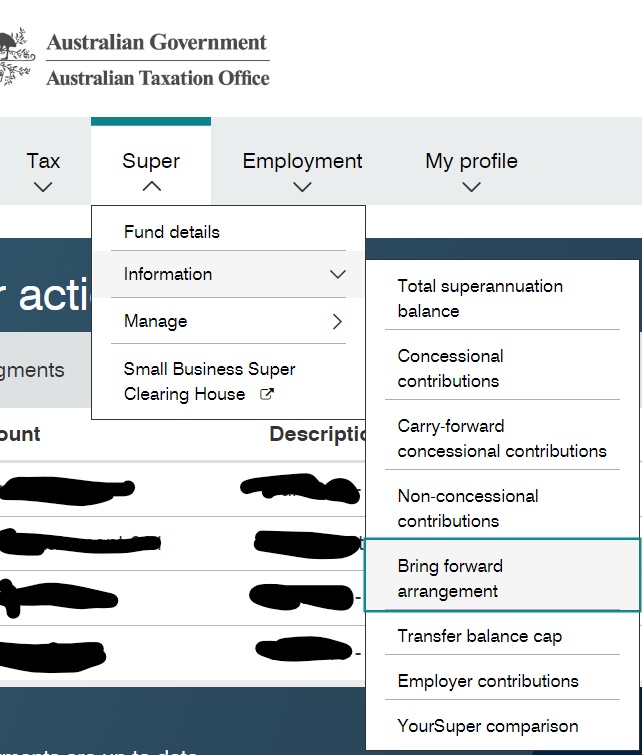













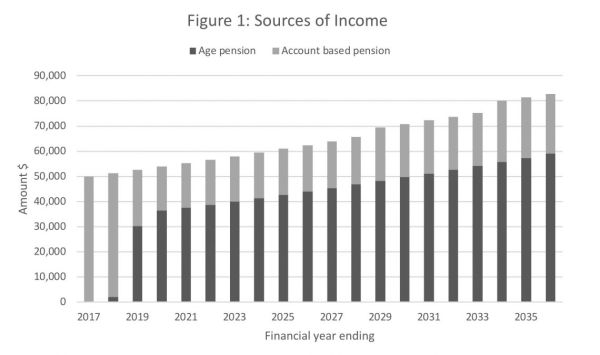
 So in 2019/20, for example, their age pension reduces from $36,337 to $9,004 and they must draw more from their pension account to make up the difference. Their wealth after 20 years is now projected at $1,581,000 or about $379,000 less than in the first scenario.

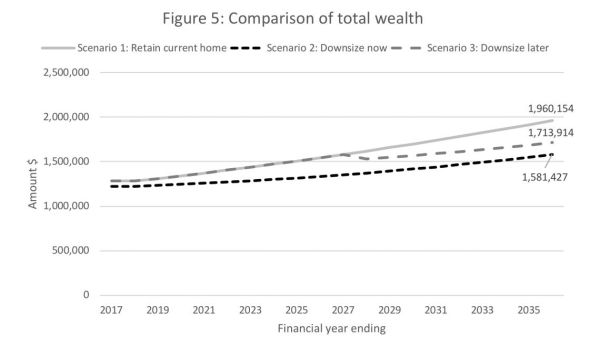













 The SMSF Coach