


• Benefits of a Self Managed Super Fund – SMSF
  • Videos
  • Why Self Managed Super?
  • Costs / Fees
  • About us
  • Testimonials
  • Contact Us
  • Property in a SMSF

The SMSF Coach

Coaching clients to take back control of their Superannuation and their future
  • Liam Shorte

    Unknown's avatar

    Putting people back in control of their wealth

  • SMSF Adviser of the Year - Winner 2025
  • SMSF Adviser of the Year - Finalist 2025
  • SMSF Adviser of the Year 2024
  • IFA 2023 Excellence Awards – SMSF Advisor of the Year – Finalist

  • IFA 2021 Excellence Awards – SMSF Advisor of the Year – WINNER!!
  • SMSF Adviser of the Year 2022 Finalist
    IFA 2022 Excellence Awards – SMSF Advisor of the Year – Finalist
  • Get advice – Have a chat

  • Enter your email address to subscribe and be first to receive notifications of new posts by email. Go on it's FREE!

    Join 6,177 other subscribers
  • Top Posts & Pages

    • How to elect to pay Division 293 Notice from your SMSF or Super
    • Stamp Duty on Transfers of Property to an SMSF
    • When your Husband Retires and the Nightmare Comes True
    • Important Changes to Pension Commencement Rules Now in Effect from 1 July 2025
    • SMSF Using an Unrelated Unit Trust for Property Development
    • Can I borrow to buy a house and land package off the plan in my SMSF?
  • Connect with me

    • View SMSFCoach’s profile on Facebook
    • View SMSFCoach’s profile on Twitter
    • View SMSFCoach’s profile on Instagram
    • View Smsfcoach’s profile on Pinterest
    • View LiamShorte’s profile on LinkedIn
    • View user44865214’s profile on Vimeo
    • View LiamShorte’s profile on Google+
  • Recent Tweets

    Tweets by SMSFCoach
  • View William Shorte's Adviser Ratings profile
    https://www.adviserratings.com.au/widget/278214/profile.js

All posts tagged Estate Planning

Superannuation changes for Self-Managed Super Funds – useful ATO links


The changes to the superannuation system, announced by the Australian Government in the 2016–17 Budget, have now received royal assent and the finer details of how to implement them have been released. While the government claim these changes were designed to improve the sustainability, flexibility and integrity of Australia’s superannuation system, they did not work with industry or the ATO before announcing them and as such it has been a nightmare to try to get your head around what the actual changes are and how strategies need to be implemented to manage them.

As a result we are getting last-minute guidance from the ATO and software providers as well as SMSF, Industry and Retail Super providers. The government have back-flipped on some measures, amended others because of collateral damage and tightened other measures for obscure reasons.  With most of these changes commencing from 1 July 2017 I have tried to put some useful links together.

A short video overview of the changes is provided below. I have provided more detailed information links and will update these as they are progressively published to help you understand the changes, how they may affect you, and what you may need to know and do now, or in the future as a trustee of a self-managed super fund (SMSF). Even more detailed information is available to help you understand the changes, including for some topics, law companion guidelines (see below) to provide certainty about how the changes will be administered.

Overview of super changes

  • Spouse tax offset
  • Personal super contributions deduction
  • Low income super tax offset
  • Introducing a transfer balance cap of $1.6M for pension phase accounts
  • Reduction of Division 293 income threshold to $250,000
  • Lowering the non-concessional (post-tax) contributions cap to $100,000 per annum
  • Reduction of concessional (pre-tax) contributions cap to $25,000 per annum
  • Carry-forward concessional contributions of unused caps over five years
  • Improve the integrity of retirement income streams
  • Removal of anti-detriment payment
  • Innovative retirement income stream products
  • Co-contributions

Law Companion Guides

For those who wish to dive in to the detail please view the Law Companion Guides below. A law companion guideline is a type of public ruling. It gives the ATO view on how recently enacted law applies. It is usually developed at the same time as the drafting of the Bill.

The ATO normally release a law companion guideline in draft form for comment when the Bill is introduced into Parliament. It is finalised after the Bill receives Royal Assent. It provides early certainty in the application of the new law. Please make sure to look for updates before relying on this information.

LCG 2016/8 – Superannuation reform: transfer balance cap and transition-to-retirement reforms: transitional CGT relief for superannuation funds
LCG 2016/9 – Superannuation reform: transfer balance cap
LCG 2016/D10 – Superannuation reform: defined benefit income streams – non commutable, lifetime pensions and lifetime annuities
LCG 2016/11 – Superannuation reform: concessional contributions – defined benefit interests and constitutionally protected funds
LCG 2016/12 – Superannuation reform: total superannuation balance
LCG 2017/D1 – Superannuation reform: defined benefit income streams – pensions or annuities paid from non-commutable, life expectancy or market-linked products
LCG 2017/D3 – Superannuation reform: Transfer Balance Cap – Superannuation death benefits

Super changes Q&As

The ATO have also released access to answers to some frequently asked questions and they can be found in this document Super Changes Q & As

Example: Q. How are my pensions and annuities valued for transfer balance cap purposes?

ANSWER : You need to contact your fund about the value of your pensions and annuities.

The value of your pension or annuity will generally be the value of your pension account for an account-based pension.

Special rules apply to calculate the value of: • lifetime pensions • lifetime annuities that existed on 30 June 2017, and • life expectancy and market linked pensions and annuities where the income stream existed on 30 June 2017

Lifetime pension and annuities These are valued by multiplying the annual entitlement by a factor of 16.This provides a simple valuation rule based on general actuarial considerations. Your annual entitlement to a superannuation income stream is worked out by reference to the first payment entitlement for the year. The first payment is annualised based on the number of days in the period to which the payment refers. (I.e. the first payment divided by the number of days the payment relates to multiplied by 365).

This means that a lifetime pension that pays $100,000 per annum will have a special value of $1.6 million which counts towards your transfer balance cap in the 2017-18 financial year.

For a lifetime pension or annuity already being paid on 1 July 2017, the special value will be based on annualising the first payment in the 2017-18 financial year. This may include indexation, so may be slightly higher than your current annual lifetime pension payments.

Life expectancy and market linked pensions and annuities being paid on or before 30 June 2017 are valued by multiplying the annual entitlement by the number of years remaining on the term of the product (rounded up to the nearest year).

I hope this guidance has been helpful and please take the time to comment. Feedback always appreciated. Please reblog, retweet, like on Facebook etc to make sure we get the news out there. As always please contact me if you want to look at your own options. We have offices in Castle Hill and Windsor but can meet clients anywhere in Sydney or via Skype. Just click the Schedule Now button up on the left to find the appointment options.

Liam Shorte B.Bus SSA™ AFP

Financial Planner & SMSF Specialist Advisor™

SMSF Specialist Adviser 

 Follow SMSFCoach on Twitter Liam Shorte on Linkedin NextGen Wealth on Facebook   

Verante Financial Planning

Tel: 02 98941844, Mobile: 0413 936 299

PO Box 6002 BHBC, Baulkham Hills NSW 2153

5/15 Terminus St. Castle Hill NSW 2154

Corporate Authorised Representative of Viridian Select Pty Ltd ABN 41 621 447 345, AFSL 51572

This information has been prepared without taking account of your objectives, financial situation or needs. Because of this you should, before acting on this information, consider its appropriateness, having regard to your objectives, financial situation and needs. This website provides an overview or summary only and it should not be considered a comprehensive statement on any matter or relied upon as such.

Share this:

  • Click to email a link to a friend (Opens in new window) Email
  • Click to print (Opens in new window) Print
  • Tweet
  • Pocket
  • Click to share on Reddit (Opens in new window) Reddit
Like Loading...
2 Comments
by SMSF Coach - Liam Shorte on April 21, 2017  •  Permalink
Posted in Checklists, Contribution Strategies, Estate Planning, News & Stats, Pension Strategies, Pensions, Retirement Planning, Salary Sacrifice, Small Business CGT, SMSF, SMSF Management, Superannuation, Superannuation Splitting, Tax Planning, Trustee
Tagged Account Based Pension, Age Pension, Alzheimer's, Asset Allocation, assets test, Baulkham Hills, budget, Castle Hill, Cost of Living, dementia, DIY Super, Dural, Enduring Power of Attorney, EPoA, Estate Planning, Hawkesbury, Incapacity, income planning, Interest Rates, Investment, Investment Strategy, pension phase, Pension Strategies, Pensions, powers of attorney, private company valuations, property, protection, RBA, reset pensions, Retire, Retirement, Retirement Planning, Self MAnaged Super, Self Managed Superannuation Fund, SMSF, Strategy, superannuation, Tax Free Pensions, Tax Planning, Transition, Transition to Retirement, Trustee, Trusts asset valuations, Windsor

Posted by SMSF Coach - Liam Shorte on April 21, 2017

https://smsfcoach.com.au/2017/04/21/superannuation-changes-for-self-managed-super-funds-useful-ato-links/

Insights in to the ATO SMSF statistical overview of 2014–15 released February 2017


The ATO have released the analysis of the SMSF sector based on the financial returns for 30 June 2015 and some 2016 figures from their records. It’s always good to understand how the sector is developing and how your SMSF compares in the overall scheme of things. In this article I cherry-pick some of the stats that may be of interest to you.

Number of new SMSFs setup each year rising again.

The SMSF sector continues to grow with another up tick in 2015-6 after a slow down in 2014 and 2015.

annual-growth-in-the-number-of-smsfs-from-2012-to-2016

One of the stats that still defies the belief of most SMSF Specialist Advisors is the number of funds being set up with Individual Trustees. In all our interaction with professional advisors over 90% recommend Corporate Trustees but the ATO stats on new setups show continued preference, over 90%,  for Individual Trustees. When you are finished this blog I would urge readers to look at my earlier blog Why Self Managed Super Funds Should Have A Corporate Trustee (click now an it will open in another tab for reading later)

SMSF trustee type

This table shows the trustee structure (either corporate or individual trustees) of the SMSF population as at 30 June 2016, plus new registrations for the years 30 June 2014 to 30 June 2016.

SMSF trustee type
Trustee
type
% of all SMSFs (at 30/06/16) 2014 registrations 2015 registrations 2016 registrations
Corporate 23.23% 2,813 (7.70%) 1,781 (5.45%) 2,433 (7.24%)
Individual 76.77% 33,718 (92.30%) 30,916 (94.55%) 31,183 (92.76%)
Total 100% 36,531 (100%) 32,697 (100%) 33,616 (100%)

 Size of SMSF sector

img_3991

SMSFs make up 99.6% of the number of funds and 29% of the $2.1 trillion total superannuation assets as at 30 June 2016.

SMSFs make up 99.6% of the number of funds and 29% of the $2.1 trillion total superannuation assets as at 30 June 2016.

There were 577,000 SMSFs holding $622 billion in assets, with more than one million SMSF members.

Over the five years to 30 June 2016, growth in the number of SMSFs averaged almost 6% annually.
45% of SMSFs have been established for more than 10 years, and 17% have been established for three years or less.

Growth of SMSF assets

img_3992

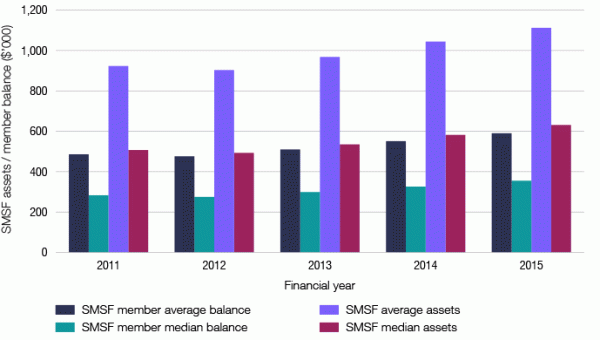
In 2015, the average assets of SMSFs reached $1.1 million, a growth of 20% over five years. Average assets per member were $590,000, the highest over five years.

In 2015, the average assets of SMSFs reached $1.1 million, a growth of 20% over five years.

Average assets per member were $590,000, the highest over five years.

For SMSFs established in 2015, the average fund assets were $392,000, an increase of 15% compared to average assets of funds established in 2011.

48% of SMSFs had assets between $200,000 and $1 million, accounting for 23% of all SMSF assets.

The majority of SMSF assets were held by funds with assets between $1 million and $5 million, representing 54% of total SMSF assets.

Contributions

img_3993

Total contributions to SMSFs increased by 38% over the five years to 2015. This is 6% higher than the growth of total contributions to all superannuation funds (32%) over the same period.

Member contributions increased to more than $26 billion or by 54% over the five-year period.

Employer contributions made to SMSFs fell by 0.5% over the five years to 2015.

The Graph below  compares contributions to SMSFs as a proportion of all super fund contributions for the years ended 30 June 2011 to 30 June 2015.

At 30 June 2015, contributions to SMSFs represented 24% of all super fund contributions. Member contributions into SMSFs, accounted for 51% of all member contributions across all super funds in 2015, an increase of 2% over the five-year period. In contrast, the proportion of employer contributions to SMSFs has dropped over the period to only 8% of all employer contributions across all super funds in 2015.

Graph 3: Contributions to SMSFs as a percentage of total Australian super contributions (for member, employer, and total) 2011–2015

annual-contributions

SMSF benefit payments

Benefit payments have increased from $19.2 billion in 2011 to $35 billion in 2015. The proportion of SMSF members receiving a benefit payment also increased by 24% in 2015.

In 2015 the average benefit payment per fund was $126,000, and the median payment $62,900.
In 2015, 94% of all benefit payments were in the form of income stream (including transition to retirement income streams).

Transition to retirement income streams have remained steady representing 12% of total benefit payments in 2015.

SMSF payment phase

img_3994The majority of SMSFs continued to be solely in the accumulation phase (52%) with the remaining 48% making pension payments to some of or all members.

Over the five years to 2015, there was a shift of funds moving into the pension phase (7%).

Of SMSFs that started to make pension payments in 2015, 50% were more than five years old, while 23% were less than two years old.

Of funds established over the last 10 years to 2015, 69% have not started making pension payments.
SMSF member demographics

SMSF member demographics

img_3995

At 30 June 2016 there were almost 1.1 million SMSF members, of whom 53% were male and 47% female

The trend continued for members of new SMSFs to be from younger age groups. With the median age of SMSF members of newly established funds in 2015 decreased to 48 years, compared to 59 years for all SMSF members as at 30 June 2016.

In 2015, SMSF members tended to be older than members of APRA funds and had both higher average balances and higher average taxable incomes.

The proportion of members receiving pension payments from an SMSF continued to trend upwards. In 2015, 41% of members were fully or partially in pension phase, compared to 34% in 2011

SMSF member balances

img_3996

At 30 June 2015 the average SMSF member balance was $590,000 and the median balance was $355,000, an increase of 21% and 26% respectively over the five years to 2015.

The average member balances for female and male members were $498,000 and $633,000 respectively. The female average member balance increased by 24% over the five-year period, while the male average member balance increased by 17% over the same period.

Over the five years to 2015, the proportion of members with balances of $200,000 or less decreased to 31% of all members.

Graph : Asset size SMSF and SMSF member 2011–2015 

median-balance

SMSF asset allocation

9050fa75-c53c-472f-b057-0ac2b3d82b55-5093-0000143d4f4c196c_tmp

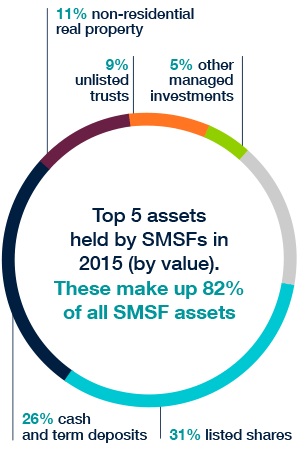
SMSFs directly invested 81% of their assets, mainly in cash and term deposits and Australian-listed shares (a total of 57%).

For the third consecutive year the proportion of total assets held in cash and term deposits decreased slightly (by 2%).

As fund asset size increased, the proportion of assets held in cash and term deposits decreased significantly while the proportion of assets held in trusts and other managed investments increased.

SMSFs in the pension phase had similar assets to SMSFs in the accumulation phase. The only noticeable differences are that SMSFs in pension phase tend to slightly favour listed shares and managed investments more, while those in accumulation phase favoured property assets more.

Limited recourse borrowing arrangement (LRBA) assets

In 2015, 6% of SMSFs reported assets held under LRBAs, which is consistent with the prior year (5.7%). The majority of these funds held LRBA investments in residential real property and non-residential real property. In terms of value, real property assets held under LRBAs collectively made up 91% or $18.5 billion of all SMSF LRBA asset holdings in 2015.

SMSF borrowing

At 30 June 2015, SMSFs held total borrowings of $16.9 billion representing 2.8% of total SMSF assets. The average amount borrowed increased from $346,000 in 2011 to $378,000 in 2015.
Investment performance

Investment performance

6aa353a7-6663-456e-b522-fbd48aa32b34-5093-0000143d57eca198_tmp

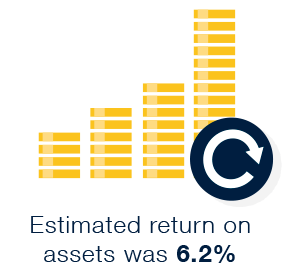
In 2014–15, estimated average return on assets for SMSFs was positive (6.2%), a decrease from the estimated returns in 2014 (of 9.7%), but remains in positive terms and is consistent with the trend of investment performance for APRA funds of more than four members over the five years to 2015.

SMSF expenses

The estimated average total expense ratio of SMSFs in 2015 was 1.1% and the average total expenses value was $12,200.

The average ‘investment expense’ and ‘administration and operating expense’ ratios were consistent at 0.60% and 0.50% respectively.

SMSFs in pension phase incurred higher average total expenses than funds solely in accumulation phase.
The average expense ratios for SMSFs declined in direct proportion to the increased size of the fund.

SMSF auditors

In 2015, there continued to be a trend towards SMSF Auditors performing audits for a larger number of SMSFs, with most (53%) performing between five and 50 SMSF audits, and 28% of auditors performing between 51 and 250 SMSF audits.

There were 5% of SMSF auditors conducting more than 250 audits, representing 44% of total SMSF audits in 2015

To see the full report in more detail click here https://www.ato.gov.au/about-ato/research-and-statistics/in-detail/super-statistics/smsf/self-managed-superannuation-funds–a-statistical-overview-2014-2015/?page=1#Introduction

I hope this guidance has been helpful and please take the time to comment. Feedback always appreciated. Please reblog, retweet, like on Facebook etc to make sure we get the news out there. As always please contact me if you want to look at your own options. We have offices in Castle Hill and Windsor but can meet clients anywhere in Sydney or via Skype. Just click the Schedule Now button up on the left to find the appointment options.

Liam Shorte B.Bus SSA™ AFP

Financial Planner & SMSF Specialist Advisor™

SMSF Specialist Adviser 

 Follow SMSFCoach on Twitter Liam Shorte on Linkedin NextGen Wealth on Facebook   

Verante Financial Planning

Tel: 02 98941844, Mobile: 0413 936 299

PO Box 6002 BHBC, Baulkham Hills NSW 2153

5/15 Terminus St. Castle Hill NSW 2154

Corporate Authorised Representative of Viridian Select Pty Ltd ABN 41 621 447 345, AFSL 51572

This information has been prepared without taking account of your objectives, financial situation or needs. Because of this you should, before acting on this information, consider its appropriateness, having regard to your objectives, financial situation and needs. This website provides an overview or summary only and it should not be considered a comprehensive statement on any matter or relied upon as such.

Share this:

  • Click to email a link to a friend (Opens in new window) Email
  • Click to print (Opens in new window) Print
  • Tweet
  • Pocket
  • Click to share on Reddit (Opens in new window) Reddit
Like Loading...
Leave a comment
by SMSF Coach - Liam Shorte on February 27, 2017  •  Permalink
Posted in News & Stats, SMSF
Tagged Account Based Pension, Age Pension, Alzheimer's, assets test, ATO statistics, Baulkham Hills, budget, Castle Hill, Cost of Living, dementia, DIY Super, Dural, Enduring Power of Attorney, EPoA, Estate Planning, Hawkesbury, Incapacity, income planning, Interest Rates, Investment, Investment Strategy, pension phase, Pension Strategies, Pensions, powers of attorney, property, reset pensions, Retire, Retirement, Retirement Planning, Self Managed Superannuation Fund, SMSF, SMSf Statistics, Tax Free Pensions, Tax Planning, Transition, Transition to Retirement

Posted by SMSF Coach - Liam Shorte on February 27, 2017

https://smsfcoach.com.au/2017/02/27/insights-in-to-the-ato-smsf-statistical-overview-of-2014-15-released-february-2017/

Buying Property through your Super – SMSF


property in an SMSF

So you have heard you can buy an investment property with your superannuation? Here is some general information and pros and cons of property in an SMSF. I have also provided links to more comprehensive information on the strategies most often used.

People have been using their superannuation to buy property in their SMSF for decades now but it really came to the fore when SMSFs were allowed to borrow to buy assets in 2007 and when this was given more clarity in terms of borrowing to buy residential property in 2010.

Investing in property within superannuation is not as straightforward as investing outside the superannuation environment and you need to do your homework. Buying property through super can be great way to invest for retirement but it’s probably most suitable for people who are only 15 to 25 years away from it. Not only do they probably have 20 years or more contributions and hence sufficient balances for a deposit at their disposal, they are also more likely to be able to hold the property until after retirement to realise the best of the tax savings.

I have also provided some more detailed general guidance on specific strategies and the implementation process on my Property in an SMSF page.

Property Investment in an SMSF:

People are able to combine their superannuation accounts in to an SMSF and use then are able to buy both residential and commercial property with or without the support of a mortgage from a lender.

However it’s important to note that all investments need to be in the best interests of fund members and meet the Sole Purpose test of superannuation and the legislation dealing with this topic.

So please make sure that any property investment has an income stream and realistic prospects for capital growth. Overall, an SMSF investment strategy needs to take into account the personal circumstances of all the fund members, including their age and risk tolerance and needs to consider:

  • diversification (investing in a range of assets and asset classes)
  • the liquidity of the fund’s assets (how easily they can be converted to cash to meet fund expenses)
  • the fund’s ability to pay benefits (when members retire) and other costs it incurs
  • the members’ needs and circumstances (such as, their age and retirement needs).
  • the steps that will be taken to insure the members and protect their retirement savings.

What you should make clear in the investment strategy:

When it comes to purchasing any investment asset through a SMSF, the Australian taxation office (ATO) provides the following guidance:

  • Investments must be purchased on an ‘arm’s length’ basis and must be maintained on a strict commercial basis.
  • The investment must meet the sole purpose test of providing retirement benefits to fund members.

In terms of property, this means that the purchase cost and sale price – as well as the rental income – must reflect a true market rate of return. It also means that you usually cannot buy the property from – or sell the property to – someone associated with any of the Fund’s members. This is called a “Related Party” transaction.

It also means that neither you nor anyone associated with you can receive any personal benefit of holding the asset. (more on this below)

So what are the pros and cons of holding a property in Superannuation?

Pros

  • Combined investing as a couple or family:. Your personal savings outside superannuation – or even your individual account balance(s) within superannuation – may not be enough to meet the deposit requirements of a direct property. Combining your account balances with the other members of your family, though, may give you the purchasing power you need to invest in a large asset.
  • It can be tax-effective. Superannuation receives concessional tax treatment on assets used to save for retirement. The earnings within your superannuation fund are taxed at only 15% with a 33% discount for assets held more than 12 months (i.e 10% CGT)– which is most likely less that your marginal tax rate. The big bonus is if you hold on to that property until retirement the earnings within the pension phase are tax-free. That is on the rent if you keep the property or the sale proceeds if you sell it. (subject to the $1.6m pension transfer limit per member from 1 July 2017).
  • Making repayments from pre-tax dollars. If you can afford to save and have room within your concessional contribution limits then you can salary sacrifice additional income to super to pay off the loan quicker from pre-tax dollars. So paying 15% on salary sacrifice and then making additional repayments rather than paying your marginal tax rate on the income and saving it outside super.
  • Supporting Business growth . While the rules prevent you purchasing a residential property from yourself or a related party, you can buy a commercial or industrial property (know as Business Real Property) to lease back to your own business – provided you pay a current market rate of rent. This helps free up funds to grow the business.
  • The feel of Bricks and Mortar! – providing more control over your investments. Many SMSF investors appreciate having control over the investments they buy and the ability to “value add” to their property investments via renovation or development (See more detail in SMSF Borrowing: What Can I Do With An Investment Property Within The Rules. there is no substitute for that feeling when you have a real understanding of where your money is invested.

Cons

  • Big lumpy illiquid asset. Diversification – the wise move of not having all your eggs in one basket is more difficult to achieve if your SMSF owns just one or two large assets. That lack of diversification may not be in the best interests of the SMSF members especially across generations. The old adage “You can sell off a bathroom when you need cash” comes to mind so make sure you plan your “what if strategies” and look at insurance, cash buffers and especially the funding of future pensions upfront.
  • Set up costs are higher. There are thousands of dollars in set-up costs and there are sometimes higher fees involved in getting a loan through your SMSF with lenders. As always set up costs should be balanced against long term benefits of the strategy. Because of the costs buying property through a SMSF is generally only suitable for funds with $200,000 or more.
  • Not great for Negative Gearing. If you borrow to buy property through your super and you’re negatively geared, the tax offset only applies to other income earned within the fund taxed at only 15% – not at your marginal tax rate on your regular income.
  • You cannot benefit personally from the property. Investments within a SMSF must be purchased via an ‘arm’s length’ transaction and must be maintained on a strict commercial basis. As such with a residential property, you cannot purchase from, lease to, or rent to a related party. The ATO advises that one of the most common breaches of the sole purpose test is in assets that provide a pre-retirement benefit to a member or associate. Some examples of a breach would be using a SMSF property as a personal holiday house, or renting a SMSF property to a family member.
  • You must be certain of future cash flow. Firstly you must expect to have to provide a higher deposit than if borrowing directly. While you can borrow to buy property within a SMSF, you cannot borrow to build or improve the property. Ensure that your level of contributions, plus the rental income, will be enough to cover any costs that you will need to meet from cash. Think seriously about having decent Income Protection insurance as well as Life and TPD insurance for the term of the loan. Again, a cash buffer is essential.
  • Liquidity at retirement. When your superannuation transfers to the pension phase you will need to ensure that you have built up a sufficient amount of cash to fund the required pension payments without risking a fire sale of the property. This can range from 4% of the pension member’s balance before 65 to 5% from 65-74 and upwards from there.
  • Reduction in Personal borrowing capacity: With banks typically asking for personal guarantees now which then restricts your personal borrowing power. (Thanks Mark Hearne).

There are many tips and traps to be aware of when it to comes to investing within a SMSF that I have done over 14 separate articles on the subject and all are available free on my blog at www.smsfcoach.com.au . So do some reading and your own research and please ensure that you get professional advice on your own circumstances, and assistance either via our team or your own advisors before you set up your fund or start the strategy.

I hope this guidance has been helpful and please take the time to comment. Feedback always appreciated. Please reblog, retweet, like on Facebook etc to make sure we get the news out there. As always please contact me if you want to look at your own options. We have offices in Castle Hill and Windsor but can meet clients anywhere in Sydney or via Skype. Just click the Schedule Now button up on the left to find the appointment options.

Liam Shorte B.Bus SSA™ AFP

Financial Planner & SMSF Specialist Advisor™

SMSF Specialist Adviser 

 Follow SMSFCoach on Twitter Liam Shorte on Linkedin NextGen Wealth on Facebook   

Verante Financial Planning

Tel: 02 98941844, Mobile: 0413 936 299

PO Box 6002 BHBC, Baulkham Hills NSW 2153

5/15 Terminus St. Castle Hill NSW 2154

Corporate Authorised Representative of Viridian Select Pty Ltd ABN 41 621 447 345, AFSL 51572

This information has been prepared without taking account of your objectives, financial situation or needs. Because of this you should, before acting on this information, consider its appropriateness, having regard to your objectives, financial situation and needs. This website provides an overview or summary only and it should not be considered a comprehensive statement on any matter or relied upon as such.

Share this:

  • Click to email a link to a friend (Opens in new window) Email
  • Click to print (Opens in new window) Print
  • Tweet
  • Pocket
  • Click to share on Reddit (Opens in new window) Reddit
Like Loading...
5 Comments
by SMSF Coach - Liam Shorte on February 13, 2017  •  Permalink
Posted in Borrowing, Investment Strategies, LRBA, Property
Tagged Account Based Pension, Alzheimer's, Baulkham Hills, budget, Castle Hill, dementia, DIY Super, Dural, Enduring Power of Attorney, EPoA, Estate Planning, Hawkesbury, Incapacity, income planning, Investment, Investment Strategy, LRBA, pension phase, Pensions, powers of attorney, property, property in super, Self Managed Superannuation Fund, SMSF, smsf borrowing, SMSF property, Tax Free Pensions, Tax Planning, Transition, Transition to Retirement

Posted by SMSF Coach - Liam Shorte on February 13, 2017

https://smsfcoach.com.au/2017/02/13/buying-property-through-your-super-smsf/

Top Ten Investment Rules Every SMSF Trustee Should Review Annually


bfc94d7a-1b71-43bf-88a0-4f5d1d5ecbd2-7421-000014efb0189b0c_tmp

Bob Farrell is a Wall Street veteran with over 50 years of experience in the investment business. He started as a technical analyst at Merrill Lynch in 1957. Bob’s ten investment rules have come from his decades of experience with all sorts of markets: dull, bull, bear, bubbles, and crashes. I thought I would share with you a short version of these Top Ten Rules to guide SMSF Trustees in reviewing their fund’s Investment Strategy
Top 10 investment rules

  1. Markets tend to return to the mean (average price) over time. Basically, this means that after a strong uptrend or downtrend, prices tend to move back toward the long-term average.
  2. Excesses in one direction will lead to an opposite excess in the other direction. Similar to above. It is not a coincidence that the ASX 300 has not reached the previous high 9 years after the pre-GFC top in 2008.
  3. There are no new eras—excesses are never permanent. “This time is different” are the four most dangerous words in investing.
  4. Exponential rapidly rising or falling markets usually go further than you think, but they do not correct by going sideways.  Corrections are as ugly as advances are exciting.
  5. The public buys the most at the top and the least at the bottom. Greed and fear drive the investing public far more than logic.
  6. Fear and greed are stronger than long-term resolve.  This is a corollary to number 5. It is easy to say you are a long-term investor when your account is rising; much more difficult when you find yourself down 40%.
  7. Markets are strongest when they are broad and weakest when they narrow to a handful of blue chip names. A rally that has few stocks rising shows modest conviction and is more indicative of a market about to falter. Conversely, a rally that encompasses a broad number of stocks tends to be indicative of a “healthy” bull run.
  8. Bear markets have three stages—sharp down, reflexive rebound, and a drawn-out fundamental downtrend. Bear markets often start with a sharp, swift decline, then a sharp rebound, then the longer, grinding down of the third stage.
  9. When all the experts and forecasts agree, something else is going to happen. If everyone expects something “unexpected” to happen, the greater likelihood is it doesn’t.  By definition, a “black swan” event is something few see coming, but after the fact, many say it should have been foreseen by everyone.
  10. Bull markets are more fun than bear markets.  Psychologically, it is easy to invest in a bull market; after all the market confirms your “skill” and “brilliance” by going up. In a bear market, fear, panic, and even depression take over as nothing seems to go your way.

Recently Lance Robert’s website, realinvestmentadvice.com, reviewed Bob’s investment rules with great illustrated graphs to back up the veracity of those 10 investment rules. I would highly recommend a visit to that article for those needing further detail.

Mr. Farrell’s rules are not meant as hard and fast rules but something to keep in mind as you review you strategy and to ensure you do a fair critical review rather than just coasting along. There are always exceptions but these are good rules to keep in mind when reviewing your Self Managed Superannuation Fund investment strategy and positioning your portfolio for long-term investing success.

I hope this guidance has been helpful and please take the time to comment. Feedback always appreciated. Please reblog, retweet, like on Facebook etc to make sure we get the news out there. As always please contact me if you want to look at your own options. We have offices in Castle Hill and Windsor but can meet clients anywhere in Sydney or via Skype. Just click the Schedule Now button up on the left to find the appointment options.

Liam Shorte B.Bus SSA™ AFP

Financial Planner & SMSF Specialist Advisor™

SMSF Specialist Adviser 

 Follow SMSFCoach on Twitter Liam Shorte on Linkedin NextGen Wealth on Facebook   

Verante Financial Planning

Tel: 02 98941844, Mobile: 0413 936 299

PO Box 6002 BHBC, Baulkham Hills NSW 2153

5/15 Terminus St. Castle Hill NSW 2154

Corporate Authorised Representative of  Viridian Advisory Pty Ltd (ABN 34 605 438 042) (AFSL 476223)

This information has been prepared without taking account of your objectives, financial situation or needs. Because of this you should, before acting on this information, consider its appropriateness, having regard to your objectives, financial situation and needs. This website provides an overview or summary only and it should not be considered a comprehensive statement on any matter or relied upon as such.

Share this:

  • Click to email a link to a friend (Opens in new window) Email
  • Click to print (Opens in new window) Print
  • Tweet
  • Pocket
  • Click to share on Reddit (Opens in new window) Reddit
Like Loading...
1 Comment
by SMSF Coach - Liam Shorte on December 5, 2016  •  Permalink
Posted in Checklists, Investment Strategies, SMSF Management
Tagged Account Based Pension, Alzheimer's, Baulkham Hills, black swan, budget, Castle Hill, contrarian, dementia, DIY Super, Dural, Enduring Power of Attorney, EPoA, Estate Planning, Hawkesbury, herd mentality, Incapacity, income planning, Investing, Investment, Investment rules, Investment Strategy, investment strategy review, pension phase, Pensions, powers of attorney, property, review, Richmond, Self Managed Superannuation Fund, SMSF, Tax Free Pensions, Tax Planning, Transition, Transition to Retirement, Windsor

Posted by SMSF Coach - Liam Shorte on December 5, 2016

https://smsfcoach.com.au/2016/12/05/top-ten-investment-rules-every-smsf-trustee-should-review-annually/

Class SMSF Benchmark Report Shows SMSF Investors Using the Newer Platforms


In it latest quarterly review of the SMSF sector Class have indicated that Platform use is actually rising a little among SMSF Trustees from 55% to 58%. However there is some change in the guard in terms of which platforms are seeing inflows. From the media release on the report:

Investment platforms have maintained their share of self-managed super funds in the past two years but the market share of the providers has shifted in favour of the non-aligned in the latest Class SMSF Benchmark Report.

The September quarter Report, based on an analysis of 120,000 SMSFs, shows that slightly less than 1 in 5 SMSFs use platforms and this has remained relatively stable for the past two years. However, the proportion of assets these funds hold on the platform has actually increased since 2014, from 55% to 58%, suggesting that predictions of the imminent demise of platforms in the SMSF market are premature.
However, the market share of different platform types has shifted significantly over the same period.

While all platforms increased the value of SMSF assets they held, most institutional platform providers lost ground compared to their non-aligned peers, especially Praemium, HUB24 and netwealth. The notable exception among the institutions was BT, which was able to build on its leading position and grow from 41% to 46% of all platform assets. Excluding BT, institutional platforms saw their share of platform assets drop from 47% to 40%.

I don’t find this a surprise as BT has launched its new generation BT Panorama platform which works especially well for SMSF investors. You can access Cash, very competitive Term Deposits from BT, Westpac and St George as well as shares, hybrids, ETFs, managed funds and managed accounts all on the one reporting platform as well as include external assets in the report. We have started using this platform for new clients as it is keenly priced with no administration charge for cash or term deposits and competitive admin fees for shares and managed funds.

Platform users more likely to use Managed Funds

Again the report also shows a higher use of managed funds by those using Platforms which no doubt is due somewhat to the preference for platforms by many SMSF advisers and also that many trustees use platforms to access sectors or managers they can’t get direct/retail. Again from the report:

The Report also found that SMSFs that use a platform allocate their assets differently to those that don’t. SMSFs that use platforms hold less cash and direct property but almost three times the percentage of managed funds as other SMSFs.

While the two categories of SMSFs have a similar direct exposure to shares, those that use platforms appear to be increasingly holding their equities off the platform, such as through a broker.

You can access the full Class Benchmark report and previous release here 

I found the table of the Top 20 investment holdings in each class very insightful as it shows the increase in use of ETFs in SMSF portfolios. Hear is a summary of the top 5 ETFs from the data:

1   IVV     Ishares S&P 500 ETF – Chess Depositary Interests 1:1 IshS&P500
2   IOO     Ishares Global 100 ETF – Chess Depositary Interests 1:1 Ishglb100
3   STW    SPDR S&P/ASX 200 Fund – Exchange Traded Fund Units Fully Paid
4   VTS     Vanguard Us Total Market Shares Index ETF – Chess Depositary Interests 1:1
5   VEU    Vanguard All-World Ex-Us Shares Index ETF – Chess Depositary Interests 1:1

Likewise the top 5 Managed funds

1    PLA0002AU   Platinum International Fund
2   MGE0001AU  Magellan Global Fund
3   PLA0004AU   Platinum Asia Fund
4   FID0008AU   Fidelity Australian Equities Fund
5   MAQ0482AU Winton Global Alpha Fund

I hope this guidance has been helpful and please take the time to comment. Feedback always appreciated. Please reblog, retweet, like on Facebook etc to make sure we get the news out there. As always please contact me if you want to look at your own options. We have offices in Castle Hill and Windsor but can meet clients anywhere in Sydney or via Skype. Just click the Schedule Now button up on the left to find the appointment options.

Liam Shorte B.Bus SSA™ AFP

Financial Planner & SMSF Specialist Advisor™

SMSF Specialist Adviser 

 Follow SMSFCoach on Twitter Liam Shorte on Linkedin NextGen Wealth on Facebook   

Verante Financial Planning

Tel: 02 98941844, Mobile: 0413 936 299

PO Box 6002 BHBC, Baulkham Hills NSW 2153

5/15 Terminus St. Castle Hill NSW 2154

Corporate Authorised Representative of Viridian Select Pty Ltd ABN 41 621 447 345, AFSL 51572

This information has been prepared without taking account of your objectives, financial situation or needs. Because of this you should, before acting on this information, consider its appropriateness, having regard to your objectives, financial situation and needs. This website provides an overview or summary only and it should not be considered a comprehensive statement on any matter or relied upon as such.

Share this:

  • Click to email a link to a friend (Opens in new window) Email
  • Click to print (Opens in new window) Print
  • Tweet
  • Pocket
  • Click to share on Reddit (Opens in new window) Reddit
Like Loading...
1 Comment
by SMSF Coach - Liam Shorte on November 22, 2016  •  Permalink
Posted in Enduring Power of Attorney, Estate Planning, SMSF Management, Trustee
Tagged Account Based Pension, Alzheimer's, Baulkham Hills, budget, Castle Hill, dementia, DIY Super, Dural, Enduring Power of Attorney, EPoA, Estate Planning, Hawkesbury, Incapacity, income planning, Investment, Investment Strategy, pension phase, Pensions, powers of attorney, property, Self Managed Superannuation Fund, SMSF, Tax Free Pensions, Tax Planning, Transition, Transition to Retirement

Posted by SMSF Coach - Liam Shorte on November 22, 2016

https://smsfcoach.com.au/2016/11/22/class-smsf-benchmark-report-shows-smsf-investors-using-the-newer-platforms/

How to Use Insurance to Pay Out an SMSF Property Mortgage on Death or Disability


 Protect Investment Property

Like every strategy we discuss with clients we stress that have to look at the exit strategies up front rather than scramble to react if something happens that changes the financial position of the members or of the fund.

While a self managed superannuation fund can increase its assets and leverage the potential growth by borrowing to purchase a property, that borrowing can also cause financial distress if a fund member dies or becomes disabled. The lack of liquidity and cash flow could force the trustee to:

  • Sell the property in a difficult or dropping market
  • Realise capital gains or losses before expected i.e. before the members are in pension phase
  • Have to deal with increased transaction costs.

Since August 2012 Trustees of an SMSF have been required to consider insurance for members and we would say that is very sensible when debt is involved.

SUPERANNUATION INDUSTRY (SUPERVISION) REGULATIONS 1994 – REG 4.09 (2)(e)

The trustee of the entity must formulate, review regularly and give effect to an investment strategy that has regard to the whole of the circumstances of the entity including, but not limited to, the following:

for a self managed superannuation fund – whether the trustees of the fund should hold a contract of insurance that provides insurance cover for one or more members of the fund

In the past strategies like Cross insurance on each member of superannuation fund was often used to reduce the impact that the sudden death or disability of a member may have on a fund however the ATO have ruled out many of these strategies including using the SMSF to fund Buy-Sell Agreements between business partners.

SMSF mortgage repayment solutions on death

If there is life insurance on the member that dies then any proceeds are added to their account balance and can be paid as a lump sum out of the fund to beneficiaries but that may leave a fund a debt still to be paid off and with less contributions going in as one member is deceased and the fund may not have the free cash-flow to fund the full balance pay out without selling the property.

The strategies outlined below are those now available as  to manage the cash-flow liquidity issues and death benefit payment requirements that have arisen when a fund member dies suddenly, whilst the fund still has a Limited Recourse Loan Arrangement in place.

Payment of insurance benefits as an income stream to spouse

If it is 2 spouses or defacto’s that have set up an SMSF and borrowed to purchase an investment property, life insurance is often used to extinguish the debt. The reason for this is that generally the disability or death will eliminate or reduce the level of contributions that are made for the member, from which the loan repayments have been sourced.

Where the members of a fund are spouses then death benefits can be paid as an income stream. This means that even if a fund has borrowed to purchase a property, the property does not need to be disposed of to pay out the death benefit. This is even more important if your business is run out of the property.

In this case the life/TPD cover can be held by the member covered by the insurance and the premium can be paid from that members account. These arrangements comply with the SIS Regs, and the policy can be held through the self managed fund.

If the member dies or becomes disabled, the proceeds will be credited to the affected member’s account and loan will be repaid. Following the repayment of the loan a pension will commence to be paid to the member in the event of TPD or to the spouse in the event of death. If under 65 they can take as little as 4% per annum to keep as much in the fund as possible.

Example: Tax Dependants like spouses

Jack and Diane are married and members of Mellencamp Family Super Fund (“SMSF”)
Account Balances:
Jack – $100,000
Diane – $100,000
SMSF took out a loan of $300,000 to acquire property valued at $500,000

example-1-tax-dependants

Jack dies after getting a bad knock playing football ( for the younger readers get the full story here

anyway thank you for indulging me and now back to the example:

SMSF Cash flow after Jack’s death

  1. The loan is paid out.
  2. Diane starts a minimum 4% annual death benefit pension. Only one member left contributing now but no interest to pay.
Rent $17,500
Concessional contributions $5,000
Total inflows $22,500
Interest $0
Operating costs ($2,000)
Life premiums $0
Pension ($16,000)
Total outflows ($18,000)
Tax ($675)
Net cash flow (surplus) $3,825

what are the tax implications of the pension

Age at Death Type of Super Death Benefit Age of Recipient- DEPENDANT Taxation Treatment of Taxed Element
Any age Lump Sum Any age Tax free
60 & above Income stream Any age Tax free
Below 60 Income stream 60 & above Tax free
Below 60 Income stream Below 60 Marginal rate of tax less 15% tax offset

To implement the strategy, the following factors, need to be considered:

  • The funds trust deed must permit the fund to hold the insurance and to pay the TPD or death benefits as an income stream
  • The fund’s investment strategy should state that the trustees have considered the needs of the individual members and determined to take out life insurance for the fund members in order to repay any outstanding mortgage under an LRBA
  • Whether the fund’s cash flow allows for the taking out of the insurance policies. The premiums will normally be deductible in this circumstance as the benefits can be paid as a pension. For younger trustees you should consider Level Premiums and reviewing the cover as the loan is paid down.

Funding benefits from a reserve

If a fund is not able to pay a death or disability benefit in the form of a pension because they don’t have a spouse or the fund trust deed does not permit the payment of a benefit as a pension, then it may need to consider the use of a reserve strategy.

This strategy involves the fund trustee taking sufficient TPD and death cover over the lives of the fund members to enable the repayment of a loan and the payment of benefits as a lump sum.

The fact that the insurance policies are paid from the fund’s reserve and the insurance proceeds in the event of an insured event are credited to the reserve, means that the insurance benefit can remain in the fund. The fact that the insurance proceeds can remain in the fund means that insurance liabilities can be met and the loan repaid without the asset purchased under the borrowing arrangement needing to be sold.

In order to implement the strategy effectively, insurance policies premiums for each of the fund members will need to be paid from the reserve. The fact that the premium is paid from the reserve will then require any insurance proceeds after an insured event to be credited to the reserve.

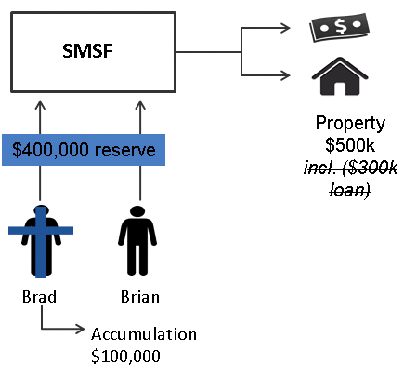
Example 2 – Non- Tax Dependants – 2 brothers in a business

example-2-non-tax-dependants

So sadly Brad dies …big ahhhh!

example-2-non-tax-dependants-outcome

SMSF Cash flow after Brad’s death

  1. Death benefits are held in a Reserve.
  2. The loan is paid out but the value is held in the reserve account
  3. Results in large reserve ($400,000)
    allocate back to Brian < 5% of his balance p.a. or
    allocate up to $25,000 p.a. this year and $25,000pa going forward to Brian’s account depending on other concessional contributions in year
Rent $17,500
Concessional contributions $10,000
Total inflows $27,500
Interest ($18,000)
Operating costs ($2,000)
Life premiums ($1,500)*
Pension $0
Total outflows ($21,500)
Tax ($900)
Net cash flow (surplus) $5,100

* Deducted from general fund expenses

Other Issues to consider

There are a number of other issues that fund trustees will need to consider when implementing this strategy:

  • If the members of the fund are business partners rather than spouses, the spouse of the deceased member may feel that the business partners are benefiting from the death of their spouse. It is really important to discuss these strategies upfront with family so they know they are provided for but that the business needs stability too.
  • When the insurance proceeds are credited to a reserve, it may be difficult to transfer that reserve back to fund members without exceeding the excessive concessional contributions cap.
  • The insurance premiums are not tax-deductible under Section 295-465 of the ITAA 97 because the policy is not held for the purpose of providing a fund member with a death or disability benefit.
  • The cost of the insurance premiums could be very high so seek advice on all possible solutions.
  • The cost of the insurance premiums may limit the trustee’s capacity to take out other insurance cover for members

By the Way – one other reason to cover your exit strategies

What happens if a trustee fails to address insurance in their SMSF?

The trustees could be fined 100 penalty units ($21,000) for each trustee – Section 34 SIS Act; Section 4AA Crimes Act 1911

and if someone else has been affected by the loss as a result:

A person who suffers loss or damage …may recover … against that other person or against any person involved in the contravention.  – Section 55(3) SIS Act

I hope this guidance has been helpful and please take the time to comment. Feedback always appreciated. Please reblog, retweet, like on Facebook etc to make sure we get the news out there. As always please contact me if you want to look at your own options. We have offices in Castle Hill and Windsor but can meet clients anywhere in Sydney or via Skype. Just click the Schedule Now button up on the left to find the appointment options.

Liam Shorte B.Bus SSA™ AFP

Financial Planner & SMSF Specialist Advisor™

SMSF Specialist Adviser 

 Follow SMSFCoach on Twitter Liam Shorte on Linkedin NextGen Wealth on Facebook   

 Top 50 Logo 12%Verante Financial Planning

Tel: 02 98941844, Mobile: 0413 936 299

PO Box 6002 BHBC, Baulkham Hills NSW 2153

5/15 Terminus St. Castle Hill NSW 2154

Corporate Authorised Representative of Viridian Select Pty Ltd ABN 41 621 447 345, AFSL 51572

This information has been prepared without taking account of your objectives, financial situation or needs. Because of this you should, before acting on this information, consider its appropriateness, having regard to your objectives, financial situation and needs. This website provides an overview or summary only and it should not be considered a comprehensive statement on any matter or relied upon as such.


Image courtesy of Vichaya Kiatying-Angsulee at FreeDigitalPhotos.net

Share this:

  • Click to email a link to a friend (Opens in new window) Email
  • Click to print (Opens in new window) Print
  • Tweet
  • Pocket
  • Click to share on Reddit (Opens in new window) Reddit
Like Loading...
1 Comment
by SMSF Coach - Liam Shorte on November 17, 2016  •  Permalink
Posted in Estate Planning, Insurance Strategies, Life Insurance, LRBA, Property, SMSF Exit Strategies, SMSF Management
Tagged Account Based Pension, Alzheimer's, Baulkham Hills, budget, Castle Hill, death benefits, Debt, dementia, DIY Super, Dural, Enduring Power of Attorney, EPoA, Estate Planning, Hawkesbury, Incapacity, income planning, Insurance, insurance solutions, Investment, investment property, Investment Strategy, Mortgage, pension phase, Pensions, powers of attorney, property, Ricjmond, Self Managed Superannuation Fund, SMSF, tax, Tax Free Pensions, Tax Planning, Transition, Transition to Retirement, Windsor

Posted by SMSF Coach - Liam Shorte on November 17, 2016

https://smsfcoach.com.au/2016/11/17/how-to-use-insurance-to-pay-out-an-smsf-property-mortgage-on-death-or-disability/

How to sell a business tax-effectively using small business capital gains tax (CGT) concessions


tax-breaks

Small business is hard work. Ask any small business owner and he or she will tell you about the hard work, sacrifices and many hours of dedication it’s taken to get to where they are. Many see their business as their superannuation and have poured profits back in to it over the years. Which is why when they sell, they absolutely deserve to get the highest return they can.

While the 2016 federal budget was full of surprises and we have seen back-flips and changes to the proposals, there was some relief for small business owners. All the media attention has been on the changes proposed to be made to superannuation contributions and balances in pension phase. There was, however, some welcome news for small business owners with regard to continued access to the small business CGT tax concessions.

So what do you know about these very valuable concessions and how do you qualify for them if you are selling a business or business assets. Firstly, identify if you need to be considering them at all:

  • Are you selling a business asset and expecting a significant capital gain?
  • Are you looking to retire after the sale of your business?
  • Do you wish to use the sale proceeds to fund your retirement?

How does it work?

Subject to meeting the basic requirements, business owners can take advantage of the Government’s small business concessions to reduce or even extinguish any capital gains tax (CGT) realised from the sale of a business or business asset.

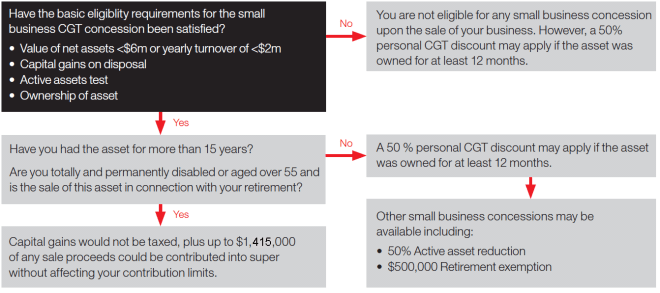
If the business asset was held for more than 15 years, and the owner is either over 55 and retiring or permanently incapacitated when the asset is sold:

• any capital gains could be disregarded; plus
• up to $1,415,000 of any sale proceeds could be contributed into super without counting towards the concessional or non-concessional contributions caps.

What does it mean for me?

This is potentially a significant opportunity for small business owners. Not only does it provide scope to reduce your CGT liability, it also allows you to turn the proceeds from the sale of your business into a tax-effective income stream in retirement
through your super.

If you’re considering this strategy, it’s important to seek professional financial, legal and tax advice specific to your circumstances. You should also note that lifetime limits apply to all contributions under these concessions, and the specific forms must be completed and given to the super fund before or at the time the super contribution is made to be effective.

How do I know if I qualify?

To be eligible for the small business CGT concession, you need to meet the following basic requirements:

• Your net asset value is less than $6 million or your business turnover is less than $2 million p.a. Your net asset value includes assets used in your business but are owned by
your affiliates or an entity connected with you.

• The asset you own is an ‘active’ asset – meaning it has been used or held ready for use in a business carried on by yourself (whether alone or in partnership), your affiliate, your
spouse, your child under 18 or an entity connected with you.

• The asset has been used in the business for at least half of the ownership period or for a minimum of 7.5 years if you’ve owned it for at least 15 years.

sm-cgt

Strategy in action

Sarah and James are joint owners of a retail shop in a small town from which they’ve run their newsagency for the last 20 years. They acquired the property in 1992 for $300,000 and have
continuously owned it outright.

In 2015, in line with their pending retirement, Sarah and James sold the property for $1 million. Both aged 60, their net assets are less than $6 million and they are looking to use the sale proceeds to fund their retirement.

Because they’ve owned their shop for more than 15 years and are retiring, Sarah and James would be eligible for the small business CGT concessions. They can apply the sale of their business as follows:

• Proceeds of sale: $1 million
• Capital gain: $700,000 ($1 million – $300,000)
• Assessable capital gain: $0

As a result, Sarah and James can contribute $500,000 each into super under the CGT cap election without it affecting their concessional or non-concessional contributions caps for the financial year. This means they could potentially contribute more into superannuation or an SMSF in the same year under their other contribution caps.

I hope this guidance has been helpful and please take the time to comment. Feedback always appreciated. Please reblog, retweet, like on Facebook etc to make sure we get the news out there. As always please contact me if you want to look at your own options. We have offices in Castle Hill and Windsor but can meet clients anywhere in Sydney or via Skype. Just click the Schedule Now button up on the left to find the appointment options.

Liam Shorte B.Bus SSA™ AFP

Financial Planner & SMSF Specialist Advisor™

SMSF Specialist Adviser 

 Follow SMSFCoach on Twitter Liam Shorte on Linkedin NextGen Wealth on Facebook   

Verante Financial Planning

Tel: 02 98941844, Mobile: 0413 936 299

PO Box 6002 BHBC, Baulkham Hills NSW 2153

5/15 Terminus St. Castle Hill NSW 2154

Corporate Authorised Representative of Viridian Select Pty Ltd ABN 41 621 447 345, AFSL 51572

This information has been prepared without taking account of your objectives, financial situation or needs. Because of this you should, before acting on this information, consider its appropriateness, having regard to your objectives, financial situation and needs. This website provides an overview or summary only and it should not be considered a comprehensive statement on any matter or relied upon as such.

Share this:

  • Click to email a link to a friend (Opens in new window) Email
  • Click to print (Opens in new window) Print
  • Tweet
  • Pocket
  • Click to share on Reddit (Opens in new window) Reddit
Like Loading...
1 Comment
by SMSF Coach - Liam Shorte on November 7, 2016  •  Permalink
Posted in Contribution Strategies, Retirement Planning, Small Business CGT
Tagged Account Based Pension, Alzheimer's, Baulkham Hills, budget, Castle Hill, CGT, dementia, DIY Super, Dural, Enduring Power of Attorney, EPoA, Estate Planning, Hawkesbury, Incapacity, income planning, Investment, Investment Strategy, pension phase, Pensions, powers of attorney, property, Self Managed Superannuation Fund, Smallbiz, Smallbusiness, sme, SMSF, tax, Tax Free Pensions, Tax Planning, Transition, Transition to Retirement

Posted by SMSF Coach - Liam Shorte on November 7, 2016

https://smsfcoach.com.au/2016/11/07/how-to-sell-a-business-tax-effectively-using-small-business-capital-gains-tax-cgt-concessions/

Busting the myth that you should dispose of assets to increase Age Pension


Pension strategies that can destroy your long term income

What follows is a case study prepared by the Actuaries Institute’s Superannuation Projections and Disclosure (SPD) Subcommittee and if any one has advised you to dispose of assets to get more Centrelink/DVA Aged Pension in reaction to the reduced Assets Test in January 2017, then you should read this article. You should not act on strategies that affect short-term income unless you look at the long-term results too.

The Actuaries Institute’s Superannuation Projections and Disclosure (SPD) Subcommittee designed a projection model to estimate the income that assets would support during retirement for a number of case studies.

The Importance of Projections in Developing Retirement Strategies

Experts are thick on the ground these days, sometimes with free advice that can prove costly later on. And it seems experts are particularly fond of advising retirees and those about to soak up the sun on weekdays about how and when to spend their money. One strand of free advice at the moment involves recommending that retirees should spend a bit more, or indeed a lot more, to secure a higher pension to take into account impending changes to the asset test.

Understandably, these changes from January 1 next year have many retirees and those close to retiring thinking hard about whether they should change their financial arrangements. To be more specific, after this date the age pension reduces by $78 per year for each $1,000 of non-home assets over certain thresholds. At first glance, this looks like you’d have to earn over 7.8% on the extra $1,000 or you’d be better off without the extra $1,000 of assets.

The Actuaries Institute cautions that retirees destined to live to a ripe old age should think twice before accepting some of the advice recently aired on this topic. Indeed, this advice ignores the fact that a partial age pension entitlement generally increases throughout retirement as assets reduce. The SPD Subcommittee have designed a projection model to estimate the income that assets would support during retirement for a number of case studies.

A Case Study

The SPD considered a number of scenarios. They were based on two single females (Anne and Barbara) who own their own homes. Their only asset, other than their home, was a balance in an allocated pension. It was assumed that the allocated pension was the only source of income for both women and that they continued to live in their own homes throughout their retirement. The modelling also assumed that the required level of income each year (the combination of the age pension and income from the allocated pension) would be equal to the annual expenditure of ASFA’s comfortable lifestyle for a single person indexed to CPI.

In this case study, we examine one of the scenarios considered.

This scenario assumes the two women plan to retire at age 65 on 1 January 2017 with potentially identical superannuation assets of $450,000. To highlight the long-term impact of spending some of the superannuation assets before retirement, we assumed that Anne increases her spending before 1 July 2017 so as to reduce her retirement assets and receive a higher age pension than Barbara, who decides to save her money. The additional spending was assumed to reduce Anne’s final retirement benefit available on 1 January 2017 to $250,000.

Chart 1 below provides a year-by-year projection of the incomes of these two individuals to age 100.

Chart 1 – Total income if retiring at age 65

Total income if retiring at age 65

Note: all projected values have been discounted to Today’s Dollars at the rate of Wage Inflation.

Assumptions Net investment return on allocated pension assets – 6.5% pa compound

Wage inflation – 3.5% pa compound

Price Inflation – 2.5% pa compound

Increase in desired income – Price inflation

Increase in age pension rate – Wage inflation

Increase in age pension asset test thresholds – Price inflation

The green and purple lines show the total income received in Today’s Dollars. The blue and red lines show the annual amount of age pension received.

It can be seen that the aged pension paid to Anne in the early years is higher because the pension assets she owns do not reduce her age pension. However, because Anne has less pension assets she exhausts her assets by age 84, after which she must live on the age pension or use her home to generate additional income.

Barbara, however, at age 84 still has pension assets and therefore receives a higher level of income than Anne for the rest of her retirement. Also Barbara’s total income received is equal to or greater than her desired income level throughout retirement. She will also maintain a balance in her allocated pension throughout retirement and can continue without resorting to using her own home to generate additional income.

An examination of the projected asset values is also instructive. Chart 2 below shows the value of their pension fund assets at the end of each year during retirement.

Chart 2 – Asset Values if retiring at age 65

Note: all projected values have been discounted to Today’s Dollars at the rate of Wage Inflation.

Chart 2 – Asset Values if retiring at age 65

Barbara has significantly greater pension fund assets throughout retirement. This provides added flexibility in her spending pattern. It also allows for aged care costs or bequests in later age. The additional assets also provide a buffer if the net investment earnings are less than the 6.5% we have assumed. Importantly, the fact that Anne receives a larger age pension in the early retirement years does not indicate what strategy results in the best long-term outcome.

The example and related discussion above highlight the significant challenges involved in retirement income modelling and strategy choice. Such tasks cannot be properly addressed through conclusions based upon calculations of a retiree’s first year age pension and allocated pension income entitlements.

The interaction of the many pieces of Australia’s retirement income system is complex. It includes assets and income test rules for the pension, minimum superannuation assets withdrawal requirements and the interaction of other factors such as inflation and investment returns. Any conclusions based on only considering the income generated in the first year after retirement are liable to be incorrect. Only the output of a year-by-year projection can clearly show how these factors interact throughout a person’s retirement.

Retirees must make decisions about spending capital over time. Ideally, these should allow for a sensible assessment of future cash flow. Year-by- year projections throughout retirement are vital to capture the dynamic nature of the age pension rules as asset values change. However, this is just the start. Given each retiree has an unknown lifespan and faces unknown investment returns, people have valid concerns about outliving their capital. Models like this one can be extended to assess a full distribution of likely outcomes and take into account the retiree’s asset mix and even health status. This allows people to make informed decisions that meet their required levels of certainty.

A longer article which considers all the scenarios examined by the SPD Subcommittee is also available. If a copy of the longer article is required (or if there are any questions on the material contained in this article) please contact Andrew Boal, Convenor of the Institute’s Superannuation Practice Committee. See the original article here The Importance of Projections in Developing Retirement Strategies

I hope this guidance has been helpful and please take the time to comment. Feedback always appreciated. Please reblog, retweet, like on Facebook etc to make sure we get the news out there. As always please contact me if you want to look at your own options. We have offices in Castle Hill and Windsor but can meet clients anywhere in Sydney or via Skype. Just click the Schedule Now button up on the left to find the appointment options.

Liam Shorte B.Bus SSA™ AFP

Financial Planner & SMSF Specialist Advisor™

SMSF Specialist Adviser 

 Follow SMSFCoach on Twitter Liam Shorte on Linkedin NextGen Wealth on Facebook   

Verante Financial Planning

Tel: 02 98941844, Mobile: 0413 936 299

PO Box 6002 BHBC, Baulkham Hills NSW 2153

5/15 Terminus St. Castle Hill NSW 2154

Corporate Authorised Representative of Viridian Select Pty Ltd ABN 41 621 447 345, AFSL 51572

This information has been prepared without taking account of your objectives, financial situation or needs. Because of this you should, before acting on this information, consider its appropriateness, having regard to your objectives, financial situation and needs. This website provides an overview or summary only and it should not be considered a comprehensive statement on any matter or relied upon as such.

Share this:

  • Click to email a link to a friend (Opens in new window) Email
  • Click to print (Opens in new window) Print
  • Tweet
  • Pocket
  • Click to share on Reddit (Opens in new window) Reddit
Like Loading...
1 Comment
by SMSF Coach - Liam Shorte on October 10, 2016  •  Permalink
Posted in Age Pension, Centrelink, Pension Strategies, Retirement Planning, Superannuation
Tagged Account Based Pension, Age Pension, Alzheimer's, assets test, Baulkham Hills, budget, Castle Hill, Cost of Living, dementia, DIY Super, Dural, Enduring Power of Attorney, EPoA, Estate Planning, Hawkesbury, Incapacity, income planning, Interest Rates, Investment, Investment Strategy, pension phase, Pension Strategies, Pensions, powers of attorney, property, reset pensions, Retire, Retirement, Retirement Planning, Self Managed Superannuation Fund, SMSF, Tax Free Pensions, Tax Planning, Transition, Transition to Retirement

Posted by SMSF Coach - Liam Shorte on October 10, 2016

https://smsfcoach.com.au/2016/10/10/busting-the-myth-that-you-should-dispose-of-assets-to-increase-age-pension/

Court Defends Superannuation Death Benefits from Bankruptcy


asset-protection

I keep hammering it in to my small business clients that while they may be passionate about their business and absolutely certain it will succeed, that they need to have a Plan B. Things can and do go wrong no matter how hard you work.

Superannuation is that Plan B in many cases. By putting away a portion of your profits each year to super you can minimise your tax obligations, save for retirement and protect some of your hard-earned wealth from unforeseen circumstances like a business collapse.

I always give an example of the client who had a very successful software business that was making decent money every year who listened to me and put funds away in superannuation yearly despite not wholly trusting the system. 6 years ago a dodgy overseas firm copied and made minor changes to his software and sold it for 10% of his price, thereby decimating his profits. He could lose everything as the ensuing defence of his patents in court cases is wiping out his personal and the company’s finances. Even if he wins, they could just keep their assets overseas and he has no chance of recovering costs and damages. The one thing protected is his Superannuation which will provide a decent if not a bit less comfortable retirement than expected.

A recent case shows the benefit of having superannuation funds when all else fails to protect you and your loved ones. In the case of Trustees of the Property of Morris (Bankrupt) v Morris (Bankrupt) [2016] FCA 846 shows just what happens when superannuation, bankruptcy and the payment of death benefits intersect.

Background
Ms Morris became bankrupt 3-4 months after her husband, Mr Foreman, died. Mr Foreman held two policies with two different superannuation funds: AustSafe Super and Plum Super.

After becoming bankrupt, Ms Morris received three separate payments. Plum Super made a life insurance payment of $311,865.95 to Mrs Foreman, which is not controversial as section 116(2)(d)(ii) of the Act provides that divisible property does not extend to life assurance policy proceeds of a bankrupt—or their spouse—received on or after the date of bankruptcy. SAFE

What was ‘controversial’ was AustSafe Super’s payment of $45,392.48 and Plum Super’s payment of $67,240.27. Those funds made these payments to the bankrupt under discretionary powers, as Mr Foreman had not nominated any dependents or beneficiaries.

Mrs Morris’s bankruptcy trustees applied to court in respect of these payments arguing that the superannuation monies received by the bankrupt were after-acquired property that vested in them (as bankruptcy trustees) and was therefore divisible among the bankrupt estate’s creditors. Uh Oh trouble!

I am not  lawyer so I will not go in to details of the argument but I am  happy point you to a good lawyer for the detail of the argument and some  interpretation of the decision in a good blog by Bryce Figot of DBA Lawyers   – See more at here and the actual case decision here

In summary

Justice Logan held that prior to the superannuation fund trustees’ exercising their discretion in favour of Ms Morris, she had no interest in either fund; however, upon this favourable decision, an interest was then created in the superannuation funds, and therefore these payments (totalling $112,632.75) made to Ms Morris (after bankruptcy) were held to be captured by s116(2)(d)(iii) and s116(2)(d)(iv) of the Act. Consequently, the bankruptcy trustees were unsuccessful with their application.

So superannuation death benefits received by the bankrupt were protected from Bankruptcy Trustees

I have not seen any previous guidance or authorities about the meaning and effect of the above sections of the Act, however the decision seems to be consistent with the intention of legislation to protect and preserve benefits in respect of retirement for both members of funds as well as their spouses and dependents.

If you or your spouse are in business or a highly litigious profession or high risk investors that could lose all if investments go wrong then come and talk to us about Your Plan B 

I hope this guidance has been helpful and please comment. Feedback always appreciated. Please reblog, retweet, like on Facebook etc to make sure we get the news out there. As always please contact me if you want to look at your own options. We have offices in Castle Hill and Windsor but can meet clients anywhere in Sydney or via Skype. Just click the Schedule Now button up on the left to find the appointment options.

Liam Shorte B.Bus SSA™ AFP

Financial Planner & SMSF Specialist Advisor™

SMSF Specialist Adviser 

 Follow SMSFCoach on Twitter Liam Shorte on Linkedin NextGen Wealth on Facebook   

Verante Financial Planning

Tel: 02 98941844, Mobile: 0413 936 299

PO Box 6002 BHBC, Baulkham Hills NSW 2153

5/15 Terminus St. Castle Hill NSW 2154

Corporate Authorised Representative of Viridian Select Pty Ltd ABN 41 621 447 345, AFSL 51572

This information has been prepared without taking account of your objectives, financial situation or needs. Because of this you should, before acting on this information, consider its appropriateness, having regard to your objectives, financial situation and needs. This website provides an overview or summary only and it should not be considered a comprehensive statement on any matter or relied upon as such.

Share this:

  • Click to email a link to a friend (Opens in new window) Email
  • Click to print (Opens in new window) Print
  • Tweet
  • Pocket
  • Click to share on Reddit (Opens in new window) Reddit
Like Loading...
Leave a comment
by SMSF Coach - Liam Shorte on October 5, 2016  •  Permalink
Posted in Bankruptcy Protection, Estate Planning
Tagged Account Based Pension, Alzheimer's, Bankruptcy, Baulkham Hills, budget, Castle Hill, death benefits, dementia, DIY Super, Dural, Enduring Power of Attorney, EPoA, Estate Planning, Hawkesbury, Incapacity, income planning, Investment, Investment Strategy, Litigation risk, pension phase, Pensions, Plan B, PlanB, powers of attorney, property, Self Managed Superannuation Fund, SMSF, Tax Free Pensions, Tax Planning, Transition, Transition to Retirement

Posted by SMSF Coach - Liam Shorte on October 5, 2016

https://smsfcoach.com.au/2016/10/05/court-defends-superannuation-death-benefits-from-bankruptcy/

Small APRA Fund as an Exit Strategy for SMSF Trustees


Exit Strategies

On the home page of this blog I outline the Benefits of a Self Managed Super Fund – SMSF in some detail. Well, when looking at any investment structure I always like to assess the alternative options and eventual exit strategies. While many of you will know of the Retail and Industry superannuation fund options, you may not be as familiar with a close relation to the SMSF known as a Small APRA fund (SAF). So let’s look at little closer at this option.

What is an Small APRA Fund (SAF)?

An SAF is similar to an SMSF but instead of the client(s) being the trustee(s), a professional licensed trustee is responsible for all of the administrative,  compliance and legislative responsibilities of running the superannuation fund.

SAFs offer an alternative for clients looking for the increased flexibility of an SMSF but without the burden of being a trustee and the associated compliance risk. They are also an effective solution for clients who are non-residents or bankrupt and therefore unable to be trustees of an SMSF.

I always warn new clients that if your career or business relies on you being a director then you must take the decision to set up an SMSF very carefully and be ready to put the time and effort in or choose SMSF specialist advisors to ensure your fund remains compliant so that you don’t lose your ability to be a director of any company because of breaching SMSF legislation.

SAFs provide all of the legislative advantages afforded to SMSFs, without the risks associated with breaching legislative compliance requirements.

Let be very honest up front and say this is not a suitable option for small balances as you are incurring an extra layer of trustee fees. However for those with larger balances the option can be very cost-effective especially when you consider the ability to relieve yourself of the trustee responsibilities.

Main benefits of the SAF structure

1. Offloading the Compliance risk

The main advantage of running an SAF is that the compliance risk is borne by the professional licensed trustee whose core responsibility is the provision of trustee services. If an SAF is in breach of the rules, the members of the fund will not be liable for the compliance mistakes of the professional trustee. In an SMSF, all members must be a trustee or director of a corporate trustee which means all members bear the compliance liability. You cannot claim your spouse was solely responsible for running the fund. One case clearly shows the risk of being a “silent trustee”where the verdict found the former wife, in her role as a trustee of the fund, was personally liable when it became non-complying after her former husband stripped out most of the assets and headed overseas. See Shail Superannuation Fund and Commissioner of Tax [2011] AATA 940

2. Administration of the fund

A professional licensed trustee in charge of an SAF typically appoints professional organisations to carry out the administration of the fund or is skilled and experienced enough to avoid common breaches of legislative requirements. As the professional licensed trustee administers all information and transactions, record keeping is typically timely and accurate. In SMSFs, the trustees are typically responsible for collating all the documentation and reports so their chosen administration service can prepare the financials of their fund (Not so hard as it sounds nowadays but when your busy?…paperwork suffers)

3. Travelling overseas for extended periods

SAFs are more flexible for people who may go overseas for an indefinite period compared to SMSFs which are strictly regulated in that circumstance. Members of an SMSF who relocate for an extended period of time have to fulfil two requirements – the central management and control of an SMSF needs to be in Australia, and the active member test needs to be fulfilled . If any of these requirements are breached, the SMSF loses its residency status, is deemed non-compliant and will face exorbitant penalty taxes of up to 46.5%. An SAF however can have offshore members – as long as they are Australian residents for tax purposes.

4. Protection and access to Superannuation Complaints Tribunal

In the case of fraudulent conduct or theft, SAFs have more readily available redress options including a grant of financial assistance as statutory compensation and access to the Superannuation Complaints Tribunal which deals with complaints about the decisions and conduct of APRA-regulated fund trustees and other decision makers. Conversely, no compensation scheme exists for SMSFs and they instead have to rely on courts to resolve disputes or look to the Corporations Law to take action against a financial adviser, accountant or administrator for losses they believe are due to misconduct, negligence or inappropriate action.

5. Disqualified persons – Bankruptcy or Criminal record

Individuals are not allowed to be trustees of an SMSF or directors of a corporate trustee if they have committed a crime involving dishonesty such as fraud, theft or embezzlement or if they have been declared bankrupt. The Tax Office will ban individuals from taking on positions of responsibility  in an SMSF if it believes the person has breached the superannuation laws either very seriously or persistently or it believes the person is not a fit or proper person and hence should be disqualified. There are no issues with a disqualified person becoming a member of an SAF as they are not required to fill the role of trustee and it is in fact an often preferred solution for those with an SMSF who find themselves in that unenviable position with assets that aren’t liquid.

6. Responsibility concerns due to ageing or onset of mental illness

Some older people may prefer to use an SAF because they have reached an age where they are no longer able, or may not want to, make effective management and operational decisions. SAFs still allow investors to be in charge of the asset allocation – subject to trustee approval (but they are becoming a lot more flexible) – and to maintain or acquire a similarly broad range of assets and avail of strategies available to SMSF investors. Problems often arise in an SMSF when an older trustee loses the capacity to function and participate in the fund’s inner workings whereas in an SAF, the professional licensed trustee will continue to manage the fund for the benefit of its members.

7. Estate planning

There are a number of estate planning scenarios  where an SAF being a better alternative to an SMSF. In an SMSF, the death of a fund trustee changes the composition of the trustees and may provide potential for disputes especially in blended families. In an SAF, the licensed trustee is an independent and unbiased party with no family relationship issues that we often see arise with estates. In an SMSF, it is possible to try to include safeguards into the trust documentation; however, if one of several feuding beneficiaries has the cheque book, it may take the remaining beneficiaries considerable time and expense to track down the person and the money. As one colleague said:

“a remaining trustee with a cheque book can do a lot of damage to an SMSF balance while family fight for control in the courts”

8. Taking care of vulnerable beneficiaries

SAFs can provide very tax effective death benefit income streams to intellectually disabled adult children. The hurdle of the person with a disability or their legal personal representative needing to be a trustee is removed because, unlike an SMSF, an SAF has a professional trustee. The use of the professional trustee also ensures that ongoing services can continue to be provided to a disabled person is over 18 and once the parents have died or lost capacity. There is the ability to pay a death benefit income stream to the disabled child and then have any capital remaining return to the parent’s estate on death.

9. Employer – Employee Fund

In an SMSF, a trustee cannot be an employee of another member – unless they are family. In an SAF however, a member can be an employee of another member. Further, since SAFs have a professional licensed trustee, the related-party issues that crop up in an SMSF are not an issue in an SAF.

In summary while an SMSF may be ideal for people who want to be fully in control of their investment decisions and retirement savings, an SAF is ideal for those who would like to actively participate in investment decisions but retain a low-level of compliance and legislative responsibilities. It is possible to switch from an SMSF to an SAF or vice versa without incurring capital gains tax as all they have to do is retire as trustees themselves and appoint a professional licensed trustee to govern their SAF.

So why may a SAF be a better option than a Retail or Industry Fund?

  • Moving to a SAF is Not a CGT event whereas it would be if you moved to a retail or industry fund
  • Likely to be able to keep assets such as direct shares, bullion, collectables and residential and commercial property subject to rules.
  • The member can still  direct investments within the approved list
  • Member directed death benefit nominations are still possible and in fact often more achievable as the trustee can follow your wishes.
  • No issues with single member funds
  • Retains privacy for those in high-profile positions

I would like to acknowledge that much of my information in this area has been gathered from articles and presentations by Julie Steed of Australian Executor Trustees who are very experienced in running SAFs and working as a team with clients and their financial planners.

I hope this guidance has been helpful and please comment below. Feedback always appreciated. Please reblog, retweet, like on Facebook etc to make sure we get the news out there. As always please contact me if you want additional information on switching fund structures.We have offices in Castle Hill and Windsor but can meet clients anywhere in Sydney or via Skype. Just click the Schedule Now button up on the left to find the appointment options.

Liam Shorte B.Bus SSA™ AFP

Financial Planner & SMSF Specialist Advisor™

SMSF Specialist Adviser 

 Follow SMSFCoach on Twitter Liam Shorte on Linkedin NextGen Wealth on Facebook   

Verante Financial Planning

Tel: 02 98941844, Mobile: 0413 936 299

PO Box 6002 BHBC, Baulkham Hills NSW 2153

5/15 Terminus St. Castle Hill NSW 2154

Corporate Authorised Representative of Viridian Select Pty Ltd ABN 41 621 447 345, AFSL 51572

This information has been prepared without taking account of your objectives, financial situation or needs. Because of this you should, before acting on this information, consider its appropriateness, having regard to your objectives, financial situation and needs. This website provides an overview or summary only and it should not be considered a comprehensive statement on any matter or relied upon as such.

Share this:

  • Click to email a link to a friend (Opens in new window) Email
  • Click to print (Opens in new window) Print
  • Tweet
  • Pocket
  • Click to share on Reddit (Opens in new window) Reddit
Like Loading...
Leave a comment
by SMSF Coach - Liam Shorte on August 29, 2016  •  Permalink
Posted in Estate Planning, SMSF Exit Strategies, SMSF Management, Trustee
Tagged Account Based Pension, Ageing, Alternative trustee, Alzheimer's, Baulkham Hills, budget, Castle Hill, dementia, DIY Super, Dural, Enduring Power of Attorney, EPoA, Estate Planning, Exit Strategies, Hawkesbury, Incapacity, income planning, Investment, Investment Strategy, pension phase, Pensions, powers of attorney, property, SAF, SAFs, Self Managed Superannuation Fund, Small APRA fund, SMSF, SMSF exit strategy, Succession Planning, Tax Free Pensions, Tax Planning, Transition, Transition to Retirement, Travelling overseas

Posted by SMSF Coach - Liam Shorte on August 29, 2016

https://smsfcoach.com.au/2016/08/29/small-apra-fund-as-an-exit-strategy-for-smsf-trustees/

A Dream without a Plan is just a Wish – Dare to Dream


Source: FPA Dare to Dream national research report conducted by McCrindle Research, August 2016

Source: FPA Dare to Dream national research report conducted by McCrindle Research, August 2016

So do you or a family member or friend talk about your future dreams of an early retirement or what you plan to do in retirement but then give a big sigh and say it is “Just a dream” or “a pipe dream” or maybe put it in the “to hard basket” to try and achieve those goals. Realistic goals are achievable with good planning and some of the whackier ones just take a little more effort or courage!

Did you know that this week is Financial Planning Week? Every year, the Financial Planning Association (FPA) holds Financial Planning Week, to remind Australians about the importance of financial planning.

The theme for this year is “Dare to Dream” and I think it’s a great reminder of why we need a plan in place to realise our biggest dreams. After all, financial planning is not just about numbers – it’s about deciding what we want out of life, then putting in steps to achieve it. It’s also a nice reminder about the importance of financial independence – whatever life stage we find ourselves at.

This short video featuring Jane Caro sets the scene to the dare to dream challenge:

So are you ready to read a bit more? Something you might find particularly interesting, is the Dare to Dream research report which has some eye opening insights about how Australians feel about their financial future. The report highlights that whilst one in two Australians dream more about the future now than five years ago, a massive 63% have made “no plans” or “very loose plans” to practically achieve those dreams. Just click the link Dare to Dream research report

The report also shows that property is still a big part of the ‘Great Australian Dream’ (surprisingly even for Gen Y), and that the biggest financial regret in life for Australians is a lack of saving (a huge 47% stated this!). The report is well worth a read.

The FPA has also developed a fun online quiz, to help you discover what kind of financial personality you are. I encourage you to take the quiz and share it on Facebook with your family and friends. You can access this quiz here at Dreamer Profiles 

Oh in case you want to know I got “Mover and Shaker” as my financial personality ….my dreams have already been put in to an Action Plan…what about yours?

I hope this guidance has been helpful and please take the time to comment or at least let me know what your personality result was! Feedback always appreciated. Please reblog, retweet, like on Facebook etc to make sure we get the news out there. As always please contact me if you want to look at your own options and achieving those dreams. We have offices in Castle Hill and Windsor but can meet clients anywhere in Sydney or via Skype. Just click the Schedule Now button up on the left to find the appointment options.

Liam Shorte B.Bus SSA™ AFP

Financial Planner & SMSF Specialist Advisor™

SMSF Specialist Adviser 

 Follow SMSFCoach on Twitter Liam Shorte on Linkedin NextGen Wealth on Facebook   

Verante Financial Planning

Tel: 02 98941844, Mobile: 0413 936 299

PO Box 6002 BHBC, Baulkham Hills NSW 2153

5/15 Terminus St. Castle Hill NSW 2154

Corporate Authorised Representative of Viridian Select Pty Ltd ABN 41 621 447 345, AFSL 51572

This information has been prepared without taking account of your objectives, financial situation or needs. Because of this you should, before acting on this information, consider its appropriateness, having regard to your objectives, financial situation and needs. This website provides an overview or summary only and it should not be considered a comprehensive statement on any matter or relied upon as such.

Share this:

  • Click to email a link to a friend (Opens in new window) Email
  • Click to print (Opens in new window) Print
  • Tweet
  • Pocket
  • Click to share on Reddit (Opens in new window) Reddit
Like Loading...
Leave a comment
by SMSF Coach - Liam Shorte on August 23, 2016  •  Permalink
Posted in Enduring Power of Attorney, Estate Planning, SMSF Management, Trustee
Tagged Account Based Pension, Alzheimer's, Baulkham Hills, budget, Castle Hill, dementia, DIY Super, Dural, Enduring Power of Attorney, EPoA, Estate Planning, Hawkesbury, Incapacity, income planning, Investment, Investment Strategy, pension phase, Pensions, powers of attorney, property, Self Managed Superannuation Fund, SMSF, Tax Free Pensions, Tax Planning, Transition, Transition to Retirement

Posted by SMSF Coach - Liam Shorte on August 23, 2016

https://smsfcoach.com.au/2016/08/23/a-dream-without-a-plan-is-just-a-wish-dare-to-dream/

ATO Clamps Down on Trustee for Superannuation Early Release Scheme


Early Access to Super

In my earlier blog Get Super Scheme Smart – ATO warns on dangers of retirement planning schemes I went through the ATO guidance and their push to educate trustees about early release schemes and fraud attempts. In a recent case they showed that they will enforce the penalty regime where a trustee has deliberately flouted the rules. The penalty, $40,000 and loss of right to be a trustee in future.

The case of Deputy Commissioner of Taxation v Rodriguez resulted in significant penalties being imposed following a large number of unauthorised withdrawals by an SMSF trustee.

In this case, the fund trustee fabricated a loan arrangement, made cash withdrawals to purchase gold bars (later selling them and depositing the proceeds of sale into his own bank account), as well as making a number of other unauthorised withdrawals for his own personal benefit over a number of years.

The court considered that there had been the following contraventions of the SIS Act:
− in making the loans and giving financial assistance the trustee failed to ensure that the fund was maintained solely for one or more of the purposes prescribed in section 62(1)
− in making the loans and giving financial assistance, the trustee failed to ensure that the fund did not lend money or give any other financial assistance using the resources of the fund to a member, contravening section 65(1)
− the trustee failed to prepare a written plan specifying: the amount by which the in-house assets of the fund exceeded the market value ratio of 5% at the end of each income year; and the steps by which the trustee proposed to dispose of the in-house assets equal to or greater than the excess amount, contravening s 82.

In imposing the penalties, the court took into account the trustee’s cooperativeness with the ATO, investigating officers, solicitors and the court process. The court also accepted that the trustee was contrite and apologetic, and was a person of good character. It was also apparent from the material before the court that the trustee was a troubled person at the time of the contraventions.
It should also be noted that some attempt had also been made to repay amounts withdrawn (including an interest component).

In addition to a monetary penalty of $40,000, the trustee was barred from acting as a trustee.

This should be taken as a strong warning to small business owners and company directors who may also endanger their ability to control their business or be a company director in their business life because of issues caused by managing their Self Managed Superannuation Fund poorly.

For those who feel the additional risk of running an SMSF may expose their career to unacceptable risk then they should consider a retail or industry fund or if you have assets that are unable to be held via one of those, like a property, art or bullion, then you should consider moving the Trustee responsibilities to a professional trustee via a Small APRA fund. I will deal with this option in a future blog.

If you are in a position of financial hardship or want to do a complex investment then why not contact us to se if there is a legal way to achieve the same goal without getting yourself in trouble.

I hope this guidance has been helpful and please take the time to comment. Feedback always appreciated. Please reblog, retweet, like on Facebook etc to make sure we get the news out there. As always please contact me if you want to look at your own options. We have offices in Castle Hill and Windsor but can meet clients anywhere in Sydney or via Skype. Just click the Schedule Now button up on the left to find the appointment options.

Liam Shorte B.Bus SSA™ AFP

Financial Planner & SMSF Specialist Advisor™

SMSF Specialist Adviser 

 Follow SMSFCoach on Twitter Liam Shorte on Linkedin NextGen Wealth on Facebook   

Verante Financial Planning

Tel: 02 98941844, Mobile: 0413 936 299

PO Box 6002 BHBC, Baulkham Hills NSW 2153

5/15 Terminus St. Castle Hill NSW 2154

Corporate Authorised Representative of Viridian Select Pty Ltd ABN 41 621 447 345, AFSL 51572

This information has been prepared without taking account of your objectives, financial situation or needs. Because of this you should, before acting on this information, consider its appropriateness, having regard to your objectives, financial situation and needs. This website provides an overview or summary only and it should not be considered a comprehensive statement on any matter or relied upon as such.
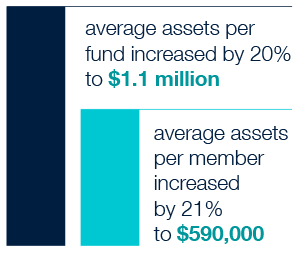
Image courtesy of Stuart Miles at FreeDigitalPhotos.net

Share this:

  • Click to email a link to a friend (Opens in new window) Email
  • Click to print (Opens in new window) Print
  • Tweet
  • Pocket
  • Click to share on Reddit (Opens in new window) Reddit
Like Loading...
Leave a comment
by SMSF Coach - Liam Shorte on August 22, 2016  •  Permalink
Posted in Enduring Power of Attorney, Estate Planning, SMSF Management, Trustee
Tagged Account Based Pension, Alzheimer's, Baulkham Hills, budget, Castle Hill, dementia, DIY Super, Dural, early release, Early Release Schemes, Enduring Power of Attorney, EPoA, Estate Planning, Fraud, Hawkesbury, Incapacity, income planning, Investment, Investment Strategy, pension phase, Pensions, powers of attorney, property, Self Managed Superannuation Fund, SMSF, SMSF Penalty, Tax Free Pensions, Tax Planning, Transition, Transition to Retirement

Posted by SMSF Coach - Liam Shorte on August 22, 2016

https://smsfcoach.com.au/2016/08/22/ato-clamps-down-on-trustee-for-superannuation-early-release-scheme/

Should SMSF trustees take part in the Telstra Buy-back


Telstra Buy Back

In line with my philosophy of find good information for clients quickly, here is a guest blog from Dr Don Hamson of Plato Investment Management on the proposed Telstra Buy Back.

Token Telstra Buy-back Mark II

On 11 August 2016, Telstra announced it would return $1.5B in capital to shareholders, $1.25B in an off-market buy-back and $0.25B in an on-market buy-back. The off-market buy-back is similar in structure to the $1B 2014 Telstra buy-back. We still believe this is pretty much a token buy-back. At $1.25B it represents less than 2% of Telstra’s current market capitalisation, and so we expect the buy-back will be fairly heavily scaled back (the 2014 buy-back was scaled back by 70%). And similar to the 2014 buy-back, our estimates suggest this buy-back will likely be only significantly worthwhile for zero taxed Australian investors such as pension phase superannuation and charities, although value for taxed investors will ultimately depend on individual circumstances. For a zero taxed pension investor, we currently estimate that the buy-back will be worth approximately 9% more than selling Telstra into the market, assuming the buy-back goes off at the maximum allowable 14% discount to market price (using the August 11 2016 closing price of $5.51 as market price – refer Chart 1).

The actual value of the buy-back will depend on where the share price of Telstra is trading at the conclusion of the buy-back, and the final buy-back discount to that market price. In 2014 we saw the value of the buy-back decline from initial estimates, primarily because the Telstra share price declined between the announcement date and the buy-back conclusion date, resulting in a declining fully franked dividend component. On our estimates the 2014 Telstra buy-back ended up being of marginal value (approximately 3%) for pensions phase investors, and of no value for higher taxed investors.

We recommend investors seek their own personal taxation advice.

Chart 1 provides an estimated illustrative example of the value of the Telstra buy-back for a pension phase superannuation investor. We have estimated the buy-back for pension phase superannuation funds using a $5.51 “market” price for Telstra. According to the 11th August Telstra announcement the actual market price for the purposes of the buy-back will be the “weighted average price of Telstra’s ordinary shares on the ASX as Telstra may determine in its discretion over the five trading days up to and including the date the Tender Period closes” (30 September 2016). Using $5.51 as “market” price, a 14% discount would equate to a $4.74 buy-back price. With the capital component being $1.78, the other $2.96 would represent a fully franked dividend, which would have a $1.27 franking credit attached. For a tax-exempt Australian investor (e.g. SMSF in pension phase), we estimate the buy-back at a 14% discount would be worth approximately $6.01 (disregarding the time value of money), representing about $0.50 or 9% more than the $5.51 “market” price of Telstra.

Chart 1. Estimated value of the 2016 Telstra buy-back for tax exempt investors using August 11 2016 closing price.

Telstra

Source: Plato, Telstra

The value of the buy-back for other investors will depend on the tax situation of each investor. However, we normally expect buy-backs to be of most value to tax exempt investors, so we expect it to be worth less than the 9% number for higher taxed investors. We would recommend individual investors seek professional tax advice based on their individual tax circumstances.

Whilst the 2016 buy-back looks somewhat better that the 2014 buy-back, it still falls short relative to previous buy-backs such as the 22% benefit of the 2011 BHP buy-back. The reason why the Telstra buy-back is of lesser value to the BHP buy-back is because the capital component is quite large relative to the expected buy-back price. Notwithstanding this, given the 2014 Telstra buy-back was heavily oversubscribed, resulting in a 70% scale-back of tendered stock at the maximum 14% discount, in our view we would similarly expect this Telstra buy-back to be heavily oversubscribed and likely to be priced at the maximum 14% discount. So whilst we believe it might be worth approximately 9% for zero taxed pensioners, this 9% will only be on shares which are successfully tendered.

In our analysis we have assumed the Telstra buy-back will go off at the maximum discount of 14%. Whilst unlikely in our opinion, if the buy-back goes off at a smaller discount, then it will be worth more than our above estimate for a pension phase superannuation investor.

don

Dr Don Hamson  (Click name for full bio)

Managing Director

Plato Investment Management

This communication has been prepared by Plato Investment Management Limited ABN 77120730136 Authorised Representative No. 304964 of Pinnacle Investment Management Limited AFSL 322140. This communication is prepared for general information purposes only. It has been prepared without taking account of any person’s objectives, financial situation or needs. Any persons relying on this information should obtain professional advice relevant to their particular circumstances, needs and investment objectives.

Disclosure: I do use Plato Australian Income Fund for some of my client portfolios but this was not a paid article and simply sourced for the benefit of my blog readers.

I hope this guidance has been helpful and please take the time to comment. Feedback always appreciated. Please reblog, retweet, like on Facebook etc to make sure we get the news out there. As always please contact me if you want to look at your own options. We have offices in Castle Hill and Windsor but can meet clients anywhere in Sydney or via Skype. Just click the Schedule Now button up on the left to find the appointment options.

Liam Shorte B.Bus SSA™ AFP

Financial Planner & SMSF Specialist Advisor™

SMSF Specialist Adviser 

 Follow SMSFCoach on Twitter Liam Shorte on Linkedin NextGen Wealth on Facebook   

Verante Financial Planning

Tel: 02 98941844, Mobile: 0413 936 299

PO Box 6002 BHBC, Baulkham Hills NSW 2153

5/15 Terminus St. Castle Hill NSW 2154

Corporate Authorised Representative of Viridian Select Pty Ltd ABN 41 621 447 345, AFSL 51572

This information has been prepared without taking account of your objectives, financial situation or needs. Because of this you should, before acting on this information, consider its appropriateness, having regard to your objectives, financial situation and needs. This website provides an overview or summary only and it should not be considered a comprehensive statement on any matter or relied upon as such.

Share this:

  • Click to email a link to a friend (Opens in new window) Email
  • Click to print (Opens in new window) Print
  • Tweet
  • Pocket
  • Click to share on Reddit (Opens in new window) Reddit
Like Loading...
2 Comments
by SMSF Coach - Liam Shorte on August 18, 2016  •  Permalink
Posted in Buy-backs, Franking Credits
Tagged Account Based Pension, Alzheimer's, Baulkham Hills, budget, Castle Hill, dementia, DIY Super, Dural, Enduring Power of Attorney, EPoA, Estate Planning, Hawkesbury, Incapacity, income planning, Income stocks, Investment, Investment Strategy, pension phase, Pensions, Plato, powers of attorney, property, Self Managed Superannuation Fund, SMSF, Tax Free Pensions, Tax Planning, Telstra, Telstra Buy-back, Transition, Transition to Retirement

Posted by SMSF Coach - Liam Shorte on August 18, 2016

https://smsfcoach.com.au/2016/08/18/should-smsf-trustees-take-part-in-the-telstra-buy-back/

Current Views on the Big 4 Aussie Banks for SMSF Investors


Outlook for Big 4 Banks

Plenty out there in the media about the results of the Big 4 Aussie Banks, CBA, NAB , Westpac and ANZ. As this is an education blog I always like to see how the global fund managers (with a strong Aussie equities team) view our banks as they do not tend to have that home country bias and their views are refreshing. So here are a few videos from the team at Franklin Templeton. Not plugging their product just like their educational material and market insights.

As the Australian banking sector continues to experience challenges in response to market and regulatory drivers, we thought it would be timely to catch up with Alastair Hunter, Lead Analyst and Investment Manager at Balanced Equity Management (owned by Franklin Templeton Investments) for his latest perspectives on the Australian banking sector.

Views on the Big 4 Banks – Watch Video (4.54)

Here Alastair talks us through the key factors he identifies as driving bank share prices from capital requirements through to dividend sustainability, and the Franklin Templeton team’s preferred overweights in the sector.

Impact of Brexit and FinTech on Australian Banks – Watch Video(4:54)
In this video, Alastair discusses the direct and indirect impacts on the sector from the Brexit referendum and some of the potential ramifications for bank funding costs from changing dynamics in international markets. He also considers some of the factors impacting on the sector from new Fintech entrants and how the banks may adopt new technologies to drive innovation for their benefit.

Disclaimer: Franklin Templeton Investments Australia Limited (ABN 87 006 972 247) (Australian Financial Services Licence Holder No. 225328) issues this publication for information purposes only and not investment or financial product advice. It expresses no views as to the suitability of the services or other matters described herein to the individual circumstances, objectives, financial situation, or needs of any recipient. You should assess whether the information is appropriate for you and consider obtaining independent taxation, legal, financial or other professional advice before making an investment decision. A Product Disclosure Statement (PDS) for any Franklin Templeton funds is available from Franklin Templeton at Level 19, 101 Collins Street, Melbourne, Victoria, 3000 or www.franklintempleton.com.au or by calling 1800 673 776. The PDS should be considered before making an investment decision.

I hope this guidance has been helpful and please take the time to comment. Feedback always appreciated. Please reblog, retweet, like on Facebook etc to make sure we get the news out there. As always please contact me if you want to look at your own options. We have offices in Castle Hill and Windsor but can meet clients anywhere in Sydney or via Skype. Just click the Schedule Now button up on the left to find the appointment options.

Liam Shorte B.Bus SSA™ AFP

Financial Planner & SMSF Specialist Advisor™

SMSF Specialist Adviser 

 Follow SMSFCoach on Twitter Liam Shorte on Linkedin NextGen Wealth on Facebook   

Verante Financial Planning

Tel: 02 98941844, Mobile: 0413 936 299

PO Box 6002 BHBC, Baulkham Hills NSW 2153

5/15 Terminus St. Castle Hill NSW 2154

Corporate Authorised Representative of Viridian Select Pty Ltd ABN 41 621 447 345, AFSL 51572

This information has been prepared without taking account of your objectives, financial situation or needs. Because of this you should, before acting on this information, consider its appropriateness, having regard to your objectives, financial situation and needs. This website provides an overview or summary only and it should not be considered a comprehensive statement on any matter or relied upon as such.
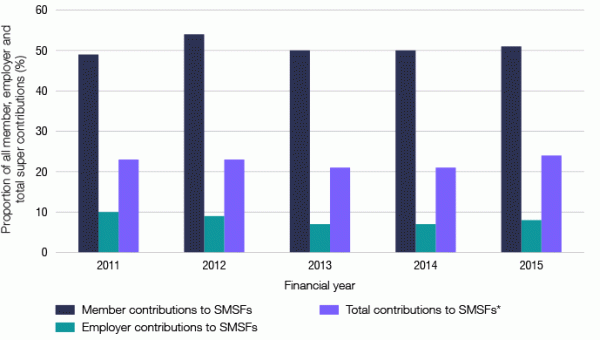
Share this:

  • Click to email a link to a friend (Opens in new window) Email
  • Click to print (Opens in new window) Print
  • Tweet
  • Pocket
  • Click to share on Reddit (Opens in new window) Reddit
Like Loading...
Leave a comment
by SMSF Coach - Liam Shorte on August 12, 2016  •  Permalink
Posted in Franking Credits, Results Season
Tagged Account Based Pension, Alzheimer's, ANZ, Aussie Banks, Australian Banks, banking sector, Banks, Baulkham Hills, Big 4, budget, Castle Hill, CBA, Corporate results, dementia, DIY Super, Dural, Enduring Power of Attorney, EPoA, Estate Planning, fintech, Hawkesbury, Incapacity, income planning, Investment, Investment Strategy, NAB, outlook, pension phase, Pensions, powers of attorney, property, reporting season, Sector Outlook, Self Managed Superannuation Fund, SMSF, Tax Free Pensions, Tax Planning, Transition, Transition to Retirement, Westpac

Posted by SMSF Coach - Liam Shorte on August 12, 2016

https://smsfcoach.com.au/2016/08/12/current-views-on-views-on-the-big-4-aussie-banks-for-smsf-investors/

Get Super Scheme Smart – ATO warns on dangers of retirement planning schemes


The old adage “if it sounds too good to be true then it usually is” holds firm especially with superannuation “release” schemes. The ATO is stepping up its education efforts to help consumers while clamping down on promoters of such schemes. Here at SMSF Coach and our sister firm Verante Financial Planning we are always willing to offer a second opinion on any recommendation you are concerned about.

The Australian Taxation Office (ATO) is extending a helping hand to pre-retirees through Super Scheme Smart, a new initiative launched recently that educates people on the dangers of risky and illegal retirement planning schemes.

The ATO has identified a significant number of retirement planning schemes designed solely to help people avoid paying tax on their assets in an illegal manner and is working to close these down.

From the ATO media video below with ATO Deputy Commissioner, Michael Cranston, he warns:

While retirement planning schemes can vary, there are some common features that people should be aware of. Usually these schemes:
• are artificially contrived and complex, usually connected with a SMSF
• involve a lot of paper shuffling
• are designed to leave the taxpayer with minimal or zero tax, or even a tax refund
• aim to give a present day tax benefit by adopting the arrangement

Individuals caught using an illegal scheme identified by the ATO may incur severe penalties under tax laws. This includes risking loss of their retirement nest egg and also their rights as a trustee to manage and operate a SMSF.

The ATO is delivering practical help and information through their Super Scheme Smart website, including a comprehensive information pack, case studies and videos, as well as sending taxpayer alerts into the community about schemes and why they don’t fit within the law.

Mr Cranston urged people undertaking retirement planning to remain vigilant and to come forward if they believe they are at risk or are already involved in a scheme.

“Retirement planning makes good sense provided it is carried out within the tax and superannuation laws. Make sure you are receiving ethical professional advice when undertaking retirement planning, and if in doubt, seek a second opinion from an independent, trusted and reputable expert.

“We do our best to shut down dodgy schemes but the best defence is working together. Blowing the whistle on those promoting retirement planning schemes will help us stop them from risking your or others’ retirement savings,” Mr Cranston said.

All those approaching retirement who are yet to get “Super Scheme Smart”, are encouraged to take advantage of these resources and report promoters of dodgy schemes by calling 1800 177 006, or via email to reportataxscheme@ato.gov.au

Some examples provided of the current schemes they are concerned about include:

The schemes the ATO are currently worried about include:

  • Dividend stripping – Where the shareholders in a private company transfer ownership of their shares to a related SMSF so that the company can pay franked dividends to the SMSF. The purpose being to strip profits from the company in a tax-free form. (refer to Taxpayer Alert (TA 2015/1))
  • Non-arm’s length limited recourse borrowing arrangements – When an SMSF trustee undertakes limited recourse borrowing arrangements (LRBAs) established or maintained on terms that are not consistent with an arm’s length dealing. For more information, see Practical Compliance Guide.
  • Personal services income – Where an individual (with an SMSF often in pension phase) diverts income earned from personal services to the SMSF where it is concessionally taxed or treated as exempt from tax (refer to Taxpayer Alert (TA 2016/6)).

As mentioned above at Verante Financial Planning we take very good care of our clients and ensure all our client strategies are fully compliant and tick all the boxes so our client can sleep securely at night know that while they have used the superannuation and tax systems to maximise their savings position, they are always within the regulations and the spirit of the law.

The whole focus of this blog, the SMSF Coach is about educating and promoting use of legal strategies and we are consistently warning people of the pitfalls of some strategies and investments out there such as our recent warning on the failed GUEVRA IPO not being suitable for SMSF clients or our very popular Property through super in a SMSF – Part 3: 20 most common mistakes

I hope this guidance has been helpful and please take the time to comment. Feedback always appreciated. Please reblog, retweet, like on Facebook etc to make sure we get the news out there. As always please contact me if you want to look at your own options. We have offices in Castle Hill and Windsor but can meet clients anywhere in Sydney or via Skype. Just click the Schedule Now button up on the left to find the appointment options.

Liam Shorte B.Bus SSA™ AFP

Financial Planner & SMSF Specialist Advisor™

SMSF Specialist Adviser 

 Follow SMSFCoach on Twitter Liam Shorte on Linkedin NextGen Wealth on Facebook   

Verante Financial Planning

Tel: 02 98941844, Mobile: 0413 936 299

PO Box 6002 BHBC, Baulkham Hills NSW 2153

5/15 Terminus St. Castle Hill NSW 2154

Corporate Authorised Representative of Viridian Select Pty Ltd ABN 41 621 447 345, AFSL 51572

This information has been prepared without taking account of your objectives, financial situation or needs. Because of this you should, before acting on this information, consider its appropriateness, having regard to your objectives, financial situation and needs. This website provides an overview or summary only and it should not be considered a comprehensive statement on any matter or relied upon as such.

Share this:

  • Click to email a link to a friend (Opens in new window) Email
  • Click to print (Opens in new window) Print
  • Tweet
  • Pocket
  • Click to share on Reddit (Opens in new window) Reddit
Like Loading...
1 Comment
by SMSF Coach - Liam Shorte on July 27, 2016  •  Permalink
Posted in Enduring Power of Attorney, Estate Planning, SMSF Management, Trustee
Tagged Account Based Pension, Alzheimer's, ato, ATO warning, Baulkham Hills, budget, Castle Hill, dementia, DIY Super, Dural, Early Release Schemes, Enduring Power of Attorney, EPoA, Estate Planning, Hawkesbury, Incapacity, income planning, Investment, Investment Strategy, pension phase, Pensions, powers of attorney, property, Self Managed Superannuation Fund, SMSF, Super Scheme Smart, Tax Free Pensions, Tax Planning, Transition, Transition to Retirement

Posted by SMSF Coach - Liam Shorte on July 27, 2016

https://smsfcoach.com.au/2016/07/27/get-super-scheme-smart-ato-warns-on-dangers-of-retirement-planning-schemes/

« Older Posts
Newer Posts »
  • Search for specific topics

  • Liam is a Fellow of the SMSF Association, their highest Specialist rating
  • Recent Posts

    • Age Pension & Deeming Changes September 2025
    • Could an Unsigned Will Be Valid? What about your BDBN in the SMSF?
    • Important Changes to Pension Commencement Rules Now in Effect from 1 July 2025
    • The Ultimate SMSF End of Financial Year Checklist 2025
    • Superannuation – General Transfer Balance Cap Increases to $2.0 Million from 1 July 2025
    • SMSF Business Real Property: It’s not what type of property that counts, it’s the use that matters.

    • The Ultimate SMSF End of Financial Year Checklist 2024
    • How to check your Superannuation data via myGov online
    • The Ultimate SMSF End of Financial Year Checklist 2023
    • So How Much Can I Contribute to my SMSF Using the Bring Forward Rule from 1 July 2025
  • Previous Posts by Topic

    • Contribution Strategies (83)
      • In Specie transfers (5)
      • Salary Sacrifice (15)
      • Small Business CGT (2)
      • Superannuation Splitting (18)
      • Tax Planning (64)
    • education (15)
    • Education costs (2)
    • Estate Planning (39)
      • Anti-Detriment (2)
      • Binding Death Nominations (15)
      • Enduring Power of Attorney (7)
      • Reversionary Pension (13)
      • testamentary trust (1)
    • Financial Planning (62)
      • Bankruptcy Protection (1)
      • Contributions (10)
      • Divorce (5)
      • downsizing (6)
      • Superannuation (27)
    • Insurance Strategies (14)
      • Income Protection (3)
      • Life Insurance (7)
      • Salary Continuance (3)
      • Total & Permanent Disability (4)
    • Investment Strategies (73)
      • Asset Allocation (22)
      • Behavioural Finance (3)
      • Bonds (5)
      • Borrowing (21)
        • Loans (12)
        • LRBA (14)
      • Botcoin (1)
      • Buy-backs (1)
      • Franking Credits (14)
      • Hybrids (3)
      • International Investing (7)
      • Investor Education (6)
      • Property (25)
      • Results Season (2)
      • Term Deposits (7)
    • Retirement Planning (91)
      • Age Pension (7)
      • Centrelink (19)
        • CHSC (2)
      • Downsizing (1)
      • Lifestyle (4)
      • Pension Strategies (36)
      • Pensions (33)
    • SMSF (102)
      • News & Stats (47)
    • SMSF alternatives (2)
    • SMSF Management (122)
      • Audit (18)
      • Checklists (23)
      • Deeds (1)
      • Scam Alert (2)
      • SMSF Exit Strategies (2)
      • TBAR reporting (4)
      • Trustee (70)
  • Like us on Facebook

    Like us on Facebook
  • Blog Stats

    • 863,248 hits
Blog at WordPress.com.
<div data-adviser-id="278214">

<a href="https://www.adviserratings.com.au/adviser/278214/William-Shorte">
View William Shorte's Adviser Ratings profile
</a>
</div>

https://www.adviserratings.com.au/widget/278214/profile.js
  • Subscribe Subscribed
    • The SMSF Coach
    • Join 297 other subscribers
    • Already have a WordPress.com account? Log in now.
    • The SMSF Coach
    • Subscribe Subscribed
    • Sign up
    • Log in
    • Report this content
    • View site in Reader
    • Manage subscriptions
    • Collapse this bar
 

Loading Comments...
 

    %d