When I talk to self-directed SMSF trustees their excuse for not diversifying more from Aussie Shares and Term Deposits was that it was difficult to understand some sectors and to get a decent diversification without building a huge portfolio of stocks, unlisted managed funds, bonds, hybrids etc. They hated application forms especially for SMSF investments but they have been reluctant to use a platform despite my argument that often a platform was a useful vehicle. Most just are not interested in another layer of fees for their SMSF. Each to their own so I left the argument there. However now the mountain is coming to them!
The following is general information and not a recommendation, you still need to do your own research or get advice for your personal circumstances.
In November 2017 Vanguard Australia finally launched a suite of four exchange traded funds (ETFs) that provide greater access to their leading diversified portfolio strategies. This will make SMSF and personal investing a far more accessible and transparent option for many and ultimately help them achieve their financial goals at a lower cost, easier reporting and with less paperwork than currently. They offer a great opportunity to develop a well simple, market leading diversified core to your portfolio.
The four Vanguard Diversified Index ETFs build on their extensive suite of ETFs and unlisted Managed Funds, and are one of the first ETFs allowing investors to gain diversification across and within all major asset classes, while making a clear choice about how much risk they take on. I would argue that AMP’s DMKT and Schroder’s GROW do this to some extent but not at this low a cost as they are actively managed an many might think they are a good blend with Vanguard’s new range.
The conservative (VDCO), balanced (VDBA), growth (VDGR) and high growth (VDHG) ETFs offer investors simple, single trade access to Vanguard’s global expertise in portfolio management and asset allocation, with annual investment costs at just 0.27 per cent. Yes that’s only $2.70 management fee for every $1000 invested in a diversified portfolio, wipe the floor of many industry and retail super funds.
Each Diversified Index ETF is a share class of an existing Vanguard Diversified Index Fund, meaning ETF investors can tap into the benefits of an established asset pool, collectively worth more than $7 billion, through Vanguard’s existing range of non-listed multi-asset funds. Vanguard’s Diversified Index Funds consistently rank in the top quartile of performance with their peers over three, five and 10 year periods, according to Morningstar.
Yes you are giving up some transparency and control but I believe you can rely on Vanguard’s investment experts to continuously assess their portfolio’s exposure and periodically rebalance it back to its intended level of risk.”
Each Vanguard Diversified Index ETF provides investors with extensive global exposure to around 6500 individual companies and more than 5000 fixed income securities.
Just in case you have not heard of Vanguard, here is a little detail to help build a picture of their strength and reach:
The Vanguard Group, Inc.: Key facts and figures*
Founded
1975
Total assets under management
AUD $5.9 trillion
Funds offered
180 in the US, and 190 funds in markets outside the US
Ownership
The Vanguard Group, Inc. is owned by its US-domiciled funds,
which are owned by their shareholders.
Headquarters
Valley Forge, Pennsylvania, USA
Chairman and CEO
F. William McNabb III
Number of employees
About 15,000 worldwide
Vanguard’s Investment Strategy Group, a global team of researchers and analysts, set the asset allocation of the diversified funds as part of a robust framework used by Vanguard globally. This framework includes analysis of concentration risk and currency exposure, and incorporates comprehensive modelling generated by Vanguard’s proprietary forecasting engine, the Vanguard Capital Markets Model.
Looking for an adviser that will keep you up to date and provide guidance and tips like in this blog? Then why not contact me at our Castle Hill or Windsor office in Northwest Sydney to arrange a one on one consultation. Just click the Schedule Now button up on the left to find the appointment options. Do it! make 2018 the year to get organised or it will be 2028 before you know it.
Please consider passing on this article to family or friends. Pay it forward!
Liam Shorte B.Bus SSA™ AFP
Financial Planner & SMSF Specialist Advisor™
Tel: 02 98941844, Mobile: 0413 936 299
PO Box 6002 BHBC, Baulkham Hills NSW 2153
5/15 Terminus St. Castle Hill NSW 2154
Corporate Authorised Representative of Viridian Select Pty Ltd ABN 41 621 447 345, AFSL 51572
This information has been prepared without taking account of your objectives, financial situation or needs. Because of this you should, before acting on this information, consider its appropriateness, having regard to your objectives, financial situation and needs. This website provides an overview or summary only and it should not be considered a comprehensive statement on any matter or relied upon as such.
I am being inundated by queries from young men aged 20-40 looking to learn more about Bitcoin and then a cohort of traditional SMSF trustees aged 40-70 who have an interest in alternative investments and especially Gold who now want to at least know more about Bitcoin and cryptocurrencies in general. so when I came across this latest paper dealing with both subjects from my good mate Jordan Eliseo, Chief Economist at ABC Bullion I twisted his arm to let me share it to my readers.
The key finding of his paper are:
KEY FINDINGS
Blockchain technology has serious real world applications – it is here to stay
Given valuations in broader financial markets, it can make sense to speculate in the cryptocurrency market with a small portion of one’s wealth
Cryptocurrencies like Bitcoin are money today, but whether that status will endure remains to be seen
Physical gold remains the simplest and most effective hedge against the monetary, market, and macroeconomic risks that investors confront today
I recommend that you read Jordan’s full report here:
Now, if you are determined to go ahead and invest in Bitcoin or other cryptocurrencies then you need to do some serious groundwork.
NOTE: I DO NOT RECOMMEND CRYPTO CURRENCIES AS A SUITABLE INVESTMENT FOR AN SMSF, I AM JUST MAKING SURE THAT THOSE WHO DO INVEST DO IT COMPLIANTLY
How the SMSF regulations affect investing in Bitcoin, Ethereum or other cryptocurrencies
SMSF Professionals and Trustees should be well aware of the restrictions placed on the investment choices of SMSFs by the Superannuation Industry (Supervision) Act 1993 and supporting regulations. The Australian Taxation Office (ATO) is in charge of the administration of these rules and they have issued this guidance on their website:
Although there are not yet any formal rulings from the ATO clarifying how the rules apply to Bitcoin, there are a number of Tax Determinations that help guide any SMSF Trustees considering investing in bitcoins.
TD 2014/25 Income tax: is bitcoin a ‘foreign currency’ for the purposes of Division 775 of the Income Tax Assessment Act 1997 (ITAA 1997)
TD 2014/26 Income tax: is bitcoin a CGT asset for the purposes of subsection 108-5(1) of the Income Tax Assessment Act 1997 (ITAA 1997)
TD 2014/27 Income tax: is bitcoin trading stock for the purposes of subsection 70-10(1) of the Income Tax Assessment Act 1997 (ITAA 1997)
GSTR 2014/3 Goods and services tax: the GST implications of transactions involving bitcoin.
Considerations before investing in Bitcoin:
Is it right for your needs and objectives? Consider if an investment in Bitcoin would satisfy the ‘sole purpose test’? – Are you honestly investing in it for your retirement?
In your circumstances does Bitcoin investing suit your risk tolerance (and the other member’s of your SMSF) and have you done enough research to validate your investment decision,
Does you Trust Deed allow for investing in bitcoins or cryptocurrencies. Read your deed and maybe ask the trust deed provider.
Talk to your fund’s auditor before proceeding as they have to sign off on the investment’s validity annually so better to run the strategy by them upfront.
They may ask you to verify the following:
If you wish to proceed with a purchase then have you amended your SMSF’s investment strategy to cater for this investment? Click the link for more details.
Trap: Make sure you know who is in ‘control’ the bitcoins? All assets must be clearly in the name/control of the trustees of the fund
How would the SMSF acquire the bitcoins? Do not acquire them from yourself or a “related party”
How secure is the exchange/wallet you are storing your cryptocurrencies in. Some have been hacked and coins lost.
No matter what it is essential to do you research and not take a gamble with your retirement nest egg unless you have covered all your bases.
Audit Tip:
Auditors and trustees can have access to the single public ledger that records Bitcoin. Websites such as Blockchain, BlockExplorer and Blockonomics allow input of a transaction ID to get detailed data of that Bitcoin transaction. Third party verification for auditors is therefore also possible. You can obtain a transaction list from the SMSF wallet provider and verify each holding. I am sure further tools will become available.
Here is another article worth reading as part of your research:
Looking for an adviser that will keep you up to date and provide guidance and tips like in this blog? Then why now contact me at our Castle Hill or Windsor office in Northwest Sydney to arrange a one on one consultation. Just click the Schedule Now button up on the left to find the appointment options. Do it! make 2016 the year to get organised or it will be 2026 before you know it.
Please consider passing on this article to family or friends. Pay it forward!
Liam Shorte B.Bus SSA™ AFP
Financial Planner & SMSF Specialist Advisor™
Tel: 02 98941844, Mobile: 0413 936 299
PO Box 6002 BHBC, Baulkham Hills NSW 2153
5/15 Terminus St. Castle Hill NSW 2154
Corporate Authorised Representative of Viridian Select Pty Ltd ABN 41 621 447 345, AFSL 51572
This information has been prepared without taking account of your objectives, financial situation or needs. Because of this you should, before acting on this information, consider its appropriateness, having regard to your objectives, financial situation and needs. This website provides an overview or summary only and it should not be considered a comprehensive statement on any matter or relied upon as such.
It always amazes me that very often when I take an SMSF under my advice that I find that the estate planning and use of Binding Death Benefit Nominations has been haphazard, lacking in essential detail, ignorant of the SMSF deed requirements or just missing. People spend their lives amazing a nestegg only to be lax in ensuring it goes to who they want when they die.
A recent decision has clarified three issues regarding the validity of binding death benefit nominations. I have relied on the following summary from Townsend Law’s Michael Hallinan for interpretation of the decision.
A recent decision of the South Australian Court of Appeal (Cantor Management Services Pty Ltd v Booth [2017]) has passed important comment on no less than three different issues regarding the validity of a binding death benefit nomination (BDBN).
The critical issue was whether a BDBN was valid. If valid, then the death benefit was payable to the estate of the deceased member. If invalid, then the trustee would decide the allocation of the benefit.
The validity turned upon the issue of whether the BDBN had been served on the corporate trustee. The BDBN had been signed by the member and then left in the possession of the accountants of the SMSF at their office which was also the registered office of the corporate trustee.
Issue No 1
The sole director of the corporate trustee had argued that as the BDBN had not been provided to the director nor had the accountants been expressly authorised to accept and hold the BDBN on behalf of the corporate trustee, then the BDBN had not been properly served on the corporate trustee.
The Court did not accept the argument put by the corporate trustee. The Chief Justice held that it was sufficient to constitute service on the corporate trustee for the BDBN to be held by the accountants of the SMSF at the registered office of the corporate trustee. The other justices agreed with the Chief Justice.
Issue No 2
The second issue was that the Court opined that the accountants had a duty to keep the BDBN safe and also had a duty to bring to the attention of the trustee of the SMSF that they held the BDBN. If the Court had held that service had not been properly effected, the defendant may have been able to sue the accountants for their negligence in failing to advise the trustee that they were holding the BDBN. Luckily for them the Court said that service was good anyway.
Issue No 3
The third issue was that Court agreed with the decision of Munro v Munro, which held that SIS regulation 6.17A does not apply to SMSFs (unless the trust deed of the SMSF explicitly or implicitly incorporates the regulation). It is surprising that a few industry die-hards still argue that reg 6.17A might still apply to SMSFs despite the number of times the courts have said otherwise.
The original article by Michael Hallinan of Townsends Business & Corporate Lawyers can be found here and you can contact them on (02) 8296 6222. I highly recommend signing up for their newsletter.
Make sure to check your with your own current death benefit arrangements or contact us for a review.
Looking for an adviser that will keep you up to date and provide guidance and tips like in this blog? Then why now contact me at our Castle Hill or Windsor office in Northwest Sydney to arrange a one on one consultation. Just click the Schedule Now button up on the left to find the appointment options. Do it! make 2016 the year to get organised or it will be 2026 before you know it.
Please consider passing on this article to family or friends. Pay it forward!
Liam Shorte B.Bus SSA™ AFP
Financial Planner & SMSF Specialist Advisor™
Tel: 02 98941844, Mobile: 0413 936 299
PO Box 6002 BHBC, Baulkham Hills NSW 2153
5/15 Terminus St. Castle Hill NSW 2154
Corporate Authorised Representative of Viridian Select Pty Ltd ABN 41 621 447 345, AFSL 51572
This information has been prepared without taking account of your objectives, financial situation or needs. Because of this you should, before acting on this information, consider its appropriateness, having regard to your objectives, financial situation and needs. This website provides an overview or summary only and it should not be considered a comprehensive statement on any matter or relied upon as such.
Your superannuation trust deed along with the superannuation laws form the governing rules that self managed super funds (SMSFs) needs to operate by. The introduction of the $1.6 million transfer balance cap (TBC) and new transition to retirement income stream (TRIS) rules are a ‘game changer’ for SMSFs when discussing benefit payments and estate planning. With the new super rules in effect as of 1 July 2017, now is the right time to review if your trust deed needs to be enhanced or amended to deal with the new approaches and strategies you may need to implement.
Read the deed
The first step in reviewing your superannuation trust deed will be to read it. Trust deeds are legal documents which can be complex to read, so you may want help from an advisor with this.
It is likely that most deeds will not result in a breach of any superannuation laws and would provide the trustee with powers to comply with relevant tax and superannuation laws as they change over time.
The next step would be to review the deed in consideration with your own circumstances.
For example, a common scenario may be a restrictive deed that only provides the trustee with a discretion to pay death benefits. Therefore, if a member of that SMSF wanted to create a binding death benefit nomination, it would be irrelevant due to the deed’s governing rules.
In any event, deeds which are clearly out of date will need to be amended as soon as possible.
Deeds post 1 July 2017
Post 1 July 2017, there are many approaches and strategies that will differ from the past and it is essential to ensure that your SMSF deed does not restrict you in anyway. We note the following areas should be considered:
Paying death benefits
The $1.6 million TBC now restricts the amount of money that can be kept in super on the death of a member. This is crucially important as when a member dies, their TBC dies with them. SMSF members should review their estate planning and further review their trust deed for the following:
Does it allow for binding death benefit nominations (BDBN)?
Do BDBNs lapse every 3 years in accordance with the trust deed when the legislation does not prescribe it?
Does it consider the appropriate solution when there is a conflict between a reversionary pension and a BDBN and which will take precedence?
Reversionary pensions
Reversionary pensions are pensions which continue being paid to a dependant after your death. Under the TBC, reversionary pensions will not count towards a member’s TBC until 12 months after the date of the original recipient’s death. Importantly, the transfer of the pension from the deceased to the new recipient will count towards the TBC. The value of the credit to the TBC will be the value of the pension at the date of death, not the value after 12 months. This increases the complexity of reversionary pensions prompting a review of trust deeds to consider:
Does it allow for a reversionary pension to be added to an existing pension or are there restrictions?
Should it automatically ensure that a pension is reversionary so that it is paid to a surviving spouse?
Pensions
The TBC also has implications for strategies in commencing pensions and making benefit payments. Trust deeds may need to be reviewed for:
Ensuring that commutations are able to be moved into accumulation phase rather than being forced as lump sums out of superannuation.
Are there any specific provisions relating to the TBC? There may be value in ensuring that the deed restricts pensions from being commenced with a value greater than the TBC.
Are there provisions which detail where commutations must be sourced from first?
Are there restrictive pension provisions that the trustees must comply with?
Transition to retirement income streams
Tax concessions for TRISs where the recipient does not have unrestricted access to their superannuation savings (known as meeting a condition of release with a nil chasing restriction) have also been removed. Trust deeds may need to be reviewed for:
Does the deed allow for the 10% maximum benefit payment to fall away once a nil condition of release is met?
Does the deed deal with a TRIS’s character when a nil condition of release? (Does it convert into an account based pension?)
How can we help?
SMSF Specialist Advisors can help you understand how the new laws may impact you and partner with a lawyer/Deed provider to review and amend your trust deed as required. Please feel free to give me a call to arrange a time to meet so that we can discuss your particular requirements, especially in regards to issues that may arise out of the latest super laws, in more detail.
For further educational information please subscribe to this blog and also visit the SMSF Association’s Trustee Knowledge Centre (http://trustees.smsfassociation.com/) to keep on top of the latest changes and information to reach your retirement goals and get the most out of your self managed super fund.
Want a Superannuation Review or are you just looking for an adviser that will keep you up to date and provide guidance and tips like in this blog? Then why now contact me at our Castle Hill or Windsor office in Northwest Sydney to arrange a one on one consultation. Just click the Schedule Now button up on the left to find the appointment options. Do it! make this the year to get organised or it will be 2028 before you know it.
Please consider passing on this article to family or friends. Pay it forward!
Liam Shorte B.Bus SSA™ AFP
Financial Planner & SMSF Specialist Advisor™
Tel: 02 98941844, Mobile: 0413 936 299
PO Box 6002 BHBC, Baulkham Hills NSW 2153
5/15 Terminus St. Castle Hill NSW 2154
Corporate Authorised Representative of Viridian Select Pty Ltd ABN 41 621 447 345, AFSL 51572
This information has been prepared without taking account of your objectives, financial situation or needs. Because of this you should, before acting on this information, consider its appropriateness, having regard to your objectives, financial situation and needs. This website provides an overview or summary only and it should not be considered a comprehensive statement on any matter or relied upon as such.
I love working on strategies for clients but sometimes you just need a true expert or excellent software to crunch the numbers. I was looking for some ideas on downsizing as it had become clear to me that is was not the panacea to retirement funding that client’s often believe it would be. So I was looking for an in-depth article working through the numbers and Rob van Dalen of Optimo Financial has kindly stepped up to provide the required analysis in our latest guest blog. Rob’s main warning is to do your sums on your own particular situation before leaping in to a downsizing strategy.
Optimo Financial
Suite 204, 10-12 Clarke Street, Crows Nest NSW 2065
PO Box 931, Crows Nest NSW 1585
Do Your Sums Before Downsizing
A popular subject often talked about at family barbecues is; “should mum and dad downsize when they get older?” Often it’s assumed that downsizing is the best option moving forward. To test and possibly challenge this we decided to run a few scenarios through our Pathfinder Financial Optimisation Platform to find out. Read our findings below;
1.1 The Clients
In this example, we look at the case of David and Alice who have recently retired and who will soon both be eligible for the age pension. David was born on 11 April 1953 while Alice was born on 15 November 1952. They have a modest $400,000 in super. Their other assets are the family home valued at $900,000 and personal assets valued at $40,000. They have no debt. They would like to have $50,000pa (increasing at CPI) for living expenses. They are worried that their super is not sufficient to maintain their desired income. Consequently, they have contemplated selling the family home and moving to a cheaper area where they could buy a new home for $500,000. Will downsizing leave them better off?
1.2 Assumptions
We have assumed in the analysis:
· Pension fund returns 5.7%pa;
· House selling costs 2.5%;
· House purchase costs 6% (including stamp duty);
· House prices in the long term increase at 3%pa;
· CPI 2.5%p.a.
1.3 Scenario 1: Retain Current Home
We first examine the scenario where David and Alice retain their current home. In this case, they will receive income from the government pension as well as drawing a pension from their own super. Figure 1 shows the sources of their income over a 20 year period.
David and Alice receive approximately 64% of their income from the age pension and associated benefits (see also Figure 6 below). The remainder is withdrawn from their pension account through withdrawing the minimum amount each year (plus some extra for the first few years until they become eligible for the age pension).
Their age pensions are limited approximately equally by the income and assets tests. After 20 years, David and Alice have a combined wealth of $1,960,000 most of which is from the family home.
1.4 Scenario 2: Downsizing Family Home in 2016/17
The next scenario sees David and Alice downsizing their family home from $900,000 to $500,000 in 2016/17. Their ages enable them to deposit the excess funds generated from the house sale into super as non-concessional contributions. However, a Pathfinder® analysis shows that increasing their superannuation balance reduces their age pension because, unlike the family home, super counts towards the age pension assets test and is deemed for the income test. Figure 2 shows the results of the age pension assets and income tests for David and Alice and we can see that their pension is now limited by the assets test. For a home owning couple, the age pension reduces at a rate of $3 per fortnight for each $1,000 of assets in excess of $575,000. This taper rate was doubled from 1 January 2017, so now has a much larger impact on the pension received.
So in 2019/20, for example, their age pension reduces from $36,337 to $9,004 and they must draw more from their pension account to make up the difference. Their wealth after 20 years is now projected at $1,581,000 or about $379,000 less than in the first scenario.
1.5 Scenario 3: Downsizing Family Home in 2027/28
In the third scenario, we examine the possibility that David and Alice defer the downsizing for ten years, say in 2027/28. Their age pension is initially unaffected until they downsize the family home, but after that time their age pension payments are severely curtailed. Their projected wealth after 20 years is now $1,714,000. This is a better outcome than in the second scenario but is still $246,000 less than if they keep their existing home.
1.6 Comparing the Scenarios
Figure 3 gives a comparison of the annual age pension received in the three scenarios. You can see that the scenario where they retain their current home, yields a higher pension and that their pension drops sharply after the sale of their house in the other two scenarios.
Figure 4 shows the total age pension payments over the 20 years. You can see that by keeping their original family home, their total pension entitlement is significantly higher than either of the downsizing options we analysed.
Figure 5 shows the total wealth over the 20 year period analysed.
The first point to note is the importance of the age pension towards retirement income, depending, of course, on the particular circumstances. Figure 6 shows the composition of retirement income over the 20 years analysed for Scenario 1.
1.7 Conclusions
In this example, the age pension plus estimated concession card benefits contribute about 64% to income while the account based pensions contribute about 36%. The second point is that downsizing the family home may not result in improving the overall situation as an increase in payments from a private pension may be more or less offset by a decrease in the age pension.
1.8 Pathfinder Learnings
In our Pathfinder® analysis, we find, perhaps surprisingly, that a couple could be considerably worse off by downsizing the family home. Any funds added to super by the income generated from downsizing could be dissipated by a reduction in the age pension. In addition, the costs of sale and repurchase of a family home are significant.
The age pension can provide a buffer between retirement savings and lifestyle expenses.
For persons eligible for the age pension, downsizing the family home may leave you worse off financially because of the impact of the age pension income and assets test.
Thank you Robby
Are you looking for an advisor that will keep you up to date and provide guidance and tips like in this blog? Then why now contact me at our Castle Hill or Windsor office in Northwest Sydney to arrange a one on one consultation. Just click the Schedule Now button up on the left to find the appointment options.
Liam Shorte B.Bus SSA™ AFP
Financial Planner & SMSF Specialist Advisor™
Tel: 02 98941844, Mobile: 0413 936 299
PO Box 6002 BHBC, Baulkham Hills NSW 2153
5/15 Terminus St. Castle Hill NSW 2154
Corporate Authorised Representative of Viridian Select Pty Ltd ABN 41 621 447 345, AFSL 51572
This information has been prepared without taking account of your objectives, financial situation or needs. Because of this you should, before acting on this information, consider its appropriateness, having regard to your objectives, financial situation and needs. This website provides an overview or summary only and it should not be considered a comprehensive statement on any matter or relied upon as such.
Image courtesy of Stuart Miles at FreeDigitalPhotos.net
There are many rumours and well-intentioned but wrong advice out here on the internet about how to maximise Centrelink or DVA pension by “gifting assets” before applying. I want to clear up some of those misunderstandings
The gifting and deprivation rules prevent you from giving away assets or income over a certain level in order to increase age pension and allowance entitlements. For Centrelink and Department of Veteran’s Affairs (DVA) purposes, gifts made in excess of certain amounts are treated as an asset and subject to the deeming provisions for a period of 5 years from disposal.
Acknowledgement: I have relied on the excellent guidance of the AMP TAPin team for the majority of the content in this article. They write great technical articles for advisors and I try and make them SMSF trustee friendly.
What is considered a gift for Centrelink purposes?
For deprivation provisions to apply, it must be shown that a person has destroyed or diminished the value of an asset, income or a source of income.
A person disposes of an asset or income when they:
− engage in a course of conduct that destroys, disposes of or diminishes the value of their assets or income, and
− do not receive adequate financial consideration in exchange for the asset or income.
Adequate financial consideration can be accepted when the amount received reasonably equates to the market value of the asset. It may be necessary to obtain an independent market valuation to support your estimated value or transferred value or Centrelink may use their own resources to do so..
Deprivation also applies where the asset gifted does not actually count under the assets test. For example, unless the ‘granny flat’ provisions apply, deprivation is assessed if a person does not receive adequate financial consideration when they:
− transfer the legal title of their principal home to another person, or
− buy a new principal home in another person’s name.
What are the gifting limits?
The gifting rules do not prevent a person from making a gift to another person. Rather, they cap the amount by which a gift will reduce a person’s assessable income and assets, thereby increasing social security entitlements.
There are two gifting limits.
A person or a couple can dispose of assets of up to $10 000 each financial year. This $10, 000 limit applies to a single person or to the combined amounts gifted by a couple, and
An additional disposal limit of $30 000 over a five financial years rolling period.
The $10,000 and $30,000 limits apply together. That is, although people can continue to gift assets of up to $10 000 per financial year without penalty, they need to take care not to exceed the gifting free limit of $30 000 in a rolling five-year period.
What happens if the gifting limits are exceeded?
If the gifting limits are breached, the amount in excess of the gifting limit is considered to be a deprived asset of the person and/or their spouse.
The deprived amount is then assessed as an asset for 5 anniversary years from the date of gift. It is assessed as an asset for asset test purposes and subject to deeming under the income test.
After the expiration of the 5 year period, the deprived amount is neither considered to be a person’s asset nor deemed.
Example 1: Single pensioner – gifts not impacted by deprivation rules
Sally, a single pensioner, has financial assets valued at $275,000. She has decided to gift some money to her son to improve his financial situation. Her plan for gifting is as follows:
Financial year
2017/18
2018/19
2019/20
2020/21
2021/22
2022/23
Amount gifted
$6,000
$6,000
$6,000
$6,000
$6,000
$6,000
With this gifting plan, Sally is not affected by either gifting rule. This is because she has kept under the $10,000 in a single year rule and also within the $30,000 per rolling five-year period.
Example 2: Single pension – Gifts impacted by both gifting rules
Peter is eligible for the Age Pension. He has given away the following amounts:
Financial year
Amount gifted
Deprived asset assessed using the $10,000 in a financial year free area rule
Deprived asset assessed using the $30,000 five-year free area rule
2017/18
$33,000
$23,000
$0
2018/19
$2,000
$0
$0
In this case, $23,000 of the $33,000 given away in 2017/18 exceeds the gifting limit (the first limit of $10,000) for that financial year, so it will continue to be treated as an asset and subject to deeming for five years.
In 2018/19, while gifts totalling $35,000 have been made, no deprived asset is assessed under the five-year rule after taking into account the deprived assets already assessed, ie $33,000 + $2,000 – $23,000 = $12,000, which is less than the relevant limit of $30,000.
Example 3: Couple impacted by both gifting rules
Ted and Alice are eligible for the Age Pension. They give away the following amounts:
Financial year
Amount gifted
Deprived asset assessed using the $10,000 in a financial year free area rule
Deprived asset assessed using the $30,000 five-year free area rule
2017/18
$10,000
$0
$0
2018/19
$13,000
$3,000
$0
2019/20
$10,000
$0
$0
2020/21
$10,000
$0
$10,000
2021/22
Any gifts in 2014/15 will be assessed as deprived assets under the five-year rule
In this case, $3,000 of the $13,000 given away in 2018/19 exceeds the gifting limit for that year, so it will continue to be treated as an asset and subject to deeming for five years. The $10,000 given away in 2020/21 exceeds the $30,000 limit for the five-year period commencing on 1 July 2017, so it will also continue to be treated as an asset and subject to deeming for five years.
Are some gifts exempt from the rules?
Certain gifts can be made without triggering the gifting provisions. Broadly speaking, these include:
− Assets transferred between the members of a couple. A common example is where a person who has reached Age Pension age withdraws money from their superannuation and contributes it to a superannuation account in the name of the spouse who has not yet reached age pension age.
− Certain gifts made by a family member or a certain close relative to a Special Disability Trust. For more information on Special Disability Trusts, refer to Department of Human Services – Special Disability Trusts.
− Assets given or construction costs paid for a ‘granny flat’ interest. See Department of Human Services – Granny Flat Interest for further detail.
Trying to be too smart – Gifting prior to claim
Contrary to what many read on the internet any amounts gifted in the five years prior to accessing the Age Pension or other allowance are subject to the gifting rules
Deprivation provisions do not apply when a person has disposed of an asset within the five years prior to accessing the Age Pension or other allowance but could not reasonably have expected to become qualified for payment. For example, a person qualifies for a social security entitlement after unexpected death of a partner or job loss.
Gifting and deceased estates
The gifting rules apply to a person’s interest in a deceased estate if the person does any of the following:
− Gives away their right to their interest in a deceased estate for no/inadequate consideration,
− Directs the executor to distribute their interest in a deceased estate for no/inadequate consideration, or
− After the estate has been finalised, gives away their interest in a deceased estate to a third-party for no/inadequate consideration.
The above rules apply even if the deceased died without a will.
Gifting and death of a partner
In some circumstances, couples in receipt of a social security benefit may give away assets prior to death of one of them. Prior to death, any deprived assets would have been assessed against the pensioner couple for five years from the date of the disposal. Now that a member of the couple has passed away, how will the deprived assets be assessed for the surviving partner?
The amount of deprivation that continues to be held against a surviving partner depends on who legally owned the assets prior to death.
Table 1: Gifting and death of a partner
Legal owner of the deprived asset
Assessment of deprived assets
jointly,
does not change.
by the deceased partner,
is reduced to zero.
by the surviving partner,
increases by the amount held against the deceased partner by the outstanding balance held against the deceased partner.
Example 4: Death of a partner
Daryl (age 84) and Gail (age 78) gifted an apartment worth $260,000 to their son Ethan on 1 July 2019. At the time the gift was made, Centrelink assessed $250,000 as a deprived asset. Daryl passed away on 1 July 2020.
The treatment of the deprived assets for Gail will depend on who legally owned the assets prior to Daryl’s death. The impact of different ownership options is shown below:
Legal owner of the deprived asset
Assessment of deprived assets
jointly,
Half of the asset value of the deprived asset will be assessed against the surviving spouse. As the amount of the deprived asset is $250,000, only $125,000 will be assessed against Gail
by the deceased partner,
No amount will be assessed against the surviving partner. As the amount of the deprived asset is $250,000, the amount assessable to Gail is $0.
by the surviving partner,
The full amount will continue to be assessed against the surviving partner. As the amount of the deprived asset is $250,000, the amount assessable to Gail remains at $250,000.
Want a Centrelink Review or are you just looking for an adviser that will keep you up to date and provide guidance and tips like in this blog? Then why not contact me at our Castle Hill or Windsor office in Northwest Sydney to arrange a one on one consultation. Just click the Schedule Now button up on the left to find the appointment options. Do it! make this the year to get organised or it will be 2028 before you know it.
Please consider passing on this article to family or friends. Pay it forward!
Liam Shorte B.Bus SSA™ AFP
Financial Planner & SMSF Specialist Advisor™
Tel: 02 98941844, Mobile: 0413 936 299
PO Box 6002 BHBC, Baulkham Hills NSW 2153
5/15 Terminus St. Castle Hill NSW 2154
Corporate Authorised Representative of Viridian Select Pty Ltd ABN 41 621 447 345, AFSL 51572
This information has been prepared without taking account of your objectives, financial situation or needs. Because of this you should, before acting on this information, consider its appropriateness, having regard to your objectives, financial situation and needs. This website provides an overview or summary only and it should not be considered a comprehensive statement on any matter or relied upon as such.
For many people setting up an SMSF, insurance is an afterthought but the law says that SMSF trustees must formulate, review regularly and give effect to an investment strategy that includes consideration of whether to hold insurance cover for one or more members of the fund. So that is why we usually have to do a needs analysis and work out where to place cover if required.
After we have assessed a new member’s insurance needs we look at what you have in place already and replacement options. But often we need to work with what you have due to changes in health or disparity in premiums when comparing group and individual rates. The basic facts on health are that most of us have some sort of issue by age 45 that triggers further investigation and loadings or exclusions by insurers before they offer cover. The latter issue of premiums is rapidly changing as retail and industry super funds hike insurance premiums and move more towards individual underwriting.
Our preference is to tidy up people’s affairs rather than complicate them and we do prefer to replace insurances where possible and use a combination of policies held inside and outside of your SMSF to maximise the breath and quality of cover while managing the premiums tax effectively. However where new cover cannot be obtained without loadings or exclusions we look at strategies for keeping existing cover in place. THIS IS WHY YOU NEVER ROLLOVER EXISTING POLICIES WITHOUT REVIEWING INSURANCES FIRST.
One of the strategies we use is that when you start your SMSF we leave a portion of your superannuation balance in the large fund to retain the current covers. This is often because it can be cost effective retain life, total and permanent disability (“TPD”) and income protection insurance cover in a large fund.
One of the advantages in keeping a balance within an existing retail/employer or industry superannuation fund is access to sometimes lower cost group insurance that has been arranged on a Group Insurance basis by the superannuation fund. Often, no medical examinations are necessary to have access to reasonably high levels of cover.
Despite any advantages, there can be terms in these insurance arrangements that cause cover to cease. This could be unexpected and usually as a result of clauses found in a 40-50 page product disclosure document that you may never have read. Some of the common cancellation triggers we have found are are outlined below.
No employer contributions
Under Protecting Your Super legislation your account will be considered inactive and transferred to the Australian Taxation Office (ATO) if your account balance is below $6,000 and within the last 16 months:
we haven’t received a contribution to your account; and
you haven’t changed your insurance cover, switched your investments, made or amended a binding beneficiary nomination on your account or told us in writing that you don’t want to be transferred.
A number of large super funds also have a clause that states, if employer contributions cease for six/12/13 months, a member automatically loses income protection cover. We understand that this is a policy for certain large funds that offer members automatic income protection insurance. Usually one month before the cover expires the fund notifies the member that cover is about to cease.
Leaving an employer in an employer sponsored plan
When it comes to employer sponsored funds we are aware of funds that require that a particular employer makes contributions to the member account or the insurance stops. TPD and income protection cover cease without notice if the member is no longer working for that employer after 60/71/90 days and their account balance is less than typically $3,000 or $6,000 under the Protecting Your Super legislation. Another fund cancels the Income Protection cover immediately on leaving the employer and no continuation option is offered whereas they do offer to continue the Life and TPD automatically when the member rolls over to a personal plan.
Minimum balance requirements
To retain cover at many industry and retail funds, the funds usually require that the member maintains a minimum balance in your account $6,000 under the Protecting Your Super legislation and have a contribution in the last 16 months. The cut off point or trigger can be as low as $1,000 or as high as $10,000. While most large funds let members retain cover as long as premiums can be automatically deducted from their account, we are aware of a fund that will cease insurance cover for all insurances when the account balance falls below $3,000 and no employer contributions are made after 13 months.
No longer working in the public sector
Some large government funds cease insurance cover if the member no longer works within the public sector. We are aware of some public sector funds where income protection cover ceases on the day the member officially ceases employment with the relevant public sector and no continuation option is provided. There is also another public sector fund that will cease all cover after 60 days from the last employer contribution or when the member stops working in the relevant public sector. Often these public sector funds do not accept further contributions from third party employers or rollovers from other funds.
Terminal illness payouts based on TPD not Life sums insured
We are also aware of a funds whereby on terminal illness, the insurance can pay out at the TPD level, which is often lower than the amount of life cover especially for higher risk occupations. The payment reduces any remaining life cover paid on death. This can mean less funds are available to cover medical or palliative care costs while the insured is alive. Thankfully the standard method of terminal illness cover is to pay out 100% of life cover upon confirmation of a terminal illness with less than 12 months life expectancy.
The kick in the teeth with this restricted payout is that it can also give rise to more tax because the non-dependent beneficiaries will receive the death benefits, as opposed to the member receiving benefits tax free before they die.
Read the Policy and Product disclosure Statement and review it annually
Before relying on existing cover to continue ensure you read the product disclosure statement and policy document particular to your type of policy. do not rely on the latest PDS on the website as this may be for a newer plan and yours maybe an older plan closed to new members so the PDS may not be on the website. email for the exact the PDS you need to rely on so you have a record of the request. Likewise any questions should be directed to the super fund via email for clarification on exactly how insurance cover applies as we know you can get many different answers to the same question over the phone!
Many funds see the employer as their client and may not give adequate warning when insurance cover is about to cease. Therefore it is important to monitor accounts and your contact details periodically especially where you may have elected for email correspondence. Many a cancellation warning has been sent to old email or previous home addresses.
I hope this guidance has been helpful and please take the time to comment. Feedback always appreciated. Please reblog, retweet, like on Facebook etc to make sure we get the news out there. As always please contact me if you want to look at your own options. We have offices in Castle Hill and Windsor but can meet clients anywhere in Sydney or via Skype. Just click the Schedule Now button up on the left to find the appointment options.
Liam Shorte B.Bus SSA™ AFP
Financial Planner & SMSF Specialist Advisor™
Tel: 02 98941844, Mobile: 0413 936 299
PO Box 6002 BHBC, Baulkham Hills NSW 2153
5/15 Terminus St. Castle Hill NSW 2154
Corporate Authorised Representative of Viridian Select Pty Ltd ABN 41 621 447 345, AFSL 51572
This information has been prepared without taking account of your objectives, financial situation or needs. Because of this you should, before acting on this information, consider its appropriateness, having regard to your objectives, financial situation and needs. This website provides an overview or summary only and it should not be considered a comprehensive statement on any matter or relied upon as such.
Image courtesy of Stuart Miles at FreeDigitalPhotos.net
Most people who have not sat with a planner or read in detail the newsletters from their superannuation funds would believe that they can only access their superannuation when they actually retire and stop working. But there are so many other circumstances that could trigger an all-important “Condition of Release” and make your retirement funds available to you. In this guide for SMSF trustees I will concentrate on meeting the Retirement Condition of Release but you can find out about the other conditions of release here (click it later).
Acknowledgement: I have relied on the excellent guidance of the AMP TAPin team for the majority of the content in this article. They write great technical articles for advisors and I try and make them SMSF trustee friendly.
What is the Retirement condition of release
The retirement condition of release is often subject to complexity and doubt. However, understanding the rules became even more important after 1 July 2017 resulting from the 2016 Budget measures. The tax exemption on investment earnings supporting a Transition to Retirement Income Stream- Accumulation Phase (TRIS – Accumulation) is no longer available. However, a TRIS will regain its tax exempt status once the ‘retirement’ condition of release is satisfied and it becomes a Transition to Retirement Income Stream- Retirement Phase (TRIS – Retirement Phase). Therefore, understanding what constitutes ‘retirement’ for an SMSF member in a TRIS is critical, to achieve that holy grail of a tax-free retirement pension.
Conditions of release – overview
Death is the only condition of release that requires compulsory cashing of benefits. There is no requirement under any other condition of release to either cash out a benefit or commence an income stream from your SMSF, and member accounts can remain in accumulation phase indefinitely.
If you do leave your member account in accumulation phase, it will be subject to an income tax rate of up to 15% instead of a 0% tax rate for investments backing a pension income stream. There is also now a $1.9m limit on how much can be transferred into an income stream with people who already had some money in pension phase having as pro-rata limit of between $1.6m and $1.9m. You can Check on MyGov.> ATO service> Super Tab> Information to see your limit.
The most common conditions of release to access your account are:
Reaching preservation age of 60 and retiring.
Transitioning to retirement (after attaining preservation age): SMSF members who are under 65 and have reached preservation age, but remain gainfully employed on a full-time or part-time basis, may access their benefits as a non-commutable income stream called a Transition to Retirement Income Stream- Accumulation Phase (TRIS – Accumulation Phase) . However from 1 July 2017 that income stream will not be tax exempt until you meet a further Retirement Condition of Release.
Reaching age 65: a Member who is 65 years old may access their benefits anytime without restrictions.
Retirement condition of release
For superannuation purposes, a member’s retirement depends on their age and future employment intentions. A person cannot access superannuation benefits under the retirement condition of release until they reach preservation age. Once you reach your preservation age, the definition of retirement depends on whether the person has reached age 60.
If a person has never been gainfully employed in their life, they cannot use the retirement condition of release to access their Preserved Benefits. Such a person would need to satisfy another condition of release to access their benefits (eg reaching age 65, invalidity, terminal illness, severe financial hardship).
Age 60 but less than 65
When a person has reached age 60, retirement occurs when an arrangement under which the person was gainfully employed has ceased on or after the person reached age 60. It does not matter that the person may intend to return to the workforce. This condition presents an opportunity for many people to move a taxed pension to tax exempt phase earlier.
Example: Reaching age 60
Michelle has worked as a nurse for many years. She resigns from this employment on her 61st birthday. Three months later, Michelle takes up a 3 day position as a grief counsellor. Because Michelle has ceased employment as a nurse after her 60th birthday, she can access all her superannuation accumulated up until that point.
Situations sometimes arise where a person, aged 60 or over, is in two or more employment arrangements at the same time. According to APRA Prudential Practice Guide SPG 280, the cessation of one of the employment arrangements is the condition of release in respect of all preserved benefits accumulated up until that time. The occurrence of the ‘retirement’ condition of release in these circumstances will not enable the cashing of any benefits which accrue after the condition of release has occurred. A person will not be able to cash those benefits until another condition of release occurs (eg,s he also leaves her second employer).
Example: Two employment arrangements
Frank (age 63) works part-time as a school janitor. During the school holidays, he had a short-term six-week contract to work as a Census form collector. The contract finished in September 2021.
Because Frank has ceased one of his employment arrangements, he can access all his superannuation up until that point. However, any later contributions made (employer and personal contributions) and earnings will be preserved.
Director and Employee of own company
Sometimes a person is both an employee and director of their own company. They may wish to cease their employment duties with the company, but retain their directorship. The question arises as to whether such a person (age 60 – 64) can access their preserved superannuation benefits.
If a person is engaged in more than one arrangement of employment, the person can cease any arrangement of employment to meet the ‘age 60’ definition of retirement.
Therefore, as long as a person’s two roles are separate and they terminate in their capacity as an employee of the company, then even though they are still employed in the capacity as director, that person can access their preserved superannuation entitlements.
Note that there must be a distinct termination, ie cessation of all duties as an employee, and the person should now only operate in the capacity as a director for the company.
We see this lot where often a spouse had helped out for years but as the children join the business or the business matures, the requirement for the spouse to continue turning up day-to-day reduces. They can step away from the duties as an employee but they may still handle the liaison with the tax agent on the financials, ASIC re company registration and the ATO to pay tax instalments, which are more akin to Directors Duties.
When is a person gainfully employed?
Someone is said to be ‘gainfully employed’, for superannuation purposes, where they are employed or self-employed for gain or reward in any business, trade, profession, vocation, calling, occupation, or employment.
Gainful employment can either be on a part-time or full time basis.
Part-time means at least 10 hours per week and less than 30 hours per week.
Full time means at least 30 hours per week.
The definition of gainful employment involves two clear components:
Employment or self-employment, and
Gain or reward.
The term employee is not specifically defined in the SIS Act for this purpose; its common law meaning must be considered. One definition of employee is ‘a person in a service of
another under any contract of hire (whether the contract was expressed or implied, oral or written), where the employer has the power or right to control and direct the employee in the material details of how the work is to be performed’.
In contrast, self-employed people work for themselves instead of an employer, drawing an income from a trade, profession, or business that they operate personally. It would be expected that someone who claims to be self-employed would be running their own business (e.g. have a business plan, financial records, an ABN, a regular and frequent level of activity in the business, advertising etc).
The superannuation legislation provides no guidance as to what ‘running a business’ is. However, taxation law does. In particular, paragraph 13 of Tax ruling 97/11 outlines relevant indicators of running a business:
whether the activity has a significant commercial purpose or character;
whether the taxpayer has more than just an intention to engage in business;
whether the taxpayer has a purpose of profit as well as a prospect of profit from the activity;
whether there is repetition and regularity of the activity;
whether the activity is of the same kind and carried on in a similar manner to that of the ordinary trade in that line of business;
whether the activity is planned, organised and carried on in a business-like manner such that it is directed at making a profit;
the size, scale and permanency of the activity; and
whether the activity is better described as a hobby, a form of recreation, or a sporting activity.
Gain or reward is not defined in the superannuation legislation and therefore takes its ordinary meaning. The Macquarie Dictionary defines gain as ‘to get an increase, addition or profit’. Reward is defined as ‘something given or received in return for service, merit, hardship, etc’.
In the context of satisfying the gainful employment definition, it follows that the service, merit, or hardship must be completed with some expectation of an increase, addition, or profit. That is, there must be a direct link (or nexus) between the activity undertaken and the reward provided for the activity. The actual level or amount of gain or reward does not necessarily have to be commensurate with the level of effort or activity undertaken. So, the level of reward could be relatively small yet still suffice – as long as there is a direct link to the activity being performed. Further, the reward doesn’t necessarily have to be received as cash, but could be received as services, fringe benefits, or other valuable consideration.
The gain or reward element is typically difficult to satisfy in the case of charity or volunteer work. Non-paid work for a charity, for example, would clearly not qualify as gainful employment. Mere reimbursement of expenses would not seem to constitute gain or reward.
Also, as discussed earlier, gainful employment for superannuation purposes requires an individual to be either employed or self-employed. Most charities or volunteer organisations will not consider their charity or volunteer workers to be employees.
Transition to retirement pensions – impacts of meeting retirement condition of release
Transition to Retirement Income Stream (TRIS) condition of release allows a member to access their superannuation as a non-commutable income stream once they have reached preservation age called a Transition to Retirement Income Stream- Accumulation Phase (TRIS – Accumulation Phase) . A non-commutable income stream for TRIS purposes is subject to a maximum annual draw down of 10% per annum. Preserved Benefits cannot be accessed through a TRIS as a lump sum until it meets the new “Pension phase” position.
From 1 July 2017 the tax exemption on investment earnings supporting a TRIS – Accumulation Phase is no longer available. The actual income stream (pension payments) will still be tax free after 60. However, a TRIS will regain its tax exempt status once the ‘retirement’ condition of release is subsequently satisfied, for example, where the individual terminates employment at any stage on or after age 60. Its a fairly simple process to confirm to your Pension provider that you have met that further condition of release and they may authomatically move you to Transition to Retirement Income Stream- Retirement Phase (TRIS – Retirement Phase) at 65 anyway, but its worth confirming with them in writing.
It will be vital for SMSF trustees to immediately contact their Accountant/Administrator should the member retire permanently from the workforce, or terminate employment on or after age 60. When the administrator is notified that a no cashing restriction condition of release occurs (eg retirement), the balance of the TRIS account (at that stage) will be converted to a Retirement phase account-based pension (ABP), and the tax exemption on earnings will apply. However, it will then also count towards the individual’s $1.6 – $1.9m million pension transfer balance cap and needs to be reported to the ATO within the new reporting guidelines
Reaching age 65 will automatically result in a TRIS pension becoming a Transition to Retirement Income Stream- Retirement Phase (TRIS – Retirement Phase) and obtaining tax exemption on earnings, if within the individual’s $1.6-$1.9 million pension transfer balance cap.
Evidencing cessation of gainful employment
The cessation must be genuine. Genuine terminations of employment will typically involve the payment of accrued benefits, such as annual and long service leave. SMSF trustees should retain written evidence of the member’s cessation of gainful employment on file and copy to the administrator so the fund auditor has access.
Penalties apply to members, trustees and those who promote ‘illegal early access schemes’ to improperly access superannuation prior to meeting a condition of release.
I hope this guidance has been helpful and please take the time to comment. Feedback always appreciated. Please reblog, retweet, like on Facebook etc to make sure we get the news out there. As always please contact me if you want to look at your own options. We have offices in Castle Hill and Windsor but can meet clients anywhere in Sydney or via Teams or Zoom. Just click the Schedule Now button up on the left to find the appointment options.
Liam Shorte B.Bus FSSA™ AFP
Financial Planner & SMSF Specialist Advisor™
Tel: 02 9899 3693, Mobile: 0413 936 299
PO Box 6002 NORWEST NSW 2153
40/8 Victoria Ave, Castle Hill NSW 2154
Corporate Authorised Representative of Viridian Select Pty Ltd ABN 34 605 438 042, AFSL 476223
This information has been prepared without taking account of your objectives, financial situation or needs. Because of this you should, before acting on this information, consider its appropriateness, having regard to your objectives, financial situation and needs. This website provides an overview or summary only and it should not be considered a comprehensive statement on any matter or relied upon as such.
With all the talk about Total Super Balance caps and where people will invest money going forward if they can’t get it in to superannuation, the spotlight is being shone on “trusts” at present. This has also brought with it the claims of tax avoidance or tax minimisation, so what exactly are trusts and are there differences between Family Trusts, Units Trusts, Discretionary Trusts and Testamentary Trusts to name a few.
Trusts are a common strategy and this article aims to aid a better understanding of how a trust works, the role and obligations of a trustee, the accounting and income tax implications and some of the advantages and pitfalls. Of course, there is no substitute for specialist legal, tax and accounting advice when a specific trust issue arises and the general information in this article needs to be understood within that context.
Introduction
Trusts are a fundamental element in the planning of business, investment and family financial affairs. There are many examples of how trusts figure in everyday transactions:
Cash management trusts and property trusts are used by many people for investment purposes
Joint ventures are frequently conducted via unit trusts
Money held in accounts for children may involve trust arrangements
Superannuation funds are trusts
Many businesses are operated through a trust structure
Executors of deceased estates act as trustees
There are charitable trusts, research trusts and trusts for animal welfare
Solicitors, real estate agents and accountants operate trust accounts
There are trustees in bankruptcy and trustees for debenture holders
Trusts are frequently used in family situations to protect assets and assist in tax planning.
Although trusts are common, they are often poorly understood.
What is a trust?
A frequently held, but erroneous view, is that a trust is a legal entity or person, like a company or an individual. But this is not true and is possibly the most misunderstood aspect of trusts.
A trust is not a separate legal entity. It is essentially a relationship that is recognised and enforced by the courts in the context of their “equitable” jurisdiction. Not all countries recognise the concept of a trust, which is an English invention. While the trust concept can trace its roots back centuries in England, many European countries have no natural concept of a trust, however, as a result of trade with countries which do recognise trusts their legal systems have had to devise ways of recognising them.
The nature of the relationship is critical to an understanding of the trust concept. In English law the common law courts recognised only the legal owner and their property, however, the equity courts were willing to recognise the rights of persons for whose benefit the legal holder may be holding the property.
Put simply, then, a trust is a relationship which exists where A holds property for the benefit of B. A is known as the trustee and is the legal owner of the property which is held on trust for the beneficiary B. The trustee can be an individual, group of individuals or a company. There can be more than one trustee and there can be more than one beneficiary. Where there is only one beneficiary the trustee and beneficiary must be different if the trust is to be valid.
The courts will very strictly enforce the nature of the trustee’s obligations to the beneficiaries so that, while the trustee is the legal owner of the relevant property, the property must be used only for the benefit of the beneficiaries. Trustees have what is known as a fiduciary duty towards beneficiaries and the courts will always enforce this duty rigorously.
The nature of the trustee’s duty is often misunderstood in the context of family trusts where the trustees and beneficiaries are not at arm’s length. For instance, one or more of the parents may be trustees and the children beneficiaries. The children have rights under the trust which can be enforced at law, although it is rare for this to occur.
Types of trusts
In general terms the following types of trusts are most frequently encountered in asset protection and investment contexts:
Fixed trusts
Unit trusts
Discretionary trusts – Family Trusts
Bare trusts
Hybrid trusts
Testamentary trusts
Superannuation trusts
Special Disability Trusts
Charitable Trusts
Trusts for Accommodation – Life Interests and Rights of Residence
A common issue with all trusts is access to income and capital. Depending on the type of trust that is used, a beneficiary may have different rights to income and capital. In a discretionary trust the rights to income and capital are usually completely at the discretion of the trustee who may decide to give one beneficiary capital and another income. This means that the beneficiary of such a trust cannot simply demand payment of income or capital. In a fixed trust the beneficiary may have fixed rights to income, capital or both.
Fixed trusts
In essence these are trusts where the trustee holds the trust assets for the benefit of specific beneficiaries in certain fixed proportions. In such a case the trustee does not have to exercise a discretion since each beneficiary is automatically entitled to his or her fixed share of the capital and income of the trust.
Unit trusts
These are generally fixed trusts where the beneficiaries and their respective interests are identified by their holding “units” much in the same way as shares are issued to shareholders of a company.
The beneficiaries are usually called unitholders. It is common for property, investment trusts (eg managed funds) and joint ventures to be structured as unit trusts. Beneficiaries can transfer their interests in the trust by transferring their units to a buyer.
There are no limits in terms of trust law on the number of units/unitholders, however, for tax purposes the tax treatment can vary depending on the size and activities of the trust.
Discretionary trusts – Family Trusts
These are often called “family trusts” because they are usually associated with tax planning and asset protection for a family group. In a discretionary trust the beneficiaries do not have any fixed interests in the trust income or its property but the trustee has a discretion to decide whether anyone will receive income and/or capital and, if so, how much.
For the purposes of trust law, a trustee of a discretionary trust could theoretically decide not to distribute any income or capital to a beneficiary, however, there are tax reasons why this course of action is usually not taken.
The attraction of a discretionary trust is that the trustee has greater control and flexibility over the disposition of assets and income since the nature of a beneficiary’s interest is that they only have a right to be considered by the trustee in the exercise of his or her discretion.
Bare trusts
A bare trust exists when there is only one trustee, one legally competent beneficiary, no specified obligations and the beneficiary has complete control of the trustee (or “nominee”). A common example of a bare trust is used within a self-managed fund to hold assets under a limited recourse borrowing arrangement.
Hybrid trusts
These are trusts which have both discretionary and fixed characteristics. The fixed entitlements to capital or income are dealt with via “special units” which the trustee has power to issue.
Testamentary trusts
As the name implies, these are trusts which only take effect upon the death of the testator. Normally, the terms of the trust are set out in the testator’s will and are often used when the testator wishes to provide for their children who have yet to reach adulthood or are handicapped.
Superannuation trusts
All superannuation funds in Australia operate as trusts. This includes self-managed superannuation funds.
The deed (or in some cases, specific acts of Parliament) establishes the basis of calculating each member’s entitlement, while the trustee will usually retain discretion concerning such matters as the fund’s investments and the selection of a death benefit beneficiary.
The Federal Government has legislated to establish certain standards that all complying superannuation funds must meet. For instance, the “preservation” conditions, under which a member’s benefit cannot be paid until a certain qualification has been reached (such as reaching age 65), are a notable example.
Special Disability Trusts
Special Disability Trusts allow a person to plan for the future care and accommodation needs of a loved one with a severe disability. Find out more in this Q & A about Special Disability Trusts.
Charitable Trusts
You may wish to provide long term income benefit to a charity by providing tax free income from your estate, rather than giving an immediate gift. This type of trust is effective if large amounts of money are involved and the purpose of the gift suits a long term benefit e.g. scholarships or medical research.
Trusts for Accommodation – Life Interests and Right of Residence
A Life Interest or Right of Residence can be set up to provide for accommodation for your beneficiary. They are often used so that a family member can have the right to live in the family home for as long as they wish. These trusts can be restrictive so it is particularly important to get professional advice in deciding whether such a trust is right for your situation.
Establishing a trust
Although a trust can be established without a written document, it is preferable to have a formal deed known as a declaration of trust or a deed of settlement. The declaration of trust involves an owner of property declaring themselves as trustee of that property for the benefit of the beneficiaries. The deed of settlement involves an owner of property transferring that property to a third person on condition that they hold the property on trust for the beneficiaries.
The person who transfers the property in a settlement is said to “settle” the property on the trustee and is called the “settlor”.
In practical terms, the original amount used to establish the trust is relatively small, often only $10 or so. More substantial assets or amounts of money are transferred or loaned to the trust after it has been established. The reason for this is to minimise stamp duty which is usually payable on the value of the property initially affected by the establishing deed.
The identity of the settlor is critical from a tax point of view and it should not generally be a person who is able to benefit under the trust, nor be a parent of a young beneficiary. Special rules in the tax law can affect such situations.
Also critical to the efficient operation of a trust is the role of the “appointor”. This role allows the named person or entity to appoint (and usually remove) the trustee, and for that reason, they are seen as the real controller of the trust. This role is generally unnecessary for small superannuation funds (those with fewer than five members) since legislation generally ensures that all members have to be trustees.
The trust fund
In principle, the trust fund can include any property at all – from cash to a huge factory, from shares to one contract, from operating a business to a single debt. Trust deeds usually have wide powers of investment, however, some deeds may prohibit certain forms of investment.
The critical point is that whatever the nature of the underlying assets, the trustee must deal with the assets having regard to the best interests of the beneficiaries. Failure to act in the best interests of the beneficiaries would result in a breach of trust which can give rise to an award of damages against the trustee.
A trustee must keep trust assets separate from the trustee’s own assets.
The trustee’s liabilities
A trustee is personally liable for the debts of the trust as the trust assets and liabilities are legally those of the trustee. For this reason if there are significant liabilities that could arise a limited liability (private) company is often used as trustee.
However, the trustee is entitled to use the trust assets to satisfy those liabilities as the trustee has a right of indemnity and a lien over them for this purpose.
This explains why the balance sheet of a corporate trustee will show the trust liabilities on the credit side and the right of indemnity as a company asset on the debit side. In the case of a discretionary trust it is usually thought that the trust liabilities cannot generally be pursued against the beneficiaries’ personal assets, but this may not be the case with a fixed or unit trust.
Powers and duties of a trustee
A trustee must act in the best interests of beneficiaries and must avoid conflicts of interest. The trustee deed will set out in detail what the trustee can invest in, the businesses the trustee can carry on and so on. The trustee must exercise powers in accordance with the deed and this is why deeds tend to be lengthy and complex so that the trustee has maximum flexibility.
Who can be a trustee?
Any legally competent person, including a company, can act as a trustee. Two or more entities can be trustees of the same trust.
A company can act as trustee (provided that its constitution allows it) and can therefore assist with limited liability, perpetual succession (the company does not “die”) and other advantages. The company’s directors control the activities of the trust. Trustees’ decisions should be the subject of formal minutes, especially in the case of important matters such as beneficiaries’ entitlements under a discretionary trust.
Trust legislation
All states and territories of Australia have their own legislation which provides for the basic powers and responsibilities of trustees. This legislation does not apply to complying superannuation funds (since the Federal legislation overrides state legislation in that area), nor will it apply to any other trust to the extent the trust deed is intended to exclude the operation of that legislation. It will usually apply to bare trusts, for example, since there is no trust deed, and it will apply where a trust deed is silent on specific matters which are relevant to the trust – for example, the legislation will prescribe certain investment powers and limits for the trustee if the deed does not exclude them.
Income tax and capital gains tax issues
Because a trust is not a person, its income is not taxed like that of an individual or company unless it is a corporate, public or trading trusts as defined in the Income Tax Assessment Act 1936. In essence the tax treatment of the trust income depends on who is and is not entitled to the income as at midnight on 30 June each year.
If all or part of the trust’s net income for tax purposes is paid or belongs to an ordinary beneficiary, it will be taxed in their hands like any other income. If a beneficiary who is entitled to the net income is under a “legal disability” (such as an infant), the income will be taxed to the trustee at the relevant individual rates.
Income to which no beneficiary is “presently entitled” will generally be taxed at highest marginal tax rate and for this reason it is important to ensure that the relevant decisions are made as soon as possible after 30 June each year and certainly within 2 months of the end of the year. The two month “period of grace” is particularly relevant for trusts which operate businesses as they will not have finalised their accounts by 30 June. In the case of discretionary trusts, if this is done the overall amount of tax can be minimised by allocating income to beneficiaries who pay a relatively low rate of tax.
The concept of “present entitlement” involves the idea that the beneficiary could demand immediate payment of their entitlement.
It is important to note that a company which is a trustee of a trust is not subject to company tax on the trust income it has responsibility for administering.
In relation to capital gains tax (CGT), a trust which holds an asset for at least 12 months is generally eligible for the 50% capital gains tax concession on capital gains that are made. This discount effectively “flows” through to beneficiaries who are individuals. A corporate beneficiary does not get the benefit of the 50% discount. Trusts that are used in a business rather than an investment context may also be entitled to additional tax concessions under the small business CGT concessions.
Since the late 1990s discretionary trusts and small unit trusts have been affected by a number of highly technical measures which affect the treatment of franking credits and tax losses. This is an area where specialist tax advice is essential.
Why a trust and which kind?
Apart from any tax benefits that might be associated with a trust, there are also benefits that can arise from the flexibility that a trust affords in responding to changed circumstances.
A trust can give some protection from creditors and is able to accommodate an employer/employee relationship. In family matters, the flexibility, control and limited liability aspects combined with potential tax savings, make discretionary trusts very popular.
In arm’s length commercial ventures, however, the parties prefer fixed proportions to flexibility and generally opt for a unit trust structure, but the possible loss of limited liability through this structure commonly warrants the use of a corporate entity as unitholder ie a company or a corporate trustee of a discretionary trust.
There are strengths and weaknesses associated with trusts and it is important for clients to understand what they are and how the trust will evolve with changed circumstances.
Trusts which incur losses
One of the most fundamental things to understand about trusts is that losses are “trapped” in the trust. This means that the trust cannot distribute the loss to a beneficiary to use at a personal level. This is an important issue for businesses operated through discretionary or unit trusts.
Establishment procedures
The following procedures apply to a trust established by settlement (the most common form of trust):
Decide on Appointors and back-up Appointors as they are the ultimate controllers of the trust. They appoint and change Trustees.
Settlor determined to establish a trust (should never be anyone who could become a beneficiary)
Select the trustee. If the trustee is a company, form the company.
Settlor makes a gift of money or other property to the trustee and executes the trust deed. (Pin $10 to the front of the register is the most common way of doing this)
Apply for ABN and TFN to allow you open a trust bank account
Establish books of account and statutory records and comply with relevant stamp duty requirements (Hint: Get your Accountant to do this)
Are you looking for an advisor that will keep you up to date and provide guidance and tips like in this blog? then why now contact me at our Castle Hill or Windsor office in Northwest Sydney to arrange a one on one consultation. Just click the Schedule Now button up on the left to find the appointment options.
Liam Shorte B.Bus SSA™ AFP
Financial Planner & SMSF Specialist Advisor™
Tel: 02 98941844, Mobile: 0413 936 299
PO Box 6002 BHBC, Baulkham Hills NSW 2153
5/15 Terminus St. Castle Hill NSW 2154
Corporate Authorised Representative of Viridian Select Pty Ltd ABN 41 621 447 345, AFSL 51572
This information has been prepared without taking account of your objectives, financial situation or needs. Because of this you should, before acting on this information, consider its appropriateness, having regard to your objectives, financial situation and needs. This website provides an overview or summary only and it should not be considered a comprehensive statement on any matter or relied upon as such.
There are all sorts of unexpected consequences coming out of the changes to the superannuation rules. As a result of moving funds over $1.6m back to accumulation to meet the Transfer Balance Cap (TBC), you may in fact now qualify for the Commonwealth Seniors Health Care card.
How?
There may be a silver lining to the new $1.6 million transfer balance cap (TBC) for some SMSF members. Having less money in an account based pension and more money in accumulation or other assets may result in some SMSF members being entitled to receive the Commonwealth Seniors Health Card (CSHC). This is because amounts held in accumulation phase are not deemed for the CSHC and are not included in a member’s personal taxable income.
Now if the excess over the $1.6m is/was withdrawn out of superannuation, whether it will count as income for the CHSC will depend on how the client invests it. for example financial investments such as shares, rented investment property and interest will be deemed but a Holiday home not rented out will not be deemed towards the CSHC income test.
Older pensions may be even more forgiving!
Income from an account based pension is deemed under the usual Centrelink deeming rates unless the account based pension commenced before 1 January 2015, and the client was entitled to the card before 1 January 2015 and continues to hold the card. This is known as the grandfathering rules.
For SMSF members who are not eligible for the grandfathering rules, holding a significant amount of money in an account based pension means that they have a lower likelihood of being eligible for a CSHC. Prior to 1 July 2017, for most SMSF members it was more beneficial to hold as much as possible in an account based pension for tax purposes even if this meant they were ineligible for the CSHC. The tax savings on the excess would have outstripped the CSHC benefit.
However, from 1 July 2017, SMSF members can only hold up to $1.6 million in an account based pension and if they are also receiving defined benefit pension income the amount which can be held in account based pensions will be lower. Depending on other income the member receives, this may result in them now being entitled to the CSHC.
You don’t believe me? The following example explains how this works in a simple scenario:
Example – single person
James is single and is age 67. In the 2016 -2017 financial year, he had $2 million in his account based pension, and no other income.
The deemed income from his account based pension is calculated as $64,247 based on deeming rates and thresholds as at 1 July 2017. His deemed income exceeds the income threshold of $52,796 for the CSHC and therefore he is not entitled to a CSHC.
On 30 June 2017, he rolls $400,000 back to accumulation leaving $1.6million in his account based pension.
The deemed income on $1.6 million is $51,247 and is under the income threshold of $52,796 (20 March 2017) meaning that James is entitled to a CSHC after rolling back money from his account based pension to accumulation.
Are you looking for an advisor that will keep you up to date and provide guidance and tips like in this blog? then why now contact me at our Castle Hill or Windsor office in Northwest Sydney to arrange a one on one consultation. Just click the Schedule Now button up on the left to find the appointment options.
Liam Shorte B.Bus SSA™ AFP
Financial Planner & SMSF Specialist Advisor™
Tel: 02 98941844, Mobile: 0413 936 299
PO Box 6002 BHBC, Baulkham Hills NSW 2153
5/15 Terminus St. Castle Hill NSW 2154
Corporate Authorised Representative of Viridian Select Pty Ltd ABN 41 621 447 345, AFSL 51572
This information has been prepared without taking account of your objectives, financial situation or needs. Because of this you should, before acting on this information, consider its appropriateness, having regard to your objectives, financial situation and needs. This website provides an overview or summary only and it should not be considered a comprehensive statement on any matter or relied upon as such.
I am always on the lookout for good Australian educational content for new SMSF trustees and I know many people enjoy content delivered in short videos. Today we have another guest post but one with a difference.
Owen Raszkiewicz from Rask Finance has a passion for delivering free educational content and has just completed his 15 part video course which is an introduction to investing in shares, managed funds and ETFs. The course is suitable for those starting out and a good refresher for experienced investors trying to explain concepts to other trustees. He has kindly agreed to me providing these 15 1-2 minute bite size videos here on my blog for you.
So off we go:
And finally for those looking at investing in direct shares overseas
I hope this course has been helpful and please scroll down to comment and make sure to visit Owen’s webpage Rask Finance for more educational content or follow him on twitter @OwenRask .
Feedback always appreciated. Please reblog, retweet, like on Facebook etc to make sure we get this educational material out there. As always please contact me if you want to look at your own planning needs or an SMSF review. We have offices in Castle Hill and Windsor but can meet clients anywhere in Sydney or via Skype. Just click the Schedule Now button up on the left to find the appointment options.
Liam Shorte B.Bus SSA™ AFP
Financial Planner & SMSF Specialist Advisor™
Tel: 02 98941844, Mobile: 0413 936 299
PO Box 6002 BHBC, Baulkham Hills NSW 2153
5/15 Terminus St. Castle Hill NSW 2154
Corporate Authorised Representative of Viridian Select Pty Ltd ABN 41 621 447 345, AFSL 51572
This information has been prepared without taking account of your objectives, financial situation or needs. Because of this you should, before acting on this information, consider its appropriateness, having regard to your objectives, financial situation and needs. This website provides an overview or summary only and it should not be considered a comprehensive statement on any matter or relied upon as such.
Not only do SMSF members need to have an up-to-date will but everyone who is a member of an SMSF needs to also put into place an enduring power of attorney.
The Australian Law Reform Commission’s (ALRC) recommendations in its final report titled “Elder Abuse – A National Legal Response” are positive steps towards helping mitigate the risks that could face ageing self-managed super fund (SMSF) members.
It involves changes to the superannuation laws to ensure that trustees consider planning for the loss of capacity of an SMSF member and estate planning as part of a fund’s investment strategy, and for the ATO to be told when an individual becomes a trustee of an SMSF because of an enduring power of attorney (EPOA).
TRUSTING SOMEONE TO DEAL WITH YOUR FINANCIAL MATTERS IF YOU CAN’T
An enduring power of attorney (EPOA) deals with your finances if you lose capacity or are unable to attend to financial matters personally and/or as a trustee of your SMSF. Your attorney is able to deal with your assets in the same way that you deal with them (subject to any directions or limitations and being appointed as a director of the SMSF Corporate Trustee). This includes signing tax returns and financial statements of the fund, buying and selling real estate or shares, accessing bank accounts and spending money on behalf of yourself personally and on your behalf as trustee of your SMSF.
For an EPOA to take your place as Trustee you must resign and they are appointed in your place. They cannot manage affairs of the SMSF using the EPOA alone, they must be made a trustee or a trustee director.
This is because if a member loses their mental capacity, perhaps through having a stroke or suffering onset of dementia, they will no longer be able to be a trustee of their fund, or a director of the corporate trustee, putting at risk the complying status of the fund.
Another occasion may be if a member departs overseas indefinitely. In this case their enduring attorney in Australia can become the trustee or director of the trustee in their place to avoid fund residency issues under subsection 295-95(2) of the Income Tax Assessment Act 1997.
Scenario we handled: Judith’s father was in the UK and had a fall. She flew back to check he was ok but found it was worse than expected and that he would need multiple surgeries and rehab over a protracted period and she would need to be there most of the time to manage the process and care for him. Her son, James, was her EPOA so she resigned as Director of the Trustee Company and James used the Enduring Power of Attorney to allow him to be appointed as director with her 2nd husband for the 3 year period she was away.
If you do not address the situation within the six-month period of grace allowed under section s17A(4) of the Superannuation Industry (Supervision) Act 1993 (SISA), the consequences for the fund and your retirement savings could be very serious indeed and attract severe penalties.
Unlike a general power of attorney, an EPOA continues to operate in the event that you lose capacity.
WHY SHOULD YOU HAVE A TRUSTED ENDURING POWER OF ATTORNEY?
It is important to have an EPOA in place for each fund member because without it, in the event that you lose capacity, your next of kin would have to make an application to the NSW Civil and Administrative Tribunal (or relevant government body in your state) to obtain a financial management order to deal with your assets. This lengthy (often more than the 6 month grace period allowed under the SIS Act) and costly process can be avoided if you have the foresight to establish your EPOA in advance. It can also lead to major friction in the family and especially with blended families and outcomes you did not expect or wish for under any circumstances!
EPOA SHOULD BE SOMEONE YOU TRUST AND CONSIDER APPOINTING SUBSTITUTE ATTORNEYS
We recommend that you seek legal advice and arrange for an EPOA to be prepared covering your personal finances and SMSF role. You may like to appoint your spouse, adult child, accountant, lawyer, business partner or close friend as your attorney in the first instance. Our legal advisers also suggest appointing substitute attorneys in case your primary attorney is unwilling or unable to act. We had one case where father had dementia but son who was EPOA was on secondment to PNG so could not take up the power of attorney
Your nominated attorney should be someone whom you trust and believe would make decisions in your best interests. I often recommend that you leave written details of your preferences for dealing with asset sales, buy backs, dividend reinvestment plans, term deposit maturities, minimum pensions and add clear instructions if they should work with trusted advisers like Financial planners, accountants and auditors before making major decisions.
You should of course consider having reversionary pensions or non-lapsing binding death nominations to ensure as much as possible that your wishes are carried out.
So when next reviewing your wills and powers of attorney just ask your solicitor if they are confident that the EPOA would also cover Superannuation matters or if that should be specifically mentioned.
I hope this guidance has been helpful and please take the time to comment. Feedback always appreciated. Please reblog, retweet, like on Facebook etc to make sure we get the news out there. As always please contact me if you want to look at your own options. We have offices in Castle Hill and Windsor but can meet clients anywhere in Sydney or via Skype. Just click the Schedule Now button up on the left to find the appointment options.
Liam Shorte B.Bus SSA™ AFP
Financial Planner & SMSF Specialist Advisor™
Tel: 02 98941844, Mobile: 0413 936 299
PO Box 6002 BHBC, Baulkham Hills NSW 2153
5/15 Terminus St. Castle Hill NSW 2154
Corporate Authorised Representative of Viridian Select Pty Ltd ABN 41 621 447 345, AFSL 51572
This information has been prepared without taking account of your objectives, financial situation or needs. Because of this you should, before acting on this information, consider its appropriateness, having regard to your objectives, financial situation and needs. This website provides an overview or summary only and it should not be considered a comprehensive statement on any matter or relied upon as such.
What seems like a worthwhile SMSF reporting requirement to help trustees that is being introduced from next year has potential to push local accountants out of the SMSF administration sector and play into the hands of major administrators.
In order to help administer the new transfer balance cap reporting, the Australian Taxation Office (ATO) is in the process of developing a self managed superannuation fund (SMSF) event based reporting regime. This new regime is likely to be in the form of a report to be called the Transfer Balance Account Report or TBAR. (Don’t you love another 4 letter acronym).
At this stage nothing has been finalised but the TBAR reporting regime is expected to be as follows:
Where the event is a pension being commuted (ie stopped) in part or in full or a rollover occurs – that must be reported to the ATO with 10 business days after the end of the month that the event occurs.
Where the event is the commencement of a pension – that must be reported within 28 days of the end of the quarter that the event occurs.
Transition Period
The ATO is also expected to introduce a transition period for events that occur in the first part of the 2018 year (ie from 1 July 2017):
Where the event is the commencement or commutation of a pension, that event does not need to be reported until the SMSF is due to lodge its 2017 tax return (typically before May 2018)
However, all events that occur after that date have to be reported in the normal manner (ie monthly or quarterly)
The transition period will not apply to some events – such as rollovers
For many accounting practitioners, and SMSF trustees, this will be a fundamental change in how they manage the administer of their SMSFs. Where an SMSF trustee needs to commence, or commute a pension they can no longer see their accountant / administrator once a year. They will have to see their administrator before, or soon after, an event occurs. While accountants may have to prepare “real time” accounts so that they can lodge such reports. They will find it hard to pass on the additional costs to trustees and many will just not be able to cope with regular reporting.
Timing Problem
It is unlikely that many, if any, existing SMSFs administered by suburban accountants are capable of reporting on a monthly basis. For example, just a simple end of year reconsolidation of accumulation and pensions will now be reportable by the 10th August each year but many tax reports from investment managers, AREITS and platforms don’t come out until after this date. We presently minute the request on 1 July but finalise implementing on receipt of financials later in the year.
Don’t panic: Many SMSFs will have no TBAR reporting obligations because they have no pensions or they are not starting any new pensions or commuting any existing pensions.
However, if you are an SMSF trustee that maybe affected by the new Transfer Balance Account Report (TBAR) regime, you should ensure that your accountant / administrator have systems, staffing and processes in place that will enable your fund to comply with this new reporting obligation.
I hope this guidance has been helpful and please take the time to comment. Feedback always appreciated. Please reblog, retweet, like on Facebook etc to make sure we get the news out there. As always please contact me if you want to look at your own options. We have offices in Castle Hill and Windsor but can meet clients anywhere in Sydney or via Skype. Just click the Schedule Now button up on the left to find the appointment options.
Liam Shorte B.Bus SSA™ AFP
Financial Planner & SMSF Specialist Advisor™
Tel: 02 98941844, Mobile: 0413 936 299
PO Box 6002 BHBC, Baulkham Hills NSW 2153
5/15 Terminus St. Castle Hill NSW 2154
Corporate Authorised Representative of Viridian Select Pty Ltd ABN 41 621 447 345, AFSL 51572
This information has been prepared without taking account of your objectives, financial situation or needs. Because of this you should, before acting on this information, consider its appropriateness, having regard to your objectives, financial situation and needs. This website provides an overview or summary only and it should not be considered a comprehensive statement on any matter or relied upon as such.
I found this excellent article on LinkedIn and and re-blogging it here for your guidance.
By now, many of us would be aware, that from 1 July 2017, earnings generated by Transition to Retirement (TtR) pensions are taxed at accumulation rates. Indeed, we are questioning what to do with an existing TtR pension, whether to roll it back to accumulation or maintain it post 30 June 2017?
Estate planning dynamics of Transition to Retirement (TtR) pensions
Through this post, I hope to share with you an estate planning consideration in situations involving TtR pensions, especially in light of typical TtR range clients (preservation age but less than 65) contributing $540,000 before 1 July 2017.
For some clients, this estate planning benefit of TtR pensions could provide sufficient benefits to maintain TtR pensions or deal with new ones in a specific way.
Hopefully, the example can highlight the role of the proportioning rules in ITAA 1997 307-125 at play and its use in estate planning context.
What about TtR clients contributing $540,000 before 30 June 2017 or $300,000 after 1 July 2017?
Julie (56) has an existing accumulation phase balance of $600,000 (all taxable component). A TtR pension on the existing $600,000 balance wasn’t recommended in the first place because:
i. her cashflow is in surplus, not needing the income from a TtR pension to use the concessional contributions cap of $35,000 (in 2016-17)
ii. given the balance is entirely taxable component, the 4% minimum pension payment were surplus to her needs and cost her more in personal income tax (despite the 15% rebate on the pension payments). The rise in personal income tax was more than the benefit of tax-free earnings of a TtR pension
So that’s just setting the scene around current state of play with Julie’s superannuation savings.
With advice, Julie contributes $540,000 to superannuation before 30 June 2017 under the bring-forward provisions (the concept applies equally to TtR range clients contributing $300,000 post 30 June 2017).
Unfortunately, Julie recently became widowed. She has no other SIS dependents other than adult children. She has nominated her financially independent adult children as her beneficiaries under a binding death benefit nomination.
One initial question is where to contribute the $540,000? Into her existing accumulation fund of $600,000 or a separate accumulation account/fund?
Focusing on public offer funds, there is a chain of thought that perhaps Julie might consider contributing the $540,000 non-concessional contribution into a separate super account to the existing one and immediately soon after starting a TtR pension.
The benefit of contributing to a separate retail fund plan / account:
At the heart of the issue, TtR pensions despite not being classed as retirement phase income streams from a tax perspective (and therefore paying accumulation phase tax rate) are still pensions under SIS standards. It is this classification of it being pension under SIS that allows a favourable proportioning rule compared to accumulation phase.
Earnings in accumulation phase are added to the taxable component whereas earnings in pension phase are recorded in the same proportion of tax components as at commencement.
If a pension is commenced with 100% tax-free component, then this pension during its existence will consist of 100% tax-free component, irrespective of earnings and pension payments.
Had the $540,000 contribution added to existing accumulation balance of $600,000, then any pension commencement soon after, will have tax-free component of 47% (540,000 / 1,140,000)
So if Julie contributes to a separate super fund or a separate super account and starts a TtR pension immediately soon after, her $540,000 TtR pension will start with $540,000 tax-free component. If it grows to $600,000 in a year’s time or two, the balance will still be 100% tax-free component.
To flesh out the benefit of proportioning rules, imagine if she passed away in 8 years time. The $540,000 has grown nicely by $100,000 with the TtR pension balance standing at $640,000 (all tax-free component).
Had she left the funds in accumulation, the $100,000 growth would be recorded against the taxable component.
The benefit to her adult children is to the tune of $17,000.
As can be seen, starting a TtR pension means that adult children benefited by an additional $17,000 and shows the differing mechanics of earnings in accumulation and TtR pensions. The larger the growth, the bigger the death benefit tax saving when comparing funds sitting in accumulation or TtR pension phase.
But the TtR pension does come with a downside doesn’t it? While the pension payments are tax-free as the TtR pension consists entirely of non-concessional contributions and therefore tax-free component, there is leakage of 4%, being the minimum pension payment requirement of the TtR. For some clients, this may be a significant hurdle, not wanting leakage from superannuation, as it is getting much harder to make non-concessional contributions. For others, this could be overcome where non-concessional cap space is available (or refreshed once the bring-forward period expires) in their own name or in a spouse’s account.
Going back to Julie, she may be okay with the 4% leakage as her total superannuation balance is well below $1.6 million for the moment. The 4% minimum pension payments are accumulated in her bank account and contributed when the 3 year bring forward period is refreshed on 1 July 2019. On 1 July 2019, assuming her total superannuation balance is less than $1.4 million, she could easily contribute up to $300,000 non-concessional contributions under the bring-forward provisions at that time.
It is this favourable aspect of the superannuation income stream proportioning rules which could offer estate planning benefits for TtR pensions. I have seen the proportioning rules as they apply to TtR pensions mentioned by some but not by many as the focus has been the loss of exempt status on the earnings. As demonstrated by Julie’s example, for some of our clients, when relevant, the proportioning rule may be something to look out for as we look to add value to our client’s situation.
Other estate planning issues around pensions (including TtRs)
1. What if Julie was retired and over 60? Has an existing standard account based pension of $600,000 (all taxable component) with $540,000 non-concessional contribution earmarked to be in pension phase?
Would you have one pension or two separate pensions?
There is a chain of thought that two separate pensions, keeping the 100% tax-free component one separate, allows more planning options with drawdown and may assist with minimising death benefit tax. If Julie’s requirements are more than the minimum level (4%), then stick to minimum from the one that is 100% tax-free component and draw down as much as needed from the one that has the higher proportion in taxable component.
Two separate pensions can dilute the taxable component at the point of death whereas one loses such planning option involving drawdown where a decision is made to consolidate pensions.
2. What if Julie was partnered?
Naturally, there are many variables but the concept of separate pensions and proportioning continues from an estate planning perspective.
The impact of $1.6 million transfer balance cap upon death for some clients may show the attractiveness of separating pensions where possible for tax component reasoning.
Say Julie had $800,000 in one pension (all taxable component) and $700,000 in another pension (all tax-free component). To illustrate the issue simplistically, if the hubby only has a defined benefit pension using up $900,000 of the transfer balance cap, then having maintained separate pensions has meant that he possibly may look to retain the $700,000 (all tax free component) death benefit pension and cash out the $800,000 pension outside super upon Julie’s death.
This way the $700,000 account based pension (and whatever it grows to in the future) could be paid out tax-free to the beneficiaries down the track.
Had Julie’s pensions been merged at the outset, the proportion of components would have been 53% taxable (800,000 / 1.5 million) and 47% tax-free. Her husband would have inherited those components. Any subsequent death benefit upon the hubby’s death passed onto the adult children would have incurred up to 17% tax on 53% of the death benefit.
The example hopefully shows the power of separate pensions in managing estate planning issues.
3. Going back to Julie. What if she was over 60 and under 65, still working and intending to work for the next 6-7 years? Has no funds to contribute to super but has accumulation phase of $600,000
You could consider having a TtR pension simply for taking 10% of account balance out as a pension payment and re-contributing it back as a non-concessional contribution assuming Julie has non-concessional contribution space available.
To ensure the re-contribution strategy dilutes as much of taxable component, there may be a need for separate pensions though. For example:
1. $600,000 TtR pension on 1 July 2017. 10% pension payment ($60,000) taken out closer to the end of FY
2. $60,000 contributed to a separate accumulation interest before in 17-18 and separate TtR pension commenced with $60,000. At this point, Julie has two pensions. One with $60,000 and the other with say $540,000.
3. Next FY in 18-19, 10% taken from both pensions and the amount contributed to a separate accumulation interest and a TtR pension commenced. The smaller TtR pension balance are consolidated (with all tax-free component) and similar process is repeated Julie turns 65 at which time she could do a cash-out and recontribution if she has non-concessional space, including the application of bring-forward provisions.
Slightly different application to SMSFs
While the concepts regarding proportioning of tax components and multiple pension interests remain the same in SMSFs, the steps taken to plan and organise multiple pension interests is different to public offer funds. In public offer funds, it is typically straightforward to establish a separate superannuation account. In SMSF’s, the planning around such things requires further steps.
Relevant to SMSFs, the ATO’s interpretation is that a SMSF can only have one accumulation interest but is permitted to have multiple pension interests.
Here is the ATO link with detail on this concept of single accumulation interest and multiple pension interest for SMSFs.
Conclusion
No doubt, there are many other things to consider with many variables leading to different considerations.
I hope this guidance has been helpful and please take the time to comment. Feedback always appreciated. Please reblog, retweet, like on Facebook etc to make sure we get the news out there. As always please contact me if you want to look at your own options. We have offices in Castle Hill and Windsor but can meet clients anywhere in Sydney or via Skype. Just click the Schedule Now button up on the left to find the appointment options.
Liam Shorte B.Bus SSA™ AFP
Financial Planner & SMSF Specialist Advisor™
Tel: 02 98941844, Mobile: 0413 936 299
PO Box 6002 BHBC, Baulkham Hills NSW 2153
5/15 Terminus St. Castle Hill NSW 2154
Corporate Authorised Representative of Viridian Select Pty Ltd ABN 41 621 447 345, AFSL 51572
This information has been prepared without taking account of your objectives, financial situation or needs. Because of this you should, before acting on this information, consider its appropriateness, having regard to your objectives, financial situation and needs. This website provides an overview or summary only and it should not be considered a comprehensive statement on any matter or relied upon as such.
Thankfully after the reams of changes to superannuation in last years budget that we are still trying to negotiate the through the implementation minefield, the government have left SMSFs and Superannuation largely untouched this year. As the SMSF Association have said “Stability and confidence for superannuation is the good news coming out of the 2017-18 Federal Budget.” However there are a few issues and gladly opportunities you need to be aware of.
Contributing the proceeds of downsizing your home to superannuation (or just taking advantage of strategy if moving house)
Tip: If you’re over 65 self funded retiree and your marginal tax rate is more than 15% then strategy may be useful. May also help avoid the Medicare levy increase in 2 years time.
It is proposed that from 1 July 2018, people aged 65 and over will be able to make a non-concessional contribution of up to $300,000 from the proceeds of selling their home. These contributions will be in addition to the existing contribution caps.
Features associated with this measure include:
The property must have been the principal place of residence for a minimum of 10 years
Both members of a couple will be able to take advantage of this measure for the same home, meaning $600,000 per couple can be contributed to superannuation through the downsizing cap
Amounts will count towards the transfer balance cap when used to commence an income stream
Contributions will be subject to social security means testing when added to a superannuation account
Contribution eligibility requirements, such as the work test and restrictions on contributions from age 75 will not apply to these contributions. The requirement to have a total superannuation balance of less than $1.6 million to be eligible to contribute will also not apply.
Social security changes
Pensioners who lost their Pensioner Concession Card entitlement due to the assets test changes on 1 January 2017 will have their card reinstated. This card provides access to a wider range of concessions than those available with the Health Care Card, such as subsidised hearing services. Pensioner Concession Cards will be automatically reissued over time with an ongoing income and assets test exemption.
As of 1 July 2018, there will be stricter residence requirements for the age pension and disability support pension. From that date, pension recipients will need to have at least 15 years’ residence in Australia or 10 years’ continuous residence with certain restrictions.
First home super saver scheme – talk to us about how you can use this to help your children or grandchildren
From 1 July 2017 individuals will be able to make voluntary contributions to superannuation of up to $15,000 per year and $30,000 in total, to be withdrawn for the purpose of purchasing a first home. Both voluntary concessional and non-concessional contributions will qualify.
These contributions (less tax on concessional contributions) along with deemed earnings can be withdrawn for a deposit from 1 July 2018. When withdrawn, the taxable portion will be included in assessable income and will receive a 30 per cent offset.
Features associated with this measure include:
Contributions will count towards existing concessional and non-concessional contribution caps
Earnings will be calculated based on the 90 day Bank Bill rate plus three percentage points.
The ATO will administer this scheme, calculate the amount that can be released and provide release instructions to superannuation funds.
The amount withdrawn (including the taxable component) will not flow through to income tests used for tax and social security purposes, such as for the calculation of HECS/HELP repayments, family tax benefit or child care benefit.
Example of how to use this strategy: Get your child or grandchild to salary sacrifice up to $15,000 each year until they max out the $30,00 limit and let them live at home or support their living costs to ensure they can still make ends meet. This way you promote a savings culture and they get a tax incentive at the same time. Boost the savings by matching what they put in to the super account dollar for dollar in to an High Interest Savings account.
If you are giving money to children then teach them a valuable life lesson on regular saving at the same time…best gift you can give to them.
Bank levy may hit dividends or term deposit rates
The Government will introduce a major bank levy which will raise $6.2 billion in the next four years. This will either be passed on to customers with lower rates on deposits or higher mortgage rates or to shareholders in the form of lower dividends. Another good reason to review your exposure to the large banks as the market cycle changes.
PROPERTY INVESTORS
Integrity of limited recourse borrowing arrangements
The Government is proceeding with amendments to the transfer balance cap and total superannuation balance rules for limited recourse borrowing arrangements (LRBAs). The outstanding balance of an LRBA will now be included in a member’s annual total superannuation balance for all new LRBAs once this legislation is passed.
Integrity of non-arm’s length arrangements
The Government will amend the non-arm’s length income rules to prevent member’s using related party transactions on non-commercial terms to increase superannuation savings by including expenses that would normally apply in a commercial transaction.
Disallow certain deductions for residential rental property
From 1 July 2017, deductions for travel expenses related to inspecting, maintaining or collecting rent for a residential rental property will be disallowed.
Investors will not be prevented from engaging third parties such as real estate agents for property management services. These expenses will remain deductible.
Also from 1 July 2017, plant and equipment depreciation deductions will be limited to outlays actually incurred by the SMSF in residential real estate properties. Plant and equipment items are usually mechanical fixtures or those which can be ‘easily’ removed from a property such as dishwashers and ceiling fans. Here’s the list of residential #property plant and equipment items that will go in crack down on negative gearing deductions. Here’s the list of residential property plant and equipment items that will go in crack down on negative gearing deductions.
This measure addresses concerns that some plant and equipment items are being depreciated by successive investors in excess of their actual value. Acquisitions of existing plant and equipment items will be reflected in the cost base for capital gains tax purposes for subsequent investors.
Other matters: Energy Assistance Payment
A one-off Energy Assistance Payment will be made in 2016-17 of $75 for single recipients and $125 per couple for those eligible for qualifying payments on 20 June 2017 and who are a resident in Australia.
Qualifying payments include the Age Pension, Disability Support Pension, Parenting Payment Single, the Veterans’ Service Pension and the Veterans’ Income Support Supplement, Veterans’ disability payments, War Widow(er)s Pension, and permanent impairment payments under the Military Rehabilitation and Compensation Act 2004 (including dependent partners) and the Safety, Rehabilitation and Compensation Act 1988.
I hope this guidance has been helpful and please take the time to comment. Feedback always appreciated. Please reblog, retweet, like on Facebook etc to make sure we get the news out there. As always please contact me if you want to look at your own options. We have offices in Castle Hill and Windsor but can meet clients anywhere in Sydney or via Skype. Just click the Schedule Now button up on the left to find the appointment options.
Liam Shorte B.Bus SSA™ AFP
Financial Planner & SMSF Specialist Advisor™
Tel: 02 98941844, Mobile: 0413 936 299
PO Box 6002 BHBC, Baulkham Hills NSW 2153
5/15 Terminus St. Castle Hill NSW 2154
Corporate Authorised Representative of Viridian Select Pty Ltd ABN 41 621 447 345, AFSL 51572
This information has been prepared without taking account of your objectives, financial situation or needs. Because of this you should, before acting on this information, consider its appropriateness, having regard to your objectives, financial situation and needs. This website provides an overview or summary only and it should not be considered a comprehensive statement on any matter or relied upon as such.









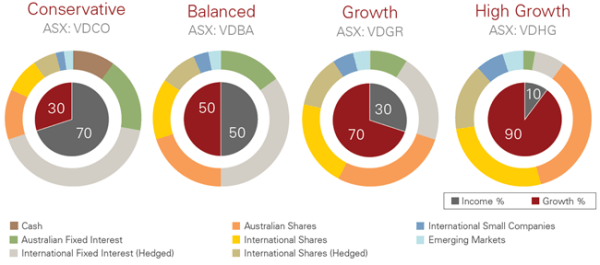














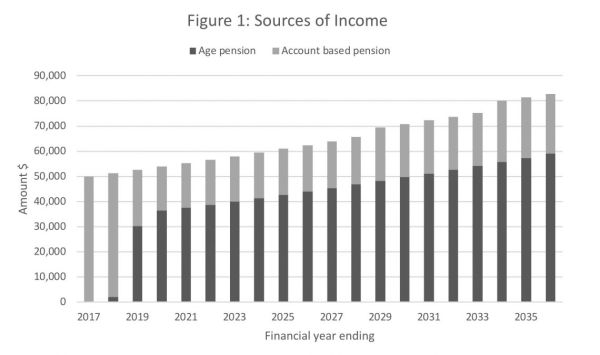
 So in 2019/20, for example, their age pension reduces from $36,337 to $9,004 and they must draw more from their pension account to make up the difference. Their wealth after 20 years is now projected at $1,581,000 or about $379,000 less than in the first scenario.
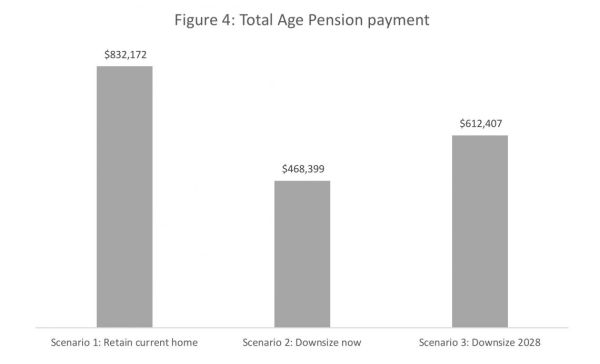
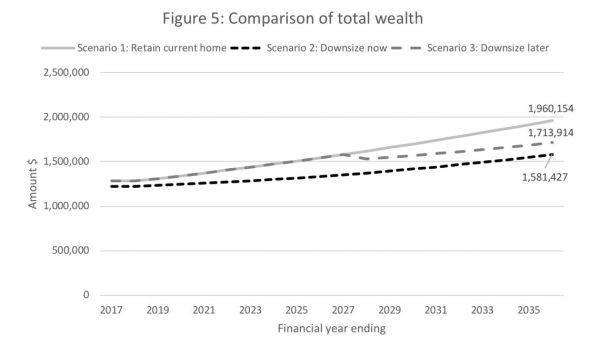
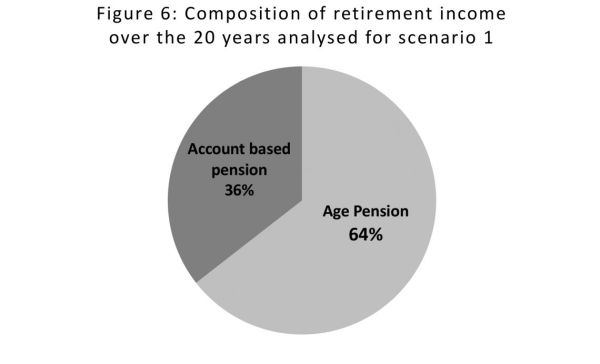










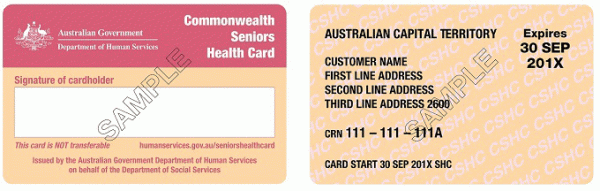







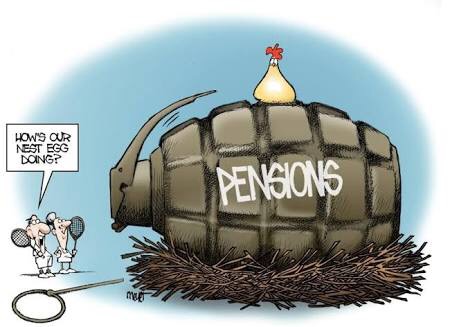






 The SMSF Coach