


• Benefits of a Self Managed Super Fund – SMSF
  • Videos
  • Why Self Managed Super?
  • Costs / Fees
  • About us
  • Testimonials
  • Contact Us
  • Property in a SMSF

The SMSF Coach

Coaching clients to take back control of their Superannuation and their future
  • Liam Shorte

    Unknown's avatar

    Putting people back in control of their wealth

  • SMSF Adviser of the Year - Winner 2025
  • SMSF Adviser of the Year - Finalist 2025
  • SMSF Adviser of the Year 2024
  • IFA 2023 Excellence Awards – SMSF Advisor of the Year – Finalist

  • IFA 2021 Excellence Awards – SMSF Advisor of the Year – WINNER!!
  • SMSF Adviser of the Year 2022 Finalist
    IFA 2022 Excellence Awards – SMSF Advisor of the Year – Finalist
  • Get advice – Have a chat

  • Enter your email address to subscribe and be first to receive notifications of new posts by email. Go on it's FREE!

    Join 6,177 other subscribers
  • Top Posts & Pages

    • How to elect to pay Division 293 Notice from your SMSF or Super
    • Stamp Duty on Transfers of Property to an SMSF
    • When your Husband Retires and the Nightmare Comes True
    • Important Changes to Pension Commencement Rules Now in Effect from 1 July 2025
    • Can I borrow to buy a house and land package off the plan in my SMSF?
    • SMSF Using an Unrelated Unit Trust for Property Development
  • Connect with me

    • View SMSFCoach’s profile on Facebook
    • View SMSFCoach’s profile on Twitter
    • View SMSFCoach’s profile on Instagram
    • View Smsfcoach’s profile on Pinterest
    • View LiamShorte’s profile on LinkedIn
    • View user44865214’s profile on Vimeo
    • View LiamShorte’s profile on Google+
  • Recent Tweets

    Tweets by SMSFCoach
  • View William Shorte's Adviser Ratings profile
    https://www.adviserratings.com.au/widget/278214/profile.js

All posts tagged Pensions

Busting the myth that you should dispose of assets to increase Age Pension


Pension strategies that can destroy your long term income

What follows is a case study prepared by the Actuaries Institute’s Superannuation Projections and Disclosure (SPD) Subcommittee and if any one has advised you to dispose of assets to get more Centrelink/DVA Aged Pension in reaction to the reduced Assets Test in January 2017, then you should read this article. You should not act on strategies that affect short-term income unless you look at the long-term results too.

The Actuaries Institute’s Superannuation Projections and Disclosure (SPD) Subcommittee designed a projection model to estimate the income that assets would support during retirement for a number of case studies.

The Importance of Projections in Developing Retirement Strategies

Experts are thick on the ground these days, sometimes with free advice that can prove costly later on. And it seems experts are particularly fond of advising retirees and those about to soak up the sun on weekdays about how and when to spend their money. One strand of free advice at the moment involves recommending that retirees should spend a bit more, or indeed a lot more, to secure a higher pension to take into account impending changes to the asset test.

Understandably, these changes from January 1 next year have many retirees and those close to retiring thinking hard about whether they should change their financial arrangements. To be more specific, after this date the age pension reduces by $78 per year for each $1,000 of non-home assets over certain thresholds. At first glance, this looks like you’d have to earn over 7.8% on the extra $1,000 or you’d be better off without the extra $1,000 of assets.

The Actuaries Institute cautions that retirees destined to live to a ripe old age should think twice before accepting some of the advice recently aired on this topic. Indeed, this advice ignores the fact that a partial age pension entitlement generally increases throughout retirement as assets reduce. The SPD Subcommittee have designed a projection model to estimate the income that assets would support during retirement for a number of case studies.

A Case Study

The SPD considered a number of scenarios. They were based on two single females (Anne and Barbara) who own their own homes. Their only asset, other than their home, was a balance in an allocated pension. It was assumed that the allocated pension was the only source of income for both women and that they continued to live in their own homes throughout their retirement. The modelling also assumed that the required level of income each year (the combination of the age pension and income from the allocated pension) would be equal to the annual expenditure of ASFA’s comfortable lifestyle for a single person indexed to CPI.

In this case study, we examine one of the scenarios considered.

This scenario assumes the two women plan to retire at age 65 on 1 January 2017 with potentially identical superannuation assets of $450,000. To highlight the long-term impact of spending some of the superannuation assets before retirement, we assumed that Anne increases her spending before 1 July 2017 so as to reduce her retirement assets and receive a higher age pension than Barbara, who decides to save her money. The additional spending was assumed to reduce Anne’s final retirement benefit available on 1 January 2017 to $250,000.

Chart 1 below provides a year-by-year projection of the incomes of these two individuals to age 100.

Chart 1 – Total income if retiring at age 65

Total income if retiring at age 65

Note: all projected values have been discounted to Today’s Dollars at the rate of Wage Inflation.

Assumptions Net investment return on allocated pension assets – 6.5% pa compound

Wage inflation – 3.5% pa compound

Price Inflation – 2.5% pa compound

Increase in desired income – Price inflation

Increase in age pension rate – Wage inflation

Increase in age pension asset test thresholds – Price inflation

The green and purple lines show the total income received in Today’s Dollars. The blue and red lines show the annual amount of age pension received.

It can be seen that the aged pension paid to Anne in the early years is higher because the pension assets she owns do not reduce her age pension. However, because Anne has less pension assets she exhausts her assets by age 84, after which she must live on the age pension or use her home to generate additional income.

Barbara, however, at age 84 still has pension assets and therefore receives a higher level of income than Anne for the rest of her retirement. Also Barbara’s total income received is equal to or greater than her desired income level throughout retirement. She will also maintain a balance in her allocated pension throughout retirement and can continue without resorting to using her own home to generate additional income.

An examination of the projected asset values is also instructive. Chart 2 below shows the value of their pension fund assets at the end of each year during retirement.

Chart 2 – Asset Values if retiring at age 65

Note: all projected values have been discounted to Today’s Dollars at the rate of Wage Inflation.

Chart 2 – Asset Values if retiring at age 65

Barbara has significantly greater pension fund assets throughout retirement. This provides added flexibility in her spending pattern. It also allows for aged care costs or bequests in later age. The additional assets also provide a buffer if the net investment earnings are less than the 6.5% we have assumed. Importantly, the fact that Anne receives a larger age pension in the early retirement years does not indicate what strategy results in the best long-term outcome.

The example and related discussion above highlight the significant challenges involved in retirement income modelling and strategy choice. Such tasks cannot be properly addressed through conclusions based upon calculations of a retiree’s first year age pension and allocated pension income entitlements.

The interaction of the many pieces of Australia’s retirement income system is complex. It includes assets and income test rules for the pension, minimum superannuation assets withdrawal requirements and the interaction of other factors such as inflation and investment returns. Any conclusions based on only considering the income generated in the first year after retirement are liable to be incorrect. Only the output of a year-by-year projection can clearly show how these factors interact throughout a person’s retirement.

Retirees must make decisions about spending capital over time. Ideally, these should allow for a sensible assessment of future cash flow. Year-by- year projections throughout retirement are vital to capture the dynamic nature of the age pension rules as asset values change. However, this is just the start. Given each retiree has an unknown lifespan and faces unknown investment returns, people have valid concerns about outliving their capital. Models like this one can be extended to assess a full distribution of likely outcomes and take into account the retiree’s asset mix and even health status. This allows people to make informed decisions that meet their required levels of certainty.

A longer article which considers all the scenarios examined by the SPD Subcommittee is also available. If a copy of the longer article is required (or if there are any questions on the material contained in this article) please contact Andrew Boal, Convenor of the Institute’s Superannuation Practice Committee. See the original article here The Importance of Projections in Developing Retirement Strategies

I hope this guidance has been helpful and please take the time to comment. Feedback always appreciated. Please reblog, retweet, like on Facebook etc to make sure we get the news out there. As always please contact me if you want to look at your own options. We have offices in Castle Hill and Windsor but can meet clients anywhere in Sydney or via Skype. Just click the Schedule Now button up on the left to find the appointment options.

Liam Shorte B.Bus SSA™ AFP

Financial Planner & SMSF Specialist Advisor™

SMSF Specialist Adviser 

 Follow SMSFCoach on Twitter Liam Shorte on Linkedin NextGen Wealth on Facebook   

Verante Financial Planning

Tel: 02 98941844, Mobile: 0413 936 299

PO Box 6002 BHBC, Baulkham Hills NSW 2153

5/15 Terminus St. Castle Hill NSW 2154

Corporate Authorised Representative of Viridian Select Pty Ltd ABN 41 621 447 345, AFSL 51572

This information has been prepared without taking account of your objectives, financial situation or needs. Because of this you should, before acting on this information, consider its appropriateness, having regard to your objectives, financial situation and needs. This website provides an overview or summary only and it should not be considered a comprehensive statement on any matter or relied upon as such.

Share this:

  • Click to email a link to a friend (Opens in new window) Email
  • Click to print (Opens in new window) Print
  • Tweet
  • Pocket
  • Click to share on Reddit (Opens in new window) Reddit
Like Loading...
1 Comment
by SMSF Coach - Liam Shorte on October 10, 2016  •  Permalink
Posted in Age Pension, Centrelink, Pension Strategies, Retirement Planning, Superannuation
Tagged Account Based Pension, Age Pension, Alzheimer's, assets test, Baulkham Hills, budget, Castle Hill, Cost of Living, dementia, DIY Super, Dural, Enduring Power of Attorney, EPoA, Estate Planning, Hawkesbury, Incapacity, income planning, Interest Rates, Investment, Investment Strategy, pension phase, Pension Strategies, Pensions, powers of attorney, property, reset pensions, Retire, Retirement, Retirement Planning, Self Managed Superannuation Fund, SMSF, Tax Free Pensions, Tax Planning, Transition, Transition to Retirement

Posted by SMSF Coach - Liam Shorte on October 10, 2016

https://smsfcoach.com.au/2016/10/10/busting-the-myth-that-you-should-dispose-of-assets-to-increase-age-pension/

Court Defends Superannuation Death Benefits from Bankruptcy


asset-protection

I keep hammering it in to my small business clients that while they may be passionate about their business and absolutely certain it will succeed, that they need to have a Plan B. Things can and do go wrong no matter how hard you work.

Superannuation is that Plan B in many cases. By putting away a portion of your profits each year to super you can minimise your tax obligations, save for retirement and protect some of your hard-earned wealth from unforeseen circumstances like a business collapse.

I always give an example of the client who had a very successful software business that was making decent money every year who listened to me and put funds away in superannuation yearly despite not wholly trusting the system. 6 years ago a dodgy overseas firm copied and made minor changes to his software and sold it for 10% of his price, thereby decimating his profits. He could lose everything as the ensuing defence of his patents in court cases is wiping out his personal and the company’s finances. Even if he wins, they could just keep their assets overseas and he has no chance of recovering costs and damages. The one thing protected is his Superannuation which will provide a decent if not a bit less comfortable retirement than expected.

A recent case shows the benefit of having superannuation funds when all else fails to protect you and your loved ones. In the case of Trustees of the Property of Morris (Bankrupt) v Morris (Bankrupt) [2016] FCA 846 shows just what happens when superannuation, bankruptcy and the payment of death benefits intersect.

Background
Ms Morris became bankrupt 3-4 months after her husband, Mr Foreman, died. Mr Foreman held two policies with two different superannuation funds: AustSafe Super and Plum Super.

After becoming bankrupt, Ms Morris received three separate payments. Plum Super made a life insurance payment of $311,865.95 to Mrs Foreman, which is not controversial as section 116(2)(d)(ii) of the Act provides that divisible property does not extend to life assurance policy proceeds of a bankrupt—or their spouse—received on or after the date of bankruptcy. SAFE

What was ‘controversial’ was AustSafe Super’s payment of $45,392.48 and Plum Super’s payment of $67,240.27. Those funds made these payments to the bankrupt under discretionary powers, as Mr Foreman had not nominated any dependents or beneficiaries.

Mrs Morris’s bankruptcy trustees applied to court in respect of these payments arguing that the superannuation monies received by the bankrupt were after-acquired property that vested in them (as bankruptcy trustees) and was therefore divisible among the bankrupt estate’s creditors. Uh Oh trouble!

I am not  lawyer so I will not go in to details of the argument but I am  happy point you to a good lawyer for the detail of the argument and some  interpretation of the decision in a good blog by Bryce Figot of DBA Lawyers   – See more at here and the actual case decision here

In summary

Justice Logan held that prior to the superannuation fund trustees’ exercising their discretion in favour of Ms Morris, she had no interest in either fund; however, upon this favourable decision, an interest was then created in the superannuation funds, and therefore these payments (totalling $112,632.75) made to Ms Morris (after bankruptcy) were held to be captured by s116(2)(d)(iii) and s116(2)(d)(iv) of the Act. Consequently, the bankruptcy trustees were unsuccessful with their application.

So superannuation death benefits received by the bankrupt were protected from Bankruptcy Trustees

I have not seen any previous guidance or authorities about the meaning and effect of the above sections of the Act, however the decision seems to be consistent with the intention of legislation to protect and preserve benefits in respect of retirement for both members of funds as well as their spouses and dependents.

If you or your spouse are in business or a highly litigious profession or high risk investors that could lose all if investments go wrong then come and talk to us about Your Plan B 

I hope this guidance has been helpful and please comment. Feedback always appreciated. Please reblog, retweet, like on Facebook etc to make sure we get the news out there. As always please contact me if you want to look at your own options. We have offices in Castle Hill and Windsor but can meet clients anywhere in Sydney or via Skype. Just click the Schedule Now button up on the left to find the appointment options.

Liam Shorte B.Bus SSA™ AFP

Financial Planner & SMSF Specialist Advisor™

SMSF Specialist Adviser 

 Follow SMSFCoach on Twitter Liam Shorte on Linkedin NextGen Wealth on Facebook   

Verante Financial Planning

Tel: 02 98941844, Mobile: 0413 936 299

PO Box 6002 BHBC, Baulkham Hills NSW 2153

5/15 Terminus St. Castle Hill NSW 2154

Corporate Authorised Representative of Viridian Select Pty Ltd ABN 41 621 447 345, AFSL 51572

This information has been prepared without taking account of your objectives, financial situation or needs. Because of this you should, before acting on this information, consider its appropriateness, having regard to your objectives, financial situation and needs. This website provides an overview or summary only and it should not be considered a comprehensive statement on any matter or relied upon as such.

Share this:

  • Click to email a link to a friend (Opens in new window) Email
  • Click to print (Opens in new window) Print
  • Tweet
  • Pocket
  • Click to share on Reddit (Opens in new window) Reddit
Like Loading...
Leave a comment
by SMSF Coach - Liam Shorte on October 5, 2016  •  Permalink
Posted in Bankruptcy Protection, Estate Planning
Tagged Account Based Pension, Alzheimer's, Bankruptcy, Baulkham Hills, budget, Castle Hill, death benefits, dementia, DIY Super, Dural, Enduring Power of Attorney, EPoA, Estate Planning, Hawkesbury, Incapacity, income planning, Investment, Investment Strategy, Litigation risk, pension phase, Pensions, Plan B, PlanB, powers of attorney, property, Self Managed Superannuation Fund, SMSF, Tax Free Pensions, Tax Planning, Transition, Transition to Retirement

Posted by SMSF Coach - Liam Shorte on October 5, 2016

https://smsfcoach.com.au/2016/10/05/court-defends-superannuation-death-benefits-from-bankruptcy/

Small APRA Fund as an Exit Strategy for SMSF Trustees


Exit Strategies

On the home page of this blog I outline the Benefits of a Self Managed Super Fund – SMSF in some detail. Well, when looking at any investment structure I always like to assess the alternative options and eventual exit strategies. While many of you will know of the Retail and Industry superannuation fund options, you may not be as familiar with a close relation to the SMSF known as a Small APRA fund (SAF). So let’s look at little closer at this option.

What is an Small APRA Fund (SAF)?

An SAF is similar to an SMSF but instead of the client(s) being the trustee(s), a professional licensed trustee is responsible for all of the administrative,  compliance and legislative responsibilities of running the superannuation fund.

SAFs offer an alternative for clients looking for the increased flexibility of an SMSF but without the burden of being a trustee and the associated compliance risk. They are also an effective solution for clients who are non-residents or bankrupt and therefore unable to be trustees of an SMSF.

I always warn new clients that if your career or business relies on you being a director then you must take the decision to set up an SMSF very carefully and be ready to put the time and effort in or choose SMSF specialist advisors to ensure your fund remains compliant so that you don’t lose your ability to be a director of any company because of breaching SMSF legislation.

SAFs provide all of the legislative advantages afforded to SMSFs, without the risks associated with breaching legislative compliance requirements.

Let be very honest up front and say this is not a suitable option for small balances as you are incurring an extra layer of trustee fees. However for those with larger balances the option can be very cost-effective especially when you consider the ability to relieve yourself of the trustee responsibilities.

Main benefits of the SAF structure

1. Offloading the Compliance risk

The main advantage of running an SAF is that the compliance risk is borne by the professional licensed trustee whose core responsibility is the provision of trustee services. If an SAF is in breach of the rules, the members of the fund will not be liable for the compliance mistakes of the professional trustee. In an SMSF, all members must be a trustee or director of a corporate trustee which means all members bear the compliance liability. You cannot claim your spouse was solely responsible for running the fund. One case clearly shows the risk of being a “silent trustee”where the verdict found the former wife, in her role as a trustee of the fund, was personally liable when it became non-complying after her former husband stripped out most of the assets and headed overseas. See Shail Superannuation Fund and Commissioner of Tax [2011] AATA 940

2. Administration of the fund

A professional licensed trustee in charge of an SAF typically appoints professional organisations to carry out the administration of the fund or is skilled and experienced enough to avoid common breaches of legislative requirements. As the professional licensed trustee administers all information and transactions, record keeping is typically timely and accurate. In SMSFs, the trustees are typically responsible for collating all the documentation and reports so their chosen administration service can prepare the financials of their fund (Not so hard as it sounds nowadays but when your busy?…paperwork suffers)

3. Travelling overseas for extended periods

SAFs are more flexible for people who may go overseas for an indefinite period compared to SMSFs which are strictly regulated in that circumstance. Members of an SMSF who relocate for an extended period of time have to fulfil two requirements – the central management and control of an SMSF needs to be in Australia, and the active member test needs to be fulfilled . If any of these requirements are breached, the SMSF loses its residency status, is deemed non-compliant and will face exorbitant penalty taxes of up to 46.5%. An SAF however can have offshore members – as long as they are Australian residents for tax purposes.

4. Protection and access to Superannuation Complaints Tribunal

In the case of fraudulent conduct or theft, SAFs have more readily available redress options including a grant of financial assistance as statutory compensation and access to the Superannuation Complaints Tribunal which deals with complaints about the decisions and conduct of APRA-regulated fund trustees and other decision makers. Conversely, no compensation scheme exists for SMSFs and they instead have to rely on courts to resolve disputes or look to the Corporations Law to take action against a financial adviser, accountant or administrator for losses they believe are due to misconduct, negligence or inappropriate action.

5. Disqualified persons – Bankruptcy or Criminal record

Individuals are not allowed to be trustees of an SMSF or directors of a corporate trustee if they have committed a crime involving dishonesty such as fraud, theft or embezzlement or if they have been declared bankrupt. The Tax Office will ban individuals from taking on positions of responsibility  in an SMSF if it believes the person has breached the superannuation laws either very seriously or persistently or it believes the person is not a fit or proper person and hence should be disqualified. There are no issues with a disqualified person becoming a member of an SAF as they are not required to fill the role of trustee and it is in fact an often preferred solution for those with an SMSF who find themselves in that unenviable position with assets that aren’t liquid.

6. Responsibility concerns due to ageing or onset of mental illness

Some older people may prefer to use an SAF because they have reached an age where they are no longer able, or may not want to, make effective management and operational decisions. SAFs still allow investors to be in charge of the asset allocation – subject to trustee approval (but they are becoming a lot more flexible) – and to maintain or acquire a similarly broad range of assets and avail of strategies available to SMSF investors. Problems often arise in an SMSF when an older trustee loses the capacity to function and participate in the fund’s inner workings whereas in an SAF, the professional licensed trustee will continue to manage the fund for the benefit of its members.

7. Estate planning

There are a number of estate planning scenarios  where an SAF being a better alternative to an SMSF. In an SMSF, the death of a fund trustee changes the composition of the trustees and may provide potential for disputes especially in blended families. In an SAF, the licensed trustee is an independent and unbiased party with no family relationship issues that we often see arise with estates. In an SMSF, it is possible to try to include safeguards into the trust documentation; however, if one of several feuding beneficiaries has the cheque book, it may take the remaining beneficiaries considerable time and expense to track down the person and the money. As one colleague said:

“a remaining trustee with a cheque book can do a lot of damage to an SMSF balance while family fight for control in the courts”

8. Taking care of vulnerable beneficiaries

SAFs can provide very tax effective death benefit income streams to intellectually disabled adult children. The hurdle of the person with a disability or their legal personal representative needing to be a trustee is removed because, unlike an SMSF, an SAF has a professional trustee. The use of the professional trustee also ensures that ongoing services can continue to be provided to a disabled person is over 18 and once the parents have died or lost capacity. There is the ability to pay a death benefit income stream to the disabled child and then have any capital remaining return to the parent’s estate on death.

9. Employer – Employee Fund

In an SMSF, a trustee cannot be an employee of another member – unless they are family. In an SAF however, a member can be an employee of another member. Further, since SAFs have a professional licensed trustee, the related-party issues that crop up in an SMSF are not an issue in an SAF.

In summary while an SMSF may be ideal for people who want to be fully in control of their investment decisions and retirement savings, an SAF is ideal for those who would like to actively participate in investment decisions but retain a low-level of compliance and legislative responsibilities. It is possible to switch from an SMSF to an SAF or vice versa without incurring capital gains tax as all they have to do is retire as trustees themselves and appoint a professional licensed trustee to govern their SAF.

So why may a SAF be a better option than a Retail or Industry Fund?

  • Moving to a SAF is Not a CGT event whereas it would be if you moved to a retail or industry fund
  • Likely to be able to keep assets such as direct shares, bullion, collectables and residential and commercial property subject to rules.
  • The member can still  direct investments within the approved list
  • Member directed death benefit nominations are still possible and in fact often more achievable as the trustee can follow your wishes.
  • No issues with single member funds
  • Retains privacy for those in high-profile positions

I would like to acknowledge that much of my information in this area has been gathered from articles and presentations by Julie Steed of Australian Executor Trustees who are very experienced in running SAFs and working as a team with clients and their financial planners.

I hope this guidance has been helpful and please comment below. Feedback always appreciated. Please reblog, retweet, like on Facebook etc to make sure we get the news out there. As always please contact me if you want additional information on switching fund structures.We have offices in Castle Hill and Windsor but can meet clients anywhere in Sydney or via Skype. Just click the Schedule Now button up on the left to find the appointment options.

Liam Shorte B.Bus SSA™ AFP

Financial Planner & SMSF Specialist Advisor™

SMSF Specialist Adviser 

 Follow SMSFCoach on Twitter Liam Shorte on Linkedin NextGen Wealth on Facebook   

Verante Financial Planning

Tel: 02 98941844, Mobile: 0413 936 299

PO Box 6002 BHBC, Baulkham Hills NSW 2153

5/15 Terminus St. Castle Hill NSW 2154

Corporate Authorised Representative of Viridian Select Pty Ltd ABN 41 621 447 345, AFSL 51572

This information has been prepared without taking account of your objectives, financial situation or needs. Because of this you should, before acting on this information, consider its appropriateness, having regard to your objectives, financial situation and needs. This website provides an overview or summary only and it should not be considered a comprehensive statement on any matter or relied upon as such.

Share this:

  • Click to email a link to a friend (Opens in new window) Email
  • Click to print (Opens in new window) Print
  • Tweet
  • Pocket
  • Click to share on Reddit (Opens in new window) Reddit
Like Loading...
Leave a comment
by SMSF Coach - Liam Shorte on August 29, 2016  •  Permalink
Posted in Estate Planning, SMSF Exit Strategies, SMSF Management, Trustee
Tagged Account Based Pension, Ageing, Alternative trustee, Alzheimer's, Baulkham Hills, budget, Castle Hill, dementia, DIY Super, Dural, Enduring Power of Attorney, EPoA, Estate Planning, Exit Strategies, Hawkesbury, Incapacity, income planning, Investment, Investment Strategy, pension phase, Pensions, powers of attorney, property, SAF, SAFs, Self Managed Superannuation Fund, Small APRA fund, SMSF, SMSF exit strategy, Succession Planning, Tax Free Pensions, Tax Planning, Transition, Transition to Retirement, Travelling overseas

Posted by SMSF Coach - Liam Shorte on August 29, 2016

https://smsfcoach.com.au/2016/08/29/small-apra-fund-as-an-exit-strategy-for-smsf-trustees/

A Dream without a Plan is just a Wish – Dare to Dream


Source: FPA Dare to Dream national research report conducted by McCrindle Research, August 2016

Source: FPA Dare to Dream national research report conducted by McCrindle Research, August 2016

So do you or a family member or friend talk about your future dreams of an early retirement or what you plan to do in retirement but then give a big sigh and say it is “Just a dream” or “a pipe dream” or maybe put it in the “to hard basket” to try and achieve those goals. Realistic goals are achievable with good planning and some of the whackier ones just take a little more effort or courage!

Did you know that this week is Financial Planning Week? Every year, the Financial Planning Association (FPA) holds Financial Planning Week, to remind Australians about the importance of financial planning.

The theme for this year is “Dare to Dream” and I think it’s a great reminder of why we need a plan in place to realise our biggest dreams. After all, financial planning is not just about numbers – it’s about deciding what we want out of life, then putting in steps to achieve it. It’s also a nice reminder about the importance of financial independence – whatever life stage we find ourselves at.

This short video featuring Jane Caro sets the scene to the dare to dream challenge:

So are you ready to read a bit more? Something you might find particularly interesting, is the Dare to Dream research report which has some eye opening insights about how Australians feel about their financial future. The report highlights that whilst one in two Australians dream more about the future now than five years ago, a massive 63% have made “no plans” or “very loose plans” to practically achieve those dreams. Just click the link Dare to Dream research report

The report also shows that property is still a big part of the ‘Great Australian Dream’ (surprisingly even for Gen Y), and that the biggest financial regret in life for Australians is a lack of saving (a huge 47% stated this!). The report is well worth a read.

The FPA has also developed a fun online quiz, to help you discover what kind of financial personality you are. I encourage you to take the quiz and share it on Facebook with your family and friends. You can access this quiz here at Dreamer Profiles 

Oh in case you want to know I got “Mover and Shaker” as my financial personality ….my dreams have already been put in to an Action Plan…what about yours?

I hope this guidance has been helpful and please take the time to comment or at least let me know what your personality result was! Feedback always appreciated. Please reblog, retweet, like on Facebook etc to make sure we get the news out there. As always please contact me if you want to look at your own options and achieving those dreams. We have offices in Castle Hill and Windsor but can meet clients anywhere in Sydney or via Skype. Just click the Schedule Now button up on the left to find the appointment options.

Liam Shorte B.Bus SSA™ AFP

Financial Planner & SMSF Specialist Advisor™

SMSF Specialist Adviser 

 Follow SMSFCoach on Twitter Liam Shorte on Linkedin NextGen Wealth on Facebook   

Verante Financial Planning

Tel: 02 98941844, Mobile: 0413 936 299

PO Box 6002 BHBC, Baulkham Hills NSW 2153

5/15 Terminus St. Castle Hill NSW 2154

Corporate Authorised Representative of Viridian Select Pty Ltd ABN 41 621 447 345, AFSL 51572

This information has been prepared without taking account of your objectives, financial situation or needs. Because of this you should, before acting on this information, consider its appropriateness, having regard to your objectives, financial situation and needs. This website provides an overview or summary only and it should not be considered a comprehensive statement on any matter or relied upon as such.

Share this:

  • Click to email a link to a friend (Opens in new window) Email
  • Click to print (Opens in new window) Print
  • Tweet
  • Pocket
  • Click to share on Reddit (Opens in new window) Reddit
Like Loading...
Leave a comment
by SMSF Coach - Liam Shorte on August 23, 2016  •  Permalink
Posted in Enduring Power of Attorney, Estate Planning, SMSF Management, Trustee
Tagged Account Based Pension, Alzheimer's, Baulkham Hills, budget, Castle Hill, dementia, DIY Super, Dural, Enduring Power of Attorney, EPoA, Estate Planning, Hawkesbury, Incapacity, income planning, Investment, Investment Strategy, pension phase, Pensions, powers of attorney, property, Self Managed Superannuation Fund, SMSF, Tax Free Pensions, Tax Planning, Transition, Transition to Retirement

Posted by SMSF Coach - Liam Shorte on August 23, 2016

https://smsfcoach.com.au/2016/08/23/a-dream-without-a-plan-is-just-a-wish-dare-to-dream/

ATO Clamps Down on Trustee for Superannuation Early Release Scheme


Early Access to Super

In my earlier blog Get Super Scheme Smart – ATO warns on dangers of retirement planning schemes I went through the ATO guidance and their push to educate trustees about early release schemes and fraud attempts. In a recent case they showed that they will enforce the penalty regime where a trustee has deliberately flouted the rules. The penalty, $40,000 and loss of right to be a trustee in future.

The case of Deputy Commissioner of Taxation v Rodriguez resulted in significant penalties being imposed following a large number of unauthorised withdrawals by an SMSF trustee.

In this case, the fund trustee fabricated a loan arrangement, made cash withdrawals to purchase gold bars (later selling them and depositing the proceeds of sale into his own bank account), as well as making a number of other unauthorised withdrawals for his own personal benefit over a number of years.

The court considered that there had been the following contraventions of the SIS Act:
− in making the loans and giving financial assistance the trustee failed to ensure that the fund was maintained solely for one or more of the purposes prescribed in section 62(1)
− in making the loans and giving financial assistance, the trustee failed to ensure that the fund did not lend money or give any other financial assistance using the resources of the fund to a member, contravening section 65(1)
− the trustee failed to prepare a written plan specifying: the amount by which the in-house assets of the fund exceeded the market value ratio of 5% at the end of each income year; and the steps by which the trustee proposed to dispose of the in-house assets equal to or greater than the excess amount, contravening s 82.

In imposing the penalties, the court took into account the trustee’s cooperativeness with the ATO, investigating officers, solicitors and the court process. The court also accepted that the trustee was contrite and apologetic, and was a person of good character. It was also apparent from the material before the court that the trustee was a troubled person at the time of the contraventions.
It should also be noted that some attempt had also been made to repay amounts withdrawn (including an interest component).

In addition to a monetary penalty of $40,000, the trustee was barred from acting as a trustee.

This should be taken as a strong warning to small business owners and company directors who may also endanger their ability to control their business or be a company director in their business life because of issues caused by managing their Self Managed Superannuation Fund poorly.

For those who feel the additional risk of running an SMSF may expose their career to unacceptable risk then they should consider a retail or industry fund or if you have assets that are unable to be held via one of those, like a property, art or bullion, then you should consider moving the Trustee responsibilities to a professional trustee via a Small APRA fund. I will deal with this option in a future blog.

If you are in a position of financial hardship or want to do a complex investment then why not contact us to se if there is a legal way to achieve the same goal without getting yourself in trouble.

I hope this guidance has been helpful and please take the time to comment. Feedback always appreciated. Please reblog, retweet, like on Facebook etc to make sure we get the news out there. As always please contact me if you want to look at your own options. We have offices in Castle Hill and Windsor but can meet clients anywhere in Sydney or via Skype. Just click the Schedule Now button up on the left to find the appointment options.

Liam Shorte B.Bus SSA™ AFP

Financial Planner & SMSF Specialist Advisor™

SMSF Specialist Adviser 

 Follow SMSFCoach on Twitter Liam Shorte on Linkedin NextGen Wealth on Facebook   

Verante Financial Planning

Tel: 02 98941844, Mobile: 0413 936 299

PO Box 6002 BHBC, Baulkham Hills NSW 2153

5/15 Terminus St. Castle Hill NSW 2154

Corporate Authorised Representative of Viridian Select Pty Ltd ABN 41 621 447 345, AFSL 51572

This information has been prepared without taking account of your objectives, financial situation or needs. Because of this you should, before acting on this information, consider its appropriateness, having regard to your objectives, financial situation and needs. This website provides an overview or summary only and it should not be considered a comprehensive statement on any matter or relied upon as such.

Image courtesy of Stuart Miles at FreeDigitalPhotos.net

Share this:

  • Click to email a link to a friend (Opens in new window) Email
  • Click to print (Opens in new window) Print
  • Tweet
  • Pocket
  • Click to share on Reddit (Opens in new window) Reddit
Like Loading...
Leave a comment
by SMSF Coach - Liam Shorte on August 22, 2016  •  Permalink
Posted in Enduring Power of Attorney, Estate Planning, SMSF Management, Trustee
Tagged Account Based Pension, Alzheimer's, Baulkham Hills, budget, Castle Hill, dementia, DIY Super, Dural, early release, Early Release Schemes, Enduring Power of Attorney, EPoA, Estate Planning, Fraud, Hawkesbury, Incapacity, income planning, Investment, Investment Strategy, pension phase, Pensions, powers of attorney, property, Self Managed Superannuation Fund, SMSF, SMSF Penalty, Tax Free Pensions, Tax Planning, Transition, Transition to Retirement

Posted by SMSF Coach - Liam Shorte on August 22, 2016

https://smsfcoach.com.au/2016/08/22/ato-clamps-down-on-trustee-for-superannuation-early-release-scheme/

Should SMSF trustees take part in the Telstra Buy-back


Telstra Buy Back

In line with my philosophy of find good information for clients quickly, here is a guest blog from Dr Don Hamson of Plato Investment Management on the proposed Telstra Buy Back.

Token Telstra Buy-back Mark II

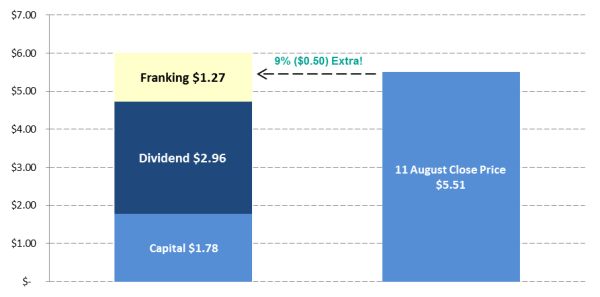
On 11 August 2016, Telstra announced it would return $1.5B in capital to shareholders, $1.25B in an off-market buy-back and $0.25B in an on-market buy-back. The off-market buy-back is similar in structure to the $1B 2014 Telstra buy-back. We still believe this is pretty much a token buy-back. At $1.25B it represents less than 2% of Telstra’s current market capitalisation, and so we expect the buy-back will be fairly heavily scaled back (the 2014 buy-back was scaled back by 70%). And similar to the 2014 buy-back, our estimates suggest this buy-back will likely be only significantly worthwhile for zero taxed Australian investors such as pension phase superannuation and charities, although value for taxed investors will ultimately depend on individual circumstances. For a zero taxed pension investor, we currently estimate that the buy-back will be worth approximately 9% more than selling Telstra into the market, assuming the buy-back goes off at the maximum allowable 14% discount to market price (using the August 11 2016 closing price of $5.51 as market price – refer Chart 1).

The actual value of the buy-back will depend on where the share price of Telstra is trading at the conclusion of the buy-back, and the final buy-back discount to that market price. In 2014 we saw the value of the buy-back decline from initial estimates, primarily because the Telstra share price declined between the announcement date and the buy-back conclusion date, resulting in a declining fully franked dividend component. On our estimates the 2014 Telstra buy-back ended up being of marginal value (approximately 3%) for pensions phase investors, and of no value for higher taxed investors.

We recommend investors seek their own personal taxation advice.

Chart 1 provides an estimated illustrative example of the value of the Telstra buy-back for a pension phase superannuation investor. We have estimated the buy-back for pension phase superannuation funds using a $5.51 “market” price for Telstra. According to the 11th August Telstra announcement the actual market price for the purposes of the buy-back will be the “weighted average price of Telstra’s ordinary shares on the ASX as Telstra may determine in its discretion over the five trading days up to and including the date the Tender Period closes” (30 September 2016). Using $5.51 as “market” price, a 14% discount would equate to a $4.74 buy-back price. With the capital component being $1.78, the other $2.96 would represent a fully franked dividend, which would have a $1.27 franking credit attached. For a tax-exempt Australian investor (e.g. SMSF in pension phase), we estimate the buy-back at a 14% discount would be worth approximately $6.01 (disregarding the time value of money), representing about $0.50 or 9% more than the $5.51 “market” price of Telstra.

Chart 1. Estimated value of the 2016 Telstra buy-back for tax exempt investors using August 11 2016 closing price.

Telstra

Source: Plato, Telstra

The value of the buy-back for other investors will depend on the tax situation of each investor. However, we normally expect buy-backs to be of most value to tax exempt investors, so we expect it to be worth less than the 9% number for higher taxed investors. We would recommend individual investors seek professional tax advice based on their individual tax circumstances.

Whilst the 2016 buy-back looks somewhat better that the 2014 buy-back, it still falls short relative to previous buy-backs such as the 22% benefit of the 2011 BHP buy-back. The reason why the Telstra buy-back is of lesser value to the BHP buy-back is because the capital component is quite large relative to the expected buy-back price. Notwithstanding this, given the 2014 Telstra buy-back was heavily oversubscribed, resulting in a 70% scale-back of tendered stock at the maximum 14% discount, in our view we would similarly expect this Telstra buy-back to be heavily oversubscribed and likely to be priced at the maximum 14% discount. So whilst we believe it might be worth approximately 9% for zero taxed pensioners, this 9% will only be on shares which are successfully tendered.

In our analysis we have assumed the Telstra buy-back will go off at the maximum discount of 14%. Whilst unlikely in our opinion, if the buy-back goes off at a smaller discount, then it will be worth more than our above estimate for a pension phase superannuation investor.

don

Dr Don Hamson  (Click name for full bio)

Managing Director

Plato Investment Management

This communication has been prepared by Plato Investment Management Limited ABN 77120730136 Authorised Representative No. 304964 of Pinnacle Investment Management Limited AFSL 322140. This communication is prepared for general information purposes only. It has been prepared without taking account of any person’s objectives, financial situation or needs. Any persons relying on this information should obtain professional advice relevant to their particular circumstances, needs and investment objectives.

Disclosure: I do use Plato Australian Income Fund for some of my client portfolios but this was not a paid article and simply sourced for the benefit of my blog readers.

I hope this guidance has been helpful and please take the time to comment. Feedback always appreciated. Please reblog, retweet, like on Facebook etc to make sure we get the news out there. As always please contact me if you want to look at your own options. We have offices in Castle Hill and Windsor but can meet clients anywhere in Sydney or via Skype. Just click the Schedule Now button up on the left to find the appointment options.

Liam Shorte B.Bus SSA™ AFP

Financial Planner & SMSF Specialist Advisor™

SMSF Specialist Adviser 

 Follow SMSFCoach on Twitter Liam Shorte on Linkedin NextGen Wealth on Facebook   

Verante Financial Planning

Tel: 02 98941844, Mobile: 0413 936 299

PO Box 6002 BHBC, Baulkham Hills NSW 2153

5/15 Terminus St. Castle Hill NSW 2154

Corporate Authorised Representative of Viridian Select Pty Ltd ABN 41 621 447 345, AFSL 51572

This information has been prepared without taking account of your objectives, financial situation or needs. Because of this you should, before acting on this information, consider its appropriateness, having regard to your objectives, financial situation and needs. This website provides an overview or summary only and it should not be considered a comprehensive statement on any matter or relied upon as such.

Share this:

  • Click to email a link to a friend (Opens in new window) Email
  • Click to print (Opens in new window) Print
  • Tweet
  • Pocket
  • Click to share on Reddit (Opens in new window) Reddit
Like Loading...
2 Comments
by SMSF Coach - Liam Shorte on August 18, 2016  •  Permalink
Posted in Buy-backs, Franking Credits
Tagged Account Based Pension, Alzheimer's, Baulkham Hills, budget, Castle Hill, dementia, DIY Super, Dural, Enduring Power of Attorney, EPoA, Estate Planning, Hawkesbury, Incapacity, income planning, Income stocks, Investment, Investment Strategy, pension phase, Pensions, Plato, powers of attorney, property, Self Managed Superannuation Fund, SMSF, Tax Free Pensions, Tax Planning, Telstra, Telstra Buy-back, Transition, Transition to Retirement

Posted by SMSF Coach - Liam Shorte on August 18, 2016

https://smsfcoach.com.au/2016/08/18/should-smsf-trustees-take-part-in-the-telstra-buy-back/

Current Views on the Big 4 Aussie Banks for SMSF Investors


Outlook for Big 4 Banks

Plenty out there in the media about the results of the Big 4 Aussie Banks, CBA, NAB , Westpac and ANZ. As this is an education blog I always like to see how the global fund managers (with a strong Aussie equities team) view our banks as they do not tend to have that home country bias and their views are refreshing. So here are a few videos from the team at Franklin Templeton. Not plugging their product just like their educational material and market insights.

As the Australian banking sector continues to experience challenges in response to market and regulatory drivers, we thought it would be timely to catch up with Alastair Hunter, Lead Analyst and Investment Manager at Balanced Equity Management (owned by Franklin Templeton Investments) for his latest perspectives on the Australian banking sector.

Views on the Big 4 Banks – Watch Video (4.54)

Here Alastair talks us through the key factors he identifies as driving bank share prices from capital requirements through to dividend sustainability, and the Franklin Templeton team’s preferred overweights in the sector.

Impact of Brexit and FinTech on Australian Banks – Watch Video(4:54)
In this video, Alastair discusses the direct and indirect impacts on the sector from the Brexit referendum and some of the potential ramifications for bank funding costs from changing dynamics in international markets. He also considers some of the factors impacting on the sector from new Fintech entrants and how the banks may adopt new technologies to drive innovation for their benefit.

Disclaimer: Franklin Templeton Investments Australia Limited (ABN 87 006 972 247) (Australian Financial Services Licence Holder No. 225328) issues this publication for information purposes only and not investment or financial product advice. It expresses no views as to the suitability of the services or other matters described herein to the individual circumstances, objectives, financial situation, or needs of any recipient. You should assess whether the information is appropriate for you and consider obtaining independent taxation, legal, financial or other professional advice before making an investment decision. A Product Disclosure Statement (PDS) for any Franklin Templeton funds is available from Franklin Templeton at Level 19, 101 Collins Street, Melbourne, Victoria, 3000 or www.franklintempleton.com.au or by calling 1800 673 776. The PDS should be considered before making an investment decision.

I hope this guidance has been helpful and please take the time to comment. Feedback always appreciated. Please reblog, retweet, like on Facebook etc to make sure we get the news out there. As always please contact me if you want to look at your own options. We have offices in Castle Hill and Windsor but can meet clients anywhere in Sydney or via Skype. Just click the Schedule Now button up on the left to find the appointment options.

Liam Shorte B.Bus SSA™ AFP

Financial Planner & SMSF Specialist Advisor™

SMSF Specialist Adviser 

 Follow SMSFCoach on Twitter Liam Shorte on Linkedin NextGen Wealth on Facebook   

Verante Financial Planning

Tel: 02 98941844, Mobile: 0413 936 299

PO Box 6002 BHBC, Baulkham Hills NSW 2153

5/15 Terminus St. Castle Hill NSW 2154

Corporate Authorised Representative of Viridian Select Pty Ltd ABN 41 621 447 345, AFSL 51572

This information has been prepared without taking account of your objectives, financial situation or needs. Because of this you should, before acting on this information, consider its appropriateness, having regard to your objectives, financial situation and needs. This website provides an overview or summary only and it should not be considered a comprehensive statement on any matter or relied upon as such.

Share this:

  • Click to email a link to a friend (Opens in new window) Email
  • Click to print (Opens in new window) Print
  • Tweet
  • Pocket
  • Click to share on Reddit (Opens in new window) Reddit
Like Loading...
Leave a comment
by SMSF Coach - Liam Shorte on August 12, 2016  •  Permalink
Posted in Franking Credits, Results Season
Tagged Account Based Pension, Alzheimer's, ANZ, Aussie Banks, Australian Banks, banking sector, Banks, Baulkham Hills, Big 4, budget, Castle Hill, CBA, Corporate results, dementia, DIY Super, Dural, Enduring Power of Attorney, EPoA, Estate Planning, fintech, Hawkesbury, Incapacity, income planning, Investment, Investment Strategy, NAB, outlook, pension phase, Pensions, powers of attorney, property, reporting season, Sector Outlook, Self Managed Superannuation Fund, SMSF, Tax Free Pensions, Tax Planning, Transition, Transition to Retirement, Westpac

Posted by SMSF Coach - Liam Shorte on August 12, 2016

https://smsfcoach.com.au/2016/08/12/current-views-on-views-on-the-big-4-aussie-banks-for-smsf-investors/

Get Super Scheme Smart – ATO warns on dangers of retirement planning schemes


The old adage “if it sounds too good to be true then it usually is” holds firm especially with superannuation “release” schemes. The ATO is stepping up its education efforts to help consumers while clamping down on promoters of such schemes. Here at SMSF Coach and our sister firm Verante Financial Planning we are always willing to offer a second opinion on any recommendation you are concerned about.

The Australian Taxation Office (ATO) is extending a helping hand to pre-retirees through Super Scheme Smart, a new initiative launched recently that educates people on the dangers of risky and illegal retirement planning schemes.

The ATO has identified a significant number of retirement planning schemes designed solely to help people avoid paying tax on their assets in an illegal manner and is working to close these down.

From the ATO media video below with ATO Deputy Commissioner, Michael Cranston, he warns:

While retirement planning schemes can vary, there are some common features that people should be aware of. Usually these schemes:
• are artificially contrived and complex, usually connected with a SMSF
• involve a lot of paper shuffling
• are designed to leave the taxpayer with minimal or zero tax, or even a tax refund
• aim to give a present day tax benefit by adopting the arrangement

Individuals caught using an illegal scheme identified by the ATO may incur severe penalties under tax laws. This includes risking loss of their retirement nest egg and also their rights as a trustee to manage and operate a SMSF.

The ATO is delivering practical help and information through their Super Scheme Smart website, including a comprehensive information pack, case studies and videos, as well as sending taxpayer alerts into the community about schemes and why they don’t fit within the law.

Mr Cranston urged people undertaking retirement planning to remain vigilant and to come forward if they believe they are at risk or are already involved in a scheme.

“Retirement planning makes good sense provided it is carried out within the tax and superannuation laws. Make sure you are receiving ethical professional advice when undertaking retirement planning, and if in doubt, seek a second opinion from an independent, trusted and reputable expert.

“We do our best to shut down dodgy schemes but the best defence is working together. Blowing the whistle on those promoting retirement planning schemes will help us stop them from risking your or others’ retirement savings,” Mr Cranston said.

All those approaching retirement who are yet to get “Super Scheme Smart”, are encouraged to take advantage of these resources and report promoters of dodgy schemes by calling 1800 177 006, or via email to reportataxscheme@ato.gov.au

Some examples provided of the current schemes they are concerned about include:

The schemes the ATO are currently worried about include:

  • Dividend stripping – Where the shareholders in a private company transfer ownership of their shares to a related SMSF so that the company can pay franked dividends to the SMSF. The purpose being to strip profits from the company in a tax-free form. (refer to Taxpayer Alert (TA 2015/1))
  • Non-arm’s length limited recourse borrowing arrangements – When an SMSF trustee undertakes limited recourse borrowing arrangements (LRBAs) established or maintained on terms that are not consistent with an arm’s length dealing. For more information, see Practical Compliance Guide.
  • Personal services income – Where an individual (with an SMSF often in pension phase) diverts income earned from personal services to the SMSF where it is concessionally taxed or treated as exempt from tax (refer to Taxpayer Alert (TA 2016/6)).

As mentioned above at Verante Financial Planning we take very good care of our clients and ensure all our client strategies are fully compliant and tick all the boxes so our client can sleep securely at night know that while they have used the superannuation and tax systems to maximise their savings position, they are always within the regulations and the spirit of the law.

The whole focus of this blog, the SMSF Coach is about educating and promoting use of legal strategies and we are consistently warning people of the pitfalls of some strategies and investments out there such as our recent warning on the failed GUEVRA IPO not being suitable for SMSF clients or our very popular Property through super in a SMSF – Part 3: 20 most common mistakes

I hope this guidance has been helpful and please take the time to comment. Feedback always appreciated. Please reblog, retweet, like on Facebook etc to make sure we get the news out there. As always please contact me if you want to look at your own options. We have offices in Castle Hill and Windsor but can meet clients anywhere in Sydney or via Skype. Just click the Schedule Now button up on the left to find the appointment options.

Liam Shorte B.Bus SSA™ AFP

Financial Planner & SMSF Specialist Advisor™

SMSF Specialist Adviser 

 Follow SMSFCoach on Twitter Liam Shorte on Linkedin NextGen Wealth on Facebook   

Verante Financial Planning

Tel: 02 98941844, Mobile: 0413 936 299

PO Box 6002 BHBC, Baulkham Hills NSW 2153

5/15 Terminus St. Castle Hill NSW 2154

Corporate Authorised Representative of Viridian Select Pty Ltd ABN 41 621 447 345, AFSL 51572

This information has been prepared without taking account of your objectives, financial situation or needs. Because of this you should, before acting on this information, consider its appropriateness, having regard to your objectives, financial situation and needs. This website provides an overview or summary only and it should not be considered a comprehensive statement on any matter or relied upon as such.

Share this:

  • Click to email a link to a friend (Opens in new window) Email
  • Click to print (Opens in new window) Print
  • Tweet
  • Pocket
  • Click to share on Reddit (Opens in new window) Reddit
Like Loading...
1 Comment
by SMSF Coach - Liam Shorte on July 27, 2016  •  Permalink
Posted in Enduring Power of Attorney, Estate Planning, SMSF Management, Trustee
Tagged Account Based Pension, Alzheimer's, ato, ATO warning, Baulkham Hills, budget, Castle Hill, dementia, DIY Super, Dural, Early Release Schemes, Enduring Power of Attorney, EPoA, Estate Planning, Hawkesbury, Incapacity, income planning, Investment, Investment Strategy, pension phase, Pensions, powers of attorney, property, Self Managed Superannuation Fund, SMSF, Super Scheme Smart, Tax Free Pensions, Tax Planning, Transition, Transition to Retirement

Posted by SMSF Coach - Liam Shorte on July 27, 2016

https://smsfcoach.com.au/2016/07/27/get-super-scheme-smart-ato-warns-on-dangers-of-retirement-planning-schemes/

Why Every SMSF Member Should have an Enduring Power of Attorney


power-of-attorney-header

Let’s start with a definition of what is an Enduring Power of Attorney (EPoA).

An enduring power of attorney is a legal agreement that enables a person to appoint a trusted person – or people – to make financial and/or property decisions on their behalf. An enduring power of attorney is an agreement made by choice that can be executed by anyone over the age of 18, who has full legal capacity.

We make decisions for ourselves on a range of family, work and lifestyle issues everyday and often we are reluctant to admit that there may come a time when we may no longer be able to do so. People don’t like to think about becoming mentally incapacitated by illnesses such as Alzheimer’s or dementia, or becoming physically or mentally incapacitated as the result of an illness or accident. But if it does occur it is vital there is a vehicle in place allowing someone else to legally make decisions.

If we have legal documents prepared prior to us losing capacity to make them, our decisions can be made by someone we know and trust. If we do not have those documents in place before we lose capacity then decisions may have to be made by a government department set up for the purpose of dealing with financial and personal affairs of an incapacitated person.

Most of us given the choice would probably choose the first one but to do this we need to make the documents whilst we have the mental capacity to make them. A person has capacity to make valid legal documents if they can understand why they are making the document and the choices which may be involved (choosing a person to act for you). You must be able to weigh up the result of giving power to someone else to act for you and you must be able to communicate your decision to make a legal document.

The main reason why we have legal documents giving a person or persons the power to act for us is that they will know our wishes and preferences and will act in our best interests. It is also a cost-effective way of protecting our family, finances and assets.

So why is it important for an SMSF member to have an EPoA

Well except in very limited circumstances, a self managed superannuation fund will only qualify as an SMSF where each member of the fund is either a trustee of the fund or a director of the fund’s corporate trustee. It is because of this threshold requirement for existence as an SMSF that the EPoA becomes a very important document for the SMSF member.

Consider the implications for the SMSF if someone is incapable of making decisions:

  • How does the SMSF run?
  • How can documents be executed?
  • How does a corporate trustee operate?
  • How can a new trustee appointed?
  • How will assets be bought or sold?
  • How are pensions or lump sum withdrawals approved and facilitated?

If there isn’t an EPoA what can happen?

  • Documents requiring two signatures, can’t be executed
  • Possible Audit contravention
  • The ATO may render the fund non-complying
  • Cannot roll-out an incapacitated member as SIS regulations require member consent (can’t be given if incapacitated)
  • Apply to QCAT, VCAT, NCAT, SAT(for WA) – Civil and Administrative Tribunal
  • Apply for guardianship
  • But who will they appoint? Surviving spouse, son/daughter, Public Trustee?
  • Do you think the Public Trustee wants to be running a SMSF?
  • What happens to the SMSF while waiting?

Technical Part (I don’t like to quote reams of legislation but sometimes it is necessary)

Subsection 17A(3) if the Superannuation Industry (Supervision) Act 1993 (SISA) provides that an SMSF will continue to be an SMSF where, amongst other things:

(b)        the legal personal representative of a member of the fund is a trustee of the fund or a director of a body corporate that is the trustee of the fund, in place of the member, during any period when:

(i)        the member of the fund is under a legal disability;  or

(ii)       the legal personal representative has an enduring power of attorney in respect of the member of the fund;

The term “legal personal representative” is defined at subsection 10(1) of the SISA as follows:

… the executor of the will or administrator of the estate of a deceased person, the trustee of the estate of a person under a legal disability or a person who holds an enduring power of attorney granted by a person.

So, in short, under the superannuation legislation:

  • the enduring power of attorney is the key to allowing a fund to continue to qualify as an SMSF notwithstanding that the member may not be acting as trustee of the fund;
  • the enduring power of attorney “relief” can be invoked to assist not only when the member is under a legal disability.

However, as also evident from the above, the fact of the EPoA being drawn up, properly signed and sitting in someone’s drawer is not enough.

Implementing the exercise of the EPoA with your SMSF 

In order to meet the requirements set out in the Superannuation Industry (Supervision) Act and the Self Managed Superannuation Funds Ruling SMSFR 2010/2, the following conditions must be satisfied:

The LPR/EPoA must be appointed as a trustee of the SMSF, or as a director of the corporate trustee of the SMSF. The appointment of the LPR/EPoA must be in accordance with the trust deed, the constitution of the trustee company (if any), the Superannuation Industry (Supervision) Act, and any other relevant legislation (such as the Powers of Attorney Act 1998 (Qld), the Guardianship and Administration Act 1990 (WA) and the Corporations Act 2001 (Cth)).

A member who has lost capacity must cease to be a trustee of the SMSF or a director of the corporate trustee upon the appointment of their LPR.

Where the EPoA appoints multiple attorneys, one or more of those attorneys can be appointed as trustee or as director of the corporate trustee in place of the member.

Similarly, multiple members are able to execute an EPoA for the same LPR, who can be appointed as a trustee or a director of the corporate trustee in place of each of those members.

A member is also able to execute an EPoA in favour of an existing member who is a trustee or director of the corporate trustee. In this case, the incapable member can cease to be a trustee, or director of a corporate trustee, and their LPR, already a trustee or director in their own capacity, will also be considered to be appointed in the capacity as LPR for the incapable member.

Acting as a trustee under the EPOA

Once appointed, the attorney performs their duties as trustee or director of the trustee company as a trustee or a director rather than as attorney or agent for the member. The attorney will be subject to the obligations of a trustee and must sign the trustee declaration stating that they understand their duties as a trustee. The attorney cannot be a disqualified person and must be eligible to be appointed as trustee.

The decision to act as an attorney and the legal duties are significant. The attorney must:

  • Consider the  interests of the donor when making decisions as the attorney;
  • Take care of property/assets;
  • Avoid conflicts of interest;
  • Comply with relevant legislation, and
  • If necessary, prove that they have been appointed your attorney.

In summary

While the decision to grant an EP0A should not be taken lightly, it is an important document which all adult Australian’s should have in place, but it is particularly vital that every adult who is a member of a SMSF execute a valid EPoA. Failing to have an EPoA can result in delays or a financial disaster if a member loses capacity. Having an EPoA will ensure that upon the loss of capacity of a member, the fund can continue to be a complying SMSF.

I hope this guidance has been helpful and please take the time to comment. Feedback always appreciated. Please reblog, retweet, like on Facebook etc to make sure we get the news out there. As always please contact me if you want to look at your own options. We have offices in Castle Hill and Windsor but can meet clients anywhere in Sydney or via Skype. Just click the Schedule Now button up on the left to find the appointment options.

Liam Shorte B.Bus SSA™ AFP

Financial Planner & SMSF Specialist Advisor™

SMSF Specialist Adviser 

 Follow SMSFCoach on Twitter Liam Shorte on Linkedin NextGen Wealth on Facebook   

Verante Financial Planning

Tel: 02 98941844, Mobile: 0413 936 299

PO Box 6002 BHBC, Baulkham Hills NSW 2153

5/15 Terminus St. Castle Hill NSW 2154

Corporate Authorised Representative of Viridian Select Pty Ltd ABN 41 621 447 345, AFSL 51572

This information has been prepared without taking account of your objectives, financial situation or needs. Because of this you should, before acting on this information, consider its appropriateness, having regard to your objectives, financial situation and needs. This website provides an overview or summary only and it should not be considered a comprehensive statement on any matter or relied upon as such.

Share this:

  • Click to email a link to a friend (Opens in new window) Email
  • Click to print (Opens in new window) Print
  • Tweet
  • Pocket
  • Click to share on Reddit (Opens in new window) Reddit
Like Loading...
Leave a comment
by SMSF Coach - Liam Shorte on July 19, 2016  •  Permalink
Posted in Enduring Power of Attorney, Estate Planning, SMSF Management, Trustee
Tagged Account Based Pension, Alzheimer's, Baulkham Hills, budget, Castle Hill, dementia, DIY Super, Dural, Enduring Power of Attorney, EPoA, Estate Planning, Hawkesbury, Incapacity, income planning, Investment, Investment Strategy, pension phase, Pensions, powers of attorney, property, Self Managed Superannuation Fund, SMSF, Tax Free Pensions, Tax Planning, Transition, Transition to Retirement

Posted by SMSF Coach - Liam Shorte on July 19, 2016

https://smsfcoach.com.au/2016/07/19/why-every-smsf-member-should-have-an-enduring-power-of-attorney/

The Ultimate SMSF End of Financial Year Checklist 2016


OK so here we are with only a few weeks left to the end of the financial year to get our SMSF in order and ensure we are making the most of the strategies available to us. Here is a check-list of the most important issues that you should address with your advisers before the year-end. But before we start, one warning:

Be careful not to allow your accountant, administrator or financial planner to reset any pension that has been grandfathered under the new pension deeming  rules that came in on Jan 1st 2015 without getting advice on the current and possible future consequences at the current and higher deeming rates.

SMSF Coach Checklist

1. It’s all about timing!

If you are making a contribution the funds must hit the Superfund’s bank account by the close of business on the 30th June. . Careful of making contributions through Clearing houses as they often hold on to funds before presenting them to the individual’s superannuation fund for 7-30 days and it’s when the fund receives the payment that the contribution is counted except if paid via the government’s SMall Business Clearing house. Pension payments must leave the account by the close of business unless paid by cheque in which case the cheques must be presented within a few days of the EOFY and there must have been sufficient funds in the bank account to support the payment of the cheques on June 30th

2. Review Your Concessional Contributions – 30K under 49 and $35K if you were 49-64 this year and then work test applies for 65+.

Maximise contributions up to concessional contribution cap but do not exceed your Concession Limit. The sting has been taken out of Excess contributions tax but you don’t need additional paperwork to sort out the problem. So check employer contributions on normal pay and bonuses, salary sacrifice and premiums for insurance in super as they may all be included in the limit.

3. Review your Non-Concessional Contributions

Have you considered making non-concessional contributions to move investments in to super and out of your personal, company or trust name. Maybe you have proceeds from and inheritance or sale of a property sitting in cash. As shares and cash have increased in value you may find that personal tax provisions are increasing and moving some assets to super may help control your tax bill. Are you nearing 65? then consider your contribution timing strategy to take advantage of the “bring forward” provisions before turning age 65 to contribute up to the $500,000 lifetime limit based on contributions since 1 July 2007.

4. Co-Contribution

Check your eligibility for the co-contribution and if you are eligible take advantage. Note that the rules have changed and it is not as attractive as previously but it is free money – grab it if you are eligible.

To calculate the super co-contribution you could be eligible to receive based on your income and personal super contributions, use the Super co-contribution calculator.

5. Spouse Contribution

If your spouse has assessable income plus reportable fringe benefits totaling less than $13,800 then consider making a spouse contribution. Check out the ATO guidance here

6. Over 65? Do you meet the work test? (The 40 hours in any 30 days rule)

You should review your ability to make contributions as if you if you have reached age 65 you must pass the work test of 40 hours in any 30 day period during the financial year, in order to continue to make contributions to super. Check out ATO superannuation contribution guidance

7. Check any payments you may have made on behalf of the fund.
It is important that you check for amounts that may form a superannuation contribution in accordance with TR 2010/1 (ask your advisor), such as expenses paid for on behalf of the fund, debt forgiveness or in-specie contributions, insurance premiums for cover via super paid from outside the fund.

8. Notice of intent to claim a deduction for contributions
If you are planning on claiming a tax deduction for personal concessional contributions you must have a valid ‘notice of intent to claim or vary a deduction’ (NAT 71121). If you intend to start a pension this notice must be made before you commence the pension. Many like to start pension in June and avoid having to take a minimum pension but make sure you have claimed your tax deduction first.

9. Contributions Splitting
Consider splitting contributions with your spouse, especially if:
• your family has one main income earner with a substantially higher balance or
• if there is a n age difference where you can get funds into pension phase earlier or
• If you can improve your eligibility for concession cards or pension by retaining funds in superannuation in younger spouse’s name.
This is a simple no-cost strategy I recommend everyone look at especially with the Government moving on limiting the tax free balance on accounts. See my blog about this strategy here.

10. Off Market Share Transfers (selling shares from your own name to your fund)
If you want to move any personal shareholdings into super you should act early. The contract is valid once the broker receives a fully valid transfer form not before.

11. Pension Payments
If you are in pension phase, ensure the minimum pension has been taken. For transition to retirement pensions, ensure you have not taken more than 10% of your opening account balance this financial year.

The following table shows the minimum percentage factor (indicative only) for each age group.
Age Minimum % withdrawal (in all other cases)
Under 65       4%
65-74              5%
75-79              6%
80-84              7%
85-89              9%
90-94             11%
95 or more   14%

Sacrificial Lamb

Think about having a sacrificial lamb, a second lower value pension that can sacrificed if minimum not taken. In this way if you pay only a small amount less than the minimum you only have to lose the smaller pensions concession rather than the concession on your full balance. When combined with the ATO relief discussed in the following article “What-happens-if-i-don’t-take-the-minimum-pension” you will have a buffer for mistakes.

Before reading the following:Be careful not to reset a pension that has been grandfathered under the new deeming of pension rules that came in on Jan 1st 2015 without getting advice.

12. Reversionary Pension is often the preferred option to pass funds to a spouse or dependent child.
You should review your pension documentation and check if you have nominated a reversionary pension. If not, consider your family situation and options to have a reversionary pension.  This is especially important with blended families and children from previous marriages that may contest your current spouse’s rights to your assets. Also consider reversionary pensions for dependent disabled children. the reversionary pension may become more important with the application of the proposed budget measure on $1.6m Transfer limit to pension phase. If funds already in pension and reverting to another person then not necessarily subject to the ca p for the reversionary pensioner but ATO will have to clarify this later.

13. Review Capital Gains Tax Position of each investment
Review any capital gains made during the year and over the term you have held the asset and consider disposing of investments with unrealised losses to offset the gains made. If in pension phase then consider triggering some capital gains regularly to avoid building up an unrealised gain that may be at risk to government changes in legislation like those proposed this year. Remember if you plan to sell an asset for the next 2 years the Temporary Budget Repair Levy may mean 2% extra tax

14. Review and Update the Investment Strategy not forgetting to include Insurance of Members

Review your investment strategy and ensure all investments have been made in accordance with it, and the SMSF trust deed. Also, make sure your investment strategy has been updated to include consideration of insurances for members. See my article of this subject here. Don’t know what to do…..call us.

15. Collate and Document records of all asset movements and decisions

Ensure all the funds activities have been appropriately documented with minutes, and that all copies of all statements and schedules are on file for your accountant/administrator and auditor.

16. Double Dipping! June Contributions Deductible this year but can be allocated across 2 years.

For those who may have a large taxable income this year (large bonus or property sale) and are expecting a lower taxable next year you should consider a contribution allocation strategy to maximise deductions for the current financial year. This strategy is also known as a “Contributions Reserving” strategy but the ATO are not fans of Reserves so best to avoid that wording! Just call is an Allocated Contributions Holding Account.

17. Market Valuations – Now required annually

Regulations now require assets to be valued at market value each year, ensure that you have re-valued assets such as property and collectibles. Here is my article on valuations of SMSF investments in Private Trusts and Private Companies. For more information refer to ATO’s publication Valuation guidelines for SMSFs.

18. In-House Assets

If your fund has any investments in in-house assets you must make sure that at all times the market value of these investments is less than 5% of the value of the fund. Do not take this rule lightly as the new SMSF penalty powers will make it easier for the ATO to apply administrative penalties (fines) for smaller misdemeanors ranging from $820 to $10,200 per breach.

19. TPD Insurance (Total Permanent Disability – basically “never work again” insurance)

Have you reviewed your insurances inside and outside of super? Check your TPD policies owned by the fund for own occupation definition as the rules about deductibility for these policies have changed. Here is a link to a good guide about this subject from Money Management

20. Do you need to update to a Corporate Trustee

We recommend a corporate trustee to all clients. To understand why please read this article on Why SMSFs should have a Corporate Trustee

21. Check the ownership details of all SMSF Investments

Make sure the assets of the fund are held in the name of the trustees on behalf of the fund and that means all of them. Check carefully any online accounts you may have set up without checking the exact ownership details. You have to ensure all SMSF assets are kept separate from your other assets.

22. Review Estate Planning and Loss of Mental Capacity Strategies.

Review any Binding Death Benefit Nominations (BDBN) to ensure they are valid (check the wording matches that required by the Trust Deed) and still in accordance with your wishes.  Also ensure you have appropriate Enduring Power of Attorney’s (EPOA) in place allow someone to step in to your place as Trustee in the event of illness, mental incapacity or death. Do you know what your Deed says on the subject? Did you know you cannot leave money to Step-Children via a BDBN if their birth-parent has pre-deceased you?

23. Review any SMSF Loans

Have you provided special terms (low or no interest rates , capitalisation of interest etc.) on a related party loan? Then you need to review your loan agreement and get advice to see if you need to amend your loan. Have you made all the payments on your internal or third-party loans, have you looked at options on prepaying interest or fixing the rates while low. Have you made sure all payments in regards to Limited Recourse Borrowing Arrangements (LRBA) for the year were made through the SMSF Trustee? If you bought a property using borrowing, has the Holding Trust been stamped by your state’s Office of State Revenue. Please review my blog on the ATO’s Safe Harbour rules for Related Party Loans here 

24. Valuations for EVERYTHING

Not just for property, any unlisted investment needs to have a market valuation for 30 June.  If you need assistance on how to value unlisted or unusual assets, including what evidence you’re going to need to keep the SMSF auditors happy, then contact us.

25. Collectibles

Play by the new rules that come into place on the 1st of July 2016 or get them out of your SMSF. More on these rules and what you must do in a good blog from SuperFund Partners  here.

26. SuperStream obligations must be met

For super funds that receive employer contributions it’s important to take note that since 2014 the ATO has been gradually introducing SuperStream, a system whereby super contributions are received and made electronically.

If SuperStream compliancy does not already apply to you and you’re not aware of the SuperStream compliancy guidelines, you have until June 30 to familiarise yourself with the obligations. The ATO has given employers with 19 or fewer employees until October 28th, 2016, to become SuperStream compliant.

All funds must be able to receive contributions electronically and will need to obtain an Electronic Service Address (ESA) to receive contribution information. If you are not sure if your fund has an ESA, contact your fund’s administrator, accountant or your bank for assistance.

Many employers are in the process of registering for SuperStream and may ask SMSF members for their ESA, ABN and bank account details. Some employers may also ask for your Unique Superfund Identifier (USI) – for SMSFs this is the ABN of the fund.

Don’t leave it until June, review your Self Managed Super Fund now and seek advice if in doubt about any matter.

Are you looking for an advisor that will keep you up to date and provide guidance and tips like in this blog? then why now contact me at our Castle Hill or Windsor office in Northwest Sydney to arrange a one on one consultation. Just click the Schedule Now button up on the left to find the appointment options.

Happy EOFYS!

Liam Shorte B.Bus SSA™ AFP

Financial Planner & SMSF Specialist Advisor™

SMSF Specialist Adviser 

 Follow SMSFCoach on Twitter Liam Shorte on Linkedin NextGen Wealth on Facebook   

Verante Financial Planning

Tel: 02 98941844, Mobile: 0413 936 299

PO Box 6002 BHBC, Baulkham Hills NSW 2153

5/15 Terminus St. Castle Hill NSW 2154

Corporate Authorised Representative of Viridian Select Pty Ltd ABN 41 621 447 345, AFSL 51572

This information has been prepared without taking account of your objectives, financial situation or needs. Because of this you should, before acting on this information, consider its appropriateness, having regard to your objectives, financial situation and needs. This website provides an overview or summary only and it should not be considered a comprehensive statement on any matter or relied upon as such.

Share this:

  • Click to email a link to a friend (Opens in new window) Email
  • Click to print (Opens in new window) Print
  • Tweet
  • Pocket
  • Click to share on Reddit (Opens in new window) Reddit
Like Loading...
Leave a comment
by SMSF Coach - Liam Shorte on June 30, 2016  •  Permalink
Posted in Checklists, Contribution Strategies, SMSF, Tax Planning
Tagged Account Based Pension, Baulkham Hills, Castle Hill, DIY Super, End of Financial Year, EOFY, Investment Strategy, June 30th, pension phase, Pensions, private company valuations, property, reset pensions, Retirement, Self Managed Superannuation Fund, SMSF, Strategy, superannuation property, Tax Planning, Tax Time, TTRAP, valuations, Windsor

Posted by SMSF Coach - Liam Shorte on June 30, 2016

https://smsfcoach.com.au/2016/06/30/the-ultimate-smsf-end-of-financial-year-checklist-2016/

How does UK vote to leave EU affect SMSF Investors


Brexit

BREXIT is a reality!

OK, It has happened. I always worried that British pride and fear of immigration would lead to this outcome. So where to from here? What does it mean for SMSF Investors?

The situation is unprecedented and there is no verified or tested procedure for EU exit. This means there is uncertainty as to what happens next.  You can expect that:

  • Article 50 of the EU constitution – the law governing the process of the UK’s divorce from the EU – will be triggered
  • This will kick-start the formal two-year process determining the terms of the UK’s EU exit, including the shape of its future access to the EU Single Market
  • There will be significant pressure on Prime Minister David Cameron to resign (Update: that has happened) and for Scotland to review its position within the UK

In the short run, Self Managed Superannuation Fund investors can expect:

  • Shock to investor confidence and increased asset price volatility primarily in the EU but also with Aussie companies who have exposure to that region especially the UK (BTT, CYBG, Henderson, HVN, IRESS)
  • This vote combined with global economic conditions, high asset valuations, our election next month and the progress towards the U.S. election in November will all likely contribute to volatility through the second half of the year.
  • Further strength in the Aussie Dollar short-term and declines in the pound (time to pay in advance for the UK trip of a lifetime!)
  • Downward pressure on equities, especially financial sector stocks and companies with overseas earnings. Time to buy the world at a discount. If not confident then look to great proven managers like Magellan and Platinum to pick the opportunities and ETFs from Vanguard, Ishares, State Street and Betashares for core or sector specific exposure.
  • Flight to safety will see USD and GOLD seen as safe havens. We can point you to the right people if interested in Bullion
  • Upward pressure on corporate bond yields owing to increased uncertainty and the worsening short term growth outlook – as with equities, the financial sector is most
    exposed. Look to proven managers in this fixed interest and credit space like Vimal Gor at BT Investment Management to guide you.
  • Modest declines in-house prices are possible, as our banks may find it harder to raise overseas debt and therefore pass on increased costs to borrowers and hence curtail new purchases.

The leave vote will create short-term volatility and hurt growth prospects as markets deal with increased uncertainty. Inevitably however, the increased volatility should open up potential opportunities to benefit tactically through buying of those companies and assets that show solid traits of being well capitalised and with good management that should be able to best withstand the uncertainty. In a nutshell you will get a one-off opportunity to buy quality assets as a discount but you must search for quality among the chaff.

From time to time, as with the Greek debt Crisis, equity markets experience heightened, event-related volatility. A good adviser will ensure that you focus on your long-term goals and understand:

  • Volatility is a normal part of long-term investing and equity returns premium revolve around getting higher than cash returns for accepting that volatility.
  • Avoid being swayed by media hype and overly negative sentiment.
  • SMSF trustees and other long-term investors are usually rewarded for taking additional equity risk when there is “blood on the streets”
  • Market corrections can create attractive opportunities to buy quality assets at a discount. Afraid to pick sectors then use a multi-manager like Russell Investments to spread the risk
  • Some active investment can help navigation in periods of increased volatility. That is why we at Verante believe in  passive/active blended portfolio design

So what to do?

  • Make sure you have some cash ready for purchases
  • Review your portfolio for any stocks or assets over exposed to Europe and seek research or comment on them
  • Wait for some sign of the market bottoming and take small and targeted purchases in discounted sectors without getting carried away.
  • Research , research and more research or outsource / work with SMSF specialist advisors like us who have made the contacts and done the leg work in portfolio design.

Finally a table that sums up the fact that those who have to live with this decision were against it.


I hope this guidance has been helpful and please take the time to comment. Feedback always appreciated. Please reblog, retweet, like on Facebook etc to make sure we get the news out there. As always please contact me if you want to look at your own options. We have offices in Castle Hill and Windsor but can meet clients anywhere in Sydney or via Skype. Just click the Schedule Now button up on the left to find the appointment options.

Liam Shorte B.Bus SSA™ AFP

Financial Planner & SMSF Specialist Advisor™

SMSF Specialist Adviser 

 Follow SMSFCoach on Twitter Liam Shorte on Linkedin NextGen Wealth on Facebook   

Verante Financial Planning

Tel: 02 98941844, Mobile: 0413 936 299

PO Box 6002 BHBC, Baulkham Hills NSW 2153

5/15 Terminus St. Castle Hill NSW 2154

Corporate Authorised Representative of Viridian Select Pty Ltd ABN 41 621 447 345, AFSL 51572

This information has been prepared without taking account of your objectives, financial situation or needs. Because of this you should, before acting on this information, consider its appropriateness, having regard to your objectives, financial situation and needs. This website provides an overview or summary only and it should not be considered a comprehensive statement on any matter or relied upon as such.

Share this:

  • Click to email a link to a friend (Opens in new window) Email
  • Click to print (Opens in new window) Print
  • Tweet
  • Pocket
  • Click to share on Reddit (Opens in new window) Reddit
Like Loading...
1 Comment
by SMSF Coach - Liam Shorte on June 24, 2016  •  Permalink
Posted in Asset Allocation, International Investing, Investment Strategies
Tagged Account Based Pension, Asset Allocation, Baulkham Hills, Brexit, budget, Castle Hill, DIY Super, Dural, Hawkesbury, income planning, Investing, Investment, Investment Strategy, pension phase, Pensions, Self Managed Superannuation Fund, SMSF, Tax Free Pensions, Tax Planning, Transition, Transition to Retirement, volatility

Posted by SMSF Coach - Liam Shorte on June 24, 2016

https://smsfcoach.com.au/2016/06/24/how-does-uk-vote-to-leave-eu-affect-smsf-investors/

My Call – Guvera IPO is not suitable for my SMSF clients – Yours?


A new Guvera - Next Big thing?

A new Guvera – Next Big thing?

As an SMSF Specialist and Financial Planner I do not pretend to my clients that I am an investment guru or that I can tell what will be the next big thing!. I believe my job is to guide them in portfolio construction and advise on diversification while bringing up opportunities to their attention that they may not have considered. This includes some IPO’s and in the last few years I have supported HPI, MPL, QVE, BWP, PIC and avoided some I just couldn’t see long-term value in like MYR, Dick Smith (DSH), McGrath (MEA). I never call them all right but I do limit what clients invest in each to what they can afford to lose.

I did not make these decisions for my clients on my own. I relied heavily for support on services such as our own in-house research team at Magnitude and eQR equities research, third-party research services like Morningstar, Intelligent Investor and discussions with peers and those I believe are thought leaders in the SMSF and Investment space. See the Twitter list here

So when I saw the Guvera IPO come up and having followed them from about 2 years ago when I signed up to their beta service it tweaked my interest. But once I had done my own research and read what others had provided I decided this was a no go area for any SMSF client looking to build wealth for retirement as superannuation is intended.

The figures spoke for themselves. $1.2 million in revenue on a $81.1 million loss and a failed attempt to raise money from size-able seed investors. Believe me there are many sources of venture and angel capital funds out there for good start-up ventures with potential so when an idea has good prospects it will receive support and at such an early stage in its life it should not be seeking a listing on the ASX as it has not proved itself.

I struggle to see how a responsible advisor could recommend a IPO like Guvera’s to many SMSF investors let alone 3000 of them. It appears that the main fund-raiser for this IPO is promoting it via related Accounting firms and rumours of SMSFs being set up just to invest in this IPO as their only current asset. I also question if Accountants and Advisers who have become promoters of this IPO are receiving options or referral fees and assume that they are fully disclosing these to clients who must trust them for guidance.  I question whether post July 2016 when Accountants’s will be legally obliged to provide Statements of Advice under a Best Interest’s duty and fully outlining the terms and risks on a personal basis for a client or their SMSF if such an investment could be as targeted to SMSFs.

Its not just me, the Australian Shareholders Association raise concerns about Guvera on Ross Greenwood’s show on 2GB. Listen here for the podcast. http://www.2gb.com/audioplayer/182331

This type of venture is a very, very highly speculative investment suitable for no more than 1-5% of the most aggressive of investors portfolios so I do not believe it should be promoted by private equity through accounting firms or financial planning firms to their SMSF clients. I will call it now as possibly the next Trio or WestPoint.

So that’s my call and guidance I have given to my clients. What are your thoughts? Am I becoming an old fuddy-duddy with no eye to the potential future of this firm?

I hope this guidance has been helpful and please take the time to comment. Feedback always appreciated. Please reblog, retweet, like on Facebook etc to make sure we get the news out there. As always please contact me if you want to look at your own options. We have offices in Castle Hill and Windsor but can meet clients anywhere in Sydney or via Skype. Just click the Schedule Now button up on the left to find the appointment options.

Liam Shorte B.Bus SSA™ AFP

Financial Planner & SMSF Specialist Advisor™

SMSF Specialist Adviser 

 Follow SMSFCoach on Twitter Liam Shorte on Linkedin NextGen Wealth on Facebook   

Verante Financial Planning

Tel: 02 98941844, Mobile: 0413 936 299

PO Box 6002 BHBC, Baulkham Hills NSW 2153

5/15 Terminus St. Castle Hill NSW 2154

Corporate Authorised Representative of Viridian Select Pty Ltd ABN 41 621 447 345, AFSL 51572

This information has been prepared without taking account of your objectives, financial situation or needs. Because of this you should, before acting on this information, consider its appropriateness, having regard to your objectives, financial situation and needs. This website provides an overview or summary only and it should not be considered a comprehensive statement on any matter or relied upon as such.

Share this:

  • Click to email a link to a friend (Opens in new window) Email
  • Click to print (Opens in new window) Print
  • Tweet
  • Pocket
  • Click to share on Reddit (Opens in new window) Reddit
Like Loading...
8 Comments
by SMSF Coach - Liam Shorte on June 9, 2016  •  Permalink
Posted in Investment Strategies, News & Stats
Tagged Account Based Pension, Baulkham Hills, budget, Castle Hill, DIY Super, Dural, guvera, Hawkesbury, income planning, Investment, Investment Strategy, ipo, pension phase, Pensions, Self Managed Superannuation Fund, SMSF, Tax Free Pensions, Tax Planning, Transition, Transition to Retirement

Posted by SMSF Coach - Liam Shorte on June 9, 2016

https://smsfcoach.com.au/2016/06/09/my-call-guvera-ipo-is-not-suitable-for-my-smsf-clients-yours/

Why cats don’t need to consider life insurance, but you do…


Ok so as SMSF trustees you are obliged to consider insurance for members but you might think you don’t need it or that you can manage risks. Here is a light-hearted look at some reasons why you might need to reconsider that decision.

Cats have 9 lives. You don’t. Enough said.

Cats get a free ride. You pay the rent/mortgage. Living in an lane way or the bush might work for a feral feline, but for your family, not so much. Your rent or mortgage still needs to be paid regardless of illness, injury or death.

Cats can hunt. You can barely handle the line at the Woolies.
Stalking prey for dinner is not an option. Your family needs cash to put food on the table.

Kittens move out at 8 weeks. Your kids may still be at home when they’re 25..30..and back again at 45 with a few kids in tow!

Your kids may leave for uni at 18, but they could be freeloading off your parental generosity well past their studying years…focusing on becoming an “entrepreneur”, an “artist” or just “finding themselves”.

Cats always land on their feet. You need a safety net. Life on the edge might be thrilling for you, but a nightmare for your family.

Cover your life and your income. Protect your family’s most important asset—you and your earning capacity (unless, of course, you’re a cat).

Contact us to figure out the life and income protection insurance you need.

I hope this guidance has been helpful and please take the time to comment. Feedback always appreciated. Please reblog, retweet, like on Facebook etc to make sure we get the news out there. As always please contact me if you want to look at your own options. We have offices in Castle Hill and Windsor but can meet clients anywhere in Sydney or via Skype. Just click the Schedule Now button up on the left to find the appointment options.

Liam Shorte B.Bus SSA™ AFP

Financial Planner & SMSF Specialist Advisor™

SMSF Specialist Adviser 

 Follow SMSFCoach on Twitter Liam Shorte on Linkedin NextGen Wealth on Facebook   

Verante Financial Planning

Tel: 02 98941844, Mobile: 0413 936 299

PO Box 6002 BHBC, Baulkham Hills NSW 2153

5/15 Terminus St. Castle Hill NSW 2154

Corporate Authorised Representative of Viridian Select Pty Ltd ABN 41 621 447 345, AFSL 51572

This information has been prepared without taking account of your objectives, financial situation or needs. Because of this you should, before acting on this information, consider its appropriateness, having regard to your objectives, financial situation and needs. This website provides an overview or summary only and it should not be considered a comprehensive statement on any matter or relied upon as such.

Share this:

  • Click to email a link to a friend (Opens in new window) Email
  • Click to print (Opens in new window) Print
  • Tweet
  • Pocket
  • Click to share on Reddit (Opens in new window) Reddit
Like Loading...
1 Comment
by SMSF Coach - Liam Shorte on May 14, 2016  •  Permalink
Posted in Income Protection, Insurance Strategies, Life Insurance, Salary Continuance, Trustee
Tagged Account Based Pension, Baulkham Hills, budget, Castle Hill, DIY Super, Dural, Hawkesbury, income planning, Income Protection, Insurance, Investment, Investment Strategy, Life Insurance, pension phase, Pensions, Self Managed Superannuation Fund, SMSF, Tax Free Pensions, Tax Planning, Transition, Transition to Retirement

Posted by SMSF Coach - Liam Shorte on May 14, 2016

https://smsfcoach.com.au/2016/05/14/why-cats-dont-need-to-consider-life-insurance-but-you-do/

How does the Budget 2016 affect contributions to an SMSF


pre_after_tax_super_contributions

I am breaking the Budget down in to bite size chunks with strategies to consider going forward for SMSF Trustees. The first part which dealt with pension strategies is available here . This second part deals with changes to contribution options, methods and caps.

Before I go into detail here is a summary of the changes that are relevant to SMSF members (No coverage of Defined Benefit Schemes in this article):

Concessional (Pre-Tax Contributions like employer superannuation guarantee (SGC), salary sacrifice and those contributions where you claim a tax deduction).

  • Reduction in the concessional contribution cap to $25,000 regardless of age
  • Carried forward concessional cap for account balances below $500,000 from 1 July 2018
  • All individuals under 65 will be eligible to claim a tax deduction for personal contributions (bye bye 10% rule). work test applies ot over those 65
  • Reduction in income threshold to $250,000 where additional super contribution tax applies
  • Reduction in contribution tax for people earning less than $37,000
  • Extension of low-income spouse contribution tax offset

Non-Concessional (Post Tax Contribution like personal after tax contributions and Government co-contributions).

  • Reduction in Non-concessional contribution cap limit to $100 per annum
  • Reduction of existing annual non-concessional bring forward provisions

Now the detail:

Reduction in the concessional contribution cap to $25,000 regardless of age

The concessional contribution cap will be reduced from the current level of $30,000 to $25,000 from 1 July 2017, irrespective of the age of the individual. The higher cap of $35,000 that currently applies to individuals over age 50 will be abolished. The reduced cap will continue to be indexed in future years in line with wages growth.

Carried Forward or Catch-up concessional contributions
From 1 July 2018 individuals will be able to make additional concessional contributions where they have not reached their concessional contributions cap in previous years. Access to these unused cap amounts will be limited to those individuals with a superannuation balance less than $500,000. Unused amounts accrued from 1 July 2018 will be able to be carried forward on a rolling basis for a period of five consecutive years.

This measure allows some additional flexibility in the timing of your contributions like making $125,000 for a tax deduction on the sale of a property or share portfolio if you did not make contributions in the previous 4 years. Your ability to save may vary throughout your career and this measure will assist to some extent, but falls well short of my preferred option for a lifetime cap on concessional contributions. The restriction based on size of account balance will add complication to the administration of this measure when multiple funds are involved.

All individuals under 65 will be eligible to claim a tax deduction for personal contributions

From 1 July 2017, all superannuation fund members up to age 65 will be able to claim an income tax deduction for personal superannuation contributions up to the concessional contribution cap ($25,000), regardless of their employment circumstances. This is good news for people who are partially self-employed and partially wage and salary earners, and individuals whose employers do not offer salary sacrifice arrangements, as they will benefit from this proposal. Personal contributions for which a tax deduction is claimed will count towards the concessional, rather than the non-concessional cap.

While I accept the government’s intention is to increase flexibility for more people to access the concessional contribution cap if they are able to do so, the mechanism requiring individuals to notify their fund of their intention to claim a tax deduction for their personal contributions will add considerable complexity to fund administration. the “she’ll be right” and “I’ll do it later factor” will lead to many missing opportunities.

Over 65’s will still need to meet the work test.

Reduction in income threshold to $250,000 where additional super contribution tax applies

From 1 July 2017, individuals with “relevant income” greater than $250,000 will pay an additional 15 per cent tax on their concessional contributions, down from $300,000. The additional tax, referred to as “Division 293 tax” after the section of the tax legislation which governs the tax, will be payable where the individual’s taxable income (including reportable fringe benefits and certain other amounts) plus concessional contributions (excluding those that exceed the concessional contributions cap) is greater than the $250,000 threshold.

Table Div 293

Superannuation still remains attractive despite this change, the 30% tax applied to concessional contributions is still less than the marginal tax rate on earnings so contributing to super remains attractive. But with the lower $25,000 concessional contribution there will be limited scope for you to make optional concessional contributions. For example, if you earn $250,000 and your employer pays the 9.5% SG on your full salary this is an annual employer contribution of $23,750 which has almost fully utilised the new lower cap. If you are on a higher income with disposable income you may look for alternatives outside superannuation or top up your partner/spouse’s superannuation (and potentially receive a tax offset if they earn less than $37,000).

After earlier reports that the threshold would be reduced to $180,000, the proposed threshold of $250,000 means the tax will apply to only around 1 per cent of superannuation fund members. Retention of the existing mechanism which minimises the administrative costs to superannuation funds associated with this tax is welcome.

Reduction in tax for people earning less than $37,000

From 1 July 2017, the Government will introduce a Low Income Superannuation Tax Offset (LISTO) to reduce the tax on superannuation contributions for low-income earners. The measure will apply to individuals with taxable income less than $37,000, and will effectively refund the tax on concessional contributions up to an annual cap of $500. This measure will replace the Low Income Superannuation Contribution (LISC) which was scheduled to be abolished from 1 July 2017, however, the mechanism will be slightly different. Rather than the government making a direct
contribution to the individual’s superannuation account, the offset will apply to the contribution tax deducted by the superannuation fund. The Australian Taxation Office will determine an individual’s eligibility for the LISTO and advise their superannuation fund annually. The fund will then contribute the LISTO to the individual’s account. The government will consult on the implementation of this scheme.

Extension of low-income spouse contribution tax offset
The government will increase access to the low-income spouse superannuation tax offset by raising the income threshold for the low-income spouse from $10,800 to $37,000 and phasing out up to $40,000. This arrangement provides a tax offset of 18 per cent of contributions made by the contributing spouse, up to a maximum offset of $540 per annum.

Non-concessional contribution cap limit of $100,000 or phasing down towards $300,000 using the bring forward provisions

For 2016-17 the single year capped contribution amount is $180,000 and then from 1 July 2017 it reduces to $100,000. So this year you can still use the bring forward rule to contribute the full $540,000 before June 30th 2017 and that has been confirmed by treasury. However if you do not have enough to meet that full contribution limit you can still trigger your cap by contributing at least $180,001 before the end of the year. Note that you may also have already triggered that rule in one of the 2 previous financials years and be wondering how much of the cap you have remaining. Well this table will clarify that for you.

bring-forward-caps

In summary the Limit to Bring Forward Contributions  based on year triggered are:

bring-forward-caps-summary

See a full explanation in this article : So How Much Can I Contribute to my SMSF Using the Bring Forward Rule

The cap now also limits the ability to use the cash-out and recontribution strategy for members who have triggered a condition of release.  We normally used this between age 60 -65 to reduce the taxable component of your account balance. Before considering this strategy you should check the available lifetime cap with your administrator / advisor including all retail / industry funds you have been a member of at any time. Many SMSF members took annual pensions and simply recontributed the payments as NCC every year. DO NOT DO THIS! check your cap first PLEASE!

Phew! that was a lot!

I hope this guidance has been helpful and please take the time to comment. Feedback always appreciated. Please reblog, retweet, like on Facebook etc to make sure we get the news out there. As always please contact me if you want to look at your own options. We have offices in Castle Hill and Windsor but can meet clients anywhere in Sydney or via Skype. Just click the Schedule Now button up on the left to find the appointment options.

Liam Shorte B.Bus SSA™ AFP

Financial Planner & SMSF Specialist Advisor™

SMSF Specialist Adviser 

 Follow SMSFCoach on Twitter Liam Shorte on Linkedin NextGen Wealth on Facebook   

Verante Financial Planning

Tel: 02 98941844, Mobile: 0413 936 299

PO Box 6002 BHBC, Baulkham Hills NSW 2153

5/15 Terminus St. Castle Hill NSW 2154

Corporate Authorised Representative of Viridian Select Pty Ltd ABN 41 621 447 345, AFSL 51572

This information has been prepared without taking account of your objectives, financial situation or needs. Because of this you should, before acting on this information, consider its appropriateness, having regard to your objectives, financial situation and needs. This website provides an overview or summary only and it should not be considered a comprehensive statement on any matter or relied upon as such.

Share this:

  • Click to email a link to a friend (Opens in new window) Email
  • Click to print (Opens in new window) Print
  • Tweet
  • Pocket
  • Click to share on Reddit (Opens in new window) Reddit
Like Loading...
2 Comments
by SMSF Coach - Liam Shorte on May 5, 2016  •  Permalink
Posted in Contribution Strategies, Contributions, Salary Sacrifice, Superannuation Splitting, Tax Planning
Tagged Account Based Pension, Baulkham Hills, budget, cap, Castle Hill, concessional, DIY Super, Dural, Hawkesbury, income planning, Investment, Investment Strategy, lifetime cap, non-concessional, pension phase, Pensions, post-tax, pre-tax, Self Managed Superannuation Fund, SMSF, spouse contribution, Tax Free Pensions, tax offset, Tax Planning, Transition, Transition to Retirement

Posted by SMSF Coach - Liam Shorte on May 5, 2016

https://smsfcoach.com.au/2016/05/05/how-does-the-budget-2016-affect-contributions-to-an-smsf/

How does the Budget 2016 affect those with SMSF pension / Income streams


Budget 2016 Analysis

Budget 2016 Analysis

I am breaking the Budget down in to bite size chunks with strategies to consider going forward for SMSF Trustees. Let’s start with Pensions. 

The government is removing the tax exemption for earnings on assets supporting ‘transition to retirement’ pension / income streams but has allowed the pension payments and withdrawals from superannuation by people over age 60 to remain tax-free. No special rules for Self Managed Superannuation funds so these rules apply to all.

  1.  Taxing Transition to Retirement Pension earnings

From 1 July 2017 in the TTR pension phase of superannuation the tax-exemption on earnings will no longer apply to transition to retirement (TTR) pensions from.

Most TTRs were started as a tax planning strategy using salary sacrifice and the exempt status of pension income. From 1 July 2017 tax will be applied to the earnings derived in a TTR pension.

In addition, you cannot elect for payments to be taxed as lump sums rather than as pension payments to gain a better tax outcome. We used this for people aged 55-60 and fully retired up until now

Strategy implications for current TTR clients:

SMSFs with existing TTRs for members may wish to maintain them until the changes take effect (and legislation is passed). At that point they should consider one of the following options:

  • Do a commutation of the pension and roll back to the accumulation phase of superannuation
  • Convert to a full account-based pension if a condition of release has been met
  • Continue the Transition to Retirement pension if it suits your circumstances.

Seek advice before making any rash decisions.

From 1 July 2017, 15% tax will be applied to the earnings derived in a TTR pension and combined with the lower concessional contribution caps these strategies are likely to be less effective and less popular but still offer some opportunities for clients so we will review the appropriateness on an individual basis before 1 July 2017

  1. Pension transfer cap of $1.6 million

From 1 July 2017, the maximum amount of superannuation that a person can transfer into pension phase is limited to $1.6 million.

Clients who are already in pension phase before 1 July 2017 will be required to transfer any balance above $1.6 million back into accumulation phase. Clients who are starting pensions from 1 July 2017 cannot roll more than $1.6 million into the pension phase (in total), but the balance rolled over can grow over $1.6 million due to earnings without penalty. some CGT relief will be available on investments moving back to accumulation phase but I will deal with that in a later blog.

The capital value of any Defined Benefit Income Streams will be counted towards the $1.6m limit using a multiple of 16 times the annual income stream.

The ATO has promised a portal or access to a central place where people can check their balances across SMSF, retail, DB and industry funds will be available soon.

Amounts transferred in excess of $1.6 million to retirement will be taxed in a similar way to excess non-concessional contributions.  That means both the excess amount and earnings on that excess amount in retirement phase will be taxed. So please do not ignore this limit which applies from 01 July 2017.

Strategy implications for current SMSF pension clients:

This measure limits the tax-free benefits generated from pension phase but do not limit the amount that can be saved in accumulation phase which is only taxed at a maximum of 15%. However the overall amount you can get in to Superannuation is limited by changes to contribution caps.

Those clients who have pension balances in excess of $1.6 million can choose to:

  1. leave savings in the accumulation phase of superannuation where tax on earnings is applied at 15% or
  2. withdraw to invest outside superannuation or
  3. withdraw and recontribute to a spouse / partner with a lower superannuation balance who has not used up their caps.

The $1.6 million cap will be indexed in $100,000 increments in line with the consumer price index.  Where a member has previously used up a proportion of their retirement balance limit, they will be able to us the remaining proportion of the indexed cap.

Investment Strategies

We will look at each available strategies to consider the tax implications and comparisons of investment options inside or outside superannuation.

For many the option to withdraw some funds when fully retired and seek other tax effective arrangements including using the Low Income Tax Offset and Seniors and Pensioners Tax Offset to minimise tax on earnings outside of super

For the funds kept in Superannuation we will look at ways to maximise returns from investments within the caps by looking at segregating assets supporting the pension and focusing those on high yield, high return assets that can grow the tax exempt pension balance through earnings above the minimum withdrawal rates. That means we will focus on cash, fixed interest and term deposits in the still concessionally taxed accumulation balance, taxed at a maximum 15%.

Other issues

We have been strong advocates of evening up balances in superannuation between partners and this strategy implemented over the last 10 years will benefit many clients.

The Government has also confirmed that they will remove tax barriers to the development of new retirement income products by extending the tax exemption on earnings in the retirement phase to products such as deferred start lifetime annuities and group self-annuitisation products (Yeah , I am not sure what they are either).

These products can provide more flexibility and choice for Australian retirees, and help them to better manage consumption and risk in retirement.

This change was recommended by the Retirement Income Streams Review. The Government has released the Review and agreed all its recommendations. The announcement also states that they will consult on how the new retirement income products will be treated under the Age Pension means test.

I hope this guidance has been helpful and please take the time to comment. Feedback always appreciated. Please reblog, retweet, like on Facebook etc to make sure we get the news out there. As always please contact me if you want to look at your own options. We have offices in Castle Hill and Windsor but can meet clients anywhere in Sydney or via Skype. Just click the Schedule Now button up on the left to find the appointment options.

Liam Shorte B.Bus SSA™ AFP

Financial Planner & SMSF Specialist Advisor™

SMSF Specialist Adviser 

 Follow SMSFCoach on Twitter Liam Shorte on Linkedin NextGen Wealth on Facebook   

Verante Financial Planning

Tel: 02 98941844, Mobile: 0413 936 299

PO Box 6002 BHBC, Baulkham Hills NSW 2153

5/15 Terminus St. Castle Hill NSW 2154

Corporate Authorised Representative of Viridian Select Pty Ltd ABN 41 621 447 345, AFSL 51572

This information has been prepared without taking account of your objectives, financial situation or needs. Because of this you should, before acting on this information, consider its appropriateness, having regard to your objectives, financial situation and needs. This website provides an overview or summary only and it should not be considered a comprehensive statement on any matter or relied upon as such.

Image courtesy of Stuart Miles at FreeDigitalPhotos.net

Share this:

  • Click to email a link to a friend (Opens in new window) Email
  • Click to print (Opens in new window) Print
  • Tweet
  • Pocket
  • Click to share on Reddit (Opens in new window) Reddit
Like Loading...
2 Comments
by SMSF Coach - Liam Shorte on May 4, 2016  •  Permalink
Posted in News & Stats, Pension Strategies, Pensions, Retirement Planning, Tax Planning
Tagged Account Based Pension, Baulkham Hills, budget, Castle Hill, DIY Super, Dural, Hawkesbury, income planning, Investment, Investment Strategy, pension phase, Pensions, Self Managed Superannuation Fund, SMSF, Tax Free Pensions, Tax Planning, Transition, Transition to Retirement

Posted by SMSF Coach - Liam Shorte on May 4, 2016

https://smsfcoach.com.au/2016/05/04/how-does-the-budget-2016-affect-those-with-smsf-pension-income-streams/

« Older Posts
Newer Posts »
  • Search for specific topics

  • Liam is a Fellow of the SMSF Association, their highest Specialist rating
  • Recent Posts

    • Age Pension & Deeming Changes September 2025
    • Could an Unsigned Will Be Valid? What about your BDBN in the SMSF?
    • Important Changes to Pension Commencement Rules Now in Effect from 1 July 2025
    • The Ultimate SMSF End of Financial Year Checklist 2025
    • Superannuation – General Transfer Balance Cap Increases to $2.0 Million from 1 July 2025
    • SMSF Business Real Property: It’s not what type of property that counts, it’s the use that matters.
    • The Ultimate SMSF End of Financial Year Checklist 2024
    • How to check your Superannuation data via myGov online
    • The Ultimate SMSF End of Financial Year Checklist 2023
    • So How Much Can I Contribute to my SMSF Using the Bring Forward Rule from 1 July 2025
  • Previous Posts by Topic

    • Contribution Strategies (83)
      • In Specie transfers (5)
      • Salary Sacrifice (15)
      • Small Business CGT (2)
      • Superannuation Splitting (18)
      • Tax Planning (64)
    • education (15)
    • Education costs (2)
    • Estate Planning (39)
      • Anti-Detriment (2)
      • Binding Death Nominations (15)
      • Enduring Power of Attorney (7)
      • Reversionary Pension (13)
      • testamentary trust (1)
    • Financial Planning (62)
      • Bankruptcy Protection (1)
      • Contributions (10)
      • Divorce (5)
      • downsizing (6)
      • Superannuation (27)
    • Insurance Strategies (14)
      • Income Protection (3)
      • Life Insurance (7)
      • Salary Continuance (3)
      • Total & Permanent Disability (4)
    • Investment Strategies (73)
      • Asset Allocation (22)
      • Behavioural Finance (3)
      • Bonds (5)
      • Borrowing (21)
        • Loans (12)
        • LRBA (14)
      • Botcoin (1)
      • Buy-backs (1)
      • Franking Credits (14)
      • Hybrids (3)
      • International Investing (7)
      • Investor Education (6)
      • Property (25)
      • Results Season (2)
      • Term Deposits (7)
    • Retirement Planning (91)
      • Age Pension (7)
      • Centrelink (19)
        • CHSC (2)
      • Downsizing (1)
      • Lifestyle (4)
      • Pension Strategies (36)
      • Pensions (33)
    • SMSF (102)
      • News & Stats (47)
    • SMSF alternatives (2)
    • SMSF Management (122)
      • Audit (18)
      • Checklists (23)
      • Deeds (1)
      • Scam Alert (2)
      • SMSF Exit Strategies (2)
      • TBAR reporting (4)
      • Trustee (70)
  • Like us on Facebook

    Like us on Facebook
  • Blog Stats

    • 863,248 hits
Blog at WordPress.com.
<div data-adviser-id="278214">

<a href="https://www.adviserratings.com.au/adviser/278214/William-Shorte">
View William Shorte's Adviser Ratings profile
</a>
</div>

https://www.adviserratings.com.au/widget/278214/profile.js
  • Subscribe Subscribed
    • The SMSF Coach
    • Join 297 other subscribers
    • Already have a WordPress.com account? Log in now.
    • The SMSF Coach
    • Subscribe Subscribed
    • Sign up
    • Log in
    • Report this content
    • View site in Reader
    • Manage subscriptions
    • Collapse this bar
 

Loading Comments...
 

    %d