


• Benefits of a Self Managed Super Fund – SMSF
  • Videos
  • Why Self Managed Super?
  • Costs / Fees
  • About us
  • Testimonials
  • Contact Us
  • Property in a SMSF

The SMSF Coach

Coaching clients to take back control of their Superannuation and their future
  • Liam Shorte

    Unknown's avatar

    Putting people back in control of their wealth

  • SMSF Adviser of the Year - Winner 2025
  • SMSF Adviser of the Year - Finalist 2025
  • SMSF Adviser of the Year 2024
  • IFA 2023 Excellence Awards – SMSF Advisor of the Year – Finalist

  • IFA 2021 Excellence Awards – SMSF Advisor of the Year – WINNER!!
  • SMSF Adviser of the Year 2022 Finalist
    IFA 2022 Excellence Awards – SMSF Advisor of the Year – Finalist
  • Get advice – Have a chat

  • Enter your email address to subscribe and be first to receive notifications of new posts by email. Go on it's FREE!

    Join 6,177 other subscribers
  • Top Posts & Pages

    • How to elect to pay Division 293 Notice from your SMSF or Super
    • Stamp Duty on Transfers of Property to an SMSF
    • When your Husband Retires and the Nightmare Comes True
    • Important Changes to Pension Commencement Rules Now in Effect from 1 July 2025
    • Can I borrow to buy a house and land package off the plan in my SMSF?
    • SMSF Using an Unrelated Unit Trust for Property Development
  • Connect with me

    • View SMSFCoach’s profile on Facebook
    • View SMSFCoach’s profile on Twitter
    • View SMSFCoach’s profile on Instagram
    • View Smsfcoach’s profile on Pinterest
    • View LiamShorte’s profile on LinkedIn
    • View user44865214’s profile on Vimeo
    • View LiamShorte’s profile on Google+
  • Recent Tweets

    Tweets by SMSFCoach
  • View William Shorte's Adviser Ratings profile
    https://www.adviserratings.com.au/widget/278214/profile.js

All posts tagged TTR

The importance of the Retirement Condition of Release after age 60


Most people who have not sat with a planner or read in detail the newsletters from their superannuation funds would believe that they can only access their superannuation when they actually retire and stop working. But there are so many other circumstances that could trigger an all-important “Condition of Release” and make your retirement funds available to you. In this guide for SMSF trustees I will concentrate on meeting the Retirement Condition of Release but you can find out about the other conditions of release here (click it later).

Acknowledgement: I have relied on the excellent guidance of the AMP TAPin team for the majority of the content in this article. They write great technical articles for advisors and I try and make them SMSF trustee friendly.

What is the Retirement condition of release

The retirement condition of release is often subject to complexity and doubt. However, understanding the rules became even more important after 1 July 2017 resulting from the 2016 Budget measures. The tax exemption on investment earnings supporting a Transition to Retirement Income Stream- Accumulation Phase (TRIS – Accumulation) is no longer available. However, a TRIS will regain its tax exempt status once the ‘retirement’ condition of release is satisfied and it becomes a Transition to Retirement Income Stream- Retirement Phase (TRIS – Retirement Phase). Therefore, understanding what constitutes ‘retirement’ for an SMSF member in a TRIS is critical, to achieve that holy grail of a tax-free retirement pension.

Conditions of release – overview

Death is the only condition of release that requires compulsory cashing of benefits. There is no requirement under any other condition of release to either cash out a benefit or commence an income stream from your SMSF, and member accounts can remain in accumulation phase indefinitely.

If you do leave your member account in accumulation phase, it will be subject to an income tax rate of up to 15% instead of a 0% tax rate for investments backing a pension income stream. There is also now a $1.9m limit on how much can be transferred into an income stream with people who already had some money in pension phase having as pro-rata limit of between $1.6m and $1.9m. You can Check on MyGov.> ATO service> Super Tab> Information to see your limit.

The most common conditions of release to access your account are:

  • Reaching preservation age of 60 and retiring.
  • Transitioning to retirement (after attaining preservation age): SMSF members who are under 65 and have reached preservation age, but remain gainfully employed on a full-time or part-time basis, may access their benefits as a non-commutable income stream called a Transition to Retirement Income Stream- Accumulation Phase (TRIS – Accumulation Phase) . However from 1 July 2017 that income stream will not be tax exempt until you meet a further Retirement Condition of Release.
  • Reaching age 65: a Member who is 65 years old may access their benefits anytime without restrictions.

Retirement condition of release

For superannuation purposes, a member’s retirement depends on their age and future employment intentions. A person cannot access superannuation benefits under the retirement condition of release until they reach preservation age. Once you reach your preservation age, the definition of retirement depends on whether the person has reached age 60.

If a person has never been gainfully employed in their life, they cannot use the retirement condition of release to access their Preserved Benefits. Such a person would need to satisfy another condition of release to access their benefits (eg reaching age 65, invalidity, terminal illness, severe financial hardship).

Age 60 but less than 65

When a person has reached age 60, retirement occurs when an arrangement under which the person was gainfully employed has ceased on or after the person reached age 60. It does not matter that the person may intend to return to the workforce. This condition presents an opportunity for many people to move a taxed pension to tax exempt phase earlier.

Example: Reaching age 60

Michelle has worked as a nurse for many years. She resigns from this employment on her  61st birthday. Three months later, Michelle takes up a 3 day position as a grief counsellor. Because Michelle has ceased employment as a nurse after her 60th birthday, she can access all her superannuation accumulated up until that point.

Situations sometimes arise where a person, aged 60 or over, is in two or more employment arrangements at the same time. According to APRA Prudential Practice Guide SPG 280, the cessation of one of the employment arrangements is the condition of release in respect of all preserved benefits accumulated up until that time. The occurrence of the ‘retirement’ condition of release in these circumstances will not enable the cashing of any benefits which accrue after the condition of release has occurred. A person will not be able to cash those benefits until another condition of release occurs (eg,s he also leaves her second employer).

Example: Two employment arrangements

Frank (age 63) works part-time as a school janitor. During the school holidays, he had a short-term six-week contract to work as a Census form collector. The contract finished in September 2021.

Because Frank has ceased one of his employment arrangements, he can access all his superannuation up until that point. However, any later contributions made (employer and personal contributions) and earnings will be preserved.

Director and Employee of own company

Sometimes a person is both an employee and director of their own company. They may wish to cease their employment duties with the company, but retain their directorship. The question arises as to whether such a person (age 60 – 64) can access their preserved superannuation benefits.

If a person is engaged in more than one arrangement of employment, the person can cease any arrangement of employment to meet the ‘age 60’ definition of retirement.

Therefore, as long as a person’s two roles are separate and they terminate in their capacity as an employee of the company, then even though they are still employed in the capacity as director, that person can access their preserved superannuation entitlements.

Note that there must be a distinct termination, ie cessation of all duties as an employee, and the person should now only operate in the capacity as a director for the company.

We see this lot where often a spouse had helped out for years but as the children join the business or the business matures, the requirement for the spouse to continue turning up day-to-day reduces. They can step away from the duties as an employee but they may still handle the liaison with the tax agent on the financials, ASIC re company registration and the ATO to pay tax instalments, which are more akin to Directors Duties.

When is a person gainfully employed?

Someone is said to be ‘gainfully employed’, for superannuation purposes, where they are employed or self-employed for gain or reward in any business, trade, profession, vocation, calling, occupation, or employment.

Gainful employment can either be on a part-time or full time basis.

  • Part-time means at least 10 hours per week and less than 30 hours per week.
  • Full time means at least 30 hours per week.

The definition of gainful employment involves two clear components:

  1. Employment or self-employment, and
  2. Gain or reward.

The term employee is not specifically defined in the SIS Act for this purpose; its common law meaning must be considered. One definition of employee is ‘a person in a service of

another under any contract of hire (whether the contract was expressed or implied, oral or written), where the employer has the power or right to control and direct the employee in the material details of how the work is to be performed’.

In contrast, self-employed people work for themselves instead of an employer, drawing an income from a trade, profession, or business that they operate personally. It would be expected that someone who claims to be self-employed would be running their own business (e.g. have a business plan, financial records, an ABN, a regular and frequent level of activity in the business, advertising etc).

The superannuation legislation provides no guidance as to what ‘running a business’ is. However, taxation law does. In particular, paragraph 13 of Tax ruling 97/11 outlines relevant indicators of running a business:

  • whether the activity has a significant commercial purpose or character;
  • whether the taxpayer has more than just an intention to engage in business;
  • whether the taxpayer has a purpose of profit as well as a prospect of profit from the activity;
  • whether there is repetition and regularity of the activity;
  • whether the activity is of the same kind and carried on in a similar manner to that of the ordinary trade in that line of business;
  • whether the activity is planned, organised and carried on in a business-like manner such that it is directed at making a profit;
  • the size, scale and permanency of the activity; and
  • whether the activity is better described as a hobby, a form of recreation, or a sporting activity.

Gain or reward is not defined in the superannuation legislation and therefore takes its ordinary meaning. The Macquarie Dictionary defines gain as ‘to get an increase, addition or profit’. Reward is defined as ‘something given or received in return for service, merit, hardship, etc’.

In the context of satisfying the gainful employment definition, it follows that the service, merit, or hardship must be completed with some expectation of an increase, addition, or profit. That is, there must be a direct link (or nexus) between the activity undertaken and the reward provided for the activity. The actual level or amount of gain or reward does not necessarily have to be commensurate with the level of effort or activity undertaken. So, the level of reward could be relatively small yet still suffice – as long as there is a direct link to the activity being performed. Further, the reward doesn’t necessarily have to be received as cash, but could be received as services, fringe benefits, or other valuable consideration.

The gain or reward element is typically difficult to satisfy in the case of charity or volunteer work. Non-paid work for a charity, for example, would clearly not qualify as gainful employment. Mere reimbursement of expenses would not seem to constitute gain or reward.

Also, as discussed earlier, gainful employment for superannuation purposes requires an individual to be either employed or self-employed. Most charities or volunteer organisations will not consider their charity or volunteer workers to be employees.

Transition to retirement pensions – impacts of meeting retirement condition of release

Transition to Retirement Income Stream (TRIS) condition of release allows a member to access their superannuation  as a non-commutable income stream once they have reached preservation age called a Transition to Retirement Income Stream- Accumulation Phase (TRIS – Accumulation Phase) . A non-commutable income stream for TRIS purposes is subject to a maximum annual draw down of 10% per annum. Preserved Benefits cannot be accessed through a TRIS as a lump sum until it meets the new “Pension phase” position.

From 1 July 2017 the tax exemption on investment earnings supporting a TRIS – Accumulation Phase is no longer available. The actual income stream (pension payments) will still be tax free after 60. However, a TRIS will regain its tax exempt status once the ‘retirement’ condition of release is subsequently satisfied, for example, where the individual terminates employment at any stage on or after age 60. Its a fairly simple process to confirm to your Pension provider that you have met that further condition of release and they may authomatically move you to Transition to Retirement Income Stream- Retirement Phase (TRIS – Retirement Phase) at 65 anyway, but its worth confirming with them in writing.

It will be vital for SMSF trustees to immediately contact their Accountant/Administrator should the member retire permanently from the workforce, or terminate employment on or after age 60. When the administrator is notified that a no cashing restriction condition of release occurs (eg retirement), the balance of the TRIS account (at that stage) will be converted to a Retirement phase account-based pension (ABP), and the tax exemption on earnings will apply. However, it will then also count towards the individual’s $1.6 – $1.9m million pension transfer balance cap and needs to be reported to the ATO within the new reporting guidelines

Reaching age 65 will automatically result in a TRIS pension becoming a Transition to Retirement Income Stream- Retirement Phase (TRIS – Retirement Phase) and obtaining tax exemption on earnings, if within the individual’s $1.6-$1.9 million pension transfer balance cap.

Evidencing cessation of gainful employment

The cessation must be genuine. Genuine terminations of employment will typically involve the payment of accrued benefits, such as annual and long service leave. SMSF trustees should retain written evidence of the member’s cessation of gainful employment on file and copy to the administrator so the fund auditor has access.

Penalties apply to members, trustees  and those who promote ‘illegal early access schemes’ to improperly access superannuation prior to meeting a condition of release.

I hope this guidance has been helpful and please take the time to comment. Feedback always appreciated. Please reblog, retweet, like on Facebook etc to make sure we get the news out there. As always please contact me if you want to look at your own options. We have offices in Castle Hill and Windsor but can meet clients anywhere in Sydney or via Teams or Zoom. Just click the Schedule Now button up on the left to find the appointment options.

Liam Shorte B.Bus FSSA™ AFP

Financial Planner & SMSF Specialist Advisor™

SMSF016_Fellow_Logo_CMYK 

 Follow SMSFCoach on Twitter Liam Shorte on Linkedin NextGen Wealth on Facebook   

Color logo with background smaller

Tel: 02 9899 3693, Mobile: 0413 936 299

PO Box 6002 NORWEST NSW 2153

40/8 Victoria Ave, Castle Hill NSW 2154

Corporate Authorised Representative of Viridian Select Pty Ltd ABN 34 605 438 042, AFSL 476223

This information has been prepared without taking account of your objectives, financial situation or needs. Because of this you should, before acting on this information, consider its appropriateness, having regard to your objectives, financial situation and needs. This website provides an overview or summary only and it should not be considered a comprehensive statement on any matter or relied upon as such.

Share this:

  • Click to email a link to a friend (Opens in new window) Email
  • Click to print (Opens in new window) Print
  • Tweet
  • Pocket
  • Click to share on Reddit (Opens in new window) Reddit
Like Loading...
3 Comments
by SMSF Coach - Liam Shorte on August 5, 2017  •  Permalink
Posted in Checklists, Investment Strategies, SMSF Management
Tagged Account Based Pension, Alzheimer's, Baulkham Hills, black swan, budget, Castle Hill, condition of release, contrarian, dementia, DIY Super, Dural, Enduring Power of Attorney, EPoA, Estate Planning, Hawkesbury, herd mentality, Incapacity, income planning, Investing, Investment, Investment rules, Investment Strategy, investment strategy review, pension phase, Pensions, powers of attorney, property, Retirement, retirement condition, review, Richmond, Self Managed Superannuation Fund, SMSF, Tax Free Pensions, Tax Planning, Transition, Transition to Retirement, Transition to retirement income stream, TRIS, TTR, Windsor

Posted by SMSF Coach - Liam Shorte on August 5, 2017

https://smsfcoach.com.au/2017/08/05/the-importance-of-the-retirement-condition-of-release-post-1-july-2017/

Estate Planning for Transition to Retirement Pensions


Pension strategies that can destroy your long term income

I found this excellent article on LinkedIn and and re-blogging it here for your guidance.

By now, many of us would be aware, that from 1 July 2017, earnings generated by Transition to Retirement (TtR) pensions are taxed at accumulation rates. Indeed, we are questioning what to do with an existing TtR pension, whether to roll it back to accumulation or maintain it post 30 June 2017?

Estate planning dynamics of Transition to Retirement (TtR) pensions

Through this post, I hope to share with you an estate planning consideration in situations involving TtR pensions, especially in light of typical TtR range clients (preservation age but less than 65) contributing $540,000 before 1 July 2017.

For some clients, this estate planning benefit of TtR pensions could provide sufficient benefits to maintain TtR pensions or deal with new ones in a specific way.

Hopefully, the example can highlight the role of the proportioning rules in ITAA 1997 307-125 at play and its use in estate planning context.

What about TtR clients contributing $540,000 before 30 June 2017 or $300,000 after 1 July 2017? 

Julie (56) has an existing accumulation phase balance of $600,000 (all taxable component). A TtR pension on the existing $600,000 balance wasn’t recommended in the first place because:

i.           her cashflow is in surplus, not needing the income from a TtR pension to use the concessional contributions cap of $35,000 (in 2016-17)

ii.           given the balance is entirely taxable component, the 4% minimum pension payment were surplus to her needs and cost her more in personal income tax (despite the 15% rebate on the pension payments). The rise in personal income tax was more than the benefit of tax-free earnings of a TtR pension

So that’s just setting the scene around current state of play with Julie’s superannuation savings.

With advice, Julie contributes $540,000 to superannuation before 30 June 2017 under the bring-forward provisions (the concept applies equally to TtR range clients contributing $300,000 post 30 June 2017).

Unfortunately, Julie recently became widowed. She has no other SIS dependents other than adult children. She has nominated her financially independent adult children as her beneficiaries under a binding death benefit nomination.

One initial question is where to contribute the $540,000? Into her existing accumulation fund of $600,000 or a separate accumulation account/fund?

Focusing on public offer funds, there is a chain of thought that perhaps Julie might consider contributing the $540,000 non-concessional contribution into a separate super account to the existing one and immediately soon after starting a TtR pension.

The benefit of contributing to a separate retail fund plan / account:

  • At the heart of the issue, TtR pensions despite not being classed as retirement phase income streams from a tax perspective (and therefore paying accumulation phase tax rate) are still pensions under SIS standards. It is this classification of it being pension under SIS that allows a favourable proportioning rule compared to accumulation phase.
  • Earnings in accumulation phase are added to the taxable component whereas earnings in pension phase are recorded in the same proportion of tax components as at commencement.
  • If a pension is commenced with 100% tax-free component, then this pension during its existence will consist of 100% tax-free component, irrespective of earnings and pension payments.
  • Had the $540,000 contribution added to existing accumulation balance of $600,000, then any pension commencement soon after, will have tax-free component of 47% (540,000 / 1,140,000)

So if Julie contributes to a separate super fund or a separate super account and starts a TtR pension immediately soon after, her $540,000 TtR pension will start with $540,000 tax-free component. If it grows to $600,000 in a year’s time or two, the balance will still be 100% tax-free component.

To flesh out the benefit of proportioning rules, imagine if she passed away in 8 years time. The $540,000 has grown nicely by $100,000 with the TtR pension balance standing at $640,000 (all tax-free component).

Had she left the funds in accumulation, the $100,000 growth would be recorded against the taxable component.

The benefit to her adult children is to the tune of $17,000.

As can be seen, starting a TtR pension means that adult children benefited by an additional $17,000 and shows the differing mechanics of earnings in accumulation and TtR pensions. The larger the growth, the bigger the death benefit tax saving when comparing funds sitting in accumulation or TtR pension phase.

But the TtR pension does come with a downside doesn’t it? While the pension payments are tax-free as the TtR pension consists entirely of non-concessional contributions and therefore tax-free component, there is leakage of 4%, being the minimum pension payment requirement of the TtR. For some clients, this may be a significant hurdle, not wanting leakage from superannuation, as it is getting much harder to make non-concessional contributions. For others, this could be overcome where non-concessional cap space is available (or refreshed once the bring-forward period expires) in their own name or in a spouse’s account.

Going back to Julie, she may be okay with the 4% leakage as her total superannuation balance is well below $1.6 million for the moment. The 4% minimum pension payments are accumulated in her bank account and contributed when the 3 year bring forward period is refreshed on 1 July 2019. On 1 July 2019, assuming her total superannuation balance is less than $1.4 million, she could easily contribute up to $300,000 non-concessional contributions under the bring-forward provisions at that time.

It is this favourable aspect of the superannuation income stream proportioning rules which could offer estate planning benefits for TtR pensions. I have seen the proportioning rules as they apply to TtR pensions mentioned by some but not by many as the focus has been the loss of exempt status on the earnings. As demonstrated by Julie’s example, for some of our clients, when relevant, the proportioning rule may be something to look out for as we look to add value to our client’s situation.

Other estate planning issues around pensions (including TtRs)

1.      What if Julie was retired and over 60? Has an existing standard account based pension of $600,000 (all taxable component) with $540,000 non-concessional contribution earmarked to be in pension phase?

Would you have one pension or two separate pensions?

There is a chain of thought that two separate pensions, keeping the 100% tax-free component one separate, allows more planning options with drawdown and may assist with minimising death benefit tax. If Julie’s requirements are more than the minimum level (4%), then stick to minimum from the one that is 100% tax-free component and draw down as much as needed from the one that has the higher proportion in taxable component.

Two separate pensions can dilute the taxable component at the point of death whereas one loses such planning option involving drawdown where a decision is made to consolidate pensions.

2.      What if Julie was partnered?

Naturally, there are many variables but the concept of separate pensions and proportioning continues from an estate planning perspective.

The impact of $1.6 million transfer balance cap upon death for some clients may show the attractiveness of separating pensions where possible for tax component reasoning.

Say Julie had $800,000 in one pension (all taxable component) and $700,000 in another pension (all tax-free component). To illustrate the issue simplistically, if the hubby only has a defined benefit pension using up $900,000 of the transfer balance cap, then having maintained separate pensions has meant that he possibly may look to retain the $700,000 (all tax free component) death benefit pension and cash out the $800,000 pension outside super upon Julie’s death.

This way the $700,000 account based pension (and whatever it grows to in the future) could be paid out tax-free to the beneficiaries down the track.

Had Julie’s pensions been merged at the outset, the proportion of components would have been 53% taxable (800,000 / 1.5 million) and 47% tax-free. Her husband would have inherited those components. Any subsequent death benefit upon the hubby’s death passed onto the adult children would have incurred up to 17% tax on 53% of the death benefit.

The example hopefully shows the power of separate pensions in managing estate planning issues.

3.      Going back to Julie. What if she was over 60 and under 65, still working and intending to work for the next 6-7 years? Has no funds to contribute to super but has accumulation phase of $600,000

You could consider having a TtR pension simply for taking 10% of account balance out as a pension payment and re-contributing it back as a non-concessional contribution assuming Julie has non-concessional contribution space available.

To ensure the re-contribution strategy dilutes as much of taxable component, there may be a need for separate pensions though. For example:

1.      $600,000 TtR pension on 1 July 2017. 10% pension payment ($60,000) taken out closer to the end of FY

2.      $60,000 contributed to a separate accumulation interest before in 17-18 and separate TtR pension commenced with $60,000. At this point, Julie has two pensions. One with $60,000 and the other with say $540,000.

3.      Next FY in 18-19, 10% taken from both pensions and the amount contributed to a separate accumulation interest and a TtR pension commenced. The smaller TtR pension balance are consolidated (with all tax-free component) and similar process is repeated Julie turns 65 at which time she could do a cash-out and recontribution if she has non-concessional space, including the application of bring-forward provisions.

Slightly different application to SMSFs

While the concepts regarding proportioning of tax components and multiple pension interests remain the same in SMSFs, the steps taken to plan and organise multiple pension interests is different to public offer funds. In public offer funds, it is typically straightforward to establish a separate superannuation account. In SMSF’s, the planning around such things requires further steps.

Relevant to SMSFs, the ATO’s interpretation is that a SMSF can only have one accumulation interest but is permitted to have multiple pension interests.

Here is the ATO link with detail on this concept of single accumulation interest and multiple pension interest for SMSFs.

Conclusion

No doubt, there are many other things to consider with many variables leading to different considerations.

I hope this guidance has been helpful and please take the time to comment. Feedback always appreciated. Please reblog, retweet, like on Facebook etc to make sure we get the news out there. As always please contact me if you want to look at your own options. We have offices in Castle Hill and Windsor but can meet clients anywhere in Sydney or via Skype. Just click the Schedule Now button up on the left to find the appointment options.

Liam Shorte B.Bus SSA™ AFP

Financial Planner & SMSF Specialist Advisor™

SMSF Specialist Adviser 

 Follow SMSFCoach on Twitter Liam Shorte on Linkedin NextGen Wealth on Facebook   

Verante Financial Planning

Tel: 02 98941844, Mobile: 0413 936 299

PO Box 6002 BHBC, Baulkham Hills NSW 2153

5/15 Terminus St. Castle Hill NSW 2154

Corporate Authorised Representative of Viridian Select Pty Ltd ABN 41 621 447 345, AFSL 51572

This information has been prepared without taking account of your objectives, financial situation or needs. Because of this you should, before acting on this information, consider its appropriateness, having regard to your objectives, financial situation and needs. This website provides an overview or summary only and it should not be considered a comprehensive statement on any matter or relied upon as such.

Share this:

  • Click to email a link to a friend (Opens in new window) Email
  • Click to print (Opens in new window) Print
  • Tweet
  • Pocket
  • Click to share on Reddit (Opens in new window) Reddit
Like Loading...
1 Comment
by SMSF Coach - Liam Shorte on May 15, 2017  •  Permalink
Posted in Contribution Strategies, Estate Planning, Pension Strategies, Reversionary Pension, Tax Planning
Tagged Account Based Pension, Age Pension, Alzheimer's, assets test, Baulkham Hills, budget, Castle Hill, Cost of Living, dementia, DIY Super, Dural, Enduring Power of Attorney, EPoA, Estate Planning, Hawkesbury, Incapacity, income planning, Interest Rates, Investment, Investment Strategy, pension phase, Pension Strategies, Pensions, powers of attorney, property, reset pensions, Retire, Retirement, Retirement Planning, Self Managed Superannuation Fund, SMSF, Tax Free Pensions, Tax Planning, Transition, Transition to Retirement, TTR

Posted by SMSF Coach - Liam Shorte on May 15, 2017

https://smsfcoach.com.au/2017/05/15/estate-planning-for-transition-to-retirement-pensions/

5 Strategies for Women to Maintain Momentum in Super While Out of the Workforce


Don't lose momentum

There has been a huge increase in Self Managed Super Funds being set up by people in their 30’s and 40’s according to ATO statistics, with 42.7% of new trustees under the age of 45. So I am going to address an issue that until now has rarely been mentioned with SMSFs strategies, as previously they were seen as the territory of crusty old men.

Maintaining momentum with your super during times out of the workforce

There finally seems to be a push on at the moment to improve the superannuation of all women in Australia. They have been lagging behind when it comes to their superannuation due to breaks in their careers as mothers or carers or because they have chosen professions that are crucial to the economy but underpaid. Statistics repeatedly show, women will retire with a super balance that’s almost half that of men. The problem of this lower level of retirement savings is compounded when you understand that women live longer and therefore need more not less super that their male cohorts.

Taking time to raise a family as a stay-at-home-mum or having part-time employment to allow for caring for a sick family member leads to loss of contributions in those critical early and later years of superannuation savings. Money that could have been invested in their 20’s or 30’s that would have compounded year on year up to retirement has been foregone. The women who also take on the burden of carer for their parents or ill spouse in later years can miss the boost in savings capacity when the mortgage has been paid off.

But what can you do for your super while we wait for politicians, business and unions to come up with a long-term solution. If you are in the position of having to take a break in your career here are five strategies for continuing to build your super during those years where employer contributions are not available.

  1. Personal contribution to access the Government Co-Contribution

Pregnancy and illness rarely fall in line with financial years so as long as you have worked any period during a tax year you can contribute up to $1,000 of your own savings to super and also be eligible to receive a government superannuation co-contribution of up to $0.50 for every $1 of non-concessional (after-tax) contributions you make to your super account.

You will be eligible for the super co-contribution if you can answer yes to all of the following:

  • you made one or more eligible personal super contributions to your super account during the financial year
  • you pass the two income tests
    • your total income for the financial year is less than the higher income threshold($53,564 for 2019-20)
    • 10% or more of your total income comes from eligible employment-related activities or carrying on a business, or a combination of both
  • you were less than 71 years old at the end of the financial year
  • you did not hold a temporary visa at any time during the financial year (unless you are a New Zealand citizen or it was a prescribed visa)
  • you lodged your tax return for the relevant financial year.
  • have a total superannuation balance less than the transfer balance cap ($1.6 million for the 2019–20 financial year) at the end of 30 June of the previous financial year
  • not have contributed more than your non-concessional contributions cap.

Spouse contributions with tax offset

A spouse contribution is an after-tax super contribution made by your partner directly into your superannuation account. This is a good for both parties as you get a boost to your super and your partner gets a tax offset to lower their taxable income.

Your partner may be able to claim an 18% tax offset (maximum $540) on spouse contributions of up to $3,000 if:

  • the sum of your spouse’s assessable income, total reportable fringe benefits amounts and reportable employer super contributions was less than $37,000 from 1 July 2019
  • the contributions were not deductible to you
  • the contributions were made to a super fund that was a complying super fund for the income year in which you made the contribution
  • both you and your spouse were Australian residents when the contributions were made
  • when making the contributions you and your spouse were not living separately and apart on a permanent basis.
  • As is currently the case, the offset is gradually reduced for income above this level and completely phases out at income above $40,000.

For SMSF Trustees, make sure you clearly nominate in the reference or accompanying minute that this is a spouse contribution so the administrators can allocate it correctly.

  1. Superannuation contributions splitting

This is a great way for partner to show commitment to maintaining your financial equality and showing taking care of family is a team effort. Contribution splitting which is fully explained in the linked article involves your partner directing a portion of their concessional superannuation contributions into your super account. The split occurs as a lump sum rollover and must be made in the financial year immediately after the one in which the contributions were made.

In any financial year, it is possible to split the lesser of:

  • 85% of the partner’s concessional contributions (employer and salary sacrifice contributions)
  • the concessional contributions cap of $25,000.

Contribution splitting can be a highly effective way to build your super while you take a career break and can work even if you had done some work before the pregnancy in the tax year or if you worked part-time afterwards.

Within an SMSF you should just minute the request to split the contributions and confirm the receiving member’s eligibility and then pass that minute to the administrators or accountant. They may have template minutes available to make this easier.

  1. Choose the right long-term investment strategy

If you are in your 20’s to early 40’s then you should not just accept the standard “core” or “balanced” asset allocation in your Superannuation fund. You have the right to choose your profile and especially as an SMSF trustee. With the preservation age of 60 and likely to rise towards 65 or 70, you should be choosing an investment asset allocation that is growth or high growth orientated to make the most of compounding returns on growth assets like shares and property during those earlier years.

Of course if you personally cannot take on that much risk without worrying then you may need to be more conservative but with some guidance and education on long-term returns and investing I believe you can step up to the higher allocations to shares and property confidently.

  1. Personal Non-concessional contributions

 Now this one may be a stretch as when you have had a baby or are caring for a sick family member, you may not be flush with savings or may be focusing on paying off the mortgage. However ,if you do have a surplus, then boosting your retirement savings with personal contributions is a good move.

Non-concessional super contributions are made by you out of your take-home (after-tax) pay, savings or for example an inheritance. You can add as little as you wish and whenever you wish subject to a maximum of $100,000 in any one year from 1 July 2017 or $300,000 if you are so lucky! using the 3 year bring forward rule.

The first $1,000 may be assessed for the government co-contributions as mentioned above, further boosting your savings.

So if you are one of the new breed of younger SMSF trustees who has to take time out for family or health reasons, you are not alone. You can maintain momentum with your super and use some or all of the above strategies to ensure your Superannuation powers ahead during time out of the workforce.

Budget 2016 had some positives for those with broken careers and one will be that you will be able to use unused contributions over a rolling 5 year period to play catch up on concessional (SG and salary sacrifice) contributions from 1 July 2018. 

Are you looking for an adviser that will keep you up to date and provide guidance and tips like in this blog? Then why now contact me at our Castle Hill or Windsor office in Northwest Sydney to arrange a one on one consultation. Just click the Schedule Now button up on the left to find the appointment options.

Liam Shorte B.Bus SSA™ AFP

Financial Planner & SMSF Specialist Advisor™

SMSF Specialist Adviser 

 Follow SMSFCoach on Twitter Liam Shorte on Linkedin NextGen Wealth on Facebook   

Verante Financial Planning

Tel: 02 98941844, Mobile: 0413 936 299

PO Box 6002 BHBC, Baulkham Hills NSW 2153

5/15 Terminus St. Castle Hill NSW 2154

Corporate Authorised Representative of Viridian Select Pty Ltd ABN 41 621 447 345, AFSL 51572

This information has been prepared without taking account of your objectives, financial situation or needs. Because of this you should, before acting on this information, consider its appropriateness, having regard to your objectives, financial situation and needs. This website provides an overview or summary only and it should not be considered a comprehensive statement on any matter or relied upon as such.

Image courtesy of Stuart Miles at FreeDigitalPhotos.net

Share this:

  • Click to email a link to a friend (Opens in new window) Email
  • Click to print (Opens in new window) Print
  • Tweet
  • Pocket
  • Click to share on Reddit (Opens in new window) Reddit
Like Loading...
1 Comment
by SMSF Coach - Liam Shorte on January 27, 2016  •  Permalink
Posted in Contribution Strategies, Financial Planning, Pension Strategies
Tagged Account Based Pension, Baulkham Hills, carer, Cash rate, Castle Hill, Change of trustee, chnage of SMSF Trustee, Cost of Living, DIY Super, Dural, Government, Hawkesbury, income, income planning, Interest Rates, Investment, Maternity leave, Office of State Revenue, OSR, Preservation age, rate cuts, RBA, RBA cash rate, Retirement, Retirement Planning, Salary Sacrifice, Self Managed Superannuation Fund, SMSF, SRO, Stamp Duty, stay at home mum, Strategy, superannuation, Transition to Retirement, TRIS, TTR, TTRAP

Posted by SMSF Coach - Liam Shorte on January 27, 2016

https://smsfcoach.com.au/2016/01/27/5-strategies-for-women-to-maintain-momentum-in-super-while-out-of-the-workforce/

Seven Deadly Sins of Investing Videos


SevenDeadlySins

I know plenty of people prefer video content when learning so when colleagues at Eviser.com.au (free trial still running) sent me a short video link on “sloth” as an “Investment sin” I did a bit of searching and came across the whole series of these short videos below from Aberdeen Asset Management’s “Thinking Aloud” website I thought they were excellent and worth sharing to Self-Managed Super Fund Trustees. Their preface to the video series says “Don’t be led astray or make decisions for the wrong reasons.” So I encourage new and experienced SMSF Trustees to watch Aberdeen Asset Management’s guide to the seven deadly sins of multi-asset investing narrated by Joanna Lumley below

Multi-Asset Investing – Sin 1: Lust

https://youtu.be/hVKIo2BjBkY

Tip: Seeking immediate satisfaction can encourage impatient and shortsighted behavior. While a short-term view has its place, an overall less lusty approach, weathering up’s and down’s, can prove to be more fruitful in the long term.

Multi-Asset Investing – Sin 2: Gluttony

https://youtu.be/4PQQuQmZxm8

Tip: When it comes to information, less is very often more. Having the discipline to screen out market noise is likely to be key to rich investment pickings.

Multi-Asset Investing – Sin 3: Greed

https://youtu.be/AjiHTyYiVB8

Tip: Whether its equities, bonds or property, if everyone is rushing to invest, it’s probably best you don’t. The greed of the herd should always be treated with caution, take a breath, be patient. It may take a while for others to come round to your point of view, so wherever you invest, invest for the right reasons.

Multi-Asset Investing – Sin 4: Sloth

https://youtu.be/dLebc-JNOmQ

In investment, there are few shortcuts. Understanding what you’re investing in means doing the hard work, even though it’s rarely the quickest way. Only once due diligence has been done, can you truly rest comfortably.

Multi-Asset Investing – Sin 5: Wrath

https://youtu.be/Fm0-C-5TNJk

Tip: When markets are plummeting and everyone is selling, it’s easy to panic, but if your portfolio is properly diversified, you can afford to be an oasis of calm. Keep a portfolio of varied assets, and you’ll be able to withstand the wrath and unpredictably of the markets.

Multi-Asset Investing – Sin 6: Envy

https://youtu.be/1ZyEjDKgXak

Tip: Imitating the index is the poorest form of flattery. Benchmark hugging is driven largely by fear. Instead of investing in assets which have just done well in the past, you should invest in those that offer the best potential for future returns.

Multi-Asset Investing – Sin 7: Pride

https://youtu.be/0djdZK3XPWk

Tip: As we know, pride can become before a fall. Overconfidence and ignoring the warning signs can be fatal. Investors often make the same mistakes over and over again.

Are you looking for an adviser that will keep you up to date and provide guidance and tips like in this blog? Then why now contact me at our Castle Hill or Windsor office in Northwest Sydney to arrange a one on one consultation. Just click the Schedule Now button up on the left to find the appointment options.

Liam Shorte B.Bus SSA™ AFP

Financial Planner & SMSF Specialist Advisor™

SMSF Specialist Adviser 

 Follow SMSFCoach on Twitter Liam Shorte on Linkedin NextGen Wealth on Facebook   

Verante Financial Planning

Tel: 02 98941844, Mobile: 0413 936 299

PO Box 6002 BHBC, Baulkham Hills NSW 2153

5/15 Terminus St. Castle Hill NSW 2154

Corporate Authorised Representative of Viridian Select Pty Ltd ABN 41 621 447 345, AFSL 51572

This information has been prepared without taking account of your objectives, financial situation or needs. Because of this you should, before acting on this information, consider its appropriateness, having regard to your objectives, financial situation and needs. This website provides an overview or summary only and it should not be considered a comprehensive statement on any matter or relied upon as such.

Image courtesy of BearMan Cartoons at Beartoons.com

Share this:

  • Click to email a link to a friend (Opens in new window) Email
  • Click to print (Opens in new window) Print
  • Tweet
  • Pocket
  • Click to share on Reddit (Opens in new window) Reddit
Like Loading...
Leave a comment
by SMSF Coach - Liam Shorte on December 29, 2015  •  Permalink
Posted in Investment Strategies, SMSF Management
Tagged 7 deadly sins, Account Based Pension, Baulkham Hills, Cash rate, Castle Hill, Change of trustee, chnage of SMSF Trustee, Cost of Living, DIY Super, Dural, Government, Hawkesbury, income, income planning, Interest Rates, Investment, Office of State Revenue, OSR, Preservation age, rate cuts, RBA, RBA cash rate, Retirement, Retirement Planning, Salary Sacrifice, Self Managed Superannuation Fund, seven deadly sins, SMSF, SRO, Stamp Duty, Strategy, superannuation, Transition to Retirement, TRIS, TTR, TTRAP

Posted by SMSF Coach - Liam Shorte on December 29, 2015

https://smsfcoach.com.au/2015/12/29/seven-deadly-sins-of-investing-videos/

55 No Longer Target Age for Transition to Retirement Pension Strategy


Tax Free Pension

The milestone for when you reach preservation age and can access your super is now starting to change. The gradual move from 55 – 60 for access to Superannuation has begun.

If you are already over 55 then you can ignore this blog and you should be reading Understanding transition to retirement pensions

If you are over 59 and not in a Transition to Retirement pension then you really need to read this article Aged 59 – 64 and not on a Transition to Retirement Pension – SHAME ON YOU

For those approaching 55, listen up! As we approach 1 July 2015, we encourage you to check if you have met your preservation age requirements prior to planning for the new tax year. You may finally be able to make the most of the superannuation and tax systems and open up some lifestyle options for yourself like reducing work hours or pursuing an alternative career while maintaining a steady income stream.

However if you have not met your preservation age, you may not be able to:

  • open a Transition to Retirement (still working) or Account Based (met other condition of release) Pension Plan account;
  • withdraw a lump sum super amount (fully retired); or
  • process a contributions splitting request.
From 1 July 2015, your preservation age can range between 55 and 60 years of age, depending on your date of birth. 
Your preservation age is determined using the following table:
Date of Birth Preservation Age Preservation age reached in year:
Before 1 July 1960 55 2014-15
1 July 1960 – 30 June 1961 56 2016-17
1 July 1961 – 30 June 1962 57 2018-19
1 July 1962 – 30 June 1963 58 2020-21
1 July 1963 – 30 June 1964 59 2022-23
 After 30 June 1964 60 2024-25

Using a Transition to Retirement Pension means you can move your funds to Tax Free earnings phase, draw a tax efficient pension and use salary sacrifice at the same time to build a bigger nest egg for retirement. All without reducing your net take home pay! The other option is to use the TTR to reduce your working hours and supplement your lower earnings with a small pension and really transition to your retirement as the strategy intended.

Either way if you are over or approaching your retirement age then speak to a well rated financial adviser as there are a number of very clever strategies around pensions, tax and debt recycling that they can use for you now that you are UNPRESERVED!

Are you looking for an adviser that will keep you up to date and provide guidance and tips like in this blog? Then why now contact me at our Castle Hill or Windsor office in Northwest Sydney to arrange a one on one consultation. Just click the Schedule Now button up on the left to find the appointment options.

Liam Shorte B.Bus SSA™ AFP

Financial Planner & SMSF Specialist Advisor™

SMSF Specialist Adviser 

 Follow SMSFCoach on Twitter Liam Shorte on Linkedin NextGen Wealth on Facebook   

Verante Financial Planning

Tel: 02 98941844, Mobile: 0413 936 299

PO Box 6002 BHBC, Baulkham Hills NSW 2153

5/15 Terminus St. Castle Hill NSW 2154

Corporate Authorised Representative of Viridian Select Pty Ltd ABN 41 621 447 345, AFSL 51572

This information has been prepared without taking account of your objectives, financial situation or needs. Because of this you should, before acting on this information, consider its appropriateness, having regard to your objectives, financial situation and needs. This website provides an overview or summary only and it should not be considered a comprehensive statement on any matter or relied upon as such.

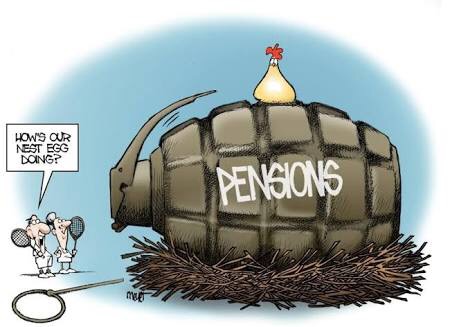
Image courtesy of Stuart Miles at FreeDigitalPhotos.net

Share this:

  • Click to email a link to a friend (Opens in new window) Email
  • Click to print (Opens in new window) Print
  • Tweet
  • Pocket
  • Click to share on Reddit (Opens in new window) Reddit
Like Loading...
1 Comment
by SMSF Coach - Liam Shorte on April 1, 2015  •  Permalink
Posted in Pension Strategies, Tax Planning
Tagged Account Based Pension, Baulkham Hills, Cash rate, Castle Hill, Change of trustee, chnage of SMSF Trustee, Cost of Living, DIY Super, Dural, Government, Hawkesbury, income, income planning, Interest Rates, Investment, Office of State Revenue, OSR, Preservation age, rate cuts, RBA, RBA cash rate, Retirement, Retirement Planning, Salary Sacrifice, Self Managed Superannuation Fund, SMSF, SRO, Stamp Duty, Strategy, superannuation, Transition to Retirement, TRIS, TTR, TTRAP

Posted by SMSF Coach - Liam Shorte on April 1, 2015

https://smsfcoach.com.au/2015/04/01/55-no-longer-target-age-for-transition-to-retirement-pension-strategy/

  • Search for specific topics

  • Liam is a Fellow of the SMSF Association, their highest Specialist rating
  • Recent Posts

    • Age Pension & Deeming Changes September 2025
    • Could an Unsigned Will Be Valid? What about your BDBN in the SMSF?
    • Important Changes to Pension Commencement Rules Now in Effect from 1 July 2025
    • The Ultimate SMSF End of Financial Year Checklist 2025
    • Superannuation – General Transfer Balance Cap Increases to $2.0 Million from 1 July 2025
    • SMSF Business Real Property: It’s not what type of property that counts, it’s the use that matters.
    • The Ultimate SMSF End of Financial Year Checklist 2024
    • How to check your Superannuation data via myGov online
    • The Ultimate SMSF End of Financial Year Checklist 2023
    • So How Much Can I Contribute to my SMSF Using the Bring Forward Rule from 1 July 2025
  • Previous Posts by Topic

    • Contribution Strategies (83)
      • In Specie transfers (5)
      • Salary Sacrifice (15)
      • Small Business CGT (2)
      • Superannuation Splitting (18)
      • Tax Planning (64)
    • education (15)
    • Education costs (2)
    • Estate Planning (39)
      • Anti-Detriment (2)
      • Binding Death Nominations (15)
      • Enduring Power of Attorney (7)
      • Reversionary Pension (13)
      • testamentary trust (1)
    • Financial Planning (62)
      • Bankruptcy Protection (1)
      • Contributions (10)
      • Divorce (5)
      • downsizing (6)
      • Superannuation (27)
    • Insurance Strategies (14)
      • Income Protection (3)
      • Life Insurance (7)
      • Salary Continuance (3)
      • Total & Permanent Disability (4)
    • Investment Strategies (73)
      • Asset Allocation (22)
      • Behavioural Finance (3)
      • Bonds (5)
      • Borrowing (21)
        • Loans (12)
        • LRBA (14)
      • Botcoin (1)
      • Buy-backs (1)
      • Franking Credits (14)
      • Hybrids (3)
      • International Investing (7)
      • Investor Education (6)
      • Property (25)
      • Results Season (2)
      • Term Deposits (7)
    • Retirement Planning (91)
      • Age Pension (7)
      • Centrelink (19)
        • CHSC (2)
      • Downsizing (1)
      • Lifestyle (4)
      • Pension Strategies (36)
      • Pensions (33)
    • SMSF (102)
      • News & Stats (47)
    • SMSF alternatives (2)
    • SMSF Management (122)
      • Audit (18)
      • Checklists (23)
      • Deeds (1)
      • Scam Alert (2)
      • SMSF Exit Strategies (2)
      • TBAR reporting (4)
      • Trustee (70)
  • Like us on Facebook

    Like us on Facebook
  • Blog Stats

    • 863,248 hits
Blog at WordPress.com.
<div data-adviser-id="278214">

<a href="https://www.adviserratings.com.au/adviser/278214/William-Shorte">
View William Shorte's Adviser Ratings profile
</a>
</div>

https://www.adviserratings.com.au/widget/278214/profile.js
  • Subscribe Subscribed
    • The SMSF Coach
    • Join 297 other subscribers
    • Already have a WordPress.com account? Log in now.
    • The SMSF Coach
    • Subscribe Subscribed
    • Sign up
    • Log in
    • Report this content
    • View site in Reader
    • Manage subscriptions
    • Collapse this bar
 

Loading Comments...
 

    %d