However, some people are still struggling with the process for implementing the option to release the funds from your SMSF. So here is a quick guide.
Firstly, Don’t ignore the notice or leave it aside to deal with later. You have 60 days to respond and if paying from your super then you must allow time to submit that election and have the ATO write to your fund with instructions to release the payment.
Complete election form online via MyGov
To complete an election form online you need to have registered for myGov and linked to the ATO Online Services.
If you are not already registered for myGov or your account is not linked to the ATO, go to online services.
If you are correctly linked to the ATO you should see the Australian Taxation Office listed under Your services when you log in to myGov. This is your starting point to make an election.
To make your election:
Login to myGov here myGov (make sure you have your mobile phone handy)
Click on the ATO image to access our ATO Online Services.
Select the Super tab from the top menu. (usually the second tab)
Scroll down to Manage and click on that to get sub-menu.
Click on Division 293 election (you may have other elections available – it is essential that you select Division 293 election).
View your available elections. You may have elections for a due and payable account and/or a deferred account. You may also have elections available for different years.
Choose which super fund you want to pay the Div 293 Tax from (Your SMSF should be listed, if not contact your SMSF administrator).
Select your SMSF and complete the declaration and Lodge for the election that you would like to complete.
Then wait for the ATO to send you as trustee of your superfund a Notice to pay and remember this may go to your SMSF tax agent or administrator so drop them a quick email to let them know to expect it as you are still on a 60 day deadline!. Do not use the BPAY details on the form that came to you in your personal name
P.S. If you have suddenly discovered you have some other superannuation accounts DO NOT CONSOLIDATE. Check with your advisor first as you may lose insurances, tax deductions, or other benefits you were not aware of that cannot be replaced. Get the full details from the fund first.
Alternative – Complete paper form
If you are unable to complete your election online
Using ATO online services is the easiest and quickest way to make your election and will ensure there is no delay.
However, if you are unable to complete your election online, you have two options:
Speak to your tax agent, who can complete your Division 293 election for you using their Online services for agents.
Looking for an adviser that will keep you up to date and provide guidance and tips like in this blog? Then why now contact me at our Castle Hill or Windsor office in Northwest Sydney to arrange a one on one consultation. Just click the Schedule Now button up on the left to find the appointment options.
Please consider passing on this article to family or friends or your tax agent! Pay it forward!
Castle Hill: 40/8 Victoria Ave, Castle Hill NSW 2154
Windsor: Suite 4, 1 Dight St, Windsor NSW 2756
Corporate Authorised Representative of Viridian Advisory Pty Ltd ABN 34 605 438 042, AFSL 476223
This information has been prepared without taking account of your objectives, financial situation or needs. Because of this you should, before acting on this information, consider its appropriateness, having regard to your objectives, financial situation and needs. This website provides an overview or summary only and it should not be considered a comprehensive statement on any matter or relied upon as such.
OK, so here we are with only a few weeks left to the end of the financial year to get our SMSF in order and ensure we are making the most of the strategies available to us. Here is a checklist of the most important issues that you should address with your advisers before the year-end.
Its been a busy year and I have not had as much time as usual to put this together so if you find an error or have a strategy to add then please let me know. Links were working at the time of writing.
Warning before we begin,
Before we start, just a warning as in the rush to take advantage of new strategies you may have forgotten about how good you have it already Be careful not to allow your accountant, administrator or financial planner to reset any pension that has been grandfathered under the pension deeming rules that came in on Jan 1st 2015 without getting advice on the current and possible future consequences resulting in the pension being subject to current deeming rates if you lose the grandfathering. Point them to this document
It’s all about timing!
If you are making a contribution the funds must hit the Superfund’s bank account by the close of business on the 30th June. Careful of making contributions through Clearing houses as they often hold on to funds before presenting them to the individual’s superannuation fund for 7-30 days and it’s when the fund receives the payment that the contribution is counted except if paid via the government’s Small Business Clearing House. Pension payments must leave the account by the close of business unless paid by cheque in which case the cheques must be presented within a few days of the EOFY and there must have been sufficient funds in the bank account to support the payment of the cheques on June 30th. Get you payments in by Friday 26th or earlier to be sure (yes I’m Irish).
Review Your Concessional Contributions options – 25K per year up to 65 this year but work test from 1 July 2020 will apply to 67.
The big news is the government have changed the contribution rules from 1 July 2020 to extend the ability to make contributions from age 65 up to age 67. Read more here. Maximise contributions up to concessional contribution cap but do not exceed your Concession Limit. The sting has been taken out of Excess contributions tax but you don’t need additional paperwork to sort out the problem. So check employer contributions on normal pay and bonuses, salary sacrifice and premiums for insurance in super as they may all be included in the limit.
3. If your Super balance on 1 July 2019 was under $500,000 Review your previous Concessional Contributions (CC) and consider using the ‘Carry forward’ concessional contributions cap
Broadly, the carry forward rule allows individuals to make additional CC in a financial year by utilising unused CC cap amounts from up to five previous financial years, providing their total superannuation balance just before the start of that financial year was less than $500,000.
This measure applies from 2018-19 so effectively, this means an individual can make up to $50,000 of CC in a single financial year by utilising unapplied unused CC caps since 1 July 2018 and going forward from up to five previous financial years.
Prior to these amendments, if an individual did not fully utilise their annual CC cap in a financial year, they could not carry forward the unused cap to a later year. But please note the balance refers to $500,000 across all of your Superannuation accounts.
Review plans for Non-Concessional Contributions (NCC) options
From 1 July 2020 the new age limit of 67 will apply to Non-Concessional Contributions (NCC) without meeting the work test so you have the option of making $100,000 NCC per year up to turning 67.
Hopefully this month (tabled for 18th June 2020 sitting) the Parliament will also pass legislation allowing you to also use the “3 year bring forward rule” up to age 67.
So people who turned 64 0r 65 this year and who planned to use the “3 year bring forward rule” may want to review that strategy if they wish to get more money in to super
Current Option if turned 65 in 2019-20 FY: NCC of $100,000 or $300,000
Have you considered making non-concessional contributions to move investments in to super and out of your personal, company or trust name. Maybe you have proceeds from and inheritance or sale of a property sitting in cash.
As shares and cash have been hit by the Covod-19 crisis value you may find that it is opportune for personal tax reasons to take this time to move some assets to super may help control your tax bill.
Co-Contribution
Check your eligibility for the co-contribution and if you are eligible take advantage. Note that the limits have changed and it is “free incentive money to save for your retirement” – grab it if you are eligible.
To calculate the super co-contribution you could be eligible to receive based on your income and personal super contributions, use the Super co-contribution calculator.
Spouse Contribution
If your spouse has assessable income plus reportable fringe benefits totalling less than $37,000 for the full $540 tax offset and up to $40,000 for a partial offset, then consider making a spouse contribution. Check out the ATO guidance here
Over 65 and soon up to 67? Do you meet the work test? (The 40 hours in any 30 days rule)
You should review your ability to make contributions as if you if you have reached age 65 you must pass the work test of 40 hours in any 30 day period during the financial year, in order to continue to make contributions to super. Check out ATO superannuation contribution guidance . Keep an eye later this month for new of the age limit rising form 65 to 67 before needing to meet the work test from 1 July 2020.
Check any payments you may have made on behalf of the fund.
It is important that you check for amounts that may form a superannuation contribution in accordance with TR 2010/1 (ask your advisor), such as expenses paid for on behalf of the fund, debt forgiveness or in-specie contributions, insurance premiums for cover via super paid from outside the fund.
Notice of intent to claim a deduction for contributions
If you intend to start a pension this notice must be made before you commence the pension. Many like to start pension in June and avoid having to take a minimum pension but make sure you have claimed your tax deduction first. The same applies if you plan to take a lump sum withdrawal from your fund. GET THE NOTICE OF INTENT IN FIRST
Contributions Splitting to your spouse
Consider splitting contributions with your spouse, especially if:
your family has one main income earner with a substantially higher balance or
• if there is an age difference where you can get funds into pension phase earlier or
• If you can improve your eligibility for concession cards or age pension by retaining funds in superannuation in the younger spouse’s name.
This is a simple no-cost strategy I recommend everyone look at. See my blog about this strategy here.
Off Market Share Transfers (selling shares from your own name to your fund)
If you want to move any personal shareholdings into super you should act early. The contract is only valid once the broker receives a fully valid transfer form not before so timing in June is critical.
Pension Payments – so many more options this year 2019-2020 and in 2020-2021
If you are in pension phase, the government have brought in the Temporary Reduction in Minimum Pensions as part of the Covid-19 response. So please ensure you take the new minimum pension of at least 50% of your age-based rate below. For transition to retirement pensions, ensure you have not taken more than 10% of your opening account balance this financial year.
The following table shows the minimum percentage factor (indicative only) for each age group.
Minimum annual payments for super income streams for 2019/20 and 2020/21 Financial years.
Age at 1 July
Standard
Minimum % withdrawal
50% reduced
minimum pension
Under 65
4%
2%
65–74
5%
2.5%
75–79
6%
3%
80–84
7%
3.5%
85–89
9%
4.5%
90–94
11%
5.5%
95 or older
14%
7%
FINER DETAILS with TIPS and TRAPS
Here is some of the finer detail on how these measures will work, along with some tips and traps to consider when taking withdrawals for the rest of this financial year and the full 2020-21 financial year:
The measures are forward looking so if a pension member has already taken your minimum pension for the year then they cannot change the payment for this year but they can get organised for 2020/21. So, no you can’t try to sneak a payment back in to the SMSF bank account!
If a pension member has already taken pensions payments of equal to or greater than the 50% reduced minimum amount, they are not required to take any further pension payments before 30 June 2020. For example, many would have taken quarterly or half yearly payments. If they add up to the 50% reduced minimum then you do not need to take anymore payments this financial year.
If you still need your pension payments for living expenses but have already taken the 50% reduced minimum then, it may be a good strategy for amounts above the 50% reduced minimum to be treated as either:
a partial lump commutation sum rather than as a pension payment. This would create a debit against the pension members transfer balance account (TBA). Please discuss this with your accountant and adviser asap as some funds will have to report this quarterly and others on an annual basis. OR
for those with both pension and accumulation accounts to take the excess as a lump sum from the accumulation account balance to preserve as much in tax exempt pension phase as possible going forward to future years.
Think about having a sacrificial lamb, a second lower value pension that can sacrificed if minimum not taken. In this way if you pay only a small amount less than the minimum you only have to lose the smaller pensions concession rather than the concession on your full balance. When combined with the ATO relief discussed in the following article “What-happens-if-i-don’t-take-the-minimum-pension” you will have a buffer for mistakes.
Before reading the above: Be careful not to reset a pension that has been grandfathered under the new deeming of pension rules that came in on Jan 1st 2015 without getting advice.
Reversionary Pension is often the preferred option to pass funds to a spouse or dependent child. Review your options
A reversionary pension to you spouse will provide them with up to 12 months to get their financials affairs organised before having to make a final decision on how to manage your death benefit.
You should review your pension documentation and check if you have nominated a reversionary pension. If not, consider your family situation and options to have a reversionary pension.
This is especially important with blended families and children from previous marriages that may contest your current spouse’s rights to your assets. Also consider reversionary pensions for dependent disabled children. T
The reversionary pension has become more important with the application of the $1.6m Transfer Balance Cap limit to pension phase.
Review Capital Gains Tax Position of each investment
Review any capital gains made during the year and over the term you have held the asset and consider disposing of investments with unrealised losses to offset the gains made. If in pension phase then consider triggering some capital gains regularly to avoid building up an unrealised gain that may be at risk to government changes in legislation like those proposed this year.
Review and Update the Investment Strategy not forgetting to include Insurance of Members
Review your investment strategy and ensure all investments have been made in accordance with it, and the SMSF trust deed. Also, make sure your investment strategy has been updated to include consideration of insurances for members. See my article of this subject here. Don’t know what to do…..call us.
Collate and Document records of all asset movements and decisions
Ensure all the funds activities have been appropriately documented with minutes, and that all copies of all statements and schedules are on file for your accountant/administrator and auditor.
Double Dipping! June Contributions Deductible this year but can be allocated across 2 years.
For those who may have a large taxable income this year (large bonus or property sale) and are expecting a lower taxable next year you should consider a contribution allocation strategy to maximise deductions for the current financial year. This strategy is also known as a “Contributions Reserving” strategy but the ATO are not fans of Reserves so best to avoid that wording! Just call is an Allocated Contributions Holding Account.
Market Valuations – Now required annually
Regulations now require assets to be valued at market value each year, ensure that you have re-valued assets such as property and collectibles. Here is my article on valuations of SMSF investments in Private Trusts and Private Companies. For more information refer to ATO’s publication Valuation guidelines for SMSFs.
In-House Assets
If your fund has any investments in in-house assets you must make sure that at all times the market value of these investments is less than 5% of the value of the fund. Do not take this rule lightly as the new SMSF penalty powers will make it easier for the ATO to apply administrative penalties (fines) for smaller misdemeanours ranging from $820 to $10,200 per breach pere trustee.
Covid-Relief – The ATO has responded to current market conditions, and has announced it will not take compliance action against SMSFs where:
at 30 June 2020 the market value of an SMSF’s in-house assets is over 5% because of the downturn in the share market
the trustee of the SMSF prepares a rectification plan
by 30 June 2021, the rectification plan either:
cannot be effectively implemented because of market conditions
does not need to be implemented because the market recovers and the 5% test is again satisfied at 30 June 2021.
Is your fund providing Covid-19 Rent Relief to a property tenant whether a related party or not? Get your documentation in place.
If you have provided Rent Relief to a tenant, related or not, then get it documented now before June 30 that you have considered, managed and documented the request, the reasoning behind the Trustee’s decision and the details of the relief provided
The ATO have thankfully provided a non-binding practical approach of broadly not applying resources to this issue for FY2020 and FY2021. However, this announcement, while positive, should not be relied on given the considerable downside risks.
Careful if replacing TPD Insurance (Total Permanent Disability – basically “never work again” insurance)
Have you reviewed your insurances inside and outside of super? Don’t forget to check your current TPD policies owned by the fund with an own occupation definition as the rules changed a few years ago so be careful about replacing an existing policy as you may not be able to obtain this same cover inside super again.
Check the ownership details of all SMSF Investments
Make sure the assets of the fund are held in the name of the trustees on behalf of the fund and that means all of them. Check carefully any online accounts you may have set up without checking the exact ownership details. You have to ensure all SMSF assets are kept separate from your other assets.
Review Estate Planning and Loss of Mental Capacity Strategies.
Review any Binding Death Benefit Nominations (BDBN) to ensure they are valid (check the wording matches that required by the Trust Deed) and still in accordance with your wishes. Also ensure you have appropriate Enduring Power of Attorney’s (EPOA) in place allow someone to step in to your place as Trustee in the event of illness, mental incapacity or death. Do you know what your Deed says on the subject? Did you know you cannot leave money to Step-Children via a BDBN if their birth-parent has pre-deceased you?
Review any SMSF Loans
Have you provided special terms (low or no interest rates , capitalisation of interest etc.) on a related party loan? Then you need to review your loan agreement and get advice to see if you need to amend your loan. Have you made all the payments on your internal or third-party loans, have you looked at options on prepaying interest or fixing the rates while low. Have you made sure all payments in regards to Limited Recourse Borrowing Arrangements (LRBA) for the year were made through the SMSF Trustee? If you bought a property using borrowing, has the Holding Trust been stamped by your state’s Office of State Revenue. Please review my blog on the ATO’s Safe Harbour rules for Related Party Loans here
Still have Collectibles in your fund?
Play by the new rules that came into place on the 1st of July 2016 or get them out of your SMSF. More on these rules and what you must do in a good blog from SuperFund Partners here.
SuperStream obligations must be met
For super funds that receive employer contributions it’s important to take note that since 2014 the ATO has been gradually introducing SuperStream, a system whereby super contributions data is received and made electronically.
All funds should be able to receive contributions electronically and you should obtain an Electronic Service Address (ESA) to receive contribution information. If you are not sure if your fund has an ESA, contact your fund’s administrator, accountant or your bank for assistance.
If you change jobs your new employers may ask SMSF members for their ESA, ABN and bank account details. Some employers may also ask for your Unique Superfund Identifier (USI) – for SMSFs this is the ABN of the fund.
Don’t leave it until after 30 June, review your Self Managed Super Fund now and seek advice if in doubt about any matter.
Are you looking for an advisor that will keep you up to date and provide guidance and tips like in this blog? then why now contact me at our Castle Hill or Windsor office in Northwest Sydney to arrange a one on one consultation. Just click the Schedule Now button up on the left to find the appointment options.
Please consider passing on this article to family or friends. Pay it forward!
Liam Shorte B.Bus SSA™ AFP
Financial Planner & SMSF Specialist Advisor™
Tel: 02 98941844, Mobile: 0413 936 299
PO Box 6002 BHBC, Baulkham Hills NSW 2153
5/15 Terminus St. Castle Hill NSW 2154
Corporate Authorised Representative of Viridian Select Pty Ltd ABN 41 621 447 345, AFSL 51572
This information has been prepared without taking account of your objectives, financial situation or needs. Because of this you should, before acting on this information, consider its appropriateness, having regard to your objectives, financial situation and needs. This website provides an overview or summary only and it should not be considered a comprehensive statement on any matter or relied upon as such.
Even the most seasoned SMSF Trustees and members realise that they need to be on top of their game over the coming 12 months. If you are running your own SMSF or your better half is doing so, then drag yourself and them along to the SMSF Association’s SMSF & Investor Event. Let the experts guide you.
Full disclosure, I am a board member of the SMSF Association and I do want as many people as possible to come along and boost their knowledge and be prepared for what the budget and possible new future government will throw at us. I have also bargained for a deal for you and if you use the coupon code “SMSFCoach” when registering you will be able to attend for FREE
So what is on the agenda:
Following the Federal Budget and leading up to the end of the financial year, hear from key SMSF and investment experts on crucial factors you as a trustee or your clients if you’re a n SMSF professional,, should be thinking about in regards to your fund/your clients’ funds. The program will feature:
A Special Address on the impact of the removal of franking credit refunds on SMSFs
Your SMSF Update – what’s new in self managed super
End of Financial Year – review your investment portfolio in light of political and investment markets
Peter Hogan our SMSF Education expert will discuss Everything you need to know about starting and receiving pensions – whether you are starting to think about moving into retirement or already earning a pension this session will cover everything you need to know especially as it relates to the Transfer Balance Cap.
And more to be announced soon…
WHERE & WHEN
Date: Tuesday 9 April 2019
Time: 8:15am – 3:30pm (including lunch and morning tea)
Register here using the coupon code ‘SMSFCoach’ for Free
(I confirm that I receive no commissions, fees or incentives for promoting this event and will not receive any of your private information)
SHOUT OUT TO SMSF PROFESSIONALS
If you are a SMSF Accountant, Auditor or Financial Planner then please pass on this opportunity to your clients as we need SMSF Trustees to be more knowledgeable than ever. Understand that ASIC now expects you to be providing education to your clients and you must find cost effective ways of doing this. Why not leverage of your association membership and provide your clients with access to this event or maybe even come along with a group of them.
If you are in Victoria don’t feel left out we will be coming to Melbourne too in June!
Liam Shorte B.Bus SSA™ AFP
Financial Planner & SMSF Specialist Advisor™
Tel: 02 98941844, Mobile: 0413 936 299
PO Box 6002 BHBC, Baulkham Hills NSW 2153
5/15 Terminus St. Castle Hill NSW 2154
Corporate Authorised Representative of Viridian Select Pty Ltd ABN 41 621 447 345, AFSL 51572
This information has been prepared without taking account of your objectives, financial situation or needs. Because of this you should, before acting on this information, consider its appropriateness, having regard to your objectives, financial situation and needs. This website provides an overview or summary only and it should not be considered a comprehensive statement on any matter or relied upon as such.
The ATO has recently redesigned the Division 293 notice to provide information clearly and concisely. This includes providing the full assessment calculation to make it easier for people to understand how their tax has been calculated. This will also make it easier to identify any erroneous assessments due to incorrect reporting of information
Julie Steed, Senior Technical Services Manager of Australian Executor Trustees Part of the IOOF group, has kindly provided a refresher on the Division 293 tax and a review of the newly redesigned ATO notice that can be seen here: Div 293 notice of assessment
Division 293 tax
From 1 July 2017, the income threshold above which individuals pay an additional 15% tax on certain superannuation contributions reduced from $300,000 to $250,000. In December 2018 the ATO began issuing over 90,000 Division 293 notices for the 2017/18 income year. It is estimated that approximately 125,000 individuals will receive a Division 293 notice in the 2025FY.
Importantly, there are no strategies that can be used to reduce an individual’s liability for Division 293 tax. However, understanding the options that are available and how the Division 293 notice process works will assist individuals who receive a notice.
Overview
People with Division 293 income greater than $250,000 will pay 15 per cent additional tax on certain superannuation contributions. The tax is a personal tax rather than a tax deducted from super contributions by a fund. However, individuals may elect to release funds from super to pay the tax (see the Choices section below).
Division 293 income
Division 293 income includes:
taxable income
reportable fringe benefits
total net investment losses.
Ad-hoc income
Individuals who are not generally high income earners may still be liable for Division 293 tax if they receive certain one-off payments during a year. Such payments include eligible termination payments, the taxable component of a superannuation death benefit and capital gains.
However, the taxable component of a super lump sum benefit (other than a death benefit) is not included where:
it is received by individuals from preservation age to age 59
it is up to the current low rate cap of $205,000.
Division 293 contributions
Division 293 contributions include:
employer contributions
personal deductible contributions
contributions for a defined benefit interest (valued by an actuary)
employer contributions (including salary sacrifice) to a constitutionally protected fund.
The additional tax does not apply to:
excess concessional contributions
non-concessional contributions
contributions to certain Government funds for senior personnel, unless they are salary sacrifice contributions
contributions for certain Judges to defined benefit funds.
Calculation of Division 293 tax
Division 293 tax is 15% of the lesser of:
the amount of the Division 293 contributions
the amount of Division 293 income and Division 293 contributions above the $250,000 threshold.
Case study
Ryan has the following Division 293 details:
Division 293 income
$240,000
Division 293 contributions
$20,000
Total
$260,000
Division 293 tax is payable on $10,000, being the lesser of:
$20,000
$260,000 – $250,000 = $10,000
The Division 293 tax amount is 15% x $10,000 = $1,500
Division 293 notice
The ATO issues an Additional tax on concessional contributions (Division 293) notice to individuals which specifies the additional amount of tax that is payable and the due date for payment.
The ATO has recently redesigned the Division 293 notice to provide information clearly and concisely. This includes providing the full assessment calculation to make it easier for people to understand how their tax has been calculated. This will also make it easier to identify any erroneous assessments due to incorrect reporting of information.
The notice will also explain how to avoid interest charges, view statements of accounts online and the process for disagreeing with the assessment.
Choices
When an individual receives a Division 293 assessment they can choose to pay the tax from their personal resources. Alternatively, they can elect to have the amount released from their super fund to pay the tax. The time frame for making the election is 60 days. However, this may be a greater time frame than the date upon which payment of the tax is due.
The election can be made to release the tax amount from any super fund (other than some defined benefit funds). There is no requirement for the release to be made from the fund that received the contributions.
Release authority
If an election to have the amount released from super is made, the ATO will send the super fund a release authority and the fund will make the payment to the ATO. Funds are required to make the payment within 10 business days from the date the release authority is issued by the ATO.
Importantly a fund must not release an amount until they have received the ATO release authority. This requirement is sometimes misunderstood by SMSF trustees.
Conclusion
Understanding the choices available and the process involved in paying Division 293 tax can assist in ensuring that any tax payable is completed in a manner most appropriate to an individual’s circumstances.
Are you looking for an advisor that will keep you up to date and provide guidance and tips like in this blog? Then why not contact me at our Castle Hill or Windsor office in Northwest Sydney to arrange a one on one consultation. Just click the Schedule Now button up on the left to find the appointment options.
Corporate Authorised Representative of Viridian Advisory Pty Ltd ABN 34 605 438 042, AFSL 476223
This information has been prepared without taking account of your objectives, financial situation or needs. Because of this you should, before acting on this information, consider its appropriateness, having regard to your objectives, financial situation and needs. This website provides an overview or summary only and it should not be considered a comprehensive statement on any matter or relied upon as such.
Self-funded retirees have felt like punching bags for the last few years with hit after hit chipping away at their ability to fend for themselves within the rules they had relied upon in making their savings plans over the last 30 years. Combine the changing of goal posts with low interest rates and blue-chip underperformance from the banks, telcos and utilities and they are not to be blamed for thinking a hex had been put on them.
So an SMSF friendly budget is the welcome news coming out of the 2018-19 Federal Budget. With many of us SMSF Specialists and you the SMSF members still working through the wide-reaching and complex superannuation changes which took effect from 1 July 2017, this Federal Budget will provide much needed stability while looking to reduce costs for SMSFs and prove additional flexibility.
The key changes proposed for SMSFs and superannuation are:
Three-yearly audit cycle for some self-managed superannuation funds.
The Government will change the annual SMSF audit requirement to a three yearly requirement for SMSFs with a history of good record keeping and compliance. The measure will start on 1 July 2019 for SMSF trustees that have a history of three consecutive years of clear audit reports and that have lodged the fund’s annual returns in a timely manner.
One concern I have is if trustees make a mistake in year 1 that is not discovered until year 3, will they face 3 years interest charges on the penalties.
Expanding the SMSF member limit from four to six
As already announced, the Federal Government confirmed its decision to expand the number of members allowed in an SMSF from four to six. Expanding the definition of an SMSF to a fund with a maximum of six members will provide greater flexibility in how funds can be structured.
Whilst there are some concerns over making decisions I like this move where as mum and dad in their later years want to reduce their involvement but they want help rather with the fund rather than moving to separate retail funds. It may help prevent elder Financial abuse where instead of one child assuming control of the SMSF, more of the family could be involved. Temptation and inheritance impatience is always there for one person but add a few others in to the decision making and the risk of financial abuse reduces considerably.
Also 6 members of a family small business allows for later drawdown from the parents accounts and recontribution for younger family members to retain business real property in the fund after death of the older generation.
Note; you will need to ensure your trust deed allows more than 4 members and it most likely won’t so you will need to update the trust deed first before accepting new members. READ THE DEED
Over 65, 1 additional year Work test exemption
The Government will provide more time for Australians aged 65 to 74 to boost their retirement savings, by introducing an exemption from the superannuation work test.This exemption will apply where an individual’s total superannuation balance is below $300,000 and will permit voluntary superannuation contributions in the first year that they do not meet the work test requirements.
This is good but limited in its scope as more and More people have reached the $300k level because of Super Guarantee Contributions for most since 1992 or before for some. But it is a female friendly move as they are most likely to have lower balances
Life insurance cover in super to be opt-in for individuals under 25 years of age.
The Government will legislate that life insurance cover in superannuation will be opt-in for those individuals under 25 years of age or with account balances under $6000 to ensure that unnecessary fees do not erode smaller balances.
Life insurance cover will also cease where no contributions have been made for a period of 13 months.
If you have kept a retail or industry fund open with small balances to retain insurances you may need to put a small annual contribution in place (I would recommend $100 per half year just in case) to ensure it does not get tagged as dormant.
Older Australian package
The Government introduced the following measures to enhance the standard of living older Australians:
• Increase to the Pension Work Bonus from $250 to $300 per fortnight.
• Amendments to the pension means test rules to encourage the take up of lifetime retirement income products.
• Expansion of the Pensions Loan Scheme to allow more Australians to use the equity in their homes to increase their incomes.
I think this will be a major bonus for those with a lumpy asset or shareholding’s they wish to retain but need more cashflow. At a current rate of 5.25% the Pensions Loan Scheme is a very decent rate and security that you are borrowing from a bank or predatory lender based on a brokers conflicted commissions.
Personal income tax bracket changes (take most these with a pinch of salt!)
The Government has provided personal income tax relief to lower and middle income earners. A Low and Middle Income Tax Offset will now be available for individuals with incomes of up to $125,333.
The $87,000 income threshold, above which a 37 per cent tax rate applies, will increase to $90,000.
Other changes
• A surplus of $2.2 billion is expected in 2019-20, one year ahead of schedule.
• The Government’s planned increase in the Medicare levy from 2 per cent to 2.5 per cent, to fund the National Disability Insurance Scheme, will now not go ahead due to increased tax revenues.
How can we help?
Some of these measures may open up strategy options for you and your family.
If you have any questions or would like further clarification in regards to any of the above measures outlined in the 2018-19 Federal Budget, please feel free to give me a call or email to arrange a time to meet or talk by phone so that we can discuss your particular requirements in more detail.
Are you looking for an advisor that will keep you up to date and provide guidance and tips like in this blog? then why now contact me at our Castle Hill or Windsor office in Northwest Sydney to arrange a one on one consultation. Just click the Schedule Now button up on the left to find the appointment options.
Liam Shorte B.Bus SSA™ AFP
Financial Planner & SMSF Specialist Advisor™
Tel: 02 98941844, Mobile: 0413 936 299
PO Box 6002 BHBC, Baulkham Hills NSW 2153
5/15 Terminus St. Castle Hill NSW 2154
Corporate Authorised Representative of Viridian Select Pty Ltd ABN 41 621 447 345, AFSL 51572
This information has been prepared without taking account of your objectives, financial situation or needs. Because of this you should, before acting on this information, consider its appropriateness, having regard to your objectives, financial situation and needs. This website provides an overview or summary only and it should not be considered a comprehensive statement on any matter or relied upon as such.
Over this last week I have read so many politically biased responses to Bill Shorten’s proposed strategy to stop the refunds of franking credits that I despaired and I know it is going to be a political football rather than part of comprehensive tax reform. Then I came across a really well explained and positioned argument from Scott Phillips of The Motley Fool fame that takes the politics out of the analysis. I immediately reached out to Scott and asked him could I re-post it for my readers who may be finding the debate confusing or hard to explain to others. So here goes:
Why Bill Shorten is wrong — and right — on dividends
Scott Phillips
What’s that? Bill Shorten has announced a new policy on the refund of franking credits?
I hadn’t noticed.
Okay, that’s not true. I noticed. And, based on feedback on Twitter over the last week, many of you noticed, too.
If Shorten wanted to stir a hornet’s nest, he got just that. Maybe it’s clever politics. Maybe the focus groups told the pollsters this was a smart political strategy.
It sure as heck isn’t good policy, in my view.
Before you fire off an email to either abuse me or suggest I be knighted, let me explain.
I’m going to start with three premises that I think most people can agree on:
The tax system should be fair
You shouldn’t have to pay tax twice on dividend income; and
The tax system, as it stands, is broken.
That last point seems to be Shorten’s main thrust. And it’s a battle cry taken up by many partisans:
“We have a problem, and I have a solution. If you don’t like my solution, you’re saying we don’t have a problem.”
To which I reply:
“We absolutely have a problem. But your solution is a poor one. There are better ways to skin this cat.”
And before we go any further, please leave your political affiliations at the door. This week, on Twitter, I have bagged and praised Labor for different policies. I’ve done the same in the past to the Libs. If you can’t put aside your team jersey and engage in a discussion of ideas, then there’s not much for you in what follows.
But if you’re interested in good policy, read on.
Bill Shorten’s policy, as announced, goes something like this:
“We’re happy for you to reduce your tax using franking credits, but we’re not going to give you a refund.”
There are a few problems with that approach:
First, it implies that if you pay tax, you’re welcome to use the credits to reduce your tax burden to zero.
Second, those credits somehow magically are worthless once you hit zero, meaning that to me they’re worth something, but to a retiree in a 0% tax bracket, they’re worth nothing.
How can franking credits be worth different amounts to different people in different circumstances? Search me… I’m buggered if I know.
And third, and this is what’s stirred up most heat among those who have gone into bat for the policy:
“I pay tax and my taxes shouldn’t go to give a refund/handout to people who already have a lot of money.”
Now, don’t get me wrong. I think the current situation — regarding the ability to pay exactly zero tax on certain income in retirement that might be up to $80,000 — is crackers.
But, Shorten’s policy doesn’t fix that problem. Here’s why:
Consider three people, all of whom have SMSFs in pension phase, and who — according to the current tax rules — pay 0% tax: Banking Betty, Rental Richard and Dividend Davina.
Banking Betty deposits $100,000, and earns $2,000 each year in interest. Betty doesn’t pay any tax.
Rental Richard has a $100,000 property that pays him $2,000 each year in rent. Richard doesn’t pay any tax.
Dividend Davina buys $100,000 worth of shares that earned a profit of $2,000. The company paid tax of $600, so Davina gets $1,400. Davina doesn’t pay any tax.
See the difference here? Because Davina’s investment is in the form of shares in a company, she gets less than the other two. Even though she’s not supposed to pay any tax, the company paid tax, so she gets less.
Under current rules, she’d get the $600 back, delivering on the current government policy of a 0% tax rate, and equalising the return for each of those investors.
Bill Shorten, in effect, is penalising people for owning shares.
Now, let’s address the elephant in the room. Yes, because the company has already paid tax on that $2,000, Davina does officially get a refund. And the optics of that are bad: it looks like somehow the taxpayer is subsidising Davina.
But it’s all a question of cash flows and timing. The ATO just gives Davina back the money the company paid in tax.
And remember, a company is just a legal structure to organise your ownership interest in an asset. Shares in a company aren’t all that different in effect to accounts at a bank. Your bank account is evidence that you have a claim to a share of that bank’s assets, even if you don’t know specifically which notes you deposited.
Imagine a scenario under which Banking Betty’s bank withholds 30% of her interest and sends it to the government as tax. And where Rental Richard’s property manager is obligated to send 30% of his rental income to the ATO.
Both of these investors would have to fill out a tax return and the ATO would send them a refund — because tax was paid on their income, even though the tax rate should have been 0%.
Would Bill Shorten stop Betty and Richard getting their money back?
I doubt it.
But somehow, because Labor has (unfortunately, disingenuously) used extreme examples to make their point, and because they’ve dressed it up as a handout, they’ve mischaracterised the situation.
Somehow Dividend Davina is a fatcat living high on the hog, while Betty and Richard are perfectly entitled to pay no tax.
Essentially, because of the asset class they decide to invest in, our three protagonists are being treated differently.
Sound fair to you?
No, me neither.
Yes, the idea of a ‘refund’ for someone who has paid no tax feels, somehow, deeply wrong. But it’s because tax was paid by the company, on behalf of a shareholder who shouldn’t be paying tax, so the ATO is essentially just righting that wrong.
Still with me? Excellent!
Still fuming that well-off people pay no tax? Me too.
What? Didn’t I just spend 984 words (don’t waste time counting them. I checked) defending those people?
Well, yes. And no.
Here’s where both parties are engaging in a phony war of words. And we’re poorer for it.
Having an essentially uncapped income at a 0% tax rate is madness.
Yes, yes, it’s not technically uncapped, for a host of reasons. So let’s say $80,000 among friends.
You and I pay a decent slug of tax on an $80,000 income. And there’s no reason that a well-off retiree should be able to draw a completely untaxed income of a similar amount, when they likely have a very decent asset base — say a home and a seven-figure superannuation balance.
It’s simply not sustainable, especially as more boomers retire, to have that slice of the economic income pie remain completely untaxed.
But — and this is important — that doesn’t mean we should simply ban franking credit refunds and assume that fixes the problem.
Let’s go back to our alliterative actors, Betty, Richard and Davina.
If Betty was earning $80,000 in interest, should that be untaxed? Should Richard’s $80,000 in rent be untouched by the taxman? Should Davina’s $80,000 in dividends remain completely unscathed?
I don’t think so. But again, it’s not a question of the source of the income; it’s the size.
Under Bill Shorten’s plan, Davina would be worse off, but Betty and Richard laugh all the way to the bank. Does anyone, seriously, think that’s a good basis for a tax plan?
I didn’t think so.
Here’s what I’d do: I’d have a generous tax-free threshold for income from superannuation, maybe $10,000 or so above the pension level. It’s not unreasonable that you’re allowed a little extra, given the sacrifice you made to save for your retirement.
But above that level, I’d implement a progressive tax scale not unlike the one that applies to regular income: The more you earn, the higher your marginal tax rate.
Simple, no?
Fair, yes?
That way, the tax code doesn’t discriminate on the basis of the asset class. There are no free lunches. And the unsustainable tax situation that currently applies to Super is fixed.
So Bill Shorten, and Chris Bowen, it’s time to admit defeat and go back to the drawing board. Feel free to use my template, above.
And Scott Morrison and Malcolm Turnbull, please stop with the emotive and negative language and grandstanding.
Politics should be a battle of ideas, not soundbites The best idea, well explained, should win, regardless of political party or ideological affiliation.
And, ladies and gentlemen of the Parliament, the Australian people will give you bonus points for explaining it clearly and for anything that reduces the complexity of our tax affairs, while ensuring fairness.
Indeed, Turnbull and Morrison’s political forebear, John Howard spoke to the National Press Club in 2014 when he shared the stage with former Labor PM, Bob Hawke. At that event, according to the Sydney Morning Herald , Howard said
“We have sometimes lost the capacity to respect the ability of the Australian people to absorb a detailed argument. They will respond to an argument for change and reform [but] they want two requirements. They want to be satisfied it’s in the national interest, because they have a deep sense of nationalism and patriotism. They also want to be satisfied it’s fundamentally fair.”
I’d like to think that’s still true.
I agree with Bill Shorten’s characterisation of the problem. I disagree completely with his solution.
I imagine I lost the most partisan readers — of both stripes — a few minutes ago. If you’re still reading, thank you for engaging in a discussion of ideas.
I hope I’ve convinced some of you. Of those I haven’t convinced, I hope I’ve at least done a decent job of addressing the issue, without bias, grandstanding or misdirection. Thanks for reading.
At the very least, I hope I’ve productively added to the conversation. It’s the least each of us can do.
I hope this guidance has been helpful and please take the time to comment. Feedback always appreciated. Please reblog, retweet, like on Facebook etc to make sure we get the news out there. As always please contact me if you want to look at your own options. We have offices in Castle Hill and Windsor but can meet clients anywhere in Sydney or via Skype. Just click the Schedule Now button up on the left to find the appointment options.
Liam Shorte B.Bus SSA™ AFP
Financial Planner & SMSF Specialist Advisor™
Tel: 02 98941844, Mobile: 0413 936 299
PO Box 6002 BHBC, Baulkham Hills NSW 2153
5/15 Terminus St. Castle Hill NSW 2154
Corporate Authorised Representative of Viridian Select Pty Ltd ABN 41 621 447 345, AFSL 51572
This information has been prepared without taking account of your objectives, financial situation or needs. Because of this you should, before acting on this information, consider its appropriateness, having regard to your objectives, financial situation and needs. This website provides an overview or summary only and it should not be considered a comprehensive statement on any matter or relied upon as such.
I love working on strategies for clients but sometimes you just need a true expert or excellent software to crunch the numbers. I was looking for some ideas on downsizing as it had become clear to me that is was not the panacea to retirement funding that client’s often believe it would be. So I was looking for an in-depth article working through the numbers and Rob van Dalen of Optimo Financial has kindly stepped up to provide the required analysis in our latest guest blog. Rob’s main warning is to do your sums on your own particular situation before leaping in to a downsizing strategy.
Optimo Financial
Suite 204, 10-12 Clarke Street, Crows Nest NSW 2065
PO Box 931, Crows Nest NSW 1585
Do Your Sums Before Downsizing
A popular subject often talked about at family barbecues is; “should mum and dad downsize when they get older?” Often it’s assumed that downsizing is the best option moving forward. To test and possibly challenge this we decided to run a few scenarios through our Pathfinder Financial Optimisation Platform to find out. Read our findings below;
1.1 The Clients
In this example, we look at the case of David and Alice who have recently retired and who will soon both be eligible for the age pension. David was born on 11 April 1953 while Alice was born on 15 November 1952. They have a modest $400,000 in super. Their other assets are the family home valued at $900,000 and personal assets valued at $40,000. They have no debt. They would like to have $50,000pa (increasing at CPI) for living expenses. They are worried that their super is not sufficient to maintain their desired income. Consequently, they have contemplated selling the family home and moving to a cheaper area where they could buy a new home for $500,000. Will downsizing leave them better off?
1.2 Assumptions
We have assumed in the analysis:
· Pension fund returns 5.7%pa;
· House selling costs 2.5%;
· House purchase costs 6% (including stamp duty);
· House prices in the long term increase at 3%pa;
· CPI 2.5%p.a.
1.3 Scenario 1: Retain Current Home
We first examine the scenario where David and Alice retain their current home. In this case, they will receive income from the government pension as well as drawing a pension from their own super. Figure 1 shows the sources of their income over a 20 year period.
David and Alice receive approximately 64% of their income from the age pension and associated benefits (see also Figure 6 below). The remainder is withdrawn from their pension account through withdrawing the minimum amount each year (plus some extra for the first few years until they become eligible for the age pension).
Their age pensions are limited approximately equally by the income and assets tests. After 20 years, David and Alice have a combined wealth of $1,960,000 most of which is from the family home.
1.4 Scenario 2: Downsizing Family Home in 2016/17
The next scenario sees David and Alice downsizing their family home from $900,000 to $500,000 in 2016/17. Their ages enable them to deposit the excess funds generated from the house sale into super as non-concessional contributions. However, a Pathfinder® analysis shows that increasing their superannuation balance reduces their age pension because, unlike the family home, super counts towards the age pension assets test and is deemed for the income test. Figure 2 shows the results of the age pension assets and income tests for David and Alice and we can see that their pension is now limited by the assets test. For a home owning couple, the age pension reduces at a rate of $3 per fortnight for each $1,000 of assets in excess of $575,000. This taper rate was doubled from 1 January 2017, so now has a much larger impact on the pension received.
So in 2019/20, for example, their age pension reduces from $36,337 to $9,004 and they must draw more from their pension account to make up the difference. Their wealth after 20 years is now projected at $1,581,000 or about $379,000 less than in the first scenario.
1.5 Scenario 3: Downsizing Family Home in 2027/28
In the third scenario, we examine the possibility that David and Alice defer the downsizing for ten years, say in 2027/28. Their age pension is initially unaffected until they downsize the family home, but after that time their age pension payments are severely curtailed. Their projected wealth after 20 years is now $1,714,000. This is a better outcome than in the second scenario but is still $246,000 less than if they keep their existing home.
1.6 Comparing the Scenarios
Figure 3 gives a comparison of the annual age pension received in the three scenarios. You can see that the scenario where they retain their current home, yields a higher pension and that their pension drops sharply after the sale of their house in the other two scenarios.
Figure 4 shows the total age pension payments over the 20 years. You can see that by keeping their original family home, their total pension entitlement is significantly higher than either of the downsizing options we analysed.
Figure 5 shows the total wealth over the 20 year period analysed.
The first point to note is the importance of the age pension towards retirement income, depending, of course, on the particular circumstances. Figure 6 shows the composition of retirement income over the 20 years analysed for Scenario 1.
1.7 Conclusions
In this example, the age pension plus estimated concession card benefits contribute about 64% to income while the account based pensions contribute about 36%. The second point is that downsizing the family home may not result in improving the overall situation as an increase in payments from a private pension may be more or less offset by a decrease in the age pension.
1.8 Pathfinder Learnings
In our Pathfinder® analysis, we find, perhaps surprisingly, that a couple could be considerably worse off by downsizing the family home. Any funds added to super by the income generated from downsizing could be dissipated by a reduction in the age pension. In addition, the costs of sale and repurchase of a family home are significant.
The age pension can provide a buffer between retirement savings and lifestyle expenses.
For persons eligible for the age pension, downsizing the family home may leave you worse off financially because of the impact of the age pension income and assets test.
Thank you Robby
Are you looking for an advisor that will keep you up to date and provide guidance and tips like in this blog? Then why now contact me at our Castle Hill or Windsor office in Northwest Sydney to arrange a one on one consultation. Just click the Schedule Now button up on the left to find the appointment options.
Liam Shorte B.Bus SSA™ AFP
Financial Planner & SMSF Specialist Advisor™
Tel: 02 98941844, Mobile: 0413 936 299
PO Box 6002 BHBC, Baulkham Hills NSW 2153
5/15 Terminus St. Castle Hill NSW 2154
Corporate Authorised Representative of Viridian Select Pty Ltd ABN 41 621 447 345, AFSL 51572
This information has been prepared without taking account of your objectives, financial situation or needs. Because of this you should, before acting on this information, consider its appropriateness, having regard to your objectives, financial situation and needs. This website provides an overview or summary only and it should not be considered a comprehensive statement on any matter or relied upon as such.
Image courtesy of Stuart Miles at FreeDigitalPhotos.net
1 July 2017 was a major date when it comes to SMSF changes and accurate valuations are key to compliance with many of the changes. Unsure of what the valuation guidelines are for your self-managed superannuation fund (SMSF)? I have compiled a guide on what you need to know about asset valuation as SMSFs are now required to use market value reporting for all their financial accounts and statements. For Financial Year 2019, getting the value right is more important than ever, especially with the impact of the new super changes. Getting it wrong may impact on the fund’s compliance and whether you can make non-concessional contributions or commence a pension.
What is the market value of an asset?
“Market value” means the amount that a willing buyer of the asset could reasonably be expected to pay to acquire the asset from a willing seller if the following assumptions were made:
• the buyer and the seller dealt with each other at arm’s length in relation to the sale
• the sale occurred after proper marketing of the asset, and
• the buyer and the seller acted knowledgeably and prudentially in relation to the sale.
How do I go about determining market value?
For assets such as cash, term deposits, widely-held managed funds, ETFs and listed securities, these can be valued easily each year and should be valued at the end of each financial year. It is typically easy for trustees to value shares, managed funds and other listed investments because they can obtain daily valuations online. Here are a few links that may be helpful for historic share prices or for companies that have been delisted from the exchange.
DeListed carries historical share prices for many listed and delisted companies at this website, including prices for the former names of such companies. The prices go back as far as 1986 in some cases and include to mid-year 2009.
SMSFs with real estate, exotic assets or investments in private companies or trusts will require additional work from auditors. from an appropriately qualified person, such as an independent registered valuer or real estate agent.
The following guide provides an outline of what is required to help in valuing fund investments where market values are not readily available.
Real estate / Property valuations
Property needs to be valued at market value every year at 30 June, but the ATO does not require SMSF trustees to undertake an external valuation for all assets each year but is recommended at least every 3 years. For instance, assets such as real property may not need an annual valuation unless a significant event (i.e. natural disaster, market volatility, macroeconomic events or changes to the character of the asset) occurred that has created the need to review the most recent valuation.. Valuation of real estate can be undertaken by anyone, including the trustee(s), if suitably qualified, as long as it is based on objective and supportable data.
The following would generally be considered adequate audit evidence:
Real estate agent valuation (appraisal letter which they back up with comparable sales or listed properties)
Formal valuation from a qualified and independent valuer (compulsory if for commercial properties leased to related parties)
Valuation from trustees (with evidence of market valuation such as recent sales or online valuations). We recommend at least a comparison with values of 4-6 comparable properties if doing it yourself.
The latest cost-effective option is valuations from online real estate services like RPData can be used so ask your Administrator if they have access to this service.
Is the rent at commercial terms?
The fund’s auditor may also request evidence to show the rental income received by the fund is paid on commercial terms, such as
Annual Rental Income & Expenses Schedule from your real estate management agent covering the lease of the property during the year. Some charge $30-$50 for this but if you say it is offered free on your other properties you can squeeze them!
Rental appraisal by an independent real estate agent (for related party transactions)
Supporting evidence such as For Rent listing or tenants notice to end contract and an explanation from the trustees if no rental income was received during the year
Units in unlisted trusts or shares in unlisted companies
It can sometimes be tricky to obtain reliable audit evidence to support the value of unlisted investments. The company or trust may not be required to value their assets at market value and trustees must consider the value of the assets held by the entity. For example, where the trust or company holds property, any value should be based on the guidelines for real estate outlined above. Sometimes the other owners (individuals. companies or family trusts) in the trust do not require the same degree of scrutiny and can refuse to incur the extra costs to to suit the SMSF requirements. You will need to work around this issue with your fund sometimes picking up the expense.
Another consideration is that unlisted entities may not be required to get their financial statements independently audited, which make them less reliable from an audit perspective.
The following would generally be considered adequate audit evidence:
Audited financial statements of the entity
A share/unit price based on recent sales or purchases of the shares or units
Financial statements of the entity, with evidence that the underlying asset is valued at market value recently.
Independent valuation of the underlying assets of the entity
Loans to related and non-related parties
Firstly your fund is not meant to lend money to a fund member or relative of the member under any circumstances. Read here for more detail. Is your SMSF lending money to someone?
When your fund makes a loan to another entity or individual not related to a member then the loan agreement will specify the terms and conditions of the loan, including payment terms, interest on the loan and whether the loan it is secured or unsecured.
The market value of a loan is determined by its recoverability which could be:
Evidence of repayment of the loan (if applicable)
Details on the financial position of the borrower confirming their ability to repay (e.g. net asset position, sources of cash)
Details and value of security held as collateral for the loan (if applicable)
Collectables and personal use assets
In the case of collectables and personal use assets, the valuer should be a current member of a relevant professional body or trade association such as the Australian Antique and Art Dealers Association, the Auctioneers and Valuers Association of Australia and the National Council of Jewellery Valuers. Collectable and personal use assets cover items such as artwork, memorabilia, collectable coins and bank notes, wine and vintage cars. Metals such as gold and silver are only considered collectable items if their value exceeds the value of the metal based on its weight.
Bullion
If a trustee holds bullion at a storage facility or at the mint the documentation provided by these places will act as proof of the holding to the auditor.
If trustees choose to store their bullion at home or their business premises the auditor will require a resolution as at 30 June of each year which confirms the following;
• Inventory listing of the type(s) and quantities of metal held.
• Confirmation the asset is stored securely and not available for personal use by the members.
• Confirmation that the metal(s) are insured for the correct value.
Valuation in this format is less costly than holding in the form of a collectible. The market value can easily be verified to live spot prices which are readily available on a number of Bullion dealers’ websites.
Who needs this information
Your administrator or accountants needs this information to complete the annual accounts. Apart from preparing your annual accounts, you will also need to value assets:
if your fund has investment dealings with, or sells assets to, a related party
if you need to determine the percentage of in-house assets in your fund
on the commencement day of a pension
if your fund transfers a collectable or personal use asset to a related party – in this case the valuation must be done by a qualified independent valuer.
So who’s watching me?
Your fund’s independent auditor (your accountant may hide this person fairly well in the background but you should make yourself know to them and make it a team relationship not an adversary one). It is their responsibility to be making checks as to whether the annual financial statements properly reflect the market value based on objective and supportable evidence. they may request you get further evidence if not satisfied and they can issue a qualified audit opinion. Any qualified opinion will be reported by the auditor to the ATO.
On assessing the auditor’s report if the ATO is not satisfied that the assets are not recorded at market value in the fund’s financial accounts a fine of 10 penalty units (currently $2,100) per trustee can be imposed.
ATO Valuation guidelines for self-managed superannuation funds
The ATO provides guidelines here on their website to assist SMSF trustees when valuing assets for superannuation purposes.
For SMSF members affected by the $1.6m transfer balance cap, an appropriate valuation is also essential for FY 2016/17 to determine whether the member’s pension balance(s) may exceed the cap and for purposes of the CGT cost base reset.
Are you looking for an advisor that will keep you up to date and provide guidance and tips like in this blog? then why now contact me at our Castle Hill or Windsor office in Northwest Sydney to arrange a one on one consultation. Just click the Schedule Now button up on the left to find the appointment options.
Liam Shorte B.Bus SSA™ AFP
Financial Planner & SMSF Specialist Advisor™
Tel: 02 98941844, Mobile: 0413 936 299
PO Box 6002 BHBC, Baulkham Hills NSW 2153
5/15 Terminus St. Castle Hill NSW 2154
Corporate Authorised Representative of Viridian Select Pty Ltd ABN 41 621 447 345, AFSL 51572
This information has been prepared without taking account of your objectives, financial situation or needs. Because of this you should, before acting on this information, consider its appropriateness, having regard to your objectives, financial situation and needs. This website provides an overview or summary only and it should not be considered a comprehensive statement on any matter or relied upon as such.
With all the talk about Total Super Balance caps and where people will invest money going forward if they can’t get it in to superannuation, the spotlight is being shone on “trusts” at present. This has also brought with it the claims of tax avoidance or tax minimisation, so what exactly are trusts and are there differences between Family Trusts, Units Trusts, Discretionary Trusts and Testamentary Trusts to name a few.
Trusts are a common strategy and this article aims to aid a better understanding of how a trust works, the role and obligations of a trustee, the accounting and income tax implications and some of the advantages and pitfalls. Of course, there is no substitute for specialist legal, tax and accounting advice when a specific trust issue arises and the general information in this article needs to be understood within that context.
Introduction
Trusts are a fundamental element in the planning of business, investment and family financial affairs. There are many examples of how trusts figure in everyday transactions:
Cash management trusts and property trusts are used by many people for investment purposes
Joint ventures are frequently conducted via unit trusts
Money held in accounts for children may involve trust arrangements
Superannuation funds are trusts
Many businesses are operated through a trust structure
Executors of deceased estates act as trustees
There are charitable trusts, research trusts and trusts for animal welfare
Solicitors, real estate agents and accountants operate trust accounts
There are trustees in bankruptcy and trustees for debenture holders
Trusts are frequently used in family situations to protect assets and assist in tax planning.
Although trusts are common, they are often poorly understood.
What is a trust?
A frequently held, but erroneous view, is that a trust is a legal entity or person, like a company or an individual. But this is not true and is possibly the most misunderstood aspect of trusts.
A trust is not a separate legal entity. It is essentially a relationship that is recognised and enforced by the courts in the context of their “equitable” jurisdiction. Not all countries recognise the concept of a trust, which is an English invention. While the trust concept can trace its roots back centuries in England, many European countries have no natural concept of a trust, however, as a result of trade with countries which do recognise trusts their legal systems have had to devise ways of recognising them.
The nature of the relationship is critical to an understanding of the trust concept. In English law the common law courts recognised only the legal owner and their property, however, the equity courts were willing to recognise the rights of persons for whose benefit the legal holder may be holding the property.
Put simply, then, a trust is a relationship which exists where A holds property for the benefit of B. A is known as the trustee and is the legal owner of the property which is held on trust for the beneficiary B. The trustee can be an individual, group of individuals or a company. There can be more than one trustee and there can be more than one beneficiary. Where there is only one beneficiary the trustee and beneficiary must be different if the trust is to be valid.
The courts will very strictly enforce the nature of the trustee’s obligations to the beneficiaries so that, while the trustee is the legal owner of the relevant property, the property must be used only for the benefit of the beneficiaries. Trustees have what is known as a fiduciary duty towards beneficiaries and the courts will always enforce this duty rigorously.
The nature of the trustee’s duty is often misunderstood in the context of family trusts where the trustees and beneficiaries are not at arm’s length. For instance, one or more of the parents may be trustees and the children beneficiaries. The children have rights under the trust which can be enforced at law, although it is rare for this to occur.
Types of trusts
In general terms the following types of trusts are most frequently encountered in asset protection and investment contexts:
Fixed trusts
Unit trusts
Discretionary trusts – Family Trusts
Bare trusts
Hybrid trusts
Testamentary trusts
Superannuation trusts
Special Disability Trusts
Charitable Trusts
Trusts for Accommodation – Life Interests and Rights of Residence
A common issue with all trusts is access to income and capital. Depending on the type of trust that is used, a beneficiary may have different rights to income and capital. In a discretionary trust the rights to income and capital are usually completely at the discretion of the trustee who may decide to give one beneficiary capital and another income. This means that the beneficiary of such a trust cannot simply demand payment of income or capital. In a fixed trust the beneficiary may have fixed rights to income, capital or both.
Fixed trusts
In essence these are trusts where the trustee holds the trust assets for the benefit of specific beneficiaries in certain fixed proportions. In such a case the trustee does not have to exercise a discretion since each beneficiary is automatically entitled to his or her fixed share of the capital and income of the trust.
Unit trusts
These are generally fixed trusts where the beneficiaries and their respective interests are identified by their holding “units” much in the same way as shares are issued to shareholders of a company.
The beneficiaries are usually called unitholders. It is common for property, investment trusts (eg managed funds) and joint ventures to be structured as unit trusts. Beneficiaries can transfer their interests in the trust by transferring their units to a buyer.
There are no limits in terms of trust law on the number of units/unitholders, however, for tax purposes the tax treatment can vary depending on the size and activities of the trust.
Discretionary trusts – Family Trusts
These are often called “family trusts” because they are usually associated with tax planning and asset protection for a family group. In a discretionary trust the beneficiaries do not have any fixed interests in the trust income or its property but the trustee has a discretion to decide whether anyone will receive income and/or capital and, if so, how much.
For the purposes of trust law, a trustee of a discretionary trust could theoretically decide not to distribute any income or capital to a beneficiary, however, there are tax reasons why this course of action is usually not taken.
The attraction of a discretionary trust is that the trustee has greater control and flexibility over the disposition of assets and income since the nature of a beneficiary’s interest is that they only have a right to be considered by the trustee in the exercise of his or her discretion.
Bare trusts
A bare trust exists when there is only one trustee, one legally competent beneficiary, no specified obligations and the beneficiary has complete control of the trustee (or “nominee”). A common example of a bare trust is used within a self-managed fund to hold assets under a limited recourse borrowing arrangement.
Hybrid trusts
These are trusts which have both discretionary and fixed characteristics. The fixed entitlements to capital or income are dealt with via “special units” which the trustee has power to issue.
Testamentary trusts
As the name implies, these are trusts which only take effect upon the death of the testator. Normally, the terms of the trust are set out in the testator’s will and are often used when the testator wishes to provide for their children who have yet to reach adulthood or are handicapped.
Superannuation trusts
All superannuation funds in Australia operate as trusts. This includes self-managed superannuation funds.
The deed (or in some cases, specific acts of Parliament) establishes the basis of calculating each member’s entitlement, while the trustee will usually retain discretion concerning such matters as the fund’s investments and the selection of a death benefit beneficiary.
The Federal Government has legislated to establish certain standards that all complying superannuation funds must meet. For instance, the “preservation” conditions, under which a member’s benefit cannot be paid until a certain qualification has been reached (such as reaching age 65), are a notable example.
Special Disability Trusts
Special Disability Trusts allow a person to plan for the future care and accommodation needs of a loved one with a severe disability. Find out more in this Q & A about Special Disability Trusts.
Charitable Trusts
You may wish to provide long term income benefit to a charity by providing tax free income from your estate, rather than giving an immediate gift. This type of trust is effective if large amounts of money are involved and the purpose of the gift suits a long term benefit e.g. scholarships or medical research.
Trusts for Accommodation – Life Interests and Right of Residence
A Life Interest or Right of Residence can be set up to provide for accommodation for your beneficiary. They are often used so that a family member can have the right to live in the family home for as long as they wish. These trusts can be restrictive so it is particularly important to get professional advice in deciding whether such a trust is right for your situation.
Establishing a trust
Although a trust can be established without a written document, it is preferable to have a formal deed known as a declaration of trust or a deed of settlement. The declaration of trust involves an owner of property declaring themselves as trustee of that property for the benefit of the beneficiaries. The deed of settlement involves an owner of property transferring that property to a third person on condition that they hold the property on trust for the beneficiaries.
The person who transfers the property in a settlement is said to “settle” the property on the trustee and is called the “settlor”.
In practical terms, the original amount used to establish the trust is relatively small, often only $10 or so. More substantial assets or amounts of money are transferred or loaned to the trust after it has been established. The reason for this is to minimise stamp duty which is usually payable on the value of the property initially affected by the establishing deed.
The identity of the settlor is critical from a tax point of view and it should not generally be a person who is able to benefit under the trust, nor be a parent of a young beneficiary. Special rules in the tax law can affect such situations.
Also critical to the efficient operation of a trust is the role of the “appointor”. This role allows the named person or entity to appoint (and usually remove) the trustee, and for that reason, they are seen as the real controller of the trust. This role is generally unnecessary for small superannuation funds (those with fewer than five members) since legislation generally ensures that all members have to be trustees.
The trust fund
In principle, the trust fund can include any property at all – from cash to a huge factory, from shares to one contract, from operating a business to a single debt. Trust deeds usually have wide powers of investment, however, some deeds may prohibit certain forms of investment.
The critical point is that whatever the nature of the underlying assets, the trustee must deal with the assets having regard to the best interests of the beneficiaries. Failure to act in the best interests of the beneficiaries would result in a breach of trust which can give rise to an award of damages against the trustee.
A trustee must keep trust assets separate from the trustee’s own assets.
The trustee’s liabilities
A trustee is personally liable for the debts of the trust as the trust assets and liabilities are legally those of the trustee. For this reason if there are significant liabilities that could arise a limited liability (private) company is often used as trustee.
However, the trustee is entitled to use the trust assets to satisfy those liabilities as the trustee has a right of indemnity and a lien over them for this purpose.
This explains why the balance sheet of a corporate trustee will show the trust liabilities on the credit side and the right of indemnity as a company asset on the debit side. In the case of a discretionary trust it is usually thought that the trust liabilities cannot generally be pursued against the beneficiaries’ personal assets, but this may not be the case with a fixed or unit trust.
Powers and duties of a trustee
A trustee must act in the best interests of beneficiaries and must avoid conflicts of interest. The trustee deed will set out in detail what the trustee can invest in, the businesses the trustee can carry on and so on. The trustee must exercise powers in accordance with the deed and this is why deeds tend to be lengthy and complex so that the trustee has maximum flexibility.
Who can be a trustee?
Any legally competent person, including a company, can act as a trustee. Two or more entities can be trustees of the same trust.
A company can act as trustee (provided that its constitution allows it) and can therefore assist with limited liability, perpetual succession (the company does not “die”) and other advantages. The company’s directors control the activities of the trust. Trustees’ decisions should be the subject of formal minutes, especially in the case of important matters such as beneficiaries’ entitlements under a discretionary trust.
Trust legislation
All states and territories of Australia have their own legislation which provides for the basic powers and responsibilities of trustees. This legislation does not apply to complying superannuation funds (since the Federal legislation overrides state legislation in that area), nor will it apply to any other trust to the extent the trust deed is intended to exclude the operation of that legislation. It will usually apply to bare trusts, for example, since there is no trust deed, and it will apply where a trust deed is silent on specific matters which are relevant to the trust – for example, the legislation will prescribe certain investment powers and limits for the trustee if the deed does not exclude them.
Income tax and capital gains tax issues
Because a trust is not a person, its income is not taxed like that of an individual or company unless it is a corporate, public or trading trusts as defined in the Income Tax Assessment Act 1936. In essence the tax treatment of the trust income depends on who is and is not entitled to the income as at midnight on 30 June each year.
If all or part of the trust’s net income for tax purposes is paid or belongs to an ordinary beneficiary, it will be taxed in their hands like any other income. If a beneficiary who is entitled to the net income is under a “legal disability” (such as an infant), the income will be taxed to the trustee at the relevant individual rates.
Income to which no beneficiary is “presently entitled” will generally be taxed at highest marginal tax rate and for this reason it is important to ensure that the relevant decisions are made as soon as possible after 30 June each year and certainly within 2 months of the end of the year. The two month “period of grace” is particularly relevant for trusts which operate businesses as they will not have finalised their accounts by 30 June. In the case of discretionary trusts, if this is done the overall amount of tax can be minimised by allocating income to beneficiaries who pay a relatively low rate of tax.
The concept of “present entitlement” involves the idea that the beneficiary could demand immediate payment of their entitlement.
It is important to note that a company which is a trustee of a trust is not subject to company tax on the trust income it has responsibility for administering.
In relation to capital gains tax (CGT), a trust which holds an asset for at least 12 months is generally eligible for the 50% capital gains tax concession on capital gains that are made. This discount effectively “flows” through to beneficiaries who are individuals. A corporate beneficiary does not get the benefit of the 50% discount. Trusts that are used in a business rather than an investment context may also be entitled to additional tax concessions under the small business CGT concessions.
Since the late 1990s discretionary trusts and small unit trusts have been affected by a number of highly technical measures which affect the treatment of franking credits and tax losses. This is an area where specialist tax advice is essential.
Why a trust and which kind?
Apart from any tax benefits that might be associated with a trust, there are also benefits that can arise from the flexibility that a trust affords in responding to changed circumstances.
A trust can give some protection from creditors and is able to accommodate an employer/employee relationship. In family matters, the flexibility, control and limited liability aspects combined with potential tax savings, make discretionary trusts very popular.
In arm’s length commercial ventures, however, the parties prefer fixed proportions to flexibility and generally opt for a unit trust structure, but the possible loss of limited liability through this structure commonly warrants the use of a corporate entity as unitholder ie a company or a corporate trustee of a discretionary trust.
There are strengths and weaknesses associated with trusts and it is important for clients to understand what they are and how the trust will evolve with changed circumstances.
Trusts which incur losses
One of the most fundamental things to understand about trusts is that losses are “trapped” in the trust. This means that the trust cannot distribute the loss to a beneficiary to use at a personal level. This is an important issue for businesses operated through discretionary or unit trusts.
Establishment procedures
The following procedures apply to a trust established by settlement (the most common form of trust):
Decide on Appointors and back-up Appointors as they are the ultimate controllers of the trust. They appoint and change Trustees.
Settlor determined to establish a trust (should never be anyone who could become a beneficiary)
Select the trustee. If the trustee is a company, form the company.
Settlor makes a gift of money or other property to the trustee and executes the trust deed. (Pin $10 to the front of the register is the most common way of doing this)
Apply for ABN and TFN to allow you open a trust bank account
Establish books of account and statutory records and comply with relevant stamp duty requirements (Hint: Get your Accountant to do this)
Are you looking for an advisor that will keep you up to date and provide guidance and tips like in this blog? then why now contact me at our Castle Hill or Windsor office in Northwest Sydney to arrange a one on one consultation. Just click the Schedule Now button up on the left to find the appointment options.
Liam Shorte B.Bus SSA™ AFP
Financial Planner & SMSF Specialist Advisor™
Tel: 02 98941844, Mobile: 0413 936 299
PO Box 6002 BHBC, Baulkham Hills NSW 2153
5/15 Terminus St. Castle Hill NSW 2154
Corporate Authorised Representative of Viridian Select Pty Ltd ABN 41 621 447 345, AFSL 51572
This information has been prepared without taking account of your objectives, financial situation or needs. Because of this you should, before acting on this information, consider its appropriateness, having regard to your objectives, financial situation and needs. This website provides an overview or summary only and it should not be considered a comprehensive statement on any matter or relied upon as such.
Client Question : My next question is about the threshold income level at which my wife and I will start to pay personal tax in 2017-18. I read “about $28,000” in the paper the other day for my situation (age >65), but my wife does not turn 65 until 2018, so her tax-free level may be different. It would be useful to know these numbers in the case we decide to take some lump sums out of super because of the new limits. We are considering investing some money tax-free in our personal names, free of SMSF red tape.
Personal Tax-free Thresholds
The amount you can earn before you have to pay tax, actually depends on your age.
Under 65
For those people under age 65, the effective tax-free threshold is currently $20,542. How do we calculate this amount? Well, if you look at the ATO’s current Individual income tax rate table, you pay no tax on the first $18,200 you earn in a year.
However, you also get the benefit of the full low income tax offset if you earn below $37,000. That means the tax office will offset up to $445 from the tax you would normally have to pay. So you can earn another couple of thousand dollars before you have to pay tax.
How much can I earn before paying taxes after age 65
For those who have reached age pension age, they can earn even more without paying tax. If you are over 65, you get access to the Seniors and Pensioners Tax Offset (SAPTO). This reduces or eliminates the tax that would normally be liable to pay on some additional income
Using the SAPTO benefit, the amount you can earn each year as a pensioner before having to pay tax, is:
$32,279 for single people,
$28,974 each for members of a couple or $57,948 combined.
The beauty of this benefit is that for clients in SMSF Pension phase any income drawn from a super fund income stream once over 60 is tax-free and non-assessable, meaning it doesn’t count towards the above thresholds.
Based on an earnings rate of 5% this means that a couple could have over $500,000 in each of their names and not pay any tax. But be careful as if you are investing in growth assets then triggering capital gains in the future may mean exceeding these thresholds where as within the SMSF the CGT on pension assets is NIL and 10-15% in accumulation.
Also consider the tax position if you are likely:
to receive an inheritance
large capital gain on an asset he’d outside super
to have one parter live significantly longer (they may end up with large amounts outside the super system)
Are you looking for an advisor that will keep you up to date and provide guidance and tips like in this blog? then why now contact me at our Castle Hill or Windsor office in Northwest Sydney to arrange a one on one consultation. Just click the Schedule Now button up on the left to find the appointment options.
Liam Shorte B.Bus SSA™ AFP
Financial Planner & SMSF Specialist Advisor™
Tel: 02 98941844, Mobile: 0413 936 299
PO Box 6002 BHBC, Baulkham Hills NSW 2153
5/15 Terminus St. Castle Hill NSW 2154
Corporate Authorised Representative of Viridian Select Pty Ltd ABN 41 621 447 345, AFSL 51572
This information has been prepared without taking account of your objectives, financial situation or needs. Because of this you should, before acting on this information, consider its appropriateness, having regard to your objectives, financial situation and needs. This website provides an overview or summary only and it should not be considered a comprehensive statement on any matter or relied upon as such.
Tax free Image courtesy of Stuart Miles /FreeDigitalPhotos.net
I found this excellent article on LinkedIn and and re-blogging it here for your guidance.
By now, many of us would be aware, that from 1 July 2017, earnings generated by Transition to Retirement (TtR) pensions are taxed at accumulation rates. Indeed, we are questioning what to do with an existing TtR pension, whether to roll it back to accumulation or maintain it post 30 June 2017?
Estate planning dynamics of Transition to Retirement (TtR) pensions
Through this post, I hope to share with you an estate planning consideration in situations involving TtR pensions, especially in light of typical TtR range clients (preservation age but less than 65) contributing $540,000 before 1 July 2017.
For some clients, this estate planning benefit of TtR pensions could provide sufficient benefits to maintain TtR pensions or deal with new ones in a specific way.
Hopefully, the example can highlight the role of the proportioning rules in ITAA 1997 307-125 at play and its use in estate planning context.
What about TtR clients contributing $540,000 before 30 June 2017 or $300,000 after 1 July 2017?
Julie (56) has an existing accumulation phase balance of $600,000 (all taxable component). A TtR pension on the existing $600,000 balance wasn’t recommended in the first place because:
i. her cashflow is in surplus, not needing the income from a TtR pension to use the concessional contributions cap of $35,000 (in 2016-17)
ii. given the balance is entirely taxable component, the 4% minimum pension payment were surplus to her needs and cost her more in personal income tax (despite the 15% rebate on the pension payments). The rise in personal income tax was more than the benefit of tax-free earnings of a TtR pension
So that’s just setting the scene around current state of play with Julie’s superannuation savings.
With advice, Julie contributes $540,000 to superannuation before 30 June 2017 under the bring-forward provisions (the concept applies equally to TtR range clients contributing $300,000 post 30 June 2017).
Unfortunately, Julie recently became widowed. She has no other SIS dependents other than adult children. She has nominated her financially independent adult children as her beneficiaries under a binding death benefit nomination.
One initial question is where to contribute the $540,000? Into her existing accumulation fund of $600,000 or a separate accumulation account/fund?
Focusing on public offer funds, there is a chain of thought that perhaps Julie might consider contributing the $540,000 non-concessional contribution into a separate super account to the existing one and immediately soon after starting a TtR pension.
The benefit of contributing to a separate retail fund plan / account:
At the heart of the issue, TtR pensions despite not being classed as retirement phase income streams from a tax perspective (and therefore paying accumulation phase tax rate) are still pensions under SIS standards. It is this classification of it being pension under SIS that allows a favourable proportioning rule compared to accumulation phase.
Earnings in accumulation phase are added to the taxable component whereas earnings in pension phase are recorded in the same proportion of tax components as at commencement.
If a pension is commenced with 100% tax-free component, then this pension during its existence will consist of 100% tax-free component, irrespective of earnings and pension payments.
Had the $540,000 contribution added to existing accumulation balance of $600,000, then any pension commencement soon after, will have tax-free component of 47% (540,000 / 1,140,000)
So if Julie contributes to a separate super fund or a separate super account and starts a TtR pension immediately soon after, her $540,000 TtR pension will start with $540,000 tax-free component. If it grows to $600,000 in a year’s time or two, the balance will still be 100% tax-free component.
To flesh out the benefit of proportioning rules, imagine if she passed away in 8 years time. The $540,000 has grown nicely by $100,000 with the TtR pension balance standing at $640,000 (all tax-free component).
Had she left the funds in accumulation, the $100,000 growth would be recorded against the taxable component.
The benefit to her adult children is to the tune of $17,000.
As can be seen, starting a TtR pension means that adult children benefited by an additional $17,000 and shows the differing mechanics of earnings in accumulation and TtR pensions. The larger the growth, the bigger the death benefit tax saving when comparing funds sitting in accumulation or TtR pension phase.
But the TtR pension does come with a downside doesn’t it? While the pension payments are tax-free as the TtR pension consists entirely of non-concessional contributions and therefore tax-free component, there is leakage of 4%, being the minimum pension payment requirement of the TtR. For some clients, this may be a significant hurdle, not wanting leakage from superannuation, as it is getting much harder to make non-concessional contributions. For others, this could be overcome where non-concessional cap space is available (or refreshed once the bring-forward period expires) in their own name or in a spouse’s account.
Going back to Julie, she may be okay with the 4% leakage as her total superannuation balance is well below $1.6 million for the moment. The 4% minimum pension payments are accumulated in her bank account and contributed when the 3 year bring forward period is refreshed on 1 July 2019. On 1 July 2019, assuming her total superannuation balance is less than $1.4 million, she could easily contribute up to $300,000 non-concessional contributions under the bring-forward provisions at that time.
It is this favourable aspect of the superannuation income stream proportioning rules which could offer estate planning benefits for TtR pensions. I have seen the proportioning rules as they apply to TtR pensions mentioned by some but not by many as the focus has been the loss of exempt status on the earnings. As demonstrated by Julie’s example, for some of our clients, when relevant, the proportioning rule may be something to look out for as we look to add value to our client’s situation.
Other estate planning issues around pensions (including TtRs)
1. What if Julie was retired and over 60? Has an existing standard account based pension of $600,000 (all taxable component) with $540,000 non-concessional contribution earmarked to be in pension phase?
Would you have one pension or two separate pensions?
There is a chain of thought that two separate pensions, keeping the 100% tax-free component one separate, allows more planning options with drawdown and may assist with minimising death benefit tax. If Julie’s requirements are more than the minimum level (4%), then stick to minimum from the one that is 100% tax-free component and draw down as much as needed from the one that has the higher proportion in taxable component.
Two separate pensions can dilute the taxable component at the point of death whereas one loses such planning option involving drawdown where a decision is made to consolidate pensions.
2. What if Julie was partnered?
Naturally, there are many variables but the concept of separate pensions and proportioning continues from an estate planning perspective.
The impact of $1.6 million transfer balance cap upon death for some clients may show the attractiveness of separating pensions where possible for tax component reasoning.
Say Julie had $800,000 in one pension (all taxable component) and $700,000 in another pension (all tax-free component). To illustrate the issue simplistically, if the hubby only has a defined benefit pension using up $900,000 of the transfer balance cap, then having maintained separate pensions has meant that he possibly may look to retain the $700,000 (all tax free component) death benefit pension and cash out the $800,000 pension outside super upon Julie’s death.
This way the $700,000 account based pension (and whatever it grows to in the future) could be paid out tax-free to the beneficiaries down the track.
Had Julie’s pensions been merged at the outset, the proportion of components would have been 53% taxable (800,000 / 1.5 million) and 47% tax-free. Her husband would have inherited those components. Any subsequent death benefit upon the hubby’s death passed onto the adult children would have incurred up to 17% tax on 53% of the death benefit.
The example hopefully shows the power of separate pensions in managing estate planning issues.
3. Going back to Julie. What if she was over 60 and under 65, still working and intending to work for the next 6-7 years? Has no funds to contribute to super but has accumulation phase of $600,000
You could consider having a TtR pension simply for taking 10% of account balance out as a pension payment and re-contributing it back as a non-concessional contribution assuming Julie has non-concessional contribution space available.
To ensure the re-contribution strategy dilutes as much of taxable component, there may be a need for separate pensions though. For example:
1. $600,000 TtR pension on 1 July 2017. 10% pension payment ($60,000) taken out closer to the end of FY
2. $60,000 contributed to a separate accumulation interest before in 17-18 and separate TtR pension commenced with $60,000. At this point, Julie has two pensions. One with $60,000 and the other with say $540,000.
3. Next FY in 18-19, 10% taken from both pensions and the amount contributed to a separate accumulation interest and a TtR pension commenced. The smaller TtR pension balance are consolidated (with all tax-free component) and similar process is repeated Julie turns 65 at which time she could do a cash-out and recontribution if she has non-concessional space, including the application of bring-forward provisions.
Slightly different application to SMSFs
While the concepts regarding proportioning of tax components and multiple pension interests remain the same in SMSFs, the steps taken to plan and organise multiple pension interests is different to public offer funds. In public offer funds, it is typically straightforward to establish a separate superannuation account. In SMSF’s, the planning around such things requires further steps.
Relevant to SMSFs, the ATO’s interpretation is that a SMSF can only have one accumulation interest but is permitted to have multiple pension interests.
Here is the ATO link with detail on this concept of single accumulation interest and multiple pension interest for SMSFs.
Conclusion
No doubt, there are many other things to consider with many variables leading to different considerations.
I hope this guidance has been helpful and please take the time to comment. Feedback always appreciated. Please reblog, retweet, like on Facebook etc to make sure we get the news out there. As always please contact me if you want to look at your own options. We have offices in Castle Hill and Windsor but can meet clients anywhere in Sydney or via Skype. Just click the Schedule Now button up on the left to find the appointment options.
Liam Shorte B.Bus SSA™ AFP
Financial Planner & SMSF Specialist Advisor™
Tel: 02 98941844, Mobile: 0413 936 299
PO Box 6002 BHBC, Baulkham Hills NSW 2153
5/15 Terminus St. Castle Hill NSW 2154
Corporate Authorised Representative of Viridian Select Pty Ltd ABN 41 621 447 345, AFSL 51572
This information has been prepared without taking account of your objectives, financial situation or needs. Because of this you should, before acting on this information, consider its appropriateness, having regard to your objectives, financial situation and needs. This website provides an overview or summary only and it should not be considered a comprehensive statement on any matter or relied upon as such.
Thankfully after the reams of changes to superannuation in last years budget that we are still trying to negotiate the through the implementation minefield, the government have left SMSFs and Superannuation largely untouched this year. As the SMSF Association have said “Stability and confidence for superannuation is the good news coming out of the 2017-18 Federal Budget.” However there are a few issues and gladly opportunities you need to be aware of.
Contributing the proceeds of downsizing your home to superannuation (or just taking advantage of strategy if moving house)
Tip: If you’re over 65 self funded retiree and your marginal tax rate is more than 15% then strategy may be useful. May also help avoid the Medicare levy increase in 2 years time.
It is proposed that from 1 July 2018, people aged 65 and over will be able to make a non-concessional contribution of up to $300,000 from the proceeds of selling their home. These contributions will be in addition to the existing contribution caps.
Features associated with this measure include:
The property must have been the principal place of residence for a minimum of 10 years
Both members of a couple will be able to take advantage of this measure for the same home, meaning $600,000 per couple can be contributed to superannuation through the downsizing cap
Amounts will count towards the transfer balance cap when used to commence an income stream
Contributions will be subject to social security means testing when added to a superannuation account
Contribution eligibility requirements, such as the work test and restrictions on contributions from age 75 will not apply to these contributions. The requirement to have a total superannuation balance of less than $1.6 million to be eligible to contribute will also not apply.
Social security changes
Pensioners who lost their Pensioner Concession Card entitlement due to the assets test changes on 1 January 2017 will have their card reinstated. This card provides access to a wider range of concessions than those available with the Health Care Card, such as subsidised hearing services. Pensioner Concession Cards will be automatically reissued over time with an ongoing income and assets test exemption.
As of 1 July 2018, there will be stricter residence requirements for the age pension and disability support pension. From that date, pension recipients will need to have at least 15 years’ residence in Australia or 10 years’ continuous residence with certain restrictions.
First home super saver scheme – talk to us about how you can use this to help your children or grandchildren
From 1 July 2017 individuals will be able to make voluntary contributions to superannuation of up to $15,000 per year and $30,000 in total, to be withdrawn for the purpose of purchasing a first home. Both voluntary concessional and non-concessional contributions will qualify.
These contributions (less tax on concessional contributions) along with deemed earnings can be withdrawn for a deposit from 1 July 2018. When withdrawn, the taxable portion will be included in assessable income and will receive a 30 per cent offset.
Features associated with this measure include:
Contributions will count towards existing concessional and non-concessional contribution caps
Earnings will be calculated based on the 90 day Bank Bill rate plus three percentage points.
The ATO will administer this scheme, calculate the amount that can be released and provide release instructions to superannuation funds.
The amount withdrawn (including the taxable component) will not flow through to income tests used for tax and social security purposes, such as for the calculation of HECS/HELP repayments, family tax benefit or child care benefit.
Example of how to use this strategy: Get your child or grandchild to salary sacrifice up to $15,000 each year until they max out the $30,00 limit and let them live at home or support their living costs to ensure they can still make ends meet. This way you promote a savings culture and they get a tax incentive at the same time. Boost the savings by matching what they put in to the super account dollar for dollar in to an High Interest Savings account.
If you are giving money to children then teach them a valuable life lesson on regular saving at the same time…best gift you can give to them.
Bank levy may hit dividends or term deposit rates
The Government will introduce a major bank levy which will raise $6.2 billion in the next four years. This will either be passed on to customers with lower rates on deposits or higher mortgage rates or to shareholders in the form of lower dividends. Another good reason to review your exposure to the large banks as the market cycle changes.
PROPERTY INVESTORS
Integrity of limited recourse borrowing arrangements
The Government is proceeding with amendments to the transfer balance cap and total superannuation balance rules for limited recourse borrowing arrangements (LRBAs). The outstanding balance of an LRBA will now be included in a member’s annual total superannuation balance for all new LRBAs once this legislation is passed.
Integrity of non-arm’s length arrangements
The Government will amend the non-arm’s length income rules to prevent member’s using related party transactions on non-commercial terms to increase superannuation savings by including expenses that would normally apply in a commercial transaction.
Disallow certain deductions for residential rental property
From 1 July 2017, deductions for travel expenses related to inspecting, maintaining or collecting rent for a residential rental property will be disallowed.
Investors will not be prevented from engaging third parties such as real estate agents for property management services. These expenses will remain deductible.
Also from 1 July 2017, plant and equipment depreciation deductions will be limited to outlays actually incurred by the SMSF in residential real estate properties. Plant and equipment items are usually mechanical fixtures or those which can be ‘easily’ removed from a property such as dishwashers and ceiling fans. Here’s the list of residential #property plant and equipment items that will go in crack down on negative gearing deductions. Here’s the list of residential property plant and equipment items that will go in crack down on negative gearing deductions.
This measure addresses concerns that some plant and equipment items are being depreciated by successive investors in excess of their actual value. Acquisitions of existing plant and equipment items will be reflected in the cost base for capital gains tax purposes for subsequent investors.
Other matters: Energy Assistance Payment
A one-off Energy Assistance Payment will be made in 2016-17 of $75 for single recipients and $125 per couple for those eligible for qualifying payments on 20 June 2017 and who are a resident in Australia.
Qualifying payments include the Age Pension, Disability Support Pension, Parenting Payment Single, the Veterans’ Service Pension and the Veterans’ Income Support Supplement, Veterans’ disability payments, War Widow(er)s Pension, and permanent impairment payments under the Military Rehabilitation and Compensation Act 2004 (including dependent partners) and the Safety, Rehabilitation and Compensation Act 1988.
I hope this guidance has been helpful and please take the time to comment. Feedback always appreciated. Please reblog, retweet, like on Facebook etc to make sure we get the news out there. As always please contact me if you want to look at your own options. We have offices in Castle Hill and Windsor but can meet clients anywhere in Sydney or via Skype. Just click the Schedule Now button up on the left to find the appointment options.
Liam Shorte B.Bus SSA™ AFP
Financial Planner & SMSF Specialist Advisor™
Tel: 02 98941844, Mobile: 0413 936 299
PO Box 6002 BHBC, Baulkham Hills NSW 2153
5/15 Terminus St. Castle Hill NSW 2154
Corporate Authorised Representative of Viridian Select Pty Ltd ABN 41 621 447 345, AFSL 51572
This information has been prepared without taking account of your objectives, financial situation or needs. Because of this you should, before acting on this information, consider its appropriateness, having regard to your objectives, financial situation and needs. This website provides an overview or summary only and it should not be considered a comprehensive statement on any matter or relied upon as such.
The changes to the superannuation system, announced by the Australian Government in the 2016–17 Budget, have now received royal assent and the finer details of how to implement them have been released. While the government claim these changes were designed to improve the sustainability, flexibility and integrity of Australia’s superannuation system, they did not work with industry or the ATO before announcing them and as such it has been a nightmare to try to get your head around what the actual changes are and how strategies need to be implemented to manage them.
As a result we are getting last-minute guidance from the ATO and software providers as well as SMSF, Industry and Retail Super providers. The government have back-flipped on some measures, amended others because of collateral damage and tightened other measures for obscure reasons. With most of these changes commencing from 1 July 2017 I have tried to put some useful links together.
A short video overview of the changes is provided below. I have provided more detailed information links and will update these as they are progressively published to help you understand the changes, how they may affect you, and what you may need to know and do now, or in the future as a trustee of a self-managed super fund (SMSF). Even more detailed information is available to help you understand the changes, including for some topics, law companion guidelines (see below) to provide certainty about how the changes will be administered.
For those who wish to dive in to the detail please view the Law Companion Guides below. A law companion guideline is a type of public ruling. It gives the ATO view on how recently enacted law applies. It is usually developed at the same time as the drafting of the Bill.
The ATO normally release a law companion guideline in draft form for comment when the Bill is introduced into Parliament. It is finalised after the Bill receives Royal Assent. It provides early certainty in the application of the new law. Please make sure to look for updates before relying on this information.
The ATO have also released access to answers to some frequently asked questions and they can be found in this document Super Changes Q & As
Example: Q. How are my pensions and annuities valued for transfer balance cap purposes?
ANSWER : You need to contact your fund about the value of your pensions and annuities.
The value of your pension or annuity will generally be the value of your pension account for an account-based pension.
Special rules apply to calculate the value of: • lifetime pensions • lifetime annuities that existed on 30 June 2017, and • life expectancy and market linked pensions and annuities where the income stream existed on 30 June 2017
Lifetime pension and annuities These are valued by multiplying the annual entitlement by a factor of 16.This provides a simple valuation rule based on general actuarial considerations. Your annual entitlement to a superannuation income stream is worked out by reference to the first payment entitlement for the year. The first payment is annualised based on the number of days in the period to which the payment refers. (I.e. the first payment divided by the number of days the payment relates to multiplied by 365).
This means that a lifetime pension that pays $100,000 per annum will have a special value of $1.6 million which counts towards your transfer balance cap in the 2017-18 financial year.
For a lifetime pension or annuity already being paid on 1 July 2017, the special value will be based on annualising the first payment in the 2017-18 financial year. This may include indexation, so may be slightly higher than your current annual lifetime pension payments.
Life expectancy and market linked pensions and annuities being paid on or before 30 June 2017 are valued by multiplying the annual entitlement by the number of years remaining on the term of the product (rounded up to the nearest year).
I hope this guidance has been helpful and please take the time to comment. Feedback always appreciated. Please reblog, retweet, like on Facebook etc to make sure we get the news out there. As always please contact me if you want to look at your own options. We have offices in Castle Hill and Windsor but can meet clients anywhere in Sydney or via Skype. Just click the Schedule Now button up on the left to find the appointment options.
Liam Shorte B.Bus SSA™ AFP
Financial Planner & SMSF Specialist Advisor™
Tel: 02 98941844, Mobile: 0413 936 299
PO Box 6002 BHBC, Baulkham Hills NSW 2153
5/15 Terminus St. Castle Hill NSW 2154
Corporate Authorised Representative of Viridian Select Pty Ltd ABN 41 621 447 345, AFSL 51572
This information has been prepared without taking account of your objectives, financial situation or needs. Because of this you should, before acting on this information, consider its appropriateness, having regard to your objectives, financial situation and needs. This website provides an overview or summary only and it should not be considered a comprehensive statement on any matter or relied upon as such.
This is part of series on the necessary changes to strategies and opportunities that have resulted from the pending 1 July 2017 changes which will see earnings on transition to retirement (TTR) pensions subject to 15% tax in the fund.
I know this has created concerns with many trustees and advisers around the question of should you access the relief and if so how to actually access the CGT relief provisions. People want to know what factors they must take in to consideration.
Some of the concerns have been clarified by the ATO. One concern was that trustees would need to commute their TTR pensions and roll back into accumulation before 1 July to access the CGT relief provisions. Those relief provisions would allow the cost base of all or selected eligible assets to be reset to the current market value on a date chosen by the trustees between now and 30 June. This CGT relief allows trustees to in effect, retain the tax-free status of unrealised capital gains accumulated prior to 30 June 2017.
The newly issued ATO issued Law Companion Guideline (LCG) 2016/8 has provided some excellent clarification. If your SMSF is operating as an unsegregated fund, the LCG states that member will not need to commute back to accumulation phase to be able to elect to reset the cost base of assets the wish to elect to apply the CGT relief.
It is intended that the same basis should be available for segregated funds, but the ATO has indicated is still reviewing options for how to make this work in practice. I will try to keep this blog updated with any guidance from the ATO on this matter but please make sure you adviser/administrator is on top of these matters. An SMSF that only has TTR or account-based pensions (and no accumulation phase) is automatically classified as a segregated fund. However if you put in a new contribution, as many are, this year then that money goes in to accumulation and the fund becomes automatically unsegregated. So look at your contribution intentions.
All is not lost as the fund would still have been segregated until that contribution was made and you may elect for that date to be the new CGT cost base valuation date.
Conversations need to start with YOUR advisers and administrators to check whether:
you should to continue a TTR pension after 1 July 2017 or to commute back to accumulation phase.
you may have already or can trigger a further condition of release such as leaving any one employment position after age 60. To move from Accumulation or TTR to Account Based Pension
Why are TTR pensions still relevant and for whom
The tax advantages of a TTR pension will reduce when the earnings in the fund start to be taxed on 1 July, but advantages may still arise for members who:
Are over age 60 and can draw tax-free income from the TTR
Wish to start accessing super to top-up income or increase income to pay off debts
Want to be able to nominate an automatic reversionary for estate planning purposes
Can use salary sacrifice or personal deductions to contribute a higher net amount into super than they need to withdraw.
If the TTR pension is no longer required, care should be taken with the commutation and timing of the commutation to ensure the CGT relief provisions can be accessed on any assets they wish to claim the relief for.
Looking for an adviser that will keep you up to date and provide guidance and tips like in this blog? Then why now contact me at our Castle Hill or Windsor office in Northwest Sydney to arrange a one on one consultation. Just click the Schedule Now button up on the left to find the appointment options. Do it! make 2016 the year to get organised or it will be 2026 before you know it.
Please consider passing on this article to family or friends. Pay it forward!
Liam Shorte B.Bus SSA™ AFP
Financial Planner & SMSF Specialist Advisor™
Tel: 02 98941844, Mobile: 0413 936 299
PO Box 6002 BHBC, Baulkham Hills NSW 2153
5/15 Terminus St. Castle Hill NSW 2154
Corporate Authorised Representative of Viridian Select Pty Ltd ABN 41 621 447 345, AFSL 51572
This information has been prepared without taking account of your objectives, financial situation or needs. Because of this you should, before acting on this information, consider its appropriateness, having regard to your objectives, financial situation and needs. This website provides an overview or summary only and it should not be considered a comprehensive statement on any matter or relied upon as such
Small business is hard work. Ask any small business owner and he or she will tell you about the hard work, sacrifices and many hours of dedication it’s taken to get to where they are. Many see their business as their superannuation and have poured profits back in to it over the years. Which is why when they sell, they absolutely deserve to get the highest return they can.
While the 2016 federal budget was full of surprises and we have seen back-flips and changes to the proposals, there was some relief for small business owners. All the media attention has been on the changes proposed to be made to superannuation contributions and balances in pension phase. There was, however, some welcome news for small business owners with regard to continued access to the small business CGT tax concessions.
So what do you know about these very valuable concessions and how do you qualify for them if you are selling a business or business assets. Firstly, identify if you need to be considering them at all:
Are you selling a business asset and expecting a significant capital gain?
Are you looking to retire after the sale of your business?
Do you wish to use the sale proceeds to fund your retirement?
How does it work?
Subject to meeting the basic requirements, business owners can take advantage of the Government’s small business concessions to reduce or even extinguish any capital gains tax (CGT) realised from the sale of a business or business asset.
If the business asset was held for more than 15 years, and the owner is either over 55 and retiring or permanently incapacitated when the asset is sold:
• any capital gains could be disregarded; plus
• up to $1,415,000 of any sale proceeds could be contributed into super without counting towards the concessional or non-concessional contributions caps.
What does it mean for me?
This is potentially a significant opportunity for small business owners. Not only does it provide scope to reduce your CGT liability, it also allows you to turn the proceeds from the sale of your business into a tax-effective income stream in retirement
through your super.
If you’re considering this strategy, it’s important to seek professional financial, legal and tax advice specific to your circumstances. You should also note that lifetime limits apply to all contributions under these concessions, and the specific forms must be completed and given to the super fund before or at the time the super contribution is made to be effective.
How do I know if I qualify?
To be eligible for the small business CGT concession, you need to meet the following basic requirements:
• Your net asset value is less than $6 million or your business turnover is less than $2 million p.a. Your net asset value includes assets used in your business but are owned by
your affiliates or an entity connected with you.
• The asset you own is an ‘active’ asset – meaning it has been used or held ready for use in a business carried on by yourself (whether alone or in partnership), your affiliate, your
spouse, your child under 18 or an entity connected with you.
• The asset has been used in the business for at least half of the ownership period or for a minimum of 7.5 years if you’ve owned it for at least 15 years.
Strategy in action
Sarah and James are joint owners of a retail shop in a small town from which they’ve run their newsagency for the last 20 years. They acquired the property in 1992 for $300,000 and have
continuously owned it outright.
In 2015, in line with their pending retirement, Sarah and James sold the property for $1 million. Both aged 60, their net assets are less than $6 million and they are looking to use the sale proceeds to fund their retirement.
Because they’ve owned their shop for more than 15 years and are retiring, Sarah and James would be eligible for the small business CGT concessions. They can apply the sale of their business as follows:
• Proceeds of sale: $1 million
• Capital gain: $700,000 ($1 million – $300,000)
• Assessable capital gain: $0
As a result, Sarah and James can contribute $500,000 each into super under the CGT cap election without it affecting their concessional or non-concessional contributions caps for the financial year. This means they could potentially contribute more into superannuation or an SMSF in the same year under their other contribution caps.
I hope this guidance has been helpful and please take the time to comment. Feedback always appreciated. Please reblog, retweet, like on Facebook etc to make sure we get the news out there. As always please contact me if you want to look at your own options. We have offices in Castle Hill and Windsor but can meet clients anywhere in Sydney or via Skype. Just click the Schedule Now button up on the left to find the appointment options.
Liam Shorte B.Bus SSA™ AFP
Financial Planner & SMSF Specialist Advisor™
Tel: 02 98941844, Mobile: 0413 936 299
PO Box 6002 BHBC, Baulkham Hills NSW 2153
5/15 Terminus St. Castle Hill NSW 2154
Corporate Authorised Representative of Viridian Select Pty Ltd ABN 41 621 447 345, AFSL 51572
This information has been prepared without taking account of your objectives, financial situation or needs. Because of this you should, before acting on this information, consider its appropriateness, having regard to your objectives, financial situation and needs. This website provides an overview or summary only and it should not be considered a comprehensive statement on any matter or relied upon as such.










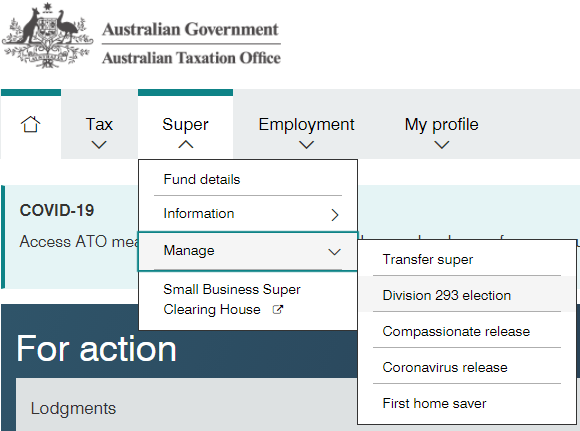
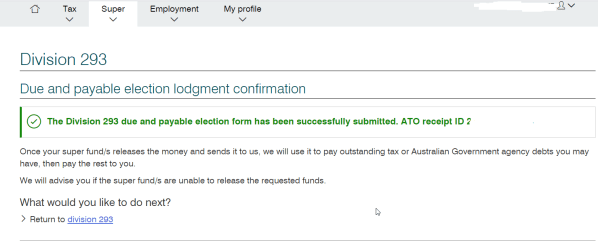







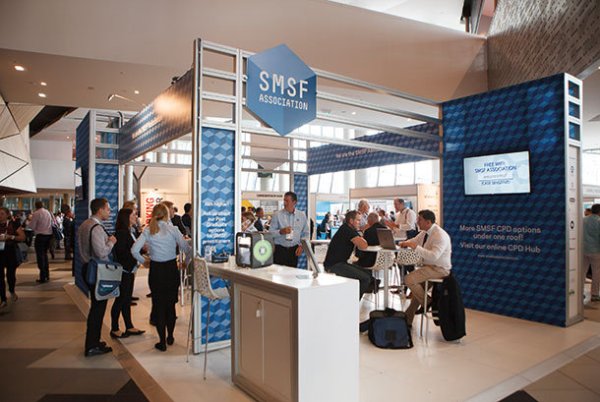













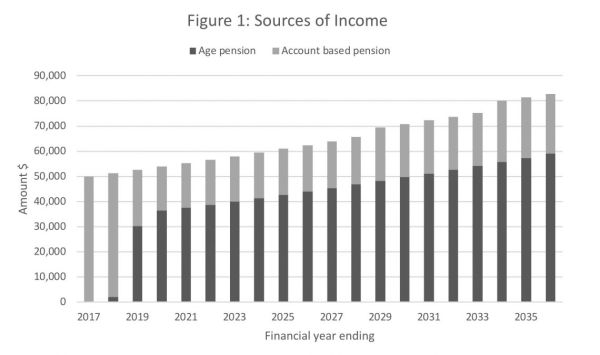
 So in 2019/20, for example, their age pension reduces from $36,337 to $9,004 and they must draw more from their pension account to make up the difference. Their wealth after 20 years is now projected at $1,581,000 or about $379,000 less than in the first scenario.
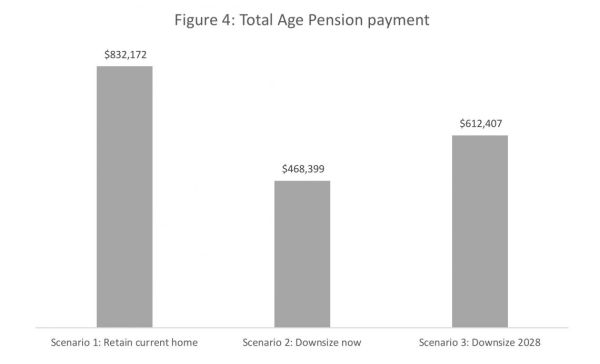
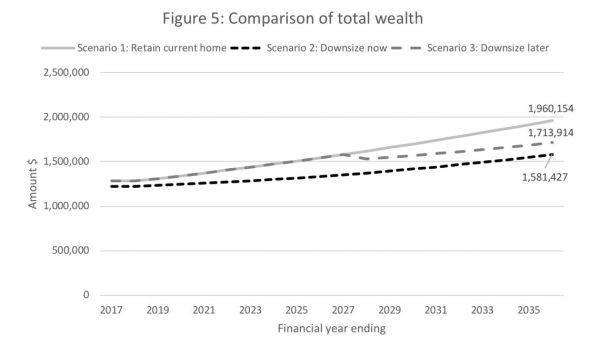
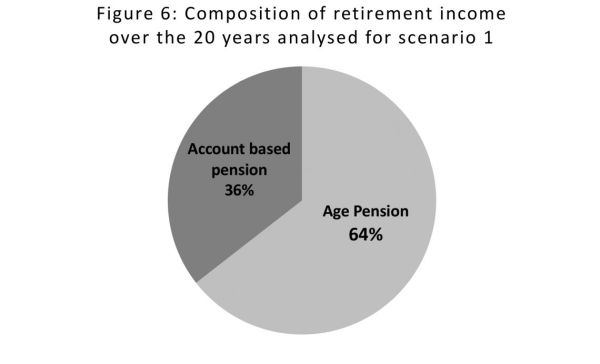








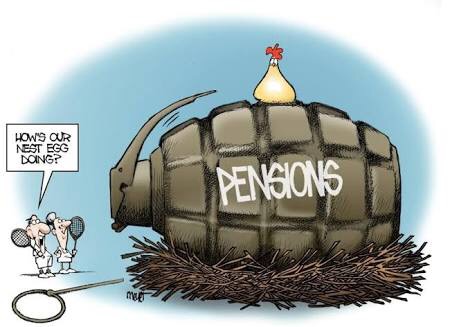










 The SMSF Coach