








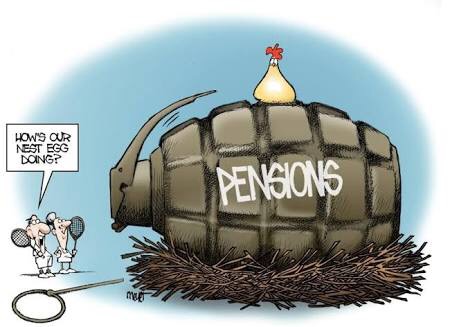
I found this excellent article on LinkedIn and and re-blogging it here for your guidance.
By now, many of us would be aware, that from 1 July 2017, earnings generated by Transition to Retirement (TtR) pensions are taxed at accumulation rates. Indeed, we are questioning what to do with an existing TtR pension, whether to roll it back to accumulation or maintain it post 30 June 2017?
Estate planning dynamics of Transition to Retirement (TtR) pensions
Through this post, I hope to share with you an estate planning consideration in situations involving TtR pensions, especially in light of typical TtR range clients (preservation age but less than 65) contributing $540,000 before 1 July 2017.
For some clients, this estate planning benefit of TtR pensions could provide sufficient benefits to maintain TtR pensions or deal with new ones in a specific way.
Hopefully, the example can highlight the role of the proportioning rules in ITAA 1997 307-125 at play and its use in estate planning context.
What about TtR clients contributing $540,000 before 30 June 2017 or $300,000 after 1 July 2017?
Julie (56) has an existing accumulation phase balance of $600,000 (all taxable component). A TtR pension on the existing $600,000 balance wasn’t recommended in the first place because:
i. her cashflow is in surplus, not needing the income from a TtR pension to use the concessional contributions cap of $35,000 (in 2016-17)
ii. given the balance is entirely taxable component, the 4% minimum pension payment were surplus to her needs and cost her more in personal income tax (despite the 15% rebate on the pension payments). The rise in personal income tax was more than the benefit of tax-free earnings of a TtR pension
So that’s just setting the scene around current state of play with Julie’s superannuation savings.
With advice, Julie contributes $540,000 to superannuation before 30 June 2017 under the bring-forward provisions (the concept applies equally to TtR range clients contributing $300,000 post 30 June 2017).
Unfortunately, Julie recently became widowed. She has no other SIS dependents other than adult children. She has nominated her financially independent adult children as her beneficiaries under a binding death benefit nomination.
One initial question is where to contribute the $540,000? Into her existing accumulation fund of $600,000 or a separate accumulation account/fund?
Focusing on public offer funds, there is a chain of thought that perhaps Julie might consider contributing the $540,000 non-concessional contribution into a separate super account to the existing one and immediately soon after starting a TtR pension.
The benefit of contributing to a separate retail fund plan / account:
- At the heart of the issue, TtR pensions despite not being classed as retirement phase income streams from a tax perspective (and therefore paying accumulation phase tax rate) are still pensions under SIS standards. It is this classification of it being pension under SIS that allows a favourable proportioning rule compared to accumulation phase.
- Earnings in accumulation phase are added to the taxable component whereas earnings in pension phase are recorded in the same proportion of tax components as at commencement.
- If a pension is commenced with 100% tax-free component, then this pension during its existence will consist of 100% tax-free component, irrespective of earnings and pension payments.
- Had the $540,000 contribution added to existing accumulation balance of $600,000, then any pension commencement soon after, will have tax-free component of 47% (540,000 / 1,140,000)
So if Julie contributes to a separate super fund or a separate super account and starts a TtR pension immediately soon after, her $540,000 TtR pension will start with $540,000 tax-free component. If it grows to $600,000 in a year’s time or two, the balance will still be 100% tax-free component.
To flesh out the benefit of proportioning rules, imagine if she passed away in 8 years time. The $540,000 has grown nicely by $100,000 with the TtR pension balance standing at $640,000 (all tax-free component).
Had she left the funds in accumulation, the $100,000 growth would be recorded against the taxable component.
The benefit to her adult children is to the tune of $17,000.

As can be seen, starting a TtR pension means that adult children benefited by an additional $17,000 and shows the differing mechanics of earnings in accumulation and TtR pensions. The larger the growth, the bigger the death benefit tax saving when comparing funds sitting in accumulation or TtR pension phase.
But the TtR pension does come with a downside doesn’t it? While the pension payments are tax-free as the TtR pension consists entirely of non-concessional contributions and therefore tax-free component, there is leakage of 4%, being the minimum pension payment requirement of the TtR. For some clients, this may be a significant hurdle, not wanting leakage from superannuation, as it is getting much harder to make non-concessional contributions. For others, this could be overcome where non-concessional cap space is available (or refreshed once the bring-forward period expires) in their own name or in a spouse’s account.
Going back to Julie, she may be okay with the 4% leakage as her total superannuation balance is well below $1.6 million for the moment. The 4% minimum pension payments are accumulated in her bank account and contributed when the 3 year bring forward period is refreshed on 1 July 2019. On 1 July 2019, assuming her total superannuation balance is less than $1.4 million, she could easily contribute up to $300,000 non-concessional contributions under the bring-forward provisions at that time.
It is this favourable aspect of the superannuation income stream proportioning rules which could offer estate planning benefits for TtR pensions. I have seen the proportioning rules as they apply to TtR pensions mentioned by some but not by many as the focus has been the loss of exempt status on the earnings. As demonstrated by Julie’s example, for some of our clients, when relevant, the proportioning rule may be something to look out for as we look to add value to our client’s situation.
Other estate planning issues around pensions (including TtRs)
1. What if Julie was retired and over 60? Has an existing standard account based pension of $600,000 (all taxable component) with $540,000 non-concessional contribution earmarked to be in pension phase?
Would you have one pension or two separate pensions?
There is a chain of thought that two separate pensions, keeping the 100% tax-free component one separate, allows more planning options with drawdown and may assist with minimising death benefit tax. If Julie’s requirements are more than the minimum level (4%), then stick to minimum from the one that is 100% tax-free component and draw down as much as needed from the one that has the higher proportion in taxable component.
Two separate pensions can dilute the taxable component at the point of death whereas one loses such planning option involving drawdown where a decision is made to consolidate pensions.
2. What if Julie was partnered?
Naturally, there are many variables but the concept of separate pensions and proportioning continues from an estate planning perspective.
The impact of $1.6 million transfer balance cap upon death for some clients may show the attractiveness of separating pensions where possible for tax component reasoning.
Say Julie had $800,000 in one pension (all taxable component) and $700,000 in another pension (all tax-free component). To illustrate the issue simplistically, if the hubby only has a defined benefit pension using up $900,000 of the transfer balance cap, then having maintained separate pensions has meant that he possibly may look to retain the $700,000 (all tax free component) death benefit pension and cash out the $800,000 pension outside super upon Julie’s death.
This way the $700,000 account based pension (and whatever it grows to in the future) could be paid out tax-free to the beneficiaries down the track.
Had Julie’s pensions been merged at the outset, the proportion of components would have been 53% taxable (800,000 / 1.5 million) and 47% tax-free. Her husband would have inherited those components. Any subsequent death benefit upon the hubby’s death passed onto the adult children would have incurred up to 17% tax on 53% of the death benefit.
The example hopefully shows the power of separate pensions in managing estate planning issues.
3. Going back to Julie. What if she was over 60 and under 65, still working and intending to work for the next 6-7 years? Has no funds to contribute to super but has accumulation phase of $600,000
You could consider having a TtR pension simply for taking 10% of account balance out as a pension payment and re-contributing it back as a non-concessional contribution assuming Julie has non-concessional contribution space available.
To ensure the re-contribution strategy dilutes as much of taxable component, there may be a need for separate pensions though. For example:
1. $600,000 TtR pension on 1 July 2017. 10% pension payment ($60,000) taken out closer to the end of FY
2. $60,000 contributed to a separate accumulation interest before in 17-18 and separate TtR pension commenced with $60,000. At this point, Julie has two pensions. One with $60,000 and the other with say $540,000.
3. Next FY in 18-19, 10% taken from both pensions and the amount contributed to a separate accumulation interest and a TtR pension commenced. The smaller TtR pension balance are consolidated (with all tax-free component) and similar process is repeated Julie turns 65 at which time she could do a cash-out and recontribution if she has non-concessional space, including the application of bring-forward provisions.
Slightly different application to SMSFs
While the concepts regarding proportioning of tax components and multiple pension interests remain the same in SMSFs, the steps taken to plan and organise multiple pension interests is different to public offer funds. In public offer funds, it is typically straightforward to establish a separate superannuation account. In SMSF’s, the planning around such things requires further steps.
Relevant to SMSFs, the ATO’s interpretation is that a SMSF can only have one accumulation interest but is permitted to have multiple pension interests.
Here is the ATO link with detail on this concept of single accumulation interest and multiple pension interest for SMSFs.
Conclusion
No doubt, there are many other things to consider with many variables leading to different considerations.
I hope this guidance has been helpful and please take the time to comment. Feedback always appreciated. Please reblog, retweet, like on Facebook etc to make sure we get the news out there. As always please contact me if you want to look at your own options. We have offices in Castle Hill and Windsor but can meet clients anywhere in Sydney or via Skype. Just click the Schedule Now button up on the left to find the appointment options.
Liam Shorte B.Bus SSA™ AFP
Financial Planner & SMSF Specialist Advisor™



Tel: 02 98941844, Mobile: 0413 936 299
PO Box 6002 BHBC, Baulkham Hills NSW 2153
5/15 Terminus St. Castle Hill NSW 2154
Corporate Authorised Representative of Viridian Select Pty Ltd ABN 41 621 447 345, AFSL 51572
This information has been prepared without taking account of your objectives, financial situation or needs. Because of this you should, before acting on this information, consider its appropriateness, having regard to your objectives, financial situation and needs. This website provides an overview or summary only and it should not be considered a comprehensive statement on any matter or relied upon as such.

























 The SMSF Coach