Before ever making Non-Concessional Contributions to your Superannuation of engaging in a re-contribution strategy you always need to check your personal Total Super Balance Cap.
The December 2024 Consumer Price Index (CPI) data has confirmed that the superannuation general transfer balance cap will rise by $100,000, to $2.0 million for the 2025–2026 income year. For SMSFs please remember that each member has their own Transfer Balance Cap (TBC). This increase marks the latest adjustment to the cap, which was first introduced in 2017. The transfer balance cap is a lifetime limit on the amount of superannuation that can be transferred into one or more retirement phase income streams (pension accounts) within your SMSF and/or across industry and retail funds, where earnings on superannuation are currently tax-free. Additionally, income or withdrawals after the age of 60 are generally tax-free. The cap was introduced to promote fairness in the distribution of superannuation tax concessions and to ensure the long-term sustainability of the superannuation system. While there are some flaws, it has been accepted as a fair system.
Unlike other superannuation caps, such as contribution caps, the general transfer balance cap and total super balance caps are adjusted annually based on the CPI, in $100,000 increments, rather than being indexed to Average Weekly Ordinary Time Earnings (AWOTE). The cap has increased progressively: from $1.6 million from 2017 to 2021, to $1.7 million from 2021 to 2023, to $1.9 million from 2023 to 2024, and will rise to $2.0 million for the 2025–2026 year. Please note the Concessional Contribution cap ($30K) and Non-Concessional Contribution Cap ($120K) are not increasing.
Personal Transfer Balance Cap (the thorn in the side if advisers!)
The personal transfer balance cap is specific to each individual when they first start a retirement phase income stream. Your personal cap will match the general transfer balance cap at the time. Therefore, if you start your retirement phase income stream on or after 1 July 2025, your personal transfer balance cap will be set at $2.0 million.
If you began your income stream before 1 July 2025, your personal transfer balance cap would range anywhere from $1.6 million to $1.9 million, depending on the specific year you started your first pension. If you didn’t use the full amount of your personal transfer balance cap at the time, a proportional increase may apply to your personal transfer balance cap on 1 July 2025. So don’t be surprised to be told you have a TBC if $1,713,325 as it can get that very personalised!
What if I contribute too much?
If you exceed your personal transfer balance cap, you must remove the excess from your income stream and either take it in cash or transfer it back into your superannuation account. An excess transfer balance tax would then be payable. The ATO will notify you if you’ve exceeded your cap.
Other Changes Related to Indexation
The indexation of the transfer balance cap will have a flow-on effect on other superannuation measures linked to this cap, including the total superannuation balance test. Starting from 1 July 2025, the total superannuation balance test will increase to $2 million. This balance determines eligibility for making after-tax non-concessional contributions and using the bring-forward rule.
If your total superannuation balance is below $2 million as of 30 June 2025, you’ll be able to make non-concessional contributions starting 1 July 2025, as long as you are under age 75. Additionally, the bring-forward rule will apply against the higher cap.
For those under 75 at 1 July 2025, and if you haven’t triggered the bring-forward rule in the previous financial years, you may contribute up to $360,000. Where an individual’s balance is close to $2 million, they can only make a contribution or use the bring forward to take their balance to $2 million but not beyond.
TSB on 30 June of prior financial year
Contribution and bring-forward available
Less than $1.76m
3 years ($360,000)
$1.76m to < $1.88m
2 years ($240,000)
$1.88m to < $12m
1 year ($120,000, no bring-forward available)
$2m and above
Nil
Changes to Government Co-Contribution and Spouse Contributions Tax Offset
Eligibility for a government co-contribution and entitlement to the spouse contributions tax offset will also be affected by the total superannuation balance test, which will be $2 million from 1 July 2025.
Opportunity
The increase in the superannuation general transfer balance cap (TBC) to $2.0 million for the 2025–2026 income year presents significant opportunities for individuals and SMSF Trustees looking to maximize their retirement savings. As the transfer balance cap (TBC) affects various aspects of superannuation, such as total superannuation balance (TSB) tests and eligibility for non-concessional contributions, it is essential to review your superannuation strategy in light of these changes. Working with an SMSF Specialist Advisor can help you optimize your superannuation contributions to your SMSF, plan for retirement, and ensure that you stay compliant with the latest regulations.
Warning before you jump into implementation of any strategy without checking your personal circumstancesand the specifics of the property you are considering.
Are you looking for an advisor that will keep you up to date and provide guidance and tips like in this blog? Then, why not contact me at our Castle Hill or Windsor office in Northwest Sydney to arrange a one-on-one consultation (after 1 July 2025 due to our waiting list). Just click the Schedule Now button up on the left to find the appointment options.
Please consider passing on this article to family or friends. Pay it forward!
Corporate Authorised Representative of Viridian Advisory Pty Ltd ABN 34 605 438 042, AFSL 476223
This information has been prepared without taking into account your objectives, financial situation, or needs. Because of this, you should, before acting on this information, consider its appropriateness, having regard to your objectives, financial situation, and needs. This website provides an overview or summary only and it should not be considered a comprehensive statement on any matter or relied upon as such.
Since November 2021 the ATO has implemented new requirements regarding director identification numbers. The following covers the key changes to be aware of.
Every Accountant and SMSF Administrator is currently updating their systems to include director ID’s for their clients and will be in touch with you asking for your Director Identification Number (director ID) within the next 12 months. they can’t provide you with the number so you need to get organised and apply for yours sooner rather than later as for some the process will not be easy.
What is a Director Identification Number (director ID) A director identification number (director ID) is a unique identifier you will keep forever. It will help to prevent the use of false or fraudulent director identities.
How director ID works A director ID is a 15-digit identifier given to a director (or someone who intends to become a director) who has verified their identity with us.
A director ID: · starts with 036, which is the 3-digit country code for Australia under International Standard ISO 3166 · ends with an 11-digit number and one ‘check’ digit for error detection.
Directors need to apply for their own director ID. It’s free to apply.
Directors will only ever have one director ID. They’ll keep it forever even if they:
· change companies · stop being a director · change their name · move interstate or overseas.
Why do you need a director ID
Shareholders, employees, creditors, consumers, external administrators and regulators are entitled to know the names and certain details of the directors of a company including SMSF Trustee Companies.
All directors are required by law to verify their identity with us before receiving a director ID. This is important because it will help to:
· prevent the use of false or fraudulent director identities · make it easier for external administrators and regulators to trace directors’ relationships with companies over time · identify and eliminate director involvement in unlawful activity, such as illegal phoenix activity.
So in the case of SMSF Corporate Trustees, each Director must apply for a director ID online from the Australian Business Registry Services (ABRS) website and will be required to log in using the myGovID app.
A director must complete the application themselves and cannot instruct an authorised agent such as an accountant or financial advisor to apply for a director ID on their behalf. However, you Accountant or Financial Advisor may sit with you and guide you through the process. I did my own application on the first day just to see how the process worked but I deal with Government websites and ID requirements daily so I was well prepared and still I hit a few hurdles along the way.
You will need a myGovID with a Standard or Strong identity strength to apply for your director ID online. If you live outside Australia and can’t get a myGovID with a Standard or Strong identity strength, you will need to apply with a paper form and provide certified copies of your identity documents. If you live in Australia and: · don’t have a myGovID, you can find information on how to download the app at How to set up myGovID .
You will need a myGovID with a standard or strong identity strength using two Australian identity documents, such as: ‒ Driver’s licence or learner’s permit ‒ Passport ‒ Birth certificate ‒ Visa (using foreign passport providing still in Australia) ‒ Citizenship certificate ‒ ImmiCard ‒ Medicare card
The Hurdles I have seen in setting up myGovID are where historically your name on ID documents differ from one to another or the details on government systems is wrong because of a historic mistake. So be prepared with as many forms of identity as possible
already have a myGovID, you can apply for your director ID now.
Step 2 – Gather your documents You will need to have some information the ATO knows about you when you apply for your director ID: · your tax file number (TFN) · your residential address as held by the ATO · information from two documents to verify your identity.
Examples of the documents you can use to verify your identity include:
· bank account details · an ATO notice of assessment · super account details · a dividend statement · a Centrelink payment summary · PAYG payment summary.
To add to the confusion many of these documents can be found on the ATO service via your myGov account. So it’s worth having that service linked before you start the process so you can download items like Notice of Assessments etc.
Step 3 – Complete your application Once you have a myGovID with a Standard or Strong identity strength, and information to verify your identity, you can log in and apply for your director ID. The application process should take less than 5 minutes.
The application process could take less than 10 minutes but for some, I have spoken to, it has already taken half a day due to differences in names on documents and lack of access to supporting documents. For more information on how to apply for a director ID visit: https://www.abrs.gov.au/director-identification-number/apply-director-identification-numb
Can I apply for a director ID if I cannot get a myGovID?
If you can’t get a myGovID set up with a standard or strong identity strength, you can apply by phone or with a paper form.
You can apply by phone if you have: ‒ An Australian TFN ‒ The information needed to verify your identity (as listed above)
The phone number is 13 62 50 and is available between 8:00am and 6:00pm Monday to Friday for directors in Australia. For directors calling from overseas, the number is +61 2 6216 3440.
If you can’t apply online or over the phone, you can apply using a downloadable form ‘Application for a director identification number’ (NAT 75329). This is a slower process and you will also need to provide certified copies of your documents to verify your identity.
Looking for an adviser that will keep you up to date and provide guidance and tips like in this blog? Then why now contact me at our Castle Hill or Windsor office in Northwest Sydney to arrange a one on one consultation. Just click the Schedule Now button up on the left to find the appointment options.
Please consider passing on this article to family or friends or your tax agent! Pay it forward!
Liam Shorte B.Bus SSA™ AFP
Financial Planner & SMSF Specialist Advisor™
Tel: 02 98993693, Mobile: 0413 936 299
PO Box 6002, NORWEST NSW 2153
40/8 Victoria Ave. Castle Hill NSW 2154
Corporate Authorised Representative of Viridian Advisory Pty Ltd ABN 34 605 438 042,, AFSL 476223
This information has been prepared without taking account of your objectives, financial situation or needs. Because of this you should, before acting on this information, consider its appropriateness, having regard to your objectives, financial situation and needs. This website provides an overview or summary only and it should not be considered a comprehensive statement on any matter or relied upon as such.
Having asked the SMSF Association to reach out to the ATO and see if they were willing to extend the Rent Relief for the current financial year, I was please with the ATO initial response that they were already considering it and now they have extended the relief for the year which will help many struggling businesses and allow SMSF trustees to support good long term tenants including Related Party tenants.
In their latest update on the subject the ATO said that COVID-19 continues to have a significant financial effect on SMSFs, particularly in some states or territories where there are re-occurring and prolonged lockdown periods.
“As a result, you may still find yourself in a position where you (in your role as trustee), or a related party of the fund, are having to provide or accept certain types of relief, which may give rise to contraventions under the super laws,” the ATO said.
So you still need to have the proper documentation, on commercial terms. But if you do that then if the rental or loan repayment relief involving an SMSF, related non-geared company or unit trust, or a related tenant in the form of a reduction, waiver, or deferral gives rise to a contravention of the super laws, the ATO will not take any compliance action against the fund.
Looking for an adviser that will keep you up to date and provide guidance and tips like in this blog? Then why now contact me at our Castle Hill or Windsor office in Northwest Sydney to arrange a one on one consultation. Just click the Schedule Now button up on the left to find the appointment options.
Please consider passing on this article to family or friends or your tax agent! Pay it forward!
Liam Shorte B.Bus SSA™ AFP
Financial Planner & SMSF Specialist Advisor™
Tel: 02 98941844, Mobile: 0413 936 299
PO Box 6002, NORWEST NSW 2153
40/8 Victoria Ave. Castle Hill NSW 2154
Corporate Authorised Representative of Viridian Select Pty Ltd ABN 41 621 447 345, AFSL 51572
This information has been prepared without taking account of your objectives, financial situation or needs. Because of this you should, before acting on this information, consider its appropriateness, having regard to your objectives, financial situation and needs. This website provides an overview or summary only and it should not be considered a comprehensive statement on any matter or relied upon as such.
We expected this year’s Federal Budget to have a strong emphasis on job growth and improvement of women’s security and ability to get back to work cost effectively. There were pleasant surprises from an SMSF perspective. The key measures that you should be aware of are outlined below with some commentary and tips. I have benefited from the technical input of the SMSF Association, Accurium Technical and conversation with other professionals in preparing this content.
All measures outlined below, other than the proposed changes to legacy retirement products, are expected to commence from 1 July 2022, once they have received Royal Assent.
Repealing the work test for voluntary contributions
Individuals aged 67 to 74 (inclusive) will be able to make non-concessional (including under the bring-forward rule) or salary sacrifice contributions without meeting the work test, subject to existing contribution caps and existing total superannuation balance limits.
TIP: The waiver of the work test will not apply to personal deductible contributions, so individuals aged 67 – 74 wishing to claim a tax deduction for personal contributions will be required to meet the work test (or be eligible to apply the work test exemption).
Individuals aged 65 to 74 will also be able to use the bring forward provisions subject to the available caps and meeting the total super balance criteria. Currently, only those under age 65 on 1 July of a financial year can trigger the bring forward provision in that financial year. The measure that was originally announced in the 2019-20 Federal Budget to extend this age from 65 to 67 effective 1 July 2020 has not been legislated.
The new measures present opportunities for many from 1 July 2022 including:
Opportunity to even up spouse balances and maximise superannuation in pension phase – Couples where one spouse has exhausted their transfer balance cap and has excess amounts in accumulation are able to withdraw and recontribute to the other spouse who has transfer balance cap space available to commence a retirement phase income stream. This can increase the tax efficiency of the couple’s retirement assets as more of their savings are in the tax-free pension phase environment.
Top up retirement savings up to age 74 – Subject to contribution caps, the new rules can help individuals contribute additional funds to super up to age 74, perhaps where they may have received an inheritance or sold an investment property.
Make your tax components more tax free by using recontribution strategies – SMSF members can cash out their existing super and re-contribute (subject to their contribution caps) them back in to the fund to help reduce tax payable from any super death benefits left to non-tax dependants. They can now do this until they turn age 75.
TIP: There is always a cost of making changes so work with your adviser and accountant to time these strategies to minimise additional accounting costs.
Opportunities to make spouse contributions for longer – The new rules can provide you with the opportunity to continue making spouse contributions which can not only help with equalising super between spouses, but may also enable the contributing spouse to benefit from the spouse contribution tax
Reducing the eligibility age for downsizer contributions
The eligibility age to make downsizer contributions into superannuation will be reduced from 65 to 60 years of age. All other eligibility criteria remains unchanged, allowing individuals to make a one-off, post-tax contribution to their superannuation of up to $300,000, per person, from the proceeds of selling their home. These contributions will continue not to count towards non-concessional contribution caps.
The new rules will allow more individuals to contribute more of their sale proceeds to super – under both the $300,000 downsizer limit (or $600,000 for a couple) and the $330,000 bring forward NCC cap each as well. This would allow for up to $630,000 in one year contributions for as single person and $1,260,000 for a couple subject to their contributions caps/
Tip: Great for people who have little super and invested in their business or property to now switch to tax effective pensions.
Relaxing residency requirements for SMSFs
SMSFs and small APRA funds will have relaxed residency requirements through the extension of the central management and control test safe harbour from two to five years. The active member test will also be removed, allowing members who are temporarily absent to continue to contribute to their SMSF. The Government expects this measure will have effect from 1 July 2022.
TIP: Probably going to be useful post-covid for those working or traveling extended periods overseas and levels the playing field somewhat with APRA funds.
No change to legislated Super Guarantee increase
The Government will not change the legislated increase in the Super Guarantee (SG) in this year’s Budget. SG will increase to 10% from 1 July 2021 and then gradually increase to 12% as follows:
Table 21: Super guarantee percentage
Period
General super guarantee (%)
1 July 2020 – 30 June 2021
9.50
1 July 2021 – 30 June 2022
10.00
1 July 2022 – 30 June 2023
10.50
1 July 2023 – 30 June 2024
11.00
1 July 2024 – 30 June 2025
11.50
1 July 2025 – 30 June 2026
12.00
1 July 2026 – 30 June 2027
12.00
1 July 2027 – 30 June 2028 and onwards
12.00
Legacy retirement product conversions
Individuals will be able to exit a specified range of legacy retirement products, together with any associated reserves over a two-year period. The specified range of legacy retirement products includes market-linked, life expectancy and lifetime products, but not flexi-pension products or a lifetime product in a large APRA-regulated or public sector defined benefit scheme.
Currently, these products can only be converted into another like product and limits apply to the allocation of any associated reserves without counting towards an individual’s contribution cap.
Some detail provided in respect to the features of this proposed measure include:
If a client chooses to commute their legacy pension, the social security and taxation treatment from the legacy product will not be grandfathered. Age Pension clients who currently benefit from a 100% or 50% asset-test exemption on their legacy pension may benefit from continuing their income stream.
Exiting a product will not cause re-assessment of prior social security treatment of the product, for example the deprivation rules.
Any commuted reserves will be taxed as an assessable contribution of the fund (with a 15% tax rate) but will not count towards the individual’s concessional contribution cap.
The existing transfer balance cap valuations for any commencement or commutation continue to apply.
Once the commuted amount is in accumulation phase the member can decide what to do with that balance such as take a lump sum, retain in accumulation, or commence a pension (subject to the individual’s transfer balance cap).
The measure will not apply to flexi-pension products or a lifetime product in a large APRA-regulated or public sector defined benefit scheme.
This measure will take effect from the first financial year after the date of Royal Assent of the enabling legislation.
TRAP: Please seek advice before using this strategy as you do not want to lose Age Pension benefits in this low interest rate environment.
Super and Property for your children or low income partner
Removing the $450 per month threshold for superannuation guarantee eligibility
The Government will remove the current $450 per month minimum income threshold, under which employees do not have to be paid the superannuation guarantee by their employer.
Great move and will help people get more benefit from super. If you can combine this with a personal contribution yourself or for a low income spouse of $20 per week ($1,000 per annum) then the member may benefit from the Government Co-Contribution of up to $500 per year.
First Home Super Saver Scheme (FHSSS)— increasing the maximum releasable amount to $50,000
The Government will increase the maximum releasable amount of voluntary concessional and non-concessional contributions under the FHSSS from $30,000 to $50,000.
Voluntary contributions made from 1 July 2017 up to the existing limit of $15,000 per year will count towards the total amount able to be released. Subject to passage of legislation, it is expected that this measure will be effective from 1 July 2022.
The Government will further make four technical changes to the legislation underpinning the FHSSS to improve its operation as well as the experience of first home buyers using the scheme.
Tip. This is a great way to show your children the benefit of salary sacrifice and get them used to putting savings away.
Social security (Benefits for you or you mum and/or dad
Improving the Pension Loan Scheme
Current
The Pension Loan Scheme (PLS) allows a fortnightly loan of up to 150% of the maximum rate of Age Pension to help boost a person’s retirement income by unlocking capital in their real estate assets. It can be available for self-funded retirees who are Age Pension age but do not receive a social security pension. Interest is compounded fortnightly at 4.50% p.a., and any debt under the scheme is paid back when the property is sold or the person dies.
Proposal
From 1 July 2022, the Government will introduce a No Negative Equity Guarantee for PLS loans and allow people access to a capped advance lump sum payment.
► No negative equity guarantee
Borrowers under the PLS, or their estate, will not owe more than the market value of their property, in the rare circumstances where their accrued PLS debt exceeds their property value. This brings the PLS in line with private sector reverse mortgages.
► Immediate access to lump sums under the PLS
Eligible people will be able to access up to two lump sum advances in any 12-month period, up to a total value of 50% of the maximum annual rate of Age Pension (currently $12,385 for singles and $18,670 for couples).
TAXATION
Low and Middle Income Tax Offset extended another year until 2021-22
The Government announced that it will retain the Low and Middle Income Tax Offset (LMITO) in the 2021-22 financial year. Eligibility for the LMITO:
Low and middle income tax offset
Taxable income
Offset
$37,000 or less
$255
Between $37,001 and $48,000
$255 plus 7.5 cents for every dollar above $37,000, up to a maximum of $1,080
Between $48,001 and $90,000
$1,080
Between $90,001 and $126,000
$1,080 minus 3 cents for every dollar of the amount above $90,000
Increasing the Medicare levy low-income thresholds
The income thresholds at which Medicare levy is payable for singles, families and pensioners will be increased for the 2020-21 financial year as follows:
Singles will be increased from $22,801 to $23,226.
The family threshold will be increased from $38,474 to $39,167.
For single seniors and pensioners, the threshold will be increased from $36,056 to $36,705. The family threshold for seniors and pensioners will be increased from $50,191 to $51,094.
For each dependent child or student, the family income thresholds increase by a further $3,597 instead of the previous amount of $3,533.
Reminder of other changes applying from 1 July 2021.
CHANGING SUPERANNUATION THRESHOLDS FROM 1 JULY 2021 TO 30 JUNE 2022
Transfer Balance Cap
$1.7 million but many who have used some of their cap already will have an individual limit betwen $1.6m and $1.7m
Concessional Contribution Cap
$27,500
Non-concessional Contribution Cap
$110,000 or $330,000 over 3 years using the bring forward rule
Low rate cap for Lump sum withdrawals
$225,000
Untaxed Plan cap
$1,615,000
Account based pension payments
Return to default payment levels (was reduced by 50% for 2020 and 2021
Superannuation Guarantee
10%
Maximum Super Contribution Base
$58,920 (per quarter)
Government Co-contribution ($500)
Lower income threshold – $41,112 Upper income threshold – $56,112
Looking for an adviser that will keep you up to date and provide guidance and tips like in this blog? Then why now contact me at our Castle Hill or Windsor office in Northwest Sydney to arrange a one on one consultation. Just click the Schedule Now button up on the left to find the appointment options.
Please consider passing on this article to family or friends or your tax agent! Pay it forward!
Liam Shorte B.Bus SSA™ AFP
Financial Planner & SMSF Specialist Advisor™
Tel: 02 98941844, Mobile: 0413 936 299
PO Box 6002, NORWEST NSW 2153
40/8 Victoria Ave. Castle Hill NSW 2154
Corporate Authorised Representative of Viridian Select Pty Ltd ABN 41 621 447 345, AFSL 51572
This information has been prepared without taking account of your objectives, financial situation or needs. Because of this you should, before acting on this information, consider its appropriateness, having regard to your objectives, financial situation and needs. This website provides an overview or summary only and it should not be considered a comprehensive statement on any matter or relied upon as such.
The ATO have recently released PS LA 2020/3 Self-managed superannuation funds – administrative penalties imposed under subsection 166(1) of the Superannuation Industry (Supervision) Act 1993 (SISA).
SMSF Specialist Advisers do need to be warning their clients that the ATO will be enforcing these tougher penalties and there will be no forgiveness for contraventions. However good advisers should be able to guide their clients to a better outcome through the use of the SMSF early engagement and voluntary disclosure-service
This Law Administration Practice Statement provides guidelines for the administration of penalties including the circumstances they take into account when considering remission. It acts as an instruction to ATO staff and ensures a consistent and transparent approach.
Every SMSF adviser and Trustees that feel they may have straggled the line or maybe crossed it to cause a contravention should read the statement. As usual, it is the Example Appendix that is most useful and you might even read that first here
Here are some excerpts from the Practice Statement itself:
1. What this Practice Statement is about
The purpose of this Practice Statement is to provide guidance on:
when an entity becomes liable to one or more administrative penalties under the Superannuation Industry (Supervision) Act 1993 (SISA)[1]
which entities are liable to pay the administrative penalty
the Commissioner’s remission considerations, and
objection, review and appeal rights relating to the remission decision.
The SISA sets out who is liable to the penalty, noting that the liability cannot be reimbursed from the SMSF. The penalty is imposed on the following persons:
a trustee of an SMSF (including an individual trustee or a corporate trustee), or
a director of a body corporate that is a trustee of an SMSF.[3]
2. Compliance treatments – general principles
The penalties, in conjunction with other compliance treatments under the SISA, give us effective, flexible and cost-effective mechanisms for applying appropriate sanctions.
You are not precluded from applying one or more compliance treatments within the one case. The appropriate compliance treatment depends on the circumstances of each case.
Any one or more of the following compliance treatments may also be appropriate:
disqualifying an individual and prohibiting them from acting as a trustee of a super fund or as a responsible officer of a corporate trustee of a super fund[8]
seeking civil and/or criminal penalties through the courts.[10]
The following are relevant when administering these penalties (including in any review process undertaken):
The principles underpinning the compliance model require us to be fair to those trustees wanting to do the right thing, and being firm but fair with those choosing to disengage and avoid their taxation obligations.
The Taxpayers’ Charter requires us to treat a trustee as being honest. We accept that what they have told us is the truth and the information they have provided is complete and accurate unless we have reason to think otherwise.
Decisions must be supported by the available facts and evidence. Conclusions about the trustee’s actions or behaviour should only be made where they are supported by facts, or can be reasonably inferred from those facts.
The trustee will be invited to explain their actions before the remission decision is finalised and they may exercise their right to object to our penalty decision.
We need to be mindful of our commitment to avoid or resolve disputes as early as possible in accordance with the ATO Disputes policy and annual Dispute management plan.[11]
3. Administering the penalty
There are four basic steps in administering the penalty imposed under section 166:
step 1 – determine if a penalty is imposed by law
step 2 – determine who is liable to the penalty
step 3 – determine if remission is appropriate
step 4 – notify each trustee and/or each director of the corporate trustee of the liability to pay the penalty.
Multiple provisions breached
An unjust result may also occur in situations where multiple administrative penalties are imposed when a particular event results in contraventions of more than one provision.
The following table lists examples of possible circumstances where multiple penalties could arise under more than one provision due to a particular event, noting this is not an exhaustive list:
Circumstances or event
Contravening provisions
Primary contravening provision
A loan to a member or relative that was greater than 5% of the fund’s assets
Subsection 65(1) for the loan and subsection 84(1) for the in-house asset
If one particular event results in multiple penalties under more than one provision, we would generally remit to a level reflecting the primary contravention. The primary contravention is determined by considering the behaviour and intention of the trustees.
I applaud the ATO for giving this comprehensive guidance as so much of the concern around contraventions is not knowing how they will be dealt with and therefore people err on the side of trying to hide them!
Looking for an adviser that will keep you up to date and provide guidance and tips like in this blog? Then why now contact me at our Castle Hill or Windsor office in Northwest Sydney to arrange a one on one consultation. Just click the Schedule Now button up on the left to find the appointment options.
Please consider passing on this article to family or friends or your tax agent! Pay it forward!
Liam Shorte B.Bus SSA™ AFP
Financial Planner & SMSF Specialist Advisor™
Tel: 02 98941844, Mobile: 0413 936 299
PO Box 6002, NORWEST NSW 2153
40/8 Victoria Ave. Castle Hill NSW 2154
Corporate Authorised Representative of Viridian Select Pty Ltd ABN 41 621 447 345, AFSL 51572
This information has been prepared without taking account of your objectives, financial situation or needs. Because of this you should, before acting on this information, consider its appropriateness, having regard to your objectives, financial situation and needs. This website provides an overview or summary only and it should not be considered a comprehensive statement on any matter or relied upon as such.
In a rare attempt to guide SMSF Trustees in how they should or shouldn’t invest the ATO has issued a news release about their intention to approach trustees who they believe have not got sufficient diversification in their SMSF portfolio. So it is time to review your strategy if biased to one asset class.
Does your SMSF investment strategy meet diversification requirements?
At the end of August 2019 the ATO intend to contact about 17,700 self-managed super fund (SMSF) trustees and their auditors where their records indicate the SMSF may be holding 90% or more of its funds in one asset or a single asset class.
They are concerned some trustees haven’t given due consideration to diversifying their fund’s investments; this can put the fund’s assets at risk.
They say further in the release that “Lack of diversification or concentration risk, can expose the SMSF and its members to unnecessary risk if a significant investment fails.
We’ll ask trustees to review their investment strategy and clearly document the reasons behind the investment decisions.
We’ll also ask trustees to have their documentation ready for their SMSF’s approved auditor for their next audit to help the auditor form an opinion on the fund’s compliance with these requirements.”
So what can you do:
It’s a time to be pro-active and not wait for the contact. Review your investment strategy and reasoning now and make sure it will stand up to scrutiny
Ideas on diversification that may help you understand why you need to diversify or to back your personal reasons for limiting your exposure to specific classes:
How can you add diversification simply and cost effectively:
This is not a recommendation as you need to understand your own needs and that of your SMSF and to do your own research or get advice. this is just one example of how to access a broad diversification in a easy and cost effective manner.
Are you looking for an advisor that will keep you up to date and provide guidance and tips like in this blog? Then why not contact me at our Castle Hill or Windsor office in Northwest Sydney to arrange a one on one consultation. Just click the Schedule Now button up on the left to find the appointment options.
Liam Shorte B.Bus SSA™ AFP
Financial Planner & SMSF Specialist Advisor™
Tel: 02 98941844, Mobile: 0413 936 299
PO Box 6002 BHBC, Baulkham Hills NSW 2153
5/15 Terminus St. Castle Hill NSW 2154
Corporate Authorised Representative of Viridian Select Pty Ltd ABN 41 621 447 345, AFSL 51572
This information has been prepared without taking account of your objectives, financial situation or needs. Because of this you should, before acting on this information, consider its appropriateness, having regard to your objectives, financial situation and needs. This website provides an overview or summary only and it should not be considered a comprehensive statement on any matter or relied upon as such.
ASIC and the ATO have on numerous occasions highlighted the dangers of buying property through one organisation that organises all steps in the process. they call them “one-stop-shops”. This is where you get all or most of the following services for a new SMSF from one associated group:
Real Estate recommendation for a specific property and/or manage the property rental
Property Adviser who does initial training or introduction to property investing, then pointing you to associated service providers
Accounting and Audit to set up and do the admin for your new SMSF
Financial Planner to prepare a Statement of Advice on the suitability, risks, costs, benefits of and SMSF and benefits lost in moving to an SMSF
Conveyancer to process the property transaction
Mortgage Broker to sort out the finance
One of the issues is that they may not be very transparent about how they’re interconnected. Always ask each party what their fees are and do they pay any form of remuneration, fees, referral commission charges etc to any other party.
397 – “The use of property one-stop shops is an area of significant concern. These models tend to promote the purchase of geared residential property through an SMSF, arranged by groups of related real estate agents, developers, mortgage brokers, accountants and financial advisers.
398 – The one-stop shop model creates inherent conflicts of interest that may affect the advice given to a client to set up an SMSF, make subsequent investments, or use specific services. These conflicts can arise from direct or indirect commissions, referral payment arrangements, representative remuneration structures or even management pressures.
399 – We have previously achieved enforcement outcomes against operators of property one-stop shops involving SMSFs—such as Park Trent Properties Group Limited and Anne Street Partners. In light of the findings from this project, we will continue to conduct surveillance on these property one-stop shop operators and take enforcement action where appropriate.
400 – We will also work with other regulators, including the ATO and APRA, to develop a holistic approach to addressing problems that we are seeing with property one-stop shops.”
Despite these warnings ASIC’s further research has shown that people still value the idea of a One-stop-shop for their advice needs when buying property. I assume this is because people just like simplicity and want someone to manage the process for them. Well you can have that simplicity without the inherent dangers involved by choosing to work with professionals who charge a fee for service for their advice and do not accept commission or any remuneration from other parties or fully disclosed like such as with a Mortgage Broker who is remunerated by the lender.
So when thinking about a property for your Self Managed Superannuation Fund or any asset really, you should always ensure that at least some of the providers of services are working in your Best Interests. Financial Planners are obligated by law to act in their Client’s Best Interest but we all know that money , fees or commissions may blur the lines. So don’t be afraid to ask questions about:
who is providing you the advice
how are they being paid,
Are they receiving any other form of remuneration
how are they connected to the other service providers
It is important for your professional service providers to work on strategies on your behalf but that does not mean they need to be paying fees to each other which ultimately increases your costs. Let me explain how I work with other professional service providers for example:
I do not provide specific advice on “the property” for you and stick to my area of expertise; whether an SMSF is right for you and how you can use it to achieve your goals. I charge you a specific fee for this advice which is outlined in a Letter of Engagement before you commit to my service. If you want ongoing advice, again I explain it up front in an Ongoing Service Agreement.
I provide you with a range of SMSF Admin and Audit solutions from other providers that will suit your needs. I have 4-5 options to ensure you can choose what suits you with our guidance and often that may be to use your current Accountant. I do not receive any commission, fees or other remuneration from these providers. I simply insist they take good care of my clients
If people want help choosing a property, again I have a number of trusted Buyer’s Agents throughout the country that are on hand to provide advice. I do not receive any commission, fees or other remuneration from these providers. I simply insist they take good care of my clients.
If you need assistance in getting finance arranged then I refer you to a number of brokers who have experience and expert knowledge in SMSF Lending. I do not receive any commission, fees or other remuneration from these providers. I simply insist they take good care of my clients.
Legal Advice/Conveyancing – If you do not have a current lawyer or they do not have SMSF experience then I refer clients to a number of lawyers / conveyancers with specific experience and expertise in the rules around SMSFs for property transactions, powers of attorney and estate planning.
I do not receive any commission, fees or other remuneration from these providers. I simply insist they take good care of my clients.
Can you say the same about your service providers?
Are you looking for an advisor that will keep you up to date and provide guidance and tips like in this blog? Then why not contact me at our Castle Hill or Windsor office in Northwest Sydney to arrange a one on one consultation. Just click the Schedule Now button up on the left to find the appointment options.
Liam Shorte B.Bus SSA™ AFP
Financial Planner & SMSF Specialist Advisor™
Tel:02 9899 3693, Mobile:0413 936 299
PO Box 6002 NORWEST NSW 2153
Suite 40, 8 Victoria Ave, Castle Hill NSW 2154
Suite 4, 1 Dight St., Windsor NSW 2756
Corporate Authorised Representative of Viridian Advisory Pty Ltd ABN 34 605 438 042, AFSL 476223
This information has been prepared without taking account of your objectives, financial situation or needs. Because of this you should, before acting on this information, consider its appropriateness, having regard to your objectives, financial situation and needs. This website provides an overview or summary only and it should not be considered a comprehensive statement on any matter or relied upon as such.
ATO approve $1 million threshold carve out SMSFs that have no members with a total superannuation balance (TSB) of $1 million or more will be able to report TBC transactions annually in line with current processes. This is a permanent carve-out for all SMSFs which meet this condition. The ATO have agreed with our position that individuals who are no risk of breaching the $1.6 million TBC should not be forced into a regular reporting framework. See here for more detail from ATO
I am getting many questions about the workings of the Transfer Balance Account Report (TBAR), Transfer Balance Cap (TBC) and Total Super Balance (TSB). So, in this 3-part series I will explain each one for you starting with your Transfer Balance Account Report. Most of this material is sourced from various ATO webpages and collated here for your guidance with my commentary.
So what is in your transfer balance account (TBA)?
There has always been a problem with the data available to the ATO in terms of how much people have in different phases of superannuation throughout the year with the ATO often having to wait until a few months after the end of the year for APRA fund reporting and nearly 11 months for SMSF data to flow through.
The transfer balance account is a new method designed by the ATO of tracking transactions and amounts in retirement phase. The balance of your transfer balance account determines whether you have space under your cap or if you have exceeded your transfer balance cap at the end of any given day. The transfer balance cap is a limit on the amount you can hold in retirement phase ($1.6 million in 2017–18).
You will start to have a transfer balance account on:
1 July 2017, if you are already receiving a retirement phase income stream at the end of 30 June 2017, or
the day you first commence receiving a retirement phase income stream.
It is important to understand that this TBA includes information from all your superannuation pension accounts via SMSF, Retail, Employer, Industry funds, annuity providers and other funds. It is on a consolidated basis and not per account.
All super providers, including self-managed super funds (SMSFs) and life insurance companies, with members in retirement phase will be required to complete and lodge this report to the ATO. The ATO will collate the data under your TFN and make available your consolidated Transfer Balance Account to you and your advisers.
Your transfer balance account measures your transfer balance, which is the sum of credits less the sum of debits posted to the account.
Now if you are like me then you tend to get totally confused when it comes to what is a debit and what is a credit so let’s take a refresher
My short code is “C+ and D-“ Credit = an addition to your total balance and Debit = a lowering of your total balance
It might be good to clear up some confusion by stating upfront that these events are not reportable.
Events that do not need to be reported include:
pension payments
investment earnings and losses
when an income stream is closed because the interest has been exhausted.
These are Credits to your account
Credits to your transfer balance account increase your transfer balance and reduce your available cap space. The most common transfer balance credit arises when you begin receiving a super income stream (pension) that is in the retirement phase.
The following amounts are credits to your account:
the total value of any super interests that support retirement phase income streams you are receiving on 30 June 2017
the value of new retirement phase income streams, including super death benefit income streams and deferred super income streams, that you begin to receive on or after 1 July 2017
the value of reversionary super income streams at the time you become entitled to them (although the timing of the credit may differ in certain circumstances)
the excess transfer balance earnings that accrue on any excess transfer balance amount you have.
For a capped defined benefit income stream, the credits above are calculated on the special value of the income stream.
The Treasury Laws Amendment (2017 Measures No.2) Bill 2017 provides for an additional credit where a super fund makes a payment towards a limited recourse borrowing arrangement. This payment increases the value of retirement phase interests.
The value of your super interests will be calculated by your super fund(s) accountant or administrator and notified to the ATO.
These are Debits to your account
Debits to your transfer balance account may:
reduce your excess transfer balance, and/or
increase your available cap space.
Events that cause your account to be debited include commutations, structured settlement contributions, and certain other events that cause a change in the value of your retirement phase interests.
Commutations
When a super income stream is fully or partially commuted, your transfer balance account is debited by the value commuted. The debit arises when you receive the lump sum, and applies whether you choose to transfer the lump sum to an accumulation account or withdraw it from super.
You must commute an income stream before you can roll it over to another fund.
Pension payments from your retirement phase account(s) are not commutations and are not debited from your transfer balance account.
Structured settlement contributions
A debit arises for a structured settlement that you receive (as payment for a personal injury you have suffered) and contribute towards your accumulation or retirement phase super interests.
Events resulting in a reduction of your super interest
You may be entitled to a debit in your transfer balance account if you lose some or all of the value of your super interests through events such as fraud, dishonesty, or void transactions under the Bankruptcy Act 1966.
Commutation authorities
The ATO may issue a commutation authority to super providers where a member has exceeded their transfer balance cap. A commutation authority will detail the amount that must be commuted for that member.
Payment split upon divorce or relationship breakdown
Super interests may be split as part of the division of property following a divorce or relationship breakdown. One party (the member spouse) will be required to provide a proportion of their retirement phase super interest(s) to the other party (the non-member spouse).
For either spouse, the debit arises either when the payment split becomes operative (under the Family Law Act 1975) or when they start to have a transfer balance account (whichever is later).
Failure to comply with pension or annuity standards
If your super fund fails to comply with the rules or standards for your income stream, that income stream may cease to meet the definition of a ‘superannuation income stream’. This means it will no longer be eligible for the earnings tax exemption.
The most common situation is where the super fund fails to pay the minimum pension amount required for a financial year under the regulatory rules. If this occurs, for transfer balance cap purposes, the income stream is taken to have stopped meeting the definition at the end of that financial year.
The debit equals the value of your income stream just before it stops meeting the definition. The debit arises in your transfer balance account when the income stream stops meeting the definition. This debit means you will be able to fully commute the income stream, and start a new one that complies with the pension or annuity standards, without breaching your transfer balance cap.
Self-managed super fund (SMSF) reporting
The ATO recognises that this is a major change for SMSFs so as a transitional concession, SMSFs will generally not need to commence reporting using the TBAR until 1 July 2018. The ATO is still currently consulting with industry on the model of event based reporting to apply from 1 July 2018.
TBAR lodgment is available from 1 October 2017 and submitted forms will be accepted from that time onwards if the choice is made to lodge earlier.
You should be talking to your Advisers, Accountants or Administrators to see how they plan to manage your reporting. If you have only been seeing them once a year then you may need to work out a solution for a quarterly update if you are in or near pension phase. You will need your various advisers to work as a team going forward to avoid late reporting. See Are your accountant, lawyer and financial planner working as a team for your benefit?
Although SMSFs with a member balance of over $1,000,000 will not generally need to commence TBAR reporting until 1 July 2018, SMSFs will need to ensure they have appropriately documented income stream valuations and decisions for the 2017-18 year. Until reporting begins, SMSF members must monitor the value of retirement income streams they receive to ensure they will not be in excess of the transfer balance cap from 1 July 2017 onwards.
The general exception to starting to report on 1 July 2018 does not apply:
if the ATO have issued an Excess Transfer Balance (ETB) Determination to a member because they have exceeded their cap and they choose to commute an income stream in their SMSF. Where this applies, the SMSF must report the commutation within 10 business days after the end of the month in which it occurred to avoid a commutation authority being issued. If the member chooses to commute an income stream the SMSF has not yet reported it to the ATO, the SMSF will also need to report the commencement date and value of the relevant income stream at the same time as a separate event
when a commutation authority is issued to an SMSF. The SMSF must abide by legislated reporting requirements. Refer to commutation authorities for more information.
To avoid the incorrect issue of an ETB Determination to a member, you are encouraged to report the following events as soon as possible if they occur before 1 July 2018:
any debit where an SMSF member is commuting an income stream because they have become aware they have exceeded their transfer balance cap
any debit that occurs prior to a member rolling over some or all of their retirement phase income stream out of their SMSF and starting a new retirement phase pension or annuity with another provider
any structured settlement contributions made to the fund on or after 1 July 2017.
Consequences of late reporting
Once your reporting has commenced, lodge the TBAR with the ATO as soon as practicable after the event has occurred to ensure your member’s transfer balance account is updated.
If you do not lodge the report by the required date your member’s transfer balance account will be adversely affected and they may be penalised. You may also be subject to compliance action and penalties.
Want a Superannuation Review or are you just looking for an adviser that will keep you up to date and provide guidance and tips like in this blog? Then why now contact me at our Castle Hill or Windsor office in Northwest Sydney to arrange a one on one consultation. Just click the Schedule Now button up on the left to find the appointment options. Do it! make this the year to get organised or it will be 2028 before you know it.
Please consider passing on this article to family or friends. Pay it forward!
Liam Shorte B.Bus SSA™ AFP
Financial Planner & SMSF Specialist Advisor™
Tel: 02 98941844, Mobile: 0413 936 299
PO Box 6002 BHBC, Baulkham Hills NSW 2153
5/15 Terminus St. Castle Hill NSW 2154
Corporate Authorised Representative of Viridian Select Pty Ltd ABN 41 621 447 345, AFSL 51572
This information has been prepared without taking account of your objectives, financial situation or needs. Because of this you should, before acting on this information, consider its appropriateness, having regard to your objectives, financial situation and needs. This website provides an overview or summary only and it should not be considered a comprehensive statement on any matter or relied upon as such.
The old adage “if it sounds too good to be true then it usually is” holds firm especially with superannuation “release” schemes. The ATO is stepping up its education efforts to help consumers while clamping down on promoters of such schemes. Here at SMSF Coach and our sister firm Verante Financial Planning we are always willing to offer a second opinion on any recommendation you are concerned about.
The Australian Taxation Office (ATO) is extending a helping hand to pre-retirees through Super Scheme Smart, a new initiative launched recently that educates people on the dangers of risky and illegal retirement planning schemes.
The ATO has identified a significant number of retirement planning schemes designed solely to help people avoid paying tax on their assets in an illegal manner and is working to close these down.
From the ATO media video below with ATO Deputy Commissioner, Michael Cranston, he warns:
While retirement planning schemes can vary, there are some common features that people should be aware of. Usually these schemes:
• are artificially contrived and complex, usually connected with a SMSF
• involve a lot of paper shuffling
• are designed to leave the taxpayer with minimal or zero tax, or even a tax refund
• aim to give a present day tax benefit by adopting the arrangement
Individuals caught using an illegal scheme identified by the ATO may incur severe penalties under tax laws. This includes risking loss of their retirement nest egg and also their rights as a trustee to manage and operate a SMSF.
The ATO is delivering practical help and information through their Super Scheme Smart website, including a comprehensive information pack, case studies and videos, as well as sending taxpayer alerts into the community about schemes and why they don’t fit within the law.
Mr Cranston urged people undertaking retirement planning to remain vigilant and to come forward if they believe they are at risk or are already involved in a scheme.
“Retirement planning makes good sense provided it is carried out within the tax and superannuation laws. Make sure you are receiving ethical professional advice when undertaking retirement planning, and if in doubt, seek a second opinion from an independent, trusted and reputable expert.
“We do our best to shut down dodgy schemes but the best defence is working together. Blowing the whistle on those promoting retirement planning schemes will help us stop them from risking your or others’ retirement savings,” Mr Cranston said.
All those approaching retirement who are yet to get “Super Scheme Smart”, are encouraged to take advantage of these resources and report promoters of dodgy schemes by calling 1800 177 006, or via email to reportataxscheme@ato.gov.au
Some examples provided of the current schemes they are concerned about include:
The schemes the ATO are currently worried about include:
Dividend stripping – Where the shareholders in a private company transfer ownership of their shares to a related SMSF so that the company can pay franked dividends to the SMSF. The purpose being to strip profits from the company in a tax-free form. (refer to Taxpayer Alert (TA 2015/1))
Non-arm’s length limited recourse borrowing arrangements – When an SMSF trustee undertakes limited recourse borrowing arrangements (LRBAs) established or maintained on terms that are not consistent with an arm’s length dealing. For more information, see Practical Compliance Guide.
Personal services income – Where an individual (with an SMSF often in pension phase) diverts income earned from personal services to the SMSF where it is concessionally taxed or treated as exempt from tax (refer to Taxpayer Alert (TA 2016/6)).
As mentioned above at Verante Financial Planning we take very good care of our clients and ensure all our client strategies are fully compliant and tick all the boxes so our client can sleep securely at night know that while they have used the superannuation and tax systems to maximise their savings position, they are always within the regulations and the spirit of the law.
The whole focus of this blog, the SMSF Coach is about educating and promoting use of legal strategies and we are consistently warning people of the pitfalls of some strategies and investments out there such as our recent warning on the failed GUEVRA IPO not being suitable for SMSF clients or our very popular Property through super in a SMSF – Part 3: 20 most common mistakes
I hope this guidance has been helpful and please take the time to comment. Feedback always appreciated. Please reblog, retweet, like on Facebook etc to make sure we get the news out there. As always please contact me if you want to look at your own options. We have offices in Castle Hill and Windsor but can meet clients anywhere in Sydney or via Skype. Just click the Schedule Now button up on the left to find the appointment options.
Liam Shorte B.Bus SSA™ AFP
Financial Planner & SMSF Specialist Advisor™
Tel: 02 98941844, Mobile: 0413 936 299
PO Box 6002 BHBC, Baulkham Hills NSW 2153
5/15 Terminus St. Castle Hill NSW 2154
Corporate Authorised Representative of Viridian Select Pty Ltd ABN 41 621 447 345, AFSL 51572
This information has been prepared without taking account of your objectives, financial situation or needs. Because of this you should, before acting on this information, consider its appropriateness, having regard to your objectives, financial situation and needs. This website provides an overview or summary only and it should not be considered a comprehensive statement on any matter or relied upon as such.
With low interest rates and a struggling economy people are often tempted by early release or get rich quick schemes that are promoted on glossy brochures and may look genuine but can destroy your retirement if they go wrong.
This is an excerpt from a speech by Matthew Bambrick, the ATO’s Assistant Commissioner for SMSF Segment of Superannuation to the Tax Institute.
SMSF loan arrangements that contravene super laws are also on our radar at the moment. We’re concerned that some organisations are promoting arrangements where SMSF assets provide members with a current-day benefit using vehicles such as pooled investment trusts. Put simply, an organisation invites SMSF members to invest their fund’s assets in a pooled investment trust type of product where the scheme operator draws a commission and if this condition is met, monies from the trust can be accessed as a loan by the fund’s members.
This is a simple form of such an arrangement but there are variations such as offering fund members’ relatives an opportunity to apply for a partial mortgage to cover the value of an asset and then invite their family to use their SMSF benefits to invest in a pooled investment trust. Their relatives can then be granted a second mortgage to further finance their investment.
We encourage anyone who has been approached to invest their SMSF monies into a trust, company or investment product and then offered some or all of that money back as a loan, to seek independent, professional advice before proceeding.
Keep an eye on our website as we’ll be publishing more information about these arrangements in a future edition of SMSF News
So we are back to the basic advice that if it seems to good to be true then it is very likely to be a scam or carry high risk of penalties and drawing the ire of the ATO.
If in doubt contact a SMSF Specialist member of the SMSF Association in your local area or drop me a line with some detail for an initial feedback. We can usually easily spot a scam
I will also be updating readers on any scams or “arrangements” that they should be aware of. If it sounds too good to be true then Google the promoters and search for “complaint” “alert” “scam” associated with that name.
The full transcript of the speech covering a number of relevant issues is available here
Are you looking for an advisor that will keep you up to date and provide guidance and tips like in this blog? then why now contact me at our Castle Hill or Windsor office in Northwest Sydney to arrange a one on one consultation. Just click the Schedule Now button up on the left to find the appointment options.
Liam Shorte B.Bus SSA™ AFP
Financial Planner & SMSF Specialist Advisor™
Tel: 02 98941844, Mobile: 0413 936 299
PO Box 6002 BHBC, Baulkham Hills NSW 2153
5/15 Terminus St. Castle Hill NSW 2154
Corporate Authorised Representative of Viridian Select Pty Ltd ABN 41 621 447 345, AFSL 51572
This information has been prepared without taking account of your objectives, financial situation or needs. Because of this you should, before acting on this information, consider its appropriateness, having regard to your objectives, financial situation and needs. This website provides an overview or summary only and it should not be considered a comprehensive statement on any matter or relied upon as such.
Image courtesy of Stuart Miles at FreeDigitalPhotos.net
We are finally seeing the SMSF sector being recognised as the retirement option of preference for engaged investors. Fees and costs are constantly being addressed but what trustees and members need is more confidence in running their funds and that comes through informative content and education.
The industry and the regulator have stepped up a notch in terms of engagement and producing news and educational content for people who want to be active in controlling their future and open to learning more about managing their finances.
Just look at the new content provided by the ATO this year:
For Trustees :
The ATO released 22 short, educational, and entertaining videos, to help you navigate a wide range of events including retirement planning, investment decisions and running an SMSF. We will release more videos next year, covering new topics to help you run your SMSF smoothly and better understand your obligations.
To help people search their website for relevant SMSF information they launched SMSF assist External Link . To use SMSF assist, type in a question or select a topic to get specific information in an instant. SMSF assist and other SMSF services have been added to the ATO app.
News articles, practical case studies and Q&As are now published as they become available and can be accessed anytime through ‘News’ on the left-hand side menu of the SMSF home page.
The ATO quarterly FREE subscription service ‘SMSF News’ has a fresh look and feel, and from 2015 will be issued on a bi-monthly basis.
They will run webinars in 2015 covering different topics for trustees and professionals.
For professionals (in addition to the above services):
The ATO began engaging with SMSF professionals through a live LinkedIn question and answer event hosted by Deputy Commissioner Alison Lendon. The event created dialogue with participants, and we answered SMSF-related questions during the forum.
Building on the success of the LinkedIn forum, they embarked on a series of webinars aimed at SMSF professionals. The webinars highlighted current issues facing the industry and provided an opportunity for participants to ask questions.
To help you better understand your role as a SMSF trustee the SMSF Association has launched a free online resource.
By completing this course, you will have learnt;
The basic facts about Superannuation and Self-Managed Superannuation Funds
How an SMSF works
The investment rules for SMSFs
The administration process to keep your SMSF healthy.
If want a source of constantly updated new on what is relevant to SMSFs then you can get subscribe free to The #SMSF News which picks up most relevant SMSF articles across the web daily. Also if you are on Twitter make sure to follow us as @SMSFCoach and subscribe to this blog up on the left hand column.
Are you looking for an advisor that will keep you up to date and provide guidance and tips like in this blog? then why now contact me at our Castle Hill or Windsor office in Northwest Sydney to arrange a one on one consultation. Just click the Schedule Now button up on the left to find the appointment options.
Liam Shorte B.Bus SSA™ AFP
SMSF Specialist Advisor™ & Financial Planner
Tel: 02 8853 6833, Mobile: 0413 936 299
liam@verante.com.au
PO Box 6002 BHBC, Baulkham Hills NSW 2153
Liam Shorte is a partner in VERANTE Financial Planning, Corporate Authorised Representative of Genesys Wealth Advisers Limited, Licence No 232686, Genesys Wealth Advisers Limited ABN 20 060 778 216 • AFSL No.232686
Important information :
The information in this article is provided for illustrative purposes only and does not take into consideration your personal circumstances. You are encouraged to seek financial advice suitable to your circumstances to avoid a decision that is not appropriate. Any reference to your actual circumstances is coincidental. Genesys and its representatives receive fees and brokerage from the provision of financial advice or placement of financial products.
Are you looking for an advisor that will keep you up to date and provide guidance and tips like in this blog? then why now contact me at our Castle Hill or Windsor office in Northwest Sydney to arrange a one on one consultation. Just click the Schedule Now button up on the left to find the appointment options.
Liam Shorte B.Bus SSA™ AFP
Financial Planner & SMSF Specialist Advisor™
Tel: 02 98941844, Mobile: 0413 936 299
PO Box 6002 BHBC, Baulkham Hills NSW 2153
5/15 Terminus St. Castle Hill NSW 2154
Corporate Authorised Representative of Viridian Select Pty Ltd ABN 41 621 447 345, AFSL 51572
This information has been prepared without taking account of your objectives, financial situation or needs. Because of this you should, before acting on this information, consider its appropriateness, having regard to your objectives, financial situation and needs. This website provides an overview or summary only and it should not be considered a comprehensive statement on any matter or relied upon as such.
Image courtesy of cooldesign at FreeDigitalPhotos.net
The Australian Tax Office (ATO) has launched a great selection of short educational videos dealing on all matters to do with self-managed superannuation funds (SMSFs). The short animated videos are only 2 -3 minutes each and cover topical subjects as well as key responsibilities for SMSF trustees in an easy to understand format.
The headline for each video contains a link that will take you to the appropriate Tax Office web page, which also publishes the full transcript of the contents of each video if you prefer reading.
This video deals with how SMSFs (or as they used to be known, “do-it-yourself” or DIY super funds) are not really very DIY at all. The video introduces the different people an SMSF trustee will have to work with, or who can help trustees meet their obligations.
SMSF trustees – individual or corporate
Deciding on the type of SMSF trustee is important. This video will help explain the difference between individual trustees and corporate trustees.
SMSF – trustee declaration
A trustee declaration must be completed and kept on file by SMSF trustees. Find out more about it here.
Video currently being updated by ATO
Learn more about the sole purpose test and what it means to your SMSF investments.
Your SMSF needs to meet the sole purpose test to be eligible for the tax concessions normally available to super funds. This means your fund needs to be maintained for the sole purpose of providing retirement benefits to your members, or to their dependants if a member dies before retirement.
Contravening the sole purpose test is very serious. In addition to the fund losing its concessional tax treatment, trustees could face civil and criminal penalties.
It’s likely your fund will not meet the sole purpose test if you or anyone else, directly or indirectly, obtains a financial benefit when making investment decisions and arrangements (other than increasing the return to your fund).
When investing in collectables such as art or wine, you need to make sure that SMSF members don’t have use of, or access to, the assets of the SMSF.
Your fund fails the sole purpose test if it provides a pre-retirement benefit to someone – for example, personal use of a fund asset.
What are super contribution caps? Learn about the types and limits on super contributions and SMSF trustee responsibilities.
Click here for written version while video unavailable
SMSF investment strategy
Your SMSF’s investment strategy is the framework that guides your investment decisions. It pays to have a good investment strategy that is regularly reviewed. Learn what factors your SMSF’s investment strategy needs to take into account.
Watch this video to learn how tax applies when you pay benefits from your SMSF.
Being updated by ATO
SMSF – arm’s length
All SMSF transactions must be on an arm’s-length basis. This means that fund assets must be bought and sold at market value, and income on the assets should show a true market rate of return.
Here the ATO have focused on SMSF loans and early access, with the perceived problem being that people mistakenly think that an SMSF can provide them with a loan, or that they can access their super savings whenever they like.
Thinking about winding up your SMSF? Here are some common reasons for winding up and the steps to follow to get it done.
I will keep this list updated as more videos are released
Are you looking for an advisor that will keep you up to date and provide guidance and tips like in this blog? then why now contact me at our Castle Hill or Windsor office in Northwest Sydney to arrange a one on one consultation. Just click the Schedule Now button up on the left to find the appointment options.
This information has been prepared without taking account of your objectives, financial situation or needs. Because of this you should, before acting on this information, consider its appropriateness, having regard to your objectives, financial situation and needs. This website provides an overview or summary only and it should not be considered a comprehensive statement on any matter or relied upon as such.
Not sure who to trust for information about setting up and running an SMSF. Well I hope after following my blog for a while you will trust me but I know that takes time so your first port of call might be the regulator for self managed super funds , the ATO.
They have lots of webinars that you can attend live, download a recording to listen at your pleasure or if you prefer to read you can download the transcript.
SMSF trustees
Note: there are no live sessions currently scheduled for these webinars.
However, recordings of past webinars are now available here.
Are you looking for an advisor that will keep you up to date and provide guidance and tips like in this blog? then why now contact me at our Castle Hill or Windsor office in Northwest Sydney to arrange a one on one consultation. Just click the Schedule Now button up on the left to find the appointment options.
Liam Shorte B.Bus SSA™ AFP
Financial Planner & SMSF Specialist Advisor™
Tel: 02 98941844, Mobile: 0413 936 299
PO Box 6002 BHBC, Baulkham Hills NSW 2153
5/15 Terminus St. Castle Hill NSW 2154
Corporate Authorised Representative of Viridian Select Pty Ltd ABN 41 621 447 345, AFSL 51572
This information has been prepared without taking account of your objectives, financial situation or needs. Because of this you should, before acting on this information, consider its appropriateness, having regard to your objectives, financial situation and needs. This website provides an overview or summary only and it should not be considered a comprehensive statement on any matter or relied upon as such.
Image courtesy of Stuart Miles at FreeDigitalPhotos.net
So you like the sound of an SMSF and you may even have read a few blogs and articles but you want to know what the Tax Man thinks about them or more to the point what the ATO feels you should consider as part of your decision. Well now you can check out their suggestions via a new mobile and tablet app.
Here is their promo:
“The ATO app now helps you run your SMSF from your mobile device. Let’s face it, we run everything else from our phones, so why not get hands-on with our tax and super too? With information and assistance tailored to trustees, we’re making it easier for you to understand your responsibilities and manage your fund. Use checklists to plan your activities throughout the year and never forget important tasks. Get the latest news and updates straight from the source, check out new SMSF education videos and find out what other trustees are asking about in the FAQs.
We’ve also added a package for people considering if an SMSF is right for them called ‘Thinking about an SMSF’. This is designed to help people who are looking into setting up an SMSF understand what’s really involved and think about whether this major financial decision is right for them. ‘Thinking about an SMSF’ is also a good refresher for new and existing trustees with plenty of information about responsibilities and important things to consider.”
Download the app and access more handy information on SMSFs, superannuation and your tax
Don’t forget to check out their very handy SMSF Checklists section.
Are you looking for an advisor that will keep you up to date and provide guidance and tips like in this blog? then why now contact me at our Castle Hill or Windsor office in Northwest Sydney to arrange a one on one consultation. Just click the Schedule Now button up on the left to find the appointment options.
This information has been prepared without taking account of your objectives, financial situation or needs. Because of this you should, before acting on this information, consider its appropriateness, having regard to your objectives, financial situation and needs. This website provides an overview or summary only and it should not be considered a comprehensive statement on any matter or relied upon as such.
I love that the ATO is getting on the front foot as far as education of potential SMSF Trustees. This video should be the first step in educating yourself on what decisions are required to set up and maintain a compliant Self Managed superannuation Fund
Here is a guide to the contents of the video in case you want to skip back to a certain section but I recommend you watch it in full at least a few times. It’s only 2 minutes 20 seconds and it is a structure you may need for 50 or more years! Make the effort and do your research before committing to setting up a SMSF.
0:02
So you’re thinking about starting your own self managed super fund. That’s great — but
0:07
are you aware of what’s really involved?
0:12
Let’s take a quick look at a typical self managed super fund.
0:17
When you first set up you need to • Decide on fund members and trustees;
0:21
• Establish the trust and trust deed; • Set up a bank account,
0:26
• Register with the ATO, • create your Investment strategy,
0:29
• and include a plan for when your SMSF ends
0:34
There’s more to consider once set up including • Rolling over of existing super;
0:40
• Organising employer contributions; • Accepting contributions within limits
0:44
• Making investments without breaking rules; • Regularly reviewing the investment strategy;
0:49
and • Documenting and maintaining records for
0:52
up to 10 years.
0:56
Then, each year you need to • Value assets;
1:01
• Prepare accounts & financial statements, • Appoint a registered Self Managed Super
1:05
Fund auditor; • Lodge the annual return,
1:07
• Pay the Self Managed Super Fund levy; and
1:10
• Any tax that’s due.
1:15
When you start making payments, you need to • Decide if any assets need to be sold;
1:19
• Ensure minimum payments are met each year; and you may also need to
1:23
• Appoint an actuary; • Withhold tax; and
1:26
• Give payment summaries to members as well as the ATO.
1:30
Finally, when the fund is finished you need to
1:34
• Get a final audit; and • lodge your final return;
1:37
plus you’ll also need to • Pay any outstanding tax; and
1:41
• Payout or rollover all of the assets.
1:44
As you can see, there is a lot involved. Before you decide to start a self managed super fund
1:52
you need to consider whether you can manage everything or whether you are prepared to
1:55
pay Self Managed Super Fund professionals to help. But remember, even if you have professionals
2:00
help, SMSF trustees are ultimately responsible for their fund.
2:05
You may want to seek some professional advice to help you decide if a self managed super
2:09
fund is right for you
2:11
For more SMSF information take a look at our other videos — or visit the ATO website at
The video misses out on a few important steps like reviewing existing funds for insurance and deciding to replace them or keep the old fund open with a smaller balance to fund the insurance. This decision must be made and any new insurances arranged before your rollover your balance as the existing cover will be cancelled and you may have a health issue that stops you replacing the cover later. For more info read my previous blog
Are you looking for an advisor that will help you set up your SMSF and keep you up to date and provide guidance and tips like in this blog? Then why not contact me at our Castle Hill or Windsor office in Northwest Sydney to arrange a one on one consultation. Just click the Schedule Now button up on the left to find the appointment options.
This information has been prepared without taking account of your objectives, financial situation or needs. Because of this you should, before acting on this information, consider its appropriateness, having regard to your objectives, financial situation and needs. This website provides an overview or summary only and it should not be considered a comprehensive statement on any matter or relied upon as such.











 already have a myGovID, you can apply for your director ID now.

















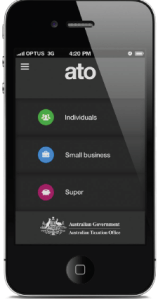
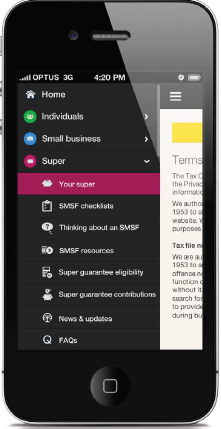




 The SMSF Coach