

Make sure you do not leave SMSF money idle in savings accounts


Have you put aside some money in a savings account or high interest savings account that you have put aside and are not making transactions on? Well beware of you could find the funds get nabbed by the Government when after 3 years they qualify as a “Dormant Account“.  Missing Money

I was alerted to this by an Accountant friend who held some of their SMSF money in an online high interest savings account and had parked a fixed amount there for more than 3 years as it was earmarked for a specific future use. Low and behold the Government nabbed it as it qualified as a Dormant Account. It was not some minor amount either as it was over $10K!

So if you have such an account look after your interests and make a small transaction yearly to ensure it remains “Active”. As little as 1 cent being transferred in or out will keep the account as on Active status. As a Trustee it’s your duty to look after the money of the Self Managed Super Fund and to take reasonable care to protect it..

Unforeseen Outcomes

The action of the government raises an issue for fund administrators and auditors:

The client has not met a condition of release so the money is restricted and should not leave the fund so the question is has this money left the superannuation system or not?

Further, if the funds are to be claimed back with this good online provider is arranging asap, as the funds will be coming from outside of the SMSF fund will they be considered a form of contribution?

Want a Superannuation Review or are you just looking for an adviser that will keep you up to date and provide guidance and tips like in this blog? Then why now contact me at our Castle Hill or Windsor office in Northwest Sydney to arrange a one on one consultation. Just click the Schedule Now button up on the left to find the appointment options. Do it! make 2016 the year to get organised or it will be 2026 before you know it.

Please consider passing on this article to family or friends. Pay it forward!

Liam Shorte B.Bus SSA™ AFP

Financial Planner & SMSF Specialist Advisor™

SMSF Specialist Adviser 

 Follow SMSFCoach on Twitter Liam Shorte on Linkedin NextGen Wealth on Facebook   

Verante Financial Planning

Tel: 02 98941844, Mobile: 0413 936 299

PO Box 6002 BHBC, Baulkham Hills NSW 2153

5/15 Terminus St. Castle Hill NSW 2154

Corporate Authorised Representative of Viridian Select Pty Ltd ABN 41 621 447 345, AFSL 51572

This information has been prepared without taking account of your objectives, financial situation or needs. Because of this you should, before acting on this information, consider its appropriateness, having regard to your objectives, financial situation and needs. This website provides an overview or summary only and it should not be considered a comprehensive statement on any matter or relied upon as such.

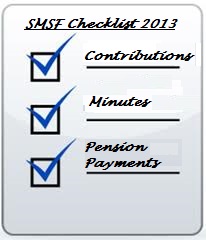
One Page SMSF End of Financial Year Checklist 2013


Ok last day to get your SMSF fund in order and ensure we are making the most of the strategies available to us. Here is a one page checklist of the most important issues that you should address with your advisors well before the year-end. For more detail on each issue visit the full article on The SMSF Coach – EOFY 2013 Strategies

1. It’s all about timing! Forget about doing anything for your fund after the Thursday June 27th
2. Review  Your Concessional Contributions – 25K , 25K, 25K max
3. Review your Non-Concessional Contributions
4. Co-Contribution
5. Spouse Contribution
6. Over 65? Do you meet the work test? (The 40 hours in any 30 days rule)
7. Check any payments you may have made on behalf of the fund.
8. Notice Of Intent To Claim A Deduction
9. Contributions Splitting
10. Off Market Share Transfers (selling shares from your own name to your fund)
11. Pension Payments
12. Reversionary Pension is often preferred option to pass funds to spouse or dependent child.
13. Review Capital Gains Tax Position of each investment
14. Review and Update the Investment Strategy not forgetting to include Insurance of Members
15. Collate and Document records of all asset movements and decisions
16. June Contributions Deductible this year but can be allocated across 2 years.
17. Market Valuations of all assets now required
18. In-House Assets – keep below the 5% limit at all times
19. TPD Insurance (Total Permanent Disability – basically “never work again” insurance)
20. Do you need to update to a Corporate Trustee
21. Check the ownership details of all SMSF Investments
22. Review Estate Planning and Loss of Mental Capacity Strategies.

As always please contact me if you want to look at your own options as we are currently taking on new clients. We have offices in Castle Hill and Windsor but can meet clients anywhere in Sydney or online via Skype.

Liam Shorte B.Bus SSA™ AFP

Financial Planner & SMSF Specialist Advisor™

SMSF Specialist Adviser 

 Follow SMSFCoach on Twitter Liam Shorte on Linkedin NextGen Wealth on Facebook   

Verante Financial Planning

Tel: 02 98941844, Mobile: 0413 936 299

PO Box 6002 BHBC, Baulkham Hills NSW 2153

5/15 Terminus St. Castle Hill NSW 2154

Corporate Authorised Representative of Viridian Select Pty Ltd ABN 41 621 447 345, AFSL 51572

This information has been prepared without taking account of your objectives, financial situation or needs. Because of this you should, before acting on this information, consider its appropriateness, having regard to your objectives, financial situation and needs. This website provides an overview or summary only and it should not be considered a comprehensive statement on any matter or relied upon as such.

Can My SMSF Buy And Lease Plant And Equipment To My Business


ID-100210503

Plant or Equipment in an SMSF?

I get this question on Plant and Equipment financing regularly from business clients with an SMSF. The technical answer is yes subject to complying with the regulatory provisions of SIS Act. In reality for most businesses the answer is most likely NO as there are so many ways you can breach one or more of the rules governing this area. Let’s look at some of those rules.

Firstly it is a requirement that a SMSF and any assets it considers purchasing must meet the Sole Purpose Test.

Sole purpose test

• Section 62: trustee must ensure fund is maintained solely for core purposes, such as benefits to members upon retirement and ancillary purposes

Other relevant issues include:

Formulating Investment Strategy

Section 52: trustee must formulate and give effect to investment strategy that has regard to whole of circumstances including:

• risk involved in making, holding and realising, and likely return from investments having regard to objectives and expected cash flow requirements

Lending to members, relatives and financial assistance:

Section 65: A trustee must not lend fund money or provide financial assistance to:
• member of fund OR relative of a member

• ‘Financial assistance’ has no technical meaning and their frame of reference is language of ordinary commerce … one must examine commercial realities of transaction and decide whether it can properly be described as giving of financial assistance (Charterhouse Investment Trust Ltd v Tempest Diesels Ltd [1986] BCLC 1, 10)

In-house asset rules:

An In-house asset is:
• loan to ‘related party’
• investment in ‘related party’
• investment in a ‘related trust’
• asset subject to lease between trustee and a related party (this is the one that matters in your case)

However a SMSF can have up to 5% of fund’s assets in invested “in-house” assets without breaching the rule so if the equipment’s value were less than 5% of the funds total value then you would not be in breach of this rule….but remember the other rules hold equal importance. Also it is important that this rule is met on an ongoing basis so if stock markets drop or cash is taken out of the fund for pensions you need to revisit the value of the in-house asset.

Arm’s length requirements:

Section 109(1): A trustee must not invest unless:

• the trustee and the other party are dealing with each other at arm’s length OR
the terms and conditions are no more favourable to the other party than if they were at arm’s length
• Section 109(1A): If trustee invests and is required to deal with investment with another party not at arm’s length, must deal as if were at arm’s length

• The term ‘at arm’s length’ is not defined in the SIS Act so open to interpretation

• implies dealing that is carried out on commercial terms again subject to interpretation

• useful test to apply is whether prudent person, acting with due regard to own commercial interests, would have made the investment (APRA v Derstepanian (2005) 60 ATR 518, 524)

So example of how this works:

Let’s say you have $600,000 in your SMSF and you want to purchase an excavator for $25,000 to lease to your own business.

  1. The SMSF Trustees do their research and minuted how they calculate a lease rate that takes into account market return on their investments, allows for the depreciation of the asset and insists on the insurance of the vehicle with its interest noted on the policy to protect its investment. They are satisfied that this provides a decent return for the fund not correlated to the other assets of the funds invested in shares and term deposits. Sole Purpose, S62 and S52 satisfied.
  2. They amend the SMSF Investment Strategy to include this type of asset with the target allocation to “Other Assets” or specifically have an allocation to “Plant & Equipment”
  3. They ascertain that the business could be approved to obtain finance for the excavator from a third-party on similar terms. Section 65 met as clear finance available elsewhere and that this is not the reason why the arrangement is being entered into.
  4. As the value of the excavator ($25k) is less than 5% of the fund ($30K) it does not breach the In house asset rule. This needs to be monitored annually.
  5. They arrange for a written commercial lease agreement comparable with the standard lease available in the market to be entered into by all parties. S109(1) satisfied

So in summary, yes it can be done but in reality there are so many ways you can trip up that it is really not worth the hassle and raising the eye of the ATO or challenging your Auditor’s patience. Your first step is to engage your Accountant and a SMSF Specialist before considering these types of strategies. I would be interested to receive comments from people who have implemented these strategies.

Why not checkout my article ” What can my SMSF invest in?” as a good place to start.

As always please contact me if you want to look at your own options. We have offices in Castle Hill and Windsor but can meet clients anywhere in Sydney or online via Skype.

Liam Shorte B.Bus SSA™ AFP

Financial Planner & SMSF Specialist Advisor™

SMSF Specialist Adviser 

 Follow SMSFCoach on Twitter Liam Shorte on Linkedin NextGen Wealth on Facebook   

Verante Financial Planning

Tel: 02 98941844, Mobile: 0413 936 299

PO Box 6002 BHBC, Baulkham Hills NSW 2153

5/15 Terminus St. Castle Hill NSW 2154

Corporate Authorised Representative of Viridian Select Pty Ltd ABN 41 621 447 345, AFSL 51572

This information has been prepared without taking account of your objectives, financial situation or needs. Because of this you should, before acting on this information, consider its appropriateness, having regard to your objectives, financial situation and needs. This website provides an overview or summary only and it should not be considered a comprehensive statement on any matter or relied upon as such.

Image courtesy of Supertrooper at FreeDigitalPhotos.net

Why Paying Expenses on behalf of a SMSF may constitute a Contribution


If you decide to pay an expense on behalf of your SMSF for any reason then that can constitute a contribution to the SMSF which you may not have intended and may lead you to inadvertently exceeding a contribution cap.

Don't exceed Caps

Who’s paying?

Funny how it always seems that it is the people who rush in to using a strategy and seek to push a strategy right to the limit who are also the ones who ignore warnings and step over the line thinking their advisers will “sort it”. The problem is once the limit is exceeded and June 30th passes it is often too late to “fix”. This could generate a huge excess contributions tax liability for those tinkering on the edge of the non-concessional contribution limit.

If a member/trustee pays for a fund expense on behalf of the fund, and if the member/trustee does not seek reimbursement for this expense immediately, the amount will be treated as a contribution to the fund.

Technically, a superannuation contribution is ‘anything of value that increases the capital of a superannuation fund provided by a person whose purpose is to benefit one or more particular members of the fund or all members in general’. See TR 2010/1 Income tax: superannuation contributions.

The meaning of contribution is therefore wider than just a direct payment of money or an in specie transfer of an asset to the SMSF.  (more…)

SMSF End of Financial Year Checklist 2013


OK so here we are already in the last quarter and with only 3 months to the end of the financial year to get our fund in order and ensure we are making the most of the strategies available SMSF 2013 Checklistto us. Here is a check-list of the most important issues that you should address with your advisers well before the year-end.

1.       It’s all about timing!

First thing to note is that June 30th falls on a Sunday this year so forget about doing anything for your fund after the 27th as funds transferred from Friday the 28th are unlikely to hit an account before the 1st July.

2.       Review  Your Concessional Contributions – 25K!, yes only 25K,  yes 25K max

Maximise contributions up to concessional contribution cap but do not exceed the 25 K Concession Limits that applies to everyone who is eligible to contribute this year.  Excess contributions tax is nasty and should always be avoided. So check employer contributions on normal pay and bonuses, salary sacrifice and premiums for insurance in super as they may all be included in the limit.

3.        Review your Non-Concessional Contributions

Have you considered making non-concessional contributions to move investments in to super and out of your personal, company or trust name.  May you have proceeds from and inheritance or sale of a property sitting in cash. As shares and cash have increased in value you may find that personal tax provisions are increasing and moving some assets to super may help control your tax bill.  Are you nearing 65, then consider your contribution timing strategy to take advantage of the “bring forward” provisions before turning age 65 to contribute up to $450,000.

4.       Co-Contribution

Check your eligibility for the co-contribution and if you are eligible take advantage.  Note that the rules have changed and are very different from previous years. To calculate the super co-contribution you could be eligible to receive based on your income and personal super contributions, use the Super co-contribution calculator.

5.       Spouse Contribution

If your spouse has assessable income plus reportable fringe benefits totalling less than $10,800 then consider making a spouse contribution. Check out the ATO guidance here

6.       Over 65? Do you meet the work test? (The 40 hours in any 30 days rule)

You should review your ability to make contributions as if you If you have reached age 65 you must pass the work test of 40 hours in any 30 day period, in order to continue to make contributions to super. Check out ATO Age Related contribution guidance

7.       Check any payments you may have made on behalf of the fund.

It is important that you check for amounts that may form a superannuation contribution in accordance with TR 2010/1 (ask your advisor), such as expenses paid for on behalf of the fund, debt forgiveness or in-specie contributions, insurance premiums for cover via super paid from outside the fund.

8.       Notice Of Intent To Claim A Deduction

If you are planning on claiming a tax deduction for personal concessional contributions you must have a valid ‘notice of intent to claim a tax deduction’.  If you intend to start a pension this notice must be made before you commence the pension.

9.        Contributions Splitting

Consider splitting contributions with your spouse, especially if your family has one main income earner with a substantially higher balance. This is a simple no cost strategy I recommend everyone look at especially with the Government moving on taxing higher balance accounts. See my blog about this strategy here.

10.   Off Market Share Transfers (selling shares from your own name to your fund)

The proposed ban on Off-Market transfer of shares into a SMSF has been dropped. YEAH!  If you want to move any shareholdings into super you should still act early. Here is the Standard Form for Computershare and here is the Link Market Services Form

11.   Pension Payments

If you are in pension phase, ensure the minimum pension has been taken.  For transition to retirement pensions, ensure you have not taken more than 10% of your opening account balance this financial year.

The minimum payment amounts have been by 25% for the 2012-13 years. The following table shows the minimum percentage factor (indicative only) for each age group.

Age Minimum % withdrawal 2012-13 year for certain pensions and annuities Minimum % withdrawal (in all other cases)
Under 65 3% 4%
65-74 3.75% 5%
75-79 4.5% 6%
80-84 5.25% 7%
85-89 6.75% 9%
90-94 8.25% 11%
95 or more 10.5% 14%

Sacrificial Lamb

Think about having a sacrificial lamb, a second lower value pension that can sacrificed if minimum not taken. In this way if you pay only a small amount less than the minimum you only have to lose the smaller pensions concession rather than the concession on your full balance. When combined with the ATO relief discussed in the following article “What-happens-if-i-don’t-take-the-minimum-pension”  you will have a buffer for mistakes.

12.    Reversionary Pension is often the preferred option to pass funds to a spouse or dependent child.

You should Review your pension documentation and check if you have nominated a reversionary pension.  If not, consider your family situation and options to have a reversionary pension. This is especially important with blended families and children from previous marriages that may contest your current spouse’s rights to your assets. Also consider reversionary pensions for dependent disabled children

13.   Review Capital Gains Tax Position of each investment

Review any capital gains made during the year and over the term you have held the asset and consider disposing of investments with unrealised losses to offset the gains made. If in pension phase then consider triggering some capital gains regularly to avoid building up an unrealised gain that may be at risk to government changes in legislation like those proposed this year.

14.   Review and Update the Investment Strategy not forgetting to include Insurance of Members

Review your investment strategy and ensure all investments have been made in accordance with it, and the funds deed.  Also, make sure your investment strategy has been updated to include consideration of insurances for members. See my article of this subject here. Don’t know what to do..call us.

15.    Collate and Document records of all asset movements and decisions

Ensure all the funds activities have been appropriately documented with minutes, and that all copies of all statements and schedules are on file for your accountant/administrator and auditor.

16.   June Contributions Deductible this year but can be allocated across 2 years.

For those who may have a large taxable income this year and are expecting a lower taxable next year you should consider a contribution allocation strategy to maximise deductions for the current financial year. This strategy is also known as a “Contributions Reserving” strategy but the ATO are not fans of Reserves so best to avoid that wording!

17.   Market Valuations

Regulations now require assets to be valued at market value each year, ensure that you have re-valued assets such as property and collectables. Here is a good article by Liz Westover of the Institute of Chartered Accountants on the subject.

18.   In-House Assets

If your fund has any investments in in-house assets you must make sure that at all times the market value of these investments is less than 5% of the value of the fund. Do not take this rule lightly as the new penalty regime will make it easier for the ATO to apply fines for smaller misdemeanours.

19.   TPD Insurance (Total Permanent Disability – basically “never work again” insurance)

Have you reviewed your insurances inside and outside of super? Check your TPD policies owned by the fund for own occupation definition as the rules about deductibility for these policies have changed. Here is a link to a good article about this subject from Money Management

  • 20.   Do you need to update to a Corporate Trustee  

We recommend a corporate trustee to all clients.  To understand why please read this article on Why SMSFs should have a Corporate Trustee

21.   Check the ownership details of all SMSF Investments

Make sure the assets of the fund are held in the name of the trustees on behalf of the fund and that means all of them. Check carefully any online accounts you may have set up without checking the exact ownership details.  You have to ensure all SMSF assets are kept separate from your other assets.

22. Review Estate Planning and Loss of Mental Capacity Strategies.

Review any Binding Death Benefit Nominations (BDN) to ensure they are valid and still in accordance with your wishes.  Also ensure you have appropriate Enduring Power of Attorney’s (EPOA) in place allow someone to step in to your place as Trustee in the event of mental incapacity or death. Do you know what your Deed says on the subject?

23. Review any SMSF Loans

Have you made all the payments on your internal or third-party loans, have you looked at options on prepaying interest or fixing the rates while low. Have you made sure all payments in regards to Limited Recourse Borrowing Arrangements (LRBA) for the year were made through the SMSF Trustee. If you bought a property using borrowing , has the Holding Trust been stamped by your state’s Office of State Revenue.

Don’t leave it until June, review your Self Managed Super Fund now and seek advice if in doubt about any matter.

As always please contact me if you want to look at your own options as we are currently taking on new clients. We have offices in Castle Hill and Windsor but can meet clients anywhere in Sydney or online via Skype.

Liam Shorte B.Bus SSA™ AFP

Financial Planner & SMSF Specialist Advisor™

SMSF Specialist Adviser 

 Follow SMSFCoach on Twitter Liam Shorte on Linkedin NextGen Wealth on Facebook   

Verante Financial Planning

Tel: 02 98941844, Mobile: 0413 936 299

PO Box 6002 BHBC, Baulkham Hills NSW 2153

5/15 Terminus St. Castle Hill NSW 2154

Corporate Authorised Representative of Viridian Select Pty Ltd ABN 41 621 447 345, AFSL 51572

This information has been prepared without taking account of your objectives, financial situation or needs. Because of this you should, before acting on this information, consider its appropriateness, having regard to your objectives, financial situation and needs. This website provides an overview or summary only and it should not be considered a comprehensive statement on any matter or relied upon as such.

Super changes will hit saving strategies


Please find a link below to an article on the Macro Business blog website about the expected and unexpected effects of the proposed Super changes.  No More Tax Free

http://www.macrobusiness.com.au/2013/04/super-changes-will-hit-saving-strategies/

Macro Business has an excellent engaged readership and as always the comments tend to be very valuable at exploring the details of any subject just that little bit further.

Are you looking for an advisor that will keep you up to date and provide guidance and tips like in this blog? Then why now contact me at our Castle Hill or Windsor office in Northwest Sydney to arrange a one on one consultation. Just click the Schedule Now button up on the left to find the appointment options.

Liam Shorte B.Bus SSA™ AFP

Financial Planner & SMSF Specialist Advisor™

SMSF Specialist Adviser 

 Follow SMSFCoach on Twitter Liam Shorte on Linkedin NextGen Wealth on Facebook   

Verante Financial Planning

Tel: 02 98941844, Mobile: 0413 936 299

PO Box 6002 BHBC, Baulkham Hills NSW 2153

5/15 Terminus St. Castle Hill NSW 2154

Corporate Authorised Representative of Viridian Select Pty Ltd ABN 41 621 447 345, AFSL 51572

This information has been prepared without taking account of your objectives, financial situation or needs. Because of this you should, before acting on this information, consider its appropriateness, having regard to your objectives, financial situation and needs. This website provides an overview or summary only and it should not be considered a comprehensive statement on any matter or relied upon as such.

What happens if I don’t take the minimum pension?


The Australian Tax Office (ATO) in January 2013 released guidance on the consequences of trustees not paying minimum amounts from account based pensions, including the loss of tax exempt status. It has issued two documents on starting and stopping a superannuation income stream (pensions) for self-managed superannuation funds. Tax Free

 (more…)

Why Self Managed Super Funds Should Have A Corporate Trustee


Why I believe it is essential to have a company as trustee and the options to have individual trustees is short-sighted  Time to Decide

The over-riding benefits of having a corporate trustee, rather than individual trustees, are summarised in the following comparison table:

Corporate Trustee

Individual Trustees

Time to Grieve or Adapt

The one main reason from 10 years experience with   SMSF’s for having a Corporate Trustee is respect for your spouse or family’s   needs in times of grief. Do you really want to leave them an onerous awkward   and expensive set of tasks to carry out just because it saved you $700

Paperwork at the worst time

Welcome to a nightmare. You have just passed away   and your spouse has barely had time to start grieving but they need to manage   the SMSF to administer pensions, investments and deeds. Minutes to record   death of Trustee, Deed update to add a new Trustee or move to a Corporate   Trustee, Off market transfer forms and identity forms and probate forms to   put every investment in correct name(s). Worse still, deal with the Land   & Property Management agency or Office of State Revenue and their endless   forms!

Continuous succession

A company has an indefinite life   span; in other words, it does not die. Therefore, a corporate trustee can   ensure control of an SMSF is more certain in the circumstances of the death   or mental or physical incapacity of a member.

Problems upon death

If the SMSF has individual trustees, e.g. a   husband and wife SMSF, then timely action must be taken on the death of a   member to ensure the trustee/member rules are adhered to properly. (SMSF   rules do not allow a sole individual trustee/member SMSF.)

Administrative efficiency

When members are admitted to, or cease,   membership of the SMSF, all that is required is that the person becomes, or   ceases to be, a director of the corporate trustee. The corporate trustee does   not change as a result. Therefore, title to all the assets of the SMSF   remains in the name of the corporate trustee. Especially useful when dealing   with property in an SMSF.

Extra and costly paperwork

To bring in a new member to an SMSF   with individual trustees requires that person to become a trustee. As trust   assets must be held in the names of the trustees, this will require the title   to all assets to be transferred to the new trustees when a member is admitted   to or exits the fund.

Sole member SMSF

You can have an SMSF where one individual is both   the sole member and the sole director. Likewise if you are mentally   incapacitated then your spouse can act as director under an enduring Power of   Attorney to run the fund on their own without the need for interference by   others.

Sole Member SMSF

A sole member SMSF must have two individual   trustees. Does your spouse need to rely on your children, possibly from your   first marriage! That’s really not going to work as we know what a problem   blended families are when it comes to Estate Planning.

Meets Lenders Requirements

If you want to borrow to buy a property via your   SMSF then most lenders will require a Corporate Trustee of the SMSF as that   is easier for them to deal with.

Restricts Pool of Lenders

If you do not have a corporate trustee the you   are limiting the number of lenders that will consider your SMSF for a loan

Higher LVRs accepted

With a Corporate Trustee many lenders will go to   80% on Residential loans and 70% on Commercial Real Estate

Lower LVRs commonplace

Due to legal concerns many lenders restrict the   maximum borrowing , if any, of a SMSF with Individual Trustees to 705 for Residential   Properties and 55-60% for Commercial Real Estate

Greater asset protection

As companies are subject to limited liability, a   corporate trustee will provide improved protection for the directors where a   party sues the trustee for damages. I use an electrician as an example here   when I cover this with clients. If he is comes on your property and is electrocuted because of the owners (SMSF) negligence then the SMSF may be   sued but your own personal liability is limited to your shareholding and member   balance rather than your entire wealth.

Less asset protection

If an individual trustee suffers any   liability, the trustee’s personal assets may be exposed. Be careful of hiring   a tradesman to work on a SMSF property as if they get injured they may sue   you in your capacity as Trustee of the fund as well as the SMSF itself.   Without the protection of Limited Liability provided by a Trustee Company   your other assets may be at risk.

What the ATO and ASIC think?

ASIC and the ATO prefer Corporate Trustees too. Last year, ASIC released a number of documents which outlined the advantages of having an SMSF corporate trustee.
More recently, the ATO have released a website and the following video that objectively outlined the pros and cons for corporate and individual trustees.

If the ATO’s comments are analysed in more detail, it is clear that there is an endorsement for SMSFs to have a corporate trustee.

The easiest way to comply with the ownership rules is for your fund to have a company set up solely for the purpose of being the corporate trustee of the fund.

If there is a change in directors of the company, you don’t have to change the name on the ownership documents for each fund asset as the trustee of the fund has not changed. Having a separate corporate trustee also reduces the chance of personal assets becoming intermingled with fund assets

Do you need more? Additional Advantages of a Corporate Trustee

  1. With a bit of preparation and planning combining use of your Will and Enduring Powers of Attorney, minuted resolutions and if needed clauses written into the deed a person (usually the “Executor” or “Legal Personal Representative”) can be immediately appointed as director so that the Fund can continue to operate in the event of death regardless of whether a death certificate or probate have been granted.
  2. Likewise when a person loses mental capacity (as with Alzheimer’s) that person will need to be replaced as the trustee of the fund if they were individuals but with a company the Constitution can immediately have a mechanism which allows the person holding the Enduring Power of Attorney to be appointed as a replacement director, resigning the incapacitated director at the same time.
  3. If under the new Administrative penalties rules a fine/penalty is made in relation to self managed superannuation fund that has individual trustees then each of them will be fined in their personal capacity while if it is a Corporate Trustee then only the one fine amount is payable. This means that if you have 2 individual trustee then you may pay double the fine of a fund with a corporate trustee and remember the fine is personally payable and not allowed to be reimbursed by the fund.
  4. Guaranteed compliance with SIS regulation 4.09A(2)(a)? It provides:A trustee of a regulated superannuation fund that is a self managed superannuation fund must keep the money and other assets of the fund separate from any money and assets, respectively: … (a) that are held by the trustee personally …As you will appreciate, it is easy for this regulation to be contravened where an SMSF has individual trustees (eg, if an individual trustee mixes their own assets with those of the SMSF). If however, you have taken our advice and the SMSF has a corporate trustee where the corporate trustee’s sole function is to act as trustee of the SMSF, then regulation 4.09A(2)(a) becomes almost impossible to contravene! This is because the trustee is unable to mix fund assets with its personal assets as it’s unlikely to have any personal assets.

Therefore an SMSF that has a sole purpose corporate trustee  is almost always guaranteed to comply with these rules

For further information on the issues raised in this blog please contact us at our Castle Hill or Windsor office or send an email.

I hope this guidance  has been helpful and please take the time to comment. Feedback always appreciated. Please reblog, retweet, put on your Facebook page etc. to make sure we get the news out there to those setting up new funds.

Liam Shorte B.Bus SSA™ AFP

Financial Planner & SMSF Specialist Advisor™

SMSF Specialist Adviser 

 Follow SMSFCoach on Twitter Liam Shorte on Linkedin NextGen Wealth on Facebook   

Verante Financial Planning

Tel: 02 98941844, Mobile: 0413 936 299

PO Box 6002 BHBC, Baulkham Hills NSW 2153

5/15 Terminus St. Castle Hill NSW 2154

Corporate Authorised Representative of  Viridian Advisory Pty Ltd (ABN 34 605 438 042) (AFSL 476223)

This information has been prepared without taking account of your objectives, financial situation or needs. Because of this you should, before acting on this information, consider its appropriateness, having regard to your objectives, financial situation and needs. This website provides an overview or summary only and it should not be considered a comprehensive statement on any matter or relied upon as such.

Image courtesy of Stuart Miles at FreeDigitalPhotos.net

What information do I need to provide for my SMSF Audit


At the end of each financial year your Self-Managed Super Fund will need to be audited by an independent third-party SMSF auditor. 

Having your SMSF audited isn’t exactly exciting, but it is an essential part of the compliance process. Looking to save money on the audit by going for a cheap service may come back to bite so I always recommend paying a decent fee to an experienced auditor is worthwhile. If they are not doing at least 25 audits a year then don’t use them as experience is crucial and it is necessary to have knowledge of what to look for and how to guide you the ultimate client.

The SMSF audit involves a review of your fund and the strategies and transactions during the year to ensure it remains a ‘complying fund’ in line with the ATO’s definition.

Who can audit my SMSF?

Your SMSF can only be audited by an approved SMSF auditor.  SMSF auditors are most commonly qualified accountants; however there are some additional requirements.

Members of the following organisations are qualified SMSF auditors:

  • SMSF Specialist Auditors, accredited by the SMSF Professionals’ Association of Australia (My personal preference)
  • CPA Australia
  • The Institute of Chartered Accountants Australia
  • National Institute of Accountants
  • Association of Taxation and Management Accountants
  • Fellows of the National Tax and Accountants Association Ltd

SMSF Specialist Auditors, as appointed by the SMSF Professionals’ Association of Australia, are also qualified to complete this important SMSF function.

SMSF Audit Check-list

The person performing the SMSF audit will require a number of documents and may seek these from your Administrator, accountant or directly from you the Trustees.  The auditor will generally have a standard SMSF audit check-list, however the following will give you some guidance on what you are generally asked to provide:

  • Financial statements of the fund.
  • Cash Management and Bank statements for all fund accounts including Cheque, Savings and Term Deposits.
  • Managed fund /Wrap annual transaction and income report.
  • Share Broker’s statement showing all transactions.
  • Holding statements for all shares held during the year and the end of year balance.
  • Buy & sell contracts for all shares held during the year including Off Market Transfers and any corporate actions.
  • Statements showing clearly the ownership of all fixed interest securities like bonds, hybrids and notes.
  • Contracts for any property purchased or sold
  • Copy of the Title deed showing evidence of ownership for any property in the correct name.
  • Property valuations and updated if starting a new pension.
  • Building & Liability insurance certificates of currency
  • Lease agreements and rental income statements
  • Documentation for any art or collectables including evidence of Insurance in the name of the SMSF.
  • Details of any debts owed by the SMSF including loan statements showing repayments
  • Documentation of any related party loans or investments
  • Confirmation of any contributions or withdrawals
  • Confirmation that the member is eligible for contributions or meets a condition of release for withdrawals
  • Pension or lump sum benefits payment details including copies of Pension Agreements and minutes.
  • Information on any  other investments not mentioned.
  • Completed SMSF Investment Strategy in writing including consideration of members’ insurance needs.

This is not an exhaustive list and your SMSF auditor may require additional documentation.

For further information on the issues raised in this blog please contact our Castle Hill SMSF Centre or Windsor Financial Planning Office. While we are not auditors we can point you in the right direction of people you can trust.

I hope this guidance  has been helpful and please take the time to comment. Feedback always appreciated. Please reblog, retweet, put on your Facebook page if you found information helpful.

Liam Shorte B.Bus SSA™ AFP

Financial Planner & SMSF Specialist Advisor™


 Follow SMSFCoach on Twitter Liam Shorte on Linkedin NextGen Wealth on Facebook   

Tel: 02 9899 3693, Mobile: 0413 936 299

PO Box 6002, Norwest NSW 2153

40/8 Victoria Ave, Castle Hill NSW 2154

Corporate Authorised Representative of Viridian Advisory Pty Ltd ABN 34 605 438 042, AFSL 476223

This information has been prepared without taking account of your objectives, financial situation or needs. Because of this you should, before acting on this information, consider its appropriateness, having regard to your objectives, financial situation and needs. This website provides an overview or summary only and it should not be considered a comprehensive statement on any matter or relied upon as such.

Is your SMSF lending money to someone?


Is that loan in your SMSF’s best interest?

The Tax Office issued an information sheet on their website last November warning trustees about the perils of lending an SMSF’s funds to the wrong person. This includes your own business, someone who advises you or a family member or friend.

An all too common occurrence is the practice adopted by some people of withdrawing funds from their SMSF to “temporarily” help keep their business afloat when cash flow is tight.

Has your SMSF loaned money? If so, you need to make sure the loan terms comply with the law and are in the best interests of your funds sole purpose test which is to provide for your retirement.

The boys and girls at the ATO are rightly concerned some trustees are lending money from their fund to people who provide advice or assist in the running of the fund. This may not be in the best interest of your SMSF, and may place your retirement savings at risk. If someone is recommending you set up a SMSF and then to lend them or a related party money for a development, you have to ask yourself in who’s best interest are they working? Might be time to scrutinise the minute details of this “too good to be true one time only opportunity”.

So when would a loan agreement not be seen to be in the best interest of your SMSF ? Basically, when you have given discount loan rates or favourable terms – this could have serious consequences. Here is one example they give:

 when you have given discount loan rates or favourable terms – this could have serious consequences. In addition to putting your member’s benefits at risk, your SMSF could be found to be non-complying and would, therefore, not qualify for concessional tax rates.

They advise that before lending any money, you should consider your fund’s investment strategy and determine whether the investment is appropriate and, in particular, whether lending money to people providing you with services or advice is in the best long-term interests of your SMSF.

If you are not sure about making these types of investments choices, they recommend that you seek advice before entering into such arrangements.

If you still decide to go ahead and lend money from your SMSF, the ATO advise that “you should:

  • write an appropriate loan agreement and have it signed by all the parties involved
  • ensure the loan agreement specifies all the terms of the loan, such as:
    • what the security for the loan
    • what is the repayment period
    • when repayments will be paid
    • the amount of the repayments
    • the interest rate
  • ensure the interest and repayments are received by the fund according to the loan agreement
  • take appropriate action to protect the fund’s investment if the loan agreement is not followed
  • ensure the loan is sensible and does not put the members’ benefits at risk
  • ensure that the conditions of the loan agreement do not provide the borrower with favourable terms.

Remember that you are the one ultimately responsible for running your SMSF, and you must make sure you understand your duties, responsibilities and obligations.”

With regards to taking funds out to help your business, you need to firstly know that should the business go under that your Superannuation is in most cases protected in bankruptcy from creditors so you should be careful about accessing this protected asset.

Regardless of how much you trust a person even if they are your accountant, lawyer, financial planner, mortgage broker or best mate, you need to get independent third-party advice. Don’t be embarrassed about not completely trusting the promoters scheme as it is often too late later to get your funds back and hindsight is a cruel tormentor when facing loved ones having lost your retirement nest egg.

For further information on the issues raised in this blog please contact our Castle Hill SMSF Centre or Windsor Financial Planning Office.

I hope this guidance  has been helpful and please take the time to comment. Feedback always appreciated. Please reblog, retweet, put on your Facebook page if you found information helpful.

Liam Shorte B.Bus SSA™ AFP

Financial Planner & SMSF Specialist Advisor™

SMSF Specialist Adviser 

 Follow SMSFCoach on Twitter Liam Shorte on Linkedin NextGen Wealth on Facebook   

Verante Financial Planning

Tel: 02 98941844, Mobile: 0413 936 299

PO Box 6002 BHBC, Baulkham Hills NSW 2153

5/15 Terminus St. Castle Hill NSW 2154

Corporate Authorised Representative of Viridian Select Pty Ltd ABN 41 621 447 345, AFSL 51572

This information has been prepared without taking account of your objectives, financial situation or needs. Because of this you should, before acting on this information, consider its appropriateness, having regard to your objectives, financial situation and needs. This website provides an overview or summary only and it should not be considered a comprehensive statement on any matter or relied upon as such.

Don’t lose your insurance cover in the haste to rollover to a SMSF.


Just because you are unhappy with your superannuation investment results is no reason to put you or your family’s future at risk by losing your insurance cover in the process of changing.

don't lose your insurance in a rollover to SMSF

A good professional like an SMSF Specialist Advisor™ will always ensure you assess your insurance needs before withdrawing.

This issue is becoming even more relevant now that the new SMSF rules require Trustees to consider the member’s insurance needs regularly. See here for more detail.

Ok, so you have decided to start your own Self Managed Super Fund or move to one that you feel better meets your needs. That is fine, but one of the things you should look at doing is protecting any cover you have in your current fund by either keeping some money in your current fund to pay for ongoing insurance premiums or taking out replacement insurance cover in the name of your new SMSF.  (more…)

Think twice before cancelling insurances as you get older.


Do you know that the average person cancels their personal insurance about 1-2 years before an claimable illness strikes! The average age a person discontinues one or more of three types of living insurance policies – cover for disability, critical illness/trauma and income protection – is 45 years yet the average age for a claim is 46.5 years. (source TAL)

As mentioned in a previous blog the SMSF regulations now require Self Managed Superannuation Fund Trustees to consider Insurance as part of the SMSF Investment Strategy . TheRisk Management following applies to everyone regardless of the type of investor you are or the structure you use to save for retirement.

I see many clients in our Castle Hill and Windsor offices in their late 50’s who have cancelled their life and income protection insurances before they have come to see me. Usually they say it is because they have paid off their mortgage and are debt free so they didn’t feel they needed cover any longer.

Their focus now was on expense reduction and saving via salary sacrifice to superannuation and even some after tax contributions from savings.

While it is great to see them focus on saving for retirement and budgeting, what they don’t realise is that in cancelling insurances it is their retirement lifestyle or that of their spouse they are no longer insuring and not just their current needs.

With 5-15 years of focused savings towards a retirement nest egg they can substantially improve their lifestyle after retirement. However those dreams of a happy retirement can all be taken away with a diagnosis of cancer or a stroke that inhibits them working for a prolonged period.

You don’t just find yourself financing time off work and medical expenses but also lose out on the employer super contributions and salary sacrifice as well or worse for a small business owner, you face the expense of a getting someone to cover for you to keep the business afloat.

To realistically assess if you need to maintain your Life, Trauma or Income Protection insurance, you need to think through the worst-case scenario. If you were unable to work for 3 years due to an illness today, how would you and your loved ones cope financially?

  • Would you be able to meet ongoing living expenses like food, clothing, changing the car, pay for private health insurance premiums, etc? (this assumes mortgage paid off)
  • Would you have the liquid funds to cover additional expenses or loss in income (e.g., gap in your medical fees, time off work for your spouse to take care of you,
  • What would happen to your retirement plans and would you be able to save enough money to see the kids through the final college years or fund your retirement comfortably?
  • What if you were actually permanently disabled and they had all the costs of rearranging the home, medical care and transport options for you.

In all honesty, it is always a struggle when you lose your earning capacity. The last thing you need compounding the situation are financial concerns. Insurance helps make sure that you and the people you care about will be provided for financially, even if you’re not around to care for them yourself.

So whether you’re in retail, industry or a Self Managed Super Fund, take a moment to consider how insurance might fit into your retirement plans. We can look at ways to reduce the cover and costs to keep them affordable and provide that protection for you and your family.

If you think you may need to review your Insurances then you can contact us to offer you advice on your options. As well as offering advice on Insurances, Superannuation and SMSF’s our advisers can also offer you help in many other area’s you may be experiencing problems such as:

  • Financial Planning,
  • Tax Planning,
  • Debt Consolidation,
  • Investment Portfolios,
  • Estate Planning,
  • SMSF Trustee queries.

Have you found this blog helpful? Pass it on. Social media buttons beneath the article.

Are you looking for an advisor that will keep you up to date and provide guidance and tips like in this blog? Then why now contact me at our Castle Hill or Windsor office in Northwest Sydney to arrange a one on one consultation. Just click the Schedule Now button up on the left to find the appointment options.

Liam Shorte B.Bus SSA™ AFP

Financial Planner & SMSF Specialist Advisor™

SMSF Specialist Adviser 

 Follow SMSFCoach on Twitter Liam Shorte on Linkedin NextGen Wealth on Facebook   

Verante Financial Planning

Tel: 02 98941844, Mobile: 0413 936 299

PO Box 6002 BHBC, Baulkham Hills NSW 2153

5/15 Terminus St. Castle Hill NSW 2154

Corporate Authorised Representative of Viridian Select Pty Ltd ABN 41 621 447 345, AFSL 51572

This information has been prepared without taking account of your objectives, financial situation or needs. Because of this you should, before acting on this information, consider its appropriateness, having regard to your objectives, financial situation and needs. This website provides an overview or summary only and it should not be considered a comprehensive statement on any matter or relied upon as such.

Self Managed Super Funds must include an Insurance Needs Analysis as part of the fund’s SMSF Investment Strategy.


Amendments to the SIS Regulations in place from August 2012 require trustees of SMSFs by law:

  1.  to consider whether insurance cover should be held by the fund on the lives of the members;
  2. to review that decision as SMSF trustees regularly as part of the review the investment strategy of the fund.

The obligation (which is set out in SIS Reg 4.09(2)(e)) requires the trustees to apply their minds to whether  “for a self managed superannuation fund – whether the trustees of the fund should hold a contract of insurance that provides insurance cover for one or more members of the fund.”

This is a major step up in terms of duties from the old regulations and I believe has been prompted by the June 2010 Super System Review Panel report noting that less than 13% of SMSFs have insurance. Now in reality the major factor to consider is probably that this low figure is a result of most SMSF members being over 55 with higher super balances and low personal debt so the need for any insurance may be negligible.

Insurance protection

Image courtesy of iosphere at FreeDigitalPhotos.net

So what insurance covers are we talking about?  Well it is not simply life insurance, and could include total permanent disability cover and income protection cover that insurers make available via superannuation.

This is not an obligation on the fund to take out each of these insurance covers – the trustees must merely consider the issue.

To prove for the purpose of the annual audit that the trustees have considered the issue, the trustees will have to prepare minutes/resolutions which:

  • acknowledges that the trustees are aware of the obligation to consider insurance cover;
  • shows that the trustees have considered the need for insurance cover for each of the members of the fund;
  • documents that they have implemented cover where possible to meet those needs of the individual members and of the fund itself (in the case of LRBA) or
  • acknowledges that the trustees have determined that insurance is or is not required for a particular member(s)

As is the case with many clients that I take care of the trustees may conclude that no insurance cover is required in respect of a particular member for a variety of reasons such as:

  • when the member has indicated that they have no need for cover as their debts are low and needs are fully funded;
  • the member has sufficient insurance cover in other super funds (we often keep employer or industry funds open to avail of lower group rates);
  • the member has other insurance arrangements outside of the super;
  • that due to illness or injury the cost of premium is too high for the cover provided;
  • when the member has actually been declined for cover due to occupation or pre-existing conditions;
  • that the member does not believe in insurance or is unwilling to pay the cost of the premium.

So how far do you go as a Trustee in documenting your reasons for their decision? Is a full-blown explanation required or a simple statement that they have considered the issue and have come to a set conclusion either way for each member?

Whilst going into detail may sound the correct option to show the trustees have fully discharged their duty, those reasons set down in writing could be questioned later and the process found negligent which may expose the trustees to claims that they have breached their duties.  You may think that an SMSF most often consisting of mum and dad and maybe a few children in a family group like this may be unlikely to end in conflict but potential Beneficiaries of Estates, with the advantage of perfect hindsight, may seek redress to put pressure on trustees to consider their claims.

A possible solution may be for the trustees to discharge their duty by requesting from each member to indicate whether the member wishes to have cover for any or all risks identified in the fund.  If a member said that they do not wish to have or do not need, and will not submit to any underwriting requirements, then the trustees would be in a position to claim that they either have discharged their duty to the member.

As the new requirement has been attached to the investment strategy operating standard of SIS Reg 4.09, it seems that the trustees will also have to reconsider the issue of insurance each time the investment strategy is reviewed and on the occurrence of any significant change to the circumstances of a member or the fund such as a large contribution or withdrawal.

It is time to decide how you will comply with the new rules so please contact us if you need assistance or want to explore your options. Our risk specialists can review existing insurances and provide quotes on a range of covers from suitable insurance companies.

Want to do some preliminary investigations yourself? Why not try this decent Insurance Needs Calculator by clicking here, and then make an appointment to discuss the results with us.

I hope this guidance  has been helpful and please take the time to comment. Feedback always appreciated. Please reblog, retweet, put on your Facebook page etc to make sure Trustees are aware of the changes.

Are you looking for an advisor that will keep you up to date and provide guidance and tips like in this blog? Then why now contact me at our Castle Hill or Windsor office in Northwest Sydney to arrange a one on one consultation. Just click the Schedule Now button up on the left to find the appointment options.

Liam Shorte B.Bus SSA™ AFP

Financial Planner & SMSF Specialist Advisor™

SMSF Specialist Adviser 

 Follow SMSFCoach on Twitter Liam Shorte on Linkedin NextGen Wealth on Facebook   

Verante Financial Planning

Tel: 02 98941844, Mobile: 0413 936 299

PO Box 6002 BHBC, Baulkham Hills NSW 2153

5/15 Terminus St. Castle Hill NSW 2154

Corporate Authorised Representative of  Viridian Advisory Pty Ltd (ABN 34 605 438 042) (AFSL 476223)

This information has been prepared without taking account of your objectives, financial situation or needs. Because of this you should, before acting on this information, consider its appropriateness, having regard to your objectives, financial situation and needs. This website provides an overview or summary only and it should not be considered a comprehensive statement on any matter or relied upon as such.