Do you know which asset sector performed best last year, the year before? Do you think those results will guide you for next year? Think again. I don’t think many SMSF Investors would have guessed Global Listed Property would have been the top performers in the last 6 years but in 2016 was a disappointing under performer. Many burnt in the property sector in the GFC had avoided it like the plague and missed some of the upside.
Franklin Templeton Austalia’s annual asset class ladder for 2018 is a great tool to visualise how each asset class/sector has performed over the last 20 years and pour water on ideas that we can reliably predict next years winners.
Click on this picture to access the larger version in PDF pormat
What becomes glaringly obvious after scrutinising the table is that no single asset class consistently outperforms the others. Just in case you subscribe to the ‘last years greyhound is this years dog” or that cycles are predictable, the table shows no clues or discernible pattern into how the previous year’s winners or losers will perform in the following year as the pattern appears totally random.
We coach clients to build a diversified strategy with some tactical allocations when sectors or assets appear oversold or opportunities arise like when the Aussie dollar was getting USD $1.10 a few years back and the opportunity came to overweight international stocks.
I hope this information has been helpful and please take the time to comment. Feedback always appreciated. Please reblog, retweet, like on Facebook etc to make sure we get the news out there. As always please contact me if you want to look at your own options. We have offices in Castle Hill and Windsor but can meet clients anywhere in Sydney or via Skype.
Liam Shorte B.Bus SSA™ AFP
Financial Planner & SMSF Specialist Advisor™
Tel: 02 98941844, Mobile: 0413 936 299
PO Box 6002 BHBC, Baulkham Hills NSW 2153
5/15 Terminus St. Castle Hill NSW 2154
Corporate Authorised Representative of Viridian Select Pty Ltd ABN 41 621 447 345, AFSL 51572
This information has been prepared without taking account of your objectives, financial situation or needs. Because of this you should, before acting on this information, consider its appropriateness, having regard to your objectives, financial situation and needs. This website provides an overview or summary only and it should not be considered a comprehensive statement on any matter or relied upon as such.
I recently had my 17-year-old son do some work experience in the office and after a few days he asked “what do you do for your clients dad?” I rattled off my elevator speech about my core belief that “I put people back in control of their finances and empower them to plan for a brighter future.” He looked at me as if I had two heads and said “yeah but what do you actually do?” Well that hit me like a brick and I realised that many people do not know what I actually do as a Professional Financial Planner. No not just a Financial Planner but a professional who lives and breathes his work and is building a business around the clients he takes care of and not around the amount of funds under management.
When I sat down with my business partner, Michael Rambaldini, and our team and we looked at what we have done for clients over the last few decades. We split the role in to 5 parts:
The financial plan designer who deals with the big picture of your goals and dreams and strategies to achieve them from a financial perspective. As part of this we help get back control by ensuring you are more organised.
The relationship builder – someone who earns your trust, becomes your financial coach and guides you through your financial journey with confidence. We deal with many clients so understand the changes in lifestyle and monetary needs as you age.
The investment strategist who chooses how to build wealth to fund those objectives. We bring that third-party view to help you avoid emotionally driven investment.
The insurance adviser who makes sense of the options available and make an assessment of the needs of the family in terms of risk management and protecting the family’s financial future.
The tax consultant (often with an accountant) to minimise the leakage from those returns and ensure compliance.
Now to actually show how that is done and the actual services provided I have made some lists and while not exhaustive they encompass 99% of what I can do for my clients.
A Professional Financial Planner:
Guides you to think about areas of your financial life you may not have considered.
Formalises your goals and puts them in writing.
Helps you prioritise your financial objectives in the right order not what’s easy first.
Helps you determine realistic benchmarks.
Makes you accountable for your own strategies through regular reviews.
Studies possible alternatives that could meet your goals.
Helps you work out your best Salary Sacrifice strategy
Prepares a “big picture” financial plan called a Statement of Advice for you. This should be a reference document for the detailed strategy.
Suggests creative alternatives that you may not have considered including the best way to maximise Centrelink benefits.
Assists you in setting up a Superannuation plan and maybe even an SMSF when the time is right.
Reviews your children’s educational cost funding strategy.
Provides reminders about updates to key financial planning data.
Checks with you before the end of the year to identify any last-minute financial planning needs.
Guides you on ways to fund health care and other lump sum expenses in retirement.
Assists in preparing an estate plan for you.
Cares more about you and your money than anyone who doesn’t share your last name.
A PERSONAL FINANCIAL COACH:
Monitors changes in your life, career and family situation.
Proactively keeps in touch with you with news and ideas, educating you along the way.
Serves as a human glossary of financial terms such as alpha, P/E ratio, and franking credits.
Provides referrals to other professionals, such as accountants, auditors and lawyers.
Shares the experience of dozens of his clients who have also faced circumstances similar to yours. (I’m Irish so I love a story to relay a solution)
Helps with the continuity of your family’s financial plan through generations.
Keeps you on track with reviews to achieve your objectives.
Identifies your savings shortfalls and strategies to plug the gap.
Develops and monitors a strategy for debt reduction.
Is a wise sounding board for ideas you are considering.
I provide the necessary resources to facilitate your decisions, and explaining the opportunities and risks associated with each option.
Provides “the sleep factor” so you are not stressed about money
Is there for your spouse and family should anything happen to you.
Is honest with you, always, even when it means saying NO!
AN INVESTMENT STRATEGIST:
Prepares an asset allocation for you so you can achieve the best rate of return for a given level of risk tolerance.
Stays up to date on changes in the investment world.
Monitors your investments.
Reviews your investments in your company superannuation plans.
Reviews the costs of your existing plan to ensure it is value for money
Helps transition your investments from Accumulation phase to providing a retirement income.
Refers you to mortgage broker for loan and debt financing.
Suggests alternative strategies to increase your income during retirement.
Researches and keeps records of your cost basis on shares and property
Provides you with reliable investment research and often differing views from a range of sources.
Provides you with personal investment analysis.
Determines the risk level of your existing portfolio.
Helps you consolidate and simplify your superannuation and investments.
Can provide you with technical, fundamental, and quantitative investment analysis.
Provides introductions to new investment opportunities.
Shows you how to access your statements and other information online.
AN INSURANCE ADVISER:
Reviews and recommends life, TPD, Trauma and Income Protection insurance policies to protect your family.
Advises on the best structure in terms of within or outside of superannuation to hold the policies
Advises on which entity should own these policies to achieve the desired outcome in the event of a claim.
Looks at Keyman and Business Expenses Insurance for professional and small business clients.
Holding your hand or if the worst happens, your family’s hand while we process a claim with you in the event of illness, injury or death.
ATAX CONSULTANT (within the limits of my licence):
Suggests alternatives to manage income streams and lower your taxes during retirement.
Reviews your tax strategies/returns with an eye to possible savings in the future.
Stays up to-date on tax law changes.
Helps you reduce your current taxes.
Helps you determine and fund your desired income in retirement and minimum pension payments.
Re-positions investments to take full advantage of tax law provisions.
Facilitates the transfer of investments from individual names to trust(s), or from an owner through to beneficiaries.
Works with your accountant, tax agent and legal advisers to help you meet your financial goals.
I can’t live your life for you but I can smooth the way!
Are you looking to build that sort of relationship? Do you want a professional advisor that will take the time to build that trusted relationship with you. Please contact me if you want to look at your own options. We have offices in Castle Hill and Windsor but can meet clients anywhere in Sydney or via Skype. Just click the Schedule Now button up on the left to find the appointment options.
Liam Shorte B.Bus SSA™ AFP
Financial Planner & SMSF Specialist Advisor™
Tel: 02 98941844, Mobile: 0413 936 299
PO Box 6002 BHBC, Baulkham Hills NSW 2153
5/15 Terminus St. Castle Hill NSW 2154
Corporate Authorised Representative of Viridian Select Pty Ltd ABN 41 621 447 345, AFSL 51572
This information has been prepared without taking account of your objectives, financial situation or needs. Because of this you should, before acting on this information, consider its appropriateness, having regard to your objectives, financial situation and needs. This website provides an overview or summary only and it should not be considered a comprehensive statement on any matter or relied upon as such.
OK so here we are with only a few weeks left to the end of the financial year to get our SMSF in order and ensure we are making the most of the strategies available to us. Here is a check-list of the most important issues that you should address with your advisers before the year-end. But before we start, one warning:
Be careful not to allow your accountant, administrator or financial planner to reset any pension that has been grandfathered under the new pension deeming rules that came in on Jan 1st 2015 without getting advice on the current and possible future consequences at the current and higher deeming rates.
1. It’s all about timing!
If you are making a contribution the funds must hit the Superfund’s bank account by the close of business on the 30th June. . Careful of making contributions through Clearing houses as they often hold on to funds before presenting them to the individual’s superannuation fund for 7-30 days and it’s when the fund receives the payment that the contribution is counted except if paid via the government’s SMall Business Clearing house. Pension payments must leave the account by the close of business unless paid by cheque in which case the cheques must be presented within a few days of the EOFY and there must have been sufficient funds in the bank account to support the payment of the cheques on June 30th
2. Review Your Concessional Contributions – 30K under 49 and $35K if you were 49-64 this year and then work test applies for 65+.
Maximise contributions up to concessional contribution cap but do not exceed your Concession Limit. The sting has been taken out of Excess contributions tax but you don’t need additional paperwork to sort out the problem. So check employer contributions on normal pay and bonuses, salary sacrifice and premiums for insurance in super as they may all be included in the limit.
3. Review your Non-Concessional Contributions
Have you considered making non-concessional contributions to move investments in to super and out of your personal, company or trust name. Maybe you have proceeds from and inheritance or sale of a property sitting in cash. As shares and cash have increased in value you may find that personal tax provisions are increasing and moving some assets to super may help control your tax bill. Are you nearing 65? then consider your contribution timing strategy to take advantage of the “bring forward” provisions before turning age 65 to contribute up to the $500,000 lifetime limit based on contributions since 1 July 2007.
4. Co-Contribution
Check your eligibility for the co-contribution and if you are eligible take advantage. Note that the rules have changed and it is not as attractive as previously but it is free money – grab it if you are eligible.
To calculate the super co-contribution you could be eligible to receive based on your income and personal super contributions, use the Super co-contribution calculator.
5. Spouse Contribution
If your spouse has assessable income plus reportable fringe benefits totaling less than $13,800 then consider making a spouse contribution. Check out the ATO guidance here
6. Over 65? Do you meet the work test? (The 40 hours in any 30 days rule)
You should review your ability to make contributions as if you if you have reached age 65 you must pass the work test of 40 hours in any 30 day period during the financial year, in order to continue to make contributions to super. Check out ATO superannuation contribution guidance
7. Check any payments you may have made on behalf of the fund.
It is important that you check for amounts that may form a superannuation contribution in accordance with TR 2010/1 (ask your advisor), such as expenses paid for on behalf of the fund, debt forgiveness or in-specie contributions, insurance premiums for cover via super paid from outside the fund.
8. Notice of intent to claim a deduction for contributions
If you are planning on claiming a tax deduction for personal concessional contributions you must have a valid ‘notice of intent to claim or vary a deduction’ (NAT 71121). If you intend to start a pension this notice must be made before you commence the pension. Many like to start pension in June and avoid having to take a minimum pension but make sure you have claimed your tax deduction first.
9. Contributions Splitting
Consider splitting contributions with your spouse, especially if:
• your family has one main income earner with a substantially higher balance or
• if there is a n age difference where you can get funds into pension phase earlier or
• If you can improve your eligibility for concession cards or pension by retaining funds in superannuation in younger spouse’s name.
This is a simple no-cost strategy I recommend everyone look at especially with the Government moving on limiting the tax free balance on accounts. See my blog about this strategy here.
10. Off Market Share Transfers (selling shares from your own name to your fund)
If you want to move any personal shareholdings into super you should act early. The contract is valid once the broker receives a fully valid transfer form not before.
11. Pension Payments
If you are in pension phase, ensure the minimum pension has been taken. For transition to retirement pensions, ensure you have not taken more than 10% of your opening account balance this financial year.
The following table shows the minimum percentage factor (indicative only) for each age group.
Age Minimum % withdrawal (in all other cases)
Under 65 4%
65-74 5%
75-79 6%
80-84 7%
85-89 9%
90-94 11%
95 or more 14%
Sacrificial Lamb
Think about having a sacrificial lamb, a second lower value pension that can sacrificed if minimum not taken. In this way if you pay only a small amount less than the minimum you only have to lose the smaller pensions concession rather than the concession on your full balance. When combined with the ATO relief discussed in the following article “What-happens-if-i-don’t-take-the-minimum-pension” you will have a buffer for mistakes.
Before reading the following:Be careful not to reset a pension that has been grandfathered under the new deeming of pension rules that came in on Jan 1st 2015 without getting advice.
12. Reversionary Pension is often the preferred option to pass funds to a spouse or dependent child.
You should review your pension documentation and check if you have nominated a reversionary pension. If not, consider your family situation and options to have a reversionary pension. This is especially important with blended families and children from previous marriages that may contest your current spouse’s rights to your assets. Also consider reversionary pensions for dependent disabled children. the reversionary pension may become more important with the application of the proposed budget measure on $1.6m Transfer limit to pension phase. If funds already in pension and reverting to another person then not necessarily subject to the ca p for the reversionary pensioner but ATO will have to clarify this later.
13. Review Capital Gains Tax Position of each investment
Review any capital gains made during the year and over the term you have held the asset and consider disposing of investments with unrealised losses to offset the gains made. If in pension phase then consider triggering some capital gains regularly to avoid building up an unrealised gain that may be at risk to government changes in legislation like those proposed this year. Remember if you plan to sell an asset for the next 2 years the Temporary Budget Repair Levy may mean 2% extra tax
14. Review and Update the Investment Strategy not forgetting to include Insurance of Members
Review your investment strategy and ensure all investments have been made in accordance with it, and the SMSF trust deed. Also, make sure your investment strategy has been updated to include consideration of insurances for members. See my article of this subject here. Don’t know what to do…..call us.
15. Collate and Document records of all asset movements and decisions
Ensure all the funds activities have been appropriately documented with minutes, and that all copies of all statements and schedules are on file for your accountant/administrator and auditor.
16. Double Dipping! June Contributions Deductible this year but can be allocated across 2 years.
For those who may have a large taxable income this year (large bonus or property sale) and are expecting a lower taxable next year you should consider a contribution allocation strategy to maximise deductions for the current financial year. This strategy is also known as a “Contributions Reserving” strategy but the ATO are not fans of Reserves so best to avoid that wording! Just call is an Allocated Contributions Holding Account.
17. Market Valuations – Now required annually
Regulations now require assets to be valued at market value each year, ensure that you have re-valued assets such as property and collectibles. Here is my article on valuations of SMSF investments in Private Trusts and Private Companies. For more information refer to ATO’s publication Valuation guidelines for SMSFs.
18. In-House Assets
If your fund has any investments in in-house assets you must make sure that at all times the market value of these investments is less than 5% of the value of the fund. Do not take this rule lightly as the new SMSF penalty powers will make it easier for the ATO to apply administrative penalties (fines) for smaller misdemeanors ranging from $820 to $10,200 per breach.
21. Check the ownership details of all SMSF Investments
Make sure the assets of the fund are held in the name of the trustees on behalf of the fund and that means all of them. Check carefully any online accounts you may have set up without checking the exact ownership details. You have to ensure all SMSF assets are kept separate from your other assets.
22. Review Estate Planning and Loss of Mental Capacity Strategies.
Review any Binding Death Benefit Nominations (BDBN) to ensure they are valid (check the wording matches that required by the Trust Deed) and still in accordance with your wishes. Also ensure you have appropriate Enduring Power of Attorney’s (EPOA) in place allow someone to step in to your place as Trustee in the event of illness, mental incapacity or death. Do you know what your Deed says on the subject? Did you know you cannot leave money to Step-Children via a BDBN if their birth-parent has pre-deceased you?
23. Review any SMSF Loans
Have you provided special terms (low or no interest rates , capitalisation of interest etc.) on a related party loan? Then you need to review your loan agreement and get advice to see if you need to amend your loan. Have you made all the payments on your internal or third-party loans, have you looked at options on prepaying interest or fixing the rates while low. Have you made sure all payments in regards to Limited Recourse Borrowing Arrangements (LRBA) for the year were made through the SMSF Trustee? If you bought a property using borrowing, has the Holding Trust been stamped by your state’s Office of State Revenue. Please review my blog on the ATO’s Safe Harbour rules for Related Party Loans here
24. Valuations for EVERYTHING
Not just for property, any unlisted investment needs to have a market valuation for 30 June. If you need assistance on how to value unlisted or unusual assets, including what evidence you’re going to need to keep the SMSF auditors happy, then contact us.
25. Collectibles
Play by the new rules that come into place on the 1st of July 2016 or get them out of your SMSF. More on these rules and what you must do in a good blog from SuperFund Partners here.
26. SuperStream obligations must be met
For super funds that receive employer contributions it’s important to take note that since 2014 the ATO has been gradually introducing SuperStream, a system whereby super contributions are received and made electronically.
If SuperStream compliancy does not already apply to you and you’re not aware of the SuperStream compliancy guidelines, you have until June 30 to familiarise yourself with the obligations. The ATO has given employers with 19 or fewer employees until October 28th, 2016, to become SuperStream compliant.
All funds must be able to receive contributions electronically and will need to obtain an Electronic Service Address (ESA) to receive contribution information. If you are not sure if your fund has an ESA, contact your fund’s administrator, accountant or your bank for assistance.
Many employers are in the process of registering for SuperStream and may ask SMSF members for their ESA, ABN and bank account details. Some employers may also ask for your Unique Superfund Identifier (USI) – for SMSFs this is the ABN of the fund.
Don’t leave it until June, review your Self Managed Super Fund now and seek advice if in doubt about any matter.
Are you looking for an advisor that will keep you up to date and provide guidance and tips like in this blog? then why now contact me at our Castle Hill or Windsor office in Northwest Sydney to arrange a one on one consultation. Just click the Schedule Now button up on the left to find the appointment options.
Happy EOFYS!
Liam Shorte B.Bus SSA™ AFP
Financial Planner & SMSF Specialist Advisor™
Tel: 02 98941844, Mobile: 0413 936 299
PO Box 6002 BHBC, Baulkham Hills NSW 2153
5/15 Terminus St. Castle Hill NSW 2154
Corporate Authorised Representative of Viridian Select Pty Ltd ABN 41 621 447 345, AFSL 51572
This information has been prepared without taking account of your objectives, financial situation or needs. Because of this you should, before acting on this information, consider its appropriateness, having regard to your objectives, financial situation and needs. This website provides an overview or summary only and it should not be considered a comprehensive statement on any matter or relied upon as such.
Suppose the government had about A$10 billion a year to fund lower income tax. It could reduce personal income tax by about 6%, or lower each marginal rate by about 1.5 percentage points. Alternatively it could reduce company tax by about 15%, or reduce the current 30% rate to 24%. Which option has more merit?
But the answer as to which is more likely to drive the “jobs and growth” the government has been promising is not that simple. And it is difficult if not impossible to comprehensively model which option is better.
Income tax affects households differently
The two lower income tax options have different implications for the distribution of the tax burden over time. They also impact changes in incentives and rewards to promote a larger economy and higher future living standards, and how much can be clawed back after the first round revenue loss.
A reduction of personal income tax rates provides a more direct and explicit increase in household income, and a quicker gain, when compared with a reduction of the corporate tax rate. Also, lower personal tax rates allow greater government discretion in the distribution of the benefits across households with different incomes, demographic and other characteristics.
Company tax cuts can impact wages and investment
Individuals benefit from lower corporate tax rates with higher market wages. But the higher wage rates will take some years to materialise, and the magnitude of increase attributed to the lower corporate tax rate, versus other factors, is open to debate.
Benefits of a lower corporate tax rate, and in time the flow of these benefits as higher wage rates, involves a chain of decision changes. Australian corporations depend on the savings of international investors for an important share of their investment funds. They use this money to invest in machinery, buildings technology and so forth. But to get it they must show investors they will get a superior return, after Australian corporate income tax is paid, compared to alternative investments in other countries.
If Australia’s company tax rate was cut, this would lower the bar on the required return to attract investment. In the end the lower corporate tax rate induces an increase in investment, resulting in a larger stock of capital and associated technology and expertise. But, this capital accumulation process takes many years.
The enlarged stock of capital, technology and expertise per worker becomes a key driver of increased worker productivity. In time, more productive workers are able to negotiate higher wages. Via this chain of decision changes, employees benefit from the lower corporate tax rate.
Personal tax cuts promote productivity
Lower personal income tax rates provide incentives for a more productive economy and higher living standards through two main mechanisms. Lower marginal income tax rates increase the incentive for, and the rewards from, joining the workforce, working more hours, and putting more into education and skill acquisition. These incentives are especially important for women with children and older workers.
Also, lower personal income tax rates reduce distortions to household decisions on how much to save and where to invest savings in owner occupied homes, other property, financial deposits, shares, superannuation and other options.
The current income tax system imposes different forms of income tax on the different options with very different effective tax rates. For example, income earned on owner occupied housing (of imputed rent and capital gains) is exempt from income tax while the nominal interest on financial deposits (associated with offsetting inflation as well as the returns for delayed consumption) faces the personal rate. Lower personal income tax rates reduce the magnitudes of the distortions caused by different effective tax rates on different saving and investment options.
The difference is in the timing
Lowering the rate of corporate or personal income tax will generate a larger and more productive economy. A larger economy means larger tax bases, and not just income tax, but also GST, payroll and excise. The enlarged tax bases generate larger tax revenues and a partial recapture over time of the first round revenue cost of the income tax rate reductions.
The revenue recapture is expected to be larger for the corporate income tax rate reduction option. With the imputation system, for domestic shareholders a reduction in corporate income tax and less franking credits would be offset by a larger direct personal income tax payment on dividend income.
The greater price sensitivity of the international supply of funds to Australia enticed by a lower corporate tax rate is expected to boost the size of the Australian economy, and tax bases, more than the labour supply response to lower personal tax rates.
Models don’t have the answer
Ultimately, quantifying the relative national productivity, distribution and revenue effects of the lower corporate tax and personal income tax options requires detailed computable general equilibrium models.
Arguably, available models, including those used by government, lack the detail of progressive personal income tax rates for different households, and details of household choices among different investment options with different effective tax rates, to confidently measure the relative effects of the two options.
Are you looking for an advisor that will keep you up to date and provide guidance and tips like in this blog? Then why now contact me at our Castle Hill or Windsor office in Northwest Sydney to arrange a one on one consultation. Just click the Schedule Now button up on the left to find the appointment options.
Liam Shorte B.Bus SSA™ AFP
Financial Planner & SMSF Specialist Advisor™
Tel: 02 98941844, Mobile: 0413 936 299
PO Box 6002 BHBC, Baulkham Hills NSW 2153
5/15 Terminus St. Castle Hill NSW 2154
Corporate Authorised Representative of Viridian Select Pty Ltd ABN 41 621 447 345, AFSL 51572
This information has been prepared without taking account of your objectives, financial situation or needs. Because of this you should, before acting on this information, consider its appropriateness, having regard to your objectives, financial situation and needs. This website provides an overview or summary only and it should not be considered a comprehensive statement on any matter or relied upon as such.
Image courtesy of Sira Anamwong at FreeDigitalPhotos.net
Rate for 2025-26 Related Property LRBA is 8.95%and Listed Shares 10.95%
Old Rate for 2024-25 Related Property LRBA was 9.35% and Listed Shares 11.35%
The ATO have issued long-awaited guidelines providing SMSF trustees with suggested ‘Safe Harbour’ loan terms on which trustees may use to structure a related party Limited Recourse Borrowing Arrangement (LRBA) consistent with dealing at arm’s length with that related party.
By implementing these “Safe Harbour” loan terms, SMSF trustees are assured by the ATO Commissioner that
..for income tax purposes, the Commissioner accepts that an LRBA structured in accordance with this Guideline is consistent with an arm’s length dealing and that the NALI provisions do not apply purelybecause of the terms of the borrowing arrangement.
It is absolutely essential that all non-bank SMSF borrowing arrangements (LRBAs) be reviewed prior now extended to 1 Jan 2017
Where has this come from?
The ATO first released and then re-issued ATO Interpretative Decisions in 2015 (ATO ID 2015/27 and ATO ID 2015/28), dealing with Non-Arm’s Length Income(NALI) derived from listed shares and real property purchased by an SMSF under an LRBA involving a related party lender – where the terms of the loan were not deemed to be on commercial terms.
These ATOIDs state that the use of a non-arm’s length LRBA gives rise to NALI in the SMSF. Broadly, the rationale for this view is that the income derived from an investment that was purchased using a related party LRBA, where the terms of the loan are more favorable to the SMSF, is more than the income the fund would have derived if it had otherwise being dealing on an arm’s length basis.
NALI is taxed at the top marginal tax rate, currently 47% – regardless of whether the income is derived while the fund is in accumulation phase where tax is normally 15% or in pension phase when the income would usually be tax exempt.
After that bombshell, the ATO announced that it would not take proactive compliance action from a NALI perspective against an SMSF trustee where an existing non-commercial related party LRBA was already in place, as long as such an LRBA was brought onto commercial terms or wound up by 30 June 2016.
The Nitty Gritty Details of the Safe Harbour Steps
The ATO has issued Practical Compliance Guideline PCG 2016/5. As a result, provided an SMSF trustee follows these guidelines in good faith, they can be assured that (for income tax compliance purposes) their arrangement will be taken to be consistent with an arm’s length dealing.
The ‘Safe Harbour’ provisions are for any non-bank LRBA entered into before 30 June 2016, and also those that will be entered into after 30 June 2016.
Broadly, this PCG outlines two ‘Safe Harbours’. These Safe Harbours provide the terms on which SMSF trustees may structure their LRBAs. An LRBA structured in accordance with the relevant Safe Harbour will be deemed to be consistent with an arm’s length dealing and the NALI provisions will not apply due merely to of the terms of the borrowing arrangement.
The terms of the borrowing under the LRBA must be established and maintained throughout the duration of the LRBA in accordance with the guidelines provided.
Safe Harbour 1
Safe Harbour 2
Asset Type
Investment in Real Property
Investment in a collection of Listed Shares or Units
Interest RateNote: as of 10 Jan 2019: The RBA no longer round the rates to the nearest 5 basis points.
RBA Indicator Lending Rates for banks providing standard variable housing loans for investors. Use the May rate immediately preceding the tax year. (2015/16 year = 5.75%)(2016-17 year = 5.65%)(2017-18 year = 5.8%)(2018-19 year = 5.8%)(2019-2020 year = 5.94%)(2020-2021 year = 5.1%) (2021-2022 year = 5.1%)(2022-2023 year = 5.35%)2024 FY = 8.85% (2024-25 year = 9.35%) (2025-26 year 8.95%)
Same as Real Property + a margin of 2%
Fixed / Variable
Interest rate may be fixed or variable.
Interest rate may be fixed or variable.
Term of Loan
Variable interest rate loans:Original loan – 15 year maximum loan term (both residential and commercial).Re-financing – maximum loan term is 15 years less the duration(s) of any previous loan(s) in respect of the asset (for both residential and commercial).Fixed interest rate loan:
Rate may be fixed for a maximum period of 5 years and must convert to a variable interest rate loan at the end of the nominated period. The total loan term cannot exceed 15 years.
For an LRBA in existence on publication of these guidelines, the trustees may adopt the rate of 5.75% as their fixed rate provided that the total period for which the interest rate is fixed does not exceed 5 years. The interest rate must convert to a variable interest rate loan at the end of the nominated period. The total loan term cannot exceed 15 years.
Variable interest rate loans:Original loan – 7 year maximum loan term.Re-financing – maximum loan term is 7 years less the duration(s) of any previous loan(s) in respect of the collection of assets.Fixed interest rate loan:
Rate may be fixed up to for a maximum period of 3 years and must convert to a variable interest rate loan at the end of the nominated period. The total loan term cannot exceed 7 years.
For an LRBA in existence on publication of these guidelines, the trustees may adopt the rate of 7.75% as their fixed rate provided that the total period for which the interest rate is fixed does not exceed 3 years. The interest rate must convert to a variable interest rate loan at the end of the nominated period. The total loan cannot exceed 7 years.
Loan-Value –RatioLVR
Maximum 70% LVR for both commercial & residential property. Total LVR of 70% if more than one loan.
Maximum 50% LVR.Total LVR of 50% if more than one loan.
Security
A registered mortgage over the property.
A registered charge/mortgage or similar security (that provides security for loans for such assets).
Personal Guarantee
Not required
Not required
Nature & frequency of repayments
Each repayment is to be both principal and interest.Repayments to be made monthly.
Each repayment is to be both principal and interest.Repayments to be made monthly.
Loan Agreement
A written and executed loan agreement is required.
A written and executed loan agreement is required.
Information sourced from Practical Compliance Guidelines PCG 2016/5.
Potential Trap to be aware of: Importantly, as part of this announcement, the ATO also indicated that the amount of principal and interest payments actually made with respect to a borrowing under an LRBA for the year ended 30 June 2016 must be in accordance with terms that are consistent with an arm’s length dealing.Information sourced from Practical Compliance Guidelines PCG 2016/5.
For the 2017-18 and 2018-19 years the rate is 5.8%
For the 2019-20 year the rate is 5.94%
For the 2020-21 year the rate is 5.1%
For the 2021-22 year the rate is 5.1%
For the 2022-23 year the rate is 5.35%
For the 2023-24 year the rate is 8.85%
For the 2024-25 year the rate is 9.35% until 30 June 2025
For the 2025-26 year the rate is 8.95%
For 2019-20 and later years, the rate published for May (the rate for the month of May immediately prior to the start of the relevant financial year)
It is the applicable rate under Column H of the above spreadsheet (click on link). The rate seems to have started in August 2015 but I assume we must use the May rate from now on.
In referencing the Indicator Rate you can use: Ref: Title: Lending rates; Housing loans; Banks; Variable; Standard; Investor Lending rates; Housing loans; Banks; Variable; Standard; Investor Frequency: Monthly Units: Per cent per annum Source RBA Publication Date 04-Apr-2016 Series ID: FILRHLBVSI
A complying SMSF borrowed money under an LRBA, using the funds to acquire commercial property valued at $500,000 on 1 July 2011.
The borrower is the SMSF trustee.
The lender is an SMSF member’s father (a related party).
A holding trust has been established, and the holding trust trustee is the legal owner of the property until the borrowing is repaid.
The loan has the following features:
the total amount borrowed is $500,000
the SMSF met all the costs associated with purchasing the property from existing fund assets.
the loan is interest free
the principal is repayable at the end of the term of the loan, but may be repaid earlier if the SMSF chooses to do so
the term of the loan is 25 years
the lender’s recourse against the SMSF is limited to the rights relating to the property held in the holding trust, and
the loan agreement is in writing.
We do not consider that this LRBA has been established or maintained on arm’s length terms. The income earned from the property, which is rented to an unrelated party, may give rise to NALI.
At 1 July 2015, the property was valued at $643,000, and the SMSF has not repaid any of the principal since the loan commenced.
If after considering TD 2016/16, it is determined that the income earned from the property is in fact NALI, to avoid having to report NALI for the 2015-16 year (and prior years) the Fund has a number of options.
Option 1 – Alter the terms of the loan to meet guidelines
The SMSF and the lender could alter the terms of the loan arrangement to meet Safe Harbour 1 (for real property).
To bring the terms of the loan into line with this Safe Harbour, the trustees of the SMSF must ensure that:
The 70% LVR is met (in this case, the value of the property at 1 July 2015 may be used).
Based on a property valuation of $643,000 at 1 July 2015, the maximum the SMSF can borrow is $450,100. The SMSF needs to repay $49,900 of principal as soon as practical before 30 June 2016.
The loan term cannot exceed 11 years from 1 July 2015.
The SMSF must recognise that the loan commenced 4 years earlier. An additional 11 years would not exceed the maximum 15 year term.
The SMSF can use a variable interest rate. Alternatively, it can alter the terms of the loan to use a fixed rate of interest for a period that ensures the total period for which the rate of interest is fixed does not exceed 5 years. The loan must convert to a variable interest rate loan at the end of the nominated period.
The interest rate of 5.75% applies for 2015-16 and 5.65% p.a. applies from 1 July 2016 to 30 June 2017. The SMSF trustee must determine and pay the appropriate amount of principal and interest payable for the year. This calculation must take the opening balance of $500,000, the remaining term of 11 years, and the timing of the capital repayment, into account.
After 1 July 2016, the new LRBA must continue under terms complying with the ATO’s guidelines relating to real property at all times.
For example, the SMSF must ensure that it updates the interest rate used for the loan on 1 July each year (if variable) or as appropriate (if fixed), and make monthly principal and interest repayments accordingly.
Option 2 – Refinance through a commercial lender
The fund could refinance the LRBA with a commercial lender, extinguish the original arrangement and pay the associated costs.
For any period after 1 July 2015 that the original loan remains in place, the SMSF must ensure that the terms of the loan are consistent with an arm’s length dealing, and relevant amounts of principal and interest are paid to the original lender.
The SMSF may choose to apply the terms set out under Safe Harbour 1 to calculate the amounts of principal and interest to be paid to the original lender for the relevant part of the 2015-16 year.
Option 3 – Payout the LRBA
The SMSF may decide to repay the loan to the related party, and bring the LRBA to an end before 30 January 2017.
For any period after 1 July 2015 that the original loan remains in place, the SMSF must ensure that the terms of the loan are consistent with an arm’s length dealing, and the relevant amounts of principal and interest are paid to the original lender.
The SMSF may choose to apply the terms set out under Safe Harbour 1 to calculate the amounts of principal and interest to be paid to the original lender for the relevant period.
Each option will have many advantages and disadvantages – so it is important to understand what the practical implications of each option are, and how physically you will approach each option. Seek specialised advice on this matter as it is not a strategy suitable for DIY implementation
Important Note to 13.22C or Unrelated Unit Trust Investors
The guidelines provided in this PCG are not applicable to an SMSF LRBA involving an investment in an unlisted company or unit trust (e.g. where a related party LRBA has been entered into to acquire a collection of units in an unrelated private trust or a 13.22C compliant trust). As such, trustees who have entered into such an arrangement will have no option but to benchmark their particular loan arrangement based on commercial loan terms, or to bring the LRBA to an end.
Please visit out SMSF Property page to get details on all available strategies for SMSF property investors.
UPDATE (Relief for those caught by Budget measures)
In a letter to an industry association, the Treasurer, Scott Morrison, has outlined transitional arrangements to allow additional non-concessional contributions above the proposed lifetime limit in certain limited circumstances. Contributions made in the following circumstances may be permitted without causing a breach of the lifetime cap:
where the trustees of a self managed superannuation fund (SMSF) have entered into a contract to purchase an asset prior to 3 May 2016 that completes after this date and non-concessional contributions were planned to be made to complete the contract of sale. Non-concessional contributions will be permitted only to allow the contract to complete provided they are within the relevant non-concessional cap that was applicable prior to Budget night, and
where additional contributions are made in order to comply with the Australian Taxation Office’s (ATO) Practical Compliance Guideline (PCG) 2016/5 related to limited recourse borrowing arrangements, provided they are made prior to 31 January 2017.
Additional non-concessional contributions made under these proposed transitional arrangements will count towards the lifetime cap, but will not result in an excess.
I hope this guidance has been helpful and please take the time to comment. Feedback always appreciated. Please reblog, retweet, like on Facebook etc to make sure we get the news out there. As always please contact me if you want to look at your own options. We have offices in Castle Hill and Windsor but can meet clients anywhere in Sydney or via Skype. Click here for appointment options.
Liam Shorte B.Bus FSSA™ AFP
Financial Planner & SMSF Specialist Advisor™
Tel: 02 9899 3693, Mobile: 0413 936 299
PO Box 6002, Norwest NSW 2153
U40, 8 Victoria Ave., Castle Hill NSW 2154
Corporate Authorised Representative of Viridian Select Pty Ltd ABN 41 621 447 345, AFSL 51572
This information has been prepared without taking account of your objectives, financial situation or needs. Because of this you should, before acting on this information, consider its appropriateness, having regard to your objectives, financial situation and needs. This website provides an overview or summary only and it should not be considered a comprehensive statement on any matter or relied upon as such.
Do you know which asset sector performed best last year, the year before? Do you think those results will guide you for next year? Think again. I don’t think many SMSF Investors would have guessed Australian Listed Property would have been the strongest in 3 out of the last 4 years but in 2016 was a disappointing underperformer. Many burnt in the property sector in the GFC had avoided it like the plague and missed some of the upside.
Franklin Templeton Austalia’s annual asset class ladder for 2016 is a great tool to visualise how each asset class/sector has performed over the last 20 years and pour water on ideas that we can reliably predict next years winners.
What becomes glaringly obvious after scrutinising the table is that no single asset class consistently outperforms the others. Just in case you subscribe to the ‘last years greyhound is this years dog” or that cycles are predictable, the table shows no clues or discernible pattern into how the previous year’s winners or losers will perform in the following year as the pattern appears totally random.
We coach clients to build a diversified strategy with some tactical allocations when sectors or assets appear oversold or opportunities arise like when the Aussie dollar was getting USD $1.10 a few years back and the opportunity came to overweight international stocks.
I hope this information has been helpful and please take the time to comment. Feedback always appreciated. Please reblog, retweet, like on Facebook etc to make sure we get the news out there. As always please contact me if you want to look at your own options. We have offices in Castle Hill and Windsor but can meet clients anywhere in Sydney or via Skype.
Liam Shorte B.Bus SSA™ AFP
Financial Planner & SMSF Specialist Advisor™
Tel: 02 98941844, Mobile: 0413 936 299
PO Box 6002 BHBC, Baulkham Hills NSW 2153
5/15 Terminus St. Castle Hill NSW 2154
Corporate Authorised Representative of Viridian Select Pty Ltd ABN 41 621 447 345, AFSL 51572
This information has been prepared without taking account of your objectives, financial situation or needs. Because of this you should, before acting on this information, consider its appropriateness, having regard to your objectives, financial situation and needs. This website provides an overview or summary only and it should not be considered a comprehensive statement on any matter or relied upon as such.
Until recently, I tended to base retirement planning strategies for clients on a book from the late 90s titled The Prosperous Retirement: Guide to the New Reality by Michael Stein.
Stein divided retirement into 3 stages. Each of these stages affected spending patterns differently, so we could plan for clients’ needs at each stage.
Under the accepted system, the first stage is the Active stage — those first early retirement years when most people are looking to see the world (or at least Australia) and/or engage in other active pursuits. They’ve suddenly got 50-60 more hours per week of free time and are still healthy enough to get out there and make the most of life and opportunities.
The second is the Passive stage — a time when they still look forward to some travel and active pursuits but, with the onset of age-related injuries and illnesses, just not as often as when they first retired. Maybe they’d take shorter trips around parts of Australia rather than long overseas trips through three countries at a time.
Then, eventually retirees move into the last stage, the Sedentary stage, when physical or mental limitations — or setbacks like the death of a spouse or close friends — lead to a much more sedentary, home-based lifestyle. It may also involve losing independence and increasing dependency on others.
The new stage of retirement
In my experience, I’m seeing a new stage of retirement forming, that can have a major effect on people. This new stage has to be managed carefully.
It happens between just retired and the first stage, the Active stage. I call it the Family Support stage.
This is a stage where more and more newly retired people are finding themselves as almost full-time carers for their grandchildren, meaning they cannot plan to travel, undertake volunteering or pursue personal activities due to commitments they make to help struggling children.
This is not the traditional, one-day-a-week “day with nanny and pop,” but a full on five, sometimes six-days-a-week commitment. Often this commitment comes the added cost of taking care of the grandchildren. The costs may not be recovered from their parents, who are often battling a huge mortgage and/or an expensive lifestyle, so the grandparents pick up the tab and deplete their own savings in doing so. You just need to plan for these expenses that can blow out a retirement budget.
I am not saying this is a major negative, as many people cherish time with their grandchildren and would not swap it for the world. However, as a result, they need to be aware that too much time spent in the initial Family Support stage may mean they miss out completely on the most active years of retirement. Some of us may move into the Passive and Sedentary stages much sooner than expected due to illness, and in reality, some of us may not live to reach the later stages.
I usually urge clients to put limits on the commitment to family and put aside “me time” throughout the year for some personal travel and other activities. This does not mean going on holidays with the family to be the babysitters while parents relax. I often recommend that you ensure that Fridays and Mondays are free so you can go away for long weekends so make sure your children know this upfront so they can plan what days they need alternative arrangements.
It is important to put these limits in place at the outset, as kids may come to rely on the arrangements and so they are hard to reverse later. If people do not plan, then they can end up at the wrong end of their 70s with no energy left to embark on their dream retirement.
What do you think? What are your arrangements like in the family? Are child care costs bringing you down? You can comment if you scroll down further.
Are you looking for an advisor that will keep you up to date and provide guidance and tips like in this blog? Then why now contact me at our Castle Hill or Windsor office in Northwest Sydney to arrange a one on one consultation. Just click the Schedule Now button up on the left to find the appointment options.
Liam Shorte B.Bus SSA™ AFP
Financial Planner & SMSF Specialist Advisor™
Tel: 02 98941844, Mobile: 0413 936 299
PO Box 6002 BHBC, Baulkham Hills NSW 2153
5/15 Terminus St. Castle Hill NSW 2154
Corporate Authorised Representative of Viridian Select Pty Ltd ABN 41 621 447 345, AFSL 51572
This information has been prepared without taking account of your objectives, financial situation or needs. Because of this you should, before acting on this information, consider its appropriateness, having regard to your objectives, financial situation and needs. This website provides an overview or summary only and it should not be considered a comprehensive statement on any matter or relied upon as such.
Image courtesy of photostock at FreeDigitalPhotos.net
OK I am going to be a bit morbid today but based on the lack of preparation by many new clients I think we need to talk death, mental incapacity and other things legal. Why me? Because for some reason many seem scared of lawyers so I want to give you good reasons to overcome that fear!
When did you last review your will, your enduring power of attorney (“EPOA”) and your appointment of enduring guardian (“EG”) documents and of course your SMSF Trust Deed.
As a financial planner we recommend you personally review these documents every 3 years and have a solicitor review them every 5 years. Just take them out (if you haven’t forgotten the “safe place” you put them!) and have a look through them after considering changes to you family circumstances including the following triggers.
So here is a list of the changes to your circumstances that should prompt you to review these documents as soon as possible and which may even require you to create new documents or update existing ones.
These changes include:
1. Setting up an SMSF or making a large or non-standard investment via your SMSF
Ok as a SMSF blog you know I had to deal with this first. When you first set up an SMSF you may have been told to read the deed but did anyone tell you it’s essential to appoint your Enduring Power of Attorney to ensure the SMSF can continue to run smoothly if your health deteriorates.
If you decide to make an unusual investment or loan or arrangement in your fund the you must first know that your SMSF Deed and Investment Strategy allows such a move. So read the SMSF deed and have a written SMSF investment strategy.
2. Marriage automatically revokes a will, unless the will was made in contemplation of marriage. After you marry, you should make a new will.
Your Power Of Attorney is not revoked by marriage. If your EPOA was signed before your marriage it is still effective. However, if, for example, your EPOA appointed your former spouse, you may wish to formally revoke the EPOA and make a new EPOA appointing another person as your attorney.
Your appointment of an Enduring Guardian is revoked on marriage even if you appointed your current spouse as your EG. After marriage, you need to sign a new appointment of EG document.
If you wish to bring your new spouse into your SMSF then you need to follow the rules of appointing a new trustee or director and accepting a new member. Read the deed and the company trustee constitution. Don’t forget to notify ASIC.
Check your Binding Death Nomination and any reversionary pensions.
3. Separation
Unlike marriage, separation does not affect the validity of your will. As a result, there have been several cases where a couple have separated, one spouse has died after separation but before the divorce and their former spouse has been entitled to the whole of their estate either due to their failure to update their will after separating or by not having any will in place at all and the rules of intestacy applying in favour of their former spouse.
Similarly, your EPOA and EG documents will not be affected by separation. You should consider whether you need to revoke the existing appointments and make a new EPOA and appoint a new EG after separating
There maybe some allowances for the transfer of SMSF assets in the event of a finalised property settlement and again you need to understand the exceptions that apply once the financial/property settlement has been agreed and signed off and read the deed before assuming you can move or split assets.
Check your Binding Death Nomination, insurance nominations and any reversionary pensions
4. Divorce
I know I am repeating myself but Check your Binding Death Nomination , insurance nominations and any reversionary pensions.
There are specific rules allowing the transfer of SMSF assets in the event of divorce without triggering CGT or Stamp Duties and again you need to understand the exceptions, the process and read the deed before assuming you can move or split assets.
Divorce does not revoke your EPOA or EG documents appointing your former spouse. In order to cancel these appointments, you need to sign a revocation and serve it on your former spouse.
Divorce only revokes or cancels any gift made in your will to your former spouse. It also cancels your spouse’s appointment as executor, trustee or guardian in your will. It does not cancel the appointment of your former spouse as trustee of property left on trust for beneficiaries that include the children of you and your former spouse. However this will not apply if the Court is satisfied you did not intend to revoke the gift or the appointment by the divorce. Instead of leaving these matters to the Court, if you have not made a new will after separating, it is imperative that you make a new will as soon as possible after your divorce.
5. Birth of an additional beneficiary.
This is likely to necessitate a change to an existing will unless your solicitor has catered for future arrivals. This is another care where being too specific can require frequent updates and legal fees.
6. Death of a spouse, an existing beneficiary, your executor, your attorney or your EG.
Review your will, Enduring Powers of Attorney and Enduring Guardianship, Binding Death Nomination, insurance nominations and any reversionary pensions.
Do you need to appoint a new individual SMSF trustee or director to keep your SMSF compliant?
7. A change to the needs of your children or grandchildren
Review your will and look at Testamentary Trusts or Special Disability Trusts. Last thing you want is for your beneficiary to lose their Disability Pension because of an inheritance.
8. A material change in your financial circumstances.
Have you sold or transferred assets that would have formed part of your estate? Make sure you have not mistakenly left someone with nothing.
If you have been bankrupted or considering filing for bankruptcy then you will not be able to continue as a member of your SMSF. You need to look at rolling to a Small APRA fund or a retail fund.
You also need to have your own parents if still with us to reconsider any direct inheritances to you as your creditors may grab them.
9. A breakdown in a relationship with relatives or friends who you may have appointed as:
the executors of your estate;
beneficiaries under your will;
guardians of your minor children; and/or
your attorney or your EG
10. The decline in health or some other change of circumstances
For example bankruptcy of a child (let’s face it, everyone under 30 thinks they are an entrepreneur and that’s going to lead to trouble!) so that, for example, a beneficiary under your will may no longer be able to manage their own finances,
The person you appointed as your executor, your attorney or your EG may no longer be suitable or capable of administering your estate or managing your affairs or making personal decisions for you.
If it is you or your spouse who have been diagnosed with onset of dementia or Alzheimer’s for example then you need to decide if you should have your EPOA step in now rather than later to help manage your self managed superannuation fund.
11. Retirement
Retirement often results in people restructuring their affairs. This is an ideal time to be proactive in your estate planning and possibly consider setting up tax effective arrangements through your will that you have not done previously.
Have you started a pension in your SMSF? Have you documented it properly including a reversionary pension election or Binding death nomination?
Have you sold assets like a business premises or investment property previously allotted to someone specific in your will? Are they losing that benefit!
When any of these events occur, you should review your SMSF and estate planning documents and, if necessary, create new documents taking into account the relevant change of circumstances. Don’t be afraid to ask advice but make sure you are dealing with a specialist in each area.
If you have been paying attention you will notice I said “12 Triggers”. Well I’ll leave the 12th for you to add in the comments section below. Come on I must have missed a few and I know some really sharp minds read this blog so help us out! I will add the best one to this list after a month or add my own, so why not subscribe to the blog in the “Free email updates” section on the left hand-side of the page.
Are you looking for an advisor that will keep you up to date and provide guidance and tips like in this blog? Then why now contact me at our Castle Hill or Windsor office in Northwest Sydney to arrange a one on one consultation. Just click the Schedule Now button up on the left to find the appointment options.
Liam Shorte B.Bus SSA™ AFP
Financial Planner & SMSF Specialist Advisor™
Tel: 02 98941844, Mobile: 0413 936 299
PO Box 6002 BHBC, Baulkham Hills NSW 2153
5/15 Terminus St. Castle Hill NSW 2154
Corporate Authorised Representative of Viridian Select Pty Ltd ABN 41 621 447 345, AFSL 51572
This information has been prepared without taking account of your objectives, financial situation or needs. Because of this you should, before acting on this information, consider its appropriateness, having regard to your objectives, financial situation and needs. This website provides an overview or summary only and it should not be considered a comprehensive statement on any matter or relied upon as such.
Adapted from an original article “Time for an estate planning “check-up” by BWS Lawyers
Image courtesy of Stuart Miles at FreeDigitalPhotos.net
This guide has been requested by a number of our younger clients under 50 who are now taking an interest in retirement savings and tax planning but applies to all working SMSF members especially those who can combine Salary Sacrifice with a Transition to Retirement Pension. Please view this short ATO video on super contributions first and then we will go in to detail:
So what is salary sacrifice?
Salary sacrifice is an arrangement between an employer and an employee, whereby the employee agrees to forgo part of their future entitlement to salary or wages in return for the employer providing them with benefits of a similar value.
Contributions made through a Salary Sacrifice Arrangement (SSA) into super are made with pre-tax dollars, meaning they are not taxed at the member’s marginal tax rate.
They are treated as Concessional Contributions (CCs) and tax of up to 15% will usually be payable, so long as the member does not exceed their CC cap. Higher income earners may have CCs within the cap taxed at 30% (refer to our article Will you be paying the new top up tax on your SMSF contributions? )
The difference between your marginal tax rate and the tax rate on contributions is what makes up the benefit of salary sacrifice for the member of your fund. This has nothing to do with investments, it is just income planning and using the tax system legally to your advantage.
Unlike Superannuation Guarantee (SG) or other employer contributions required under an award or workplace agreement, there is no legislative time-frame specifying when salary sacrifice contributions must be made to superannuation. It’s recommended that a time-frame be specified in the SSA. This could be, for example:
at the same time as SG is paid, or
within three business days of being withheld from salary.
An SSA is only valid until the person turns age 75. Salary sacrifice contributions generally cannot be accepted by a super fund after 28 days from the end of the month in which the member turns 75. Only mandated employer contributions can be made for an employee age 75 or older (SIS Reg 7.04).
What makes a Salary Sacrifice Arrangement (SSA) valid?
There is no legal obligation for employers to offer salary sacrifice to employees. To be effective, only prospective earnings can be sacrificed. This means an SSA will only be valid if there is a prospective agreement in place before the employee has earned the entitlement to receive the relevant amount as salary and wages.
Remember, there is no requirement for an SSA to be in writing, nor is there a standard SSA. It is strongly recommended that a written agreement be in place which states the terms and conditions of that agreement. The ATO provides a detailed explanation in tax ruling TR 2001/10.
What forms of income can be salary sacrificed?
Salary or wages are the most common types of payments that are sacrificed into super. As only future entitlements can be sacrificed, an effective arrangement can’t be made for salary or wages that have already been earned.
This means payments to which an employee is already entitled to (such as earned salary and wages, accrued leave and bonuses or commissions already earned), cannot be salary sacrificed into super unless an effective arrangement was in place prior to the employee becoming entitled to that remuneration. For example, annual and long service leave paid on termination of employment can’t be sacrificed.
If an employee has entered into an SSA and takes leave during employment, the SSA is still effective and salary sacrifice amounts can still be directed to superannuation.
What are the tax implications?
Amounts salary sacrificed into super under an effective SSA are not ‘salary and wages’ in the hands of the employee. Accordingly, employers have no PAYG withholding liabilities in relation to the payment.
Although the super contributions are a benefit derived due to employment, it is specifically exempt from Fringe Benefits Tax (FBT). However, this doesn’t extend to salary sacrifice amounts into another person’s super account (eg a spouse).
Super contributions made under an effective SSA are considered employer contributions for the purposes of the Income Tax Assessment Act 1997 and are deductible to the employer.
Usually, an SSA favours taxpayers subject to the higher marginal tax rates, as they pay just 15% contributions tax on the amount sacrificed into super (or 30% for high income earners). See this ATO video below for a short explanation of the Division 293 Tax
However, for taxpayers with incomes under the 19%( + 2% Medicare) tax rate threshold (currently $37,000), the marginal rate is not markedly different to the 15% tax payable on contributions by the receiving super fund for the sacrificed contribution.
A minor saving can still be made of almost 6% as Medicare Levy (of up to 2%) is not payable on the amount sacrificed to super.
An alternative strategy for lower-income earners is to make personal after-tax contributions to obtain a Government co-contribution of up to $500. Note: Salary sacrificed employer contributions do not qualify for the Government’s co-contribution.
What are the Centrelink implications?
An amount of salary voluntarily sacrificed into super is still counted as income for Centrelink / social security purposes. Contributions are assessed as income where a person voluntarily sacrifices income into super and has the capacity to influence the size of the amount contributed or the way in which the contribution is made reduces their assessable income.
Super contributions that an employer is required to make under the SG Act, an award, a collective workplace agreement or the super fund’s rules are not assessed as income for the member.
What issues should be considered?
Employer or other limitations
It is not compulsory for an employer to allow salary sacrificing, including amounts to superannuation. The first step is for the member to know is if their employer permits salary sacrificing.
Also, even where allowed, the arrangement under which the person is employed may impose limitations. This could be terms in a workplace agreement or award.
For example, some awards specify that a certain level of an employee’s package must be paid as salary. This would effectively place a limit on the amount that could be sacrificed to superannuation
Super Guarantee payments
Salary sacrifice amounts are treated as employer contributions. An employer may decrease an employee’s SG contributions when taxable income is reduced through salary sacrifice.
This is because the minimum amount of SG an employer is required to pay is based on the employee’s Ordinary Time Earnings (OTE). As entering into an SSA reduces an employee’s OTE, it will reduce the amount of SG that an employer is required to pay.
It is also the case that a salary sacrificed amount, being an employer contribution, could meet some or all of employers SG obligations. SMSF members should negotiate with their employer that SG payments are maintained at pre-salary sacrifice levels and include this in the SSA.
Example
Malcolm’s salary and OTE is $105,000 pa. He enters into an effective SSA to forego $20,000 of his salary for additional employer super contributions. Malcolm’s salary/OTE reduces to $85,000 for SG purposes and his employer is only legally required to pay 9.5% on this amount.
Malcolm should have negotiated with his employer to maintain the SG based on his original salary and the salary sacrifice amounts are made in addition.
Entitlements upon ceasing employment
As outlined above, an SSA reduces the salary component of a person’s package. This may also reduce other entitlements when ceasing employment (through resignation or redundancy) such as:
leave loading
calculation of leave entitlements, and
calculation of redundancy payments.
Members of your SMSF should ensure that they understand the impact of entering into an SSA. Where possible, the agreement should ensure no reduction in benefits. However confirmation from the employer is necessary.
Timing of employer contributions
There are clear rules governing an employers’ legal obligation to pay its contributions to a complying super fund either monthly or quarterly.
There are no such rules governing an employer to make a pre-tax voluntary contribution/salary sacrifice contribution into an employee’s super fund when the employee requests it. This means an employer can pay this contribution whenever they want.
SMSF members should include in the SSA the frequency of salary sacrifice contributions to super (eg the same frequency as salary payments).
Reportable employer contributions
Reportable employer super contributions (RESC) including salary sacrifice, are counted as ‘income’ for many Government benefits and concessions, such as:
Government co-contributions
Senior Australians tax offset
Spouse contribution tax offset
10% rule for making personal deductible super contributions
Medicare Levy Surcharge
Family assistance benefits, and
Centrelink and DVA income tests.
RESCs are not added back when calculating the low-income tax offset and Medicare levy.
Termination payments
Long service leave and annual leave paid on termination cannot be salary sacrificed, unless an effective SSA was put in place prior to the leave being accrued.
If termination payments are based on a definition of salary that excludes employer superannuation contributions, the employer can effectively exclude the salary sacrifice amount from the total salary on which these entitlements would be calculated.
As a result, the employee’s termination package would be reduced. SMSF members should ensure that the SSA does not impact on other benefits and entitlements.
Contribution caps
An employer is eligible for a tax deduction for super contributions made on behalf of employees, regardless of the amount.
There is also no limit on the amount that an employee can sacrifice into super. However, salary sacrifice amounts are counted towards the employee’s CC cap. Excess CCs are taxed at the person’s marginal tax rate plus a charge. See the ATO video below for more details
This effectively limits the tax-effectiveness of salary sacrifice to superannuation to the employee’s annual CC cap.
At the beginning of the financial year, it’s critical to review your SMSF member’s existing SSA to ensure they won’t exceed their CC cap.
For example, if a member has received a pay rise, they may now be getting higher SG contributions from their employer. They may therefore need to reduce their salary sacrifice contributions to ensure they don’t breach their CC cap.
Ongoing reviews may also be necessary as the member may receive a pay rise during the financial year or elect to salary sacrifice a bonus which impacts on the total CCs. As well as if the concessional contribution cap increases in future years or the client becomes eligible to use the transitional higher CC cap. We recommend a April or May review of contributions to make sure your SMSF members are under their caps and will stay so up to June 30th.
Checklist
While salary sacrifice can be a tax-effective way for people to save for retirement, there are a number of steps that should be taken to ensure it is properly implemented. The following checklist could be used to help ensure all the key issues are addressed.
1.
Check that the employer permits salary sacrifice
2.
Check on limitations placed on an agreement by employment conditions (eg award, workplace agreement, etc)
3.
Ensure agreement is for future earnings and valid
4.
Ensure other employment entitlements are not impacted by agreement (eg SG,
5.
Check available concessional contribution cap and ensure client will not exceed the cap
6.
Establish the agreement in writing (including timing of contributions)
7.
Review agreement and level of contributions at least on an annual basis (around
I hope this guidance has been helpful and please take the time to comment. Feedback always appreciated. Please reblog, retweet, like on Facebook etc to make sure we get the news out there. As always please contact me if you want to look at your own options. We have offices in Castle Hill and Windsor but can meet clients anywhere in Sydney or via Skype. Just click on the Schedule now link to see some options.
Liam Shorte B.Bus SSA™ AFP
Financial Planner & SMSF Specialist Advisor™
Tel: 02 98941844, Mobile: 0413 936 299
PO Box 6002 BHBC, Baulkham Hills NSW 2153
5/15 Terminus St. Castle Hill NSW 2154
Corporate Authorised Representative of Viridian Select Pty Ltd ABN 41 621 447 345, AFSL 51572
This information has been prepared without taking account of your objectives, financial situation or needs. Because of this you should, before acting on this information, consider its appropriateness, having regard to your objectives, financial situation and needs. This website provides an overview or summary only and it should not be considered a comprehensive statement on any matter or relied upon as such.
Information sourced and valid as of February 2015 from ATO, BT, MLC, Challenger, SIS Act.
What if you are not sure a proposed investment ticks all the boxes?
While you should make your best effort to ensure that the SMSF investments in your fund are compliant with the legislation, it can often be difficult to tell whether a particular investment strategy would be compliant or not.
For example, an SMSF trustee would be able to acquire a property from a member if that property was deemed to be business real property (BRP) but while for most BRP it is obvious that it satisfies the definition like a stand alone warehouse, for other properties it is far from clear such as a retail shop with 2 residential units above it.
In this case, as trustee, you could either decide not to proceed with the acquisition or else they could seek further guidance. you should initially seek guidance from your fund Auditor and other adviser but you may often get a grey answer. While trustees always have the option of seeking legal advice, they also have the ability to go straight to the ATO to seek their opinion before entering the transaction.
The ATO can provide SMSF specific advice about the following topics:
investment rules including
an investment by an SMSF in a company or unit trust
acquisition of assets from related parties
borrowing and charges
in-house assets
business real property
in specie contributions/payments
payment of benefits under a condition of release.
You should use this service if you want specific advice about how the super law applies to a particular transaction or arrangement for a self-managed superannuation fund, but you cannot use this service for tax related questions so that is when you need to look for a Private Ruling.
Private Ruling for Tax Related Scenarios
As an SMSF Trustee, if you have a concern that your circumstances or those of the fund may put you in an unusual tax position, or that a particular financial arrangement doesn’t fit any known approach for tax purposes, or you simply wants to minimise the risk of an unanticipated tax outcome, you can apply for a ‘private ruling’ from the Tax Office.
A private ruling may deal with anything involved in the application of a relevant provision of the law, including issues relating to liability, administration and ultimate conclusions of fact (such as residency status).When you apply for a private ruling about an arrangement, you can also ask the ATO to consider whether Part IVA (general anti-avoidance rule) applies to the arrangement.
In fact a lot of the proposed SMSF projects or strategies we are asked to advise on do not have a clear definable answer. Specific advice is often required on unusual scenarios for contributions involving residency or the work test or benefit payments for those under age 65. Asking for a private ruling can be a good way to ‘test-drive’ a tax arrangement you may be considering, especially where the already existing information from the Tax Office doesn’t seem to adequately cover all the bases and you are concerned about the level of tax or penalties if you get it wrong.
You can apply for a private ruling on behalf of your SMSF yourself but I would recommend using your tax agent or tax law specialist (click here for access to the private ruling instructions, plus additional ATO guidance).
Each ruling is specific to the entity that applied for it, and only to the specific facts and situation considered by the ruling, and can’t be picked up as a standard by any other taxpayer. These are one-off decisions, made only about a certain set of circumstances, and they set out how the Tax Office views that situation.
Binding If you get a private ruling, and base your SMSF tax affairs on that advice, the Tax Office is bound to administer the tax law as set out in that ruling. But, if later, the ATO issues a public ruling and the tax outcome conflicts with the one in your private ruling, you generally have the choice of which one to apply.
A ruling made in respect of a particular tax law will be changed if that law is altered by legislation or by the result of a court decision. But it’s worthwhile remembering that if you follow a ruling’s advice, and that ruling is later found to have not applied the law correctly, that you’re protected from having to repay any tax that would have otherwise been owed, as well as interest and penalties.
If a private ruling affects one of your earlier tax assessments, the Tax Office will not automatically amend it unless you make a point of submitting a written request for an amendment.
But just because you apply for a private ruling doesn’t mean you are going to get one. The Tax Office can refuse if it thinks a ruling would prejudice or restrict the law, if you are being audited over the same issue, or if it deems your application to be ‘frivolous’ or ‘vexatious’.
Are you looking for an advisor that will keep you up to date and provide guidance and tips like in this blog? Then why not contact me at our Castle Hill or Windsor office in Northwest Sydney to arrange a one on one consultation. Just click the Schedule Now button up on the left to find the appointment options.
Liam Shorte B.Bus SSA™ AFP
Financial Planner & SMSF Specialist Advisor™
Tel: 02 98941844, Mobile: 0413 936 299
PO Box 6002 BHBC, Baulkham Hills NSW 2153
5/15 Terminus St. Castle Hill NSW 2154
Corporate Authorised Representative of Viridian Select Pty Ltd ABN 41 621 447 345, AFSL 51572
This information has been prepared without taking account of your objectives, financial situation or needs. Because of this you should, before acting on this information, consider its appropriateness, having regard to your objectives, financial situation and needs. This website provides an overview or summary only and it should not be considered a comprehensive statement on any matter or relied upon as such.
I deal everyday with people’s money and more importantly their dreams. Often we have to question clients about what they really want out of life and yes we encourage responsible saving but also a balanced lifestyle to ensure they are healthy enough to enjoy retirement and wise enough to keep relationships strong to share that retirement with loved ones and friends. This is an excellent video that shows money and fame are not the be all and end all of achieving happiness in life.
What keeps us happy and healthy as we go through life? If you think it’s fame and money, you’re not alone – but, according to psychiatrist Robert Waldinger, you’re mistaken. As the director of a 75-year-old study on adult development, Waldinger has unprecedented access to data on true happiness and satisfaction. In this talk, he shares three important lessons learned from the study as well as some practical, old-as-the-hills wisdom on how to build a fulfilling, long life.
Are you looking for an advisor that will keep you up to date and provide guidance and tips like in this blog? Then why now contact me at our Castle Hill or Windsor office in Northwest Sydney to arrange a one on one consultation. Just click the Schedule Now button up on the left to find the appointment options.
Liam Shorte B.Bus SSA™ AFP
Financial Planner & SMSF Specialist Advisor™
Tel: 02 98941844, Mobile: 0413 936 299
PO Box 6002 BHBC, Baulkham Hills NSW 2153
5/15 Terminus St. Castle Hill NSW 2154
Corporate Authorised Representative of Viridian Select Pty Ltd ABN 41 621 447 345, AFSL 51572
This information has been prepared without taking account of your objectives, financial situation or needs. Because of this you should, before acting on this information, consider its appropriateness, having regard to your objectives, financial situation and needs. This website provides an overview or summary only and it should not be considered a comprehensive statement on any matter or relied upon as such.
So you have a great idea to move some assets to your SMSF but you want to stay within the rules and keep your fund compliant. Then you hit the jargon associated with Superannuation rules and regulations.
You need to understand who are “related parties” of your SMSF for two reasons, to ensure compliance with the acquisition from a related party rules and to determine the in-house assets.
A related party is defined in the Superannuation Industry Supervision) Act 1993 known as the SIS Act. This is the bible when it comes to Superannuation so you should save that link above. Anyway in the SIS Act sec 10(1) a related party is defined as:
Fund member
Standard employer-sponsor of the fund or
Part 8 associate of a fund member or a part 8 associate of a standard employer-sponsor of the fund.
Ok the first one is easy. Any member including you yourself is a related party.
Standard Employer
A standard employer sponsor of a fund is an employer who contributes to the fund due to an agreement between the employer and the trustee of the fund. These were common in the early days of SMSFs but largely non-existent now.
Where an employer only contributes to a fund due to an agreement between the member and the employer such as under a salary sacrifice arrangement, they will not be considered a standard employer sponsor.
If an SMSF has a standard employer sponsor, which would be uncommon, the relationship will be noted either in the trust deed or in an attached schedule to the deed.
Part 8 associate
Now prepare for a headache to hit you hard after reading this one.
Part 8 associates are broken down in the legislation to Part 8 associates of individuals, companies and partnerships. However, if there is no standard employer sponsor, we only need to examine the part 8 associates of the members who will always be individuals.
The part 8 associates of a member are:
a relative of the member (parent, grandparent, brother, sister, uncle, aunt, nephew, niece, linear descendant or adopted child of the member or their spouse or a spouse of the aforementioned)
other members of the SMSF (a person who is not a member but acting as individual trustee or director under an Enduring Power of Attorney is not necessarily a Part 8 associate)
a partner of the member (legal partnership, not ‘business partners’ i.e. company directors) and their spouses and children
the trustee of a trust the member controls and
a company sufficiently influenced by, or in which majority voting interest is held by the member and their Part 8 associates either individually or together.
A member of the fund will be deemed to control a trust where the member and/or their part 8 associates are:
entitled to a fixed entitlement of more than 50 per cent of the capital of the trust,
entitled to a fixed entitlement of more than 50 per cent of the income of the trust,
able or accustomed (formally or informally) to direct the trustees to act in accordance with their directions or
able to appoint or remove trustees.
A company will be deemed to be controlled by a member where the directors are accustomed or under an obligation to act under the instructions of the member and/ or their Part 8 associates or the member and/ or their part 8 associates have more than 50 per cent of the voting rights.
OK, so I warned you to beware of the headache inducing nature of dealing with “Part 8 Associates”. Was I right or was I RIGHT!
The best advice I can give you is to get advice before transferring assets and ask for the advice and get that advice in writing so all parties are sure of the scenario and no mistakes are made.
Are you looking for an adviser that will keep you up to date and provide guidance and tips like in this blog? Then why now contact me at our Castle Hill or Windsor office in Northwest Sydney to arrange a one on one consultation. Just click the Schedule Now button up on the left to find the appointment options.
Liam Shorte B.Bus SSA™ AFP
Financial Planner & SMSF Specialist Advisor™
Tel: 02 98941844, Mobile: 0413 936 299
PO Box 6002 BHBC, Baulkham Hills NSW 2153
5/15 Terminus St. Castle Hill NSW 2154
Corporate Authorised Representative of Viridian Select Pty Ltd ABN 41 621 447 345, AFSL 51572
This information has been prepared without taking account of your objectives, financial situation or needs. Because of this you should, before acting on this information, consider its appropriateness, having regard to your objectives, financial situation and needs. This website provides an overview or summary only and it should not be considered a comprehensive statement on any matter or relied upon as such.
There has been a huge increase in Self Managed Super Funds being set up by people in their 30’s and 40’s according to ATO statistics, with 42.7% of new trustees under the age of 45. So I am going to address an issue that until now has rarely been mentioned with SMSFs strategies, as previously they were seen as the territory of crusty old men.
Maintaining momentum with your super during times out of the workforce
There finally seems to be a push on at the moment to improve the superannuation of all women in Australia. They have been lagging behind when it comes to their superannuation due to breaks in their careers as mothers or carers or because they have chosen professions that are crucial to the economy but underpaid. Statistics repeatedly show, women will retire with a super balance that’s almost half that of men. The problem of this lower level of retirement savings is compounded when you understand that women live longer and therefore need more not less super that their male cohorts.
Taking time to raise a family as a stay-at-home-mum or having part-time employment to allow for caring for a sick family member leads to loss of contributions in those critical early and later years of superannuation savings. Money that could have been invested in their 20’s or 30’s that would have compounded year on year up to retirement has been foregone. The women who also take on the burden of carer for their parents or ill spouse in later years can miss the boost in savings capacity when the mortgage has been paid off.
But what can you do for your super while we wait for politicians, business and unions to come up with a long-term solution. If you are in the position of having to take a break in your career here are five strategies for continuing to build your super during those years where employer contributions are not available.
Personal contribution to access the Government Co-Contribution
Pregnancy and illness rarely fall in line with financial years so as long as you have worked any period during a tax year you can contribute up to $1,000 of your own savings to super and also be eligible to receive a government superannuation co-contribution of up to $0.50 for every $1 of non-concessional (after-tax) contributions you make to your super account.
You will be eligible for the super co-contribution if you can answer yes to all of the following:
you made one or more eligible personal super contributions to your super account during the financial year
you pass the two income tests
your total income for the financial year is less than the higher income threshold($53,564 for 2019-20)
10% or more of your total income comes from eligible employment-related activities or carrying on a business, or a combination of both
you were less than 71 years old at the end of the financial year
you did not hold a temporary visa at any time during the financial year (unless you are a New Zealand citizen or it was a prescribed visa)
you lodged your tax return for the relevant financial year.
have a total superannuation balance less than the transfer balance cap ($1.6 million for the 2019–20 financial year) at the end of 30 June of the previous financial year
A spouse contribution is an after-tax super contribution made by your partner directly into your superannuation account. This is a good for both parties as you get a boost to your super and your partner gets a tax offset to lower their taxable income.
Your partner may be able to claim an 18% tax offset (maximum $540) on spouse contributions of up to $3,000 if:
the sum of your spouse’s assessable income, total reportable fringe benefits amounts and reportable employer super contributions was less than $37,000 from 1 July 2019
the contributions were not deductible to you
the contributions were made to a super fund that was a complying super fund for the income year in which you made the contribution
both you and your spouse were Australian residents when the contributions were made
when making the contributions you and your spouse were not living separately and apart on a permanent basis.
As is currently the case, the offset is gradually reduced for income above this level and completely phases out at income above $40,000.
For SMSF Trustees, make sure you clearly nominate in the reference or accompanying minute that this is a spouse contribution so the administrators can allocate it correctly.
Superannuation contributions splitting
This is a great way for partner to show commitment to maintaining your financial equality and showing taking care of family is a team effort. Contribution splitting which is fully explained in the linked article involves your partner directing a portion of their concessional superannuation contributions into your super account. The split occurs as a lump sum rollover and must be made in the financial year immediately after the one in which the contributions were made.
In any financial year, it is possible to split the lesser of:
Contribution splitting can be a highly effective way to build your super while you take a career break and can work even if you had done some work before the pregnancy in the tax year or if you worked part-time afterwards.
Within an SMSF you should just minute the request to split the contributions and confirm the receiving member’s eligibility and then pass that minute to the administrators or accountant. They may have template minutes available to make this easier.
Choose the right long-term investment strategy
If you are in your 20’s to early 40’s then you should not just accept the standard “core” or “balanced” asset allocation in your Superannuation fund. You have the right to choose your profile and especially as an SMSF trustee. With the preservation age of 60 and likely to rise towards 65 or 70, you should be choosing an investment asset allocation that is growth or high growth orientated to make the most of compounding returns on growth assets like shares and property during those earlier years.
Of course if you personally cannot take on that much risk without worrying then you may need to be more conservative but with some guidance and education on long-term returns and investing I believe you can step up to the higher allocations to shares and property confidently.
Personal Non-concessional contributions
Now this one may be a stretch as when you have had a baby or are caring for a sick family member, you may not be flush with savings or may be focusing on paying off the mortgage. However ,if you do have a surplus, then boosting your retirement savings with personal contributions is a good move.
Non-concessional super contributions are made by you out of your take-home (after-tax) pay, savings or for example an inheritance. You can add as little as you wish and whenever you wish subject to a maximum of $100,000 in any one year from 1 July 2017 or $300,000 if you are so lucky! using the 3 year bring forward rule.
The first $1,000 may be assessed for the government co-contributions as mentioned above, further boosting your savings.
So if you are one of the new breed of younger SMSF trustees who has to take time out for family or health reasons, you are not alone. You can maintain momentum with your super and use some or all of the above strategies to ensure your Superannuation powers ahead during time out of the workforce.
Budget 2016 had some positives for those with broken careers and one will be that you will be able to use unused contributions over a rolling 5 year period to play catch up on concessional (SG and salary sacrifice) contributions from 1 July 2018.
Are you looking for an adviser that will keep you up to date and provide guidance and tips like in this blog? Then why now contact me at our Castle Hill or Windsor office in Northwest Sydney to arrange a one on one consultation. Just click the Schedule Now button up on the left to find the appointment options.
Liam Shorte B.Bus SSA™ AFP
Financial Planner & SMSF Specialist Advisor™
Tel: 02 98941844, Mobile: 0413 936 299
PO Box 6002 BHBC, Baulkham Hills NSW 2153
5/15 Terminus St. Castle Hill NSW 2154
Corporate Authorised Representative of Viridian Select Pty Ltd ABN 41 621 447 345, AFSL 51572
This information has been prepared without taking account of your objectives, financial situation or needs. Because of this you should, before acting on this information, consider its appropriateness, having regard to your objectives, financial situation and needs. This website provides an overview or summary only and it should not be considered a comprehensive statement on any matter or relied upon as such.
Image courtesy of Stuart Miles at FreeDigitalPhotos.net
I know plenty of people prefer video content when learning so when colleagues at Eviser.com.au (free trial still running) sent me a short video link on “sloth” as an “Investment sin” I did a bit of searching and came across the whole series of these short videos below from Aberdeen Asset Management’s “Thinking Aloud” website I thought they were excellent and worth sharing to Self-Managed Super Fund Trustees. Their preface to the video series says “Don’t be led astray or make decisions for the wrong reasons.” So I encourage new and experienced SMSF Trustees to watch Aberdeen Asset Management’s guide to the seven deadly sins of multi-asset investing narrated by Joanna Lumley below
Multi-Asset Investing – Sin 1: Lust
Tip: Seeking immediate satisfaction can encourage impatient and shortsighted behavior. While a short-term view has its place, an overall less lusty approach, weathering up’s and down’s, can prove to be more fruitful in the long term.
Multi-Asset Investing – Sin 2: Gluttony
Tip: When it comes to information, less is very often more. Having the discipline to screen out market noise is likely to be key to rich investment pickings.
Multi-Asset Investing – Sin 3: Greed
Tip: Whether its equities, bonds or property, if everyone is rushing to invest, it’s probably best you don’t. The greed of the herd should always be treated with caution, take a breath, be patient. It may take a while for others to come round to your point of view, so wherever you invest, invest for the right reasons.
Multi-Asset Investing – Sin 4: Sloth
In investment, there are few shortcuts. Understanding what you’re investing in means doing the hard work, even though it’s rarely the quickest way. Only once due diligence has been done, can you truly rest comfortably.
Multi-Asset Investing – Sin 5: Wrath
Tip: When markets are plummeting and everyone is selling, it’s easy to panic, but if your portfolio is properly diversified, you can afford to be an oasis of calm. Keep a portfolio of varied assets, and you’ll be able to withstand the wrath and unpredictably of the markets.
Multi-Asset Investing – Sin 6: Envy
Tip: Imitating the index is the poorest form of flattery. Benchmark hugging is driven largely by fear. Instead of investing in assets which have just done well in the past, you should invest in those that offer the best potential for future returns.
Multi-Asset Investing – Sin 7: Pride
Tip: As we know, pride can become before a fall. Overconfidence and ignoring the warning signs can be fatal. Investors often make the same mistakes over and over again.
Are you looking for an adviser that will keep you up to date and provide guidance and tips like in this blog? Then why now contact me at our Castle Hill or Windsor office in Northwest Sydney to arrange a one on one consultation. Just click the Schedule Now button up on the left to find the appointment options.
Liam Shorte B.Bus SSA™ AFP
Financial Planner & SMSF Specialist Advisor™
Tel: 02 98941844, Mobile: 0413 936 299
PO Box 6002 BHBC, Baulkham Hills NSW 2153
5/15 Terminus St. Castle Hill NSW 2154
Corporate Authorised Representative of Viridian Select Pty Ltd ABN 41 621 447 345, AFSL 51572
This information has been prepared without taking account of your objectives, financial situation or needs. Because of this you should, before acting on this information, consider its appropriateness, having regard to your objectives, financial situation and needs. This website provides an overview or summary only and it should not be considered a comprehensive statement on any matter or relied upon as such.
If you want to add the ultimate in flexibility then look a the use of a Self Managed Superannuation Fund ( SMSF ) to allow access to a greater range of investment options for your pension, with the flexibility you need and the control you want!
Are you looking for an advisor that will keep you up to date and provide guidance and tips like in this blog? Then why now contact me at our Castle Hill or Windsor office in Northwest Sydney to arrange a one on one consultation. Just click the Schedule Now button up on the left to find the appointment options.
Liam Shorte B.Bus SSA™ AFP
Financial Planner & SMSF Specialist Advisor™
Tel: 02 98941844, Mobile: 0413 936 299
PO Box 6002 BHBC, Baulkham Hills NSW 2153
5/15 Terminus St. Castle Hill NSW 2154
Corporate Authorised Representative of Viridian Select Pty Ltd ABN 41 621 447 345, AFSL 51572
This information has been prepared without taking account of your objectives, financial situation or needs. Because of this you should, before acting on this information, consider its appropriateness, having regard to your objectives, financial situation and needs. This website provides an overview or summary only and it should not be considered a comprehensive statement on any matter or relied upon as such.




































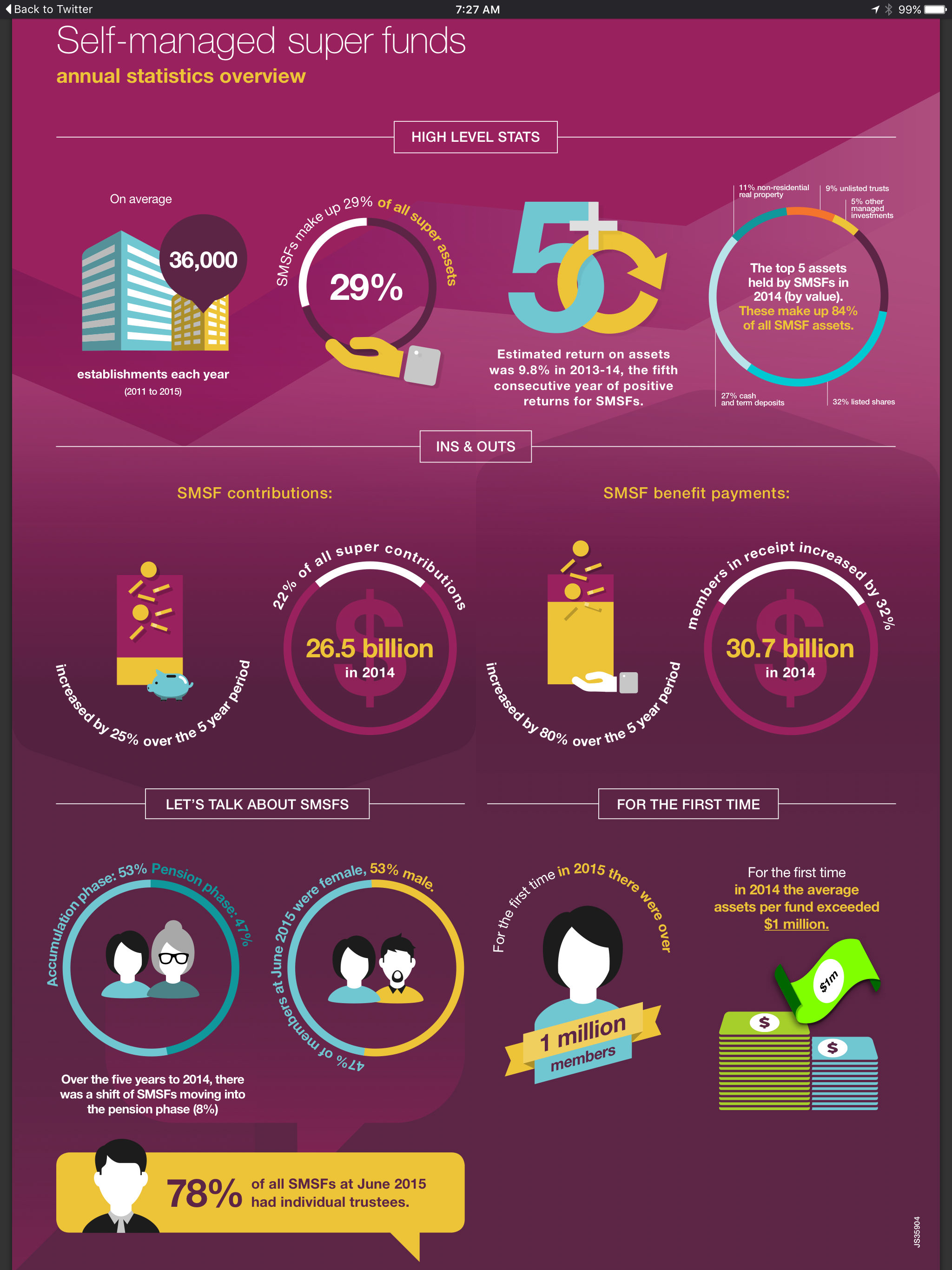



 The SMSF Coach